


 Скачать презентацию REG 265 Infrastructure Technology Dr AHMAD HILMY
0f9245de8c941f2560747cd8d21258d9.ppt
- Количество слайдов: 53
 REG 265 – Infrastructure Technology Dr AHMAD HILMY ABDUL HAMID School of Housing, Building & Planning
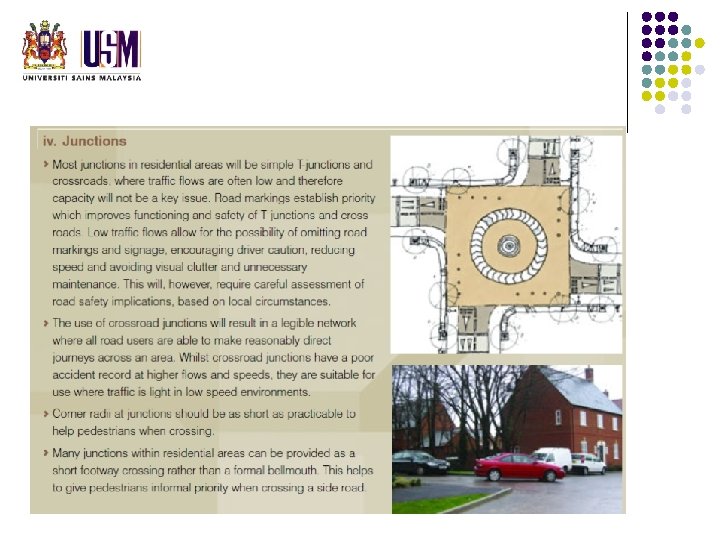
 Municipal Street Classifications Residential Streets Residential Access Residential Collector Neighborhood Commercial Access / Residential collector Residential Special Use Alley Divided Street Other / Mixed Use Commercial / Industrial Access Mixed Use Collector Arterial
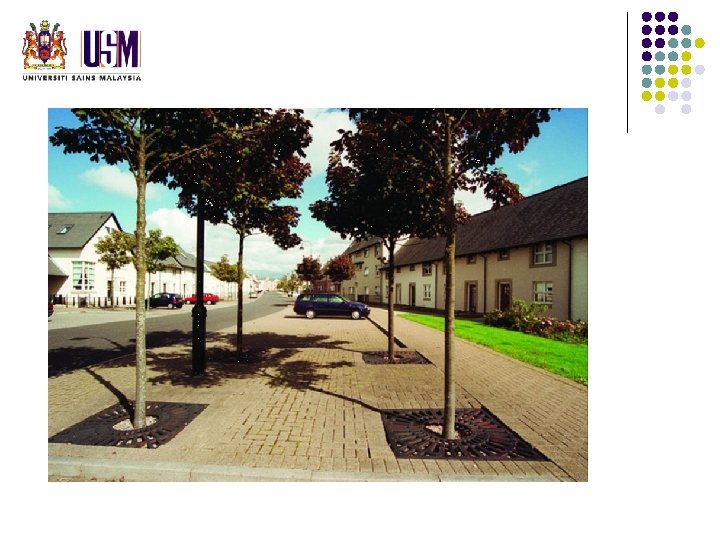
 Residential Access Functional Definition: • This is the lowest level street; it’s primary function is to provide access to individual residential properties for motorized vehicles, bicycles, and pedestrians. • Carries traffic that has its destination or origin on that street or from within the local neighborhood. • Contributes to the character of residential neighborhoods Defining Characteristics • Average Daily Traffic Up to 1500 (per Residential Streets) Note that residential access streets are limited to 750 TPD at each access point onto the next higher street classification (i. e. if there is only one connection point, the street is limited to 75 single family detached homes or 750 TPD; if street has two connection points it can support 150 single family detached homes or 1500 TPD) Cul-de-sac’s are special residential access streets limited to an ADT of 400 (40 single family homes)
 Residential Collector Functional Definition: • The primary function of this type street is vehicular mobility within residential neighborhoods; • They are intended as connections between residential neighborhoods and other collectors or arterials. • These corridors may also serve pedestrian and bicycle traffic, although their primary function is vehicular mobility. • These streets should reflect the character of the neighborhood while providing a desired level of mobility. • Some limited residential access can be provided for land areas that can’t be accesses through a residential access street. • No Parking Defining Characteristics • Average Daily Traffic >1500 and < 3000 (Lower limit per Residnetial Streets) Geometric design parameters to be based on ADT.
 Mixed Use Access / Residential Collector Functional Definition: • The primary function of this street type is access to neighborhood commercial properties and access to multi-family housing complexes. They may also serve as residential collectors. Mobility is secondary to these functions. • May serve as connections between neighborhoods and arterials. • These streets may also serve as pedestrian and bikeway corridors to the neighborhood commercial uses. • Reflecting neighborhood character is equal in importance to mobility. • Street parking may be provided to supplement off-street parking. Defining Characteristics • Average Daily Traffic > 1500 TPD Geometric design parameters to be based on ADT…no upper limit to ADT but generally should be less than 3000 VPD to minimize pedestrian, bicycle, vehicular conflicts.

 Alley Functional Definition: • Provide alternative access to residential or commercial property. • Reduces access points along (driveway entrances) along street (Pennscapes and Subdivision Streets). • Unencumbered, pedestrian Scaled front (Penn. SCAPES) • Service and Maintenance functions can be provided from rear in a less visible location (Penn. SCAPES). • No alley parking • With minimum cartway width to accommodate single direction movement of vehicles and adequate ROW width so vehicles may pass. Divided Streets (Parkway’s and Boulevards) Functional Definition: • A street where opposing lanes of traffic are separated by a planted median. The median can be planted, or can be designed to maintain natural vegetative and topographic features. Divided streets can be used to preserve natural features. • Parkway: Divided streets without curbs; no on-street parking. • Boulevard…. typically curbed; used in higher density areas; on-street parking may be provided for.
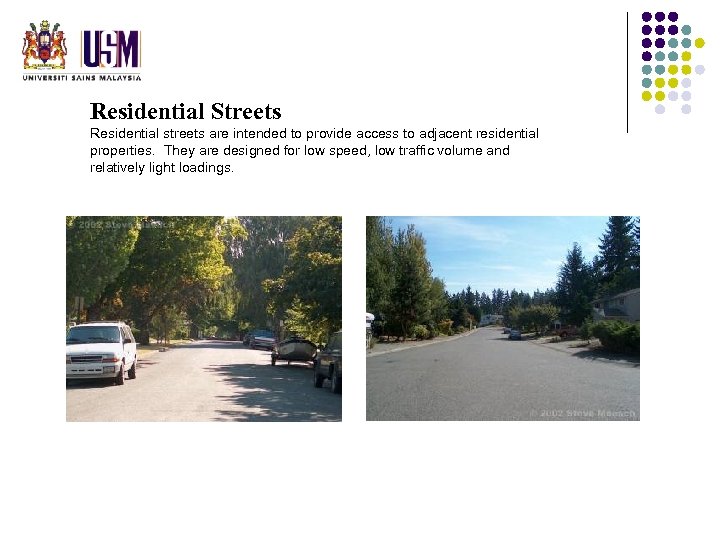 Residential Streets Residential streets are intended to provide access to adjacent residential properties. They are designed for low speed, low traffic volume and relatively light loadings.
 Assumed Traffic Low speed, low traffic volume and relatively light loadings. Truck traffic is limited to those vehicles that provide residential services such as garbage trucks, delivery trucks and the occasional moving van. Vehicle Type Vehicles per day Vehicles per year ESALs per year Cars and Light Trucks 500 200, 000 140 Medium Trucks and Buses 10 4, 000 80 Heavy Trucks and Buses negligible Totals 510 204, 000 220
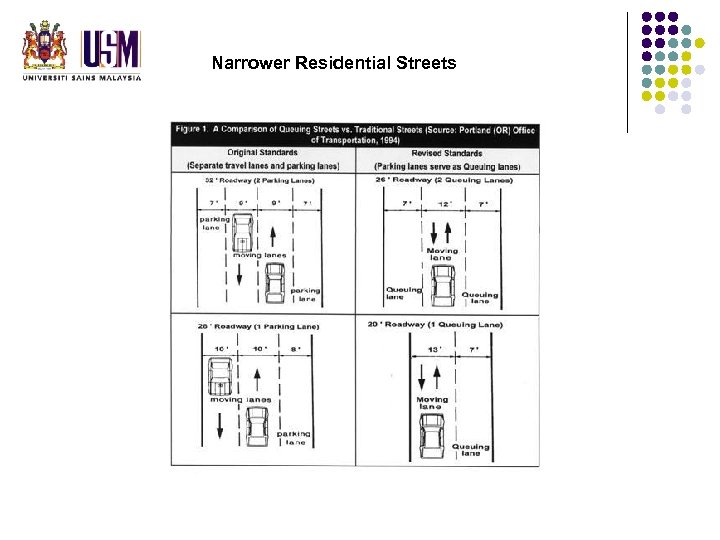 Narrower Residential Streets
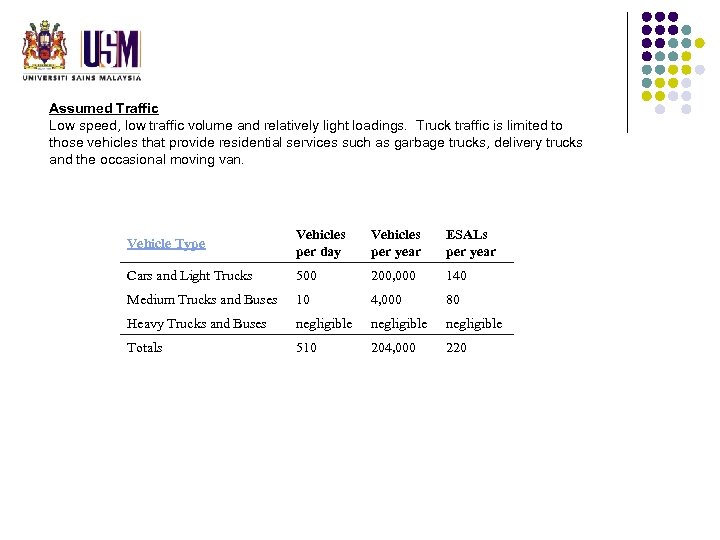
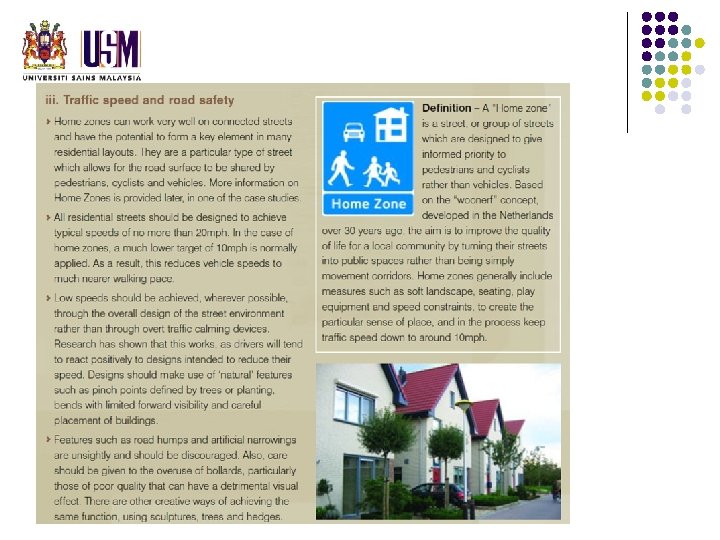
 This practice involves promoting the use of narrower streets to reduce the amount of impervious cover created by new residential development, and in turn, reduce the stormwater runoff and associated pollutant loads Siting and Design Conditions Residential street design requires a careful balancing of many competing objectives: design, speed, traffic volume, emergency access, parking, and safety, to name a few. Communities that want to change their road standards to permit narrower streets need to involve all the stakeholders who influence street design in the revision process.
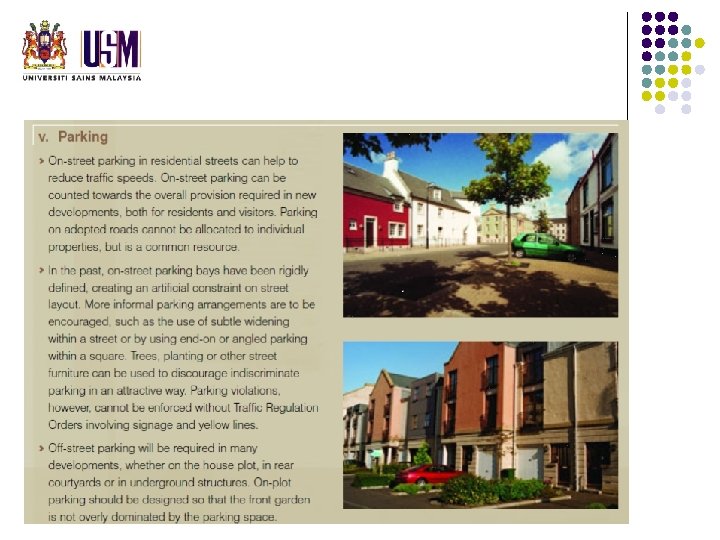
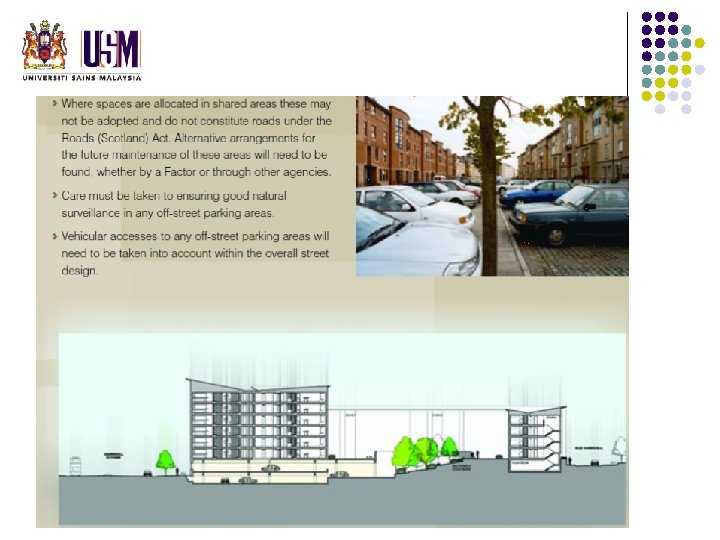
 Limitations There a number of real and perceived barriers to wider acceptance of narrower streets at the local level. Some of the more frequent concerns about narrower streets are debunked below. Inadequate On-street Parking. Recent research and local experience have demonstrated that narrow streets can easily accommodate residential parking demand. A single family home typically requires 2 to 2. 5 parking spaces. In most residential zones, this parking demand can be easily satisfied by one parking lane on the street and driveways. Car and Pedestrian Safety. Recent research indicates that narrow streets have lower accident rates than wide streets. Narrow streets tend to lower the speed of vehicles and act as traffic calming devices. Emergency Access. When designed properly, narrower streets can easily accommodate fire trucks, ambulances and other emergency vehicles.
 Large vehicles. Field tests have shown that school buses, garbage trucks, moving vans and other large vehicles can generally safely negotiate narrower streets, even when cars are parked on both sides of the street. Utility Corridors. It is often necessary to place utilities underneath the street rather than in the right of way.
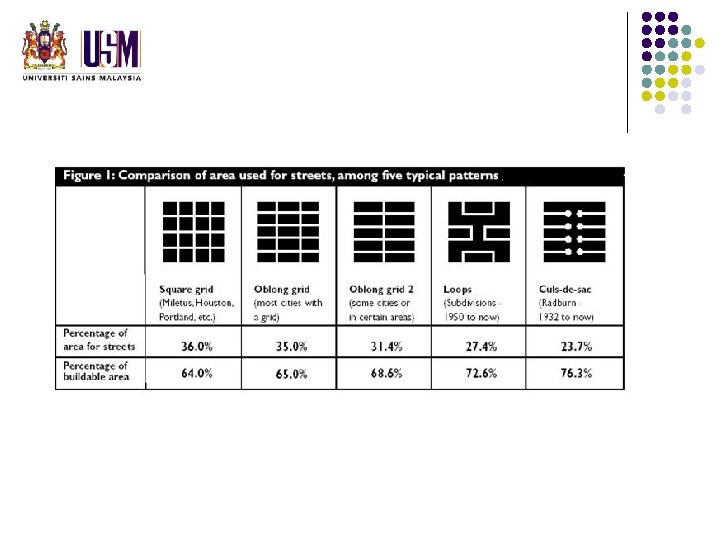
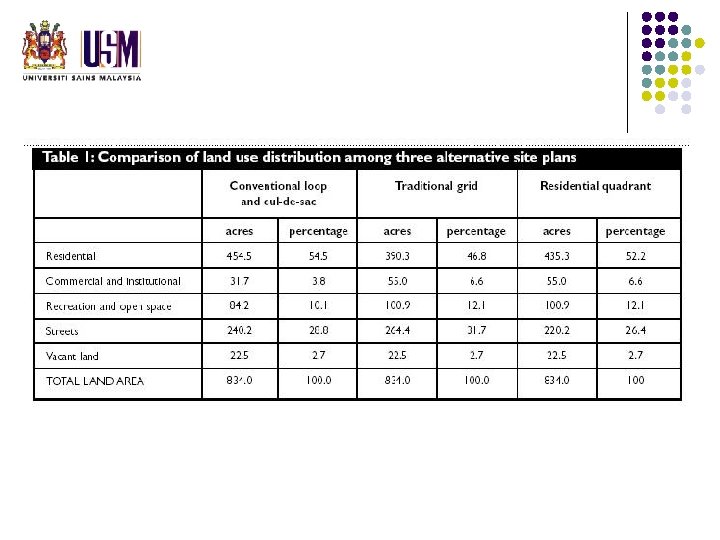
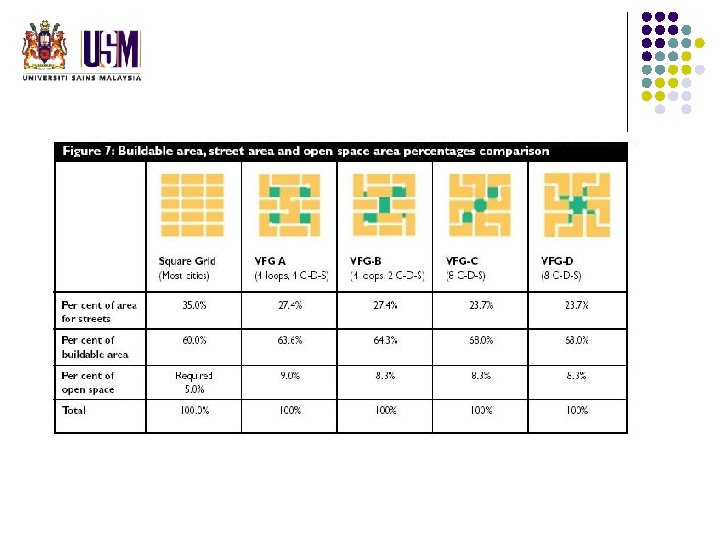
 Maintenance Considerations Narrower streets should slightly reduce road maintenance costs for local communities, since they present a smaller surface area to maintain and repair. Effectiveness Since streets constitute the largest share of impervious cover in residential developments (about 40 to 50%), a shift to narrower streets can result in a five to 20% overall reduction in impervious area for a typical residential subdivision (Schueler, 1995). As nearly all the pollutants deposited on street surfaces or trapped along curbs are delivered to the storm drain system during storm events, this reduced imperviousness translates directly into less stormwater runoff and pollutant loadings from the development. From the standpoint of stormwater quality, residential streets rank as a major source area for many stormwater pollutants, including sediment, bacteria, nutrients, hydrocarbons and metals (Steuer et al, 1997, and Bannerman, 1994). Cost Considerations It makes sense that narrower streets cost less to build than wider streets. Considering that the cost of paving a road averages RM 500 per sq meter, shaving even a mere 1 m from existing street widths can yield cost savings of more than RM 500, 000 per km of residential street. In addition, since narrower streets produce less impervious cover and runoff, additional savings can be realized in the reduced size and cost of downstream stormwater management facilities.
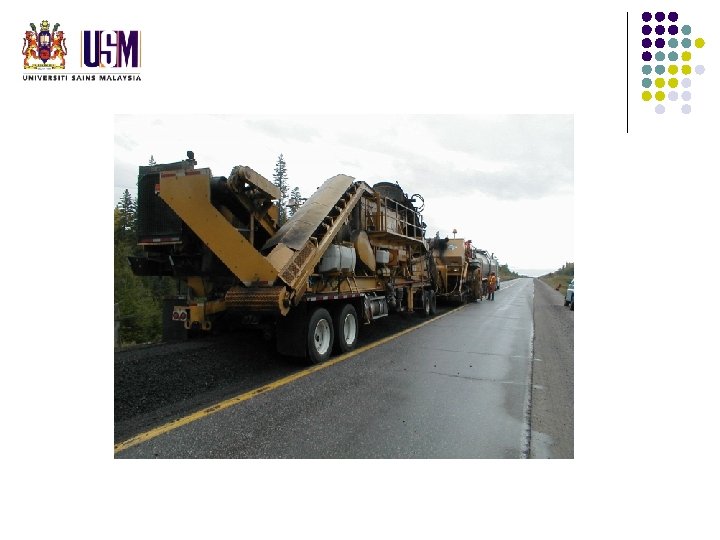
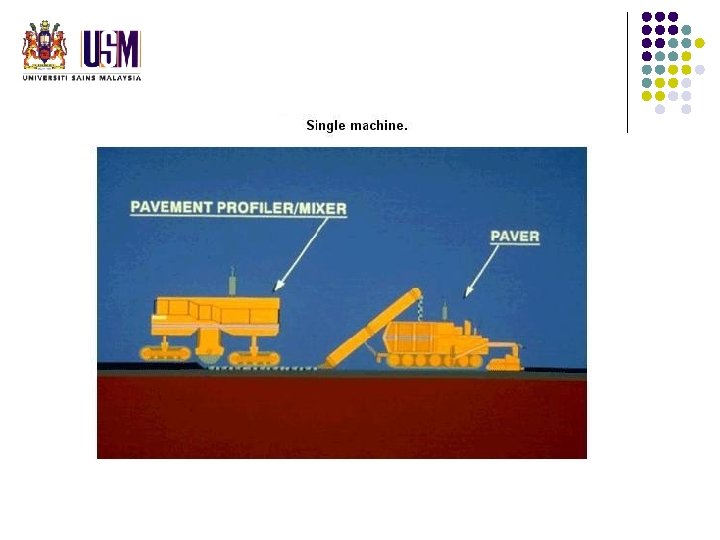
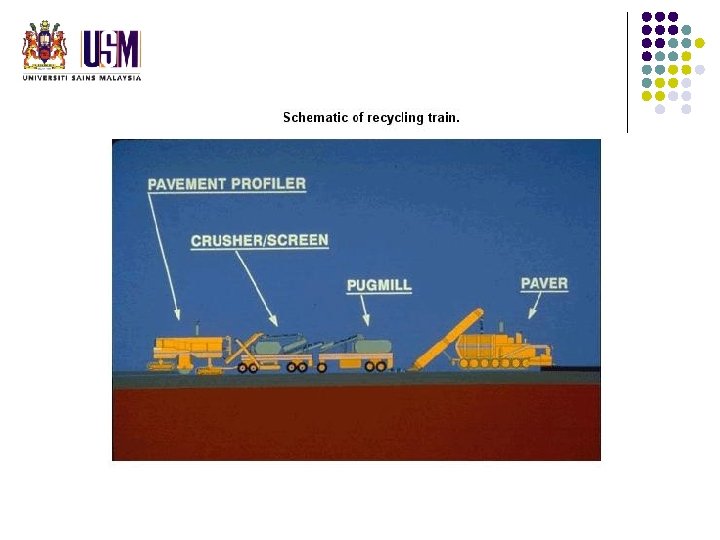
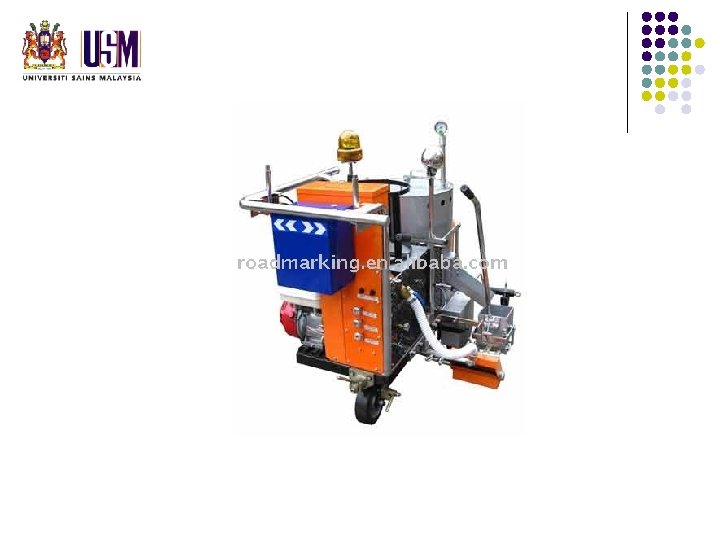
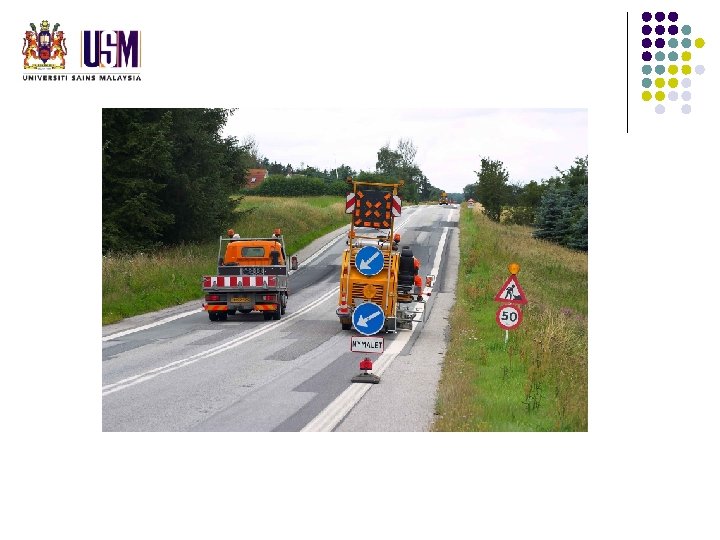
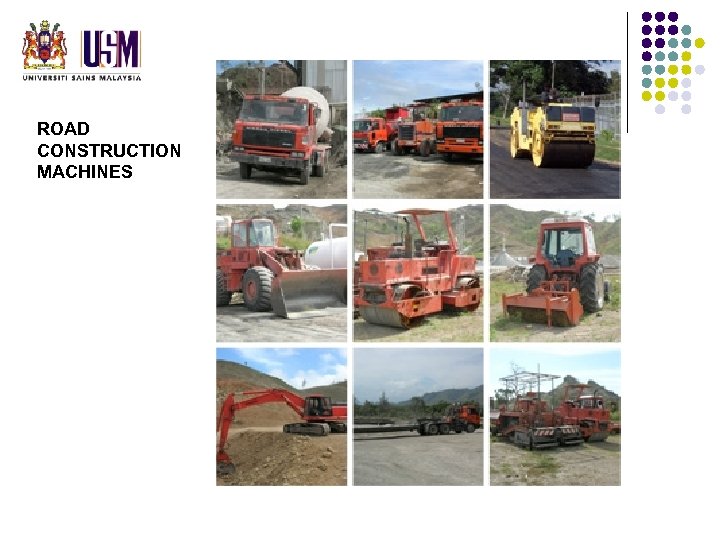 ROAD CONSTRUCTION MACHINES
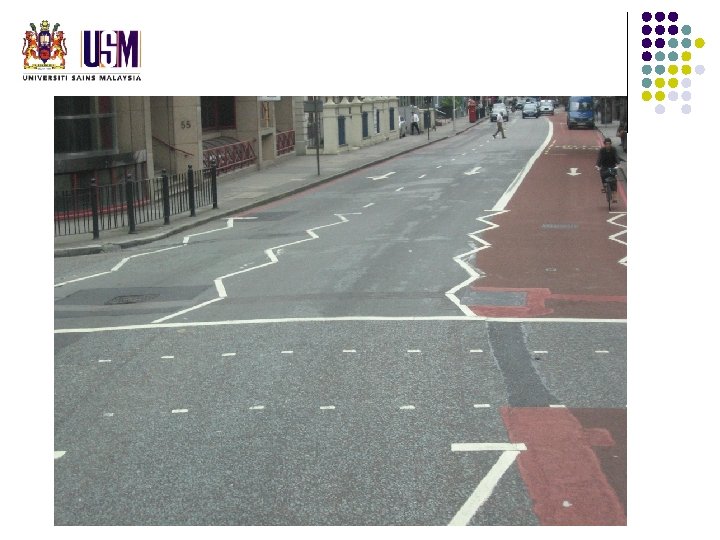
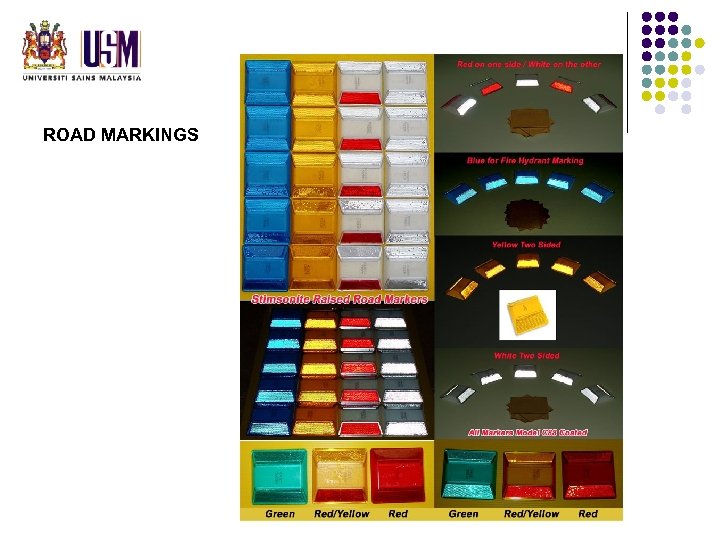 ROAD MARKINGS

 Roads & Connections To be continued…