


 Скачать презентацию Refractory Status Epilepticus NCSE Challenges and Unknowns
e42f5196e465b3e1bb9cf1f44c3a136a.ppt
- Количество слайдов: 55
 Refractory Status Epilepticus – NCSE, Challenges, and Unknowns Patrick Landazuri, M. D. March 18, 2016
 Overview § § § Definitions NCSE RSE clinical characteristics RSE basic pathophysiology RSE Treatment § AEDs § Anesthesia § Non-anesthesia § Overall outcome data § Suggested treatment paradigm
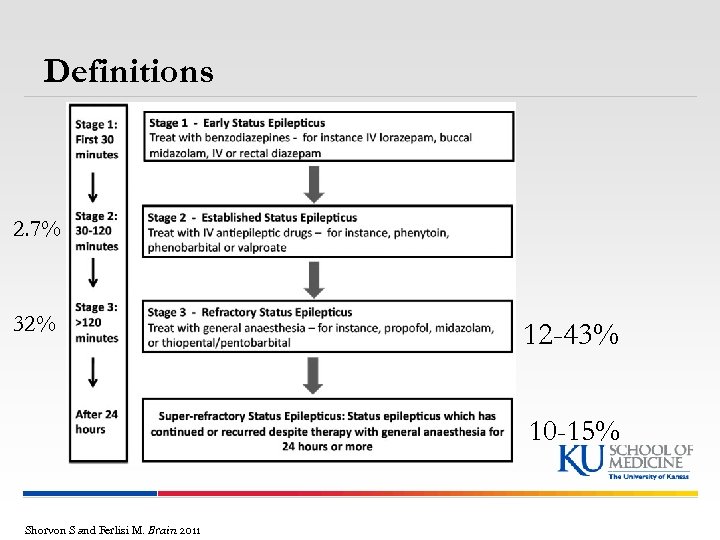 Definitions 2. 7% 32% 12 -43% 10 -15% Shorvon S and Ferlisi M. Brain 2011
 NON-CONVULSIVE SEIZURES AND STATUS EPILEPTICUS
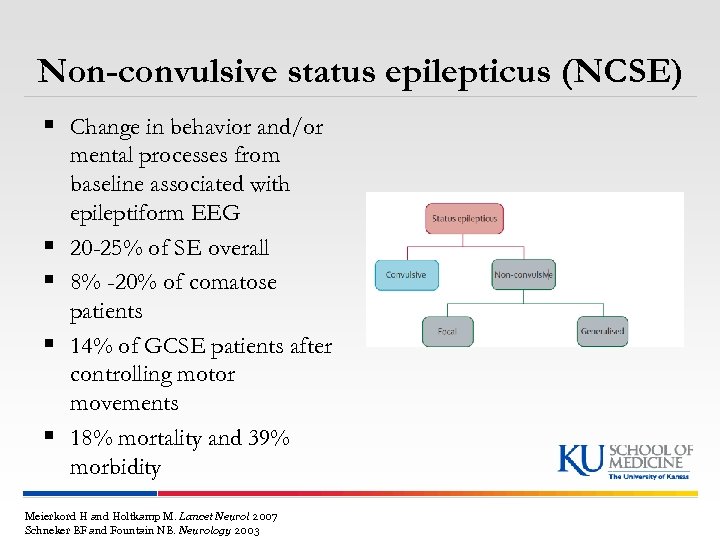 Non-convulsive status epilepticus (NCSE) § Change in behavior and/or § § mental processes from baseline associated with epileptiform EEG 20 -25% of SE overall 8% -20% of comatose patients 14% of GCSE patients after controlling motor movements 18% mortality and 39% morbidity Meierkord H and Holtkamp M. Lancet Neurol 2007 Schneker BF and Fountain NB. Neurology 2003
 NCSE – When to consider § Remote risk factors for epilepsy § Intracranial tumor § Meningitis/encephalitis § MRI evidence of encephalomalacia § Previous stroke § Previous neurosurgery § History of epilepsy § Physical exam § Abnormal ocular movements § Subtle mouth movements § Severely impaired mental status Laccheo I, et al. Neurocrit Care 2014 Husain AM, et al. JNNP 2003 Gilmore EJ, et al. Intensive Care Med 2015
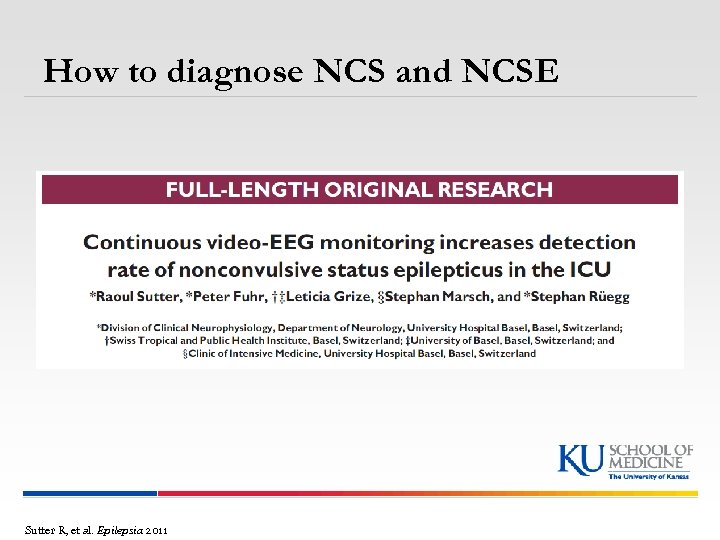 How to diagnose NCS and NCSE Sutter R, et al. Epilepsia 2011
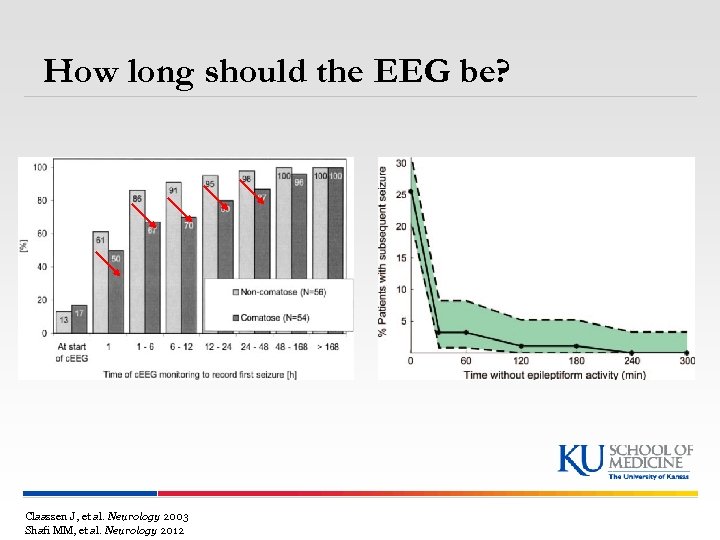 How long should the EEG be? Claassen J, et al. Neurology 2003 Shafi MM, et al. Neurology 2012
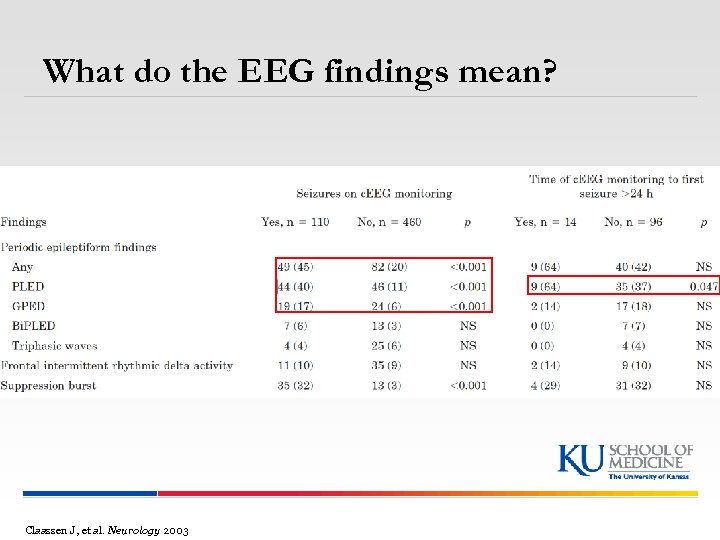 What do the EEG findings mean? Claassen J, et al. Neurology 2003
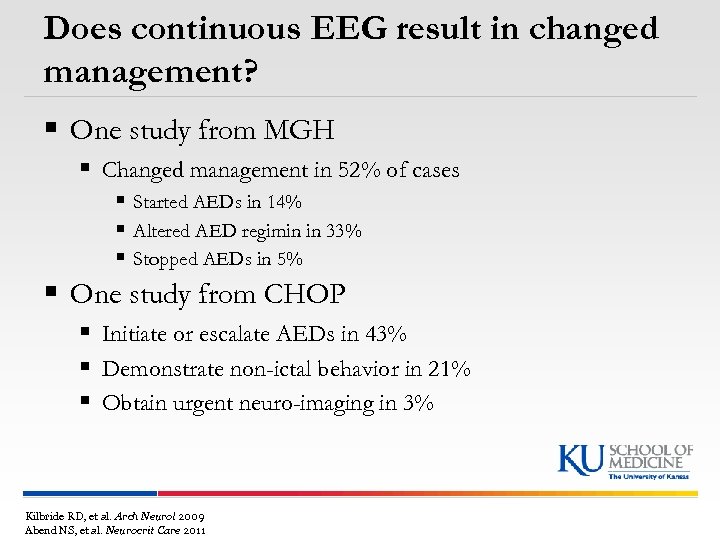 Does continuous EEG result in changed management? § One study from MGH § Changed management in 52% of cases § Started AEDs in 14% § Altered AED regimin in 33% § Stopped AEDs in 5% § One study from CHOP § Initiate or escalate AEDs in 43% § Demonstrate non-ictal behavior in 21% § Obtain urgent neuro-imaging in 3% Kilbride RD, et al. Arch Neurol 2009 Abend NS, et al. Neurocrit Care 2011
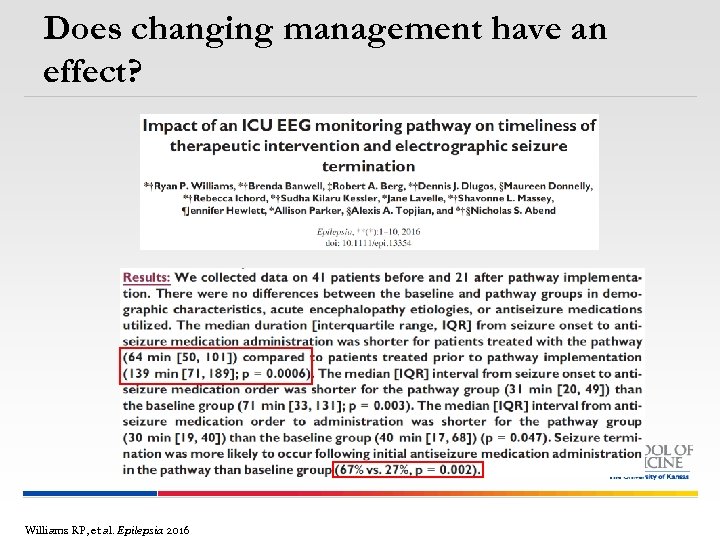 Does changing management have an effect? Williams RP, et al. Epilepsia 2016
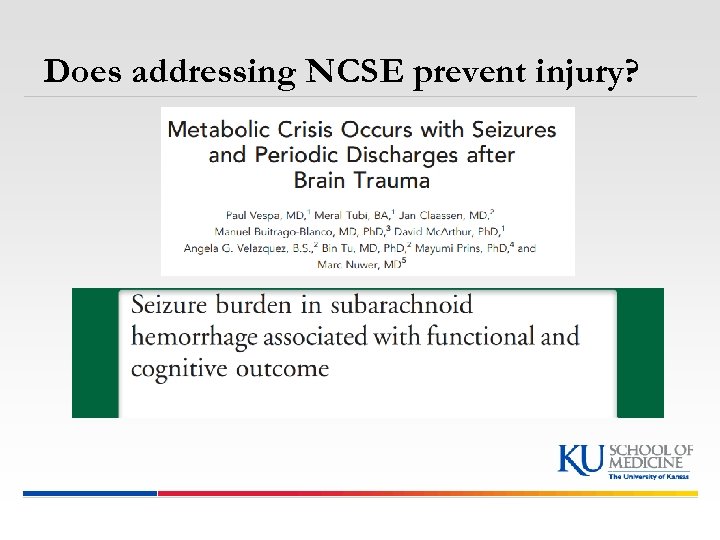 Does addressing NCSE prevent injury?
 REFRACTORY STATUS EPILEPTICUS
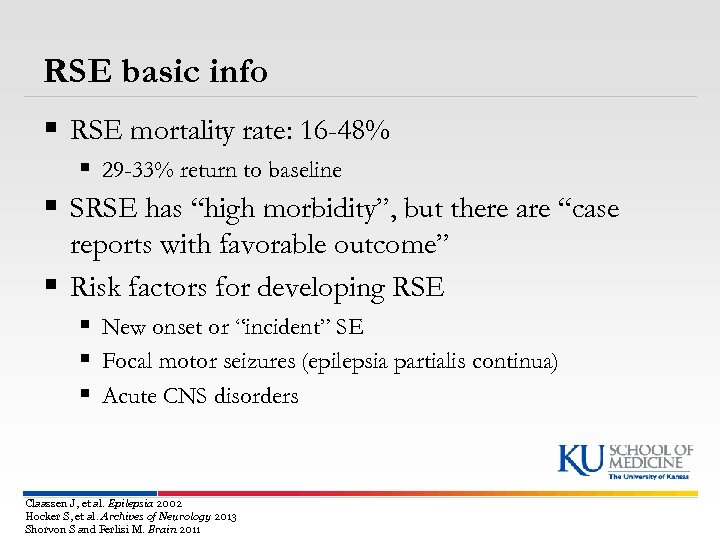 RSE basic info § RSE mortality rate: 16 -48% § 29 -33% return to baseline § SRSE has “high morbidity”, but there are “case reports with favorable outcome” § Risk factors for developing RSE § New onset or “incident” SE § Focal motor seizures (epilepsia partialis continua) § Acute CNS disorders Claassen J, et al. Epilepsia 2002 Hocker S, et al. Archives of Neurology 2013 Shorvon S and Ferlisi M. Brain 2011
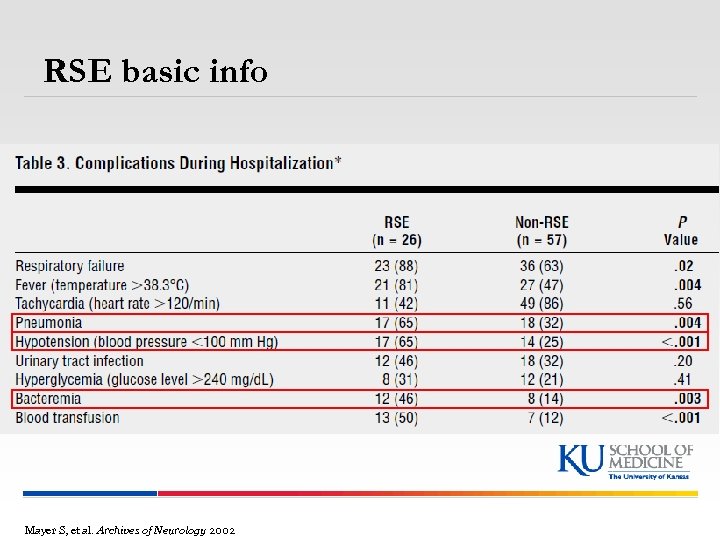 RSE basic info Mayer S, et al. Archives of Neurology 2002
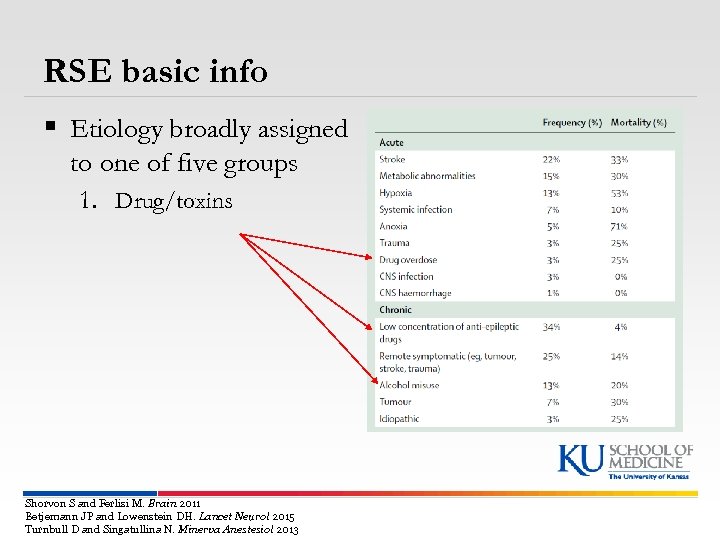 RSE basic info § Etiology broadly assigned to one of five groups 1. Drug/toxins Shorvon S and Ferlisi M. Brain 2011 Betjemann JP and Lowenstein DH. Lancet Neurol 2015 Turnbull D and Singatullina N. Minerva Anestesiol 2013
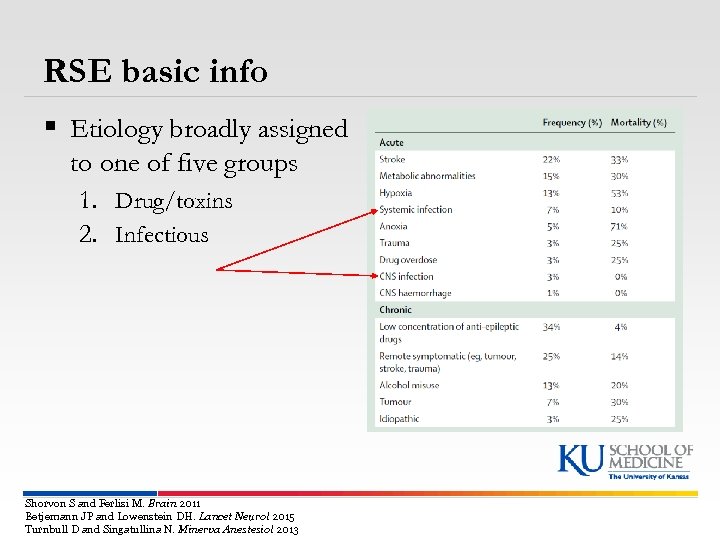 RSE basic info § Etiology broadly assigned to one of five groups 1. Drug/toxins 2. Infectious Shorvon S and Ferlisi M. Brain 2011 Betjemann JP and Lowenstein DH. Lancet Neurol 2015 Turnbull D and Singatullina N. Minerva Anestesiol 2013
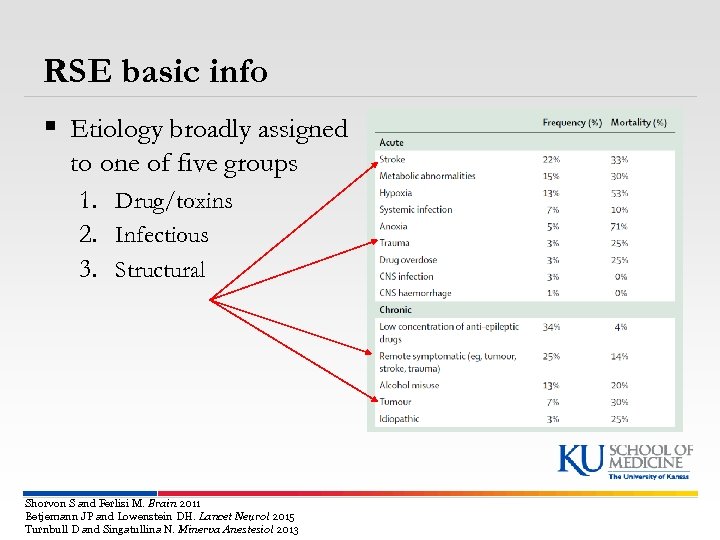 RSE basic info § Etiology broadly assigned to one of five groups 1. Drug/toxins 2. Infectious 3. Structural Shorvon S and Ferlisi M. Brain 2011 Betjemann JP and Lowenstein DH. Lancet Neurol 2015 Turnbull D and Singatullina N. Minerva Anestesiol 2013
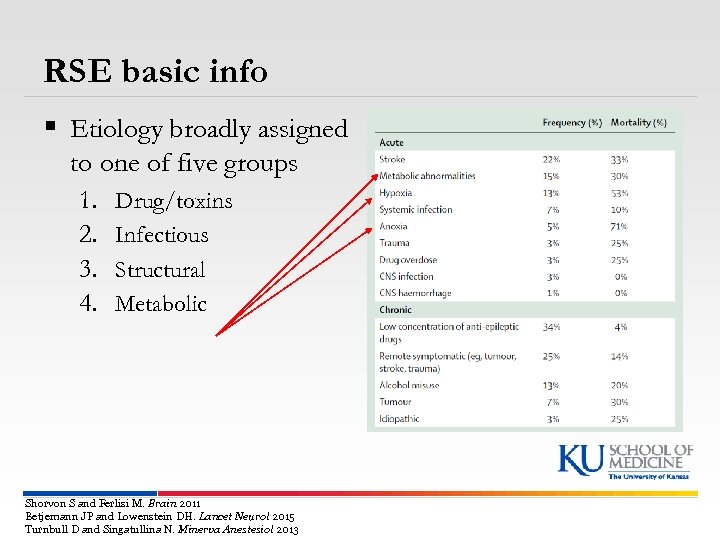 RSE basic info § Etiology broadly assigned to one of five groups 1. Drug/toxins 2. Infectious 3. Structural 4. Metabolic Shorvon S and Ferlisi M. Brain 2011 Betjemann JP and Lowenstein DH. Lancet Neurol 2015 Turnbull D and Singatullina N. Minerva Anestesiol 2013
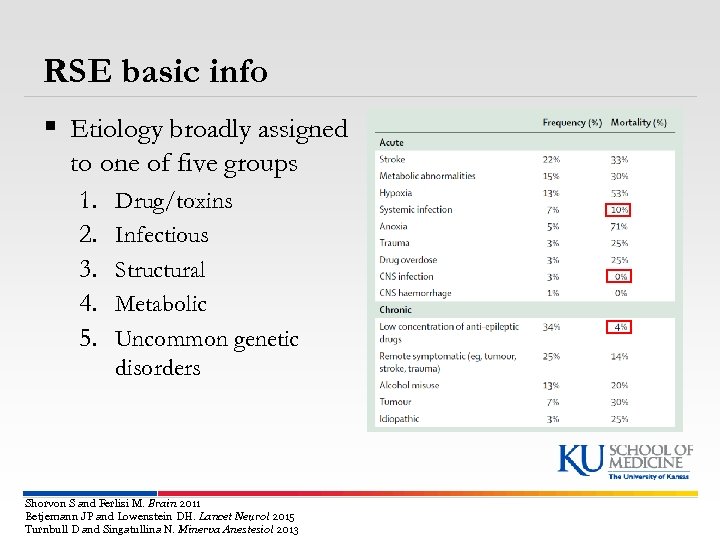 RSE basic info § Etiology broadly assigned to one of five groups 1. Drug/toxins 2. Infectious 3. Structural 4. Metabolic 5. Uncommon genetic disorders Shorvon S and Ferlisi M. Brain 2011 Betjemann JP and Lowenstein DH. Lancet Neurol 2015 Turnbull D and Singatullina N. Minerva Anestesiol 2013
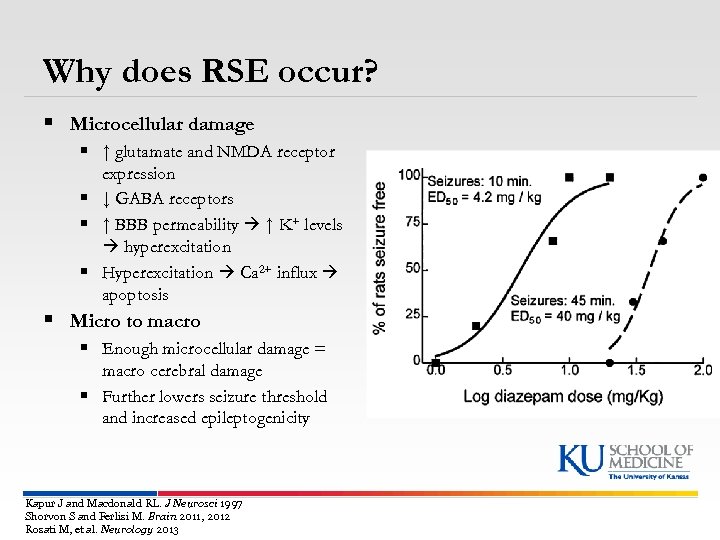 Why does RSE occur? § Microcellular damage § ↑ glutamate and NMDA receptor expression § ↓ GABA receptors § ↑ BBB permeability ↑ K+ levels hyperexcitation § Hyperexcitation Ca 2+ influx apoptosis § Micro to macro § Enough microcellular damage = macro cerebral damage § Further lowers seizure threshold and increased epileptogenicity Kapur J and Macdonald RL. J Neurosci 1997 Shorvon S and Ferlisi M. Brain 2011, 2012 Rosati M, et al. Neurology 2013
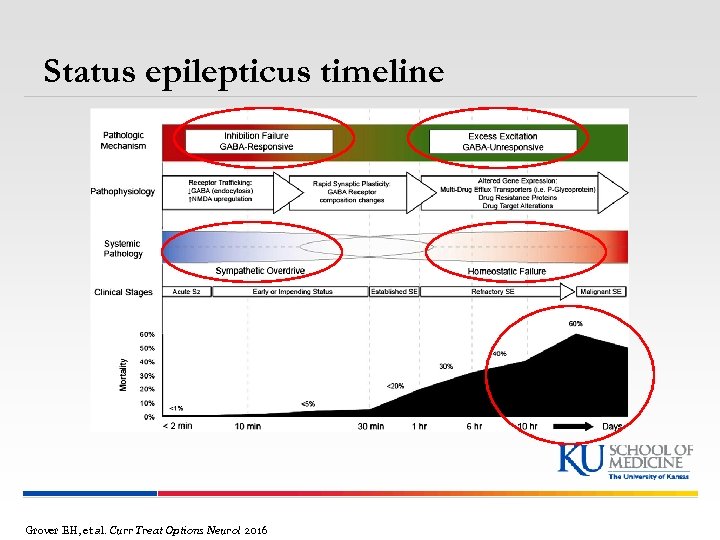 Status epilepticus timeline Grover EH, et al. Curr Treat Options Neurol 2016
 RSE TREATMENT
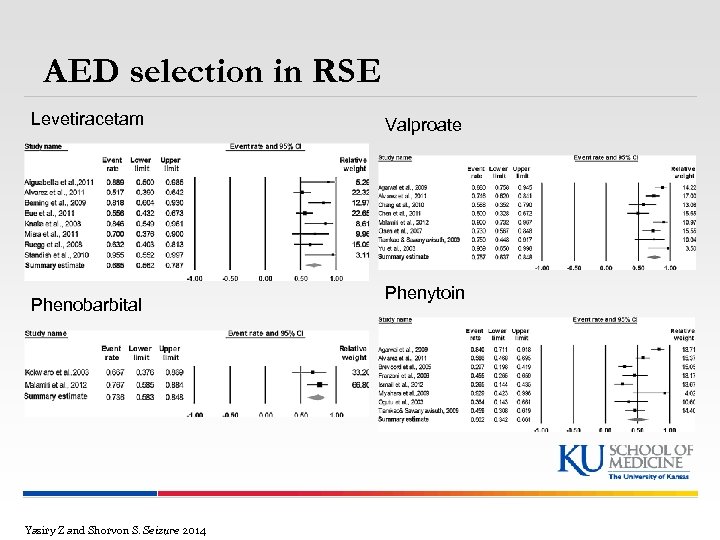 AED selection in RSE Levetiracetam Phenobarbital Yasiry Z and Shorvon S. Seizure 2014 Valproate Phenytoin
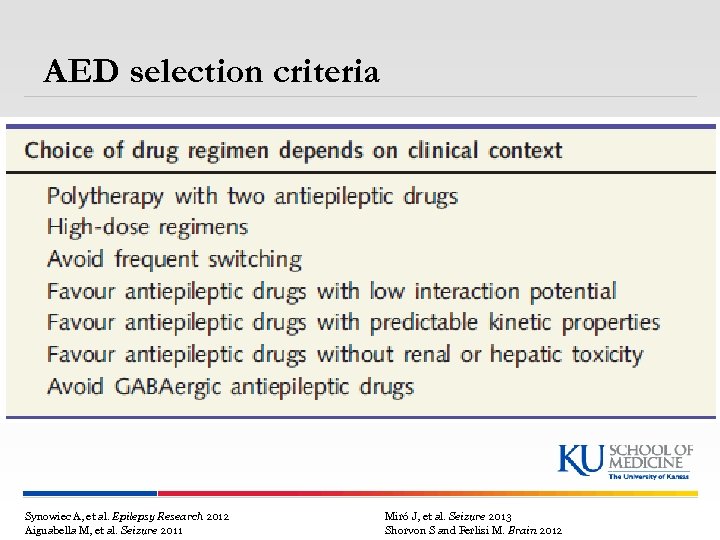 AED selection criteria Synowiec A, et al. Epilepsy Research 2012 Aiguabella M, et al. Seizure 2011 Miró J, et al. Seizure 2013 Shorvon S and Ferlisi M. Brain 2012
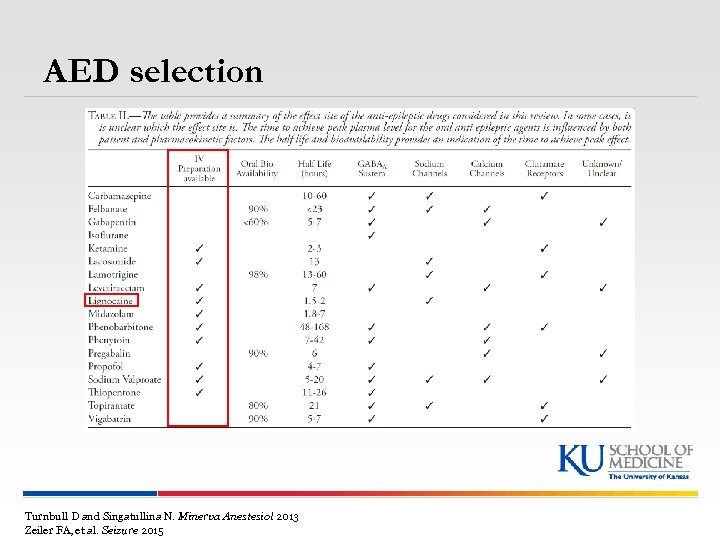 AED selection Turnbull D and Singatullina N. Minerva Anestesiol 2013 Zeiler FA, et al. Seizure 2015
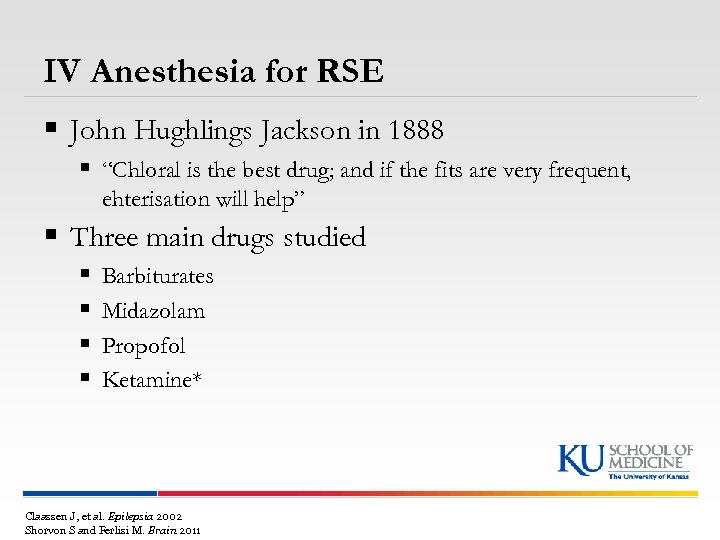 IV Anesthesia for RSE § John Hughlings Jackson in 1888 § “Chloral is the best drug; and if the fits are very frequent, ehterisation will help” § Three main drugs studied § § Barbiturates Midazolam Propofol Ketamine* Claassen J, et al. Epilepsia 2002 Shorvon S and Ferlisi M. Brain 2011
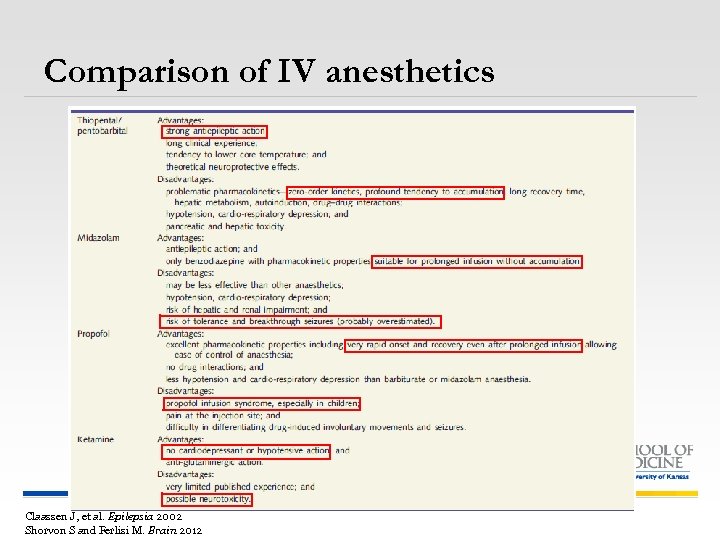 Comparison of IV anesthetics Claassen J, et al. Epilepsia 2002 Shorvon S and Ferlisi M. Brain 2012
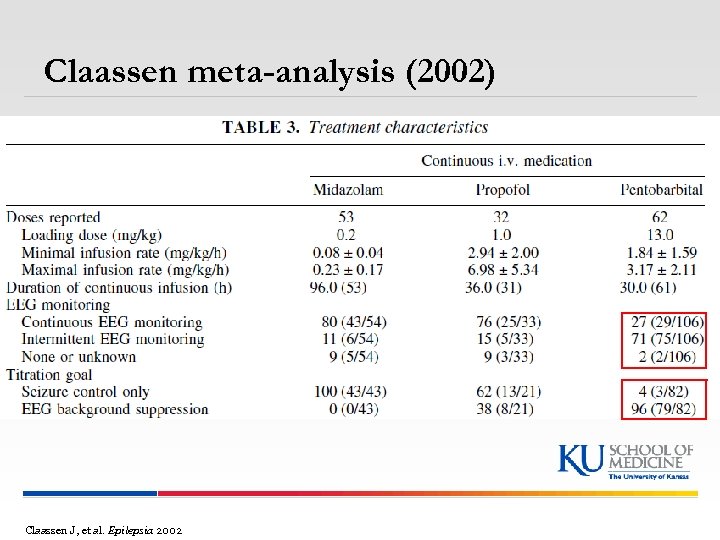 Claassen meta-analysis (2002) Claassen J, et al. Epilepsia 2002
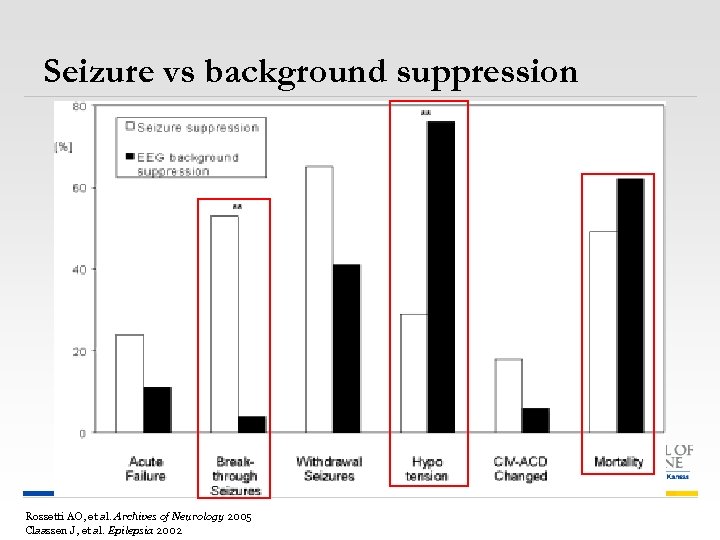 Seizure vs background suppression Rossetti AO, et al. Archives of Neurology 2005 Claassen J, et al. Epilepsia 2002
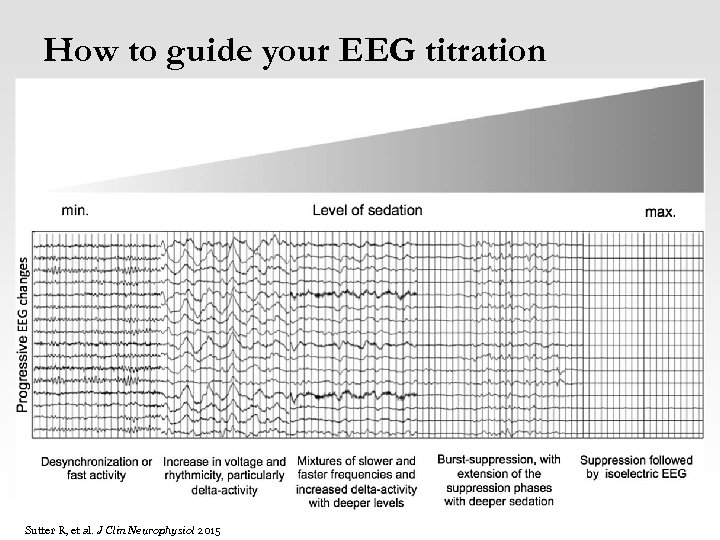 How to guide your EEG titration Sutter R, et al. J Clin Neurophysiol 2015
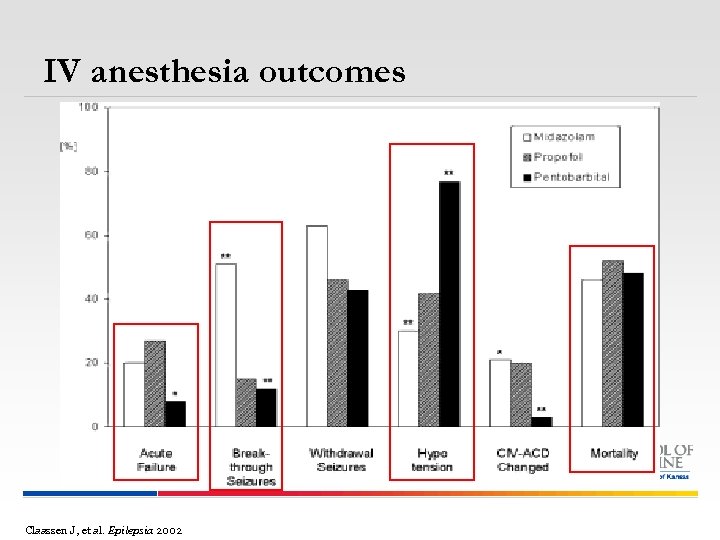 IV anesthesia outcomes Claassen J, et al. Epilepsia 2002
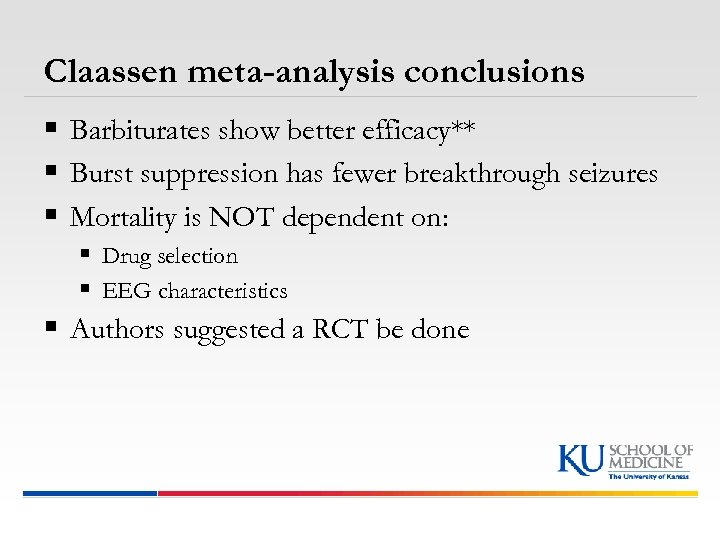 Claassen meta-analysis conclusions § Barbiturates show better efficacy** § Burst suppression has fewer breakthrough seizures § Mortality is NOT dependent on: § Drug selection § EEG characteristics § Authors suggested a RCT be done
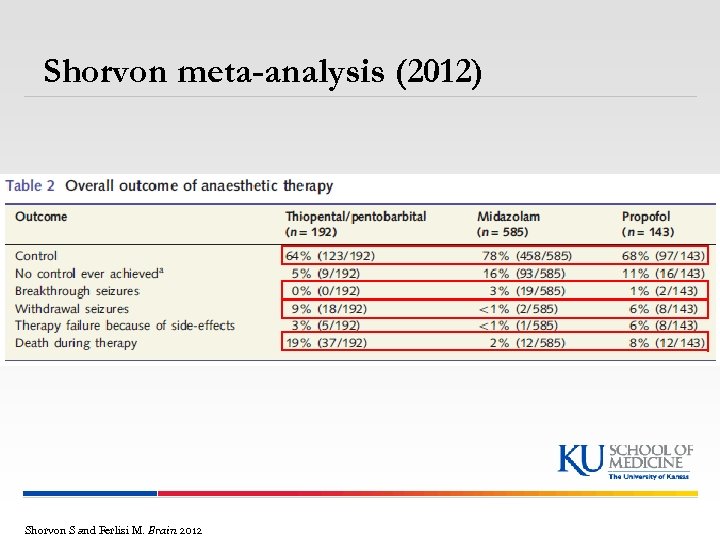 Shorvon meta-analysis (2012) Shorvon S and Ferlisi M. Brain 2012
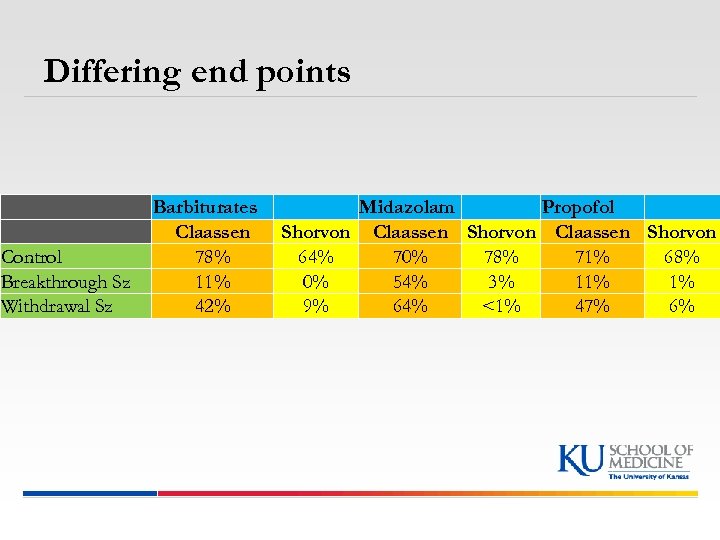 Differing end points Control Breakthrough Sz Withdrawal Sz Barbiturates Midazolam Propofol Claassen Shorvon 78% 64% 70% 78% 71% 68% 11% 0% 54% 3% 11% 1% 42% 9% 64% <1% 47% 6%
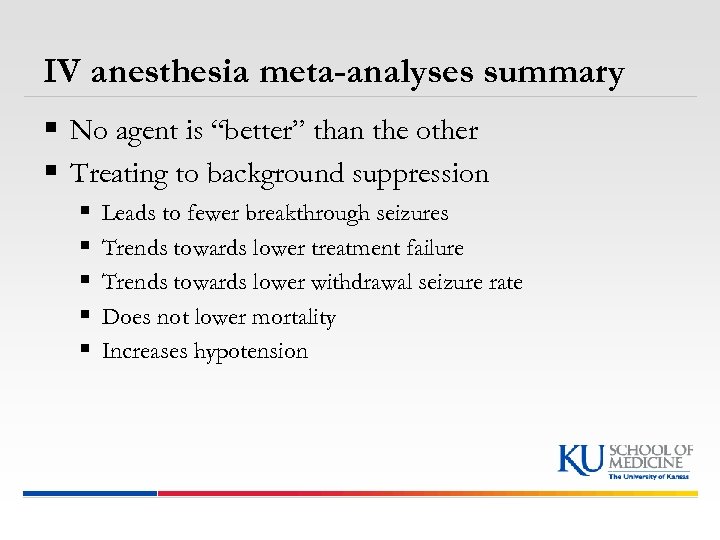 IV anesthesia meta-analyses summary § No agent is “better” than the other § Treating to background suppression § § § Leads to fewer breakthrough seizures Trends towards lower treatment failure Trends towards lower withdrawal seizure rate Does not lower mortality Increases hypotension
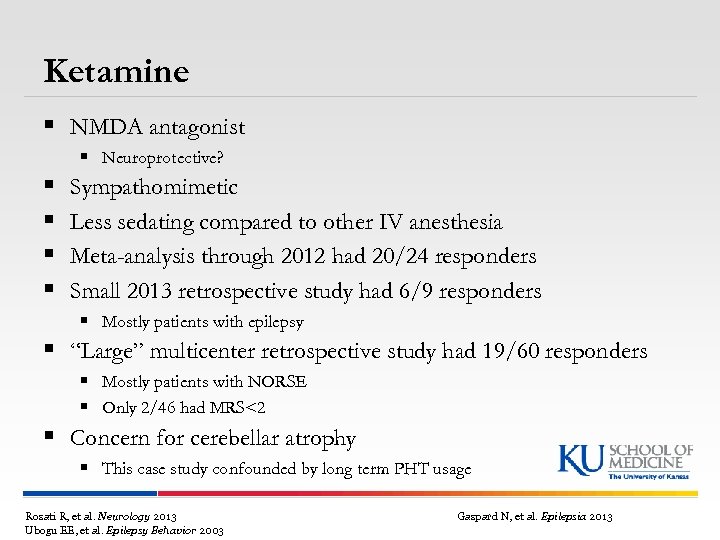 Ketamine § NMDA antagonist § Neuroprotective? § § Sympathomimetic Less sedating compared to other IV anesthesia Meta-analysis through 2012 had 20/24 responders Small 2013 retrospective study had 6/9 responders § Mostly patients with epilepsy § “Large” multicenter retrospective study had 19/60 responders § Mostly patients with NORSE § Only 2/46 had MRS<2 § Concern for cerebellar atrophy § This case study confounded by long term PHT usage Rosati R, et al. Neurology 2013 Ubogu EE, et al. Epilepsy Behavior 2003 Gaspard N, et al. Epilepsia 2013
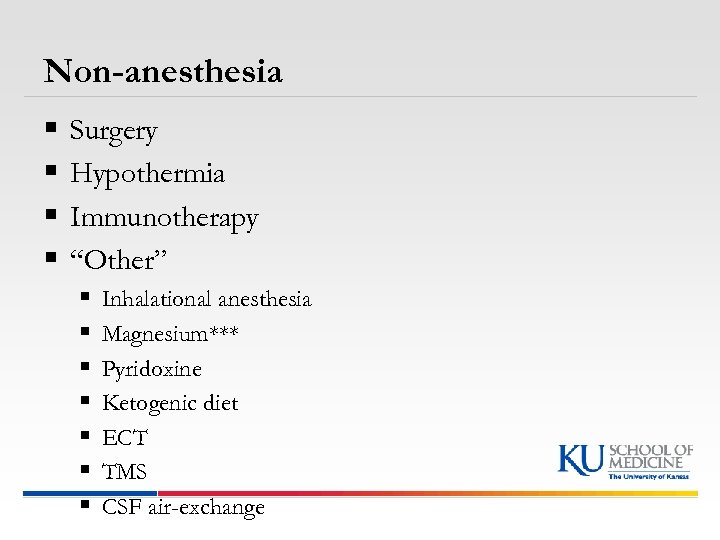 Non-anesthesia § § Surgery Hypothermia Immunotherapy “Other” § § § § Inhalational anesthesia Magnesium*** Pyridoxine Ketogenic diet ECT TMS CSF air-exchange
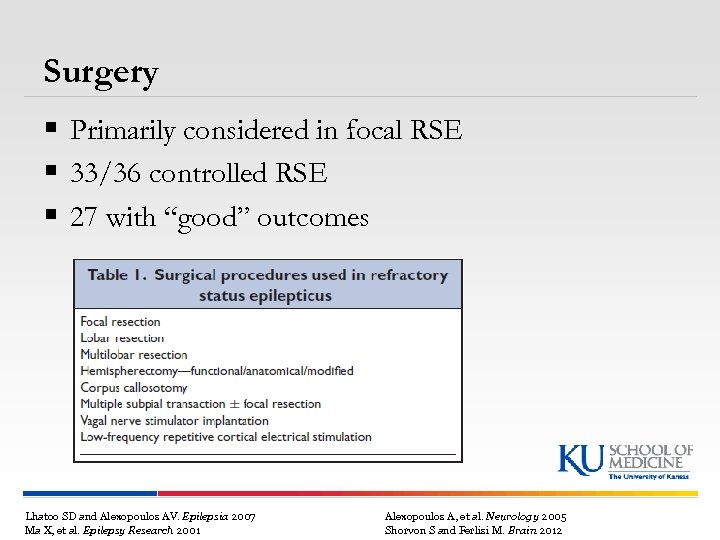 Surgery § Primarily considered in focal RSE § 33/36 controlled RSE § 27 with “good” outcomes Lhatoo SD and Alexopoulos AV. Epilepsia 2007 Ma X, et al. Epilepsy Research 2001 Alexopoulos A, et al. Neurology 2005 Shorvon S and Ferlisi M. Brain 2012
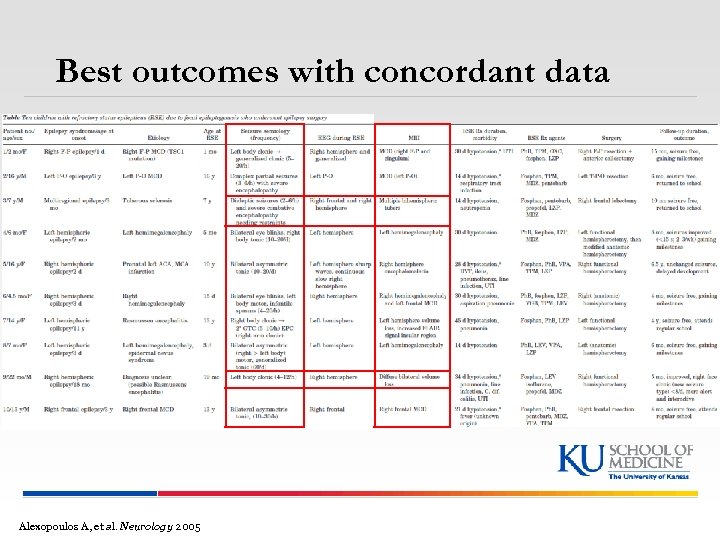 Best outcomes with concordant data Alexopoulos A, et al. Neurology 2005
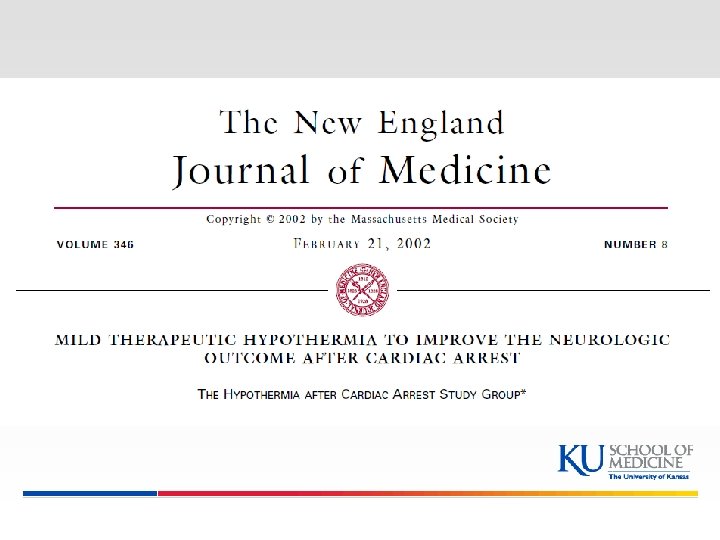
 Hypothermia § First 3 cases reported in 1984 § Grew out of intraoperative experience of putting cold water on seizing brain § Rat data demonstrates decreased cerebral damage compared to normothermic and hyperthermic groups § Suggested exclusion criteria § § Immunosuppression Hemodynamically unstable Coagulopathy Active infection Orlowski JP, et al. Critical Care Medicine 1984 Kowski AB, et al. Brain Research 2012 Rossetti AO. Epilepsia 2011 Corry JJ, et al. Neurocritical Care 2008
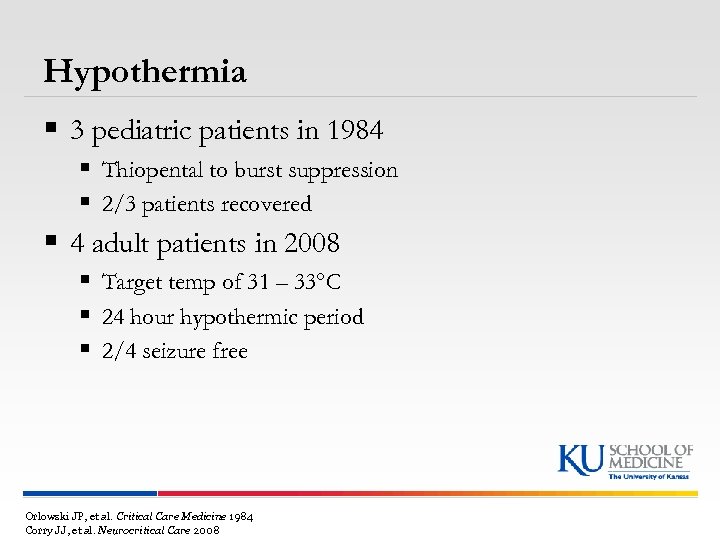 Hypothermia § 3 pediatric patients in 1984 § Thiopental to burst suppression § 2/3 patients recovered § 4 adult patients in 2008 § Target temp of 31 – 33°C § 24 hour hypothermic period § 2/4 seizure free Orlowski JP, et al. Critical Care Medicine 1984 Corry JJ, et al. Neurocritical Care 2008
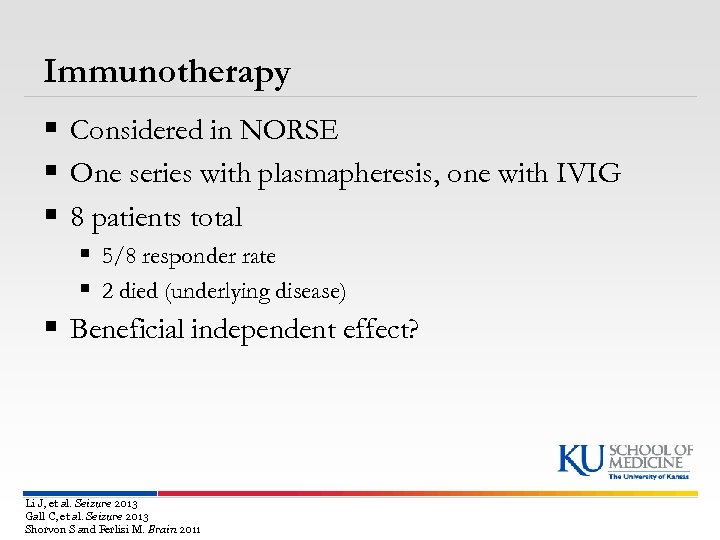 Immunotherapy § Considered in NORSE § One series with plasmapheresis, one with IVIG § 8 patients total § 5/8 responder rate § 2 died (underlying disease) § Beneficial independent effect? Li J, et al. Seizure 2013 Gall C, et al. Seizure 2013 Shorvon S and Ferlisi M. Brain 2011
 FACTORS ALTERING PROGNOSIS AND OUTCOMES
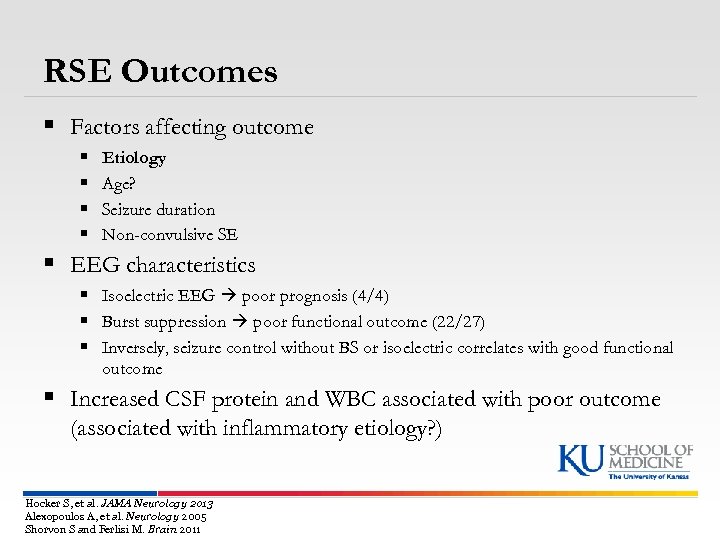 RSE Outcomes § Factors affecting outcome § § Etiology Age? Seizure duration Non-convulsive SE § EEG characteristics § Isoelectric EEG poor prognosis (4/4) § Burst suppression poor functional outcome (22/27) § Inversely, seizure control without BS or isoelectric correlates with good functional outcome § Increased CSF protein and WBC associated with poor outcome (associated with inflammatory etiology? ) Hocker S, et al. JAMA Neurology 2013 Alexopoulos A, et al. Neurology 2005 Shorvon S and Ferlisi M. Brain 2011
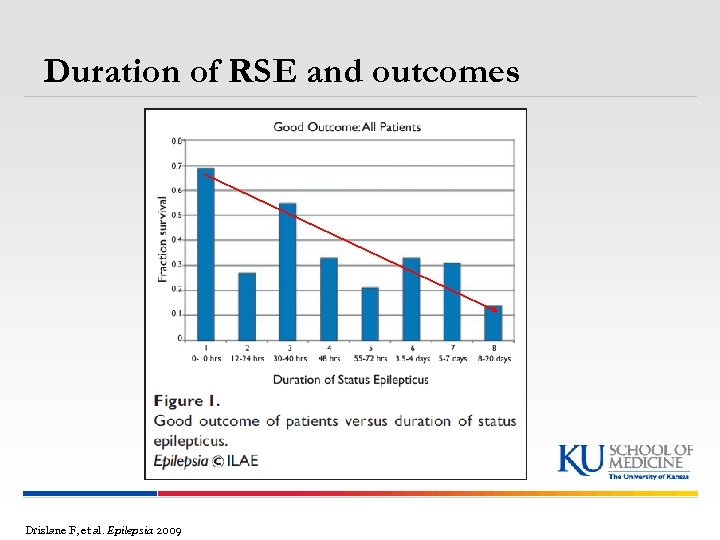 Duration of RSE and outcomes Drislane F, et al. Epilepsia 2009
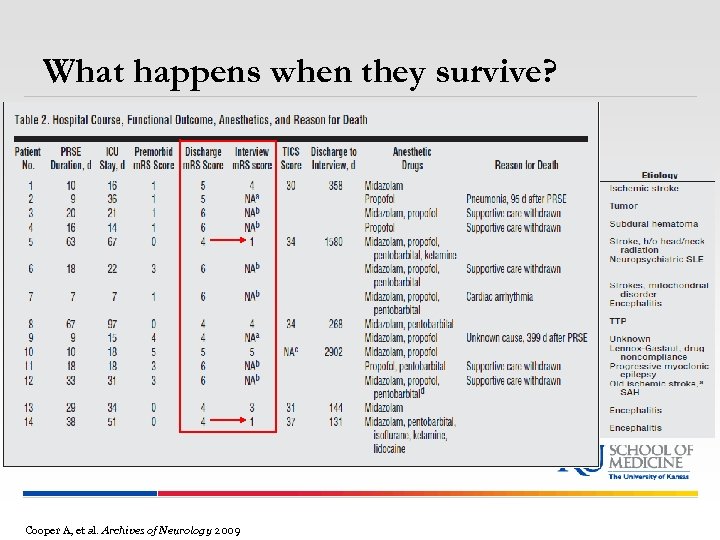 What happens when they survive? Cooper A, et al. Archives of Neurology 2009
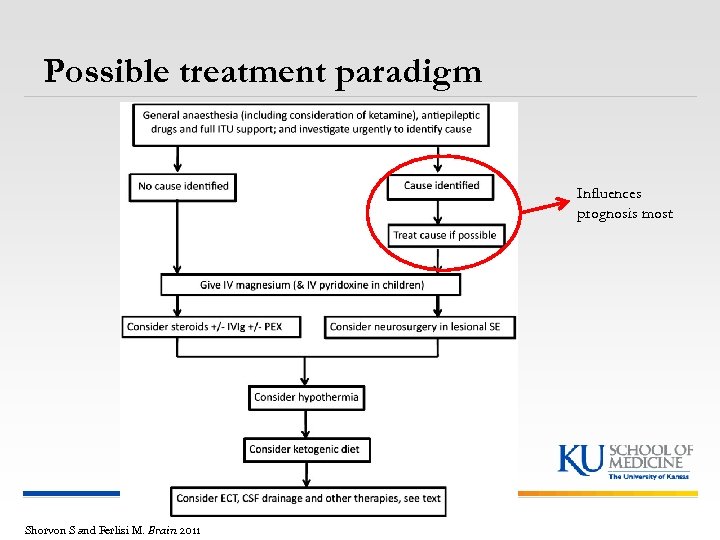 Possible treatment paradigm Influences prognosis most Shorvon S and Ferlisi M. Brain 2011
 Comments or questions?
 Works cited § § § § § Abend NS, et al. “Impact of Continuous EEG Monitoring on Clinical Management in Critically Ill Children”. Neurocrit Care 2011 Aug; 15(1): 70 -5 Alexopoulos, A. , et al. “Resective surgery to treat refractory status epilepticus in children with focal epileptogenesis. ” Neurology, v. 64 issue 3, 2005, p. 567 -70. Claassen, J. ; Hirsch, LJ. ; Emerson, RG. ; Mayer, SA. “Treatment of refractory status epilepticus with pentobarbital, propofol, or midazolam: a systematic review. ” Epilepsia (Series 4), v. 43 issue 2, 2002, p. 146 -53. Claassen, J, et al. “Detection of electrographic seizures with continuous EEG monitoring in critically ill patients”. Neurology 2004; 62: 1743 -1748 Cooper, AD. ; Britton, JW. ; Rabinstein, AA. “Functional and cognitive outcome in prolonged refractory status epilepticus. ” Archives of Neurology, v. 66 issue 12, 2009, p. 1505 -9. Corry, JJ. ; Dhar, R. ; Murphy, T. ; Diringer, MN. “Hypothermia for refractory status epilepticus. ” Neurocritical Care, v. 9 issue 2, 2008, p. 189 -97. De Marchis GM, et al. “Seizure burden in subarachnoid hemorrhage associated with functional and cognitive decline”. Neurology 2016; 86: 25360 Drislane, FW. , et al. “Duration of refractory status epilepticus and outcome: loss of prognostic utility after several hours. ” Epilepsia (Series 4), v. 50 issue 6, 2009, p. 1566 -71. Gall, CR. ; Jumma, O. ; Mohanraj, R. “Five cases of new onset refractory status epilepticus (NORSE) syndrome: outcomes with early immunotherapy. ” Seizure : the journal of the British Epilepsy Association, v. 22 issue 3, 2013, p. 217 -20. Gaspard N, et al. “Intravenous ketamine for the treatment of refractory status epilepticus: A retrospective multicenter study”. Epilepsia, 54(8); 1498 -1503 Gilmore EJ, et al. “Acute brain failure in severe sepsis: a prospective study in the medical intensive care unit utilizing continuous EEG monitoring”. Intensive Care Med 2015 APR; 41(4): 686 -94 Grover EH, Nazzal Y, and Hirsch LJ. “Treatment of Convulsive Status Epilepticus”. Curr Treat Options Neurol. 2016 Mar; 18(3): 11 Hocker, SE. , et al. “Predictors of outcome in refractory status epilepticus. ” JAMA Neurology, v. 70 issue 1, 2013, p. 72 -7. Husain Am, Horn GJ, Jacobson MP. “Non-convulsive status epilepticus: usefulness of clinical feature sin selecting patients for urgent EEG” JNNP 2003; 74: 189 -91 Kapur, J. ; Macdonald, RL. “Rapid seizure-induced reduction of benzodiazepine and Zn 2+ sensitivity of hippocampal dentate granule cell GABAA receptors. ” Journal of Neuroscience, 17 (19), 1997; 7532 -40 Kilbride RD, et al. “How Seizure Detection by Continuous Electroencephalographic Monitoring Affects the Prescribing of Antiepileptic Drugs”. Arch Neurol 2009; 66(6): 723 -8 Köhrmann, et al. “CSF-air-exchange for pharmacorefractory status epilepticus. ” Journal of Neurology, v. 253 issue 8, 2006, p. 1100 -1.
 Works cited § § § § § Laccheo I, et al. “Non-convulsive Status Epilepticus and Non-convulsive Seizures in Neurological ICU Patients”. 2015 Apr; 22(2): 202 -11 Lambrecq, V. , et al. “Refractory status epilepticus: electroconvulsive therapy as a possible therapeutic strategy. ” Seizure, v. 21 issue 9, 2012, p. 661 -4. Lhatoo, SD. ; Alexopoulos, AV. “The surgical treatment of status epilepticus. ” Epilepsia (Series 4), v. 48 Suppl 8, 2007, p. 61 -5. Li, J. ; Saldivar, C. ; Maganti, RK. “Plasma exchange in cryptogenic new onset refractory status epilepticus. ” Seizure : the journal of the British Epilepsy Association, v. 22 issue 1, 2013, p. 70 -3. Ma, X. ; Liporace, J. ; O'Connor, MJ. ; Sperling, MR. “Neurosurgical treatment of medically intractable status epilepticus. ” Epilepsy Research, v. 46 issue 1, 2001, p. 33 -8. Mayer, SA. , et al. “Refractory status epilepticus: frequency, risk factors, and impact on outcome. ” Archives of Neurology, v. 59 issue 2, 2002, p. 205 -10. Meierkord H and Holtkamp M. “Non-convulsive status epilepticus in adults: clinical forms and treatment”. Lancet Neurol 2007; 6: 329 -39 Mirsattari, SM. ; Sharpe, MD. ; Young, GB. “Treatment of refractory status epilepticus with inhalational anesthetic agents isoflurane and desflurane. ” Archives of Neurology, v. 61 issue 8, 2004, p. 1254 -9. Quek, AM. , et al. “Autoimmune epilepsy: clinical characteristics and response to immunotherapy. ” Archives of Neurology, v. 69 issue 5, 2012, p. 582 -93. Rosati, A. , et al. “Efficacy and safety of ketamine in refractory status epilepticus in children. ” Neurology, v. 79 issue 24, 2012, p. 2355 -8. Rossetti, AO. ; Logroscino, G. ; Bromfield, EB. “Refractory status epilepticus: effect of treatment aggressiveness on prognosis. ” Archives of Neurology, v. 62 issue 11, 2005, p. 1698 -702. Rossetti, AO. “What is the value of hypothermia in acute neurologic diseases and status epilepticus? . ” Epilepsia (Series 4), v. 52 Suppl 8, 2011, p. 64 -6. Rossetti, AO. , et al. “A randomized trial for the treatment of refractory status epilepticus. ” Neurocritical Care, v. 14 issue 1, 2011, p. 4 -10. Shafi MM, et al. “Absence of early epileptiform abnormalities predicts lack of seizures on continuous EEG”. Neurology 2012; 79: 1796 -1801 Shneker BF and Fountain NB. “Assessment of acute morbidity and mortality in nonconvulsive status epilepticus”. Neurology 2003; 61: 1066 -73 Shorvon, S. ; Ferlisi, M. “The treatment of super-refractory status epilepticus: a critical review of available therapies and a clinical treatment protocol. ” Brain: A Journal of Neurology, v. 134 issue Pt 10, 2011, p. 2802 -18. Shorvon, S. ; Ferlisi, M. “The outcome of therapies in refractory and super-refractory convulsive status epilepticus and recommendations for therapy. ” Brain: A Journal of Neurology, v. 135 issue Pt 8, 2012, p. 2314 -28.
 Works cited § § § § Smith, M. “Anesthestic agents and status epilepticus. ” Epilepsia (Series 4), v. 52 Suppl 8, 2011, p. 42 -4. Sutter R, et al. “Continuous video-EEG monitoring increases detection rate of nonconvulsive status epilepticus in the ICU”. Epilepsia 2011; 52(3): 453 -457 Sutter R, et al. “EEG for Diagnosis and Prognosis of Acute Nonhypoxic Encephalopathy: History and Current Evidence”. J Clin Neurophysiol 2015; 32: 456– 464 Turnbull, D. ; Singatullina, N. “Manuscript title: Super Refractory Status Epilepticus: The development of a paradigm for critical care management. ” Minerva Anestesiologica, 2013 Feb 18 [Epub ahead of print] Vespa P, et al. “Metabolic Crisis Occurs with Seizures and Periodic Discharges after Brain Trauma”. Ann Neurol 2016 [Epub ahead of print] Williams RP, et al. “Impat of an ICU EEG monitoring pathway on timeliness of therapeutic intervention and electrographic seizure termination”. Epilepsia 2016 [Epub ahead of print] Yasiry Z and Shorvon SD. “The relative effectiveness of five antiepileptic drugs in treatment of benzodiazepine-resistant convulsive status epilepticus: A meta-analysis of published studies”. Seizure 23 (2014) 167 -174 Zeiler FA, et al. “Lidocaine for status epilepticus in adults”. Seizure 31 (2015) 41 -48