


 Скачать презентацию Reforms Sectionalism Causes of the Civil War
fe5b0a9d1d9dc973f807c596af44cec2.ppt
- Количество слайдов: 76
 Reforms, Sectionalism, Causes of the Civil War
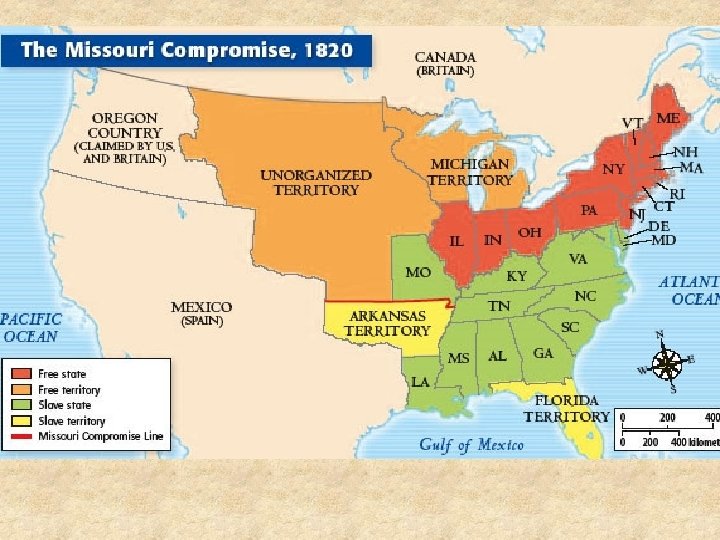
 Events that Led to the Civil War 1. Sectional differences 2. Abolitionist Movement 3. Doctrine of Nullification 4. Missouri Compromise 5. Wilmot Proviso 6. Compromise of 1850 7. Kansas – Nebraska Act 8. Bleeding Kansas 9. Lincoln – Douglas Debate 10. Election of 1860 www. coachgreer. com/Road_ To_Civil_War_Timeline. htm
 Second Great Awakening • 2 nd Great Awakening – occurred in early 1800 s through the revival movement – Emphasized individual responsibility for seeking salvation – Revivals: an emotional meeting to regenerate religious faith and bring people back to the Church.
 Second Great Awakening • Result of 2 nd Great Awakening – Christianity spreads to slavery – Slaves see it as a promise of freedom – Black churches develop = African Methodist Episcopal Church
 Transcendentalist Spur Reform • Transcendentalist believe in an alternative to traditional religion. – Believe in living a simple life – Began a literary movement that stressed American ideas of optimism, freedom, and self -reliance
 Ralph Emerson’s Essay on Self-Reliance 1841
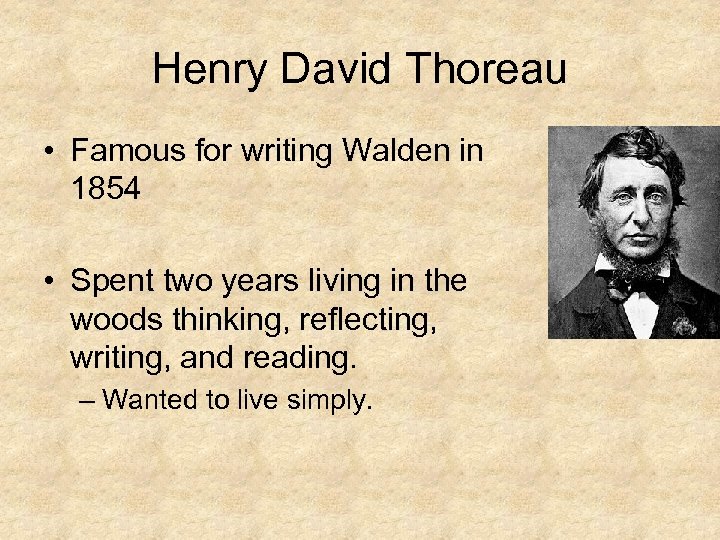 Henry David Thoreau • Famous for writing Walden in 1854 • Spent two years living in the woods thinking, reflecting, writing, and reading. – Wanted to live simply.
 Other Social Reforms • Temperance Movement – favored prohibition (ban on alcohol) • Dorthea Dix – persuaded Massachusetts to create institutions that would rehabilitate the mentally ill.
 Reforming Education • Emma Willard – founded Troy Female Seminary, the first college level school for women. • Horace Mann – pioneered public education in Mass. • The first public high school was English High School of Boston, it opened in 1821.
 Abolitionist Movement • Began in the 1830 – 40’s • Immediatists - wanted emancipation now - favored violence or force - more effective for public attention
 Abolitionist Movement • Moderates - emancipation slow and gradual - nonviolent tactics - methods would win more public support
 Causes for the Movement: • Quakers - challenged slavery on religious grounds • Great Awakening Ministers - believed morally wrong; actions matter
 Abolitionist Movement • Women - played a big role as reformers - understood being treated unfairly • Westward expansion - new territories kept slave issue in focus
 Opposition to Abolition: • Many Northerners were racist • Southerners’ defense – Economic reasons – Antebellum South / part of culture – Slaves not able to care for themselves
 Opposition to Abolition • Federal gov’t using the Gag Rule – South refused to debate slavery – Congress could not discuss slavery issue
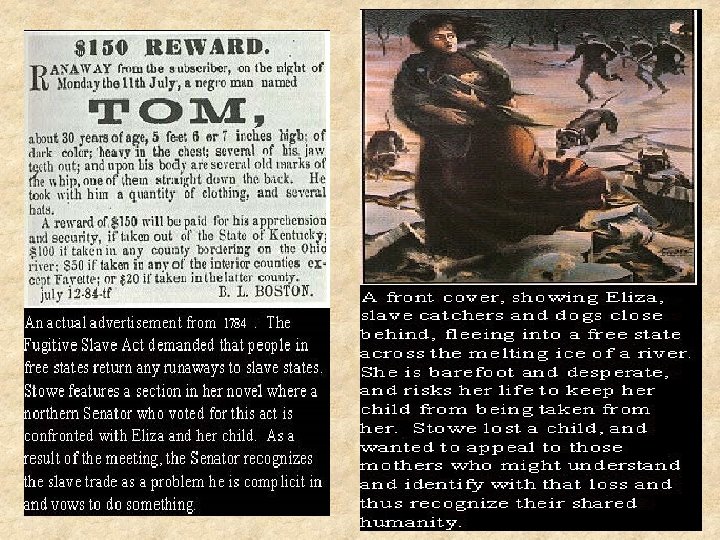
 Uncle Tom’s Cabin • Written by Harriet Beecher Stowe • People are exposed to the horrors of slavery • Sold millions of copies • When Lincoln meets Stowe, he says "So you're the little woman who wrote the book that made this great war!" Impact: help to add fuel to the burning desire to see slavery abolished
 Slavery in 1860 In the US States that formed the Confederacy • Roughly 4 million slaves in US (12. 7% of the population) • Roughly had 3. 5 out of the 4 million slaves living in it (38. 7% of the population) • Only 7. 6% of the population owned slaves • 30. 8% of the population owned slaves
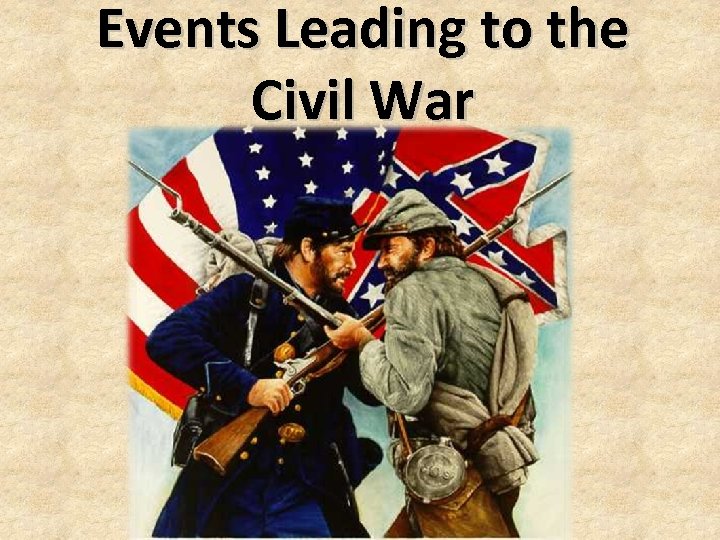 Events Leading to the Civil War
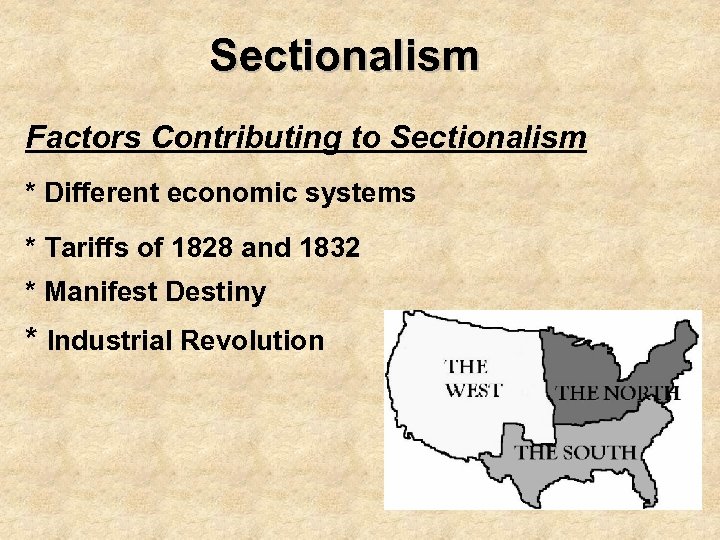 Sectionalism Factors Contributing to Sectionalism * Different economic systems * Tariffs of 1828 and 1832 * Manifest Destiny * Industrial Revolution
 Wilmot Proviso - 1846 • Propose: 1. territory from MX war remain “free soil” 2. California - free state 3. UT & NM terr. - closed to slavery • North - favored • South – against (why? )
 Compromise of 1850 • Proposed by Henry Clay (his last compromise) • 4 Provisions – – CA admitted as a free state UT & NM territories could choose (Popular Sovereignty) Slave trade would be abolished in D. C. Stricter Fugitive slave laws
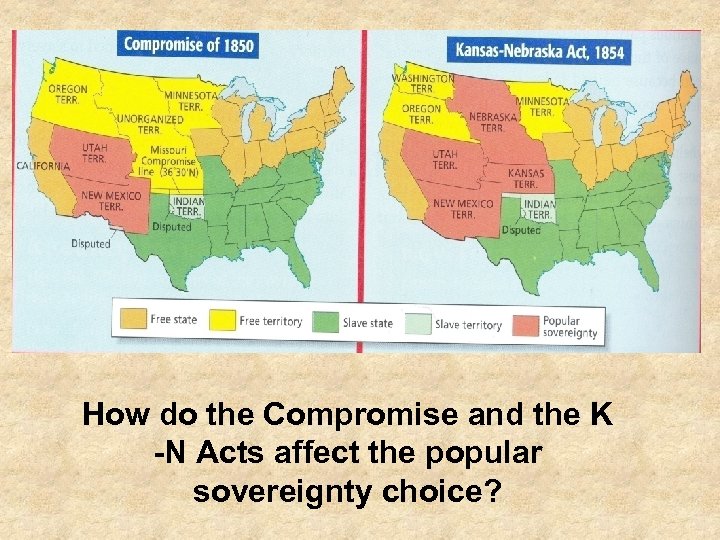 How do the Compromise and the K -N Acts affect the popular sovereignty choice?
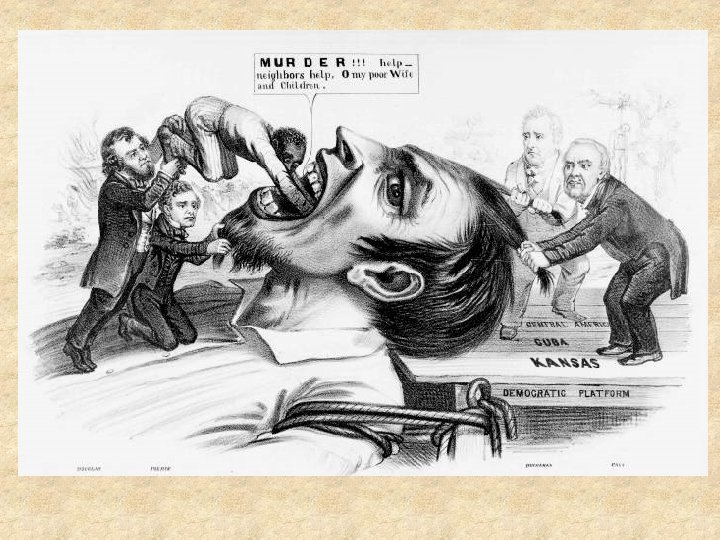
 Kansas – Nebraska Act 1854 • Divided Territory into 2 sections (Kansas and Nebraska) • Both north of Missouri Compromise line • Popular Sovereignty given to territories – What's that get rid of?
 Bleeding Kansas 1854 -1855 • Settlers from North and South rush to Kansas to vote for their cause • Pro Slavery groups crossed border with weapons to illegally vote • John Brown leads a antislavery group that kill many people – He believed God had sent him to stop slavery
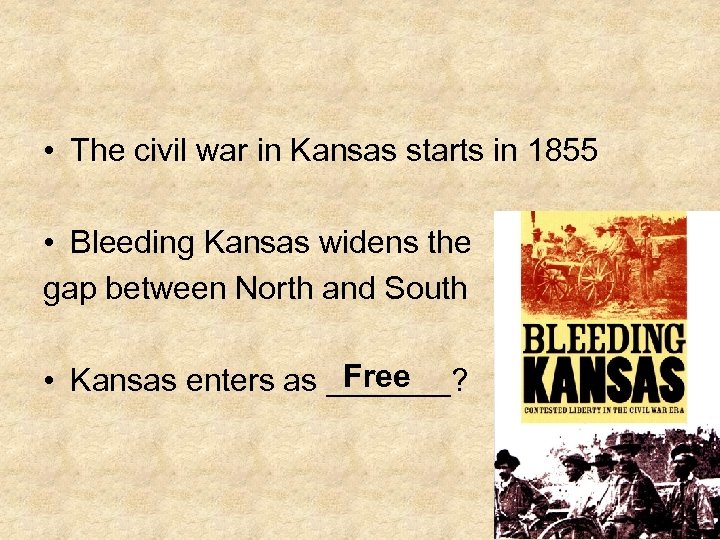 • The civil war in Kansas starts in 1855 • Bleeding Kansas widens the gap between North and South Free • Kansas enters as _______?
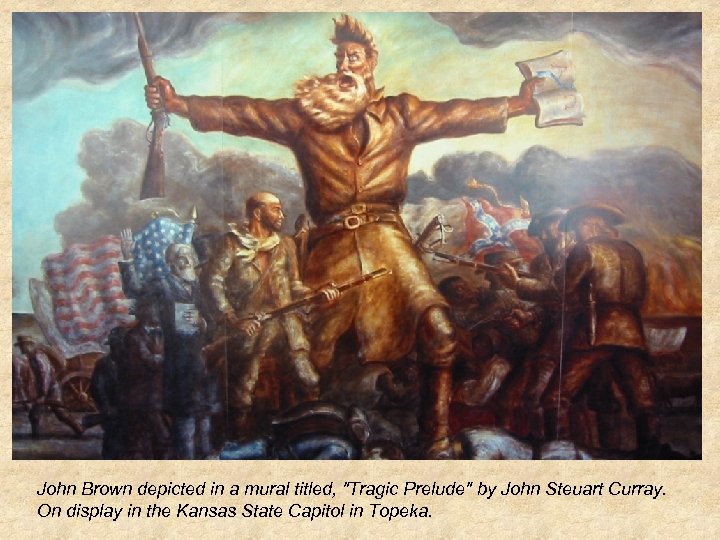 John Brown depicted in a mural titled, "Tragic Prelude" by John Steuart Curray. On display in the Kansas State Capitol in Topeka.
 Dread Scott Case 1857 • Dread Scott was a slave in Missouri (slave state) • He traveled with his master to Illinois and Wisconsin (both free states) • He sued for his freedom when his master returned to Missouri (he had lived in a free state after all)
 Dread Scott Continued • Legal Impact – slaves considered property, this expanded slave owners reach (how? ) • Increased sectional tension between North and South (why? )
 Birth of the Republican Party • Northern Whigs, anti-slave Democrats, & free-soilers formed the Republican Party • Party became strong due to diversity • Party was only unified on one issue – Opposed the expansion of slavery
 Lincoln-Douglas Debate • Senate race in Illinois • Abraham Lincoln vs. Stephen A. Douglas • Anti Slave vs. Popular Sovereignty • Lincoln loses the senate race but becomes well known.
 Harpers Ferry • John Brown raids the federal arsenal at Harpers Ferry, VA. • Goal was to gather weapons and start a slave rebellion • He was hanged as a traitor but many radical abolitionists view him as a martyr.
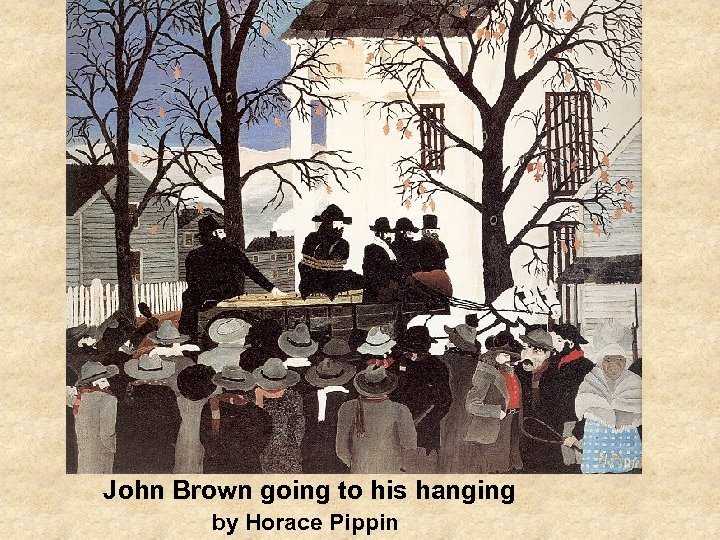 John Brown going to his hanging by Horace Pippin
 Election of 1860 • 4 candidates run for President – Northern Democrats – Stephen A. Douglas – Southern Democrats – John Breckenridge – Republicans – Abraham Lincoln – Constitutional Union Party – John Bell
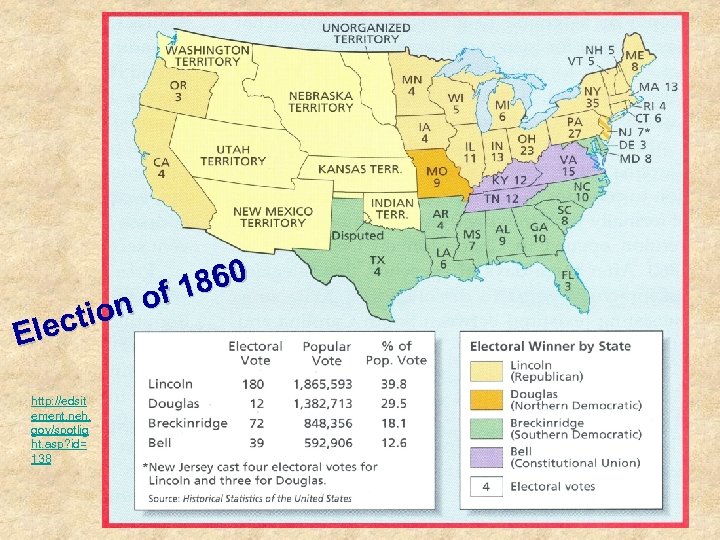 tion Elec http: //edsit ement. neh. gov/spotlig ht. asp? id= 138 1860 of
 • The deep south left before Lincoln’s inauguration • Lincoln’s stand: 1. would not interfere w/ slavery where it existed 2. slavery would not be extended 3. no state could lawfully withdraw from the union 4. did not want to provoke war
 Secession • Southerners were afraid of Lincoln and the Republican party they saw them as a threat • They saw secession as only option, and thought it would be peaceful • SC secedes on Dec. 20, 1860 – voluntary to join, voluntary to leave (States Rights? )
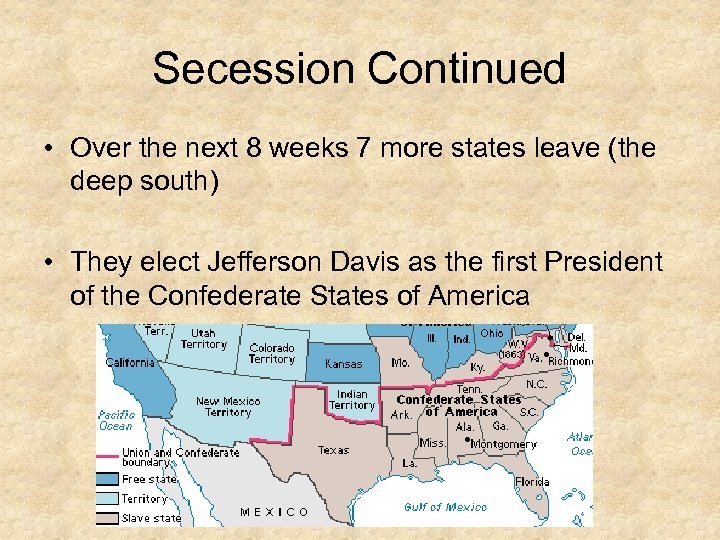 Secession Continued • Over the next 8 weeks 7 more states leave (the deep south) • They elect Jefferson Davis as the first President of the Confederate States of America
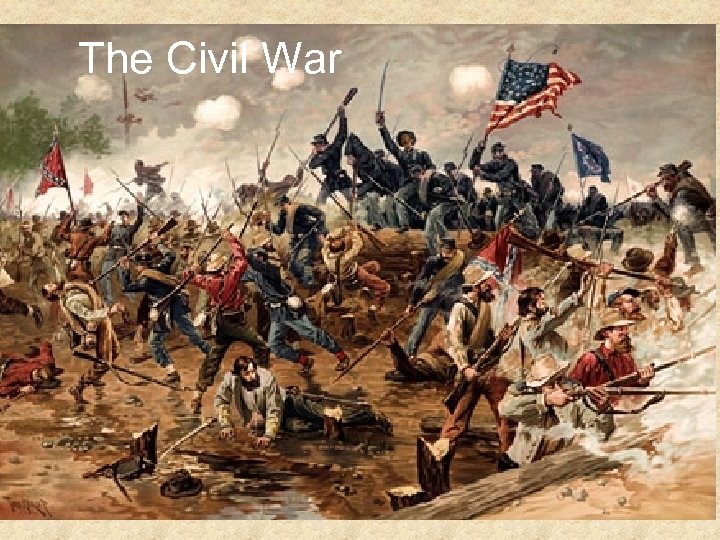 The Civil War
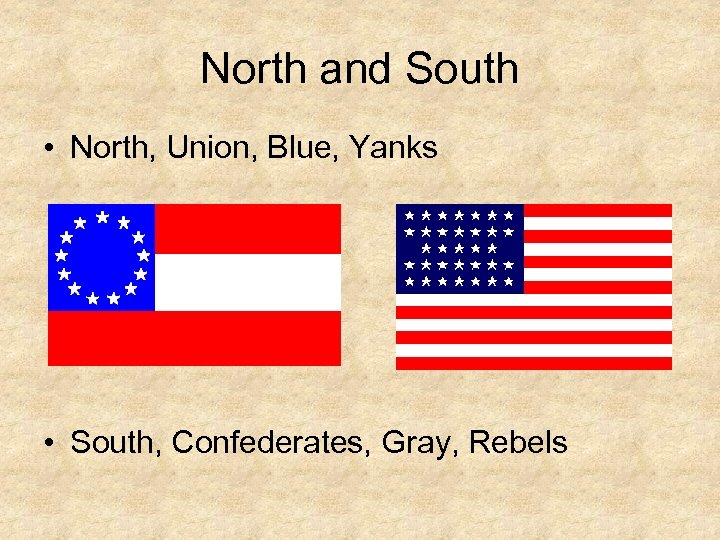 North and South • North, Union, Blue, Yanks • South, Confederates, Gray, Rebels
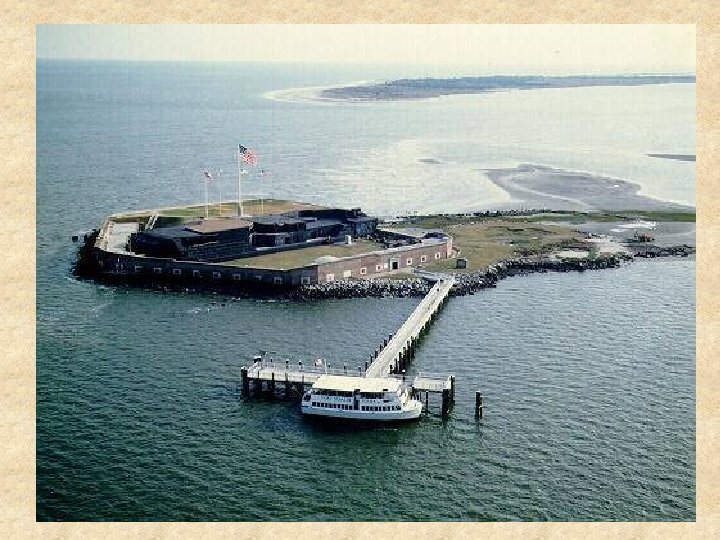
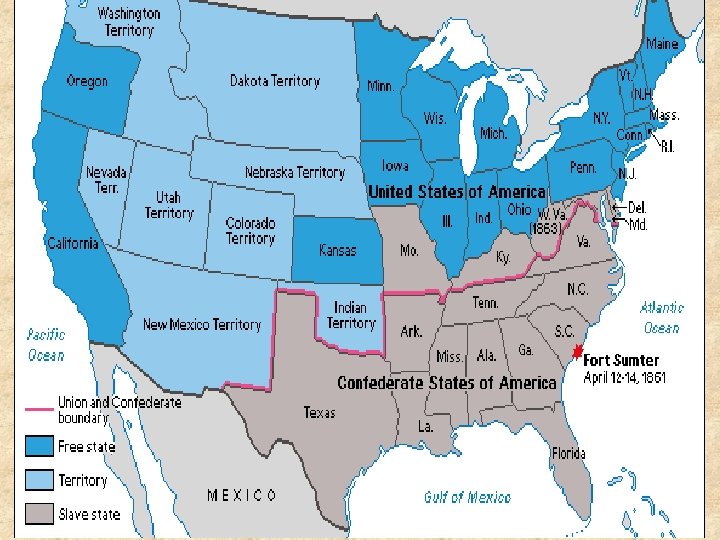
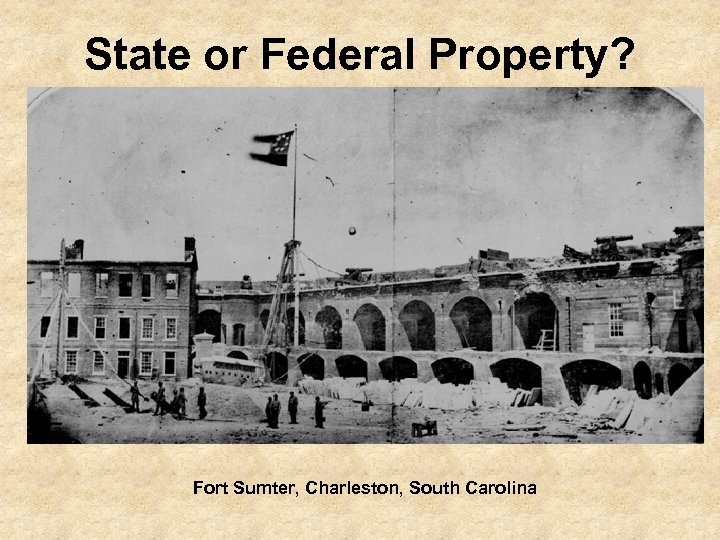 State or Federal Property? Fort Sumter, Charleston, South Carolina
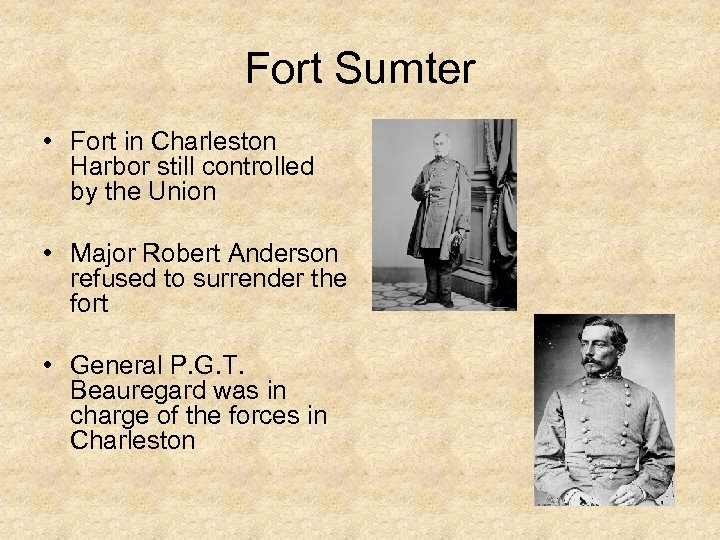 Fort Sumter • Fort in Charleston Harbor still controlled by the Union • Major Robert Anderson refused to surrender the fort • General P. G. T. Beauregard was in charge of the forces in Charleston
 • Lincoln had to choose – He doesn’t want to start the war, if he does more states may secede – However he can’t treat the CSA as a legitimate country – He decides to send a resupply ship (the Star of the West) to the fort – He forces Jefferson Davis to make the first move
 • April 12, 1861 4: 30 am – Confederates open fire on the fort • Bombardment lasts 33 hours and nobody is killed • This is the immediate cause of the Civil War.
 More states secede • Lincoln calls for troops to stop South’s rebellion • This causes NC, VA, TN, and AK to leave • May 1861 the CSA move their capital to Richmond, VA
 Border States • There were 5 slave states that stayed in the Union 4 of them shared a border with the CSA • Delaware – had legalized slavery but there were very few slaves (does not touch the CSA) • Maryland – Lincoln ordered federal troops to secure the state preventing it from leaving
 Border States Continued • West Virginia – formed as a state, most of it was against slavery and resented the rich plantation owners • Kentucky – tried to remain neutral but was invaded by the Confederates and joined the Union • Missouri – did not gain a majority vote to secede
 Who has the Advantage? • Resources are important for success in any war
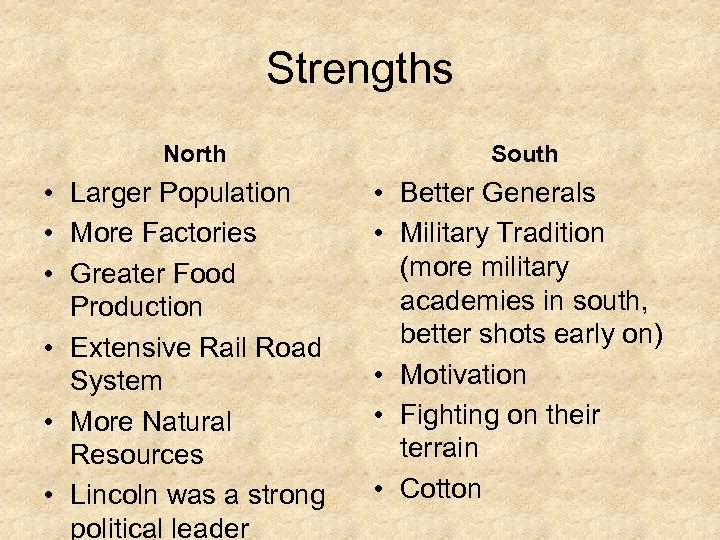 Strengths North South • Larger Population • More Factories • Greater Food Production • Extensive Rail Road System • More Natural Resources • Lincoln was a strong political leader • Better Generals • Military Tradition (more military academies in south, better shots early on) • Motivation • Fighting on their terrain • Cotton
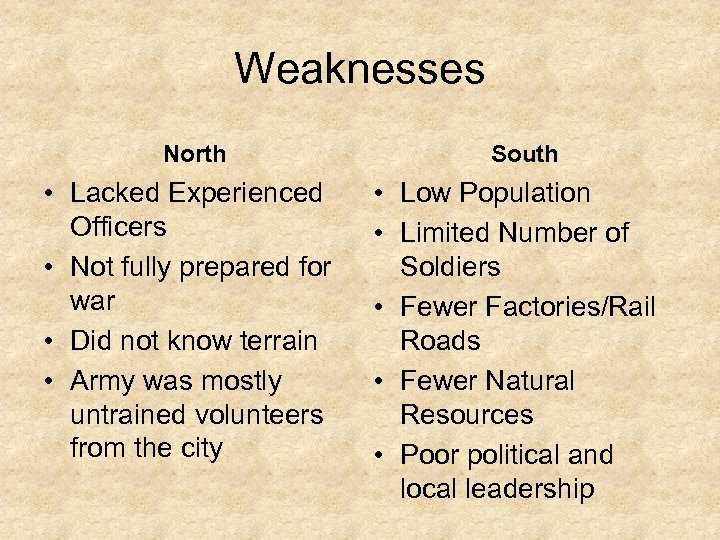 Weaknesses North South • Lacked Experienced Officers • Not fully prepared for war • Did not know terrain • Army was mostly untrained volunteers from the city • Low Population • Limited Number of Soldiers • Fewer Factories/Rail Roads • Fewer Natural Resources • Poor political and local leadership
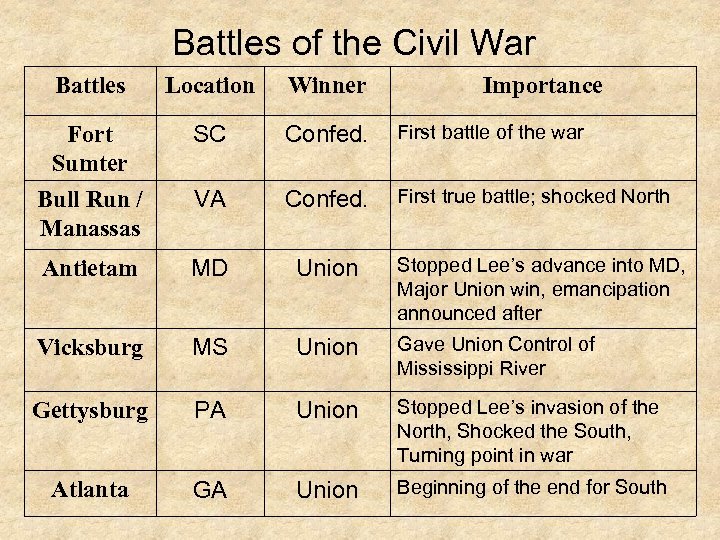 Battles of the Civil War Battles Location Winner Importance Fort Sumter Bull Run / Manassas SC Confed. First battle of the war VA Confed. First true battle; shocked North Antietam MD Union Stopped Lee’s advance into MD, Major Union win, emancipation announced after Vicksburg MS Union Gave Union Control of Mississippi River Gettysburg PA Union Stopped Lee’s invasion of the North, Shocked the South, Turning point in war Atlanta GA Union Beginning of the end for South
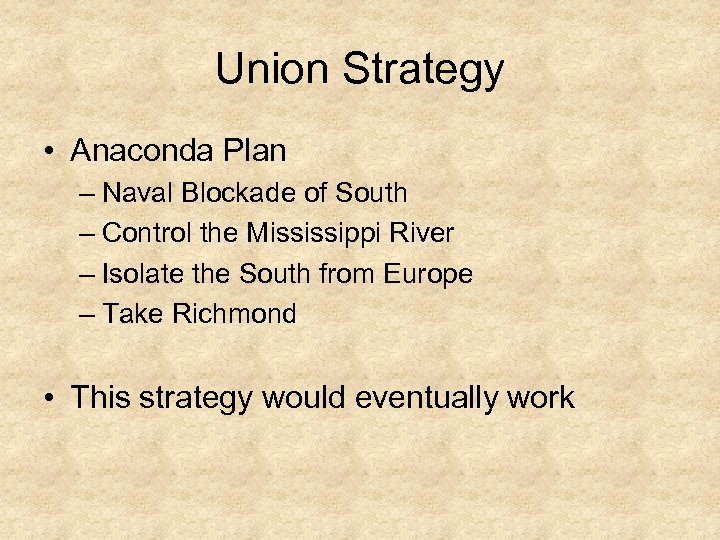 Union Strategy • Anaconda Plan – Naval Blockade of South – Control the Mississippi River – Isolate the South from Europe – Take Richmond • This strategy would eventually work
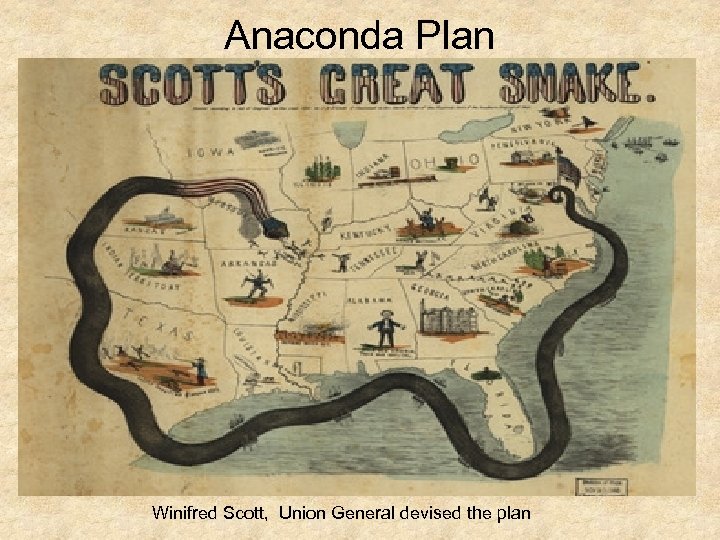 Anaconda Plan Winifred Scott, Union General devised the plan
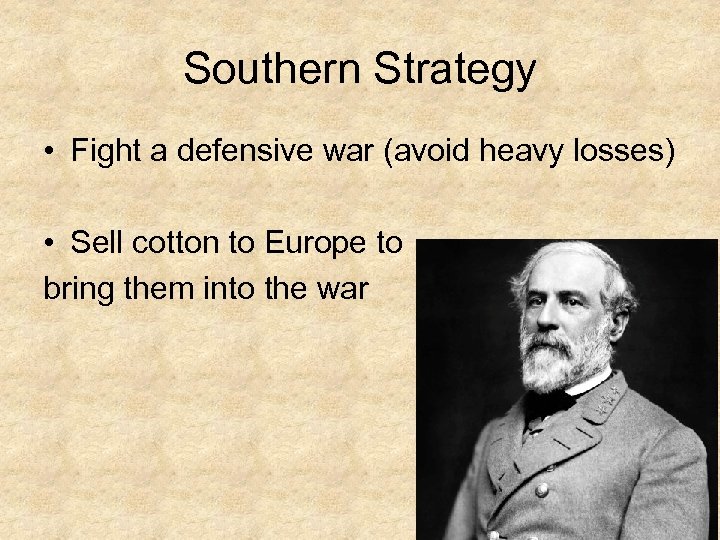 Southern Strategy • Fight a defensive war (avoid heavy losses) • Sell cotton to Europe to bring them into the war
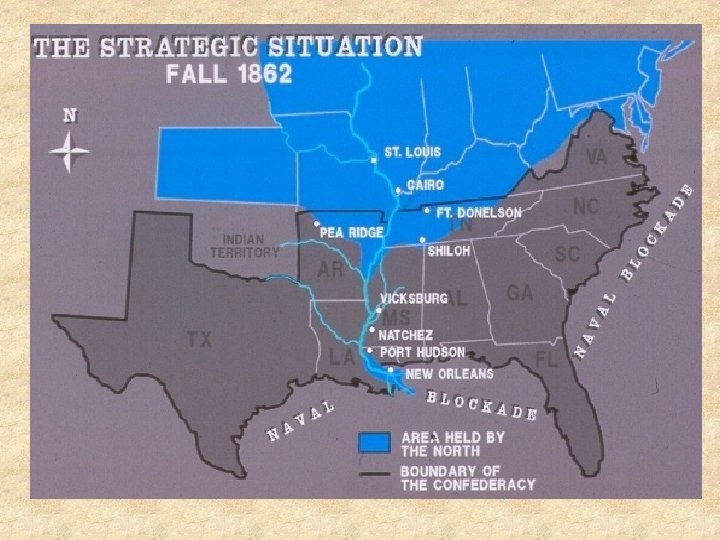
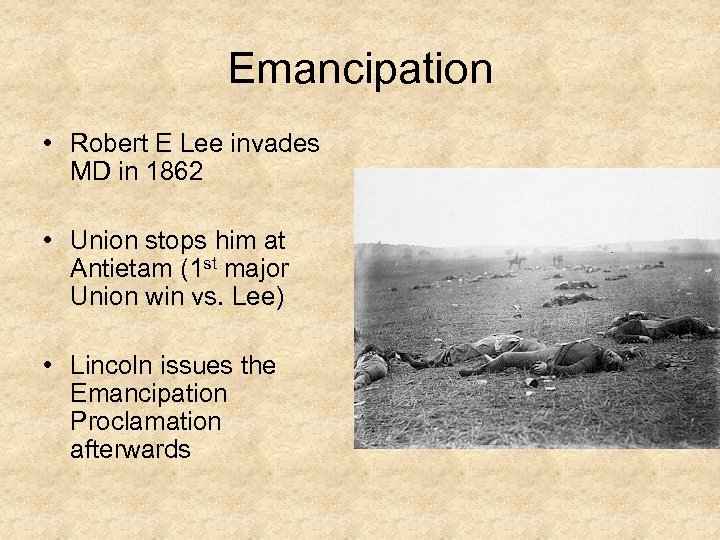 Emancipation • Robert E Lee invades MD in 1862 • Union stops him at Antietam (1 st major Union win vs. Lee) • Lincoln issues the Emancipation Proclamation afterwards
 • Emancipation Proclamation freed slaves in the Confederate States • Allowed Blacks to enlist in the Union Army • Prevented Great Britain and France from aiding the Confederacy
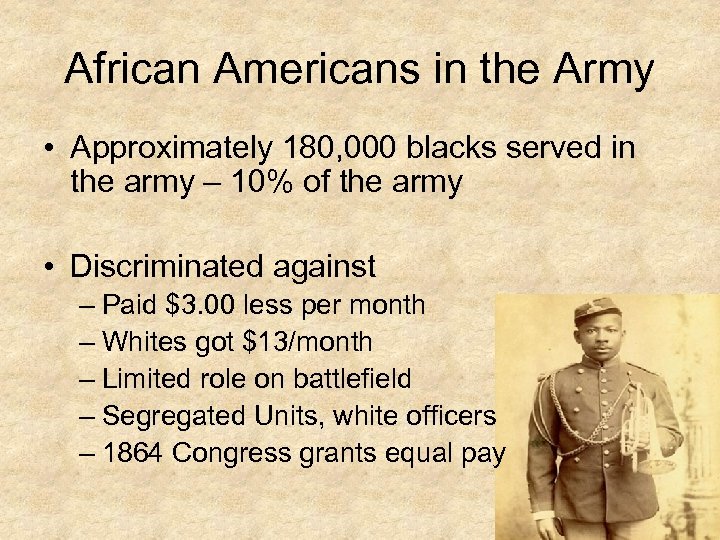 African Americans in the Army • Approximately 180, 000 blacks served in the army – 10% of the army • Discriminated against – Paid $3. 00 less per month – Whites got $13/month – Limited role on battlefield – Segregated Units, white officers – 1864 Congress grants equal pay
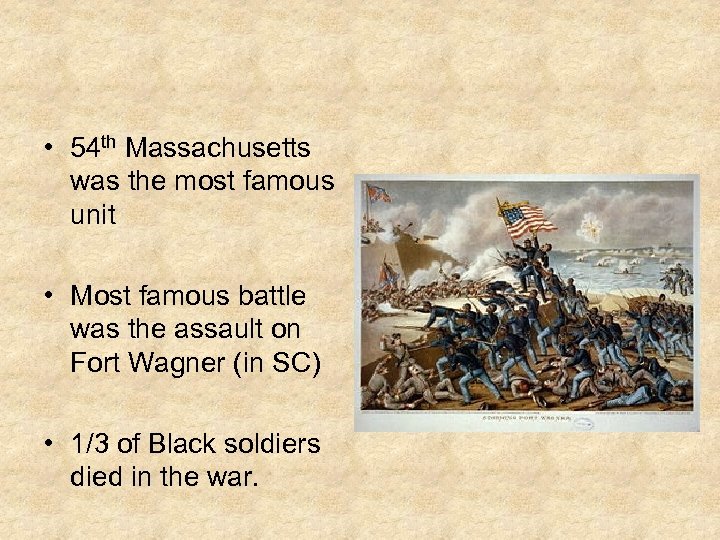 • 54 th Massachusetts was the most famous unit • Most famous battle was the assault on Fort Wagner (in SC) • 1/3 of Black soldiers died in the war.
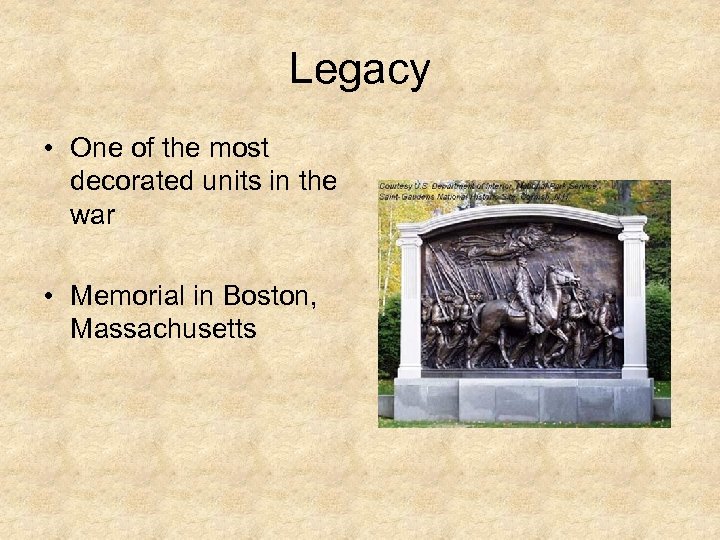 Legacy • One of the most decorated units in the war • Memorial in Boston, Massachusetts
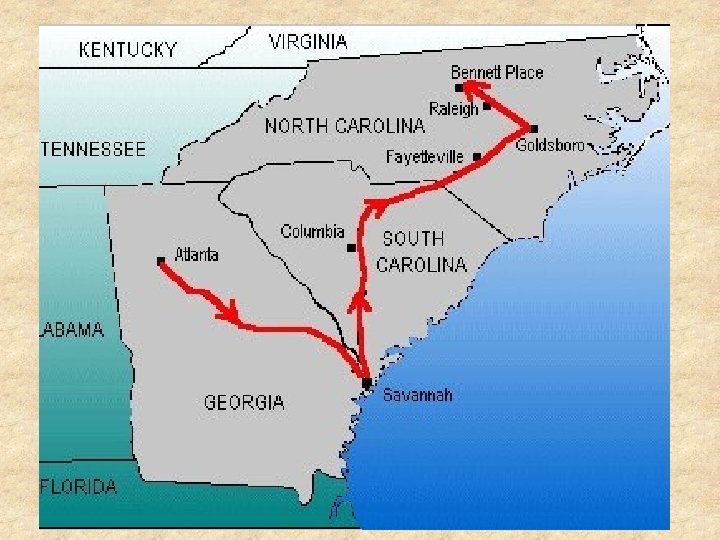
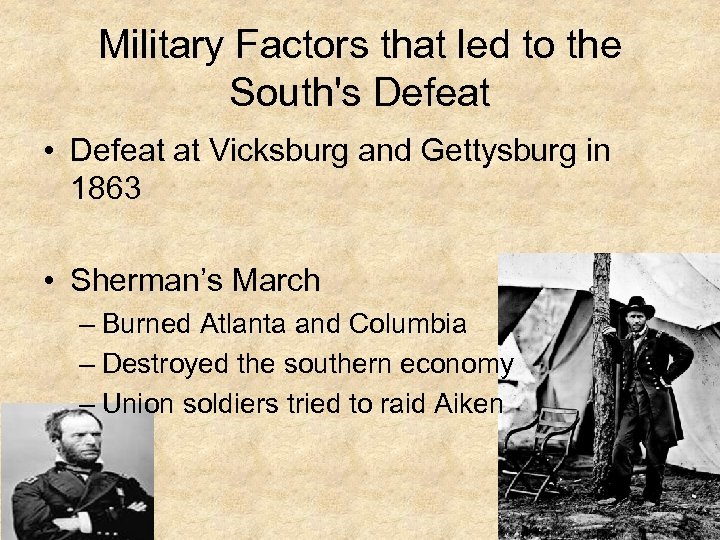 Military Factors that led to the South's Defeat • Defeat at Vicksburg and Gettysburg in 1863 • Sherman’s March – Burned Atlanta and Columbia – Destroyed the southern economy – Union soldiers tried to raid Aiken
 Economic Factors that led to defeat • South could not sell their cotton due to blockade • Loss of Slavery due to Emancipation Proclamation causes chaos
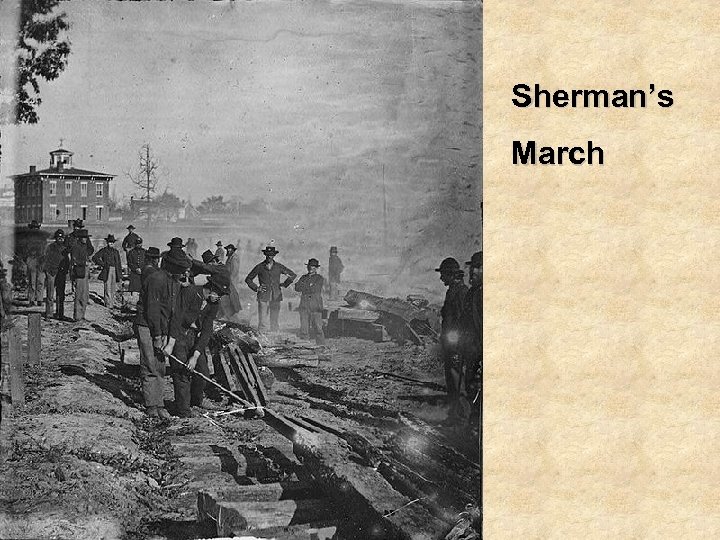 Sherman’s March
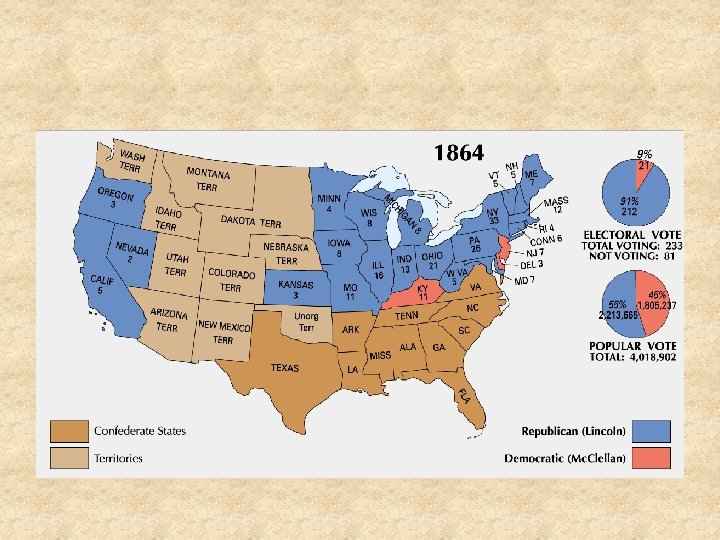
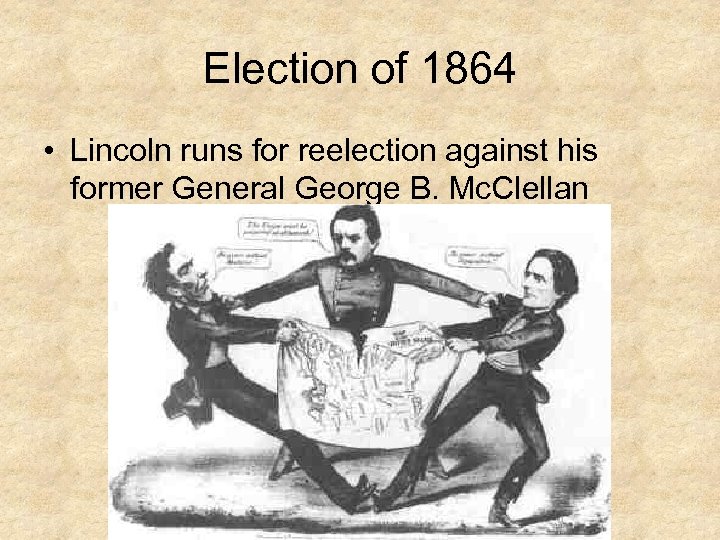 Election of 1864 • Lincoln runs for reelection against his former General George B. Mc. Clellan
 The Confederacy Surrenders • Robert E. Lee surrenders to Ulysses S. Grant at Appomattox Court House, VA on April 9, 1865. • Jefferson Davis and Confederate leaders flee Richmond, VA. • The Civil War ends after four years.
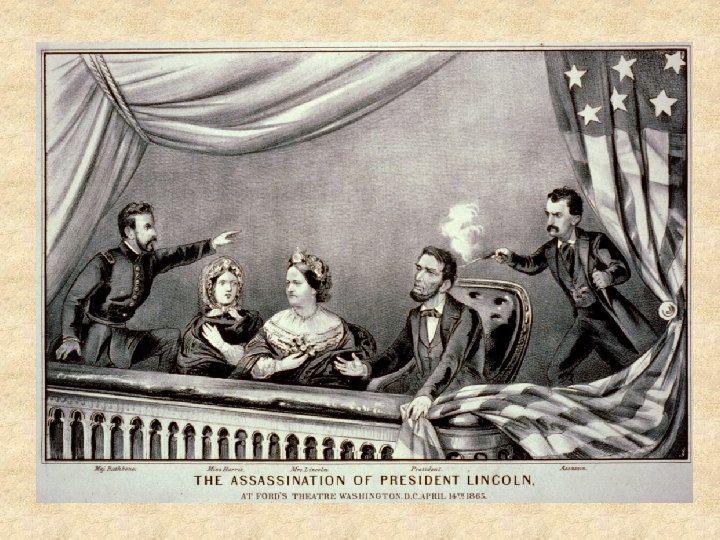
 Lincoln’s Assassination • Only five days after the surrender, Lincoln is assassinated on April 14 th, 1865. • John Wilkes Booth shoots Lincoln while he watches Our American Cousin at Ford’s Theater.
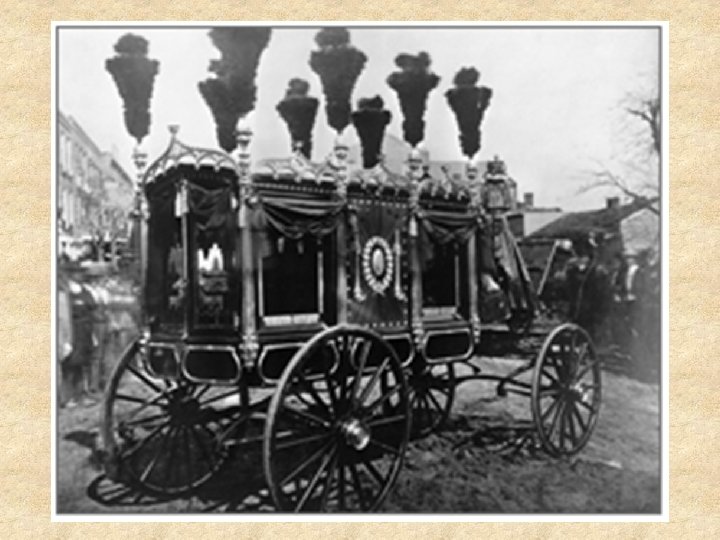
 Aftermath of the Civil War • Immediate Effects: – Loss of Life 625, 000 people died – Emancipation – Preserved the Union – States Rights debate is put to rest
 Aftermath of the Civil War • Intermediate Effects: – Industrial boom in the North – Reconstruction of the South – Reconciliation – no more sectionalism • Long-term Effects: – Civil Rights – Increased Power of the Federal Government – New Amendments to the Constitution