


 Скачать презентацию Reforming Tanzania Agricultural Sector A Poverty Perspective Presented
710b4df4e9c60e3a8ba6be8169cb67e9.ppt
- Количество слайдов: 19
 Reforming Tanzania Agricultural Sector: A Poverty Perspective Presented by: Presented during: Ag. CLIR Conference USAID & World Bank Dar es Salaam - Tanzania Feb. 1, 2010 The World Bank Waly Wane Senior Poverty Economist World Bank Poverty Reduction & Economic Management
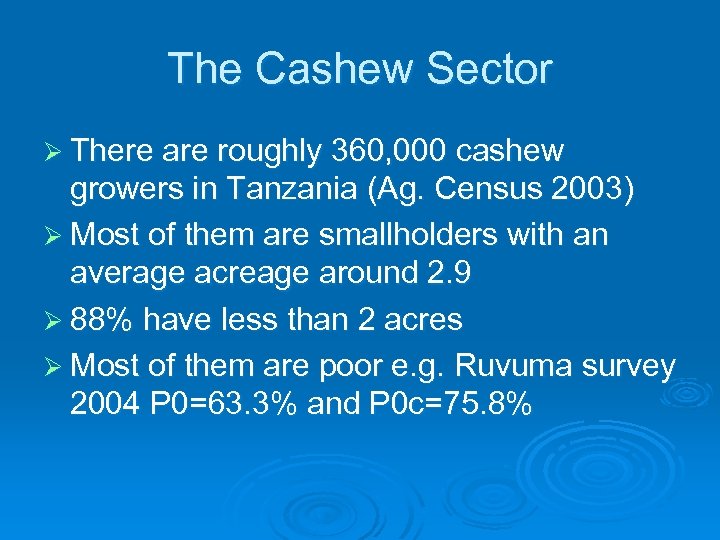 The Cashew Sector Ø There are roughly 360, 000 cashew growers in Tanzania (Ag. Census 2003) Ø Most of them are smallholders with an average acreage around 2. 9 Ø 88% have less than 2 acres Ø Most of them are poor e. g. Ruvuma survey 2004 P 0=63. 3% and P 0 c=75. 8%
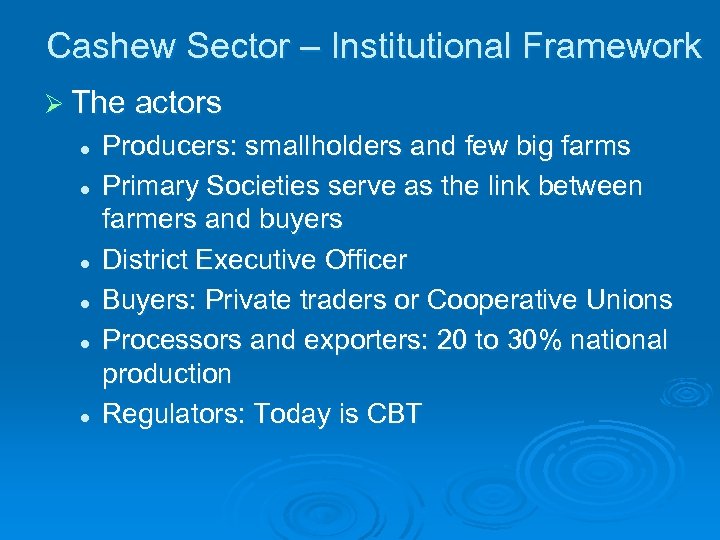 Cashew Sector – Institutional Framework Ø The actors l l l Producers: smallholders and few big farms Primary Societies serve as the link between farmers and buyers District Executive Officer Buyers: Private traders or Cooperative Unions Processors and exporters: 20 to 30% national production Regulators: Today is CBT
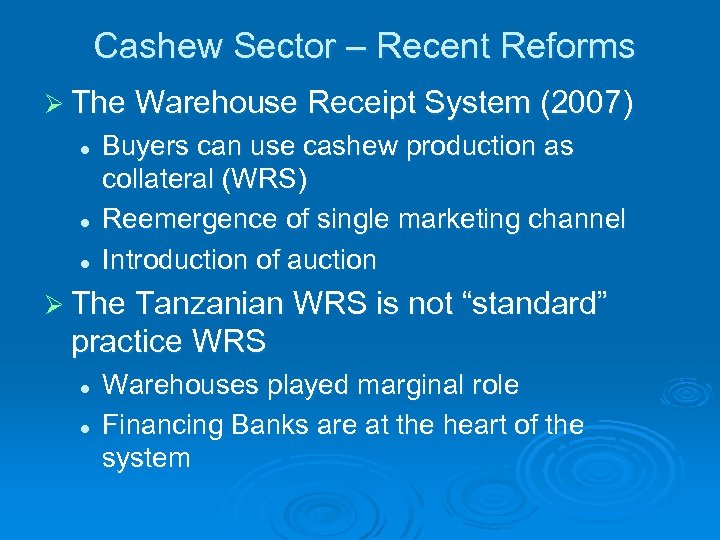 Cashew Sector – Recent Reforms Ø The Warehouse Receipt System (2007) l l l Buyers can use cashew production as collateral (WRS) Reemergence of single marketing channel Introduction of auction Ø The Tanzanian WRS is not “standard” practice WRS l l Warehouses played marginal role Financing Banks are at the heart of the system
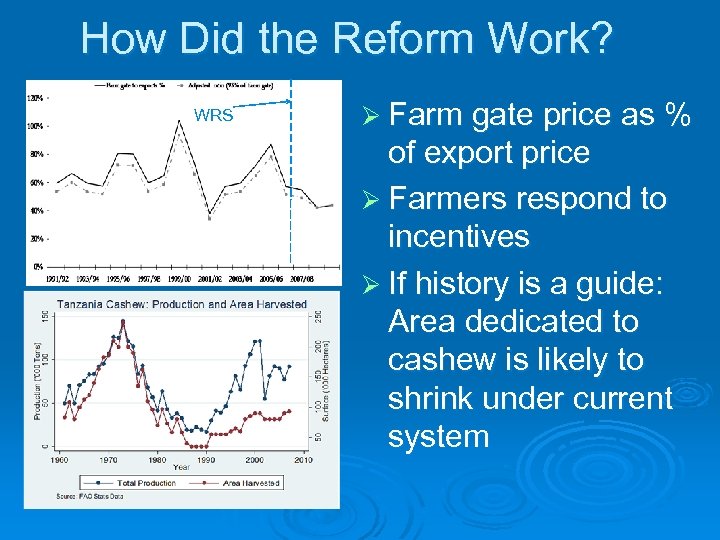 How Did the Reform Work? WRS Ø Farm gate price as % of export price Ø Farmers respond to incentives Ø If history is a guide: Area dedicated to cashew is likely to shrink under current system
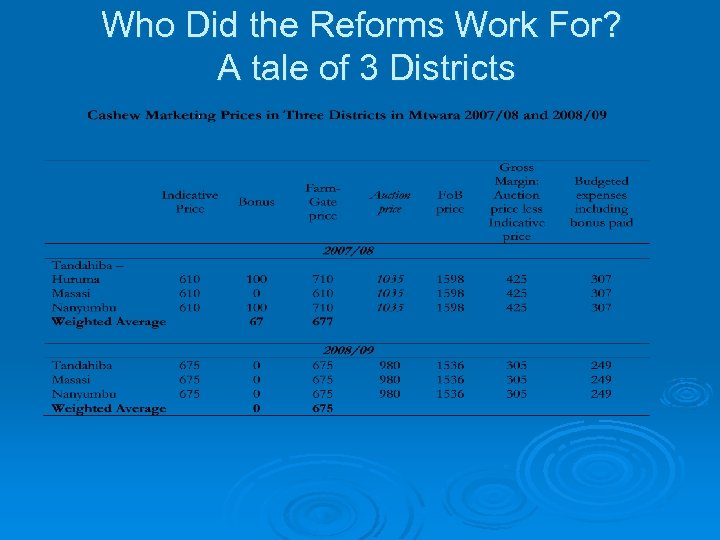 Who Did the Reforms Work For? A tale of 3 Districts
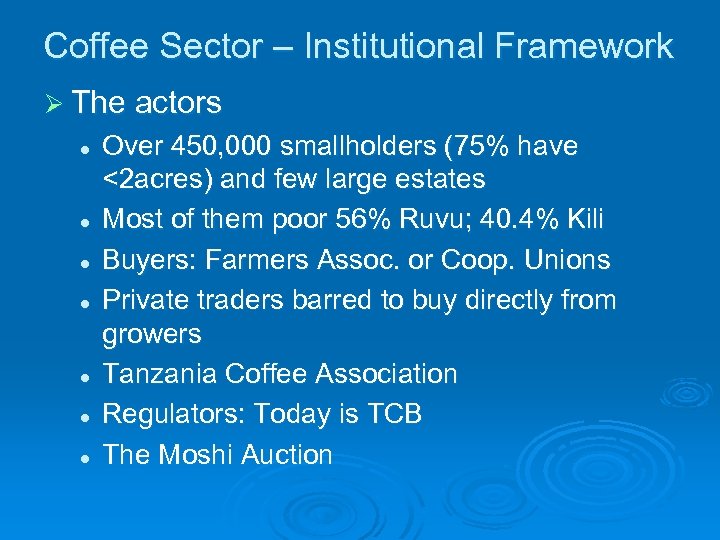 Coffee Sector – Institutional Framework Ø The actors l l l l Over 450, 000 smallholders (75% have <2 acres) and few large estates Most of them poor 56% Ruvu; 40. 4% Kili Buyers: Farmers Assoc. or Coop. Unions Private traders barred to buy directly from growers Tanzania Coffee Association Regulators: Today is TCB The Moshi Auction
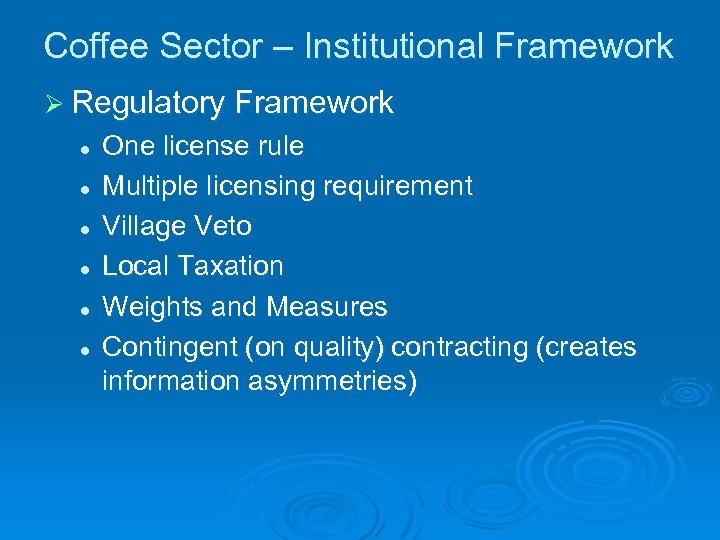 Coffee Sector – Institutional Framework Ø Regulatory Framework l l l One license rule Multiple licensing requirement Village Veto Local Taxation Weights and Measures Contingent (on quality) contracting (creates information asymmetries)
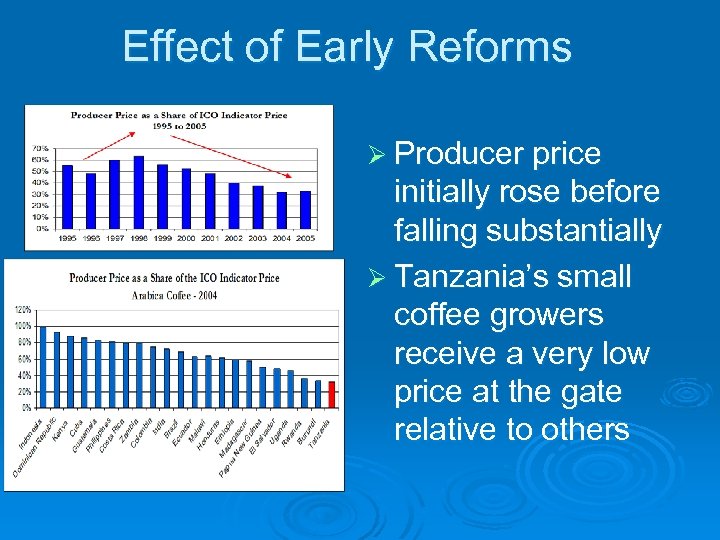 Effect of Early Reforms Ø Producer price initially rose before falling substantially Ø Tanzania’s small coffee growers receive a very low price at the gate relative to others
 Comparing Two Institutional Frameworks: Rakai (UG) vs. Kagera (TZ) Ø Kagera Coffee marketed through KCU (~124 PS) l 75% farmers belong to KCU l Farmers have to sell to KCU through PS l KCU uses contingent contracting Ø Rakai l Coffee farmers are independent, only 10% belong to an association (NUCAFE) l NUCAFE does not buy coffee; gives TA l Sell their crops to privately owned l
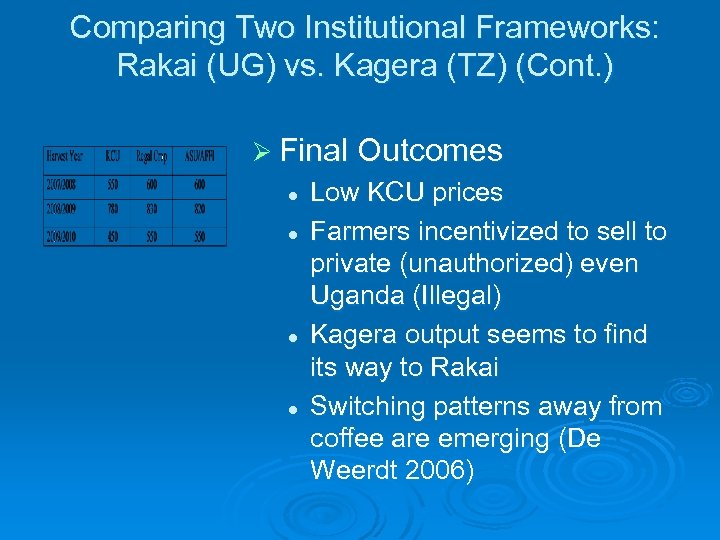 Comparing Two Institutional Frameworks: Rakai (UG) vs. Kagera (TZ) (Cont. ) Ø Final Outcomes l Low KCU prices l Farmers incentivized to sell to private (unauthorized) even Uganda (Illegal) l Kagera output seems to find its way to Rakai l Switching patterns away from coffee are emerging (De Weerdt 2006)
 Maize Sector – Institutional Framework Ø The actors l l l Maize grown by 65% of crop growing households across the country Smallholders are again the large majority with few medium to large growers Buyers: • Small village-based traders • Larger non village-based traders • Large public sector and other buyers l No cooperatives since liberalization
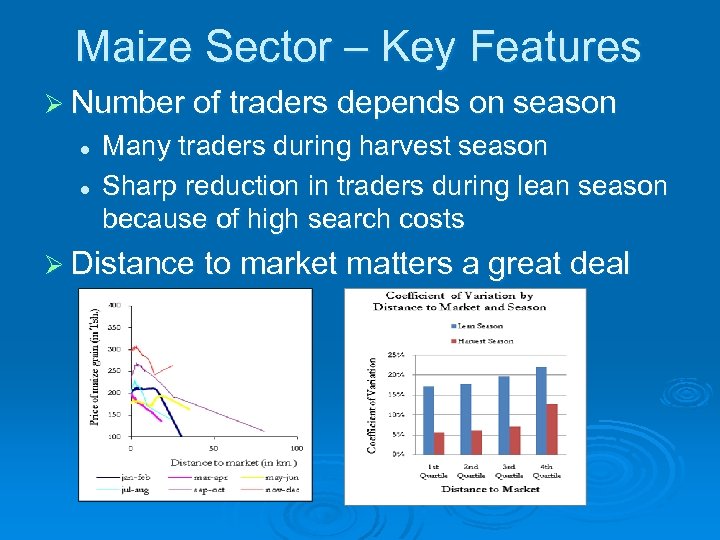 Maize Sector – Key Features Ø Number of traders depends on season l l Many traders during harvest season Sharp reduction in traders during lean season because of high search costs Ø Distance to market matters a great deal
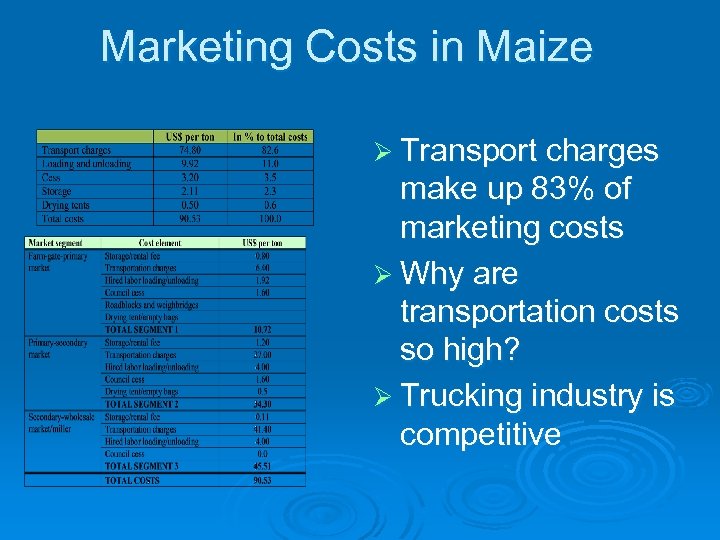 Marketing Costs in Maize Ø Transport charges make up 83% of marketing costs Ø Why are transportation costs so high? Ø Trucking industry is competitive
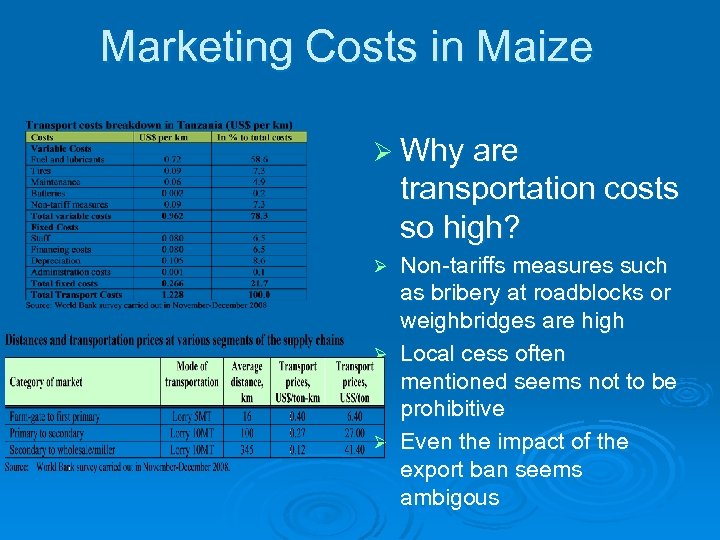 Marketing Costs in Maize Ø Why are transportation costs so high? Non-tariffs measures such as bribery at roadblocks or weighbridges are high Ø Local cess often mentioned seems not to be prohibitive Ø Even the impact of the export ban seems ambigous Ø
 Reducing Transport Costs Ø Improve public investments l l Best to improve rural roads In Tanzania rural roads have been neglected
 A Overarching Lessons Ø To increase productivity and help lift the smallholders out of poverty l l l Restore competition Prioritize infrastructure Government can be the answer But it is not Always the answer • Go. T should find right balance • Better design and target policies
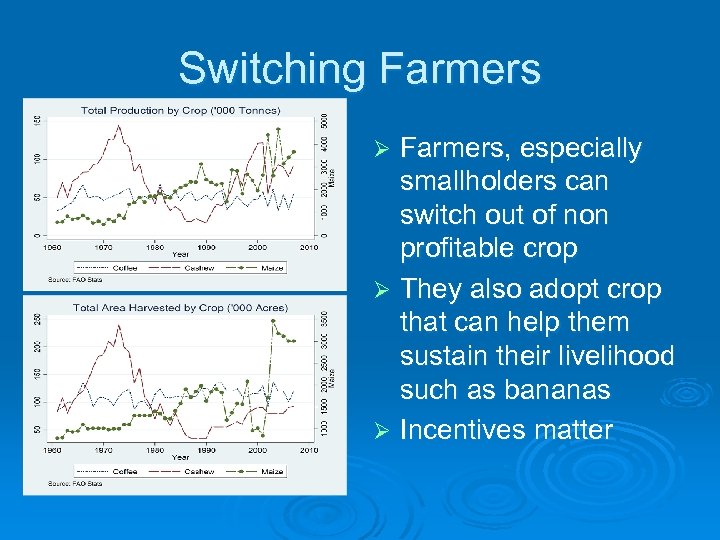 Switching Farmers, especially smallholders can switch out of non profitable crop Ø They also adopt crop that can help them sustain their livelihood such as bananas Ø Incentives matter Ø
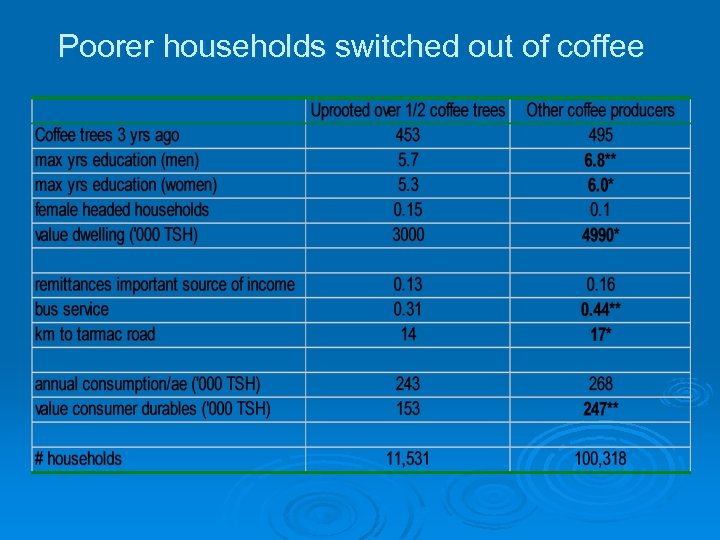 Poorer households switched out of coffee