


 Скачать презентацию Reflection on the Future of Disease Management The
0706f0ddfa24d40f79b3b38e50a3a8b7.ppt
- Количество слайдов: 52
 Reflection on the Future of Disease Management The Disease Management Colloquium June 30, 2004 Sam Nussbaum, M. D. Executive Vice President and Chief Medical Officer
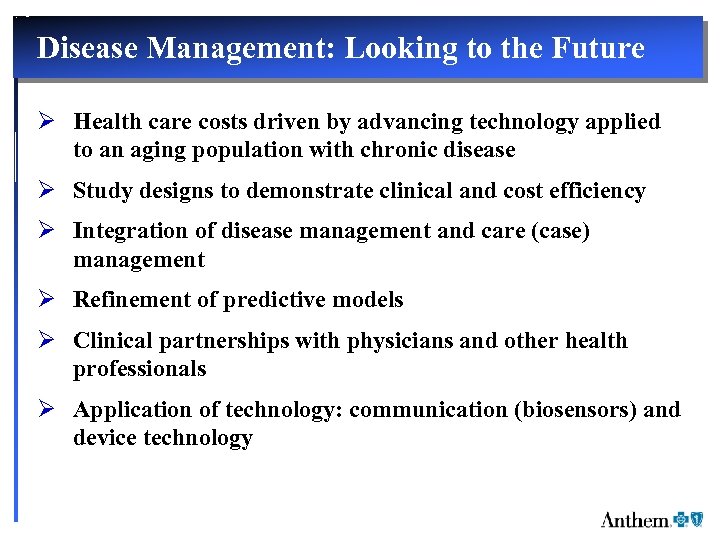 Disease Management: Looking to the Future Ø Health care costs driven by advancing technology applied to an aging population with chronic disease Ø Study designs to demonstrate clinical and cost efficiency Ø Integration of disease management and care (case) management Ø Refinement of predictive models Ø Clinical partnerships with physicians and other health professionals Ø Application of technology: communication (biosensors) and device technology
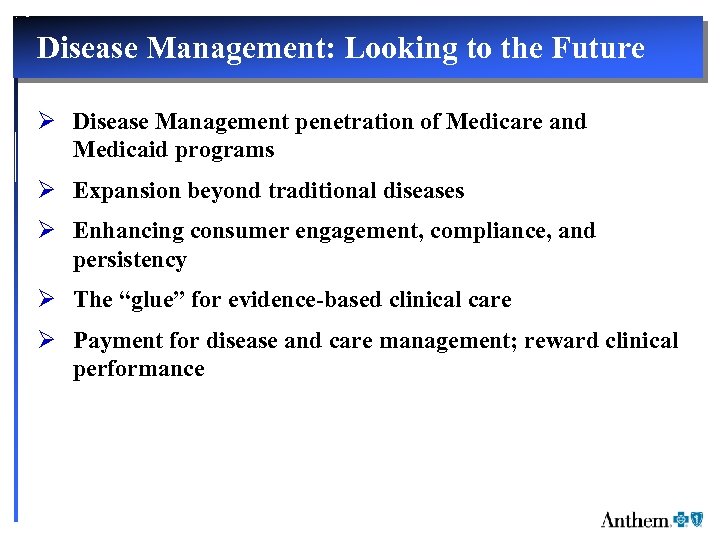 Disease Management: Looking to the Future Ø Disease Management penetration of Medicare and Medicaid programs Ø Expansion beyond traditional diseases Ø Enhancing consumer engagement, compliance, and persistency Ø The “glue” for evidence-based clinical care Ø Payment for disease and care management; reward clinical performance
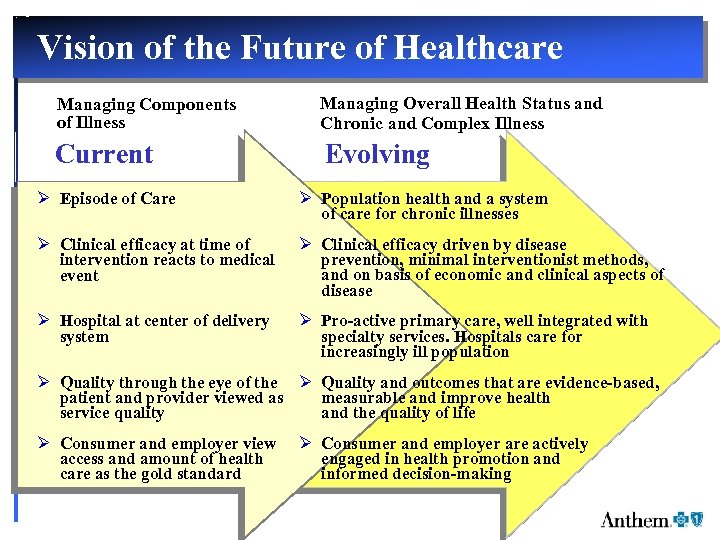 Vision of the Future of Healthcare Managing Components of Illness Managing Overall Health Status and Chronic and Complex Illness Current Evolving Ø Episode of Care Ø Population health and a system of care for chronic illnesses Ø Clinical efficacy at time of intervention reacts to medical event Ø Clinical efficacy driven by disease prevention, minimal interventionist methods, and on basis of economic and clinical aspects of disease Ø Hospital at center of delivery system Ø Pro-active primary care, well integrated with specialty services. Hospitals care for increasingly ill population Ø Quality through the eye of the Ø Quality and outcomes that are evidence-based, measurable and improve health patient and provider viewed as and the quality of life service quality Ø Consumer and employer view access and amount of health care as the gold standard Ø Consumer and employer are actively engaged in health promotion and informed decision-making
 Drivers of Health Care Costs Ø Population dynamics: an aging population with chronic diseases Ø Medical technology and treatment advances Ø Medical errors; poor quality care Ø Health professional shortages; medical malpractice litigation Ø Consumer education, information, navigating the complex system Ø Unnecessary care; duplication of medical services Ø Administrative costs: hospitals, insurers, medical practices Ø Physician and hospital compensation incentives
 Disease Management: Definition Ø A multidisciplinary, systematic approach to health care delivery that: l l includes all members of a chronic disease population; supports the physician-patient relationship and plan of care; optimizes patient care through prevention, proactive, protocols/ interventions based on professional consensus, demonstrated clinical best practices, or evidence-based interventions; and patient self-management; and continuously evaluates health status and measures outcomes with the goal of improving overall health, thereby enhancing quality of life and lowering the cost of care.
 Disease Management: Program Components Ø Population Identification processes; Ø Evidence-based practice guidelines; Ø Collaborative practice models that include physician and supportservice providers; Ø Risk identification and matching of interventions with need; Ø Patient self-management education (which may include primary prevention, behavior modification programs, support groups, and compliance/surveillance); Ø Process and outcomes measurement, evaluation, and management; Ø Routine reporting/ feedback loops (which may include communication with patient, physician, health plan and ancillary providers, in addition to practice profiling); and Ø Appropriate use of information technology (which may include specialized software, data registries, automated decision support tools, and call-back systems).
 Institute of Medicine: Redesign and Improve Care Ø Care based on continuous healing relationships Ø Customization based on patient needs and values Ø The patient as the source of control Ø Shared knowledge and the free flow of information Ø Evidence-based decision-making Ø Safety as a system property Ø The need for transparency Ø Anticipation of needs Ø Continuous decrease in waste Ø Cooperation amongst clinicians
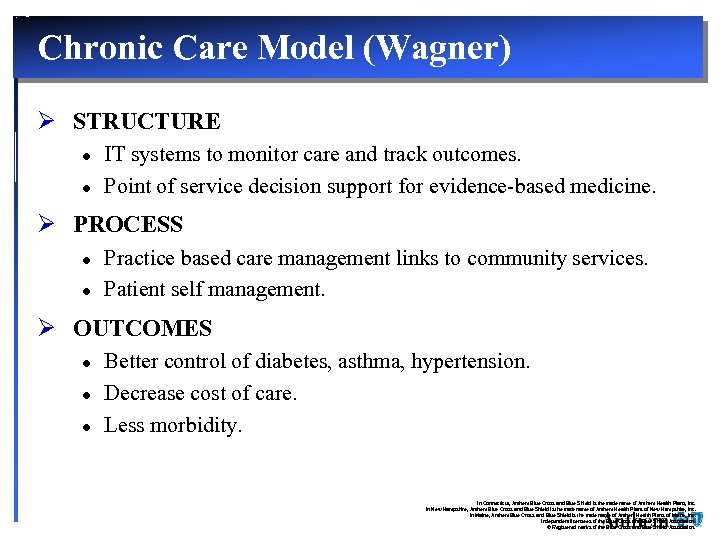 Chronic Care Model (Wagner) Ø STRUCTURE l l IT systems to monitor care and track outcomes. Point of service decision support for evidence-based medicine. Ø PROCESS l l Practice based care management links to community services. Patient self management. Ø OUTCOMES l l l Better control of diabetes, asthma, hypertension. Decrease cost of care. Less morbidity. In Connecticut, Anthem Blue Cross and Blue Shield is the trade name of Anthem Health Plans, Inc. In New Hampshire, Anthem Blue Cross and Blue Shield is the trade name of Anthem Health Plans of New Hampshire, Inc. In Maine, Anthem Blue Cross and Blue Shield is the trade name of Anthem Health Plans of Maine, Inc. Independent licensees of the Blue Cross and Blue Shield Association. ® Registered marks of the Blue Cross and Blue Shield Association.
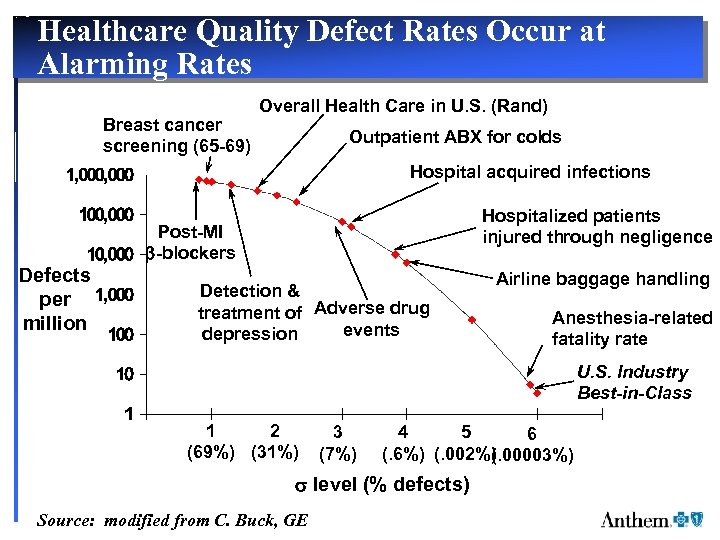 Healthcare Quality Defect Rates Occur at Alarming Rates Breast cancer screening (65 -69) Overall Health Care in U. S. (Rand) Outpatient ABX for colds Hospital acquired infections Hospitalized patients injured through negligence Post-MI b-blockers Defects per million Detection & treatment of Adverse drug events depression Airline baggage handling Anesthesia-related fatality rate U. S. Industry Best-in-Class 1 2 (69%) (31%) 3 (7%) 4 5 6 (. 6%) (. 002%) (. 00003%) s level (% defects) Source: modified from C. Buck, GE
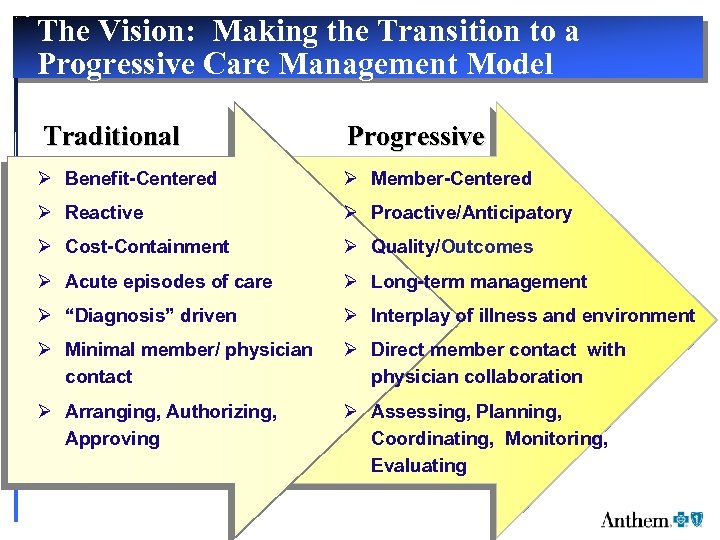 The Vision: Making the Transition to a Progressive Care Management Model Traditional Progressive Ø Benefit-Centered Ø Member-Centered Ø Reactive Ø Proactive/Anticipatory Ø Cost-Containment Ø Quality/Outcomes Ø Acute episodes of care Ø Long-term management Ø “Diagnosis” driven Ø Interplay of illness and environment Ø Minimal member/ physician contact Ø Direct member contact with physician collaboration Ø Arranging, Authorizing, Approving Ø Assessing, Planning, Coordinating, Monitoring, Evaluating
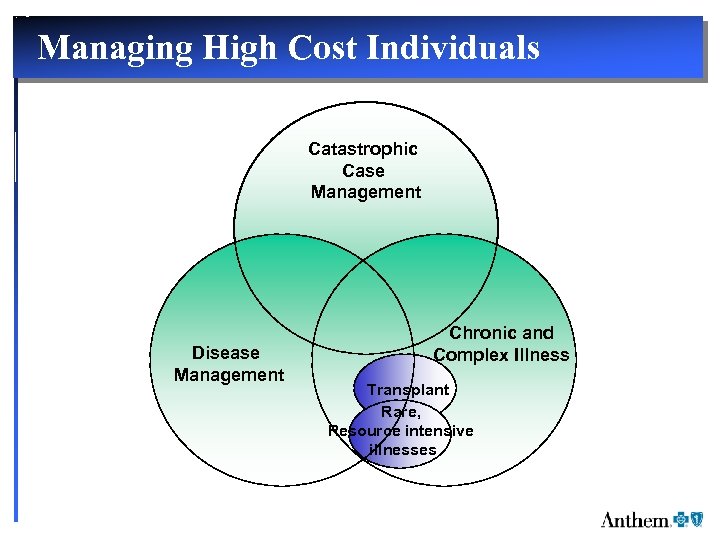 Managing High Cost Individuals Catastrophic Case Management Disease Management Chronic and Complex Illness Transplant Rare, Resource intensive illnesses
 High Risk Population Case Management versus Disease Management Ø Disease management defines members/patients by presence of a diagnosis. l Enhanced by stratification and management strategies Ø High risk population-based case management, or Advanced Care Management, defines members/patients on the basis of risk of future resource use. Chronic and complex illness(es) are common. l l Requires standardized means of case identification High risk members typically have co-morbidities and social challenges, and are at risk for deterioration in health
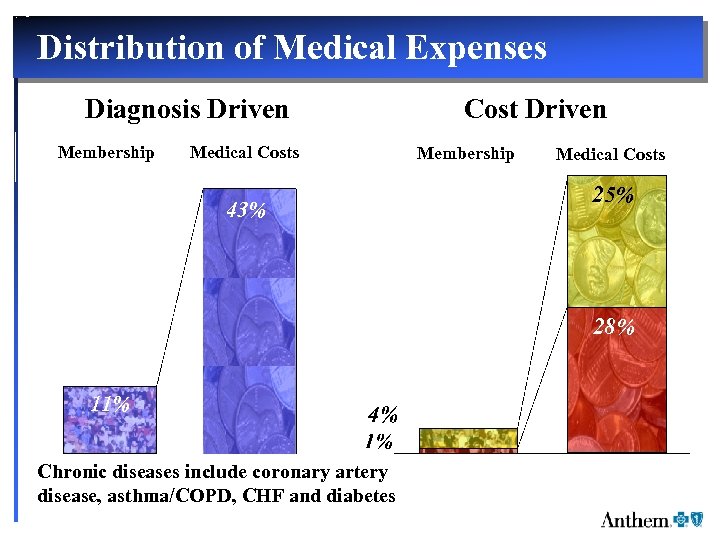 Distribution of Medical Expenses Diagnosis Driven Membership Medical Costs 43% Cost Driven Membership Medical Costs 25% 28% 11% Chronic diseases include coronary artery disease, asthma/COPD, CHF and diabetes
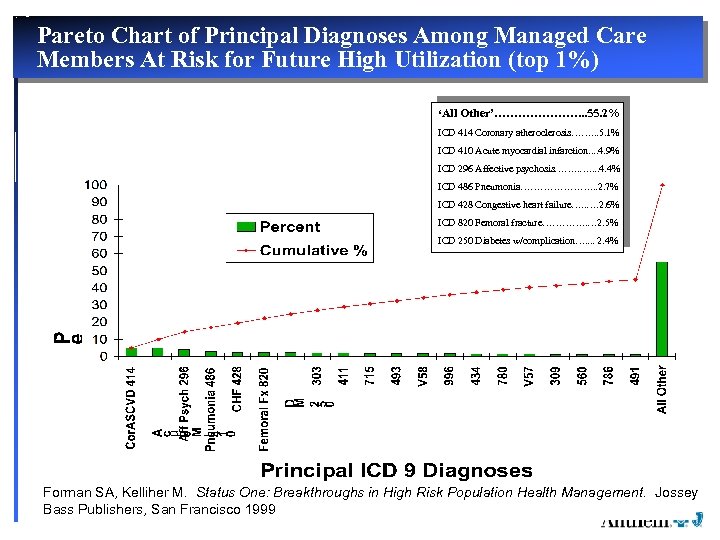 Pareto Chart of Principal Diagnoses Among Managed Care Members At Risk for Future High Utilization (top 1%) ‘All Other’…………………. . . 55. 2% ICD 414 Coronary atheroclerosis……. . . 5. 1% ICD 410 Acute myocardial infarction. . 4. 9% ICD 296 Affective psychosis……. . . . 4. 4% ICD 486 Pneumonia…………………. . . 2. 7% ICD 428 Congestive heart failure…. . …. 2. 6% ICD 820 Femoral fracture…………. . … 2. 5% ICD 250 Diabetes w/complication…. . 2. 4% Forman SA, Kelliher M. Status One: Breakthroughs in High Risk Population Health Management. Jossey Bass Publishers, San Francisco 1999
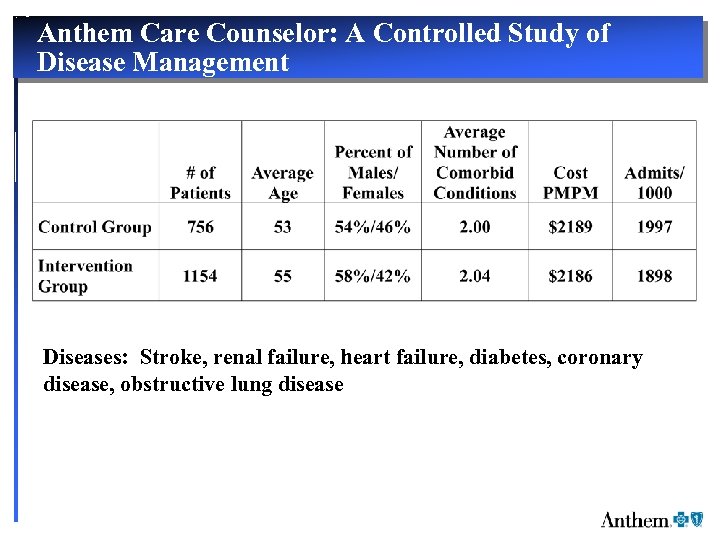 Anthem Care Counselor: A Controlled Study of Disease Management Diseases: Stroke, renal failure, heart failure, diabetes, coronary disease, obstructive lung disease
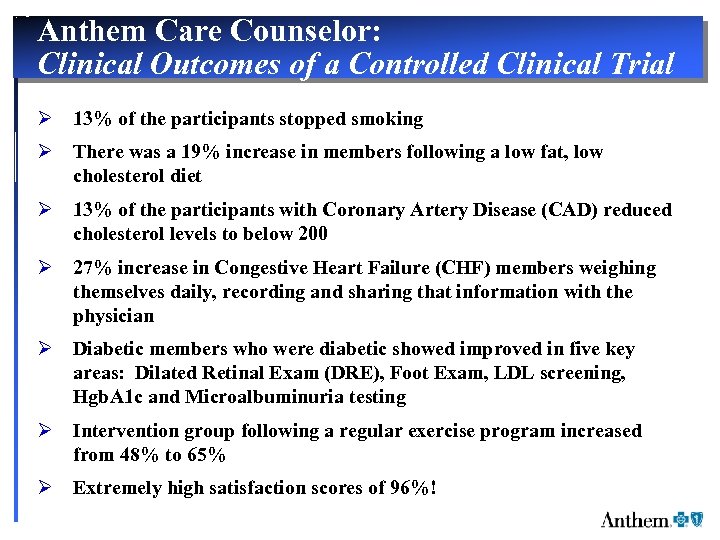 Anthem Care Counselor: Clinical Outcomes of a Controlled Clinical Trial Ø 13% of the participants stopped smoking Ø There was a 19% increase in members following a low fat, low cholesterol diet Ø 13% of the participants with Coronary Artery Disease (CAD) reduced cholesterol levels to below 200 Ø 27% increase in Congestive Heart Failure (CHF) members weighing themselves daily, recording and sharing that information with the physician Ø Diabetic members who were diabetic showed improved in five key areas: Dilated Retinal Exam (DRE), Foot Exam, LDL screening, Hgb. A 1 c and Microalbuminuria testing Ø Intervention group following a regular exercise program increased from 48% to 65% Ø Extremely high satisfaction scores of 96%!
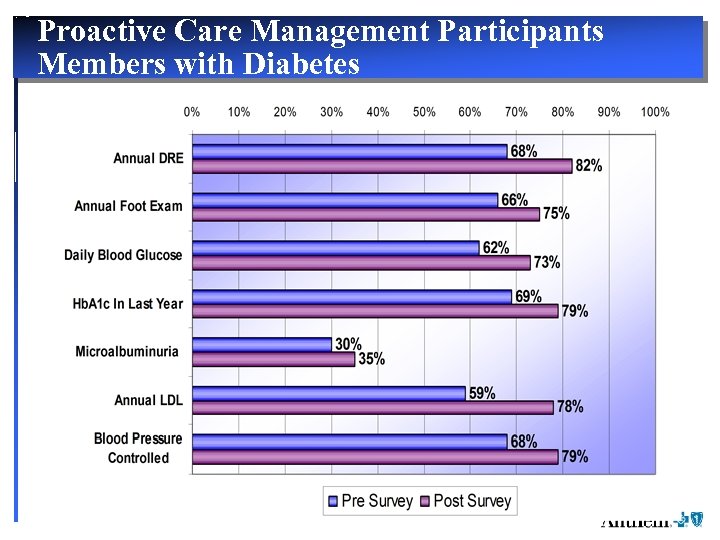 Proactive Care Management Participants Members with Diabetes
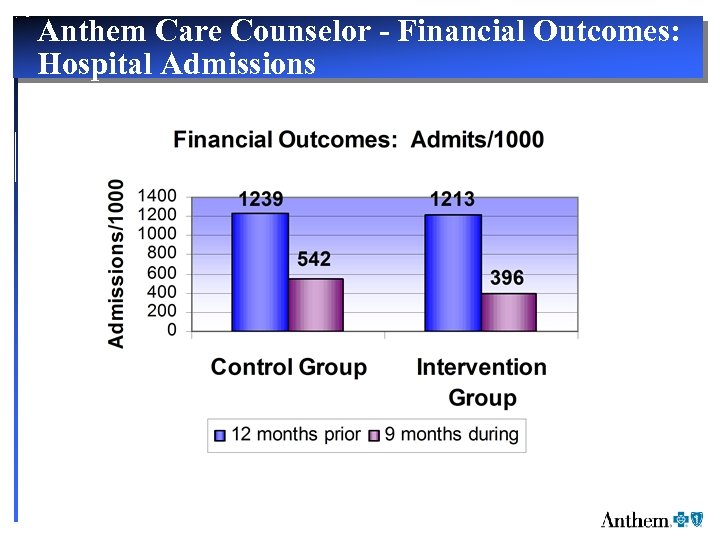 Anthem Care Counselor - Financial Outcomes: Hospital Admissions
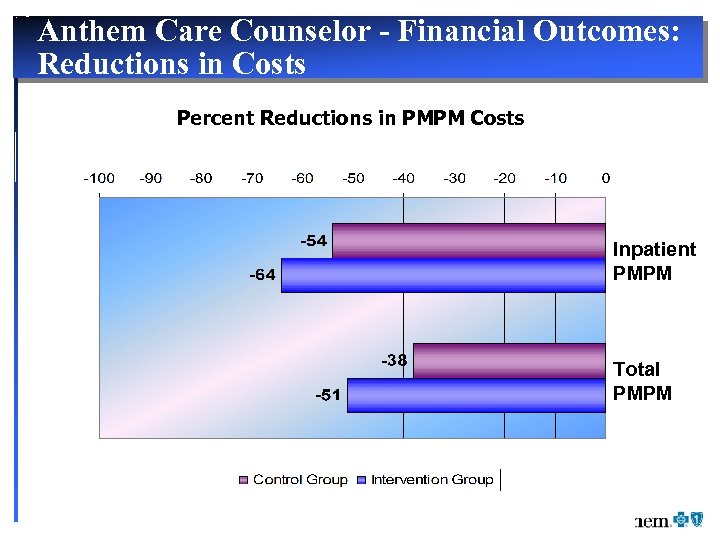 Anthem Care Counselor - Financial Outcomes: Reductions in Costs Percent Reductions in PMPM Costs Inpatient PMPM Total PMPM
 Predictive Models “The future ain’t what it used to be. ” - Lawrence Peter “Yogi” Berra
 Predictive Models: A Functional Definition Ø Use of analytic and statistical techniques applied to member-specific clinical indicators (such as medical and pharmacy claims data, laboratory values, and other clinical information) to identify members who are most likely to incur high health costs and concomitant deterioration in health. Ø Models used for underwriting and models used to impact medical management may differ. Correlation coefficients (R-squared and Pearson) may be more valuable for underwriting. Ø Sensitivity, specificity, and positive predictive impact are essential for medical management.
 Application of Predictive Models Ø Identifying/managing complexly ill members (hospitalization avoidance) Ø Refining disease management strategies Ø Managing pharmacy services (integrated with medical management) Ø Underwriting more precisely Ø Reimbursement based on illness burden Ø Assessing physician management strategies
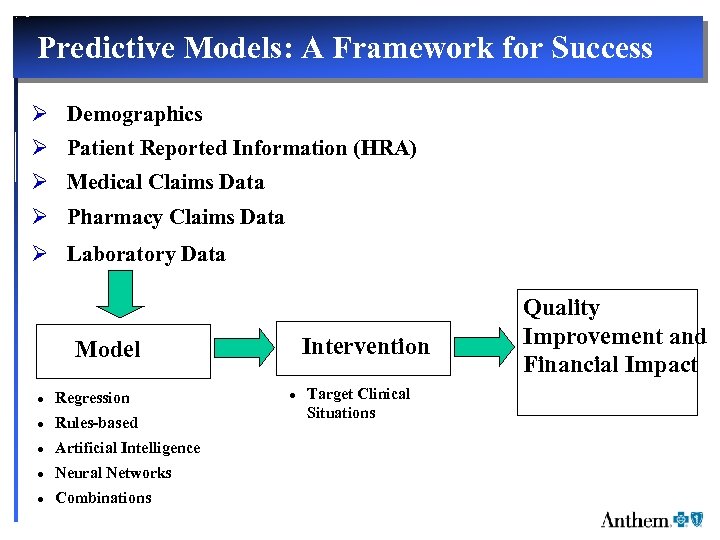 Predictive Models: A Framework for Success Ø Demographics Ø Patient Reported Information (HRA) Ø Medical Claims Data Ø Pharmacy Claims Data Ø Laboratory Data Intervention Model l Regression l Rules-based l Artificial Intelligence l Neural Networks l Combinations l Target Clinical Situations Quality Improvement and Financial Impact
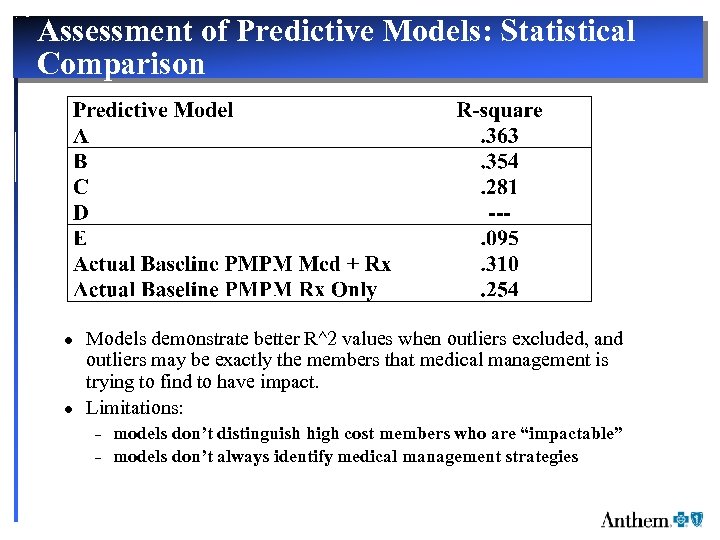 Assessment of Predictive Models: Statistical Comparison l l Models demonstrate better R^2 values when outliers excluded, and outliers may be exactly the members that medical management is trying to find to have impact. Limitations: – – models don’t distinguish high cost members who are “impactable” models don’t always identify medical management strategies
 Impactability Factor Ø The “Impactability Factor” is critical to Medical Management. Level of impact varies based on: l l l Diagnosis: CHF>Leukemia>accidental trauma Psychosocial factors: strength of family and social support Current treatment: evidence-based care vs. opportunity to improve care Contracting issues: high cost pharmaceuticals History of medical site of service; ER>physician office Care process: acute care>rehabilitation>chronic/home care
 Predictive Models: Conclusions Ø There is no clearly superior predictive model for managing care. Ø Certain approaches may be more valuable for underwriting. Ø Simple models linked with interventions can advance the quality and efficiency of care. Ø Most important is an integrated medical management strategy to manage members where intervention has the greatest impact: “Impactability Focus. ” Ø It is improving the process that has value: l reengineering clinical management units l outsourcing to vendor with model and intervention
 Physician Partnerships for Disease Management Ø Historically, a craft-based practice l Individual physicians, working alone, putting patients’ health first l Handcraft a customized solution for each patient l Vast personal knowledge gained from training and experience l <50% of care is evidence-based and there is wide variation in practice (Wennberg, Dartmouth Atlas) Ø Transformation to profession-based practice l Plan coordinated care delivery processes l Clinical information is available at the point of care and directs appropriate services and therapies: drugs, imaging l This approach leads to fewer quality gaps, better patient outcomes and optimizes cost l Physician scientists advance the science of medicine; clinicians generate new medical knowledge as they practice medicine
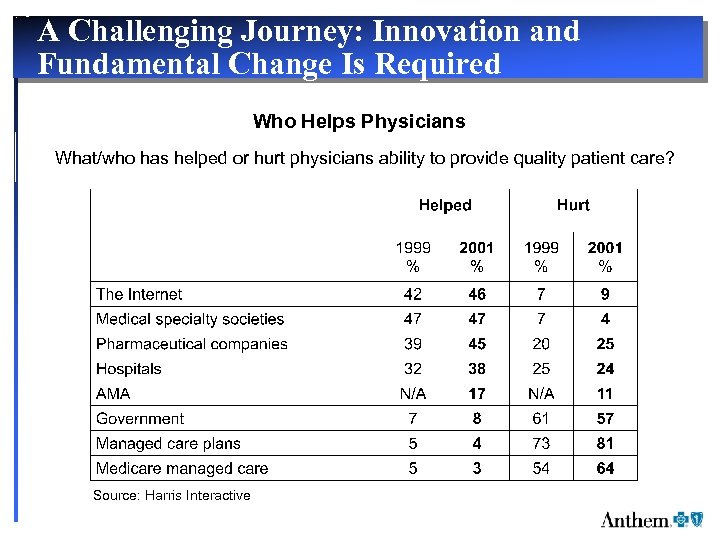 A Challenging Journey: Innovation and Fundamental Change Is Required Who Helps Physicians What/who has helped or hurt physicians ability to provide quality patient care? Source: Harris Interactive
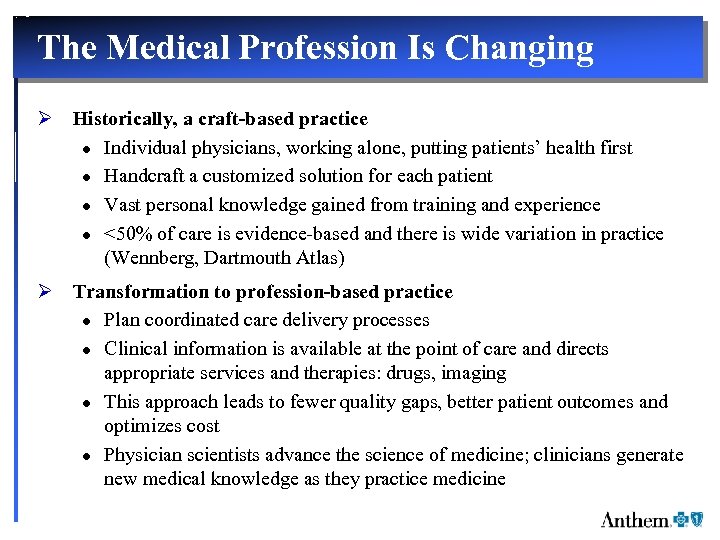 The Medical Profession Is Changing Ø Historically, a craft-based practice l Individual physicians, working alone, putting patients’ health first l Handcraft a customized solution for each patient l Vast personal knowledge gained from training and experience l <50% of care is evidence-based and there is wide variation in practice (Wennberg, Dartmouth Atlas) Ø Transformation to profession-based practice l Plan coordinated care delivery processes l Clinical information is available at the point of care and directs appropriate services and therapies: drugs, imaging l This approach leads to fewer quality gaps, better patient outcomes and optimizes cost l Physician scientists advance the science of medicine; clinicians generate new medical knowledge as they practice medicine
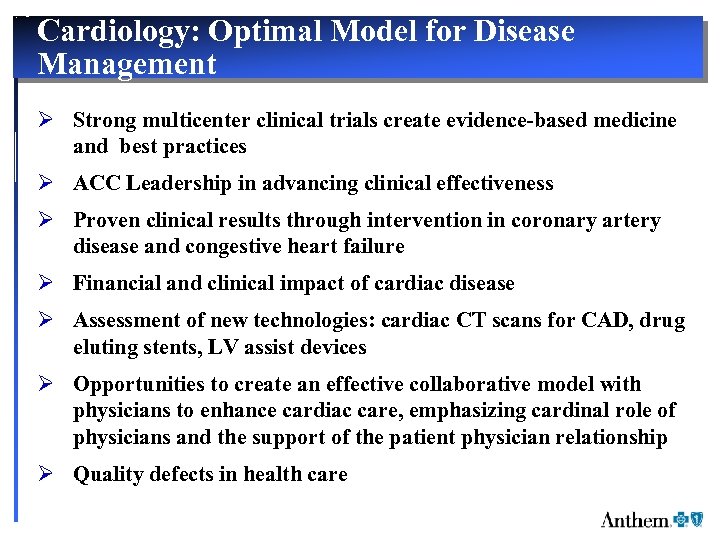 Cardiology: Optimal Model for Disease Management Ø Strong multicenter clinical trials create evidence-based medicine and best practices Ø ACC Leadership in advancing clinical effectiveness Ø Proven clinical results through intervention in coronary artery disease and congestive heart failure Ø Financial and clinical impact of cardiac disease Ø Assessment of new technologies: cardiac CT scans for CAD, drug eluting stents, LV assist devices Ø Opportunities to create an effective collaborative model with physicians to enhance cardiac care, emphasizing cardinal role of physicians and the support of the patient physician relationship Ø Quality defects in health care
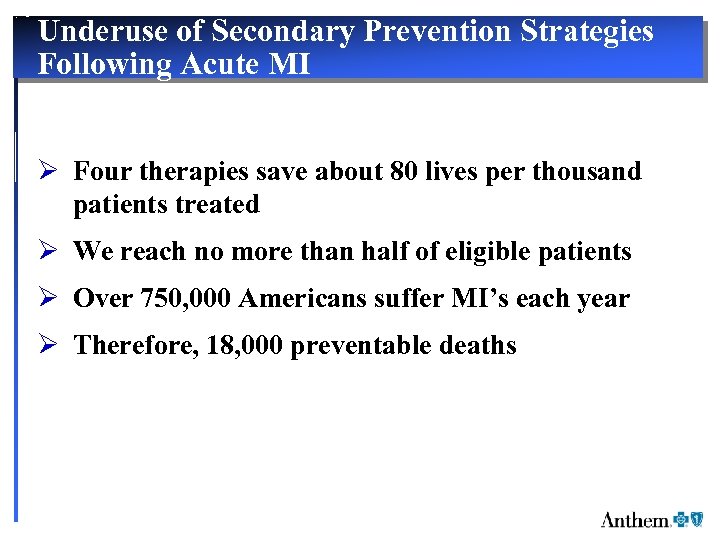 Underuse of Secondary Prevention Strategies Following Acute MI Ø Four therapies save about 80 lives per thousand patients treated Ø We reach no more than half of eligible patients Ø Over 750, 000 Americans suffer MI’s each year Ø Therefore, 18, 000 preventable deaths
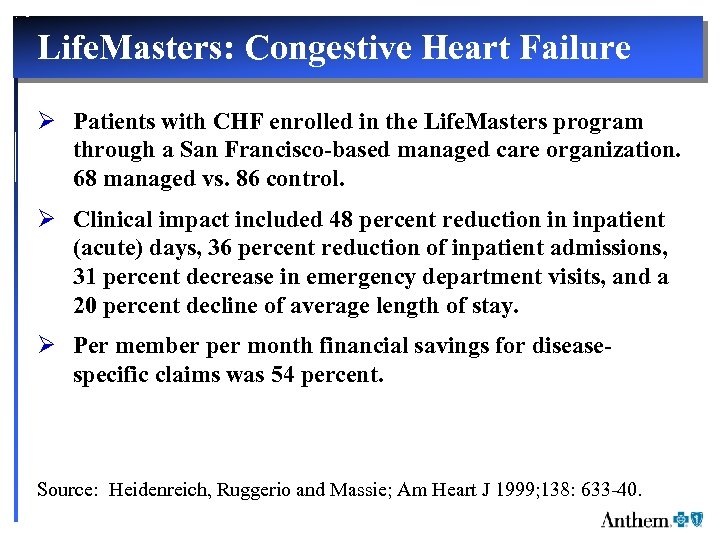 Life. Masters: Congestive Heart Failure Ø Patients with CHF enrolled in the Life. Masters program through a San Francisco-based managed care organization. 68 managed vs. 86 control. Ø Clinical impact included 48 percent reduction in inpatient (acute) days, 36 percent reduction of inpatient admissions, 31 percent decrease in emergency department visits, and a 20 percent decline of average length of stay. Ø Per member per month financial savings for diseasespecific claims was 54 percent. Source: Heidenreich, Ruggerio and Massie; Am Heart J 1999; 138: 633 -40.
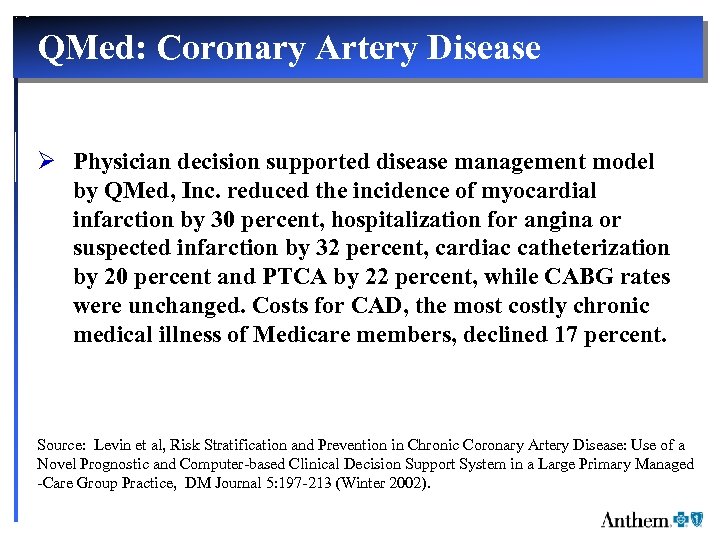 QMed: Coronary Artery Disease Ø Physician decision supported disease management model by QMed, Inc. reduced the incidence of myocardial infarction by 30 percent, hospitalization for angina or suspected infarction by 32 percent, cardiac catheterization by 20 percent and PTCA by 22 percent, while CABG rates were unchanged. Costs for CAD, the most costly chronic medical illness of Medicare members, declined 17 percent. Source: Levin et al, Risk Stratification and Prevention in Chronic Coronary Artery Disease: Use of a Novel Prognostic and Computer-based Clinical Decision Support System in a Large Primary Managed -Care Group Practice, DM Journal 5: 197 -213 (Winter 2002).
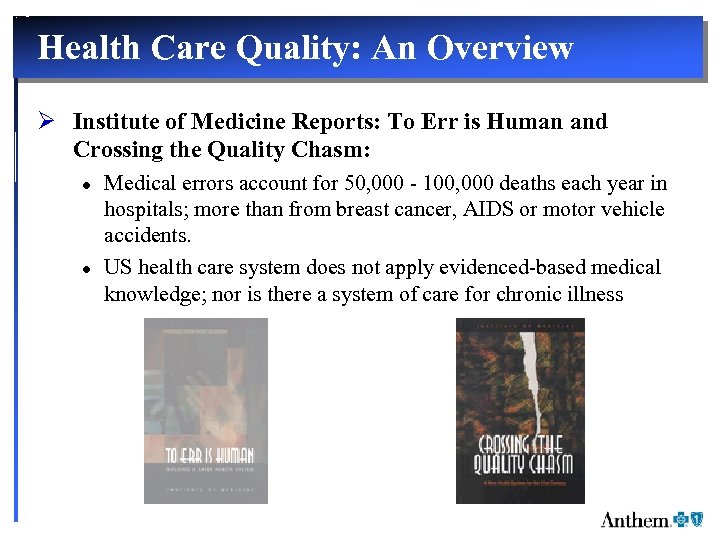 Health Care Quality: An Overview Ø Institute of Medicine Reports: To Err is Human and Crossing the Quality Chasm: l l Medical errors account for 50, 000 - 100, 000 deaths each year in hospitals; more than from breast cancer, AIDS or motor vehicle accidents. US health care system does not apply evidenced-based medical knowledge; nor is there a system of care for chronic illness
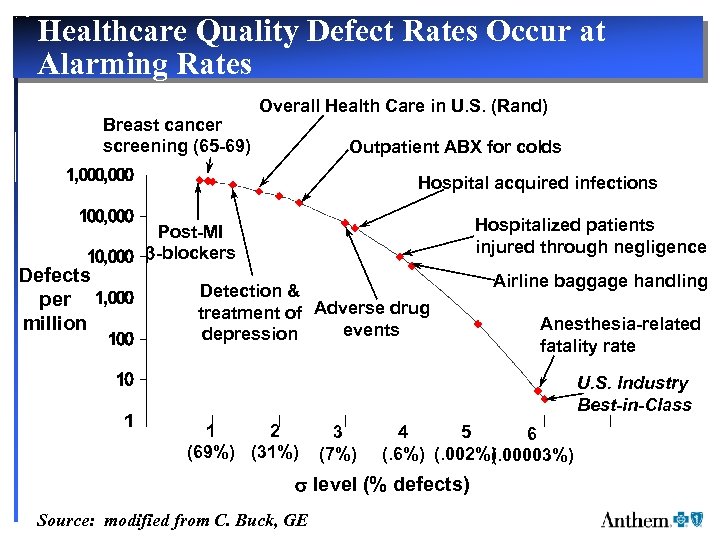 Healthcare Quality Defect Rates Occur at Alarming Rates Breast cancer screening (65 -69) Overall Health Care in U. S. (Rand) Outpatient ABX for colds Hospital acquired infections Hospitalized patients injured through negligence Post-MI b-blockers Defects per million Detection & treatment of Adverse drug events depression Airline baggage handling Anesthesia-related fatality rate U. S. Industry Best-in-Class 1 2 (69%) (31%) 3 (7%) 4 5 6 (. 6%) (. 002%) (. 00003%) s level (% defects) Source: modified from C. Buck, GE
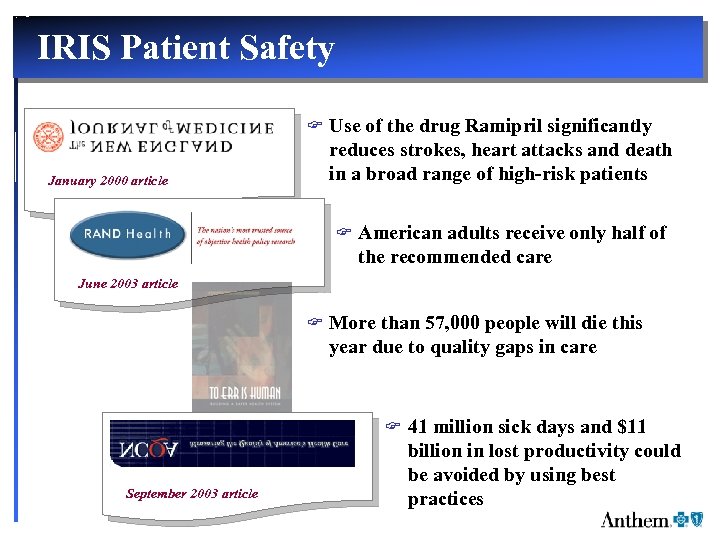 IRIS Patient Safety F Use of the drug Ramipril significantly January 2000 article reduces strokes, heart attacks and death in a broad range of high-risk patients F American adults receive only half of the recommended care June 2003 article F More than 57, 000 people will die this year due to quality gaps in care F 41 million sick days and $11 September 2003 article billion in lost productivity could be avoided by using best practices
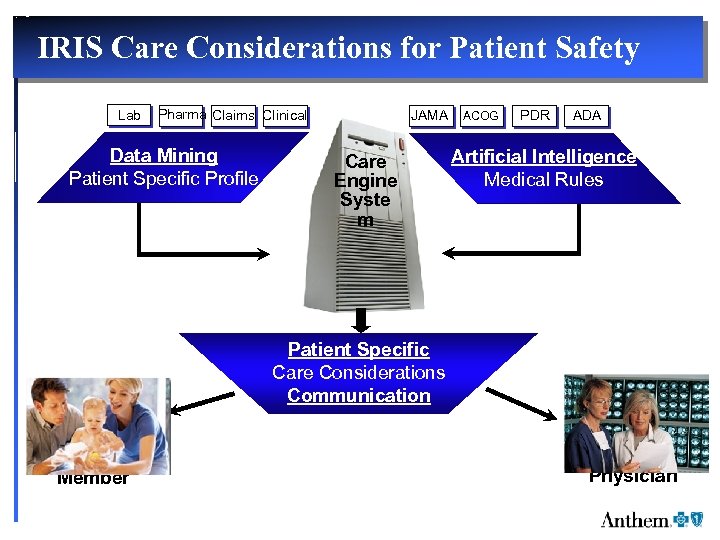 IRIS Care Considerations for Patient Safety Lab Pharma Claims Clinical Data Mining Patient Specific Profile JAMA Care Engine Syste m ACOG PDR ADA Artificial Intelligence Medical Rules Patient Specific Care Considerations Communication Member Physician
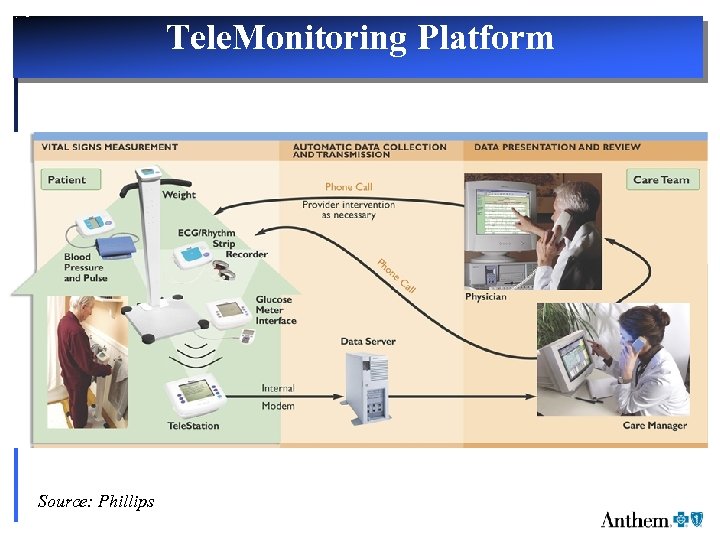 Tele. Monitoring Platform Source: Phillips
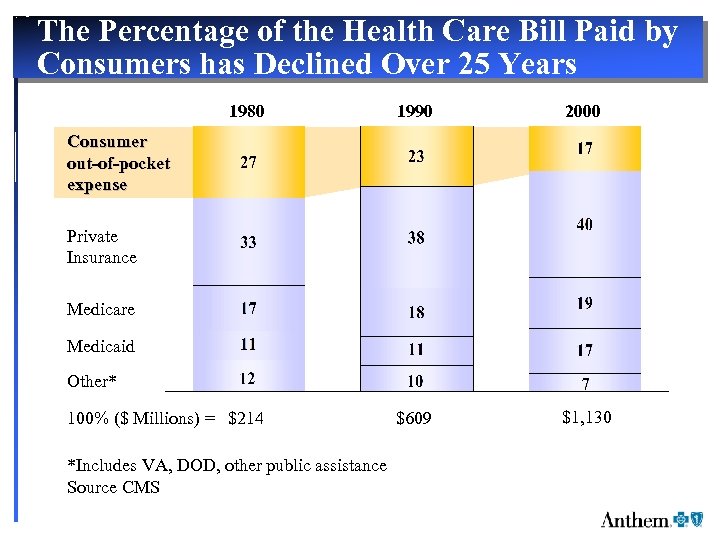 The Percentage of the Health Care Bill Paid by Consumers has Declined Over 25 Years 1980 1990 2000 100% ($ Millions) = $214 $609 $1, 130 Consumer out-of-pocket expense Private Insurance Medicare Medicaid Other* *Includes VA, DOD, other public assistance Source CMS
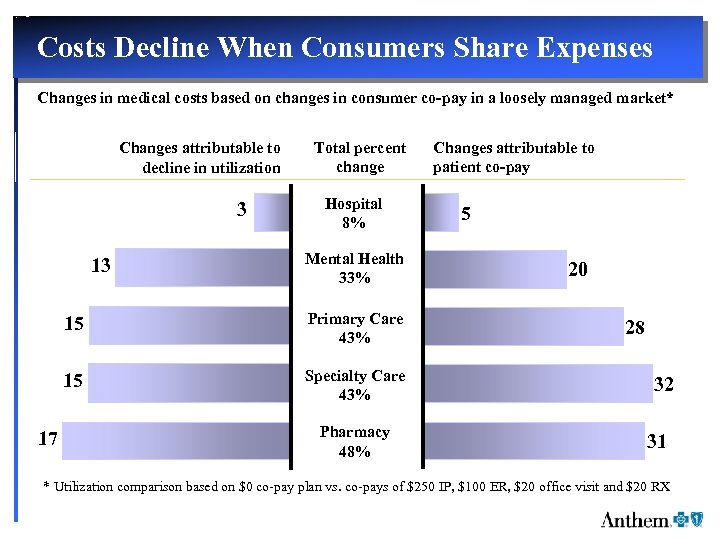 Costs Decline When Consumers Share Expenses Changes in medical costs based on changes in consumer co-pay in a loosely managed market* Changes attributable to decline in utilization 3 13 Total percent change Hospital 8% Mental Health 33% 15 15 17 Primary Care 43% Specialty Care 43% Pharmacy 48% Changes attributable to patient co-pay 5 20 28 32 31 * Utilization comparison based on $0 co-pay plan vs. co-pays of $250 IP, $100 ER, $20 office visit and $20 RX
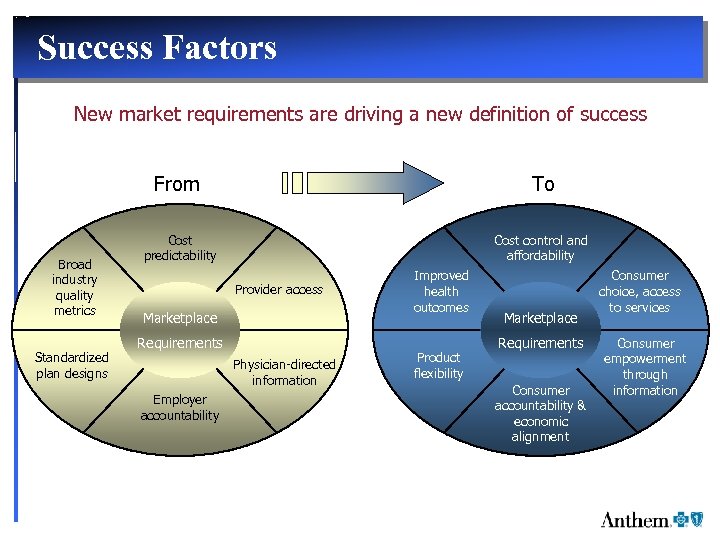 Success Factors New market requirements are driving a new definition of success From Broad industry quality metrics Standardized plan designs To Cost predictability Cost control and affordability Provider access Marketplace Requirements Physician-directed information Employer accountability Improved health outcomes Product flexibility Marketplace Requirements Consumer accountability & economic alignment Consumer choice, access to services Consumer empowerment through information
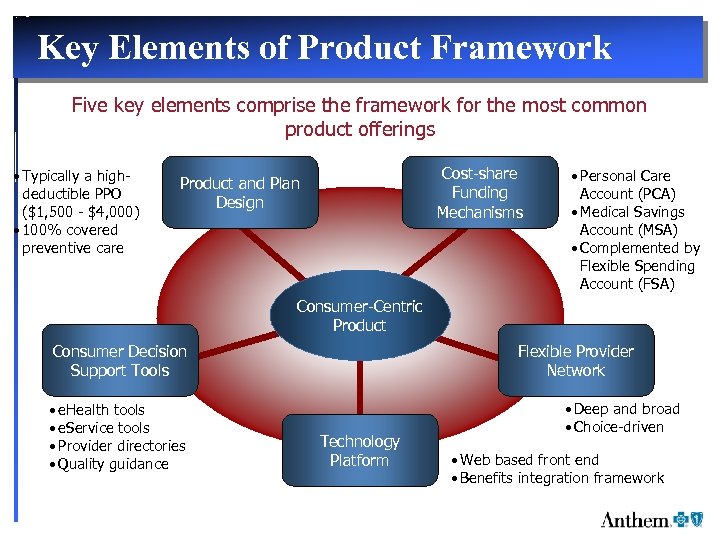 Key Elements of Product Framework Five key elements comprise the framework for the most common product offerings • Typically a highdeductible PPO ($1, 500 - $4, 000) • 100% covered preventive care Cost-share Funding Mechanisms Product and Plan Design • Personal Care Account (PCA) • Medical Savings Account (MSA) • Complemented by Flexible Spending Account (FSA) Consumer-Centric Product Consumer Decision Support Tools • e. Health tools • e. Service tools • Provider directories • Quality guidance Flexible Provider Network Technology Platform • Deep and broad • Choice-driven • Web based front end • Benefits integration framework
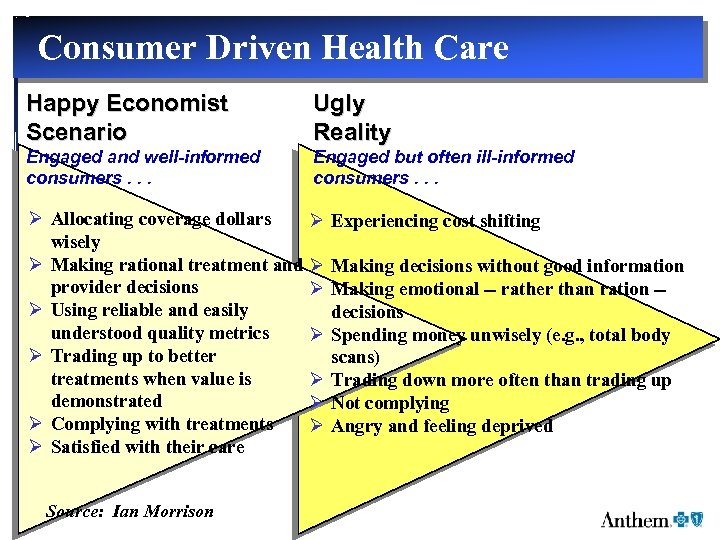 Consumer Driven Health Care Happy Economist Scenario Ugly Reality Engaged and well-informed consumers. . . Engaged but often ill-informed consumers. . . Ø Allocating coverage dollars Ø wisely Ø Making rational treatment and Ø provider decisions Ø Ø Using reliable and easily understood quality metrics Ø Ø Trading up to better treatments when value is Ø demonstrated Ø Ø Complying with treatments Ø Ø Satisfied with their care Source: Ian Morrison Experiencing cost shifting Making decisions without good information Making emotional -- rather than ration -decisions Spending money unwisely (e. g. , total body scans) Trading down more often than trading up Not complying Angry and feeling deprived
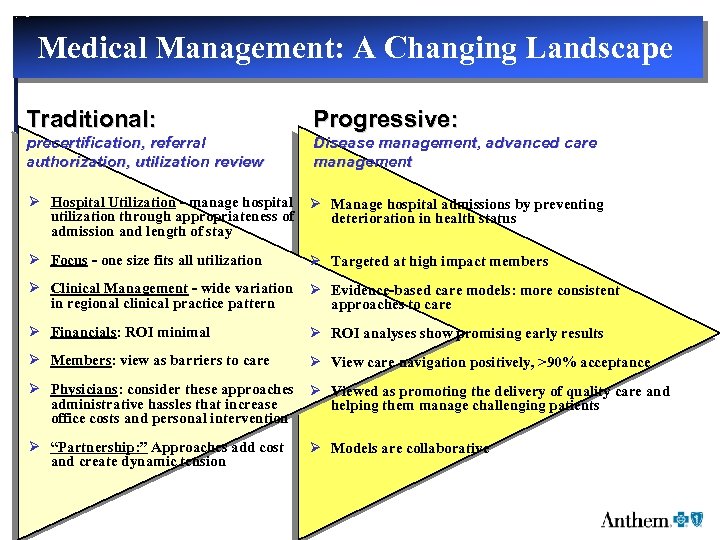 Medical Management: A Changing Landscape Traditional: Progressive: precertification, referral authorization, utilization review Disease management, advanced care management Ø Hospital Utilization - manage hospital Ø Manage hospital admissions by preventing utilization through appropriateness of deterioration in health status admission and length of stay Ø Focus - one size fits all utilization Ø Targeted at high impact members Ø Clinical Management - wide variation in regional clinical practice pattern Ø Evidence-based care models: more consistent approaches to care Ø Financials: ROI minimal Ø ROI analyses show promising early results Ø Members: view as barriers to care Ø View care navigation positively, >90% acceptance Ø Physicians: consider these approaches Ø Viewed as promoting the delivery of quality care and administrative hassles that increase helping them manage challenging patients office costs and personal intervention Ø “Partnership: ” Approaches add cost and create dynamic tension Ø Models are collaborative
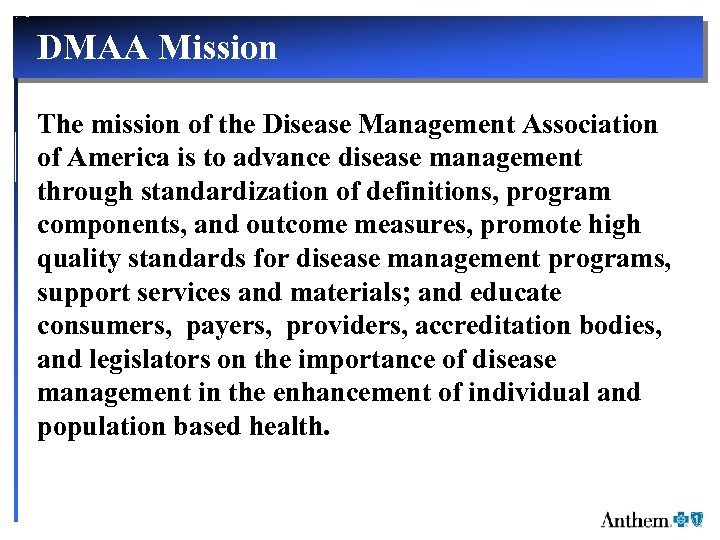 DMAA Mission The mission of the Disease Management Association of America is to advance disease management through standardization of definitions, program components, and outcome measures, promote high quality standards for disease management programs, support services and materials; and educate consumers, payers, providers, accreditation bodies, and legislators on the importance of disease management in the enhancement of individual and population based health.
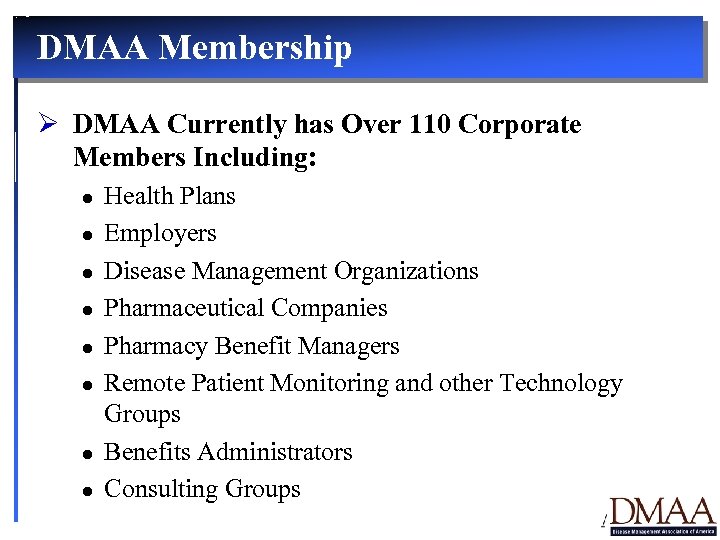 DMAA Membership Ø DMAA Currently has Over 110 Corporate Members Including: l l l l Health Plans Employers Disease Management Organizations Pharmaceutical Companies Pharmacy Benefit Managers Remote Patient Monitoring and other Technology Groups Benefits Administrators Consulting Groups
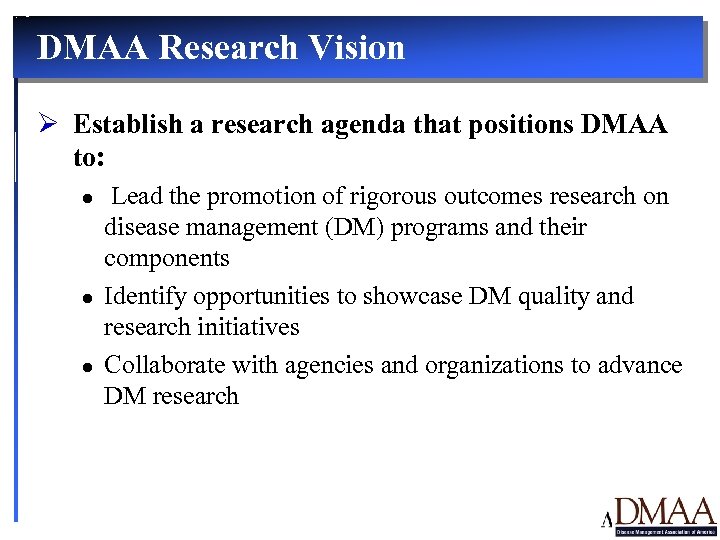 DMAA Research Vision Ø Establish a research agenda that positions DMAA to: l l l Lead the promotion of rigorous outcomes research on disease management (DM) programs and their components Identify opportunities to showcase DM quality and research initiatives Collaborate with agencies and organizations to advance DM research
 DMAA's Quality and Research Committee Outcomes Measurement Ø Outcomes Consolidation Project and Benchmarking Symposium: October 2003, compiling unpublished outcomes information from health plan and disease management companies. Ø February 2004, Convened a Steering Committee of thought leaders to consider methods available for DM program evaluation and promote evaluation designs that are consensus driven, rigorous, and applicable in the real world. The work of this group culminated in the paper, “Principles for Assessing Disease Management Outcomes”, available on the DMAA website and to be published in Disease Management
 DMAA Research Programs Ø Definitions Project l l To advance DM through standardization of definitions Develop industry accepted definitions for business, research purposes Ø Patient Satisfaction with Disease Management programs Ø Predictive Modeling
 Why is Disease Management a Major Player Today? Ø Disease Management programs fill a gap in our healthcare system l l Provide patients with chronic conditions support for self -care. Maximize patient functionality, Minimize disability, and death, and Improve the efficiency and cost effectiveness of patient care delivery.
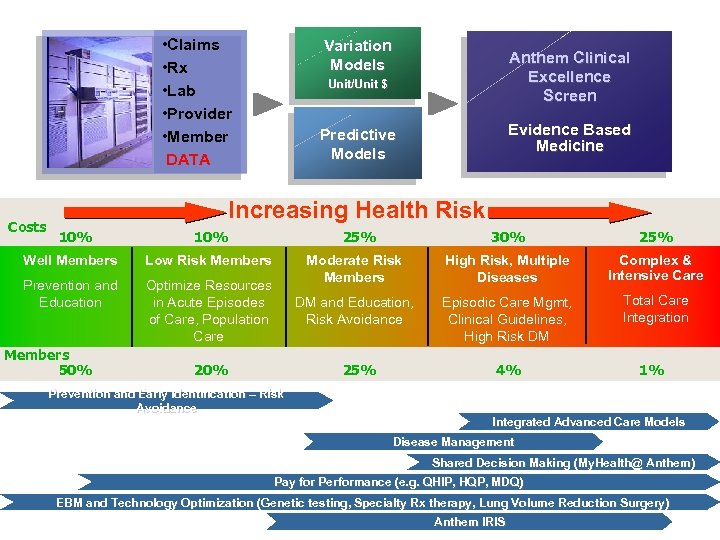 • Claims • Rx • Lab • Provider • Member DATA Costs Variation Models Anthem Clinical Excellence Screen Unit/Unit $ Evidence Based Medicine Predictive Models Increasing Health Risk 10% Well Members 50% 25% High Risk, Multiple Diseases Complex & Intensive Care DM and Education, Risk Avoidance Optimize Resources in Acute Episodes of Care, Population Care 30% Moderate Risk Members Low Risk Members Prevention and Education 25% Episodic Care Mgmt, Clinical Guidelines, High Risk DM Total Care Integration 4% 1% 25% Prevention and Early Identification – Risk Avoidance Integrated Advanced Care Models Disease Management Shared Decision Making (My. Health@ Anthem) (My. Health@ Pay for Performance (e. g. QHIP, HQP, MDQ) EBM and Technology Optimization (Genetic testing, Specialty Rx therapy, Lung Volume Reduction Surgery) Anthem IRIS