 Скачать презентацию Reducing vulnerabilities of People Living With HIV and
5576d940299dce6e4226e783d2363b43.ppt
- Количество слайдов: 22



Reducing vulnerabilities of “People Living With HIV and AIDS” to common infections in humanitarian settings – experiences from Oxfam GB programs by Foyeke Christiana Tolani (Ph. D, MPH) Oxfam GB Health Adviser
OUTLINE • Introduction • Objective • Emergencies and factors that increase vulnerability • PLWHA vulnerability to communicable disease and opportunistic infections • Experiences of Oxfam GB in Humanitarian programs • Challenges / new initiatives • Conclusion
Objective Contribute to how to increase efforts of different stakeholders in reducing vulnerabilities of people living with HIV and AIDS during emergency in HIV and AIDS endemic areas.
Introduction • Overview of responding to the needs of PLWHIV in emergencies – Around 40 million refugees in the world – Estimates of HIV burden in emergencies 2006 – PLWHIV represents 5. 4% (1. 8 million) of emergency affected population (Lowicki-Zucca et al, 2008) • Progress in the last decade – Concept – Stakeholders – Resources
Emergencies and Factors that increase vulnerability • Emergencies – Natural & Man-made Disasters • Impact of emergencies and links to vulnerability – Loss of shelter and non-food household items – Loss of lives (including care/ income providers) – Loss/reduced access or lack of social facilities (health, water, sanitation etc) – Loss of income/ Livelihoods – Loss/ reduced access to food – Breakdown in family structures – Population interactions
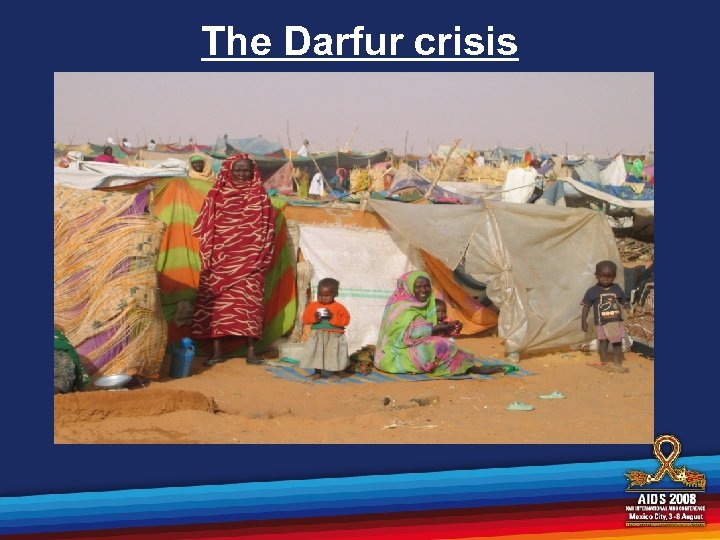
The Darfur crisis
The household reality of AIDS: Siavonga, Zambia Betina Mukazi, 67 year old grandmother, cares for 6 people: – Paul: 35 year old son, sick with AIDS – Maria: 33 year old daughter-in-law, sick with AIDS – 4 grandchildren: • • Francesca, 14 year-old girl Arthur, 11 year-old boy Betty, 10 year-old girl Adenai, 2 year-old boy
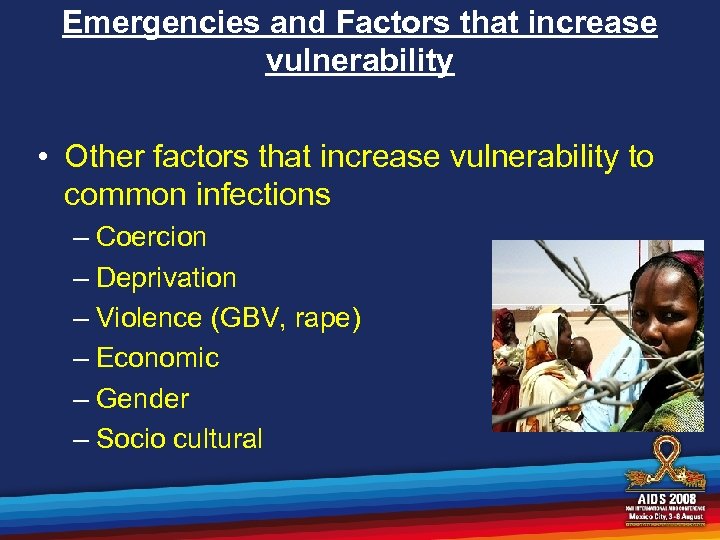
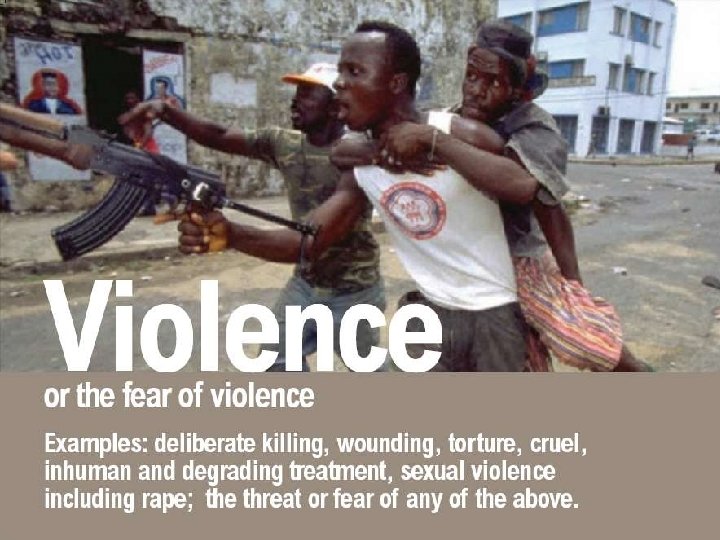
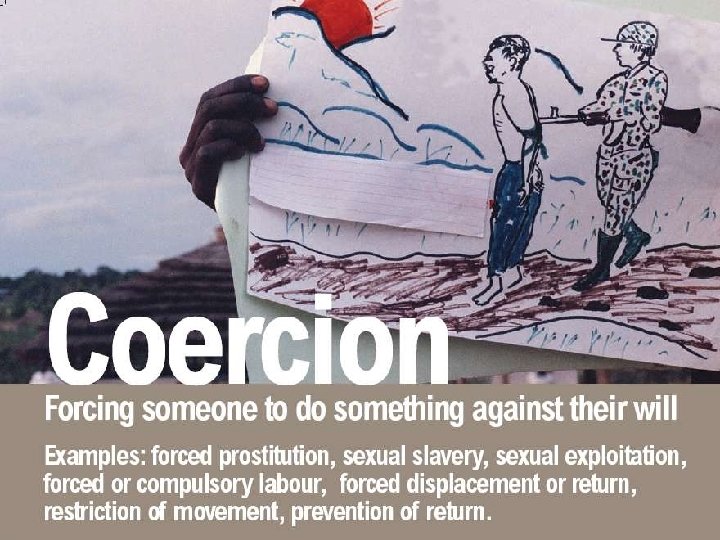
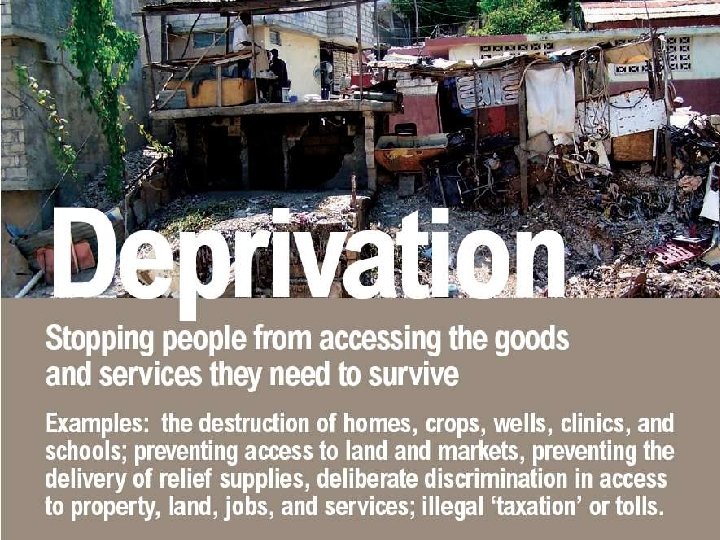
Emergencies and Factors that increase vulnerability • Other factors that increase vulnerability to common infections – Coercion – Deprivation – Violence (GBV, rape) – Economic – Gender – Socio cultural
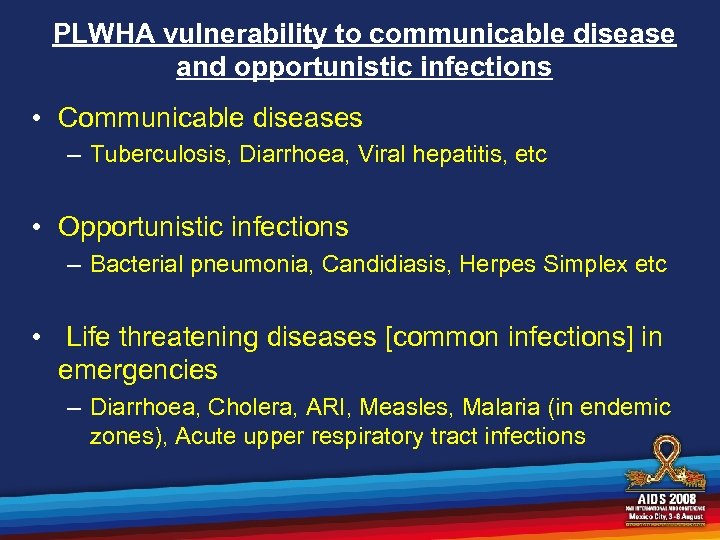
PLWHA vulnerability to communicable disease and opportunistic infections • Communicable diseases – Tuberculosis, Diarrhoea, Viral hepatitis, etc • Opportunistic infections – Bacterial pneumonia, Candidiasis, Herpes Simplex etc • Life threatening diseases [common infections] in emergencies – Diarrhoea, Cholera, ARI, Measles, Malaria (in endemic zones), Acute upper respiratory tract infections
Experiences of OGB in Humanitarian programs - internal • Increase staff knowledge about HIV and AIDS • Staff are aware of Oxfam workplace policy • Make condoms available if requested • Be aware of services available within country • Staff are aware of gender and protection issues • Give training on mainstreaming HIV and AIDS externally
Experiences of OGB in Humanitarian programs • Food Security and Livelihoods – Malawi ; Kenya ; Myanmar (2008) - cash grants and/or food distribution • Public Health and preventing exposure – Uganda (2006) - provision of safe water & waiver of water user fee for people with chronic illnesses – Zimbabwe and Zambia (2003) - latrine provision to households with chronic illness sufferers and adaptation of latrine design to suit users – Zimbabwe (2006) - hygiene education and basic care kit to home-based carer
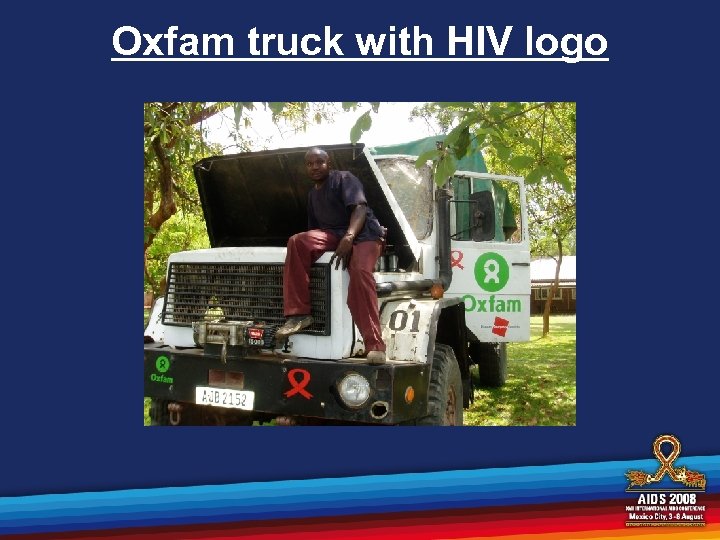
Oxfam truck with HIV logo
Experiences of OGB in Humanitarian programs • Non-food and household items (NFIs) providing sufficient and appropriate quantities – Zambia drought (2002); floods(2006) – providing extra NFIs & Uganda floods (2007) addressing stigmatisation, • Others – Myanmar (2008) – free transportation to health care provider for people living with HIV and AIDS
Challenges • Avoiding stigmatisation in assessing and meeting the needs of PLWHA; • Increasing staff awareness and getting people to buy in quickly • Mainstreaming HIV and AIDS throughout the Project cycle especially issue of monitoring and evaluation • Budgeting and funding for mainstreaming HIV and integrated AIDS work • Putting GIPA principles into practice
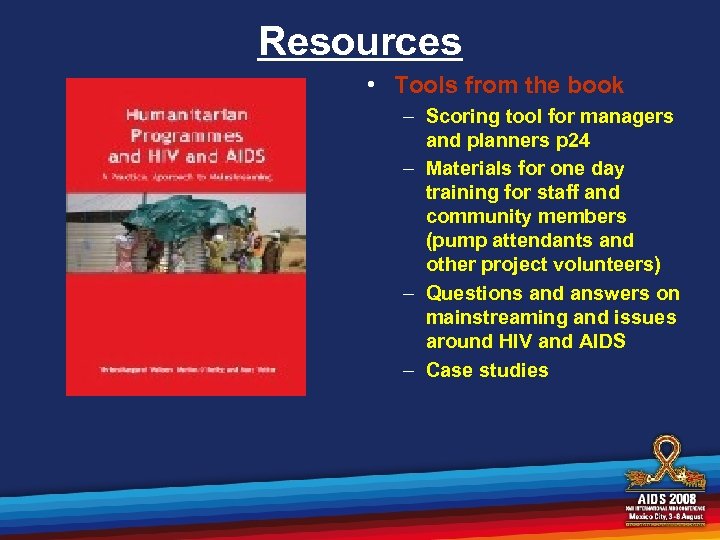
Resources • Tools from the book – Scoring tool for managers and planners p 24 – Materials for one day training for staff and community members (pump attendants and other project volunteers) – Questions and answers on mainstreaming and issues around HIV and AIDS – Case studies
Conclusion • ‘The needs of people living with HIV and affected by AIDS must be considered from start to finish in emergency interventions. These people often belong to the most vulnerable groups and therefore their needs must be adequately addressed. ’
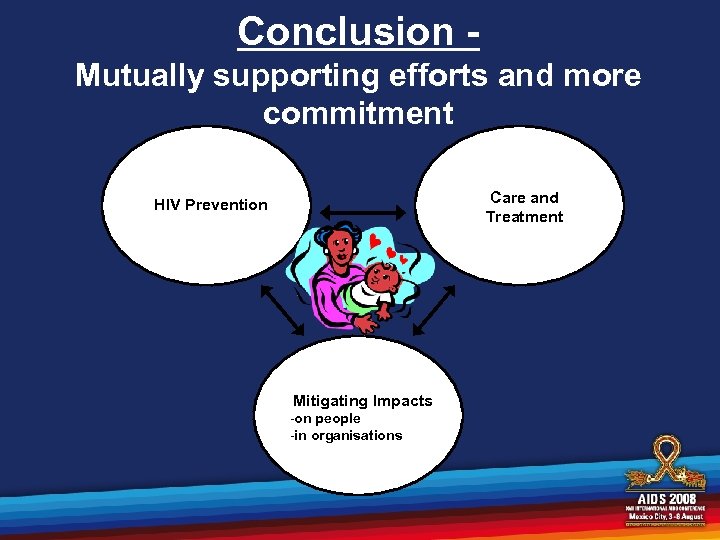
Conclusion Mutually supporting efforts and more commitment Care and Treatment HIV Prevention Mitigating Impacts -on people -in organisations
Some References • US PHS (2002) 'Guidelines for Preventing Opportunistic Infections Among HIV-Infected Persons' • Control of Communicable diseases and prevention of epidemics. http: //www. searo. who. int • HIV in Humanitarian situations http: //www. aidsandemergencies. org/cms/ • Estimates of HIV burden in emergencies M Lowicki-Zucca, P B Spiegel, S Kelly, K-L Dehne, N Walker, P D Ghys, Sex. Transm. Inf. 2008; 84; i 42 -i 48
Appreciation • Camilla Knox-Peebles - OGB Humanitarian Dept. EFSL Focal point • Daudi Bikaba - OGB Humanitarian Dept. PHE Focal point • Carron Basu Ray – OGB Program Resource centre • Dr. Harriet Kivumbi – Oxfam International • All field staff in all the country mentioned in the presentation
Скачать презентацию Reducing vulnerabilities of People Living With HIV and
5576d940299dce6e4226e783d2363b43.ppt