 Скачать презентацию Reducing the Vulnerability of Coastal Communities A Partnership
c042a94a5f3c622fceb93b6499cd90ab.ppt
- Количество слайдов: 15



Reducing the Vulnerability of Coastal Communities: A Partnership Approach A Case Study from Samoa Indonesia-NZ DRM Conference and Workshop Jakarta, 5 -6 August 2008 Michele Daly – Kestrel Group Graeme Roberts – Beca International Consultants
Strengthening DRM capacity Two Examples • How the private sector and the local community in partnership with the government can achieve sustainable DRM outcomes – integration of land use planning and environmental management with mitigation and response is feasible at the local community level – Shift to collective ownership of risk – DRM is everyone’s responsibility – Effective partnerships can significantly increase capacity and capability
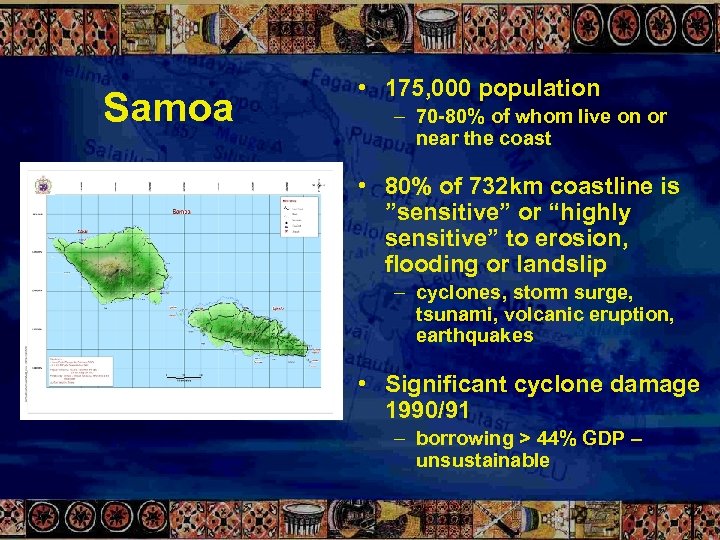
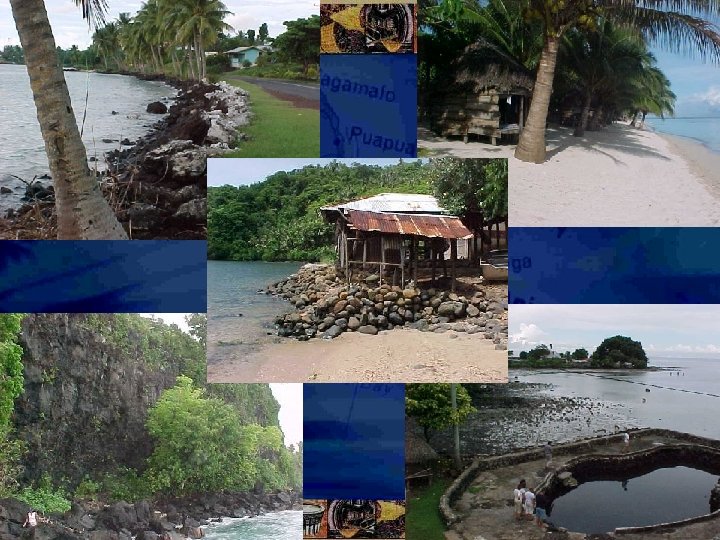
Samoa • 175, 000 population – 70 -80% of whom live on or near the coast • 80% of 732 km coastline is ”sensitive” or “highly sensitive” to erosion, flooding or landslip – cyclones, storm surge, tsunami, volcanic eruption, earthquakes • Significant cyclone damage 1990/91 – borrowing > 44% GDP – unsustainable
Investing in Sustainable Growth & Protection 2004 -2008 4 integrated workstreams – Environmental management – Natural risk management – Natural resource management – Disaster risk management
Key Programme Features • Recognition that sustainable management requires DRM as a component • Necessity to secure integrated messages national – district – village levels – Effective national strategy/ plan and implementation partnerships – Key relationships with land use planning agency • Critical components recognised – Process of integration, strengthening, mainstreaming
Coastal Infrastructure Management Strategy & Plans • National level strategy to drive planning process - theme of “resilience” – Objectives of the strategy achieved for each of Samoa’s 41 Districts (~350 villages) • Foundation principles – – Concept of “partnership” National – district – village integration Highly participatory process Respecting “fa’a samoa” & “fa’a matai”
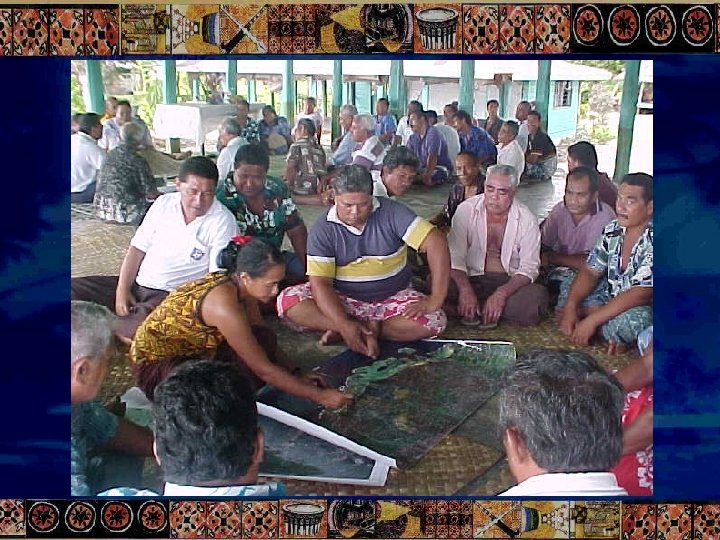
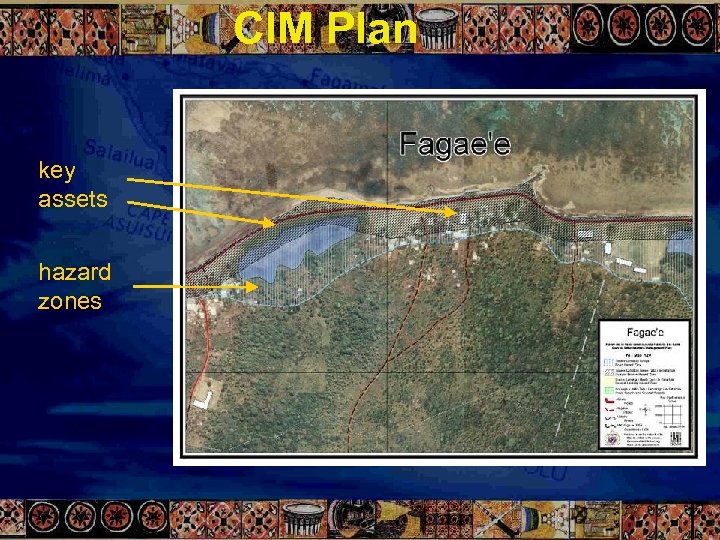
CIM Plan key assets hazard zones
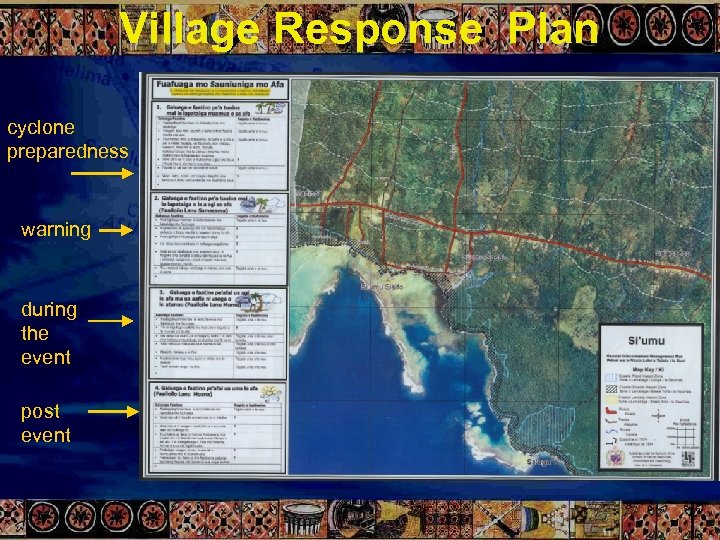
Village Response Plan cyclone preparedness warning during the event post event
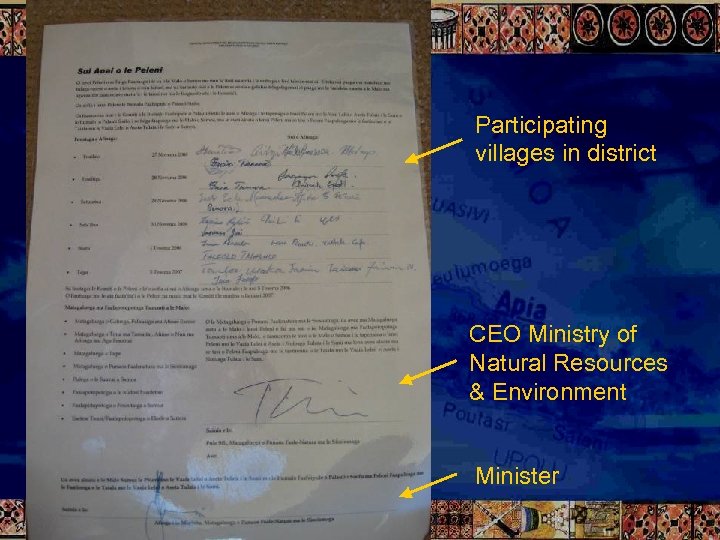
Participating villages in district CEO Ministry of Natural Resources & Environment Minister
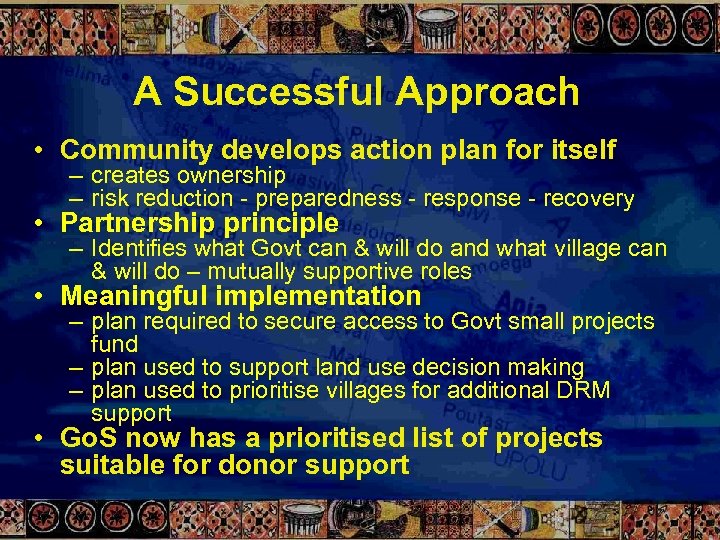
A Successful Approach • Community develops action plan for itself – creates ownership – risk reduction - preparedness - response - recovery • Partnership principle – Identifies what Govt can & will do and what village can & will do – mutually supportive roles • Meaningful implementation – plan required to secure access to Govt small projects fund – plan used to support land use decision making – plan used to prioritise villages for additional DRM support • Go. S now has a prioritised list of projects suitable for donor support
Agency Response Plans • Increasing understanding of national disaster management framework, roles and responsibilities • Developing link to national response structure in agency plans • emergency services (police, fire service) • lifeline utilities (telecommunications, water and wastewater, power, fuel, airport, roading) • health agencies (hospitals, public health) • government ministries • hotels association • NGOs
Agency Response Plans cont. / • Increasing levels of inter-agency cooperation and understanding of interdependencies and available resources (sector based approach) – sustainability through partnerships (public: private) – increasing capacity and capability • Encouraging better business continuity management
Challenges/ Opportunities NZ & Indonesia • Implementation (mainstreaming in practice) – be creative, flexible, adapt what works elsewhere • Risk management approach – larger steps to be made than with 4 R approach • Communities owning and managing their risks – collective ownership of and responsibility for risk – cultural shift
Скачать презентацию Reducing the Vulnerability of Coastal Communities A Partnership
c042a94a5f3c622fceb93b6499cd90ab.ppt