 Скачать презентацию Reducing the Impact of Global Climate Change on
c1dd11a7b5d21a1aa223a9d671047a93.ppt
- Количество слайдов: 31



Reducing the Impact of Global Climate Change on Agriculture - The Use of Technological Innovation Aliza Fleischer 1, Evgeni Shifrin 1 and Robert Mendelsohn 2 1 Department of Agricultural Economics and Management, The Hebrew University of Jerusalem 2 School of Forestry and Environmental Studies, Yale University
Background • Climate change is threatening agricultural production in various world regions • The livelihoods of millions of poor rural people are at risk • Large potential damages have been predicted by many agronomic studies (Rosenzweig and Parry 1994; Reilly et al. 1996).
Economic Approaches • The agro-economic (production) approach developed by Adams et al. (1989; 1995) begins with agronomic models that predict how climate change will affect yields of specific crops. • The Recardian approach uses the land value or net revenues it allows farmers to adapt to climate change by choosing different crops, crop mixes, technologies and management practices under different climate conditions. Impact of GCC is less drastic then in the agro-economic approach • We claim that in the Israeli case the use of technology in agriculture is sensitive to climate conditions.
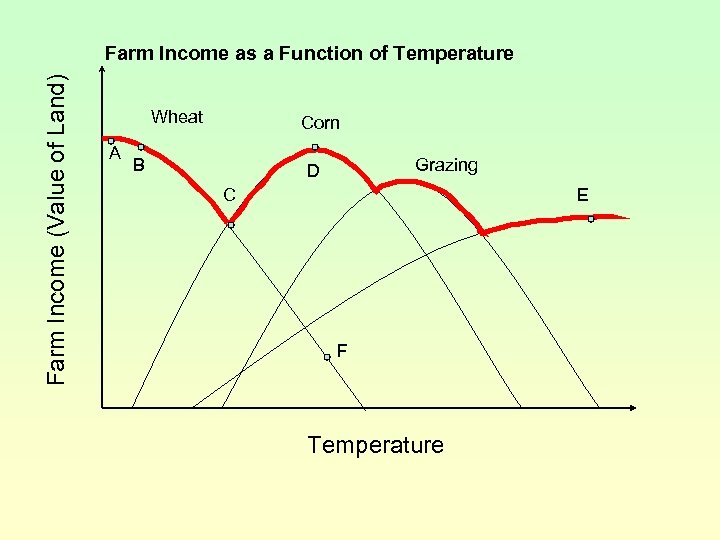
Farm Income (Value of Land) Farm Income as a Function of Temperature Wheat A Corn B Grazing D C E F Temperature
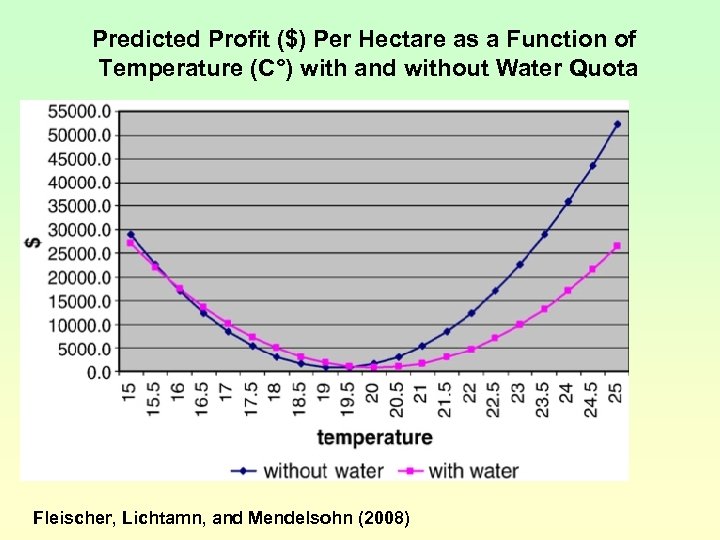
Predicted Profit ($) Per Hectare as a Function of Temperature (C°) with and without Water Quota Fleischer, Lichtamn, and Mendelsohn (2008)
Objectives • to examine the adoption of irrigation and cover technologies in Israel • to test whether the technology decisions are sensitive to climate
Israel’s Agriculture Sector • Israel's agricultural sector is characterized by an intensive system of production stemming from the need to overcome a scarcity water and arable land. • Israeli farmers have come to rely on technology and capital as substitutes for the scarce water and harsh climate they face. • The combination of technology and capital has turned the warmer and potentially unproductive regions of Israel into highly profitable vegetable, fruit, and flower farms. • Farmers in Israel use different technologies to increase their revenues and protect their crops from fluctuations in weather and climate conditions. • These technologies include irrigation, different types of cover, hybrid varieties, hormones and other techniques. • Irrigation and cover are widely used. Almost all the crops excluding some of the field crops are irrigated and different types of cover are used. • Field crops are grown on large plots of marginal lands and depend on rainfall more than other crops.
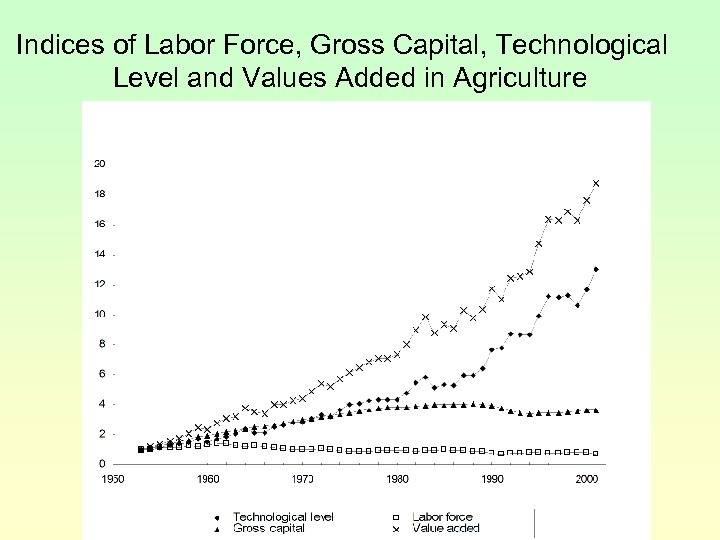
Indices of Labor Force, Gross Capital, Technological Level and Values Added in Agriculture
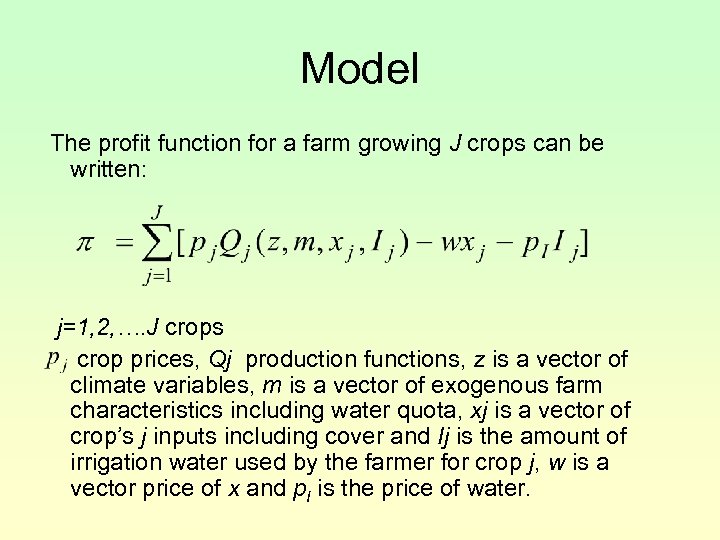
Model The profit function for a farm growing J crops can be written: j=1, 2, …. J crops crop prices, Qj production functions, z is a vector of climate variables, m is a vector of exogenous farm characteristics including water quota, xj is a vector of crop’s j inputs including cover and Ij is the amount of irrigation water used by the farmer for crop j, w is a vector price of x and p. I is the price of water.
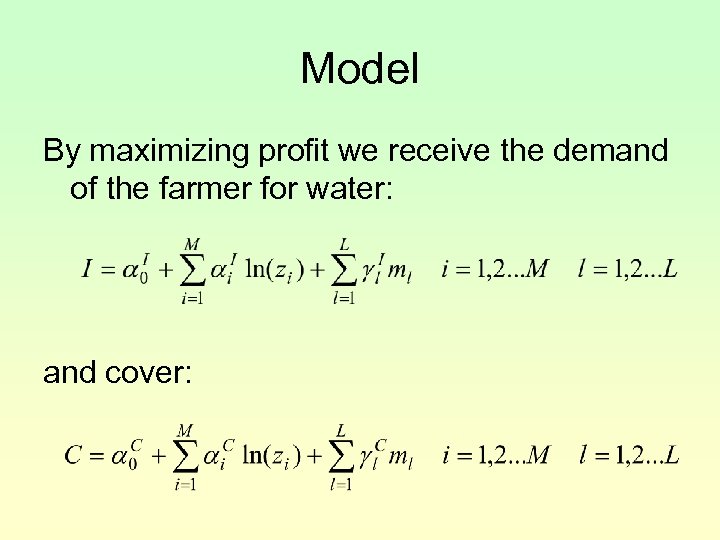
Model By maximizing profit we receive the demand of the farmer for water: and cover:
Data • Data on farm operations were collected by conducting a face-to-face survey among a representative sample of farmers. • The sampled farmers were chosen according to their location in the geo-climatic zones and type of village. • A total of 86 out of 863 rural villages were sampled: 41 Moshavim, 31 Kibbutzim, and 14 others. • A total of 381 farmers were interviewed out of which 230 grew crops and the rest worked on animal husbandry farms. • In this work we concentrated on crops and thus most of the analysis is conducted on the 230 farms with crops. • The survey asked numerous questions about farm characteristics, farmer characteristics, farm choices, and farm outcomes.
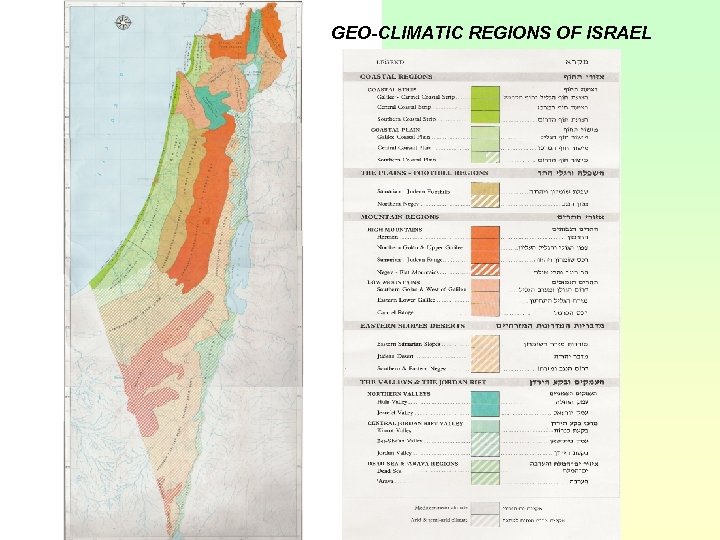
GEO-CLIMATIC REGIONS OF ISRAEL
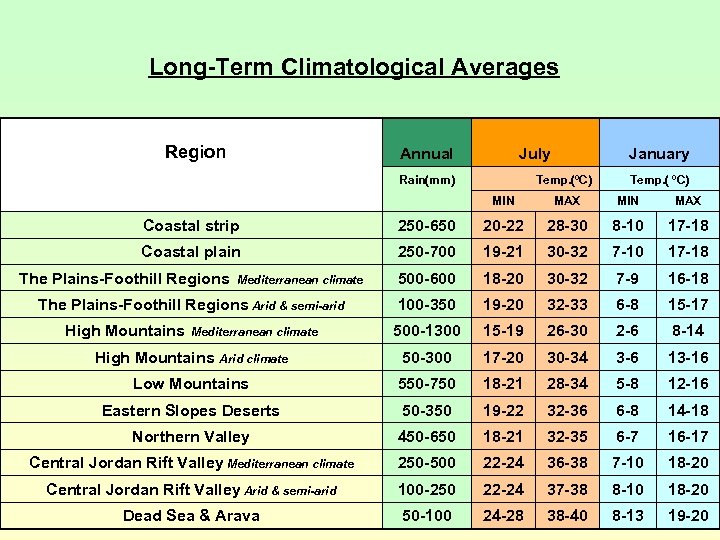
Long-Term Climatological Averages Region Annual July Rain(mm) January Temp. (ºC) Temp. ( ºC) MIN MAX Coastal strip 250 -650 20 -22 28 -30 8 -10 17 -18 Coastal plain 250 -700 19 -21 30 -32 7 -10 17 -18 The Plains-Foothill Regions Mediterranean climate 500 -600 18 -20 30 -32 7 -9 16 -18 The Plains-Foothill Regions Arid & semi-arid 100 -350 19 -20 32 -33 6 -8 15 -17 500 -1300 15 -19 26 -30 2 -6 8 -14 High Mountains Arid climate 50 -300 17 -20 30 -34 3 -6 13 -16 Low Mountains 550 -750 18 -21 28 -34 5 -8 12 -16 Eastern Slopes Deserts 50 -350 19 -22 32 -36 6 -8 14 -18 Northern Valley 450 -650 18 -21 32 -35 6 -7 16 -17 Central Jordan Rift Valley Mediterranean climate 250 -500 22 -24 36 -38 7 -10 18 -20 Central Jordan Rift Valley Arid & semi-arid 100 -250 22 -24 37 -38 8 -10 18 -20 Dead Sea & Arava 50 -100 24 -28 38 -40 8 -13 19 -20 High Mountains Mediterranean climate
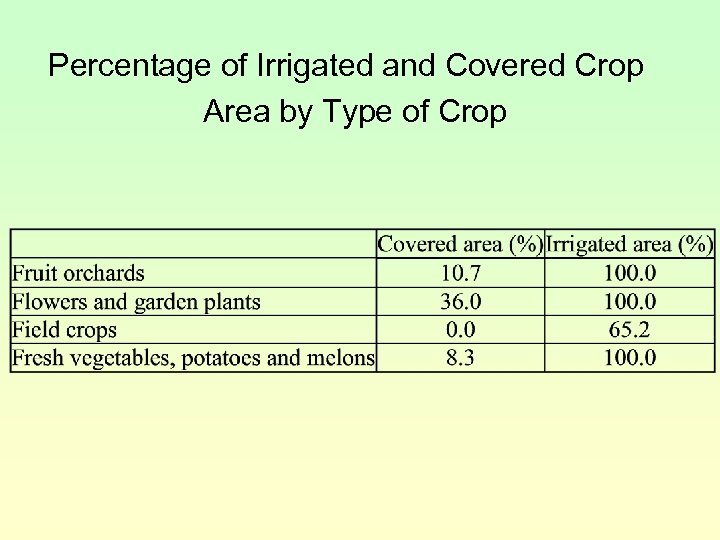
Percentage of Irrigated and Covered Crop Area by Type of Crop
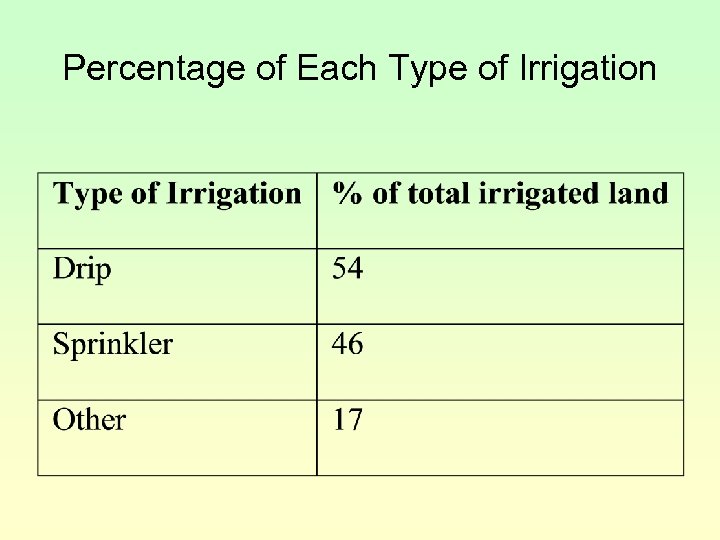
Percentage of Each Type of Irrigation
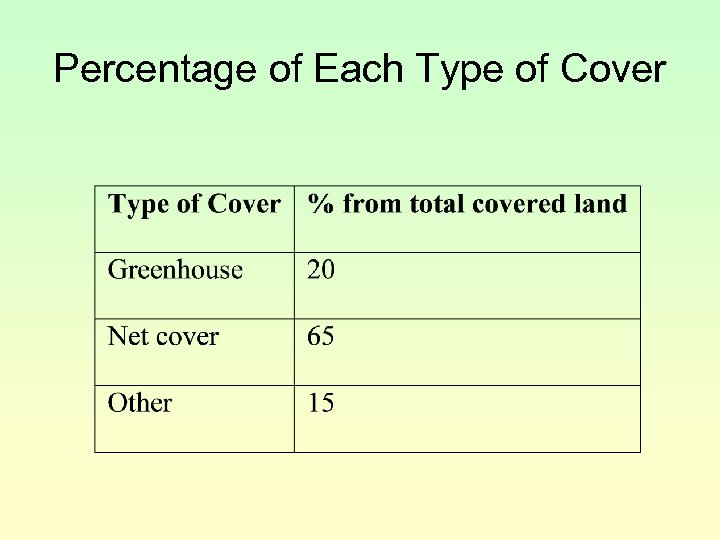
Percentage of Each Type of Cover
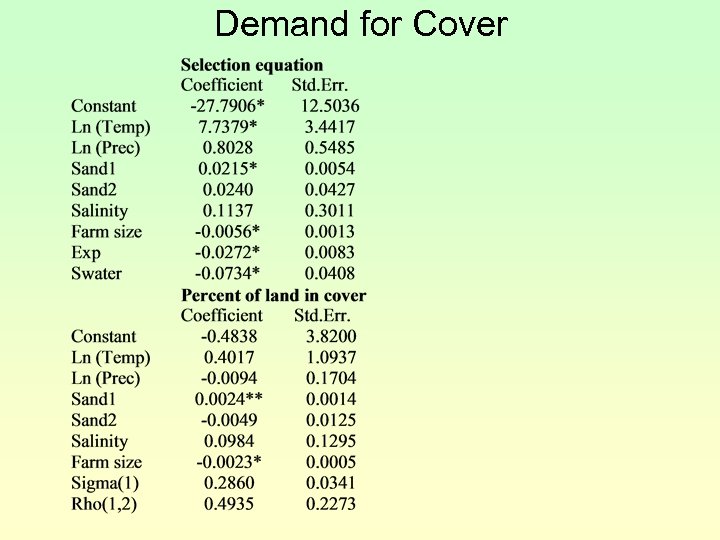
Demand for Cover
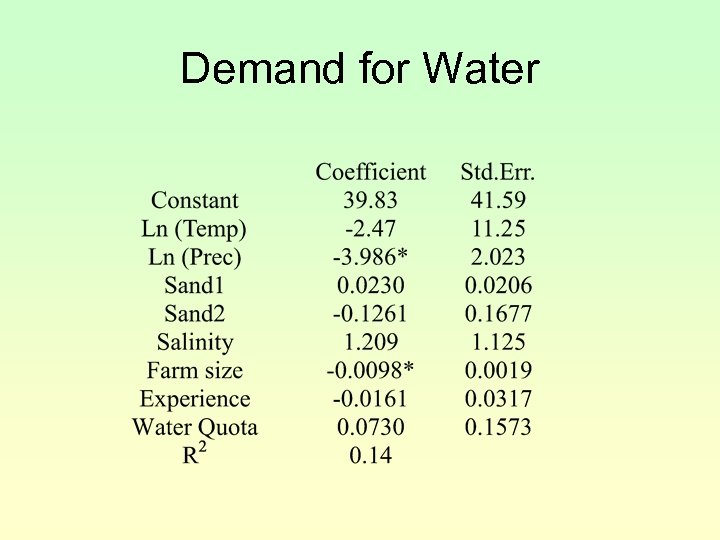
Demand for Water
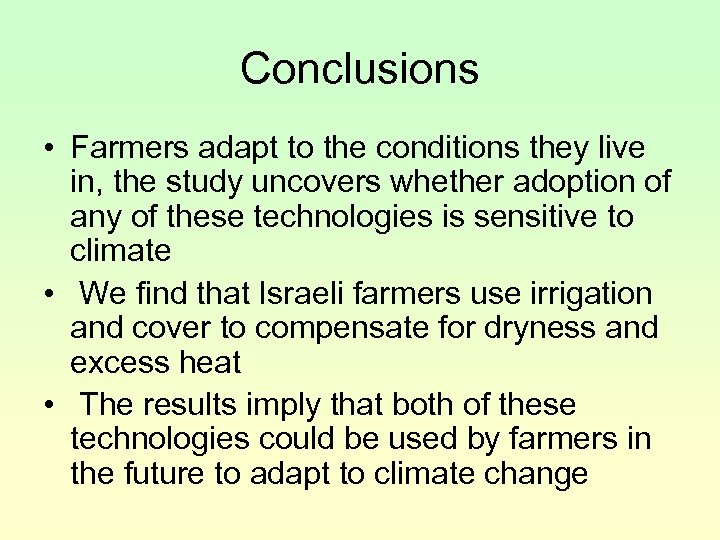
Conclusions • Farmers adapt to the conditions they live in, the study uncovers whether adoption of any of these technologies is sensitive to climate • We find that Israeli farmers use irrigation and cover to compensate for dryness and excess heat • The results imply that both of these technologies could be used by farmers in the future to adapt to climate change
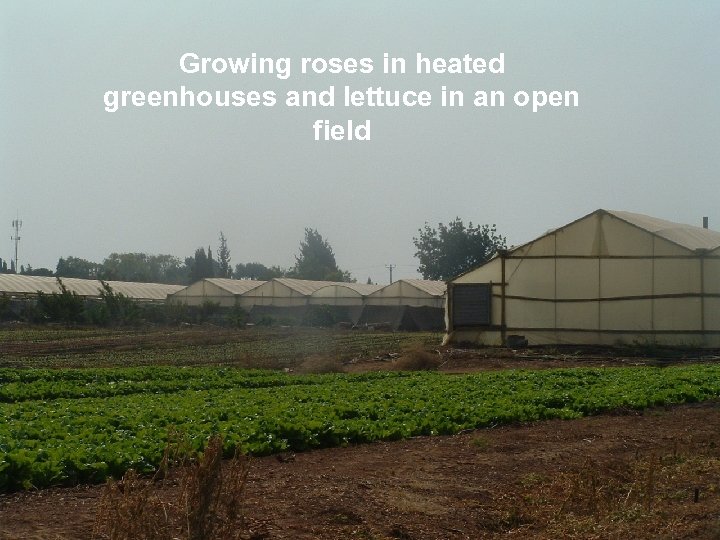
Growing roses in heated greenhouses and lettuce in an open field
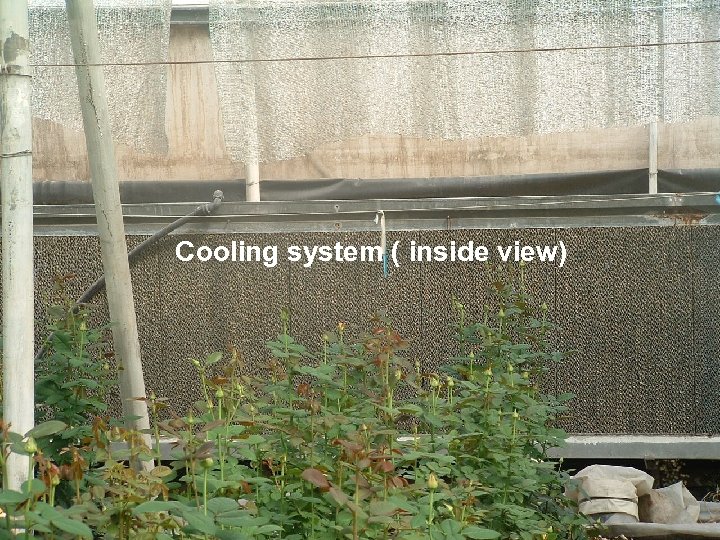
Cooling system ( inside view)
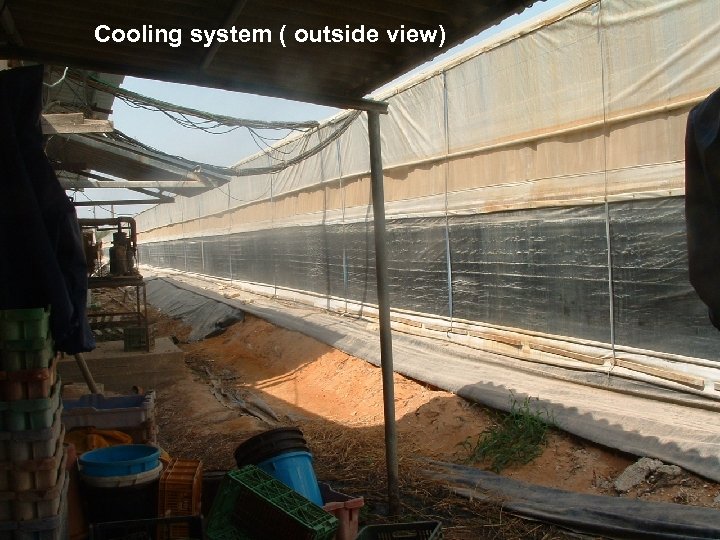
Cooling system ( outside view)
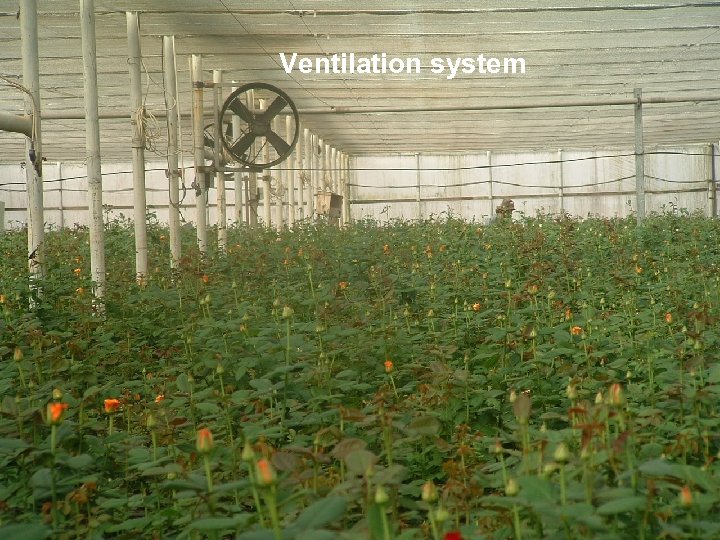
Ventilation system
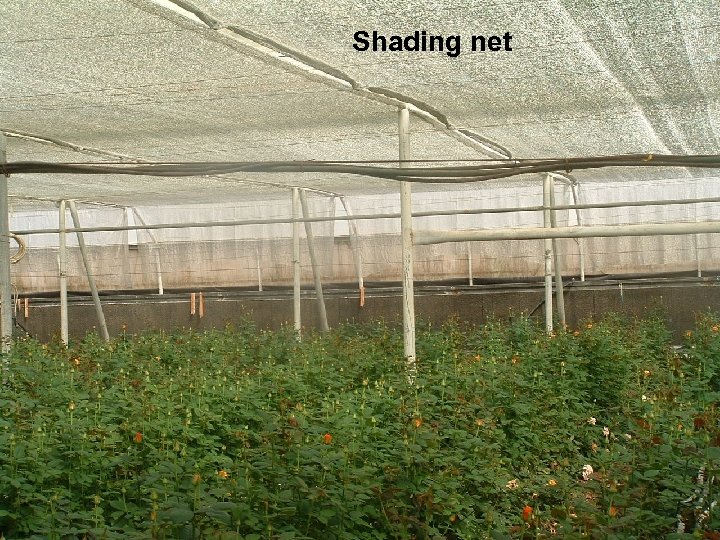
Shading net
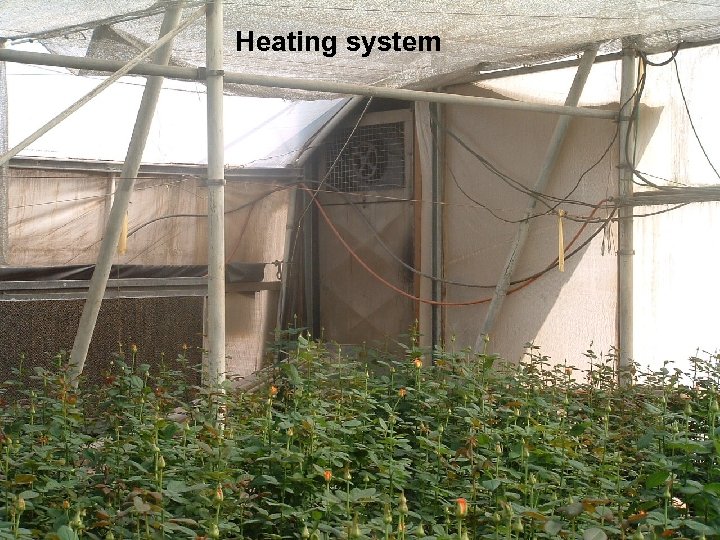
Heating system
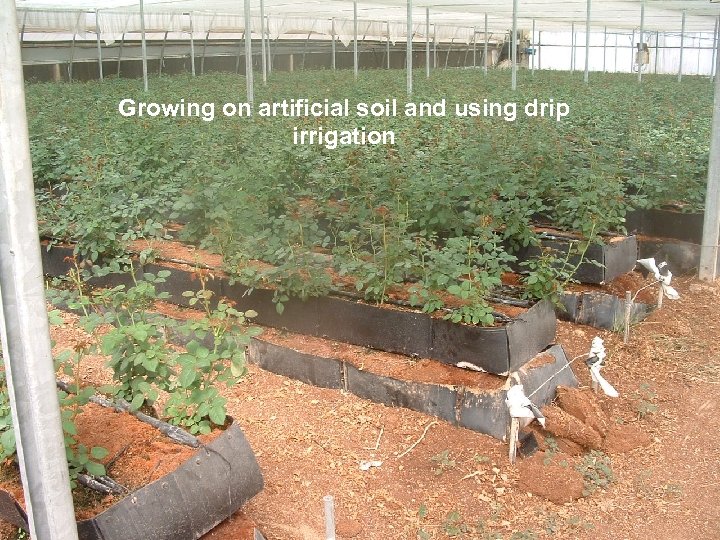
Growing on artificial soil and using drip irrigation
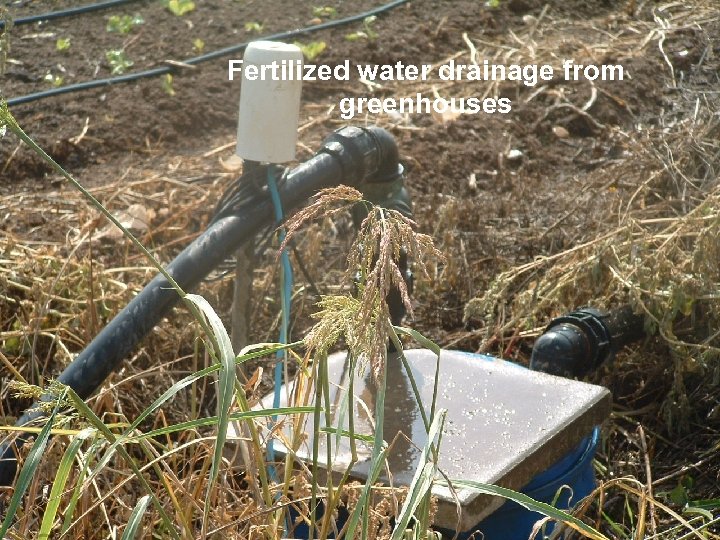
Fertilized water drainage from greenhouses
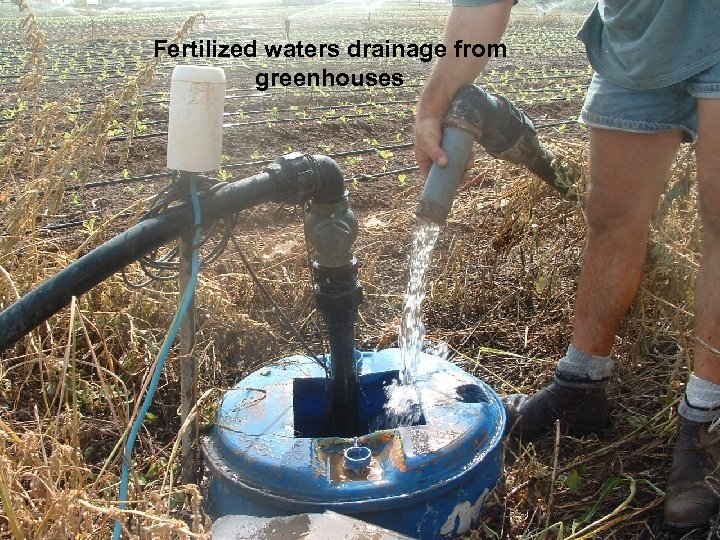
Fertilized waters drainage from greenhouses
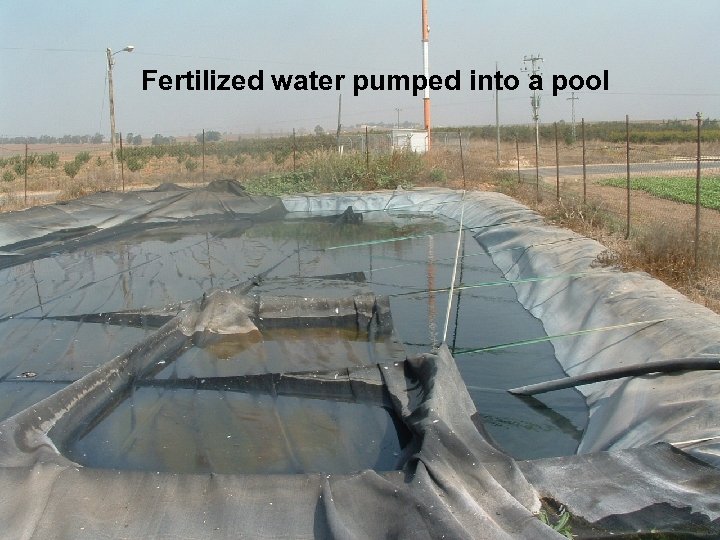
Fertilized water pumped into a pool
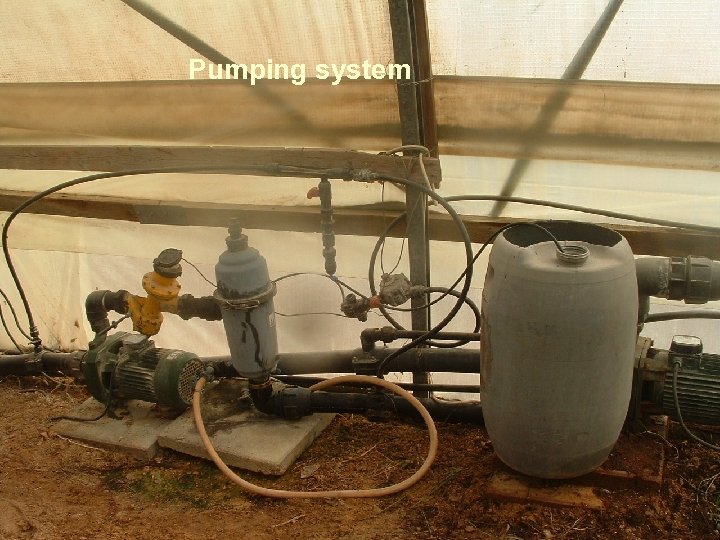
Pumping system
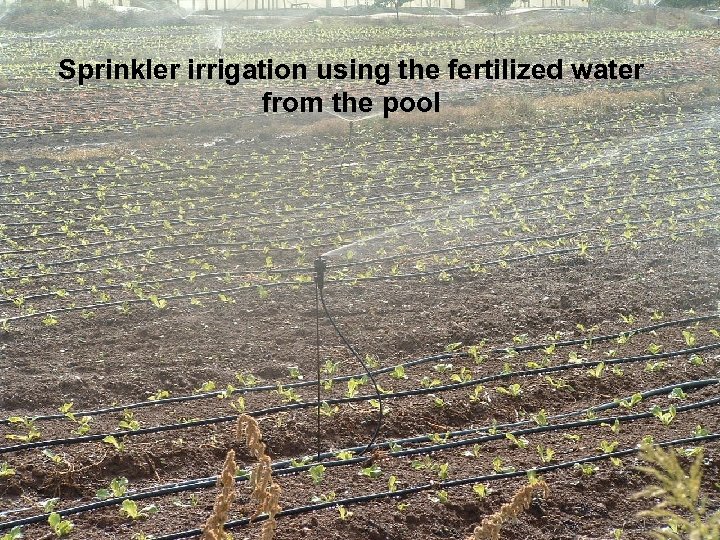
Sprinkler irrigation using the fertilized water from the pool
Скачать презентацию Reducing the Impact of Global Climate Change on
c1dd11a7b5d21a1aa223a9d671047a93.ppt