 Скачать презентацию Reconstructing Partnership between University and Schools for Indigenous
4ef5f08fa977ff93fb7c24fbbe4e6565.ppt
- Количество слайдов: 48



Reconstructing Partnership between University and Schools for Indigenous Culturally Responsive Science Curriculum Development Chien-Lung Wang Ju-Hui Chang Department of Education, NTTU
I. Introduction • Action research • Built partnership locally in 06 -07 – NTTU, communities, museum, schools – The Botanical World of Ami People – Disadvantages, disconnections • 08 -09 – Reflected globally – Reconstructing partnership locally
Reflected globally • Further literature review/WIPC: E 2008 • Learning indigenous culture in education – Indigenous peoples’ right, affirmed by UN – “The right to be indigenous” is the prerequisite • Decolonizing methodologies (Smith, 1999) • Culturally responsive science curriculum – – University of Alaska Fairbanks, USA University of Saskatchewan, Canada Association of Native Educators Culture guidelines and curriculum materials
Reconstructing partnership locally • From the global context • Strategies affirmed – Building partnership of indigenous educators – Integrating resources protected by law • Strategies identified – Establishing web-site for partnership – Developing curriculum guidelines • For culturally responsive science curriculum development
II. Indigenous Culturally Responsive Science Curriculum • Multicultural science education – Western-centric science was challenged • Equity for Indigenous students • Three approaches – Place-based science curriculum – Culturally responsive science curriculum – Culture-based science curriculum • The extent of emphasizing indigenous culture
1. Definition of CRSC • Integrate native and western knowledge system around science topics – Enhance the cultural well being and scientific skills • Schools recognize and make connection to the understandings students • Recognize multiple ways of viewing, structuring and transmitting knowledge – Insights and limitation
2. Integrating IK & WS • Social goals – harmony with vs. power over nature • Intellectual goals – coexistence with vs. explain mystery • Association with human action – subjectively related vs. decontextualized • General perspective – holistic vs. manipulative • Validity – survival vs. predictive (Aikenhead, 2006)
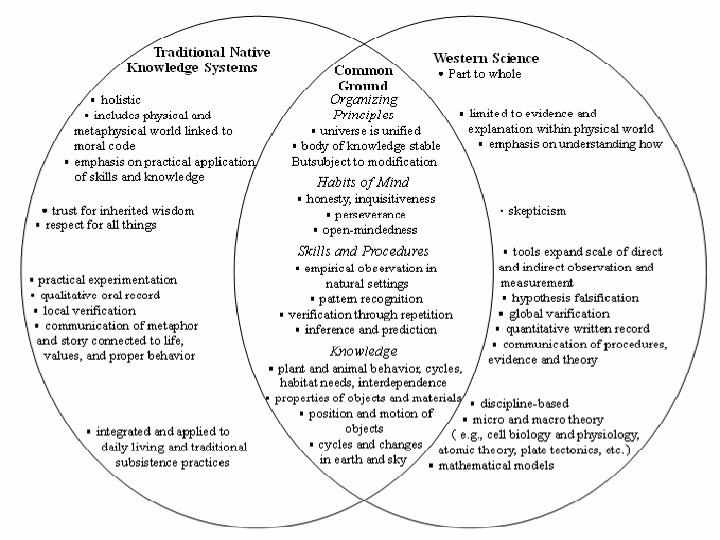
Two circles • Native knowledge – Make prominent part of schooling • Western science – Connect western knowledge to local knowledge • Common ground – Can be achieved with both systems • The foundation for integration
Four dimensions • Organizing principles – holistic/ unified/ part to whole • Habits of mind – respect/ open-mindedness/ skepticism • Skills and procedures – practical experimentation/ empirical observation/ hypothesis falsification • Knowledge – Integrated/plant & animal/ disciplinebased
3. Curriculum Development in Alaska • AKRSI, UAF – Partnership: 176 schools of 20 districts – 5 geographical, 16 language regions – Associations of Native Educators – 7 Culture Guidelines • Adopted by Alaska DOE • Supplement for State Guidelines • Standard-based teaching materials – Alaska Native Knowledge Network
4. Curriculum Development in Canada • Manitoba – Integrating Aboriginal Perspective into Curriculum – K-12 Aboriginal Languages & Cultures • Science Curriculum – Identify one example of Aboriginal tool for each of 6 types of simple machines – Fire drills—pulley systems
University of Saskatchewan • 6 teachers • Rekindling Traditions – Cross-culture science & Technology – Snow shoes, wild rice, trapping, night sky – Nature hidden gift, survival in our land
III. Reconstructing Partnership for Indigenous Culturally Responsive Science Curriculum Development in Taitung, Taiwan
1. Building Partnership: 06 -07 • National Science Council: Funding • RCSMTLIC, NTTU • Elders of Ami communities – Produce the cultural artifact • Museum • Schools mainly in Tonhe Township – 100 teachers & 1000 students
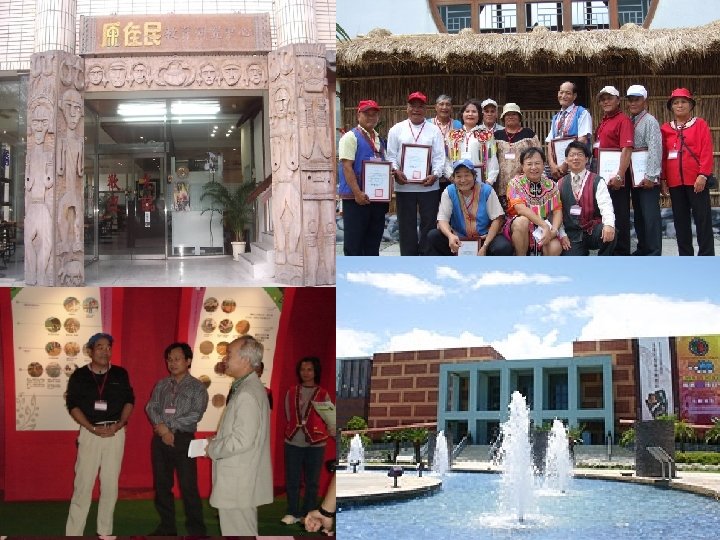
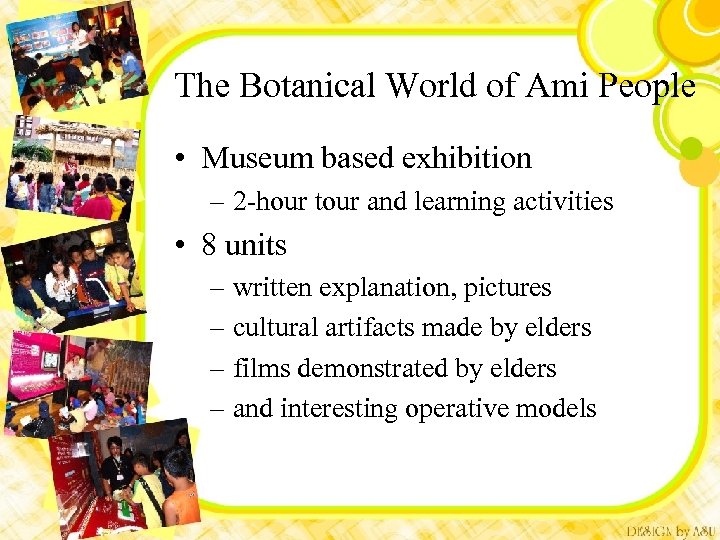
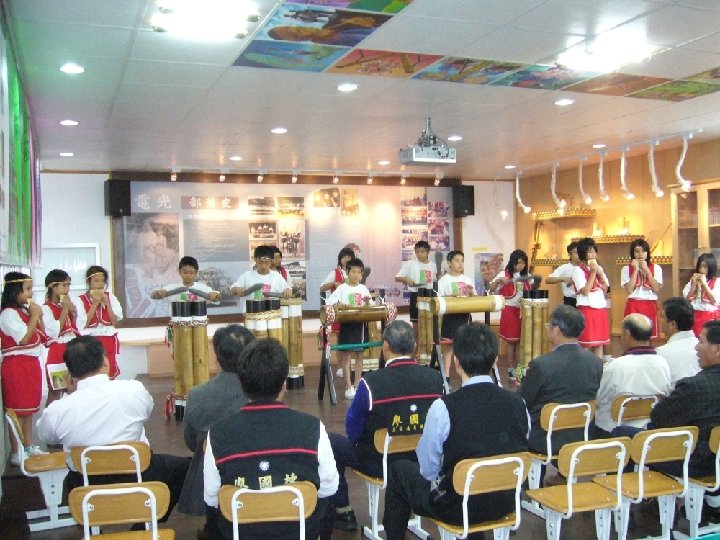
The Botanical World of Ami People • Museum based exhibition – 2 -hour tour and learning activities • 8 units – written explanation, pictures – cultural artifacts made by elders – films demonstrated by elders – and interesting operative models
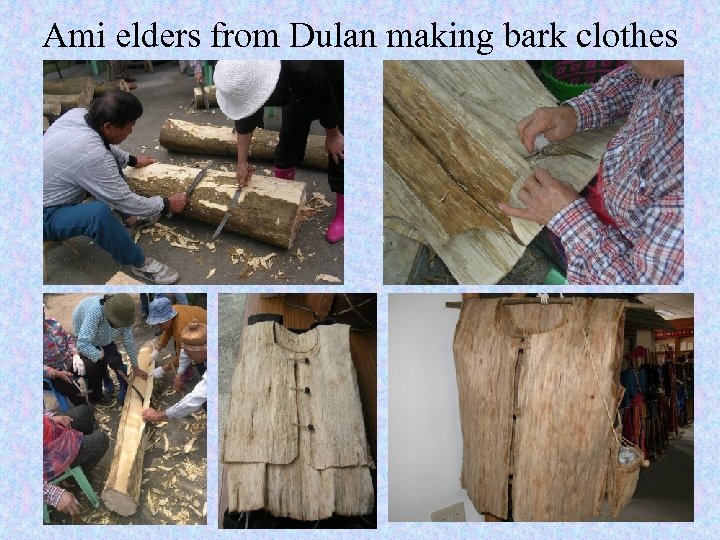
Ami elders from Dulan making bark clothes
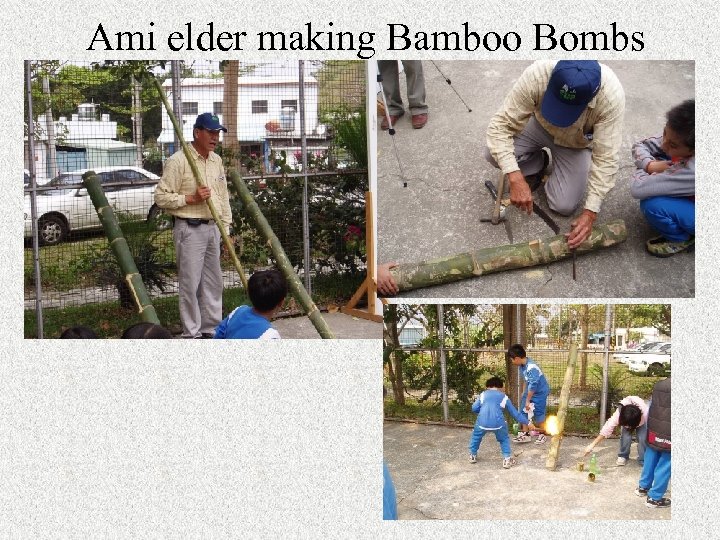
Ami elder making Bamboo Bombs
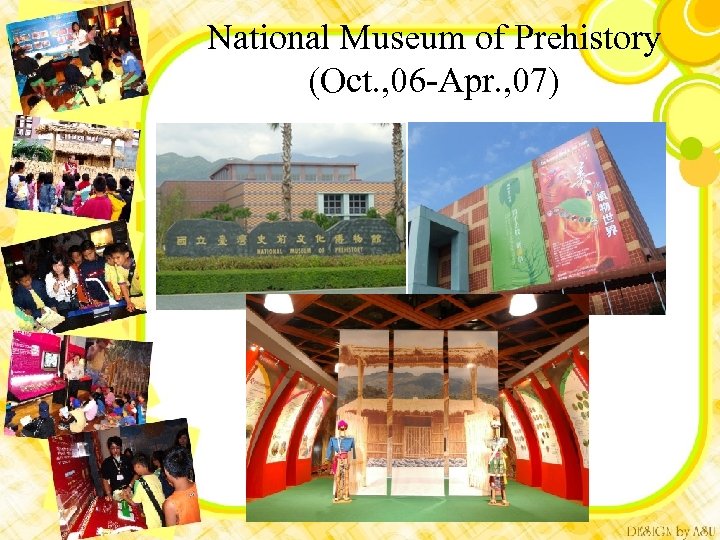
National Museum of Prehistory (Oct. , 06 -Apr. , 07)
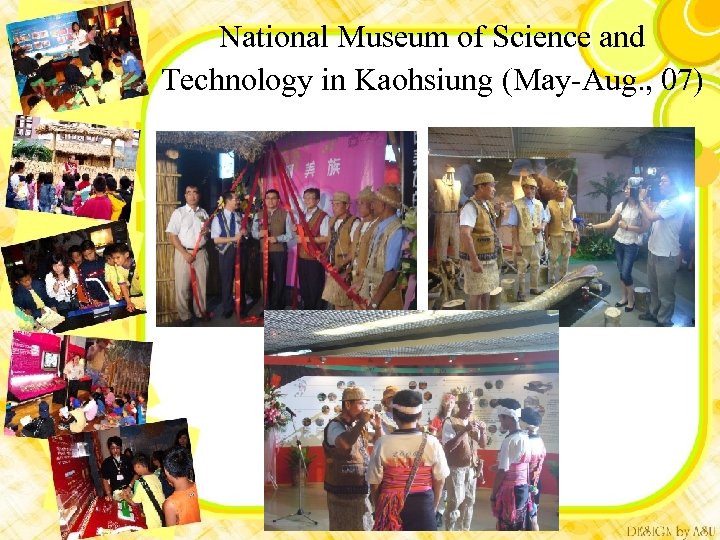
National Museum of Science and Technology in Kaohsiung (May-Aug. , 07)
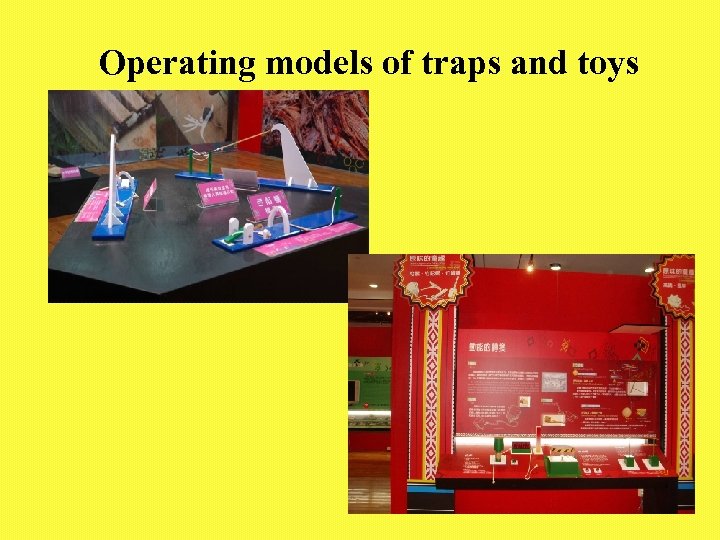
Operating models of traps and toys
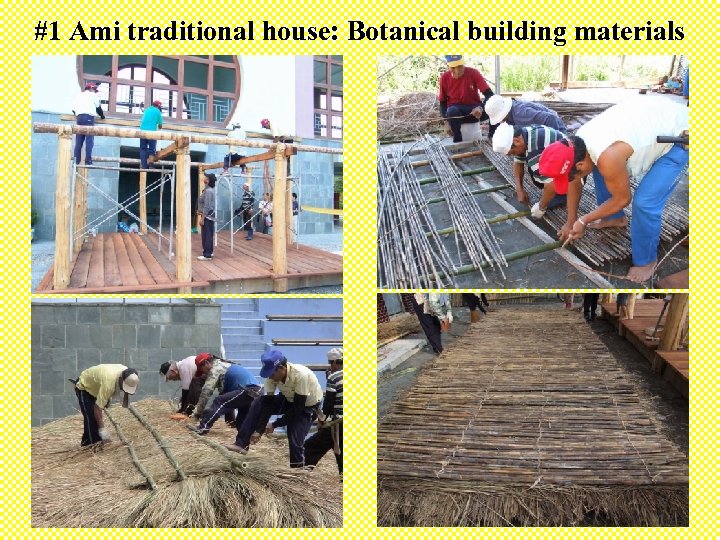
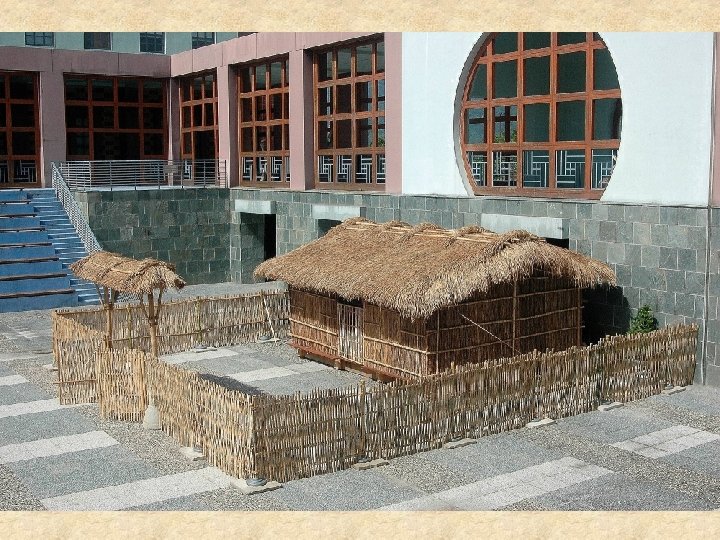
#1 Ami traditional house: Botanical building materials
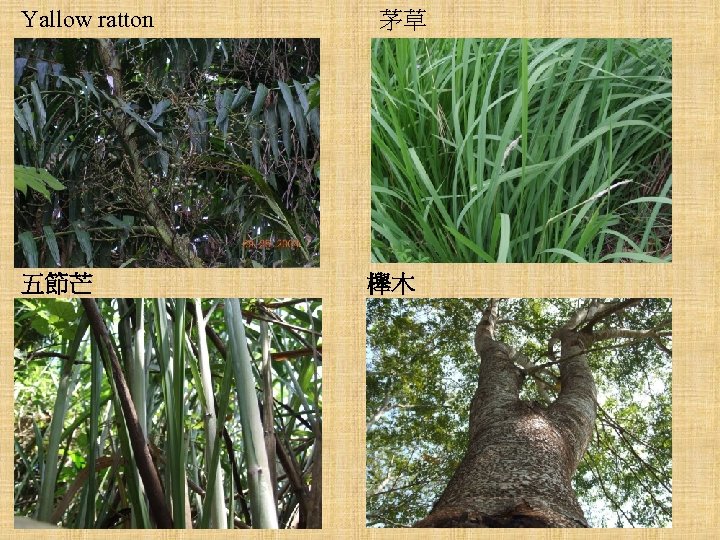
Yallow ratton 五節芒 茅草 櫸木
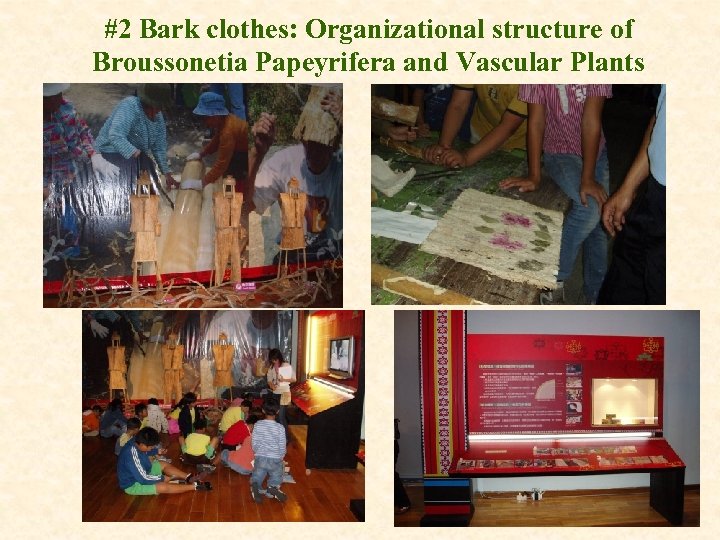
#2 Bark clothes: Organizational structure of Broussonetia Papeyrifera and Vascular Plants
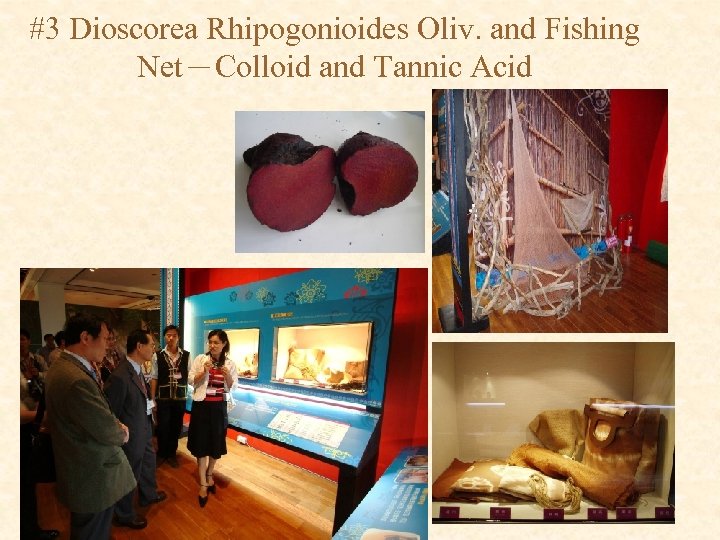
#3 Dioscorea Rhipogonioides Oliv. and Fishing Net-Colloid and Tannic Acid
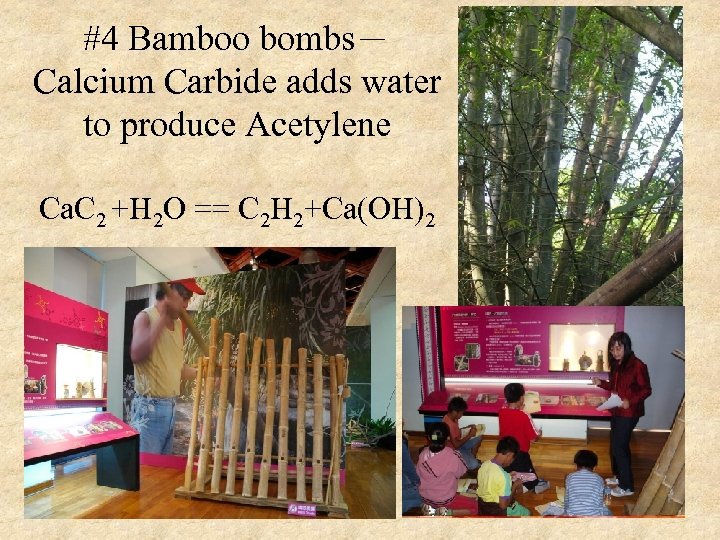
#4 Bamboo bombs- Calcium Carbide adds water to produce Acetylene Ca. C 2 +H 2 O == C 2 H 2+Ca(OH)2
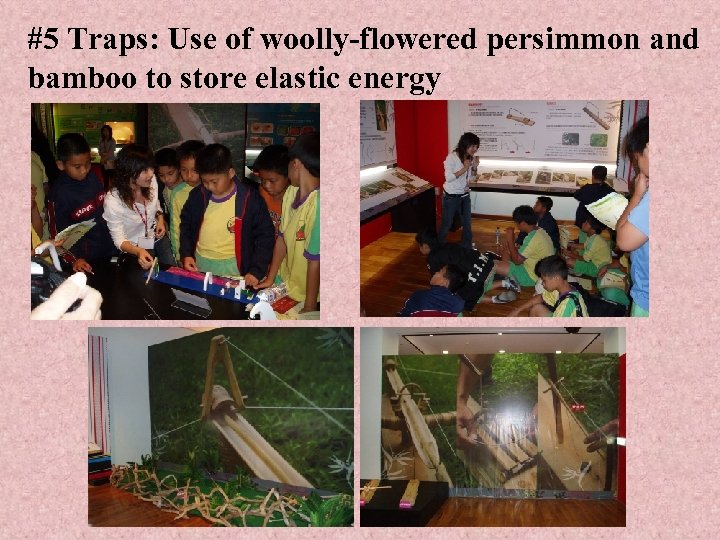
#5 Traps: Use of woolly-flowered persimmon and bamboo to store elastic energy
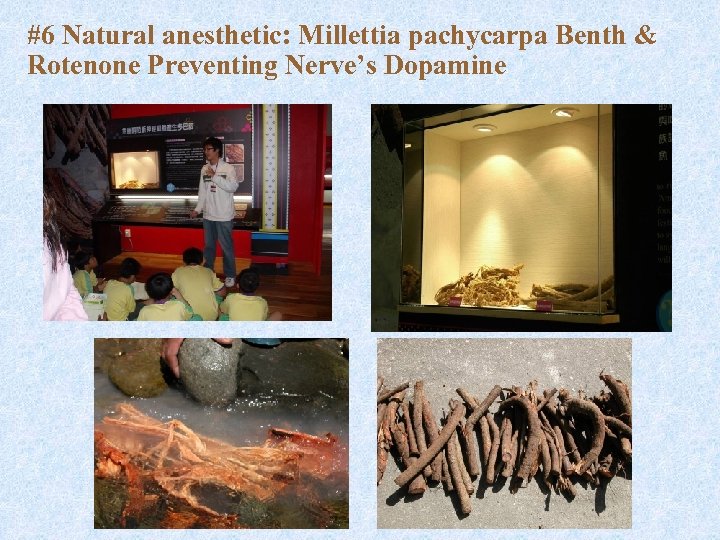
#6 Natural anesthetic: Millettia pachycarpa Benth & Rotenone Preventing Nerve’s Dopamine
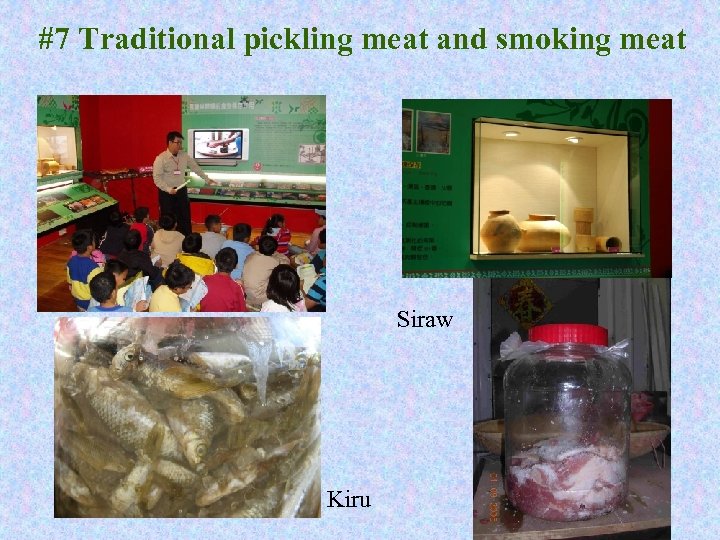
#7 Traditional pickling meat and smoking meat Siraw Kiru
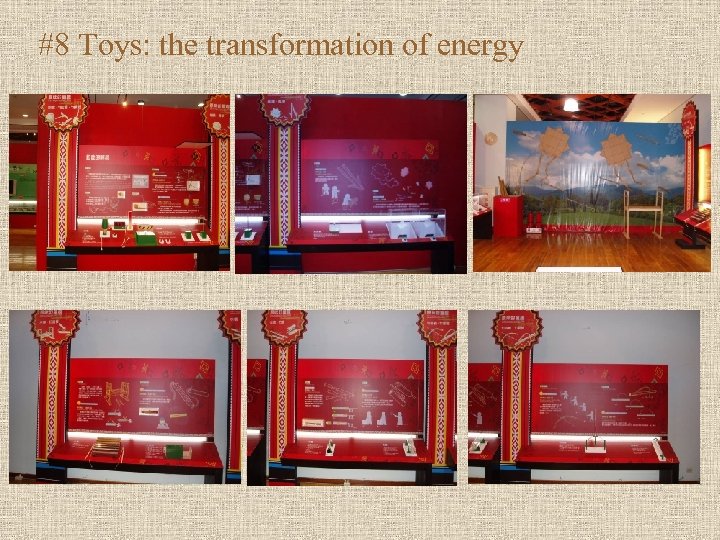
#8 Toys: the transformation of energy
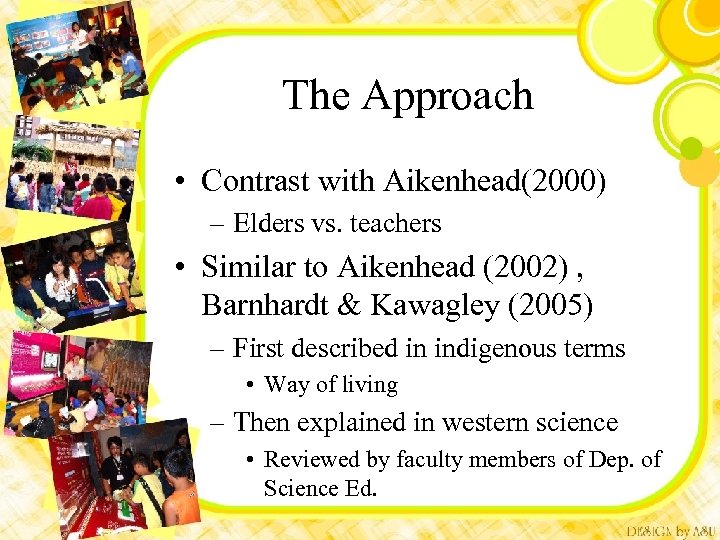
The Approach • Contrast with Aikenhead(2000) – Elders vs. teachers • Similar to Aikenhead (2002) , Barnhardt & Kawagley (2005) – First described in indigenous terms • Way of living – Then explained in western science • Reviewed by faculty members of Dep. of Science Ed.
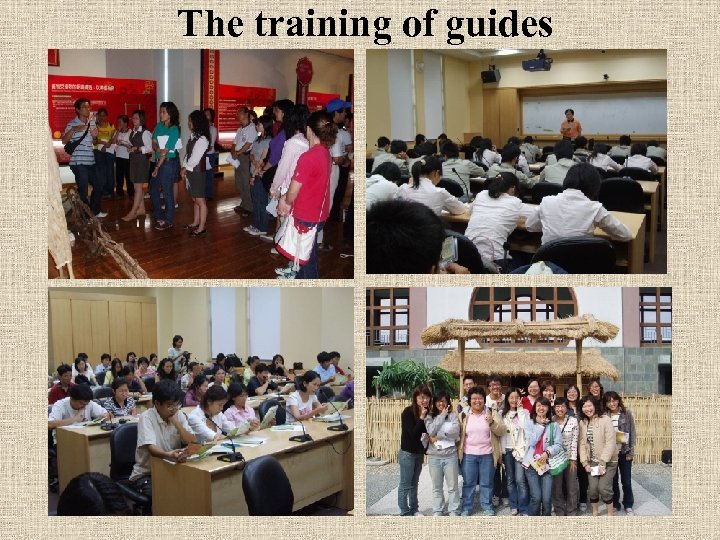
The training of guides
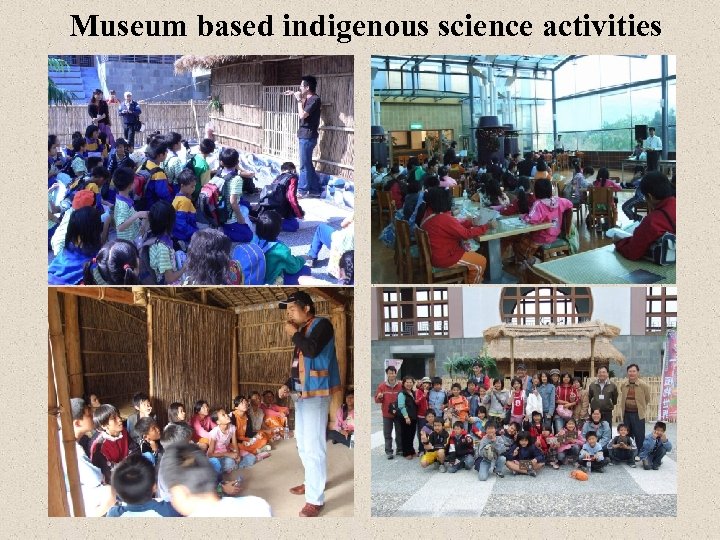
Museum based indigenous science activities
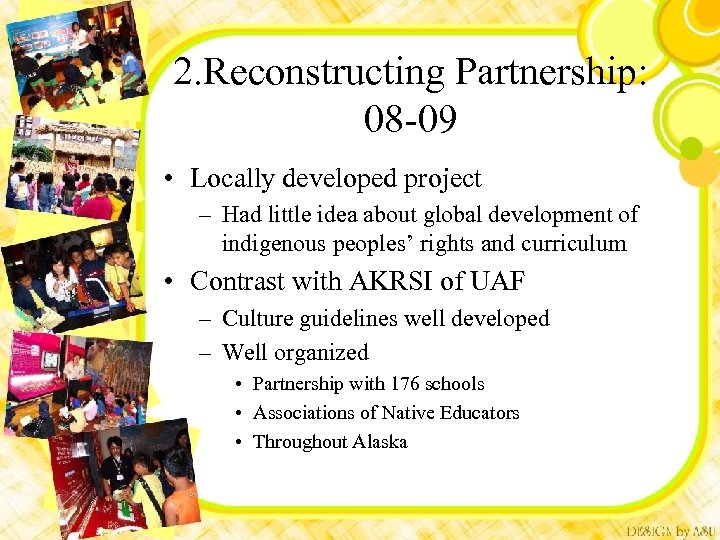
2. Reconstructing Partnership: 08 -09 • Locally developed project – Had little idea about global development of indigenous peoples’ rights and curriculum • Contrast with AKRSI of UAF – Culture guidelines well developed – Well organized • Partnership with 176 schools • Associations of Native Educators • Throughout Alaska
Disadvantages #1 • CIER- State-wide project for Council of Indigenous Peoples – 100 resource centers and classrooms – Partnership between schools and educators hadn’t been organized • Most teachers are not indigenous – Not easy to incorporate culture – One-time museum activities
Action Strategies #1 • Reconstructing Partnership – Not only Ami educators – Educators of each indigenous groups – Who really care and are experienced – With government’s resource – Protected by Indigenous Education Act • Web-site for the Partnership – ANKN of UAF
Context of Taiwan • Indigenous peoples of Taiwan – 2% of the population – Identity constructed after 1987 in the indigenous movement – Constitutional Amendment of 1997 • Indigenous education Act in 1998 – Resources were protected, but were scattered – also indigenous educators
Context of Taitung • 60 of 90 schools are in indigenous area – one-third of students are indigenous • Indigenous students: 36% – Ami 45% (4257) – Paiwan 22% (2015) – Bunun 13% (1193) • Indigenous educators: 15%
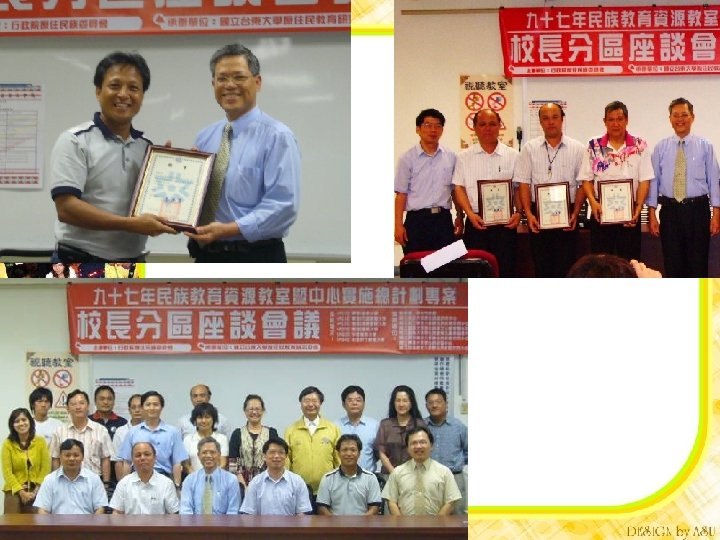
Integration of resources • Human resources – 20 senior indigenous educators – The consciousness of decolonization – Committee/ decision-making collectively • Center & Classroom for indigenous ed. – 3 centers and 26 classrooms at 29 schools • Funding – 6 million NT$ per year – 3 -year mid-term planning
Integration of resources • School-based indigenous activities – Partnership of 18 schools • • • 7 Ami 3 Bunun 5 Paiwan 1 Puyuma 2 Dao • Existing activities develop stably at schools
Disadvantages #2 • Contrast with AKRSI of UAF – Culture Responsive School Standards – Developed and adopted • Contrast with Manitoba, Canada – Guidelines for integrating aboriginal perspective into science curriculum • There is no such guidelines in Taiwan
Action Strategies #2 • With guidelines – Curriculum implemented seriously – Enhance the need for units offered • The Botanical World of Ami People • The guidelines are prepared – Mainly refer to the one of Manitoba – Put into discussion by partner educators – “The Botanical World of Ami People”
Conclusion • Partnership building from 06 to 07 – Mainly university , community and museum – Locally developed • Partnership reconstructing from 08 -09 – Reflected globally, reconstructed locally • Constructing partnership of indigenous educators • Reclaiming rights and integrating resources • Developing the curriculum guidelines – Stronger foundation for indigenous culturally responsive curriculum development
Thanks for Your Listening
Скачать презентацию Reconstructing Partnership between University and Schools for Indigenous
4ef5f08fa977ff93fb7c24fbbe4e6565.ppt