


 Скачать презентацию Recommendations to the HIT Policy Committee on ONC
dafce733bf40d0d6aff181d7022b6ecf.ppt
- Количество слайдов: 30
 Recommendations to the HIT Policy Committee on ONC Standards and Certification NPRM May 2, 2012 With Discussion Slides Certification and Adoption Workgroup Marc Probst, Intermountain Healthcare Larry Wolf, Kindred Healthcare
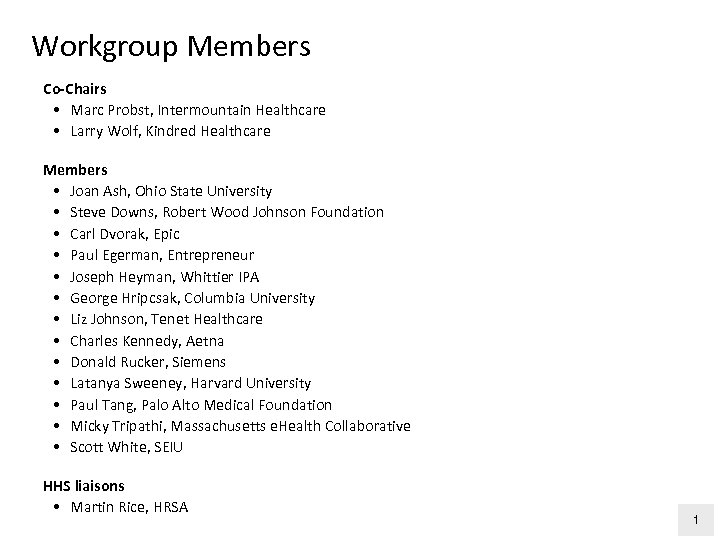 Workgroup Members Co-Chairs • Marc Probst, Intermountain Healthcare • Larry Wolf, Kindred Healthcare Members • Joan Ash, Ohio State University • Steve Downs, Robert Wood Johnson Foundation • Carl Dvorak, Epic • Paul Egerman, Entrepreneur • Joseph Heyman, Whittier IPA • George Hripcsak, Columbia University • Liz Johnson, Tenet Healthcare • Charles Kennedy, Aetna • Donald Rucker, Siemens • Latanya Sweeney, Harvard University • Paul Tang, Palo Alto Medical Foundation • Micky Tripathi, Massachusetts e. Health Collaborative • Scott White, SEIU HHS liaisons • Martin Rice, HRSA 1
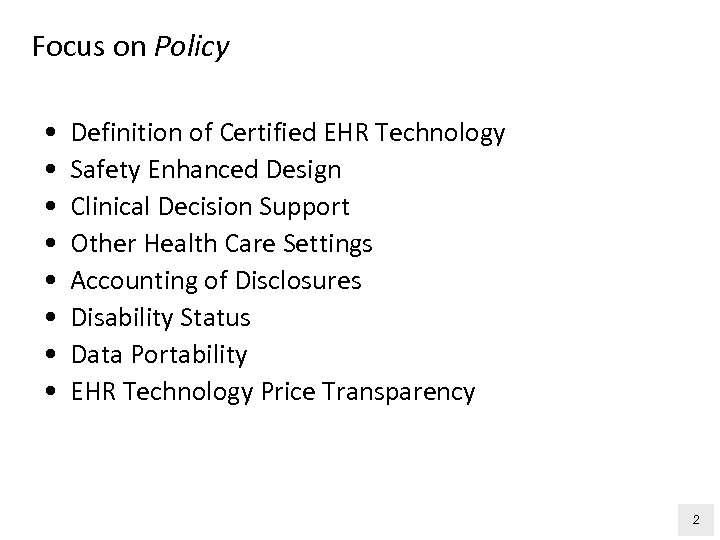 Focus on Policy • • Definition of Certified EHR Technology Safety Enhanced Design Clinical Decision Support Other Health Care Settings Accounting of Disclosures Disability Status Data Portability EHR Technology Price Transparency 2
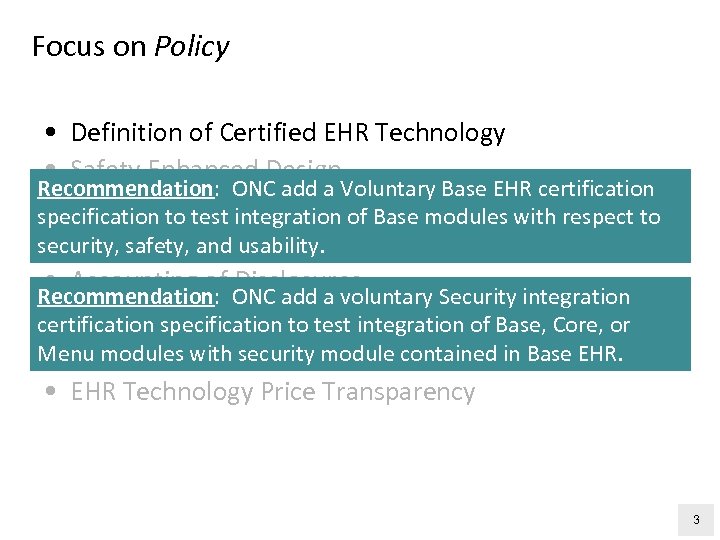 Focus on Policy • Definition of Certified EHR Technology • Safety Enhanced Design Recommendation: ONC add a Voluntary Base EHR certification • Clinical to test integration specification. Decision Supportof Base modules with respect to • Other Health Care Settings security, safety, and usability. • Accounting of Disclosures Recommendation: ONC add a voluntary Security integration • Disability Status certification specification to test integration of Base, Core, or Menu modules with security module contained in Base EHR. • Data Portability • EHR Technology Price Transparency 3
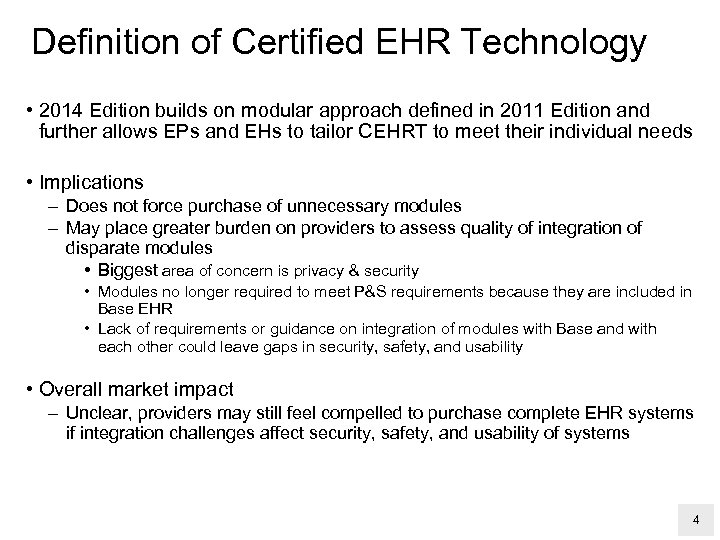 Definition of Certified EHR Technology • 2014 Edition builds on modular approach defined in 2011 Edition and further allows EPs and EHs to tailor CEHRT to meet their individual needs • Implications – Does not force purchase of unnecessary modules – May place greater burden on providers to assess quality of integration of disparate modules • Biggest area of concern is privacy & security • Modules no longer required to meet P&S requirements because they are included in Base EHR • Lack of requirements or guidance on integration of modules with Base and with each other could leave gaps in security, safety, and usability • Overall market impact – Unclear, providers may still feel compelled to purchase complete EHR systems if integration challenges affect security, safety, and usability of systems 4
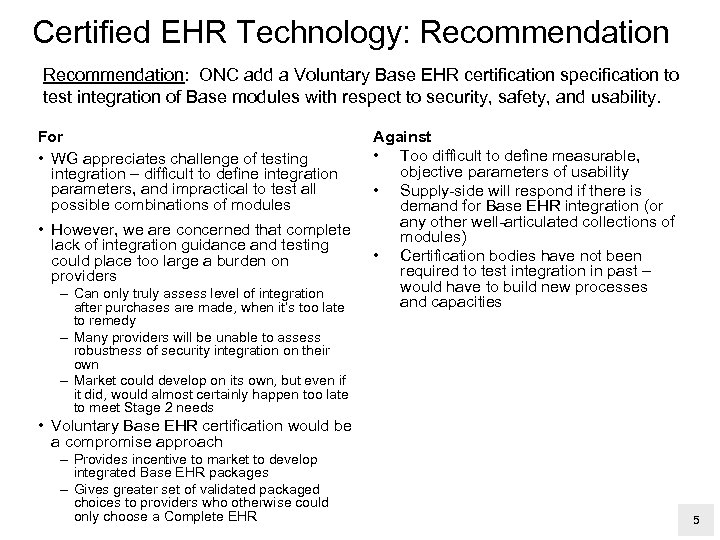 Certified EHR Technology: Recommendation: ONC add a Voluntary Base EHR certification specification to test integration of Base modules with respect to security, safety, and usability. For • WG appreciates challenge of testing integration – difficult to define integration parameters, and impractical to test all possible combinations of modules • However, we are concerned that complete lack of integration guidance and testing could place too large a burden on providers – Can only truly assess level of integration after purchases are made, when it’s too late to remedy – Many providers will be unable to assess robustness of security integration on their own – Market could develop on its own, but even if it did, would almost certainly happen too late to meet Stage 2 needs Against • Too difficult to define measurable, objective parameters of usability • Supply-side will respond if there is demand for Base EHR integration (or any other well-articulated collections of modules) • Certification bodies have not been required to test integration in past – would have to build new processes and capacities • Voluntary Base EHR certification would be a compromise approach – Provides incentive to market to develop integrated Base EHR packages – Gives greater set of validated packaged choices to providers who otherwise could only choose a Complete EHR 5
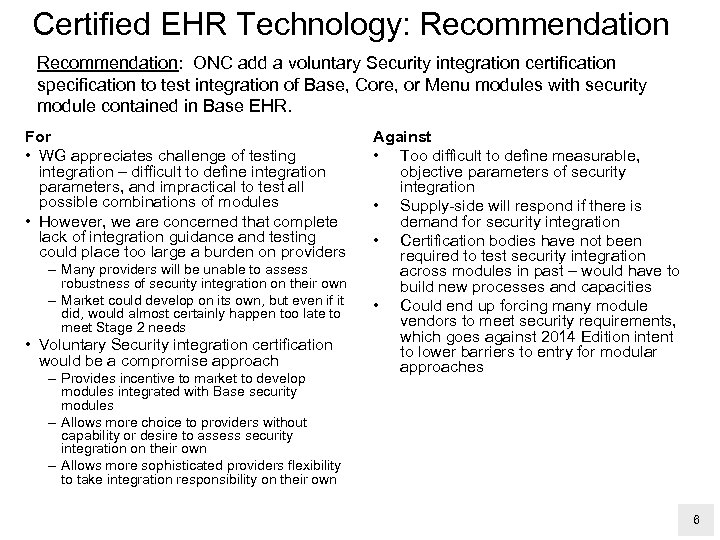 Certified EHR Technology: Recommendation: ONC add a voluntary Security integration certification specification to test integration of Base, Core, or Menu modules with security module contained in Base EHR. For • WG appreciates challenge of testing integration – difficult to define integration parameters, and impractical to test all possible combinations of modules • However, we are concerned that complete lack of integration guidance and testing could place too large a burden on providers – Many providers will be unable to assess robustness of security integration on their own – Market could develop on its own, but even if it did, would almost certainly happen too late to meet Stage 2 needs • Voluntary Security integration certification would be a compromise approach – Provides incentive to market to develop modules integrated with Base security modules – Allows more choice to providers without capability or desire to assess security integration on their own – Allows more sophisticated providers flexibility to take integration responsibility on their own Against • Too difficult to define measurable, objective parameters of security integration • Supply-side will respond if there is demand for security integration • Certification bodies have not been required to test security integration across modules in past – would have to build new processes and capacities • Could end up forcing many module vendors to meet security requirements, which goes against 2014 Edition intent to lower barriers to entry for modular approaches 6
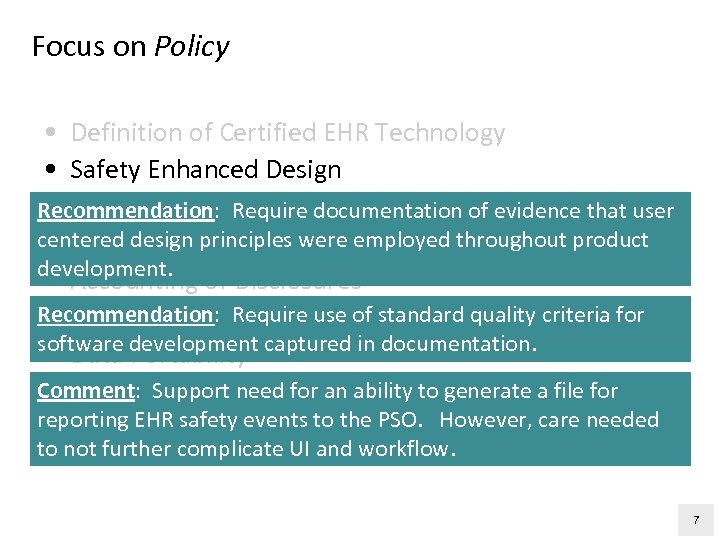 Focus on Policy • Definition of Certified EHR Technology • Safety Enhanced Design • Clinical Decision Support Recommendation: Require documentation of evidence that user centered design principles were employed throughout product • Other Health Care Settings development. • Accounting of Disclosures Recommendation: Require use of standard quality criteria for • Disability Status software development captured in documentation. • Data Portability Comment: Support need for Transparency • EHR Technology Price an ability to generate a file for reporting EHR safety events to the PSO. However, care needed to not further complicate UI and workflow. 7
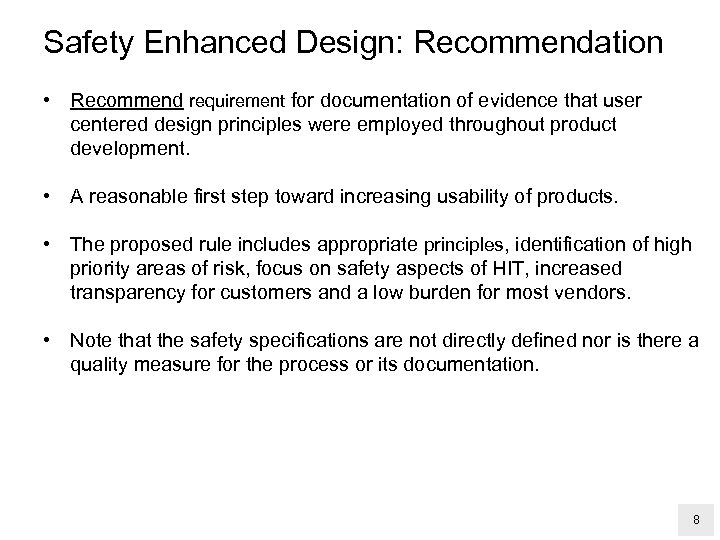 Safety Enhanced Design: Recommendation • Recommend requirement for documentation of evidence that user centered design principles were employed throughout product development. • A reasonable first step toward increasing usability of products. • The proposed rule includes appropriate principles, identification of high priority areas of risk, focus on safety aspects of HIT, increased transparency for customers and a low burden for most vendors. • Note that the safety specifications are not directly defined nor is there a quality measure for the process or its documentation. 8
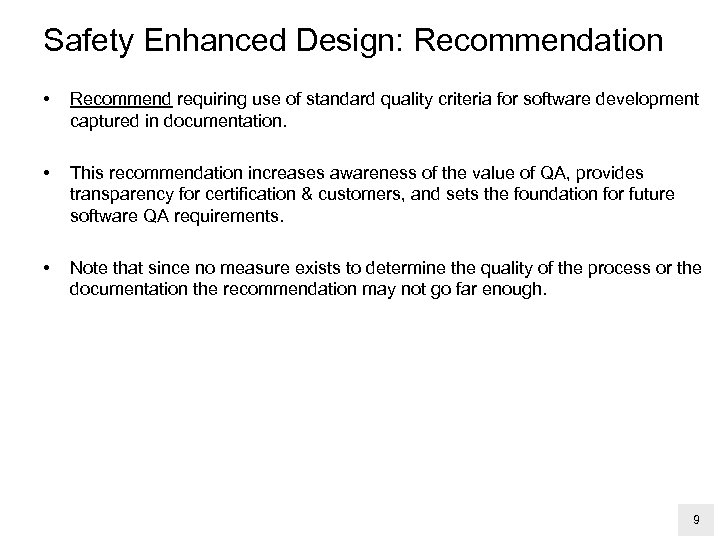 Safety Enhanced Design: Recommendation • Recommend requiring use of standard quality criteria for software development captured in documentation. • This recommendation increases awareness of the value of QA, provides transparency for certification & customers, and sets the foundation for future software QA requirements. • Note that since no measure exists to determine the quality of the process or the documentation the recommendation may not go far enough. 9
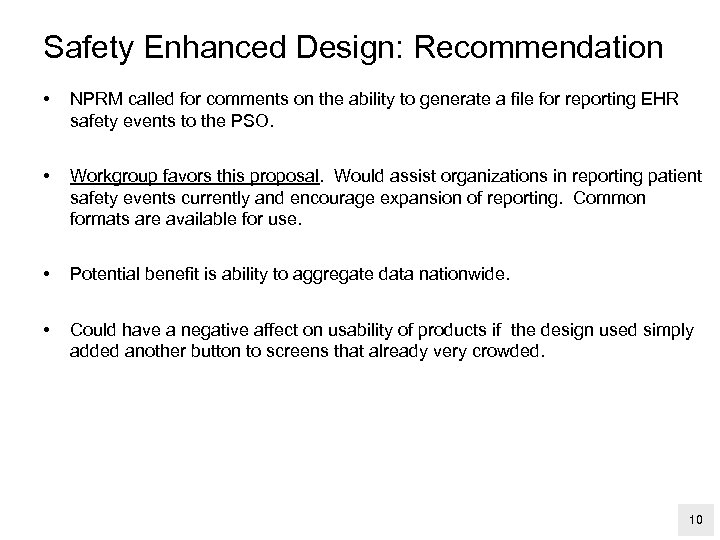 Safety Enhanced Design: Recommendation • NPRM called for comments on the ability to generate a file for reporting EHR safety events to the PSO. • Workgroup favors this proposal. Would assist organizations in reporting patient safety events currently and encourage expansion of reporting. Common formats are available for use. • Potential benefit is ability to aggregate data nationwide. • Could have a negative affect on usability of products if the design used simply added another button to screens that already very crowded. 10
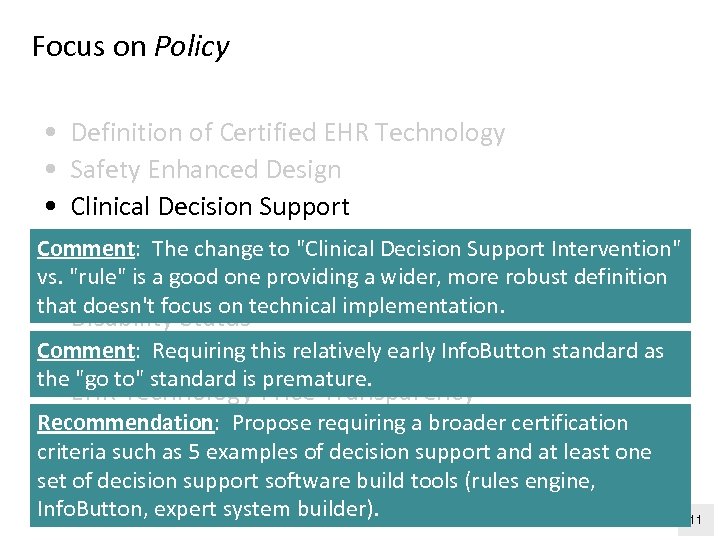 Focus on Policy • Definition of Certified EHR Technology • Safety Enhanced Design • Clinical Decision Support • Other The change to "Clinical Comment: Health Care Settings Decision Support Intervention" vs. "rule" is a good one providing a wider, more robust definition • Accounting of Disclosures that doesn't focus on technical implementation. • Disability Status Comment: Requiring this relatively early Info. Button standard as • Data Portability the "go to" standard is premature. • EHR Technology Price Transparency Recommendation: Propose requiring a broader certification criteria such as 5 examples of decision support and at least one set of decision support software build tools (rules engine, Info. Button, expert system builder). 11
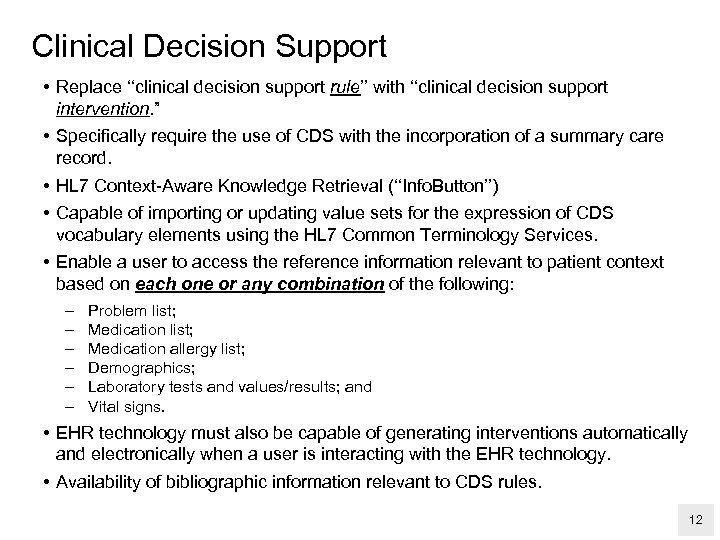 Clinical Decision Support • Replace ‘‘clinical decision support rule’’ with ‘‘clinical decision support intervention. ” • Specifically require the use of CDS with the incorporation of a summary care record. • HL 7 Context-Aware Knowledge Retrieval (‘‘Info. Button’’) • Capable of importing or updating value sets for the expression of CDS vocabulary elements using the HL 7 Common Terminology Services. • Enable a user to access the reference information relevant to patient context based on each one or any combination of the following: – – – Problem list; Medication allergy list; Demographics; Laboratory tests and values/results; and Vital signs. • EHR technology must also be capable of generating interventions automatically and electronically when a user is interacting with the EHR technology. • Availability of bibliographic information relevant to CDS rules. 12
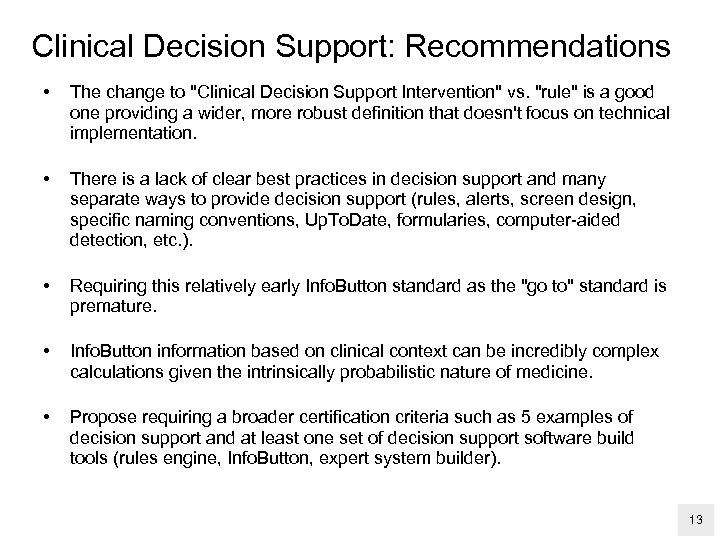 Clinical Decision Support: Recommendations • The change to "Clinical Decision Support Intervention" vs. "rule" is a good one providing a wider, more robust definition that doesn't focus on technical implementation. • There is a lack of clear best practices in decision support and many separate ways to provide decision support (rules, alerts, screen design, specific naming conventions, Up. To. Date, formularies, computer-aided detection, etc. ). • Requiring this relatively early Info. Button standard as the "go to" standard is premature. • Info. Button information based on clinical context can be incredibly complex calculations given the intrinsically probabilistic nature of medicine. • Propose requiring a broader certification criteria such as 5 examples of decision support and at least one set of decision support software build tools (rules engine, Info. Button, expert system builder). 13
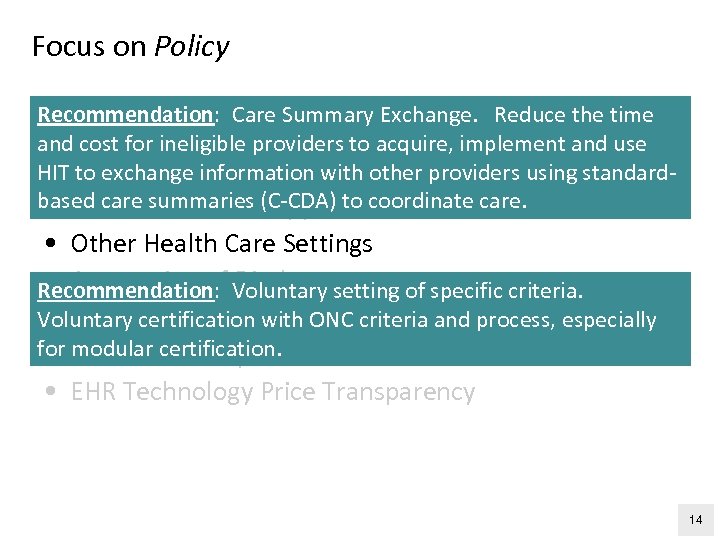 Focus on Policy Recommendation: Care Summary Exchange. Reduce the time • cost for ineligible providers to acquire, implement and use and. Definition of Certified EHR Technology • to exchange information with HITSafety Enhanced Design other providers using standardbased care summaries Support coordinate care. • Clinical Decision (C-CDA) to • Other Health Care Settings • Accounting of Disclosures Recommendation: Voluntary setting of specific criteria. • Disability Status Voluntary certification with ONC criteria and process, especially for Data Portability • modular certification. • EHR Technology Price Transparency 14
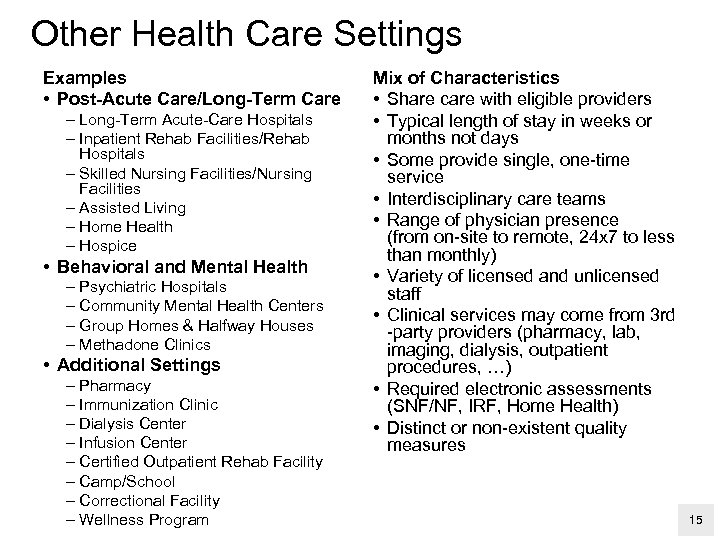 Other Health Care Settings Examples • Post-Acute Care/Long-Term Care – Long-Term Acute-Care Hospitals – Inpatient Rehab Facilities/Rehab Hospitals – Skilled Nursing Facilities/Nursing Facilities – Assisted Living – Home Health – Hospice • Behavioral and Mental Health – Psychiatric Hospitals – Community Mental Health Centers – Group Homes & Halfway Houses – Methadone Clinics • Additional Settings – Pharmacy – Immunization Clinic – Dialysis Center – Infusion Center – Certified Outpatient Rehab Facility – Camp/School – Correctional Facility – Wellness Program Mix of Characteristics • Share care with eligible providers • Typical length of stay in weeks or months not days • Some provide single, one-time service • Interdisciplinary care teams • Range of physician presence (from on-site to remote, 24 x 7 to less than monthly) • Variety of licensed and unlicensed staff • Clinical services may come from 3 rd -party providers (pharmacy, lab, imaging, dialysis, outpatient procedures, …) • Required electronic assessments (SNF/NF, IRF, Home Health) • Distinct or non-existent quality measures 15
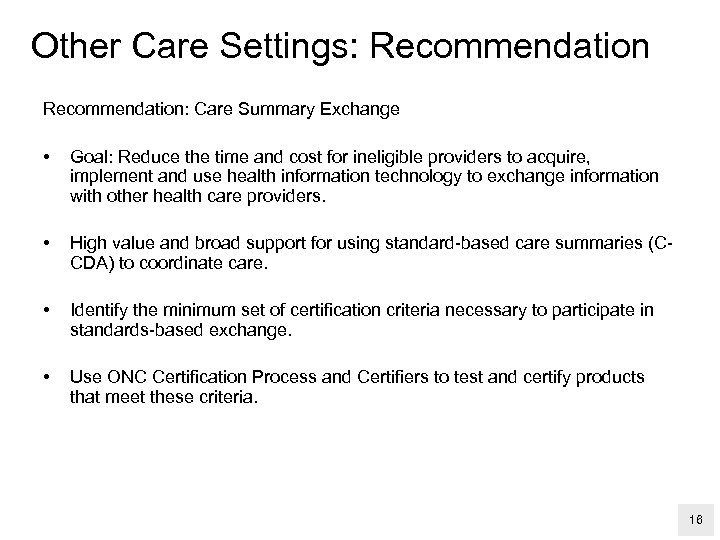 Other Care Settings: Recommendation: Care Summary Exchange • Goal: Reduce the time and cost for ineligible providers to acquire, implement and use health information technology to exchange information with other health care providers. • High value and broad support for using standard-based care summaries (CCDA) to coordinate care. • Identify the minimum set of certification criteria necessary to participate in standards-based exchange. • Use ONC Certification Process and Certifiers to test and certify products that meet these criteria. 16
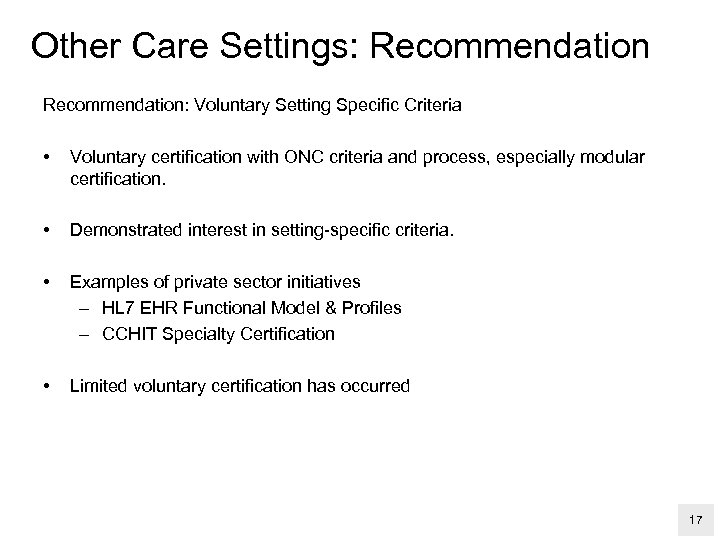 Other Care Settings: Recommendation: Voluntary Setting Specific Criteria • Voluntary certification with ONC criteria and process, especially modular certification. • Demonstrated interest in setting-specific criteria. • Examples of private sector initiatives – HL 7 EHR Functional Model & Profiles – CCHIT Specialty Certification • Limited voluntary certification has occurred 17
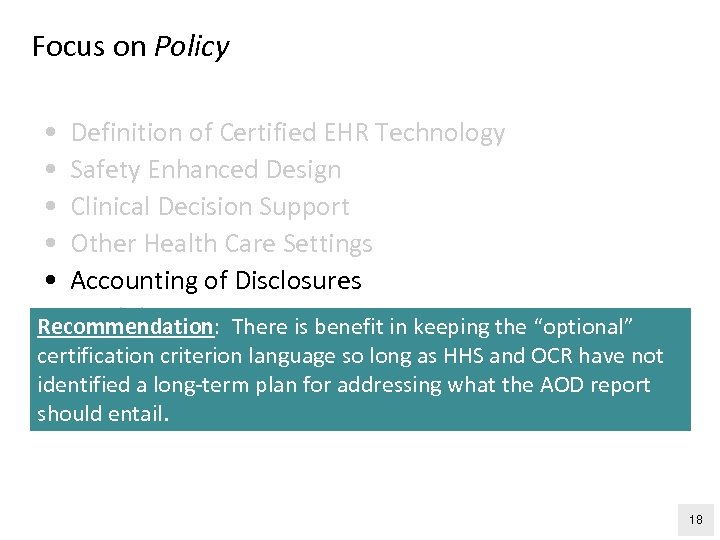 Focus on Policy • Definition of Certified EHR Technology • Safety Enhanced Design • Clinical Decision Support • Other Health Care Settings • Accounting of Disclosures • Disability Status Recommendation: There is benefit in keeping the “optional” • Data Portability certification criterion language so long as HHS and OCR have not identified a long-term plan for addressing what the AOD report • EHR Technology Price Transparency should entail. 18
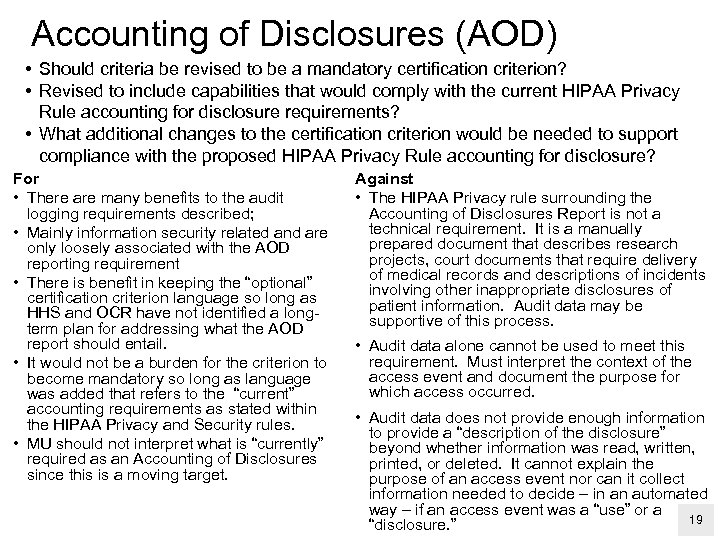 Accounting of Disclosures (AOD) • Should criteria be revised to be a mandatory certification criterion? • Revised to include capabilities that would comply with the current HIPAA Privacy Rule accounting for disclosure requirements? • What additional changes to the certification criterion would be needed to support compliance with the proposed HIPAA Privacy Rule accounting for disclosure? For • There are many benefits to the audit logging requirements described; • Mainly information security related and are only loosely associated with the AOD reporting requirement • There is benefit in keeping the “optional” certification criterion language so long as HHS and OCR have not identified a longterm plan for addressing what the AOD report should entail. • It would not be a burden for the criterion to become mandatory so long as language was added that refers to the “current” accounting requirements as stated within the HIPAA Privacy and Security rules. • MU should not interpret what is “currently” required as an Accounting of Disclosures since this is a moving target. Against • The HIPAA Privacy rule surrounding the Accounting of Disclosures Report is not a technical requirement. It is a manually prepared document that describes research projects, court documents that require delivery of medical records and descriptions of incidents involving other inappropriate disclosures of patient information. Audit data may be supportive of this process. • Audit data alone cannot be used to meet this requirement. Must interpret the context of the access event and document the purpose for which access occurred. • Audit data does not provide enough information to provide a “description of the disclosure” beyond whether information was read, written, printed, or deleted. It cannot explain the purpose of an access event nor can it collect information needed to decide – in an automated way – if an access event was a “use” or a 19 “disclosure. ”
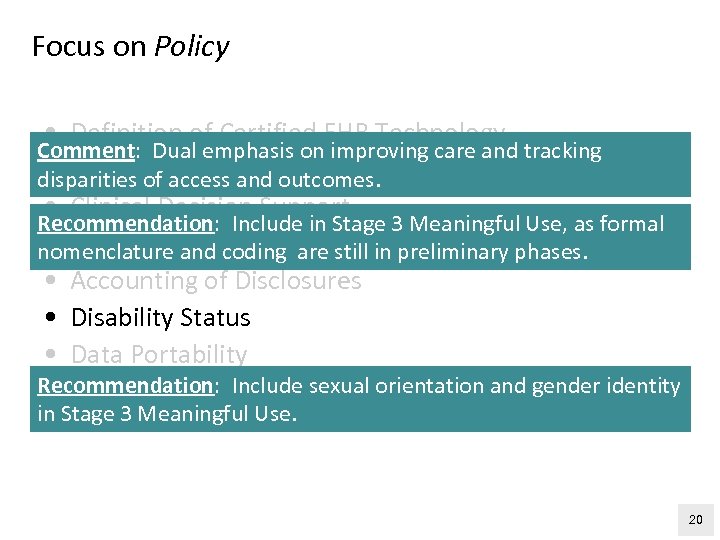 Focus on Policy • Definition of Certified EHR Technology Comment: Dual emphasis on improving care and tracking • Safety Enhanced Design disparities of access and outcomes. • Clinical Decision Support Recommendation: Include in Stage 3 Meaningful Use, as formal • Other Health Care still nomenclature and coding. Settingsin preliminary phases. • Accounting of Disclosures • Disability Status • Data Portability Recommendation: Include sexual orientation and gender identity • EHR Technology Price Transparency in Stage 3 Meaningful Use. 20
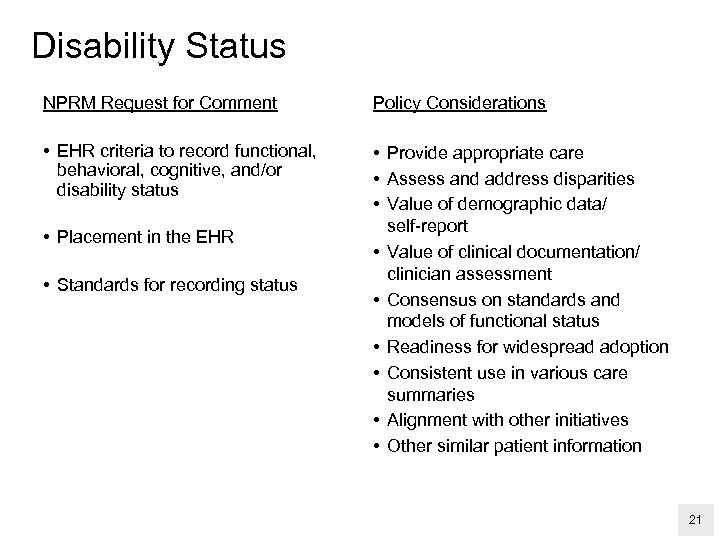 Disability Status NPRM Request for Comment Policy Considerations • EHR criteria to record functional, behavioral, cognitive, and/or disability status • Provide appropriate care • Assess and address disparities • Value of demographic data/ self-report • Value of clinical documentation/ clinician assessment • Consensus on standards and models of functional status • Readiness for widespread adoption • Consistent use in various care summaries • Alignment with other initiatives • Other similar patient information • Placement in the EHR • Standards for recording status 21
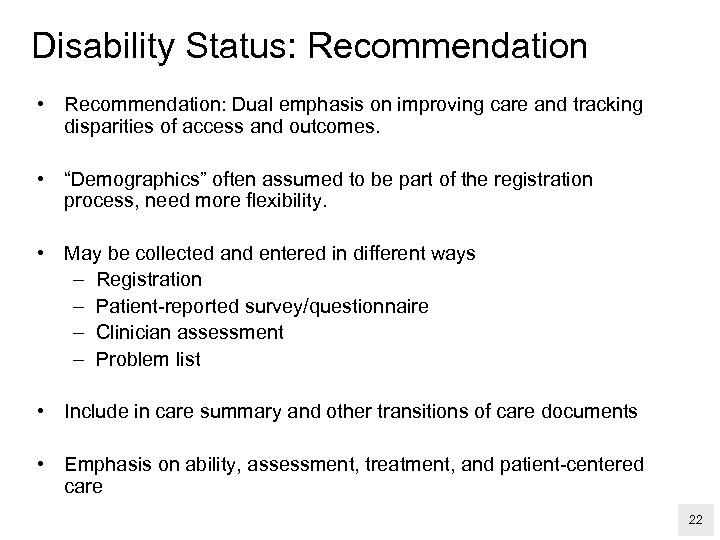 Disability Status: Recommendation • Recommendation: Dual emphasis on improving care and tracking disparities of access and outcomes. • “Demographics” often assumed to be part of the registration process, need more flexibility. • May be collected and entered in different ways – Registration – Patient-reported survey/questionnaire – Clinician assessment – Problem list • Include in care summary and other transitions of care documents • Emphasis on ability, assessment, treatment, and patient-centered care 22
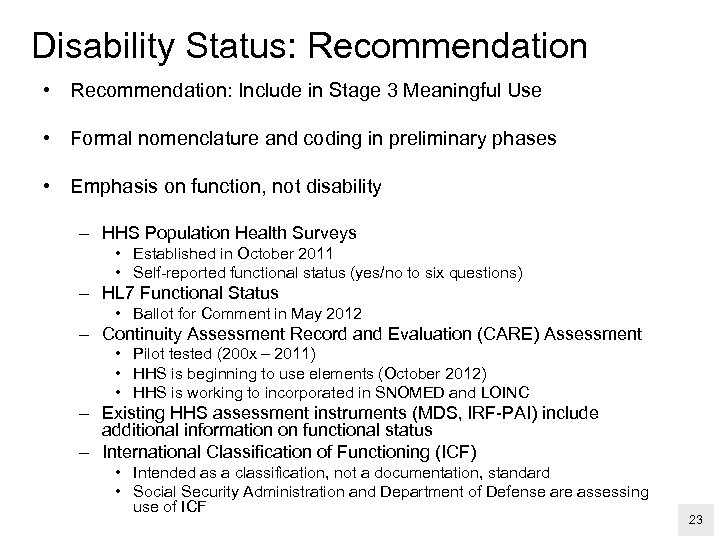 Disability Status: Recommendation • Recommendation: Include in Stage 3 Meaningful Use • Formal nomenclature and coding in preliminary phases • Emphasis on function, not disability – HHS Population Health Surveys • Established in October 2011 • Self-reported functional status (yes/no to six questions) – HL 7 Functional Status • Ballot for Comment in May 2012 – Continuity Assessment Record and Evaluation (CARE) Assessment • Pilot tested (200 x – 2011) • HHS is beginning to use elements (October 2012) • HHS is working to incorporated in SNOMED and LOINC – Existing HHS assessment instruments (MDS, IRF-PAI) include additional information on functional status – International Classification of Functioning (ICF) • Intended as a classification, not a documentation, standard • Social Security Administration and Department of Defense are assessing use of ICF 23
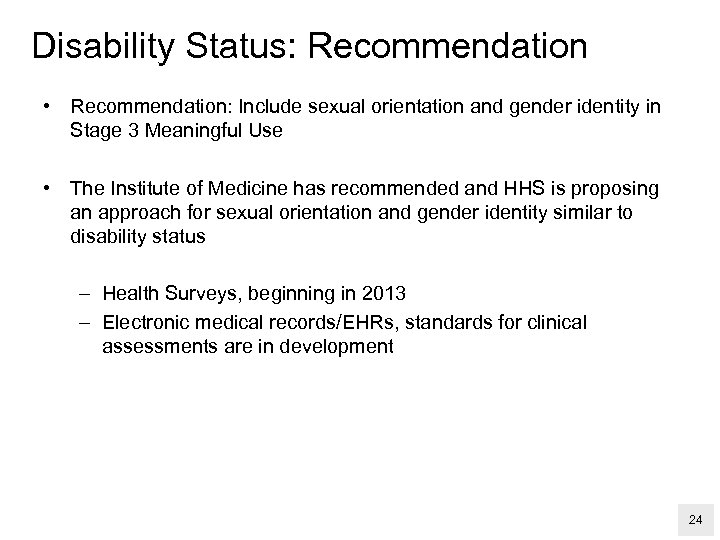 Disability Status: Recommendation • Recommendation: Include sexual orientation and gender identity in Stage 3 Meaningful Use • The Institute of Medicine has recommended and HHS is proposing an approach for sexual orientation and gender identity similar to disability status – Health Surveys, beginning in 2013 – Electronic medical records/EHRs, standards for clinical assessments are in development 24
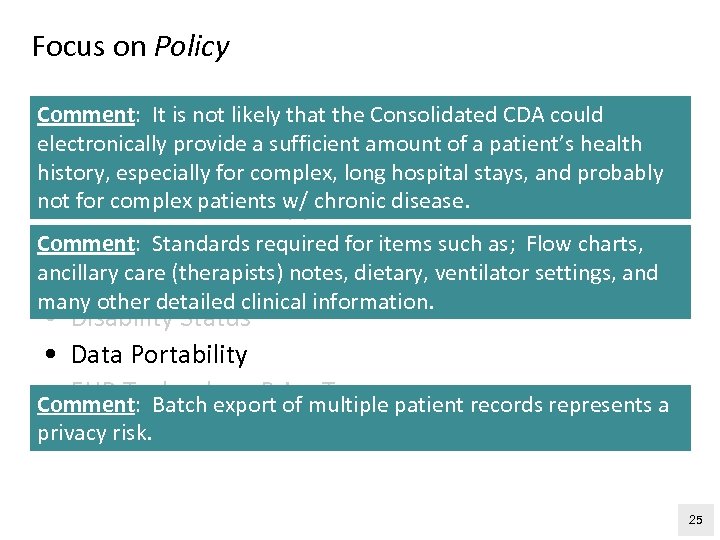 Focus on Policy Comment: It is not likely that the Consolidated CDA could • Definition of Certified EHR Technology electronically provide a sufficient amount of a patient’s health • Safety Enhanced Design history, especially for complex, long hospital stays, and probably not. Clinical Decision Support • for complex patients w/ chronic disease. Comment: Health Care Settings items such as; Flow charts, • Other Standards required for ancillary care (therapists) notes, dietary, ventilator settings, and • Accounting of Disclosures many other detailed clinical information. • Disability Status • Data Portability • EHR Technology Price Transparency Comment: Batch export of multiple patient records represents a privacy risk. 25
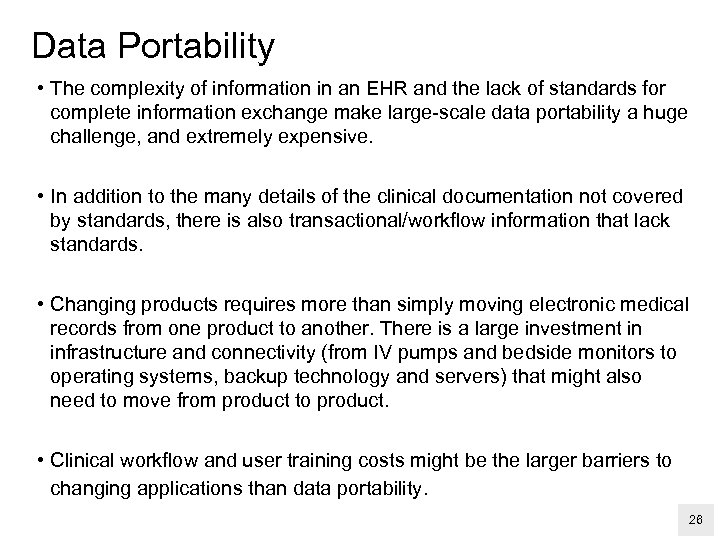 Data Portability • The complexity of information in an EHR and the lack of standards for complete information exchange make large-scale data portability a huge challenge, and extremely expensive. • In addition to the many details of the clinical documentation not covered by standards, there is also transactional/workflow information that lack standards. • Changing products requires more than simply moving electronic medical records from one product to another. There is a large investment in infrastructure and connectivity (from IV pumps and bedside monitors to operating systems, backup technology and servers) that might also need to move from product to product. • Clinical workflow and user training costs might be the larger barriers to changing applications than data portability. 26
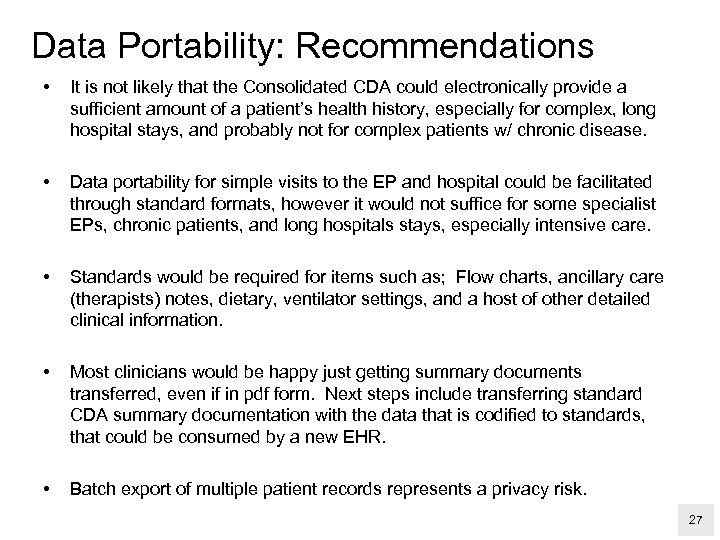 Data Portability: Recommendations • It is not likely that the Consolidated CDA could electronically provide a sufficient amount of a patient’s health history, especially for complex, long hospital stays, and probably not for complex patients w/ chronic disease. • Data portability for simple visits to the EP and hospital could be facilitated through standard formats, however it would not suffice for some specialist EPs, chronic patients, and long hospitals stays, especially intensive care. • Standards would be required for items such as; Flow charts, ancillary care (therapists) notes, dietary, ventilator settings, and a host of other detailed clinical information. • Most clinicians would be happy just getting summary documents transferred, even if in pdf form. Next steps include transferring standard CDA summary documentation with the data that is codified to standards, that could be consumed by a new EHR. • Batch export of multiple patient records represents a privacy risk. 27
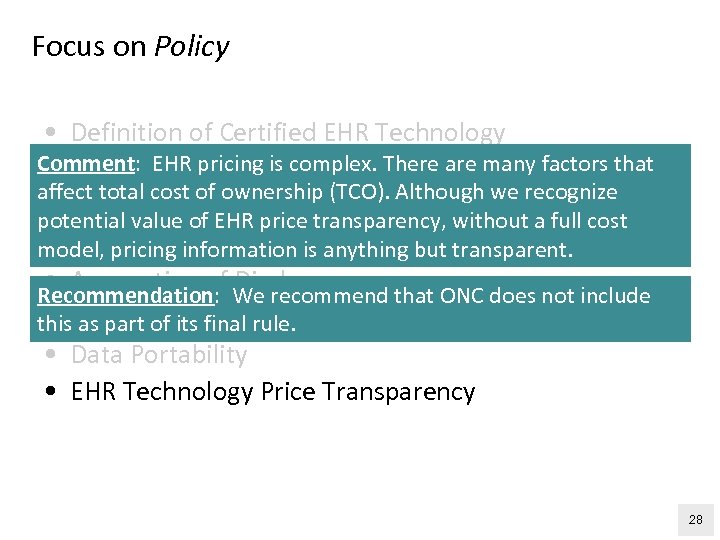 Focus on Policy • Definition of Certified EHR Technology Comment: Enhanced Design • Safety EHR pricing is complex. There are many factors that affect total cost of ownership (TCO). Although we recognize • Clinical Decision price transparency, without a full cost Support potential value of EHR • Other Health Care Settings model, pricing information is anything but transparent. • Accounting of Disclosures Recommendation: We recommend that ONC does not include • as part of Status this. Disability its final rule. • Data Portability • EHR Technology Price Transparency 28
 EHR Price Transparency: Recommendation • EHR pricing is complex. There are many factors that affect total cost of ownership (TCO). Although we recognize potential value of EHR price transparency, without a full cost model, pricing information is anything but transparent. • We recommend that ONC does not include this as part of its final rule. 29