


 Скачать презентацию Real-time Monitoring Control and Optimization of Patients Flow
fb19f22a7614bd7faa5d4e74a027afa4.ppt
- Количество слайдов: 55
 Real-time Monitoring, Control and Optimization of Patients Flow in Emergency Departments Boaz Carmeli M. Sc. Research Seminar Advisor: Prof. Avishai Mandelbaum The Faculty of Industrial Engineering and Management Technion - Israel Institute of Technology
 What you are about to see n n n The problem – monitoring and control of ED operations Core IT concepts of ED monitoring and control system Two interesting applications: n ED load monitoring and measurement n n Just a very brief overview due to time constraints Which patient to treat next? n Core ED patient flow control challenge
 The Problem n n n The rising cost of healthcare services has been a subject of mounting importance and much discussion worldwide Overcrowding in hospital Emergency Departments (ED) is perhaps the most urgent operational problem in the healthcare industry Overcrowding in hospital EDs leads to excessive waiting times and repellent environments, which in turn cause: n n n n Poor service quality (clinical, operational) Unnecessary pain and anxiety for patients Negative emotions (in patients and escorts) that sometimes lead to violence against staff Increased risk of clinical deterioration Ambulance diversion Patients leaving without being seen (LWBS) Inflated staff workload
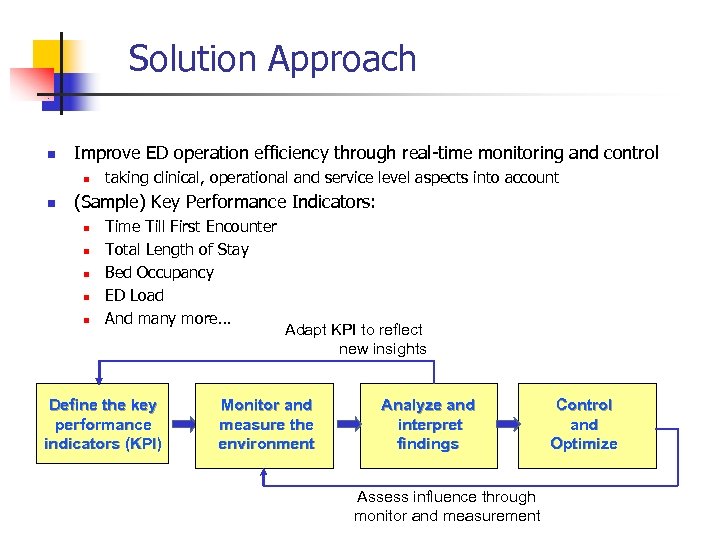 Solution Approach n Improve ED operation efficiency through real-time monitoring and control n n taking clinical, operational and service level aspects into account (Sample) Key Performance Indicators: n n n Time Till First Encounter Total Length of Stay Bed Occupancy ED Load And many more… Define the key performance indicators (KPI) Adapt KPI to reflect new insights Monitor and measure the environment Analyze and interpret findings Assess influence through monitor and measurement Control and Optimize
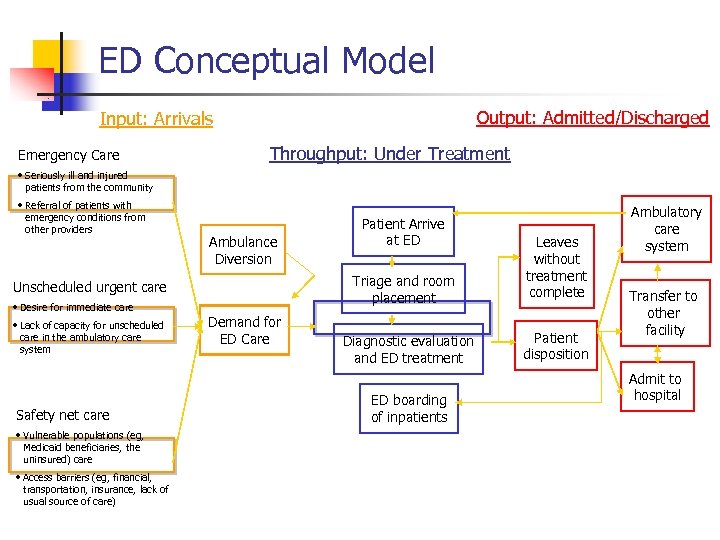 ED Conceptual Model Output: Admitted/Discharged Input: Arrivals Emergency Care Throughput: Under Treatment • Seriously ill and injured patients from the community • Referral of patients with emergency conditions from other providers Ambulance Diversion Triage and room placement Unscheduled urgent care • Desire for immediate care • Lack of capacity for unscheduled care in the ambulatory care system Safety net care • Vulnerable populations (eg, Medicaid beneficiaries, the uninsured) care • Access barriers (eg, financial, transportation, insurance, lack of usual source of care) Patient Arrive at ED Demand for ED Care Diagnostic evaluation and ED treatment ED boarding of inpatients Leaves without treatment complete Patient disposition Ambulatory care system Transfer to other facility Admit to hospital
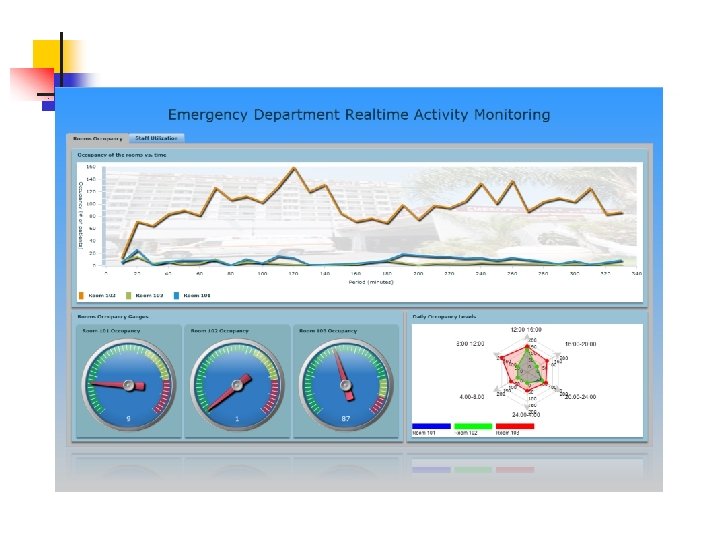
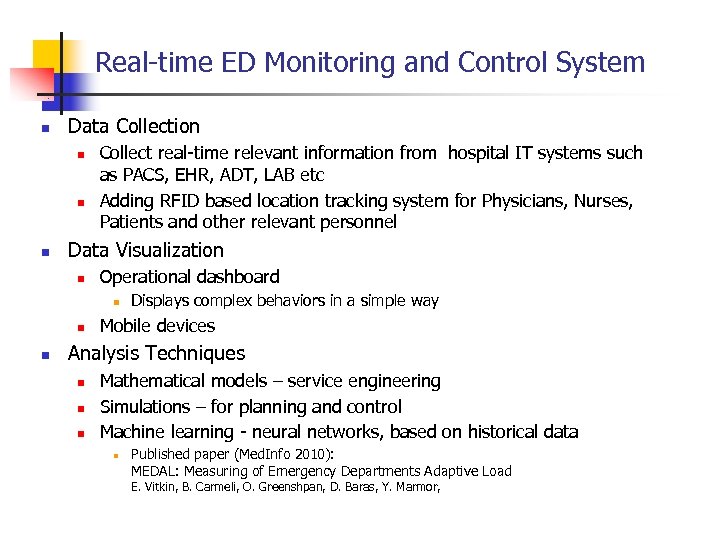 Real-time ED Monitoring and Control System n Data Collection n Collect real-time relevant information from hospital IT systems such as PACS, EHR, ADT, LAB etc Adding RFID based location tracking system for Physicians, Nurses, Patients and other relevant personnel Data Visualization n Operational dashboard n n n Displays complex behaviors in a simple way Mobile devices Analysis Techniques n n n Mathematical models – service engineering Simulations – for planning and control Machine learning - neural networks, based on historical data n Published paper (Med. Info 2010): MEDAL: Measuring of Emergency Departments Adaptive Load E. Vitkin, B. Carmeli, O. Greenshpan, D. Baras, Y. Marmor,
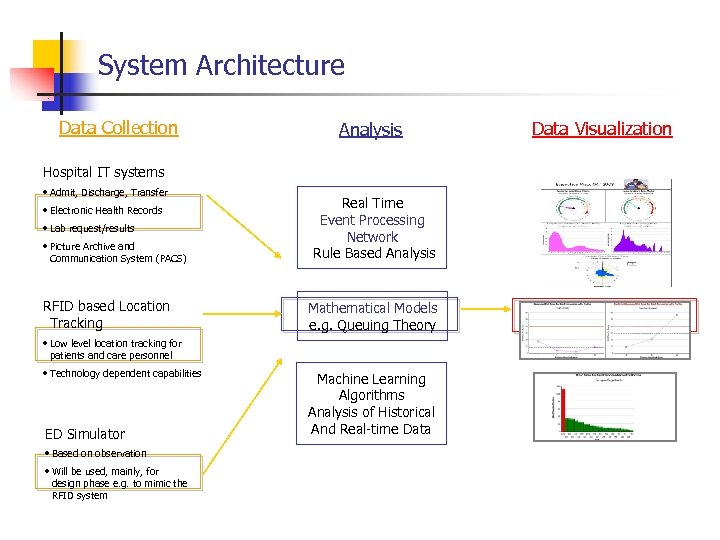 System Architecture Data Collection Analysis Hospital IT systems • Admit, Discharge, Transfer • Electronic Health Records • Lab request/results • Picture Archive and Communication System (PACS) RFID based Location Tracking Real Time Event Processing Network Rule Based Analysis Mathematical Models e. g. Queuing Theory • Low level location tracking for patients and care personnel • Technology dependent capabilities ED Simulator • Based on observation • Will be used, mainly, for design phase e. g. to mimic the RFID system Machine Learning Algorithms Analysis of Historical And Real-time Data Visualization
 Real-time Monitoring and Measuring ED Load
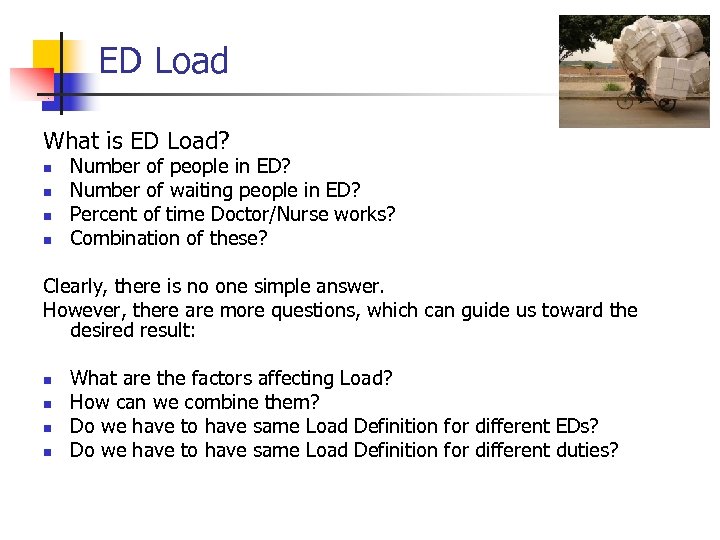 ED Load What is ED Load? n n Number of people in ED? Number of waiting people in ED? Percent of time Doctor/Nurse works? Combination of these? Clearly, there is no one simple answer. However, there are more questions, which can guide us toward the desired result: n n What are the factors affecting Load? How can we combine them? Do we have to have same Load Definition for different EDs? Do we have to have same Load Definition for different duties?
 Monitoring and Measuring ED Load n n n We defined a framework which provide a mean to monitor and measure load The framework is based on Neural Networks paradigm which enables adaptive load definition A NN learning mechanism adapts the load function towards specific ED setting and user (e. g. , patient, physician) views
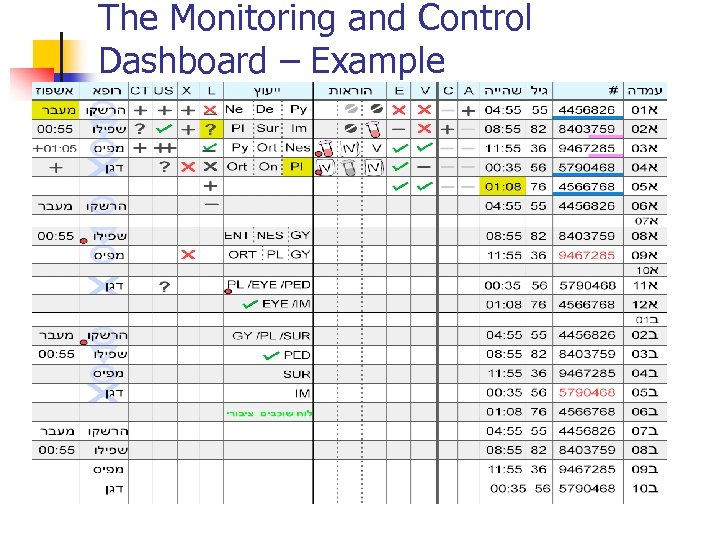
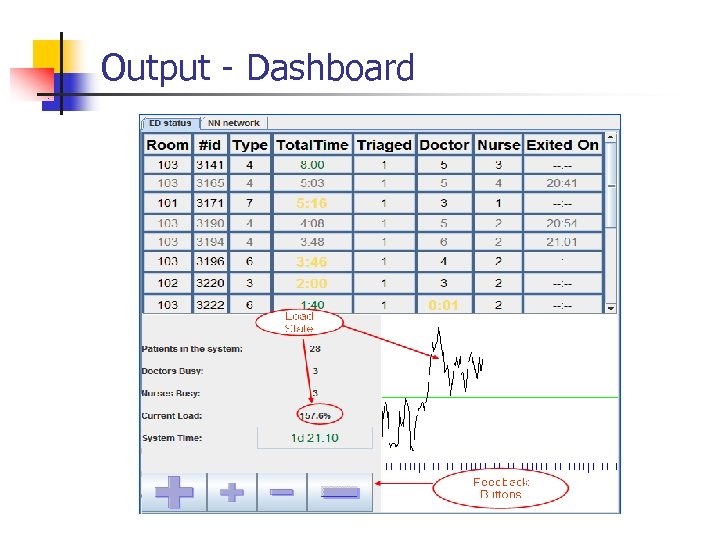 Output - Dashboard
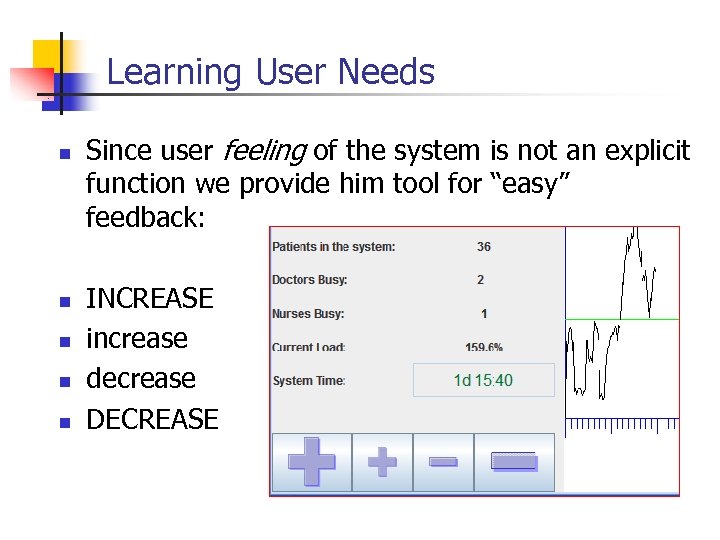 Learning User Needs n n n Since user feeling of the system is not an explicit function we provide him tool for “easy” feedback: INCREASE increase decrease DECREASE
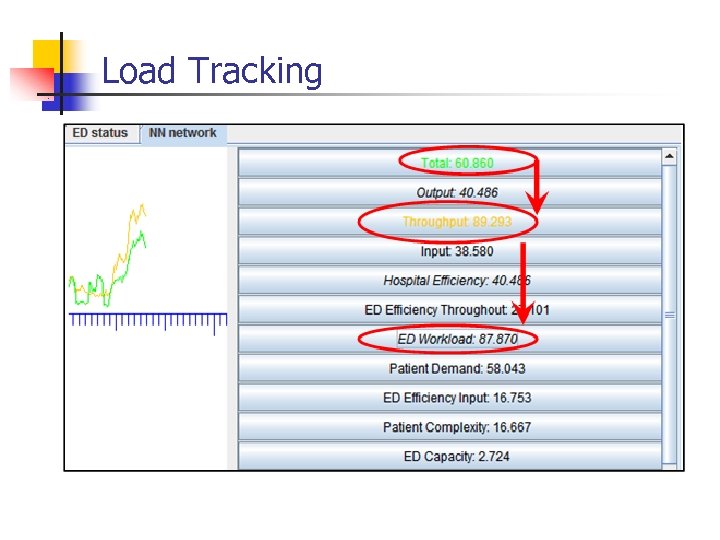 Load Tracking
 Real-time Control and Optimization Controlling and Optimizing the ED Patient Flow
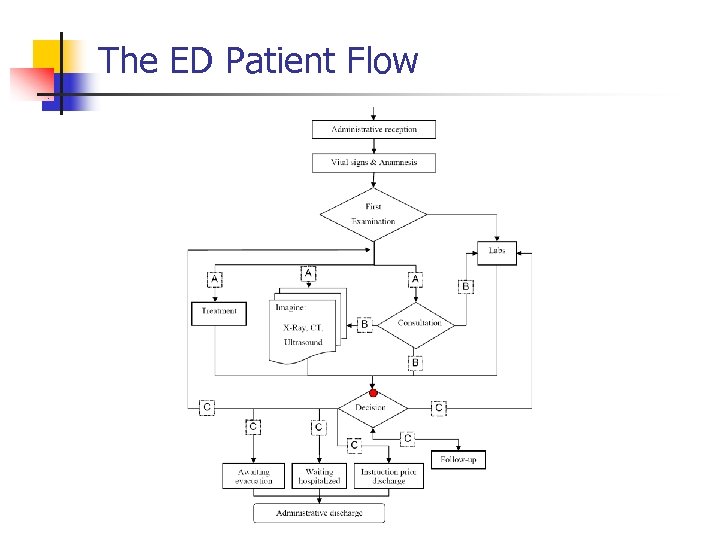
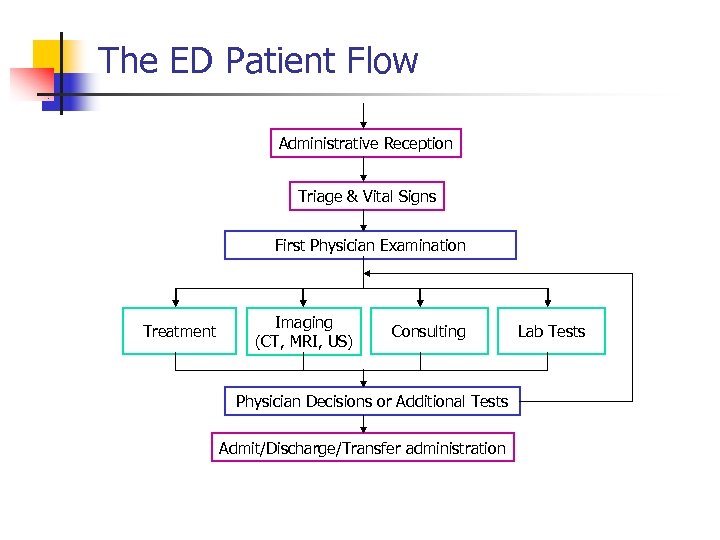 The ED Patient Flow Administrative Reception Triage & Vital Signs First Physician Examination Treatment Imaging (CT, MRI, US) Consulting Physician Decisions or Additional Tests Admit/Discharge/Transfer administration Lab Tests
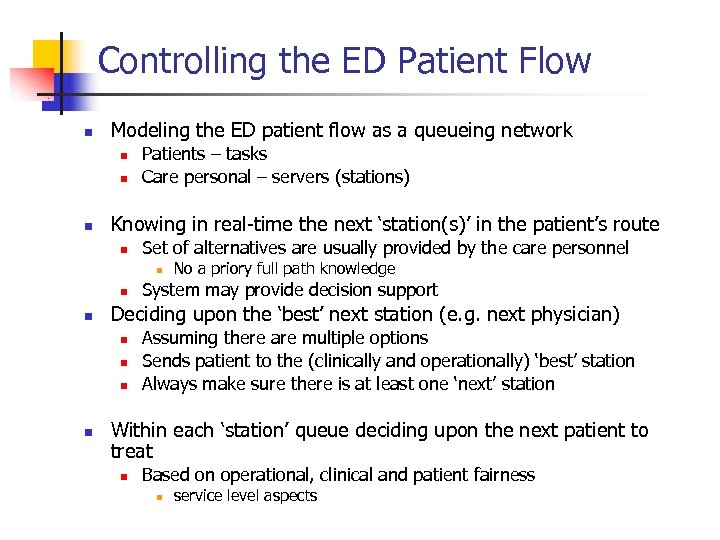 Controlling the ED Patient Flow n Modeling the ED patient flow as a queueing network n n n Patients – tasks Care personal – servers (stations) Knowing in real-time the next ‘station(s)’ in the patient’s route n Set of alternatives are usually provided by the care personnel n n n System may provide decision support Deciding upon the ‘best’ next station (e. g. next physician) n n No a priory full path knowledge Assuming there are multiple options Sends patient to the (clinically and operationally) ‘best’ station Always make sure there is at least one ‘next’ station Within each ‘station’ queue deciding upon the next patient to treat n Based on operational, clinical and patient fairness n service level aspects
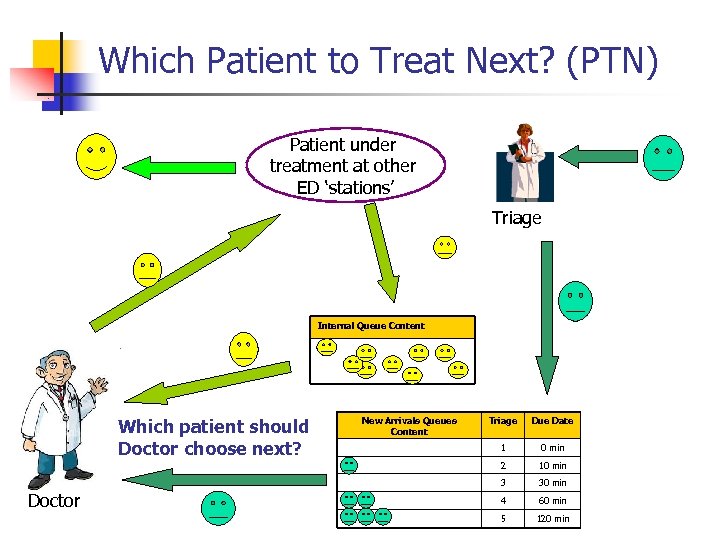 Which Patient to Treat Next? (PTN) Patient under treatment at other ED ‘stations’ Triage Internal Queue Content Which patient should Doctor choose next? Triage Due Date Predicted Treatment Punishment 1 0 min T 1 P 1 2 10 min T 2 P 2 3 Doctor New Arrivals Queues Content 30 min T 3 P 3 4 60 min T 4 P 4 5 120 min T 5 P 5
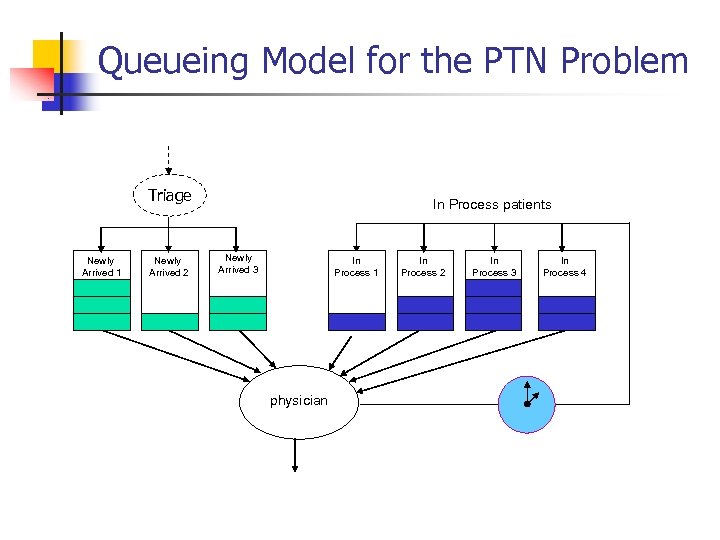 Queueing Model for the PTN Problem Triage Newly Arrived 1 Newly Arrived 2 In Process patients Newly Arrived 3 In Process 1 physician In Process 2 In Process 3 In Process 4
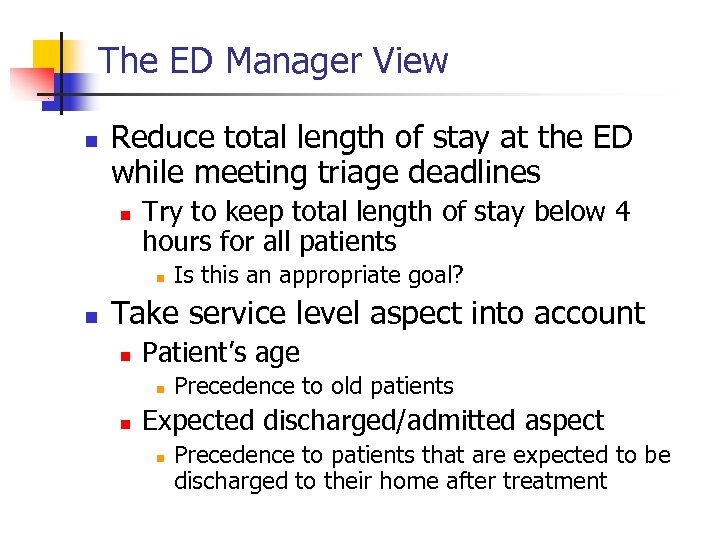 The ED Manager View n Reduce total length of stay at the ED while meeting triage deadlines n Try to keep total length of stay below 4 hours for all patients n n Is this an appropriate goal? Take service level aspect into account n Patient’s age n n Precedence to old patients Expected discharged/admitted aspect n Precedence to patients that are expected to be discharged to their home after treatment
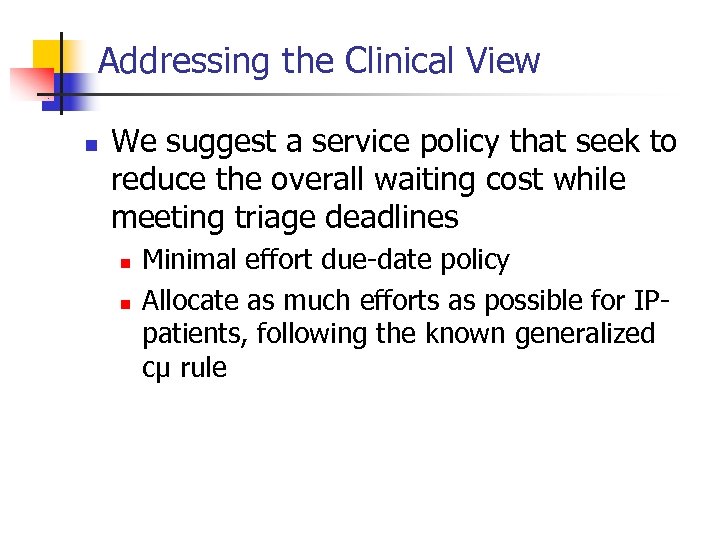 Addressing the Clinical View n We suggest a service policy that seek to reduce the overall waiting cost while meeting triage deadlines n n Minimal effort due-date policy Allocate as much efforts as possible for IPpatients, following the known generalized cμ rule
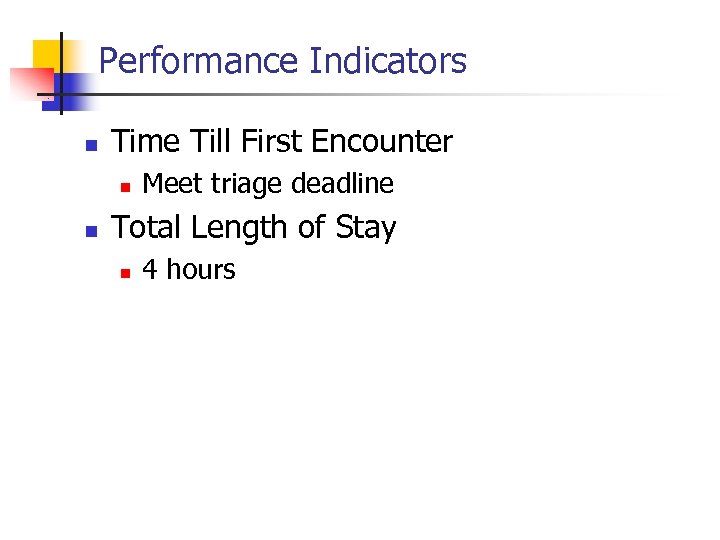 Performance Indicators n Time Till First Encounter n n Meet triage deadline Total Length of Stay n 4 hours
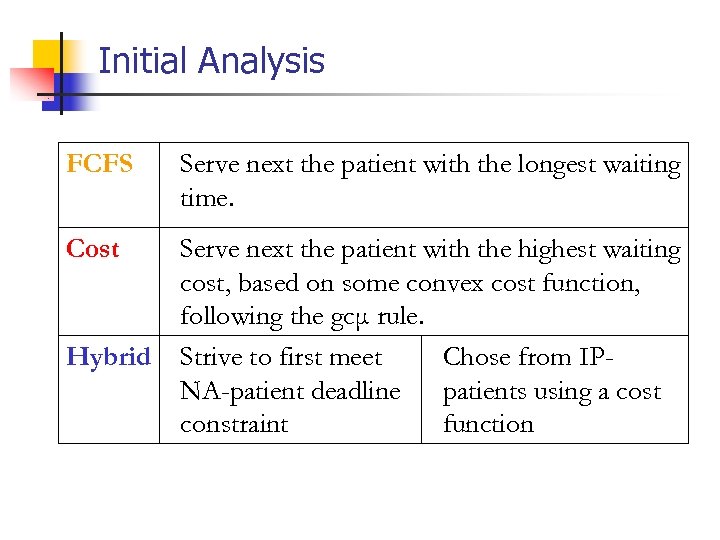 Initial Analysis FCFS Serve next the patient with the longest waiting time. Cost Serve next the patient with the highest waiting cost, based on some convex cost function, following the gcμ rule. Strive to first meet Chose from IPNA-patient deadline patients using a cost constraint function Hybrid
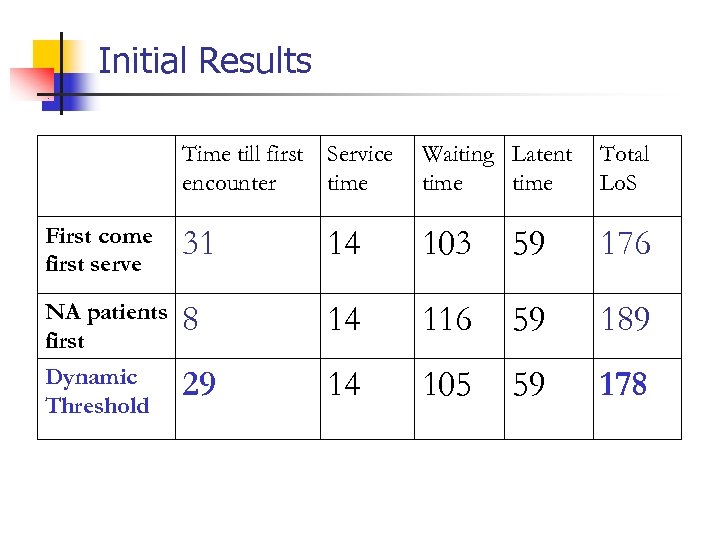 Initial Results Time till first Service encounter time Waiting Latent time Total Lo. S First come first serve 31 14 103 59 176 NA patients first Dynamic Threshold 8 14 116 59 189 29 14 105 59 178
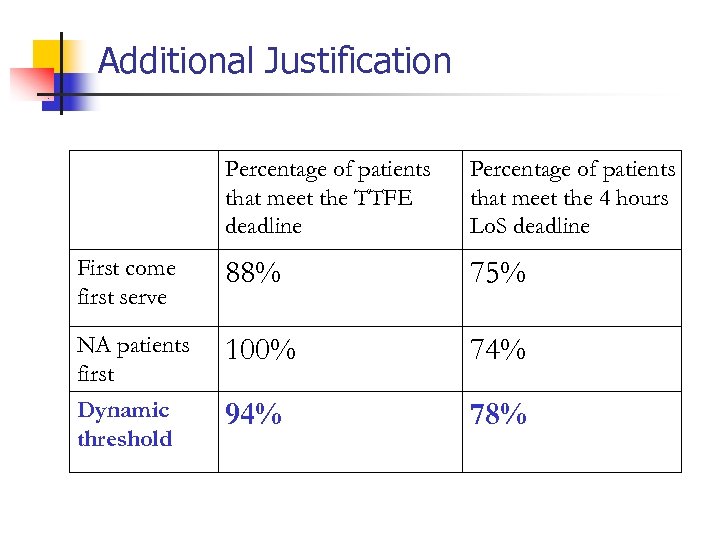 Additional Justification Percentage of patients that meet the TTFE deadline Percentage of patients that meet the 4 hours Lo. S deadline First come first serve 88% 75% NA patients first Dynamic threshold 100% 74% 94% 78%
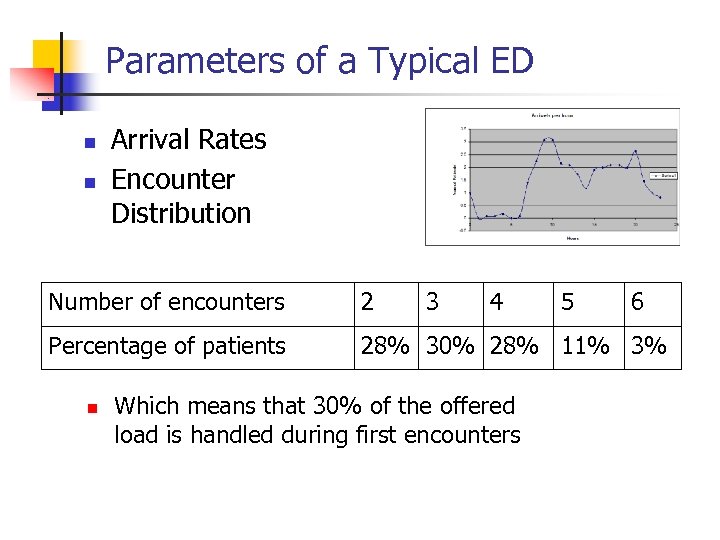 Parameters of a Typical ED n n Arrival Rates Encounter Distribution Number of encounters 2 Percentage of patients 28% 30% 28% 11% 3% n 3 4 Which means that 30% of the offered load is handled during first encounters 5 6
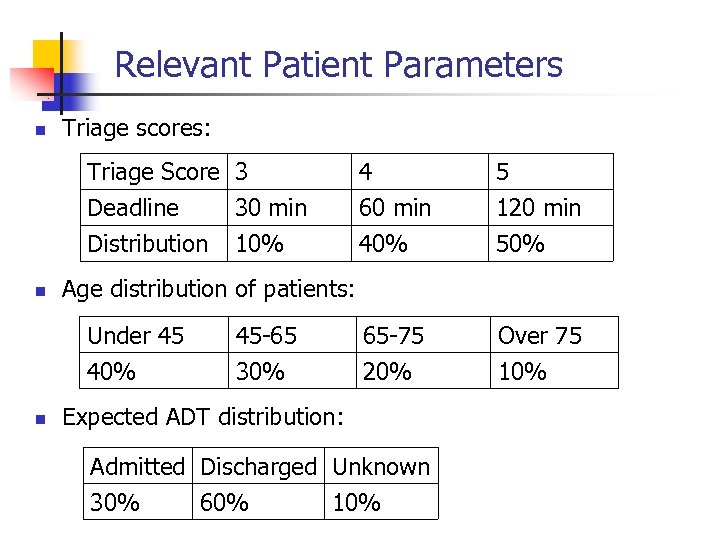 Relevant Patient Parameters n Triage scores: Triage Score 3 Deadline 30 min Distribution 10% n 5 120 min 50% 65 -75 20% Over 75 10% Age distribution of patients: Under 45 40% n 4 60 min 40% 45 -65 30% Expected ADT distribution: Admitted Discharged Unknown 30% 60% 10%
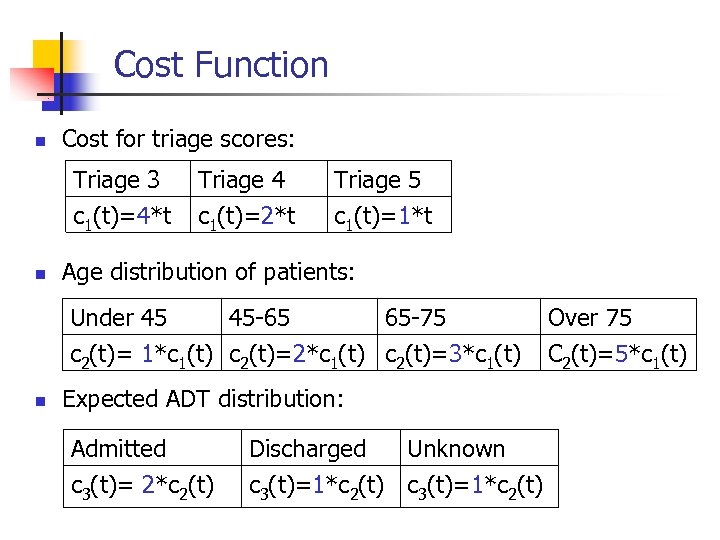 Cost Function n Cost for triage scores: Triage 3 c 1(t)=4*t n Triage 4 c 1(t)=2*t Triage 5 c 1(t)=1*t Age distribution of patients: Under 45 45 -65 65 -75 c 2(t)= 1*c 1(t) c 2(t)=2*c 1(t) c 2(t)=3*c 1(t) n Expected ADT distribution: Admitted c 3(t)= 2*c 2(t) Discharged Unknown c 3(t)=1*c 2(t) Over 75 C 2(t)=5*c 1(t)
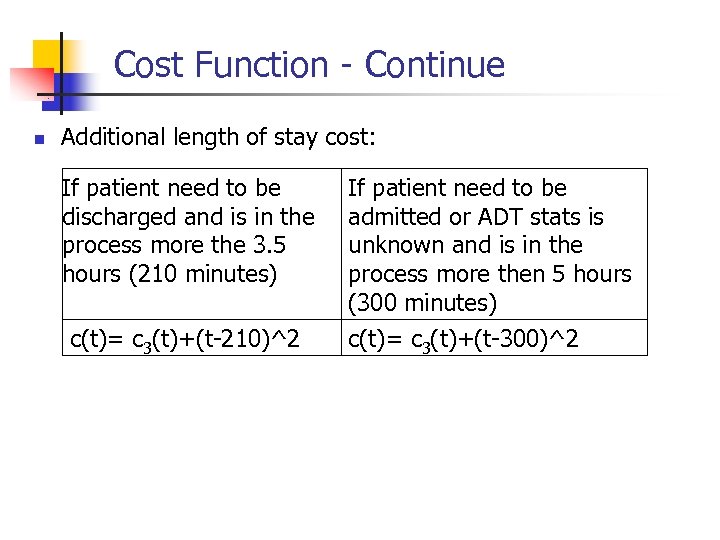 Cost Function - Continue n Additional length of stay cost: If patient need to be discharged and is in the process more the 3. 5 hours (210 minutes) c(t)= c 3(t)+(t-210)^2 If patient need to be admitted or ADT stats is unknown and is in the process more then 5 hours (300 minutes) c(t)= c 3(t)+(t-300)^2
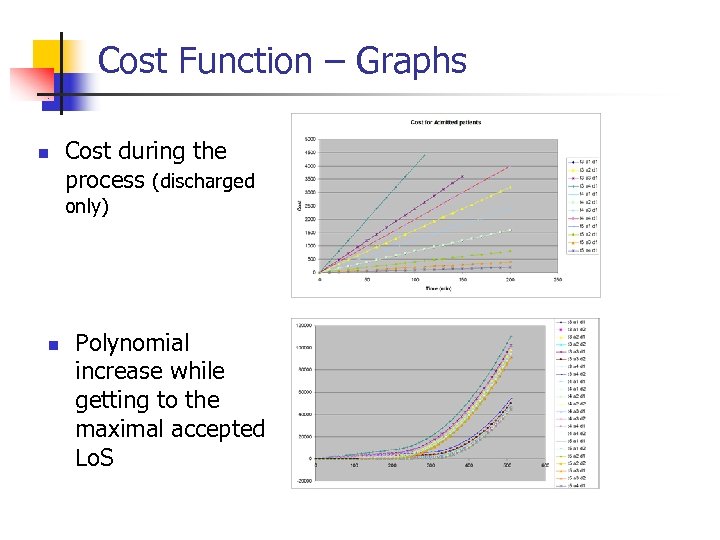 Cost Function – Graphs n Cost during the process (discharged only) n Polynomial increase while getting to the maximal accepted Lo. S
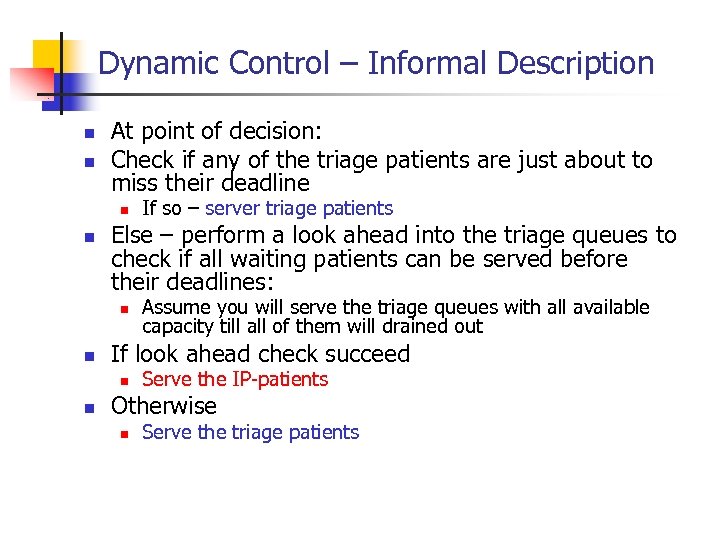 Dynamic Control – Informal Description n n At point of decision: Check if any of the triage patients are just about to miss their deadline n n Else – perform a look ahead into the triage queues to check if all waiting patients can be served before their deadlines: n n Assume you will serve the triage queues with all available capacity till all of them will drained out If look ahead check succeed n n If so – server triage patients Serve the IP-patients Otherwise n Serve the triage patients
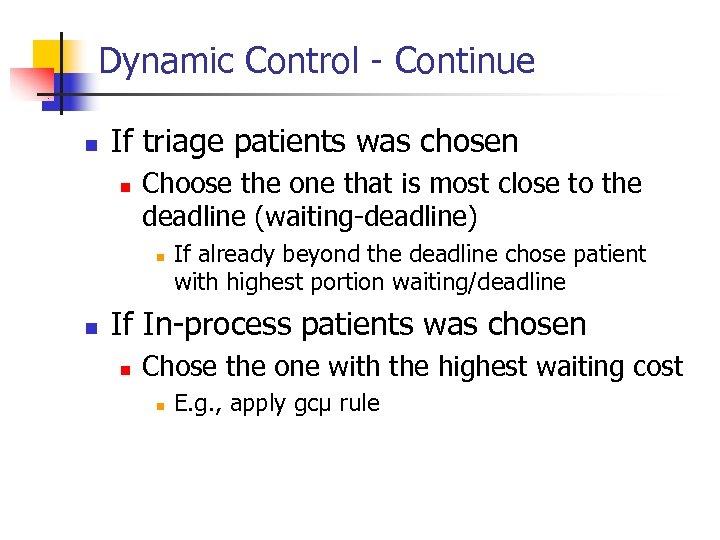 Dynamic Control - Continue n If triage patients was chosen n Choose the one that is most close to the deadline (waiting-deadline) n n If already beyond the deadline chose patient with highest portion waiting/deadline If In-process patients was chosen n Chose the one with the highest waiting cost n E. g. , apply gcμ rule
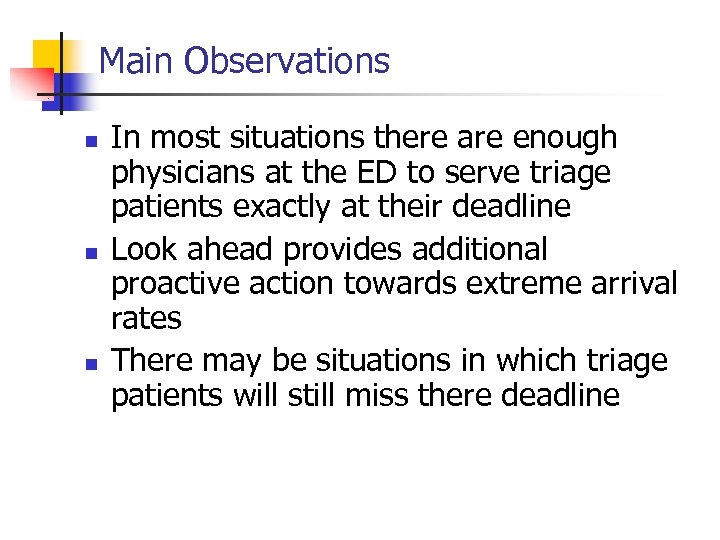 Main Observations n n n In most situations there are enough physicians at the ED to serve triage patients exactly at their deadline Look ahead provides additional proactive action towards extreme arrival rates There may be situations in which triage patients will still miss there deadline
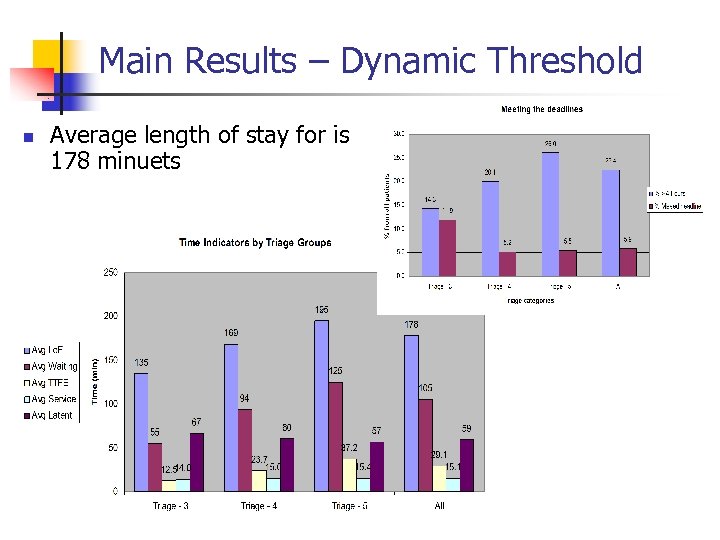 Main Results – Dynamic Threshold n Average length of stay for is 178 minuets
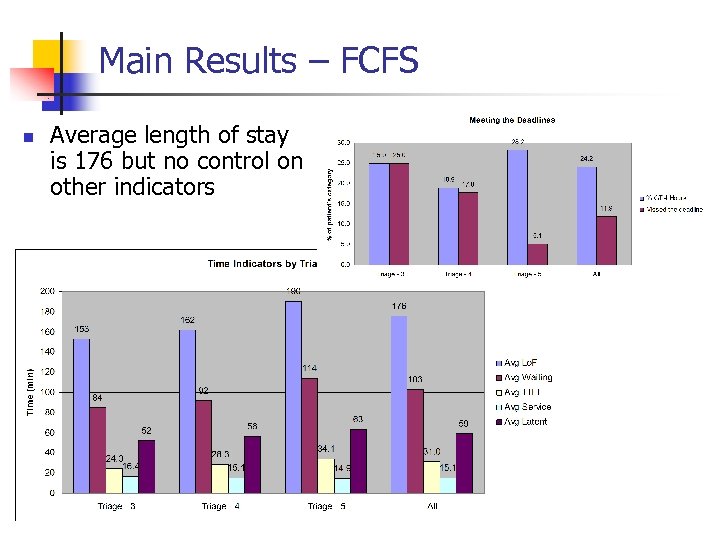 Main Results – FCFS n Average length of stay is 176 but no control on other indicators
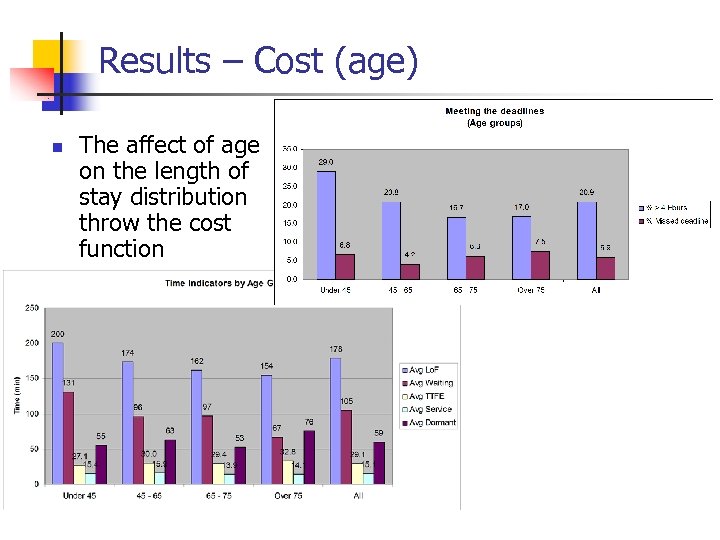 Results – Cost (age) n The affect of age on the length of stay distribution throw the cost function
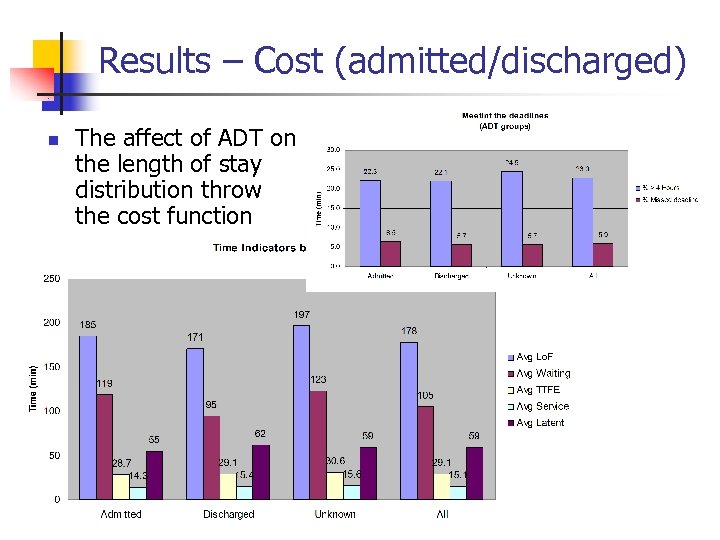 Results – Cost (admitted/discharged) n The affect of ADT on the length of stay distribution throw the cost function
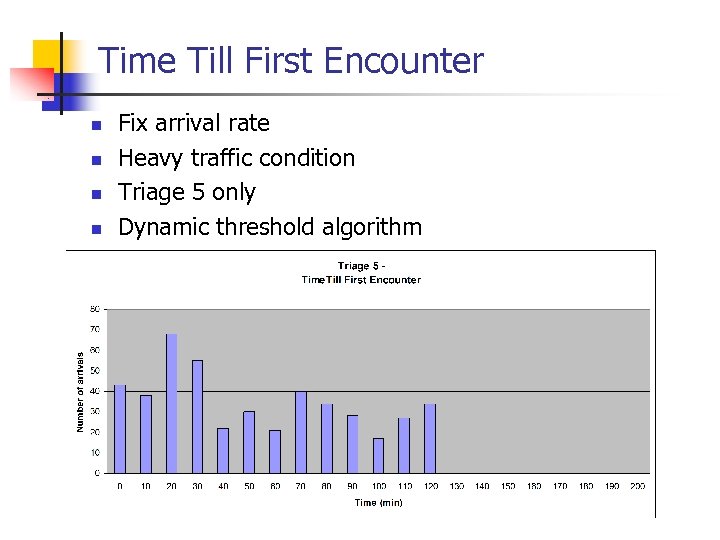 Time Till First Encounter n n Fix arrival rate Heavy traffic condition Triage 5 only Dynamic threshold algorithm
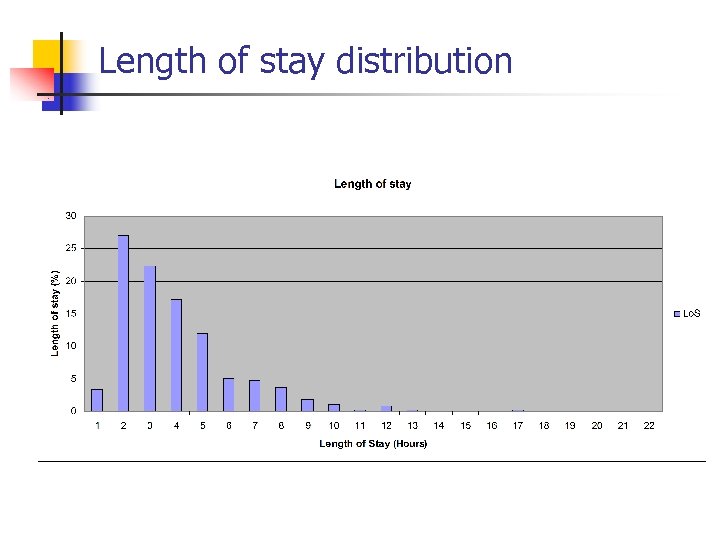 Length of stay distribution
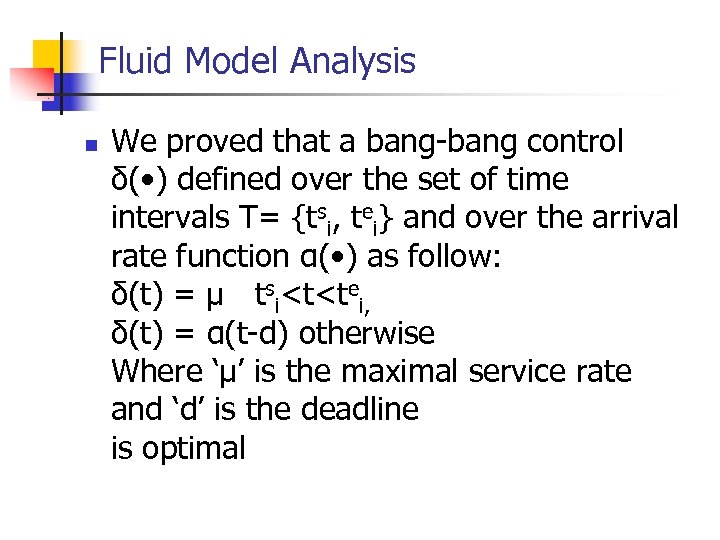 Fluid Model Analysis n We proved that a bang-bang control δ( • ) defined over the set of time intervals T= {tsi, tei} and over the arrival rate function α( • ) as follow: δ(t) = µ tsi
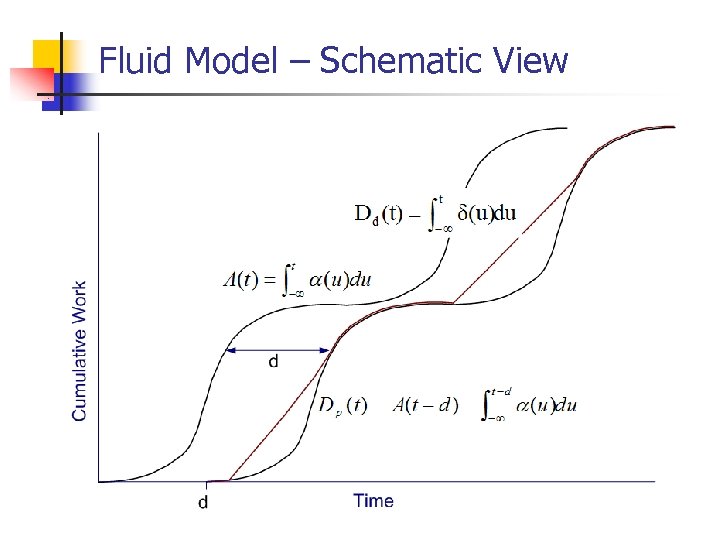 Fluid Model – Schematic View
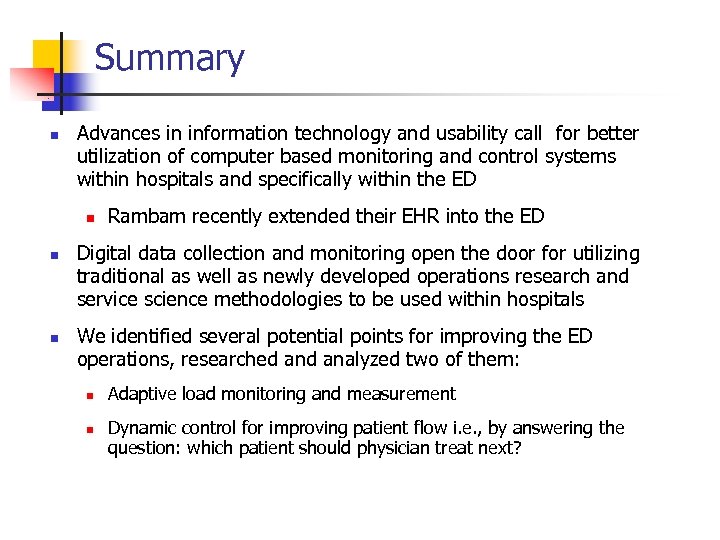 Summary n Advances in information technology and usability call for better utilization of computer based monitoring and control systems within hospitals and specifically within the ED n n n Rambam recently extended their EHR into the ED Digital data collection and monitoring open the door for utilizing traditional as well as newly developed operations research and service science methodologies to be used within hospitals We identified several potential points for improving the ED operations, researched analyzed two of them: n n Adaptive load monitoring and measurement Dynamic control for improving patient flow i. e. , by answering the question: which patient should physician treat next?
 Thank You
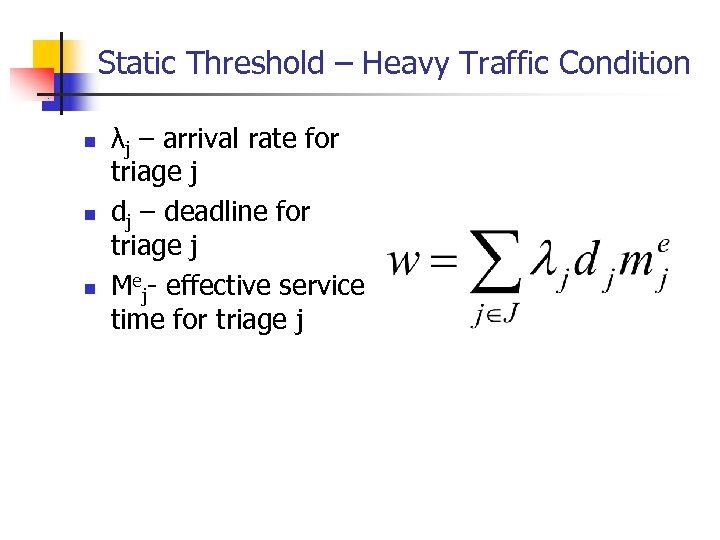 Static Threshold – Heavy Traffic Condition n λj – arrival rate for triage j dj – deadline for triage j Mej- effective service time for triage j
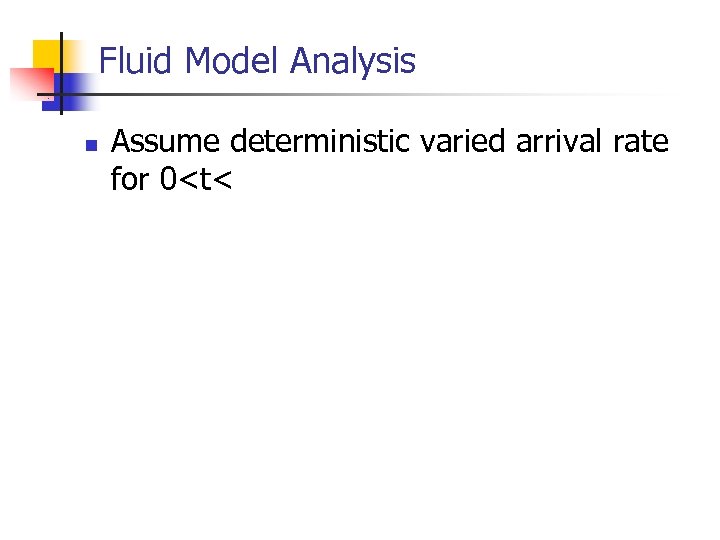 Fluid Model Analysis n Assume deterministic varied arrival rate for 0
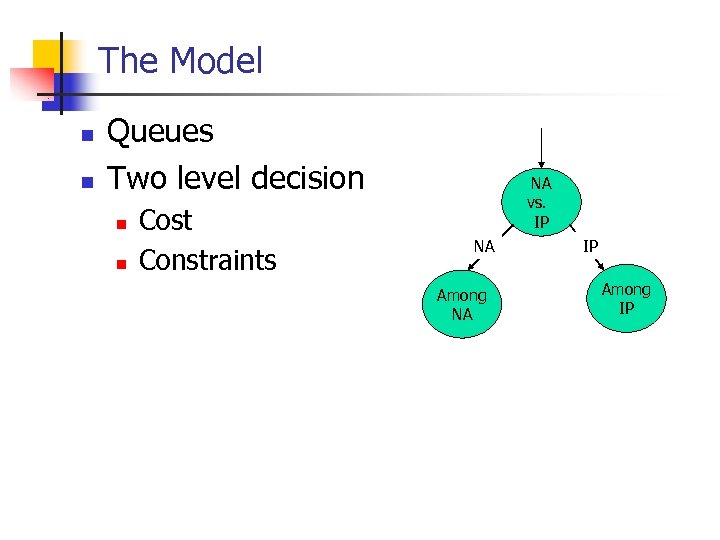 The Model n n Queues Two level decision n n Cost Constraints NA vs. IP NA Among NA IP Among IP
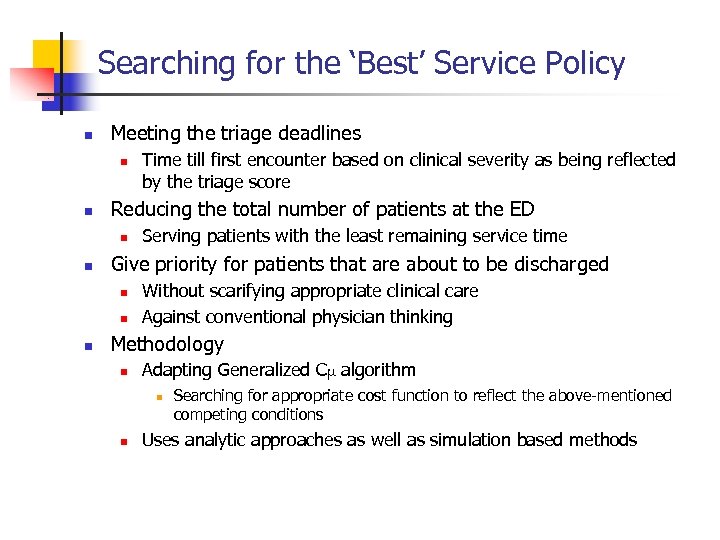 Searching for the ‘Best’ Service Policy n Meeting the triage deadlines n n Reducing the total number of patients at the ED n n Serving patients with the least remaining service time Give priority for patients that are about to be discharged n n n Time till first encounter based on clinical severity as being reflected by the triage score Without scarifying appropriate clinical care Against conventional physician thinking Methodology n Adapting Generalized Cμ algorithm n n Searching for appropriate cost function to reflect the above-mentioned competing conditions Uses analytic approaches as well as simulation based methods
 Back-up n n Uses analytical processing for gaining business and clinical understanding Provides real time monitoring through RFID and operational dashboards for problem identification, quality assurance and risk management Provides optimization, forecasting and what/if type of analysis based on analytical models Allows for modifying/improving operational and clinical processes for better performance and results
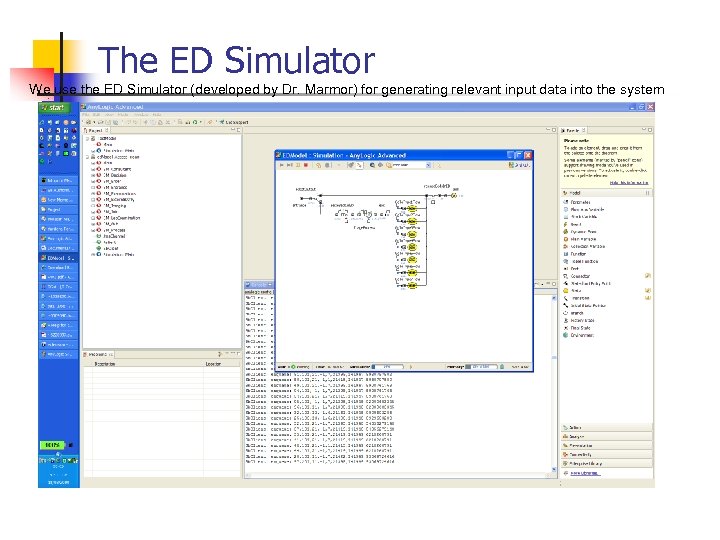 The ED Simulator We use the ED Simulator (developed by Dr. Marmor) for generating relevant input data into the system
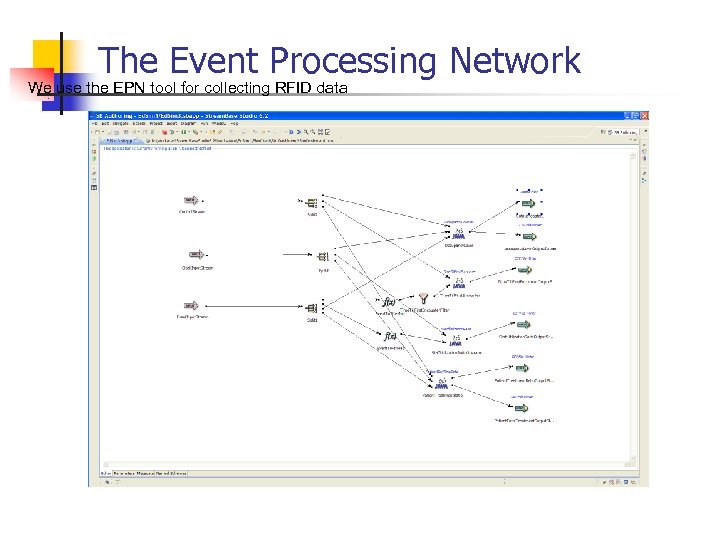 The Event Processing Network We use the EPN tool for collecting RFID data
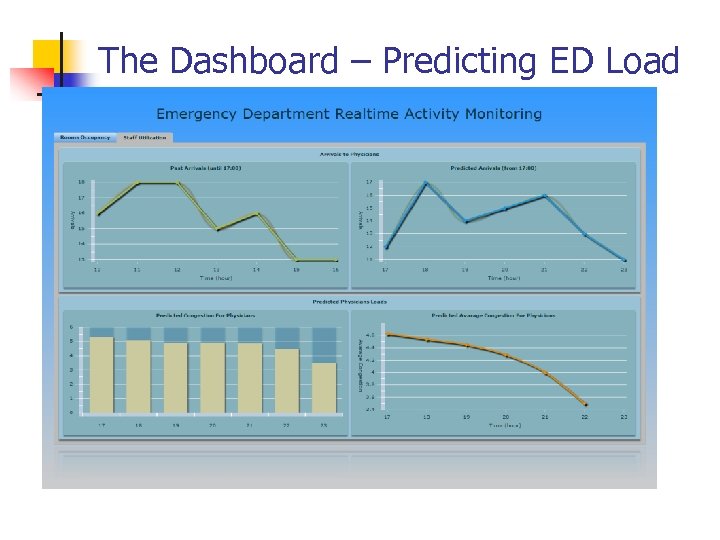 The Dashboard – Predicting ED Load
 Promise a collection of clinical operations research projects n n n Several projects related to patient flow at ED, internal wards and from the ED to the wards Operational Research, Queuing Theory, Simulation, Complex Event Processing Join work with the Technion and Rambam (leading Israeli Hospital) under an IBM Open Collaborative Research program
 The Monitoring and Control Dashboard – Example
 The ED Patient Flow