 Скачать презентацию Real Estate Market Analysis Basic Principles an Overview
02-Overview and Levels.ppt
- Количество слайдов: 39



Real Estate Market Analysis Basic Principles, an Overview of the Process and Levels of Study Wayne Foss, DBA, MAI, CRE, FRICS Fullerton, CA USA Email: waynefoss@usa. net
Real Estate Market Analysis n Studies that Focus on the Market n Analysis of Local Economic Conditions n n Study of the fundamental determinates of the demand for all real estate in the market Market Analysis n Study of the demand for a particular property type n n A site in search of a Use A Use in Search of a Site 2
Real Estate Market Analysis n Marketability Analysis n n Study of a specific development or property to assess its competitive position Studies That Focus on Individual Decisions n Feasibility Analysis n n Evaluates a specific project as to whether or not it is likely to be carried out successfully Investment Analysis n Evaluates a specific property as a potential investment. Investor specific. 3
Overview of Market Analysis Components n Two Major Study (Question) Types n n 1. A Site in Search of a Use 2. A Use in Search of a Site 4
Overview of Market Analysis Components n n The Study Process 1. What attributes does the subject property offer to the market? 2. Who are the potential, typical users/most likely purchasers of the subject? n Most Probable Buyer Analysis 5
Overview of Market Analysis Components n 3. Is the property use needed? Demand Analysis n Population Þ Households Þ Housing Units n Income Þ Effective Buying Power Þ Retail Sq. Ft. n Jobs Þ % Use Office Þ Office Sq. Ft. n Jobs Þ % Use Industrial Þ Industrial Sq. Ft. 6

Overview of Market Analysis Components n 4. What is the Competition? n n Supply Analysis 5. Analysis comparing demand supply n Equilibrium Analysis n n How much rent can be charges? Is the location competitive? Are the property attributes competitive? How much of the demand can be captured? 7
Overview of Market Analysis Components n 6. Subjects marketability n n Capture Analysis 7. Does the subject make financial sense? n n n Is it a good investment? What is its market value? Is the property’s value more than its cost? n n I. e. : is there any entrepreneurial reward for the risk? Feasibility Analysis and/or Highest and Best Use 8
Step 1: Define the Product Property Productivity Analysis n n A. Physical Attributes B. Legal and Regulatory Attributes n n n Private Public C. Location Attributes n n Identification of economic attributes – the association between land uses and their linkages Identification of the movement of demand in relation to the direction of urban growth 9
Step 1: Define the Product Property Productivity Analysis n Analysis of Urban Growth Structure n n Analysis of factors influencing urban growth structure n n Pattern, Direction and Rate Natural, Manufactured and Political Identification of competition and comparison of location advantages and disadvantages between competition and subject 10
Step 1: Define the Product Property Productivity Analysis n D. Market appeal Attributes: n Identification of specific features such as design or amenities that appeal to market participants 11
Step 2: Define the Users Market Delineation n A. Market area concepts n n Time-distance concepts Area over which equally desirable, substitute properties tend to compete with the subject B. Geographic Market Delineation C. Identification of Characteristics of Most Probable User (consumer profile) 12
Step 3: Forecast Demand Factors n A. Major demand types n n n Population creates households Income creates retail buying power Employment creates office and industrial users B. Tastes and preferences: behavioral, motivational, and psychological factors C. Demand segmentation 13
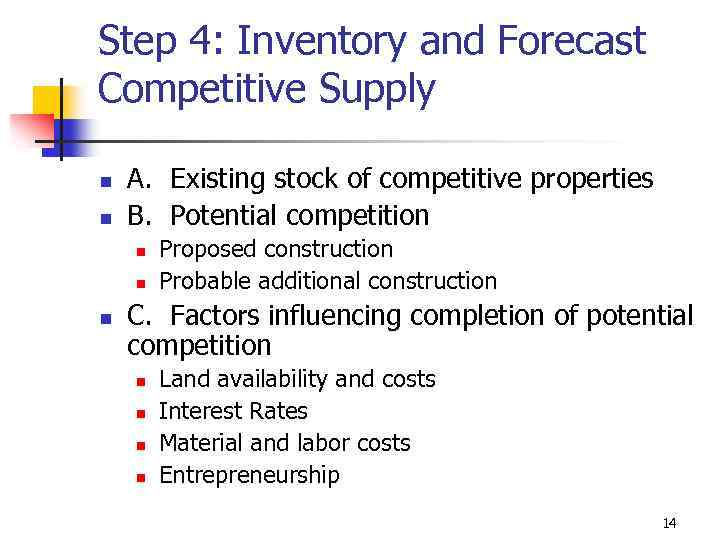
Step 4: Inventory and Forecast Competitive Supply n n A. Existing stock of competitive properties B. Potential competition n Proposed construction Probable additional construction C. Factors influencing completion of potential competition n n Land availability and costs Interest Rates Material and labor costs Entrepreneurship 14
Step 5: Analyze the Interaction of Supply and Demand n n Residual Demand Study A. Competitive environment B. Residual Demand Concepts 15
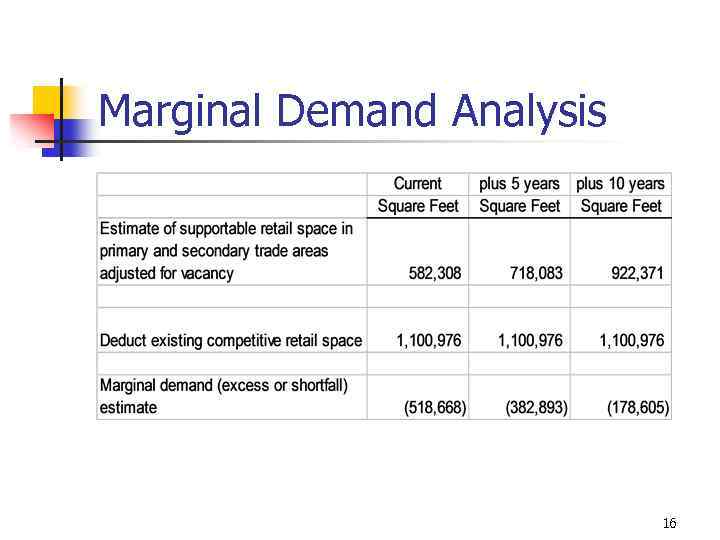
Marginal Demand Analysis 16
Step 6: Forecast Subject Capture n n n A. Capture rate and absorption period for subject property B. Risk Analysis C. Reconciliation of market analysis and conclusions 17
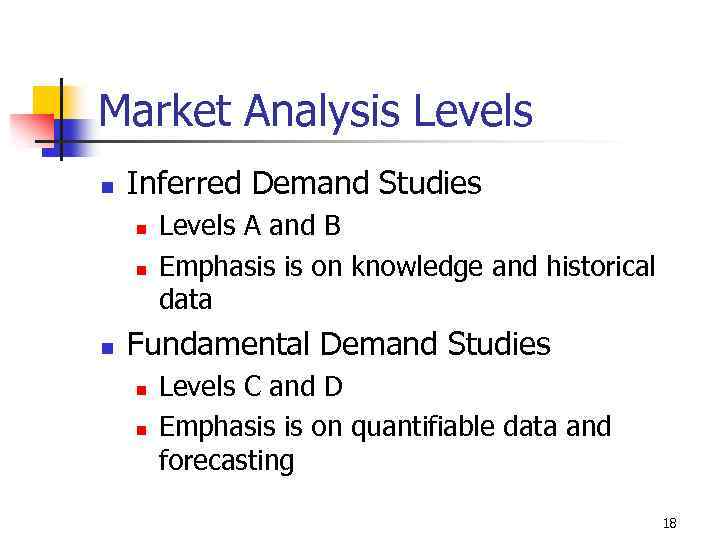
Market Analysis Levels n Inferred Demand Studies n n n Levels A and B Emphasis is on knowledge and historical data Fundamental Demand Studies n n Levels C and D Emphasis is on quantifiable data and forecasting 18
Level A Market Analysis n Draws on readily available regional and city data, a general area description provides the backdrop for the comparable property data used to represent market conditions n n n Analyses are more descriptive than analytical Historically oriented rather than future oriented Rent and comparable sales are relied upon 19
Level A Market Analysis n A. Property productivity analysis n n Physical attributes Legal attributes Location attributes B. Supply and demand analysis n n Demand Supply 20
Level A Market Analysis n C. Marketability/equilibrium analysis/highest and best use conclusions n n Focuses on use conclusions Timing based on analysts feel for the market n Improved Properties n n Use and timing for property use Vacant land or land as though vacant n n Use – Usually uses permitted by current zoning Timing – Considered immediate 21
Level B Market Analysis n n Relies upon broadly based surveys of the market for estimating supply and demand Uses quantifiable data as a basis for judgments about highest and best use and timing 22
Level B Market Analysis n A. Property productivity n n Physical Attributes Legal Attributes n n n Includes a check for deed restrictions, easements, and other legal attributes Location attributes B. Supply and demand analysis 23
Level B Market Analysis n C. Marketability/equilibrium analysis/highest and best use n n Uses specific quantifiable data for use and timing Employs data that relate to timing of demand – timing becomes function of demand relative to supply 24
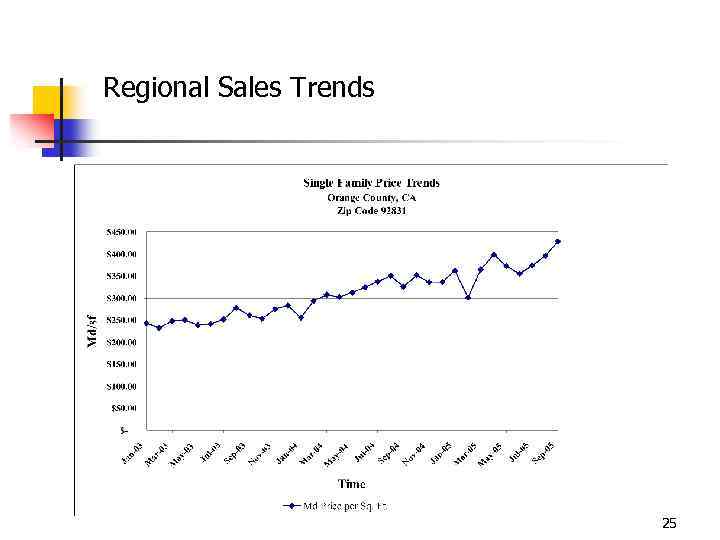
Regional Sales Trends 25
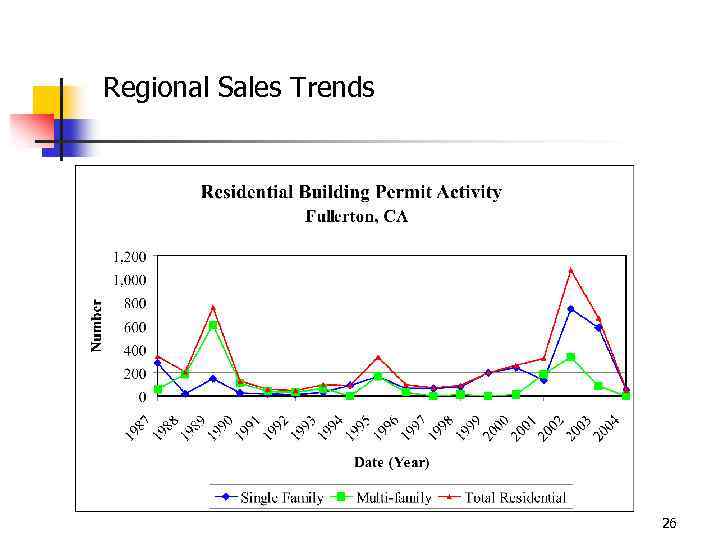
Regional Sales Trends 26
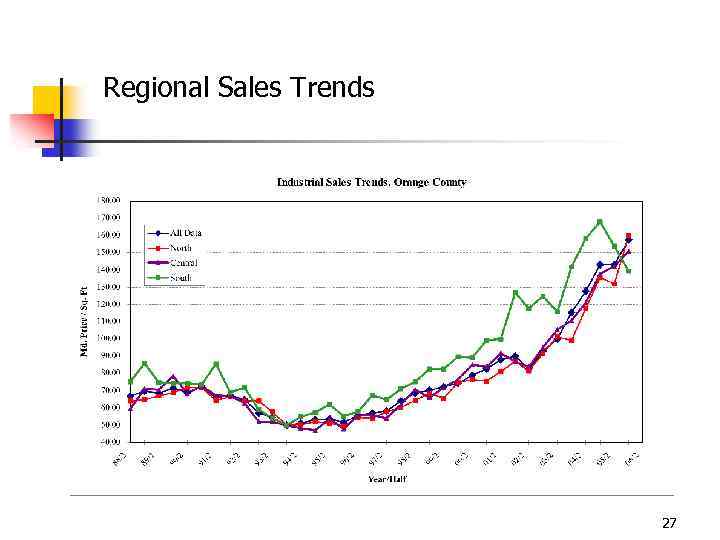
Regional Sales Trends 27
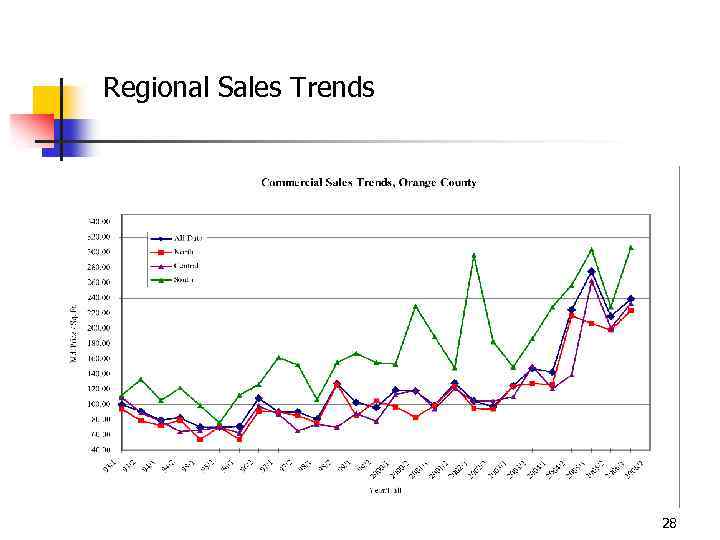
Regional Sales Trends 28
Level C Market Analysis n n Employs fundamental forecasting techniques Can discern whethere is an excess or supply, an excess of demand, or a balanced market 29
Level C Market Analysis n A. Property productivity analysis n n n Physical attributes – same as level B Legal attributes – same as level B Location attributes n Analyzed with a location rating grid to provide some quantified analysis of the subject’s competitive position 30
Level C Market Analysis n B. Supply and demand analysis n n Uses future oriented forecasting techniques forecasting demand supply C. Marketability/equilibrium analysis/highest and best use conclusions n n Probable use of vacant land 31
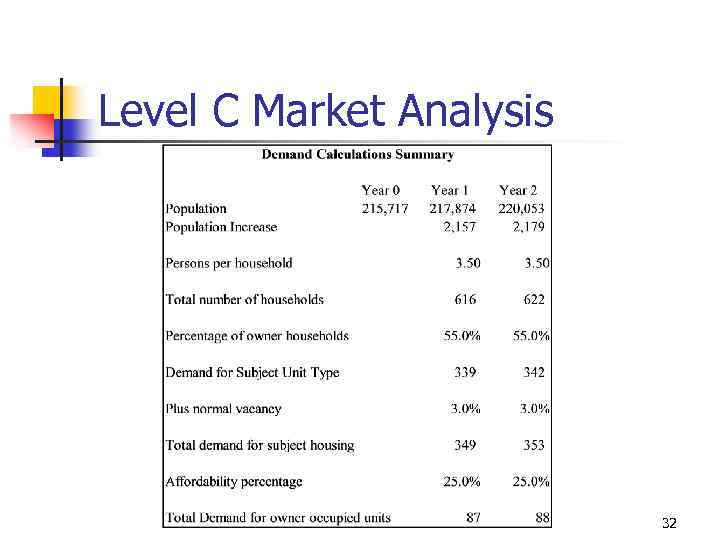
Level C Market Analysis 32
Level D Market Analysis n n Usually handled by professional real estate market analysts A. Property productivity analysis n n B. Supply and demand analysis n n Includes detailed projections of probable future land uses Forecasting demand supply C. Marketability/equilibrium analysis/highest and best use conclusions n n Improved existing or proposed properties Vacant land 33
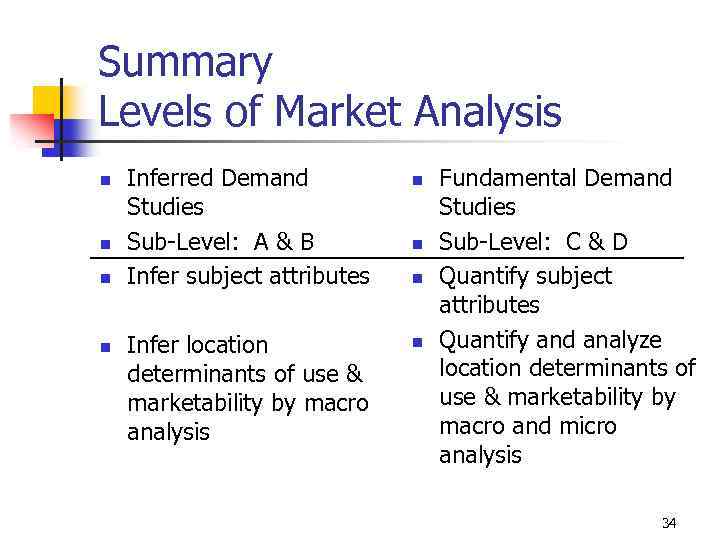
Summary Levels of Market Analysis n n Inferred Demand Studies Sub-Level: A & B Infer subject attributes Infer location determinants of use & marketability by macro analysis n n Fundamental Demand Studies Sub-Level: C & D Quantify subject attributes Quantify and analyze location determinants of use & marketability by macro and micro analysis 34
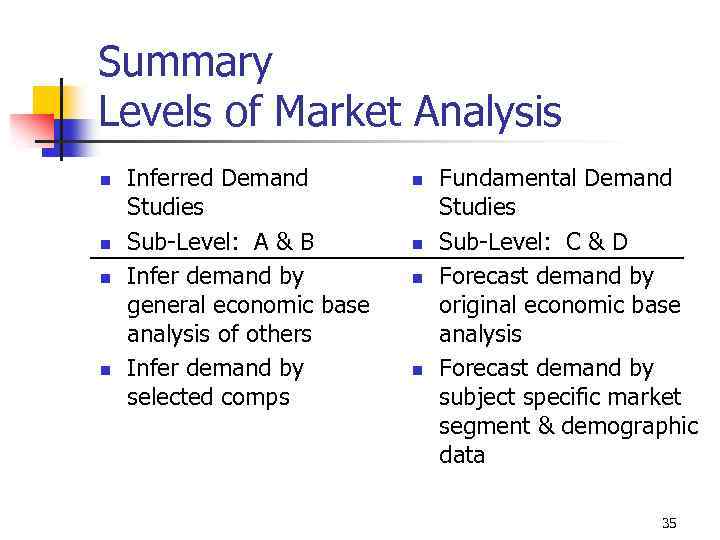
Summary Levels of Market Analysis n n Inferred Demand Studies Sub-Level: A & B Infer demand by general economic base analysis of others Infer demand by selected comps n n Fundamental Demand Studies Sub-Level: C & D Forecast demand by original economic base analysis Forecast demand by subject specific market segment & demographic data 35
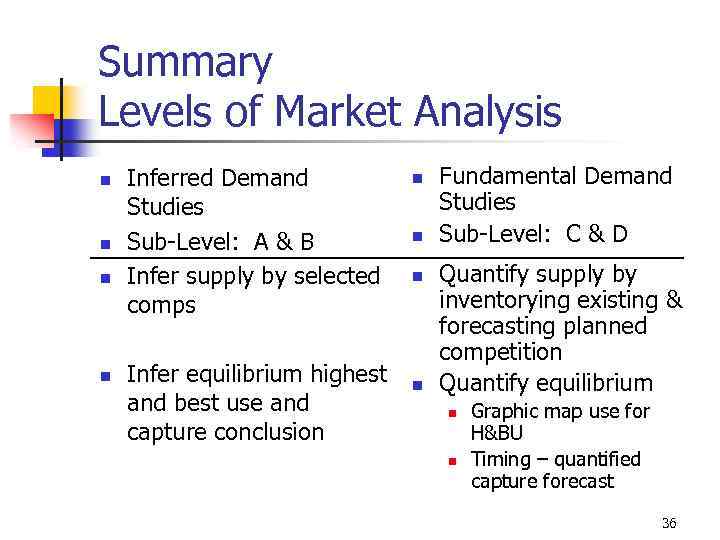
Summary Levels of Market Analysis n n Inferred Demand Studies Sub-Level: A & B Infer supply by selected comps Infer equilibrium highest and best use and capture conclusion n n Fundamental Demand Studies Sub-Level: C & D Quantify supply by inventorying existing & forecasting planned competition Quantify equilibrium n n Graphic map use for H&BU Timing – quantified capture forecast 36
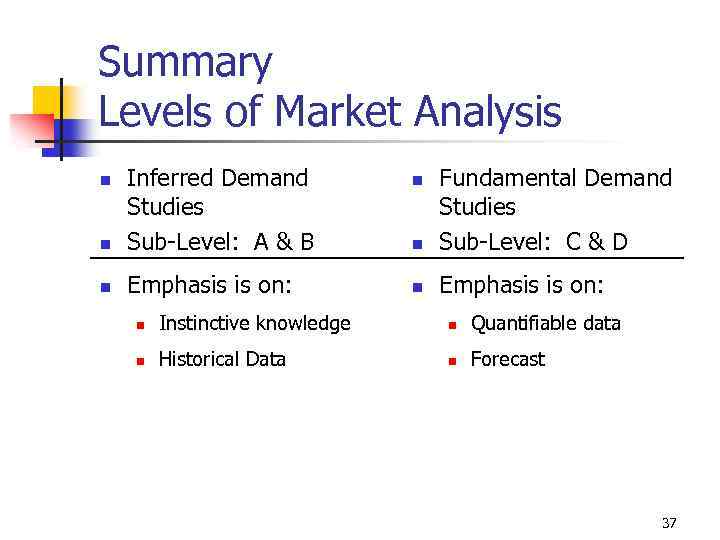
Summary Levels of Market Analysis n Inferred Demand Studies Sub-Level: A & B n Emphasis is on: n n Fundamental Demand Studies Sub-Level: C & D n Emphasis is on: n n Instinctive knowledge n Quantifiable data n Historical Data n Forecast 37
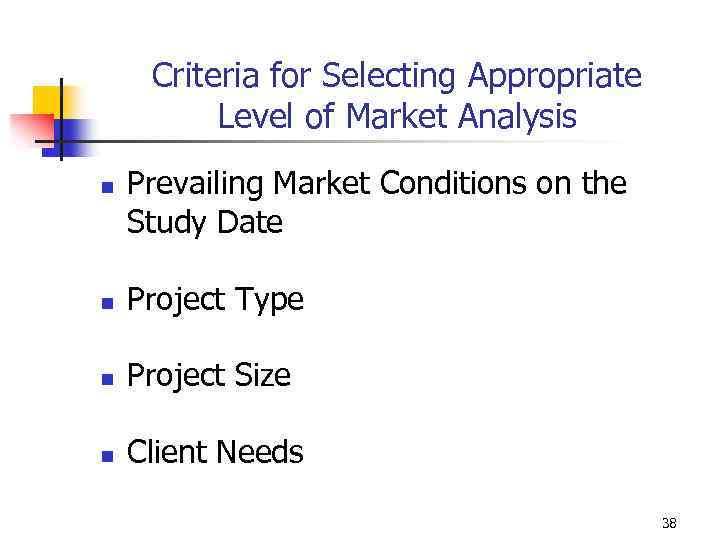
Criteria for Selecting Appropriate Level of Market Analysis n Prevailing Market Conditions on the Study Date n Project Type n Project Size n Client Needs 38

So That’s An Overview of Real Estate Market Analysis Wayne Foss, DBA, MAI, CRE, FRICS Fullerton, CA USA Email: waynefoss@usa. net 39
Скачать презентацию Real Estate Market Analysis Basic Principles an Overview
02-Overview and Levels.ppt