 Скачать презентацию Reading Water Media and Tissue Tests Bodie V
3920bbdc06dde7caa0599e010eb6301c.ppt
- Количество слайдов: 45



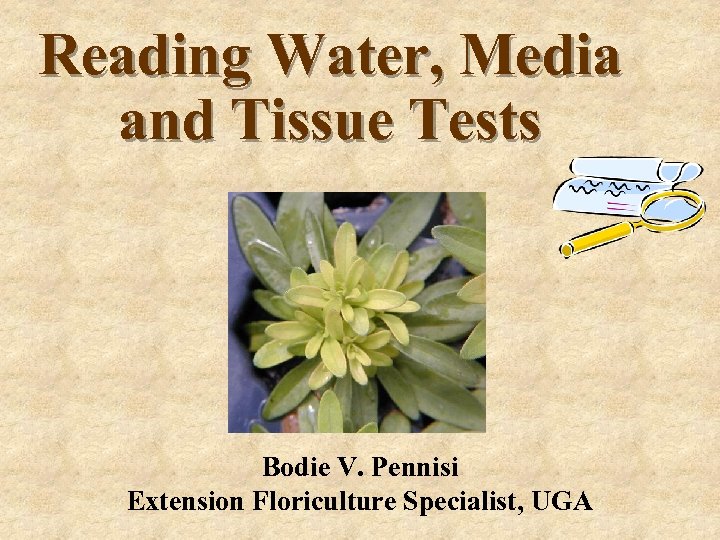
Reading Water, Media and Tissue Tests Bodie V. Pennisi Extension Floriculture Specialist, UGA
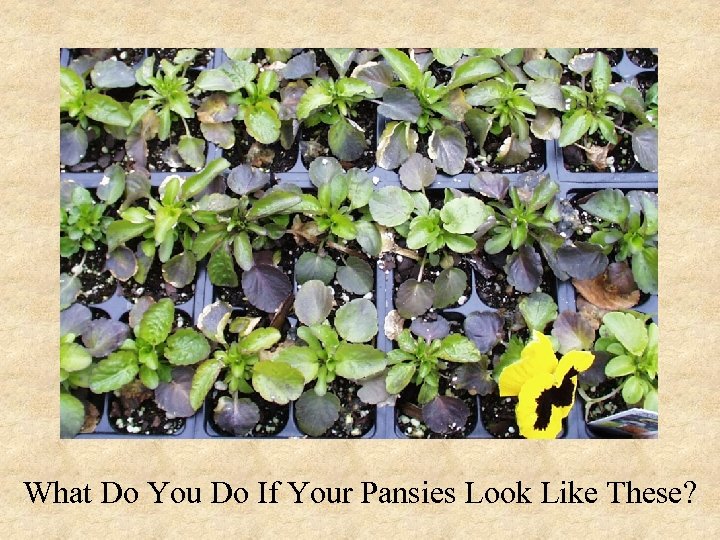
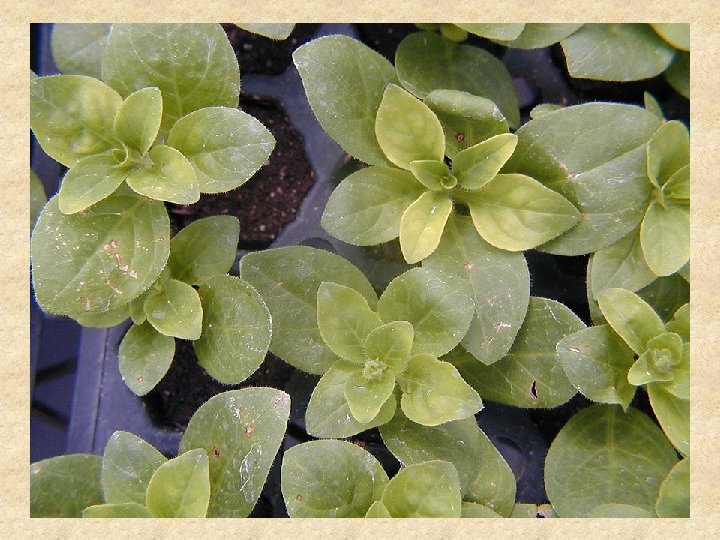
What Do You Do If Your Pansies Look Like These?
Investigate: • Nutritional ? • Which nutrient(s) ? • Deficiency or toxicity ? • Cause(s) ?
Macronutrient. Related Problems
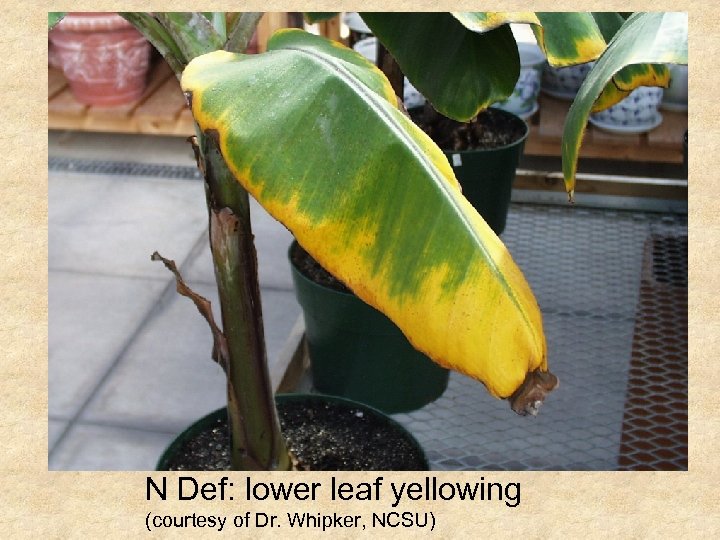
N Def: lower leaf yellowing (courtesy of Dr. Whipker, NCSU)
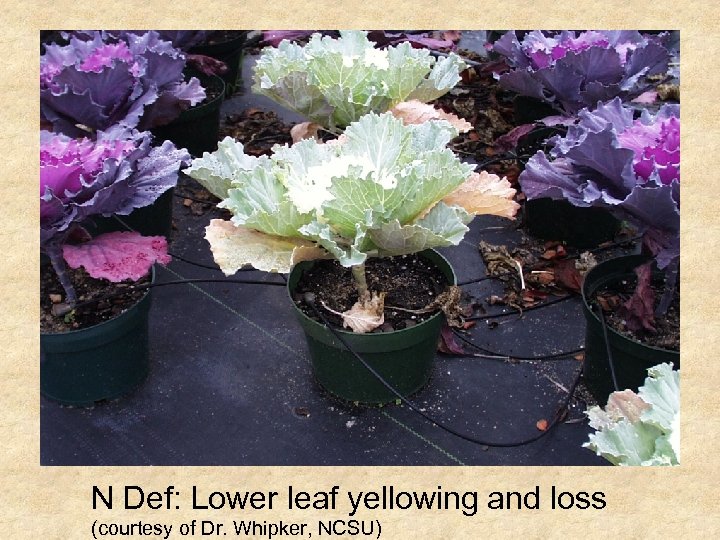
N Def: Lower leaf yellowing and loss (courtesy of Dr. Whipker, NCSU)
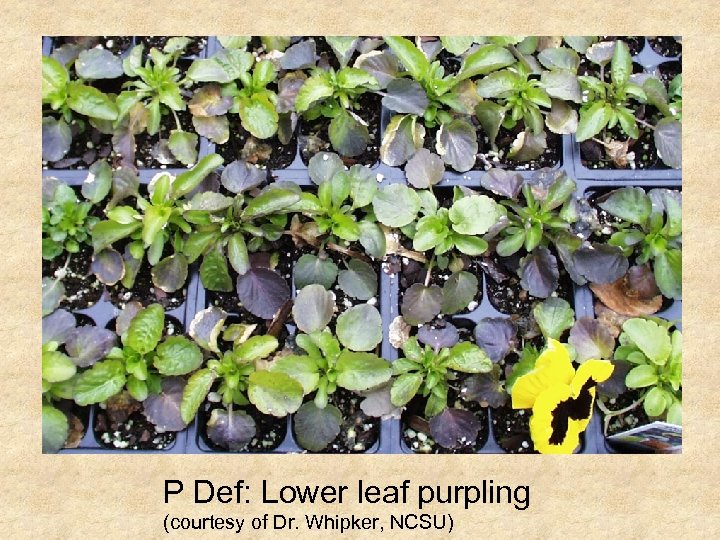
P Def: Lower leaf purpling (courtesy of Dr. Whipker, NCSU)
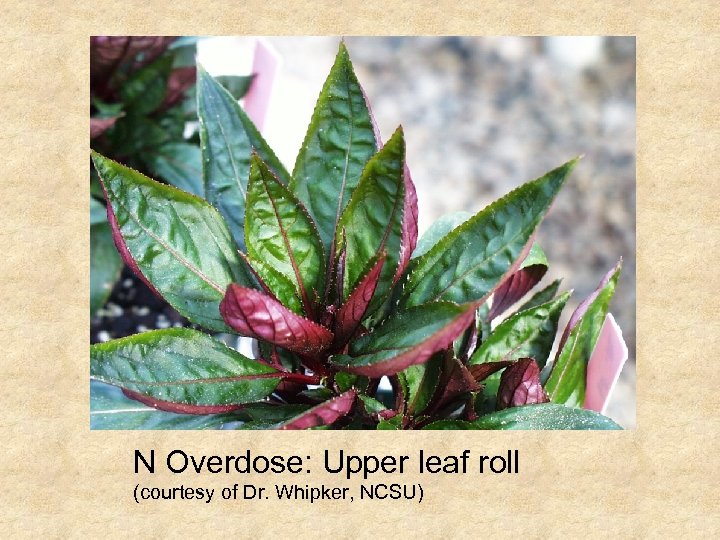
N Overdose: Upper leaf roll (courtesy of Dr. Whipker, NCSU)
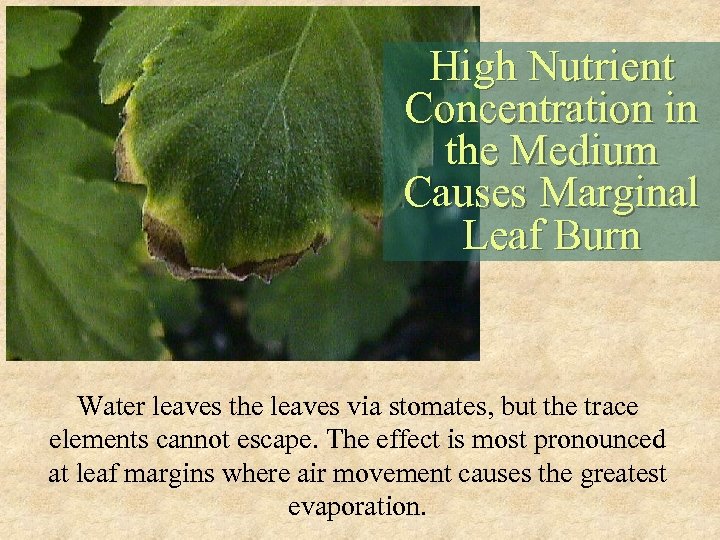
High Nutrient Concentration in the Medium Causes Marginal Leaf Burn Water leaves the leaves via stomates, but the trace elements cannot escape. The effect is most pronounced at leaf margins where air movement causes the greatest evaporation.
Micronutrient. Related Problems
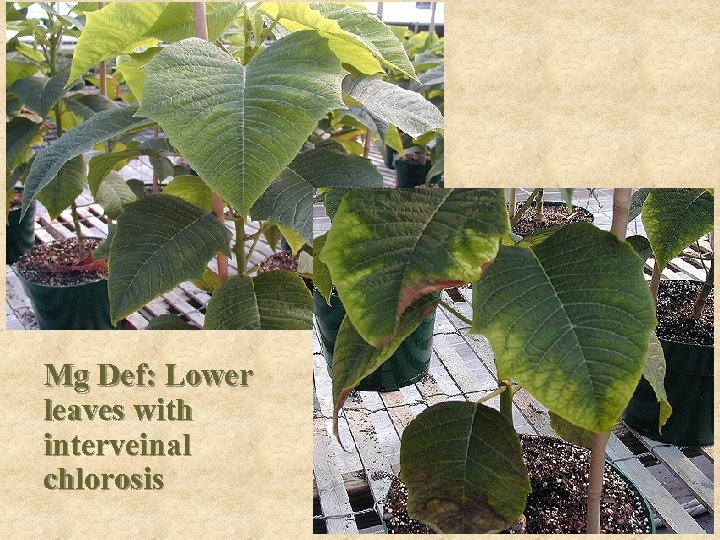
Mg Def: Lower leaves with interveinal chlorosis
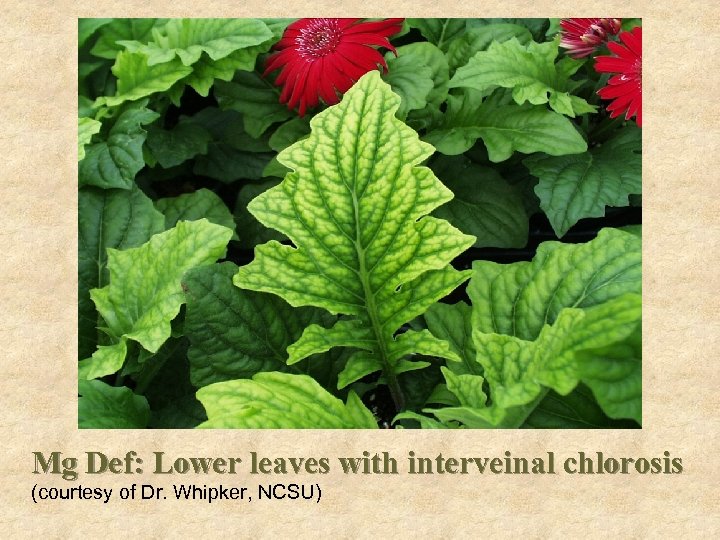
Problems Mg Def: Lower leaves with interveinal chlorosis (courtesy of Dr. Whipker, NCSU)
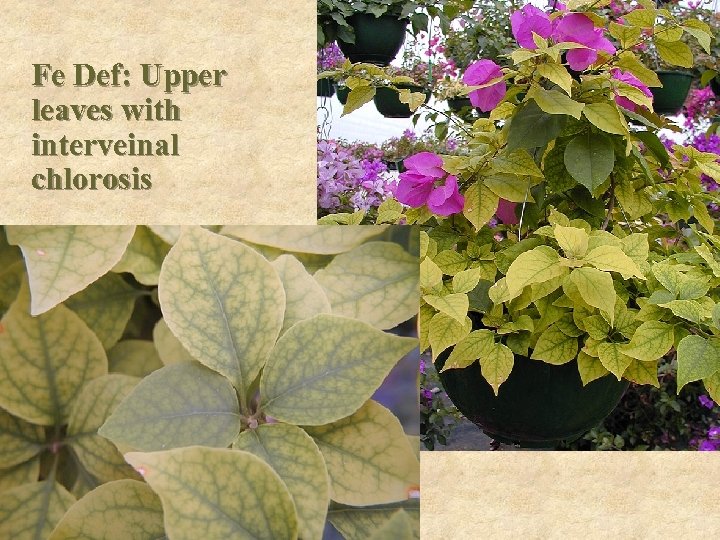
Fe Def: Upper leaves with interveinal chlorosis
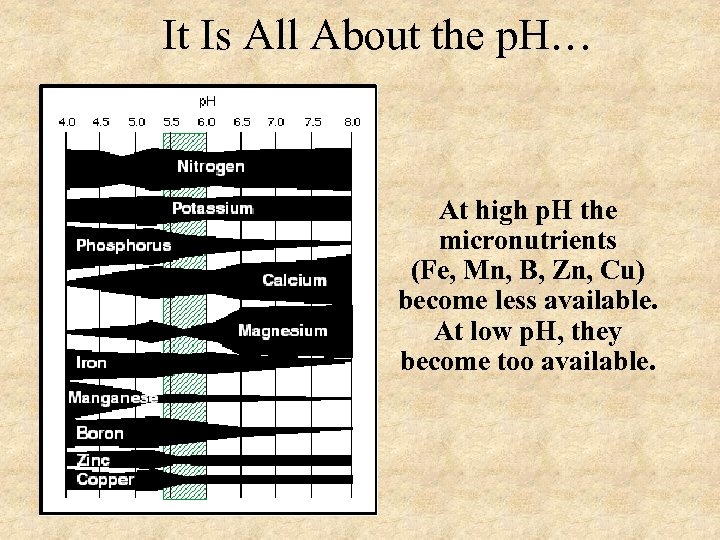
It Is All About the p. H… At high p. H the micronutrients (Fe, Mn, B, Zn, Cu) become less available. At low p. H, they become too available.
Media p. H is affected by: • lime incorporated • water alkalinity and p. H • type of fertilizer used (basic or acidic) • species grown
Crops Can Be Placed Into Groups • Geranium Group • • • Plants that are very efficient in taking up Fe Ex: seed and zonal geraniums, marygolds, New Guinea impatiens, lisianthus Petunia Group • Plants that are very inefficient in taking up Fe • Ex: petunias, pansies, snapdragons, calibrachoa, vinca
Low p. H
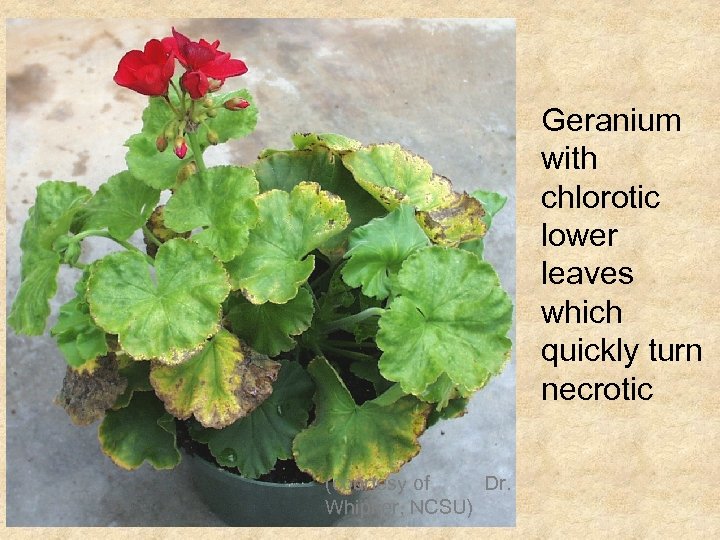
Geranium with chlorotic lower leaves which quickly turn necrotic (courtesy of Dr. Whipker, NCSU)
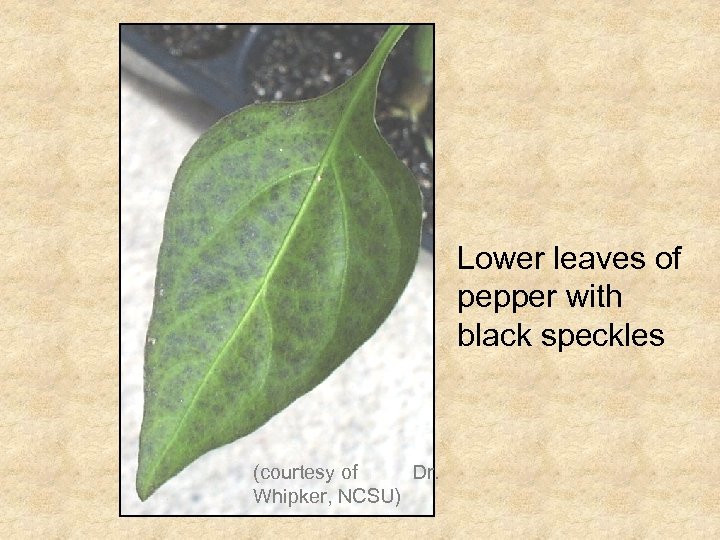
Lower leaves of pepper with black speckles (courtesy of Dr. Whipker, NCSU)
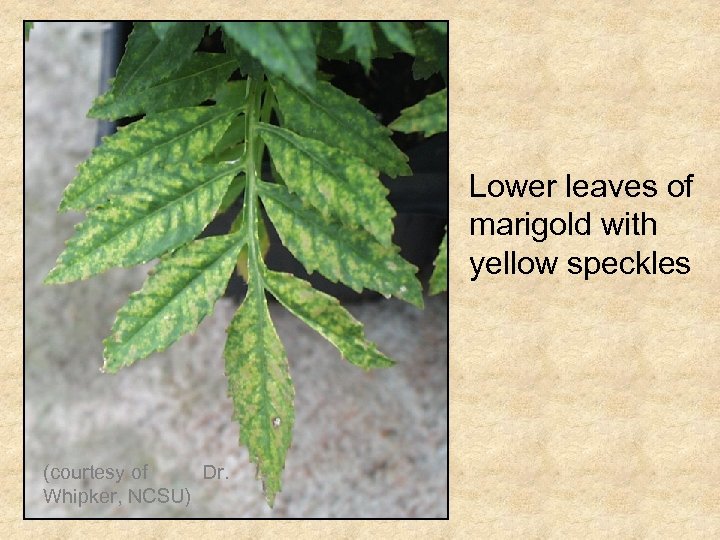
Lower leaves of marigold with yellow speckles (courtesy of Dr. Whipker, NCSU)
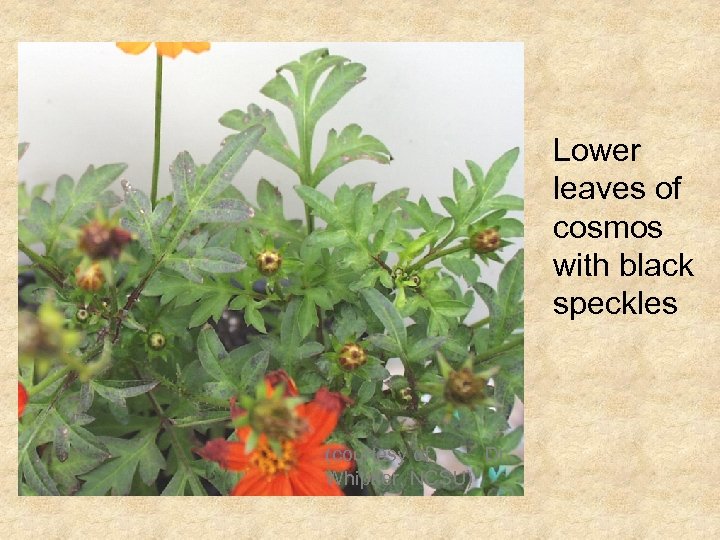
Lower leaves of cosmos with black speckles (courtesy of Dr. Whipker, NCSU)
High p. H
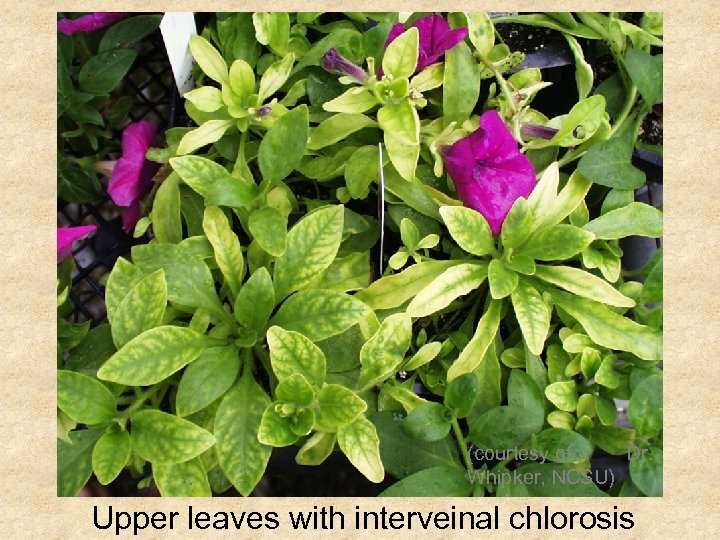
(courtesy of Dr. Whipker, NCSU) Upper leaves with interveinal chlorosis
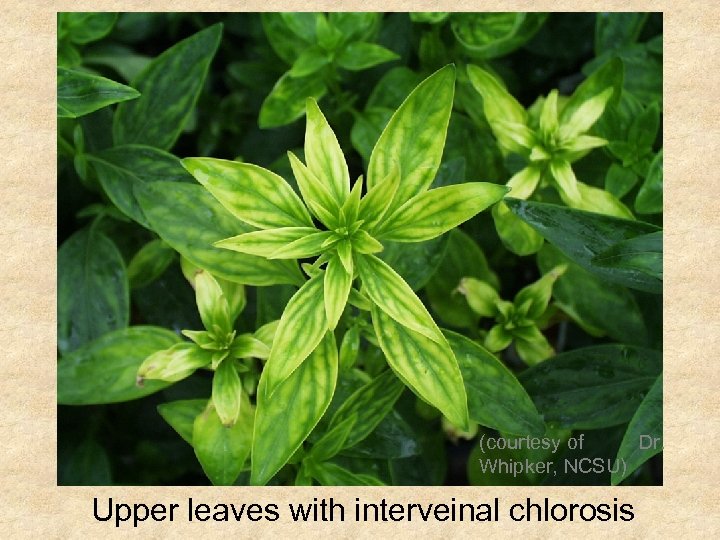
(courtesy of Dr. Whipker, NCSU) Upper leaves with interveinal chlorosis
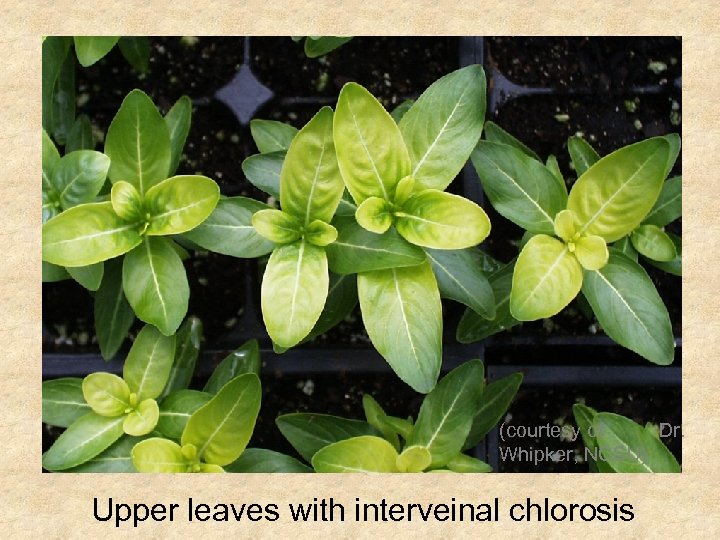
(courtesy of Dr. Whipker, NCSU) Upper leaves with interveinal chlorosis
The Goal Is To Achieve A Stable Medium p. H Over Time
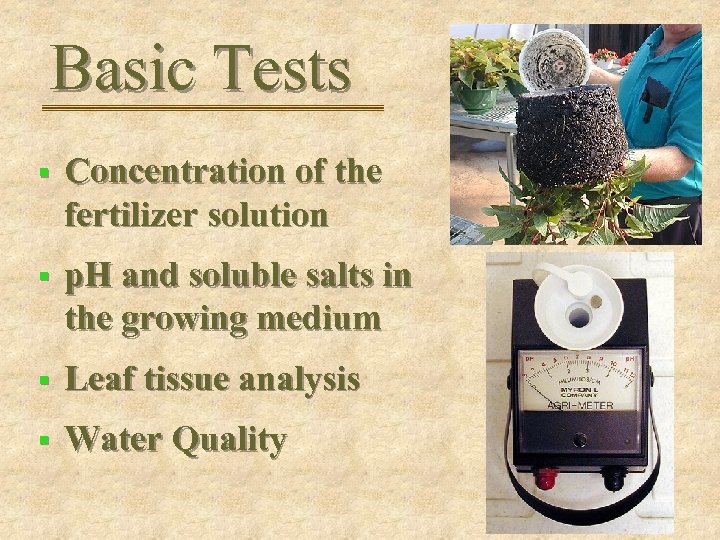
Basic Tests § Concentration of the fertilizer solution § p. H and soluble salts in the growing medium § Leaf tissue analysis § Water Quality
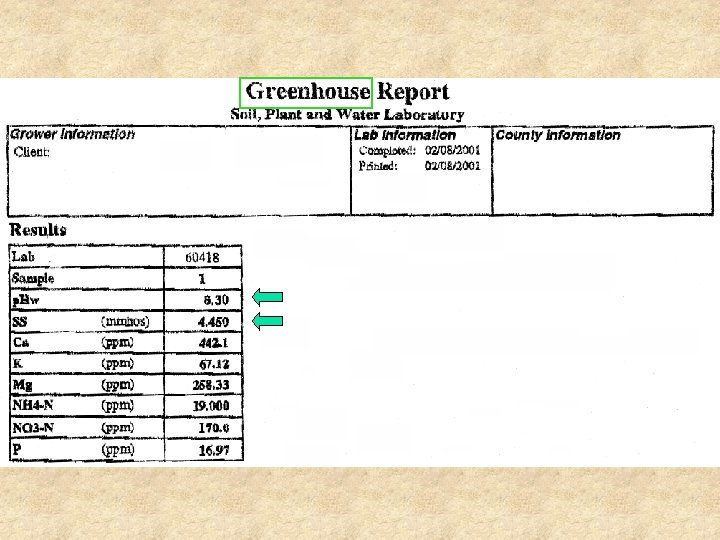
Testing the growing medium § EC (SS) and p. H of the leachate § In-house tests can be done with the pourthrough method § Sending samples to a lab: do not use the top 1/2 to 1 inch of the soil § NO 3 --N, NH 4+-N, P, K, Ca, Mg
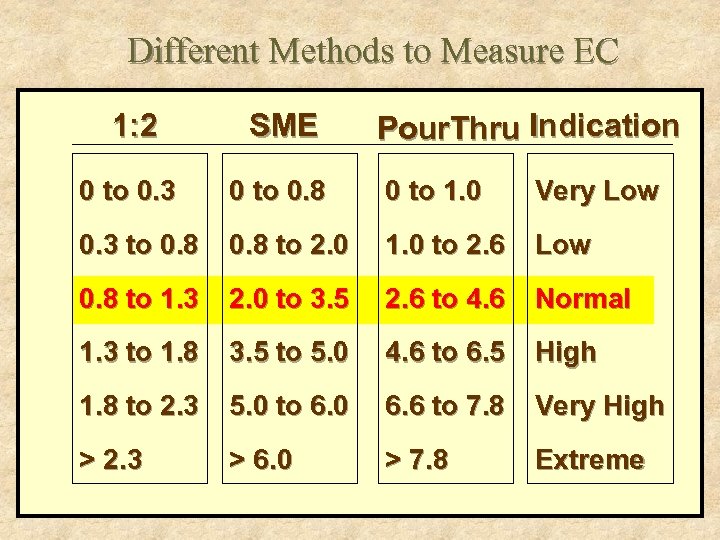
Different Methods to Measure EC 1: 2 SME Pour. Thru Indication 0 to 0. 3 0 to 0. 8 0 to 1. 0 Very Low 0. 3 to 0. 8 to 2. 0 1. 0 to 2. 6 Low 0. 8 to 1. 3 2. 0 to 3. 5 2. 6 to 4. 6 Normal 1. 3 to 1. 8 3. 5 to 5. 0 4. 6 to 6. 5 High 1. 8 to 2. 3 5. 0 to 6. 0 6. 6 to 7. 8 Very High > 2. 3 > 6. 0 > 7. 8 Extreme
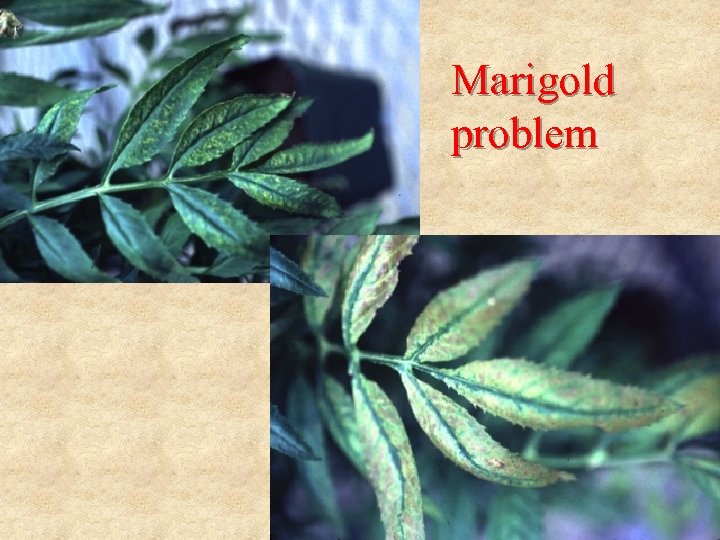
Marigold problem
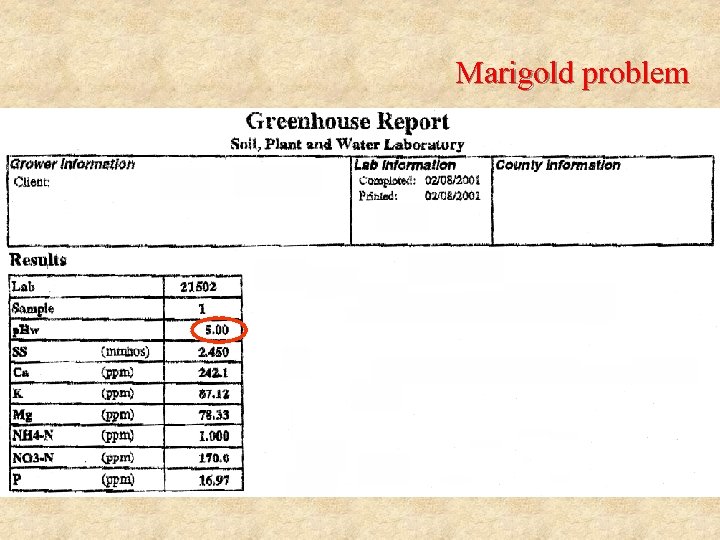
Marigold problem
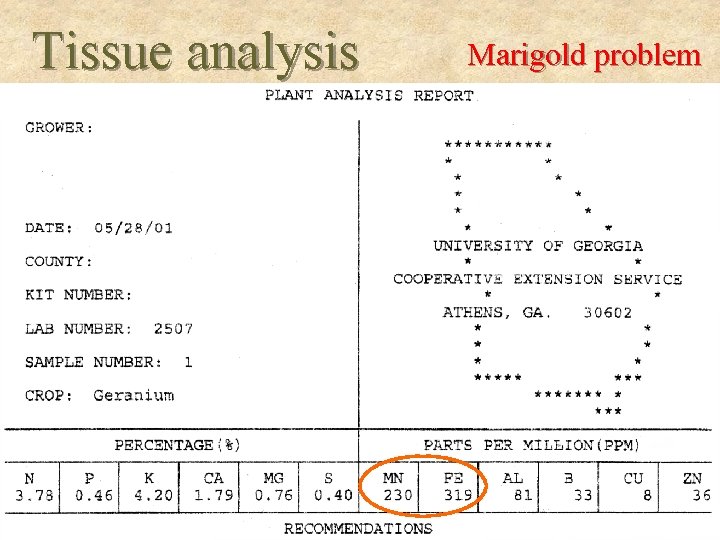
Tissue analysis Marigold problem
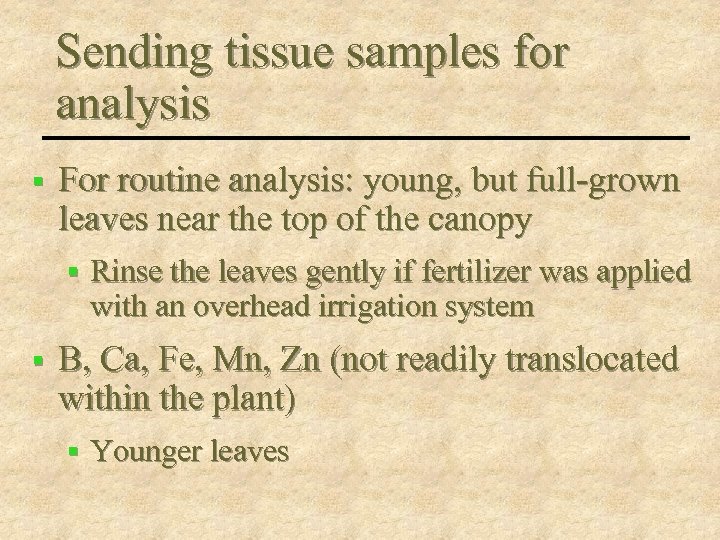
Sending tissue samples for analysis § For routine analysis: young, but full-grown leaves near the top of the canopy § § Rinse the leaves gently if fertilizer was applied with an overhead irrigation system B, Ca, Fe, Mn, Zn (not readily translocated within the plant) § Younger leaves
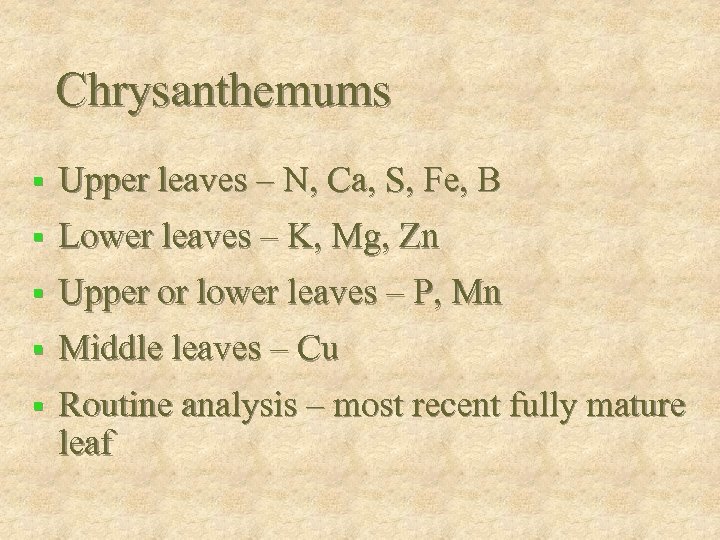
Chrysanthemums § Upper leaves – N, Ca, S, Fe, B § Lower leaves – K, Mg, Zn § Upper or lower leaves – P, Mn § Middle leaves – Cu § Routine analysis – most recent fully mature leaf
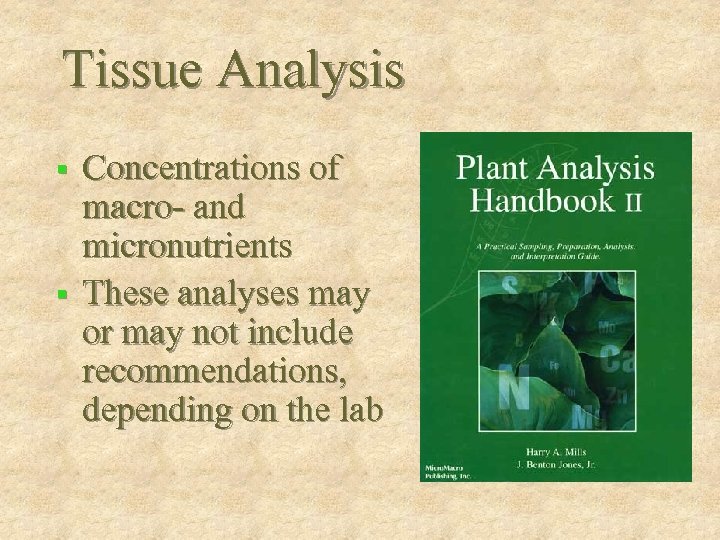
Tissue Analysis Concentrations of macro- and micronutrients § These analyses may or may not include recommendations, depending on the lab §
Testing The Waters…
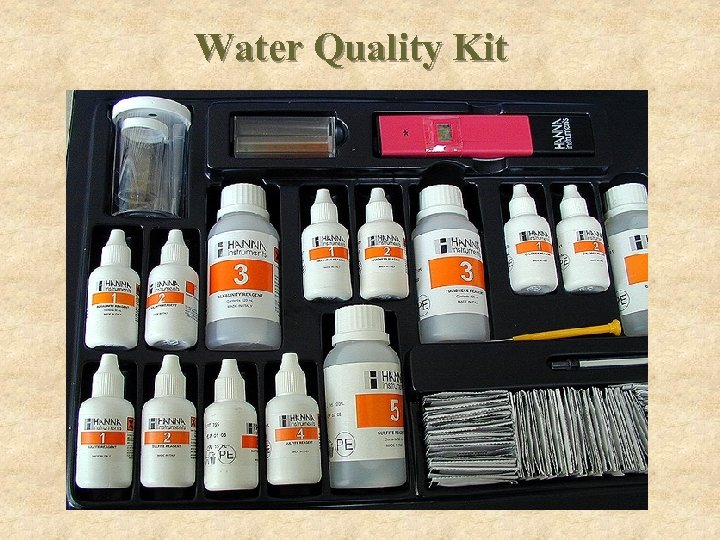
Water Quality Kit
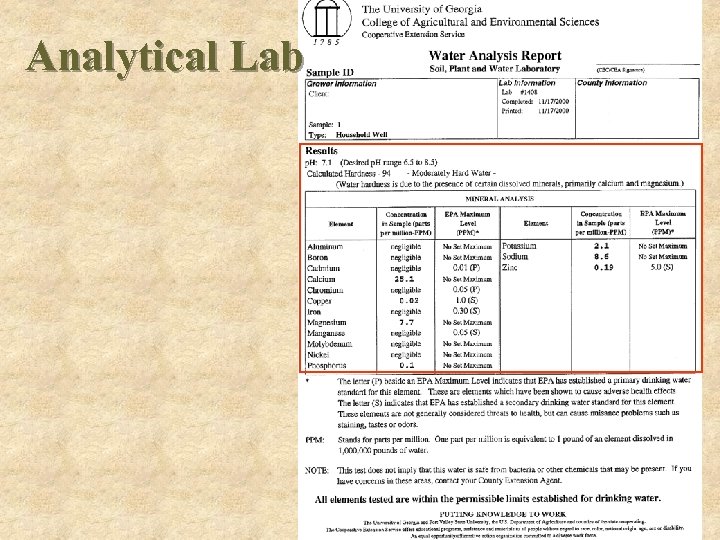
Analytical Lab
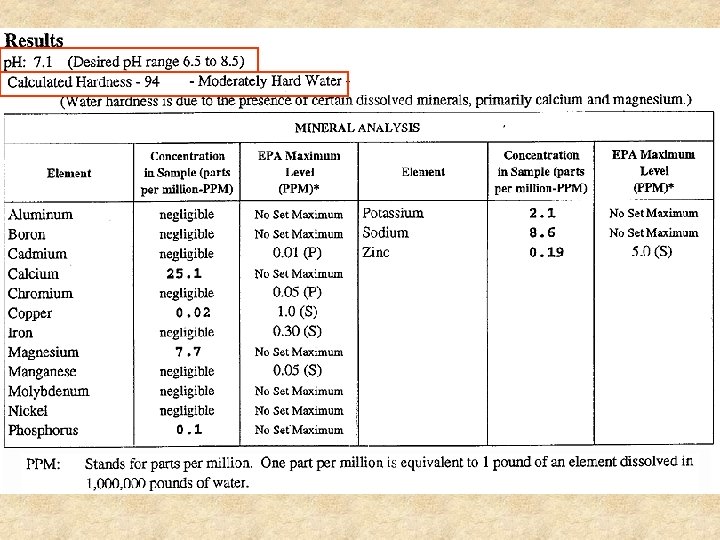
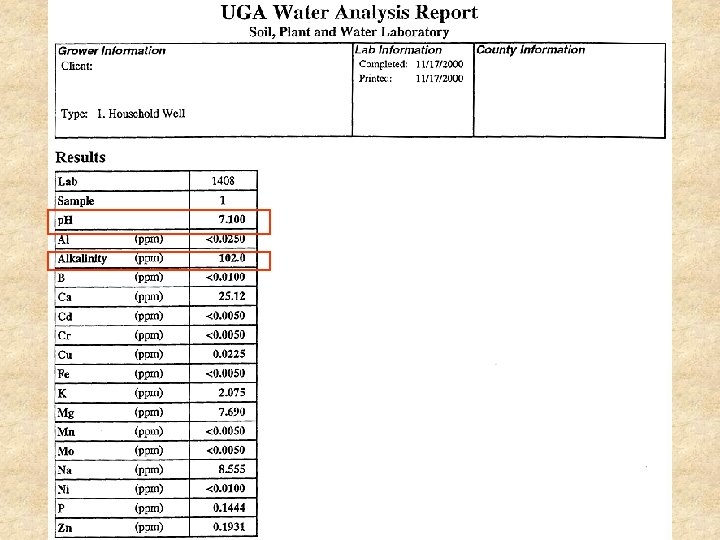
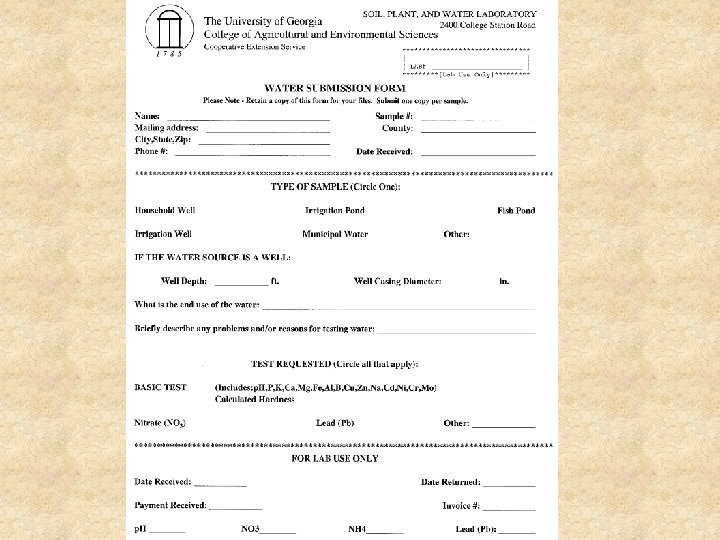
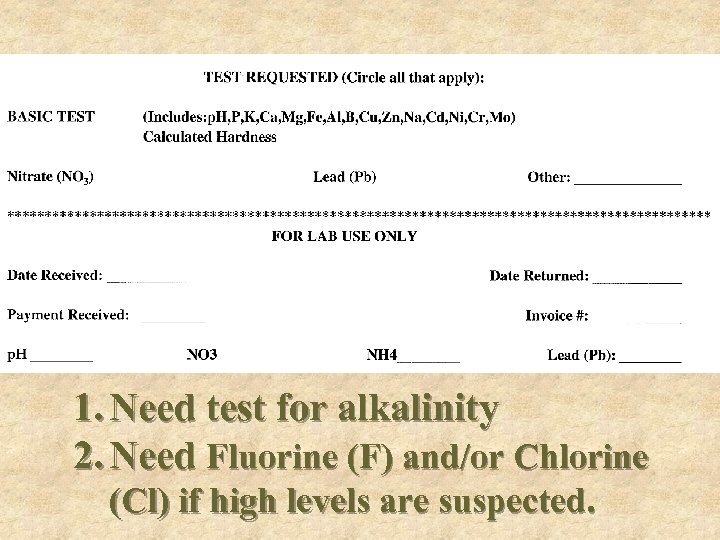
1. Need test for alkalinity 2. Need Fluorine (F) and/or Chlorine (Cl) if high levels are suspected.
Summary of Basic Tests ü Fertilizer solution ü Greenhouse medium ü Plant tissue ü Water
Скачать презентацию Reading Water Media and Tissue Tests Bodie V
3920bbdc06dde7caa0599e010eb6301c.ppt