


 Скачать презентацию Rapid Risk Assessment Preparedness Response Recovery and Mitigation
4f8a8a669c6bb35ca69005cb7345dd45.ppt
- Количество слайдов: 22
 Rapid Risk Assessment Preparedness, Response, Recovery, and Mitigation Workshop U. S. Nuclear Regulatory Commission Rockville, Maryland Pacific Northwest National Laboratory November 15 -17, 2005
 Team Gariann Gelston (HERS), Project Manager Gene Whelan (NR), Technical Lead Dave Millard (ISE), EMAdvantage Lead l l Chitra Sivaraman (ISE) Tim Downing (ISE) Mitch Pelton (HERS), FRAMES Lead l l Dennis Strenge (HERS) Bonnie Hoopes (HERS) Tarang Khangaonkar (MSL), EFDC Lead l l l Zhaoqing Yang (MSL) Cheegwan Lee (MSL) Lon Hachmeister (MSL) Mary Simpson/Joan Young (HERS), DS Lead 2
 “Multi-Thematic” Modeling Supporters 1. Engineer Research & Development Center, ACOE 2. National Environmental Research Laboratory, ORD, EPA 3. Office of Nuclear Regulatory Research, NRC 4. Office of Radiation and Indoor Air, OAR, EPA 5. Office of Environmental Management, DOE 6. Pacific Northwest National Laboratory, DOE 7. Multimedia Modeling: $23 M ($8 M for FRAMES) 8. FEMIS/EMAdvantage: $42 M 3
 Purpose Provide an illustrative example that combines a multi-thematic modeling capability with emergency planning & response tools to create an automated system, which provides a real-time linkage between scientific and emergency-response communities. 4
 Introduction 1. Preparedness, Response, Recovery, & Mitigation a. b. c. Air is common Now easily link soil, surface water, groundwater, exposure pathway/routes, decision support, etc. Integrated Multi-thematic capability, illustrating water 2. Not Vaporware a. b. c. d. Simulated Sensor Data Pre-run 3 -D surface water flow and transport Real site with real data Demonstration of actual software actually running 5
 Proposition 1. Release of an unknown contaminant, unknown strength, unknown location to a water body, where a nearby population is potentially exposed 2. Question: What is the potential impact to the surrounding area, and what response plan do you implement, if the contaminant levels are unacceptable? 3. Operate Status Board Command & Control system linked with “Multi-thematic Modeling” running in the background 6
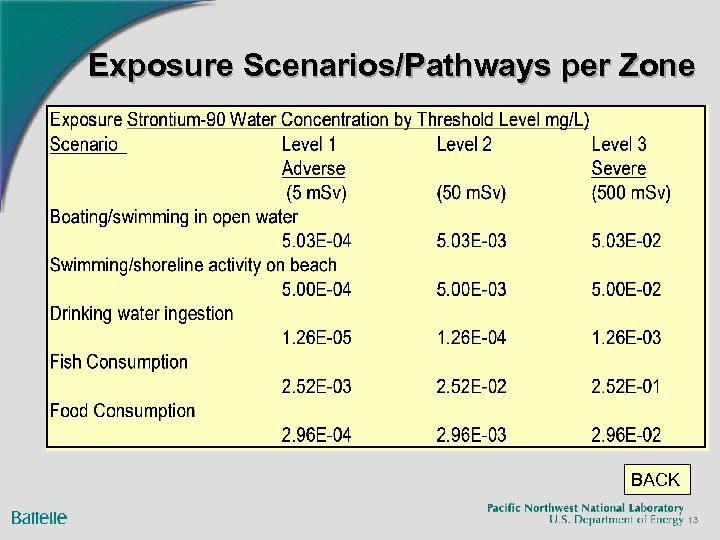
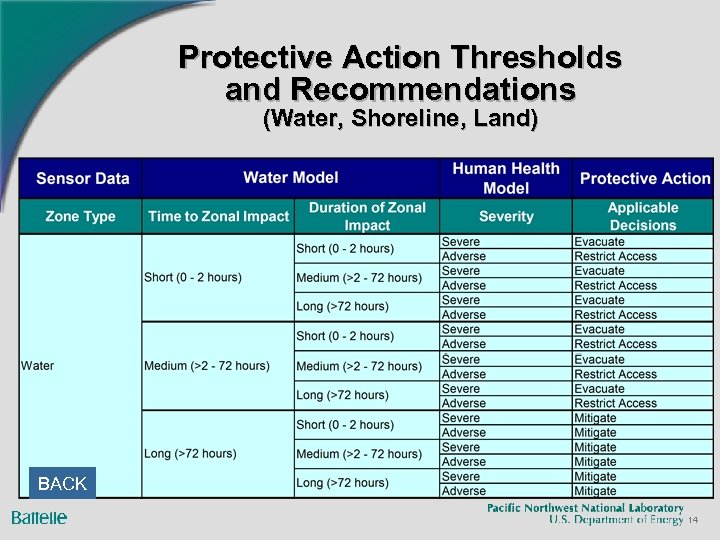
 Preparation Work 1. 2. 3. 4. 5. 6. 7. Spatial description of site Sensors Contaminants of Concern (Co. C) Exposure scenarios/pathways per zone Fate & Transport Models (Calibrate/Validate) Protective/Response Action Plans Protective Action Thresholds and Recommendations 7
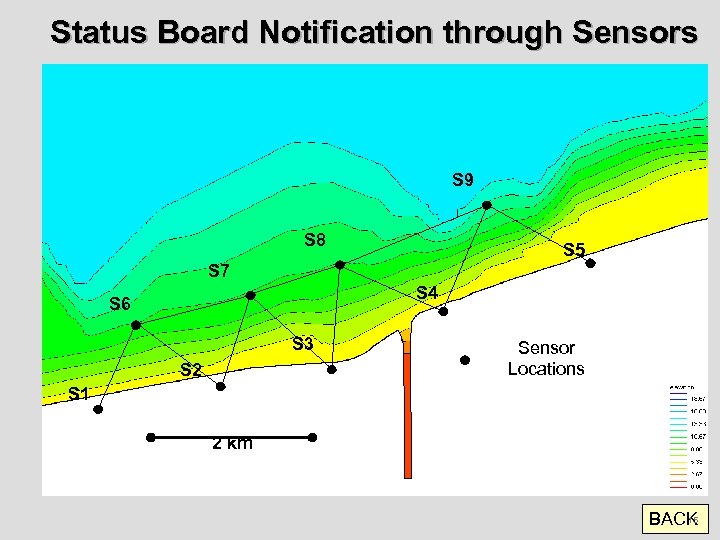
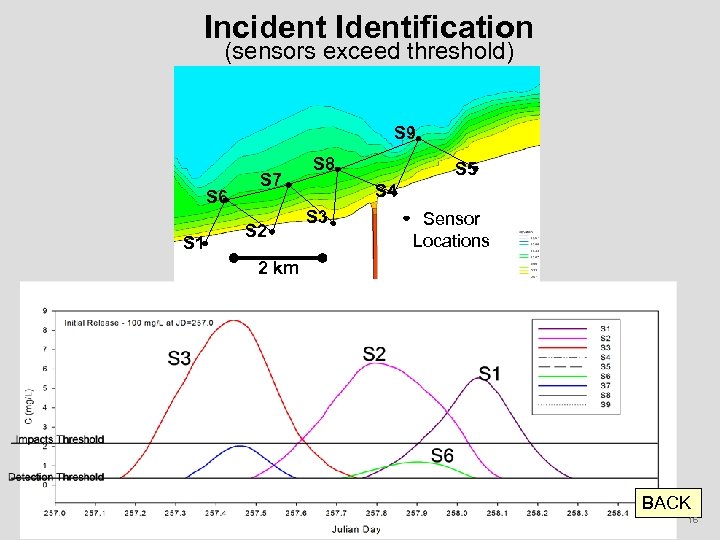
 Demonstration Steps 1. 2. 3. 4. 5. 6. 7. Operational System Status Board notification through sensors Incident Identification Surface Water Back Calculation Surface Water Transport Forward Calculation Risk Impact Analysis Post Protective Action Recommendations 8
 Demonstration Steps (cont’d) 7. Choose and Implement best-fit Protective Action Plan 8. Evaluate differences between Protective Action Recommendations and Final Protective Action Decision 9. Re-evaluate in real-time as the assessment requires 9
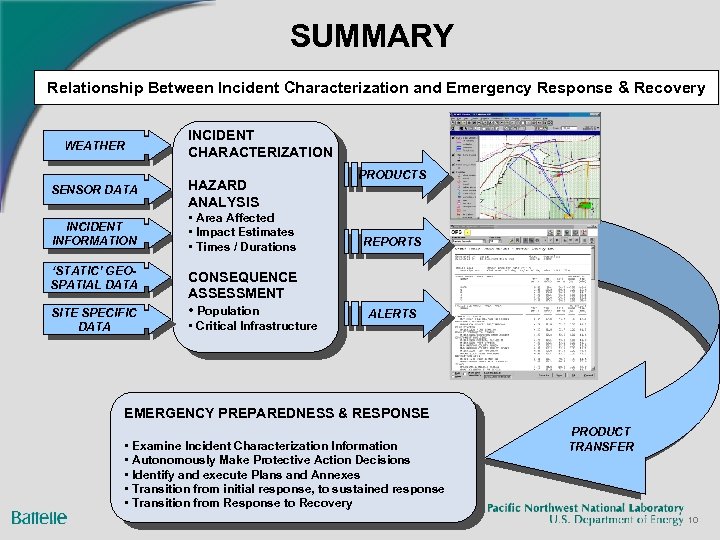 SUMMARY Relationship Between Incident Characterization and Emergency Response & Recovery WEATHER INCIDENT CHARACTERIZATION PRODUCTS SENSOR DATA HAZARD ANALYSIS INCIDENT INFORMATION • Area Affected • Impact Estimates • Times / Durations REPORTS CONSEQUENCE ASSESSMENT • Population ALERTS ‘STATIC’ GEOSPATIAL DATA SITE SPECIFIC DATA • Critical Infrastructure EMERGENCY PREPAREDNESS & RESPONSE • Examine Incident Characterization Information • Autonomously Make Protective Action Decisions • Identify and execute Plans and Annexes • Transition from initial response, to sustained response • Transition from Response to Recovery PRODUCT TRANSFER 10
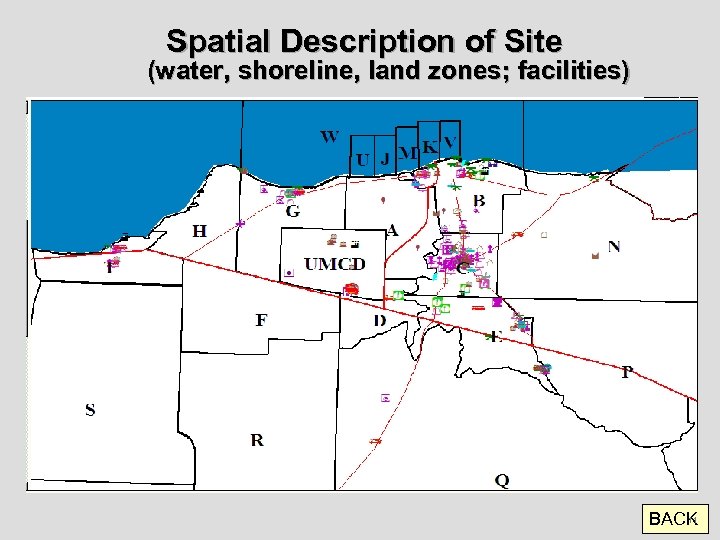 Spatial Description of Site (water, shoreline, land zones; facilities) 11 BACK
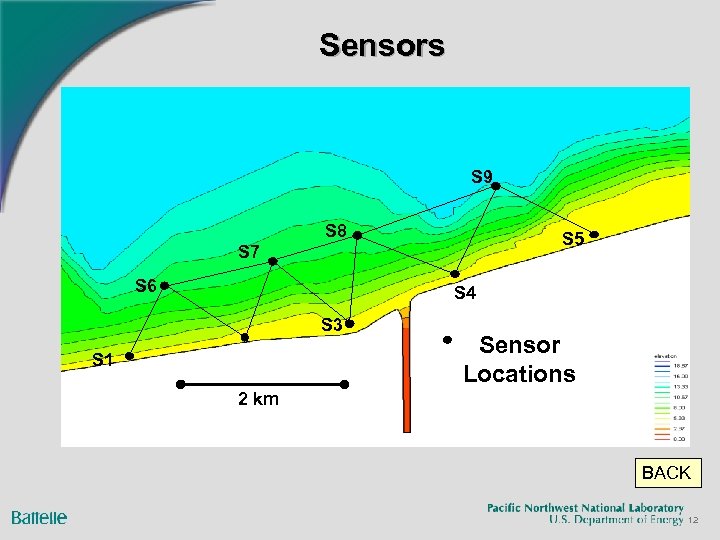 Sensors S 9 S 8 S 5 S 7 S 6 S 4 S 3 S 2 S 1 Sensor Locations 2 km BACK 12
 Exposure Scenarios/Pathways per Zone BACK 13
 Protective Action Thresholds and Recommendations (Water, Shoreline, Land) BACK 14
 Status Board Notification through Sensors S 9 S 8 S 5 S 7 S 4 S 6 S 3 S 2 Sensor Locations S 1 2 km 15 BACK
 Incident Identification (sensors exceed threshold) S 9 S 6 S 1 S 7 S 2 S 8 S 5 S 4 S 3 Sensor Locations 2 km BACK 16
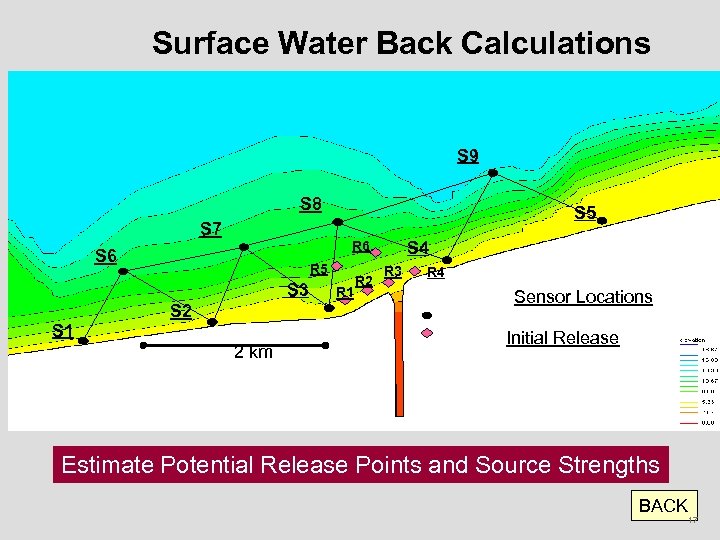 Surface Water Back Calculations S 9 S 8 S 7 S 4 R 6 S 6 R 5 S 3 S 1 S 5 S 2 2 km R 1 R 2 R 3 R 4 Sensor Locations Initial Release Estimate Potential Release Points and Source Strengths BACK 17
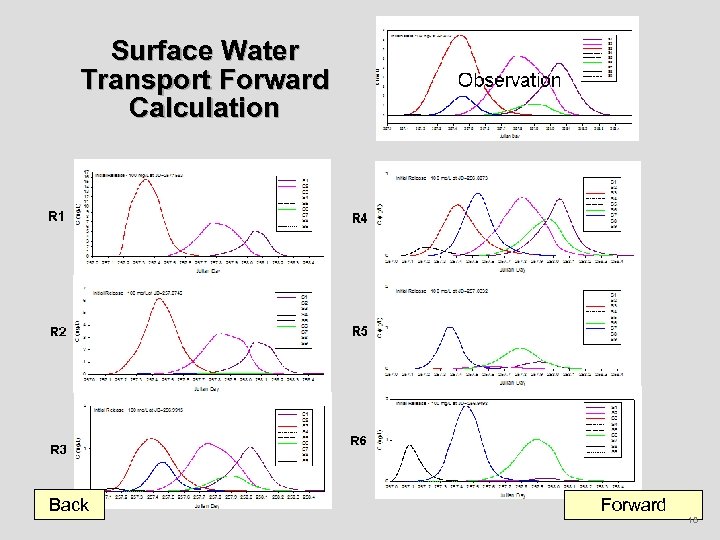 Surface Water Transport Forward Calculation Back Forward 18
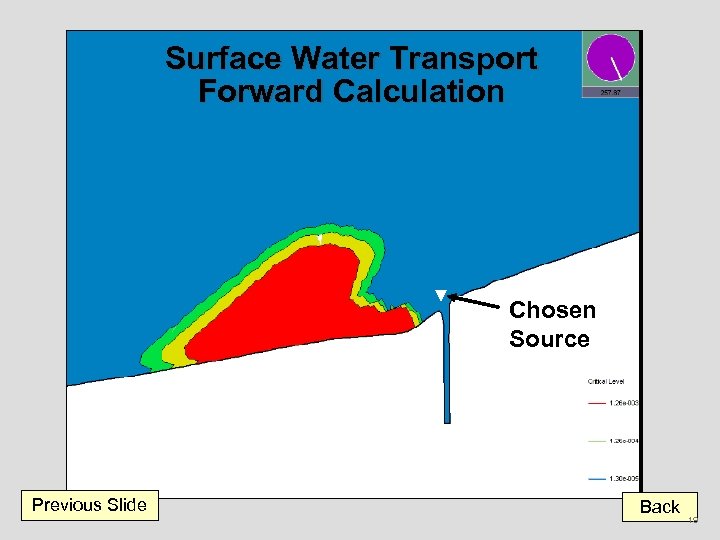 Surface Water Transport Forward Calculation ▼ Previous Slide Chosen Source Back 19
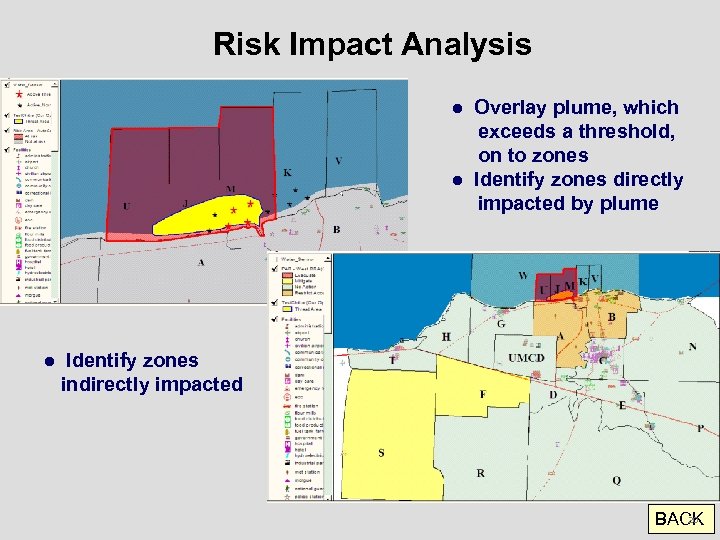 Risk Impact Analysis ● Overlay plume, which exceeds a threshold, on to zones ● Identify zones directly impacted by plume ● Identify zones indirectly impacted 20 BACK
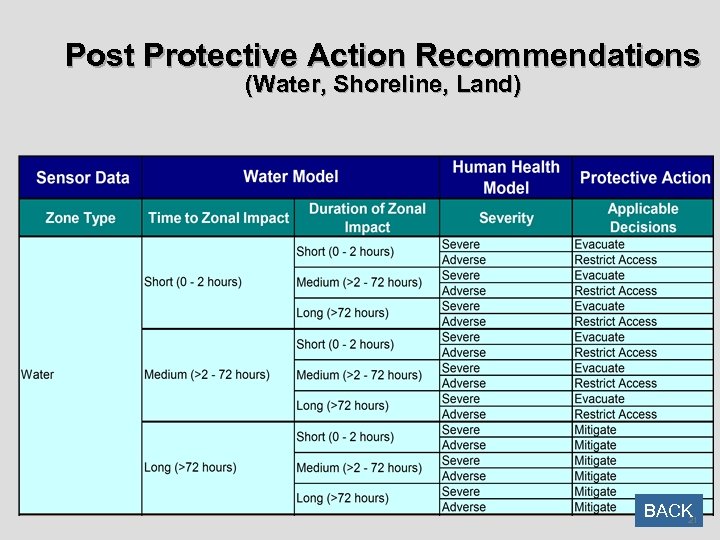 Post Protective Action Recommendations (Water, Shoreline, Land) BACK 21
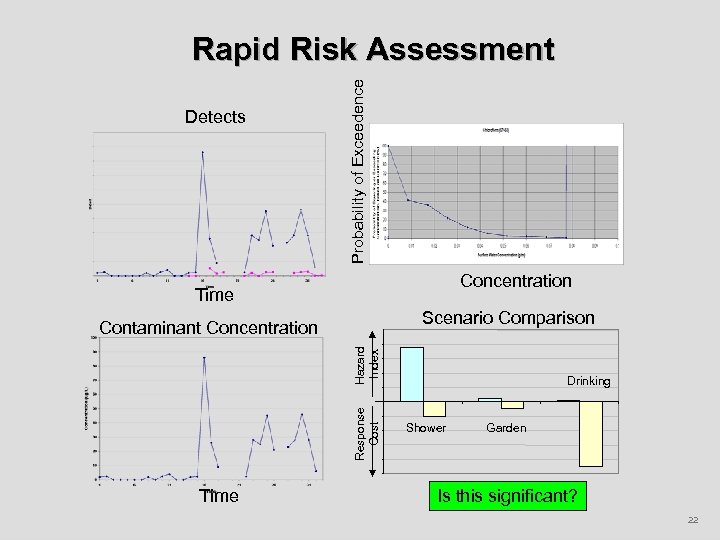 Detects Probability of Exceedence Rapid Risk Assessment Concentration Time Scenario Comparison Response Cost Hazard Index Contaminant Concentration Time Drinking Shower Garden Is this significant? 22