 Скачать презентацию RAPID POPULATION GROWTH Post-War Baby Boom
328a19608ec2445881669c2452df1d20.ppt
- Количество слайдов: 21



RAPID POPULATION GROWTH • Post-War Baby Boom – Return of peace and prosperity – Asian Tradition of having large families – 1. 02 million (1950) to 1. 64 million (1960) • Problems of Rapid Population Growth – Unemployment – Housing – Low Standard of Living
Policies to Reduce Population Growth • Family Planning was encouraged – Singapore Family Planning and Population Board (1966) • Need for smaller families – Abortion legalised – Use of contraceptives • ‘Stop at Two’ • Maintain number of children born per woman = 2. 1 children – Disincentives given to families with 3 or more children
Slow Population Growth • Birth Control measures highly successful – Government policies – Preference in smaller families by educated couples – Marriage and motherhood at a later age • Problems of Slow Population Growth – Shortage of manpower in the economy – Ageing population • Effects on economy? – Less soldiers to serve National Service
Policies to Increase Population Growth • Promoting Larger Families – Campaigns • Joy of having many children • Incentives to have more children – Limited success • Increase only in Dragon Year • Attracting Foreign Talent – Relaxation on immigration policy – Greater cosmopolitan – Boost Singapore’s economic competitiveness
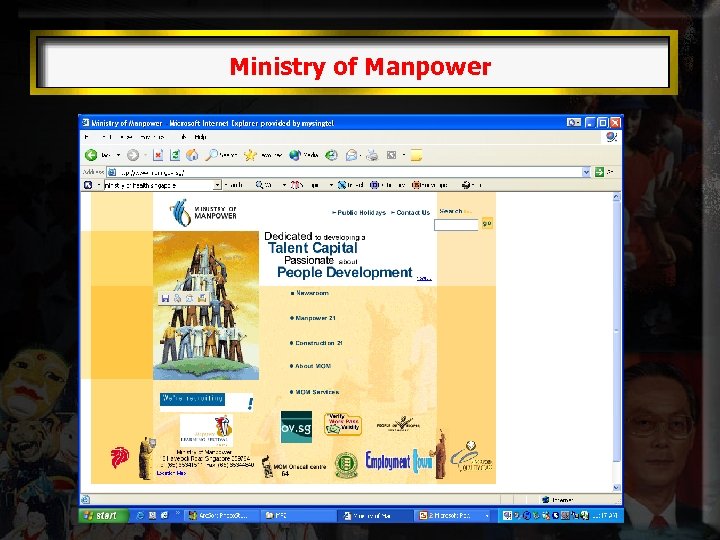
Ministry of Manpower
Reasons for Ageing Population • Post-war baby boom – Reaching the age of 65 by 2030 • Fall in birth-rate – Proportion of young people decreased – Proportion of senior citizens increased • Longer Life-span of Singaporeans – Improvement in health care services, medical technology and standard of living
Senior Citizens as Assets to Society • Taking care of grandchildren • Mentors to young people • Advisers in government organisations and private companies • Healthy and experienced senior citizens to continue working – Extension of retirement age from 60 to 62. – ‘Back to Work’ programme • Boom to senior citizens’ products
Impact of an Ageing Population • Demand for Health Care & Social Services – Age-related health problems – Community-based services – Accommodation at Public Areas • Strain on Working People – More revenue on services • Higher taxes – Each working person to pay more taxes to help provide services & facilities
Preparing for an Ageing Population • ‘Many Helping Hands’ Approach – Individual Responsibility • Regular check-ups, maintain proper diet, pre-retirement plan, spending more time with family – Family Care • Showing care and concern for the senior citizens – Community Help • Voluntary welfare organisations – Free health check – Recreational activities
Preparing for an Ageing Population – Government Support • Central Provident Fund (CPF) – – Special Account Medisave Account Ordinary Account Retirement Account (62 years old) • Tribunal for Maintenance of Parents – By law, children would have to support their parents if the parents could not themselves financially • Tax Relief – Less taxes for individuals taking care of elderly parents • Public Housing Scheme – Housing grant for choosing a place near to their parents
By 2020, 23% of Japanese will be aged 65 or over Japan will have the oldest population of any country in the world Japan's population is currently ageing faster than that of any other country
The United Nations' definition of an "aged" population is 7% of citizens aged 65 or over The US took 70 years to go from 7% to 14% UK and Germany 45 years, Sweden 85 years Japan - only 25 years. Furthermore, the proportion of very elderly people (aged 75 or over) in Japan (10. 8%) will be among the highest in the world by 2020. Source : “Financing Japan's Social Security System” by KATSUMATA Yukiko http: //web. iss. u-tokyo. ac. jp/newslet/SSJ 5/katsumata. html
Coping with an Ageing Population • Reorganisation of Pension System – Two-tiered system • Basic pension for all residents • Employees’ pension • Increase in retirement age from 60 to 65 (2001) • Restructuring Health Insurance System – New health insurance scheme (2000) • Monthly contribution to central fund by all those aged between 40 to 65 • Entitlement to medical benefits, provided the illnesses are related to ageing
Coping with an Ageing Population • Overcoming Shortage of Caregivers – Local homemakers to advise senior citizens on health matters – Private companies to provide health care services for senior citizens • Promoting Family Support – Employers are encouraged to take care of their elderly family members • Elder care leave
Coping with an Ageing Population • Encouraging Active Lifestyle – Encouraged to stay healthy and fit – Participation in recreational, social & educational activities
Coping with an Ageing Population • Making it Easier for Retirees to be Employed – Reasons for retirees wanting to work • Earn more money, make new friends, contribute to society – Reasons for difficulties in finding employment • Competition with younger job-seekers • Pension and Promotion Systems are affected • Only some companies accommodate their older employees – Part-time work schedule
THE PROBLEM WITH PEOPLE • Large Population – Greater expenditure & resources required • Small Population – Economically and militarily affected • Young Population – Unemployment arises • Ageing Population – Strain on economy Acknowledgement : Text by Mr Robin Leong, East Spring Sec School
 Скачать презентацию RAPID POPULATION GROWTH Post-War Baby Boom
328a19608ec2445881669c2452df1d20.ppt