 Скачать презентацию Rapid Bacterial Detection System Fully Automated 4 minute
10bd9cb2bb6fa0244fbdea0605f81e73.ppt
- Количество слайдов: 16



Rapid Bacterial Detection System Fully Automated 4 minute CFU/ml response system SUBC Inc. Rochester MN
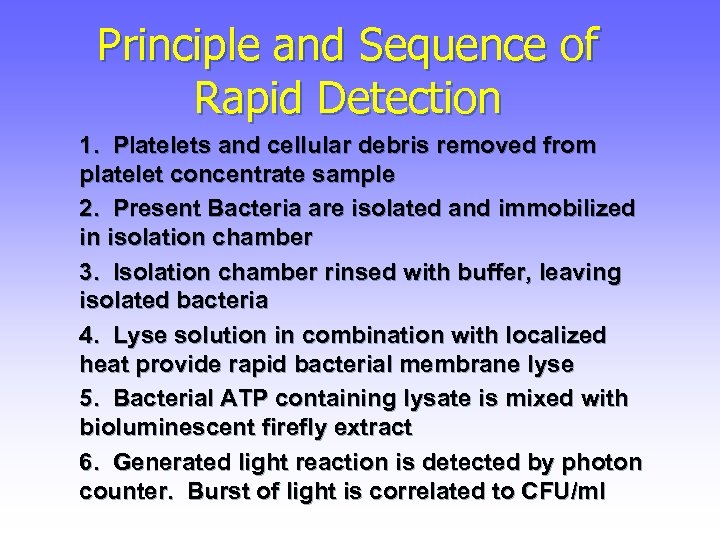
Principle and Sequence of Rapid Detection 1. Platelets and cellular debris removed from platelet concentrate sample 2. Present Bacteria are isolated and immobilized in isolation chamber 3. Isolation chamber rinsed with buffer, leaving isolated bacteria 4. Lyse solution in combination with localized heat provide rapid bacterial membrane lyse 5. Bacterial ATP containing lysate is mixed with bioluminescent firefly extract 6. Generated light reaction is detected by photon counter. Burst of light is correlated to CFU/ml

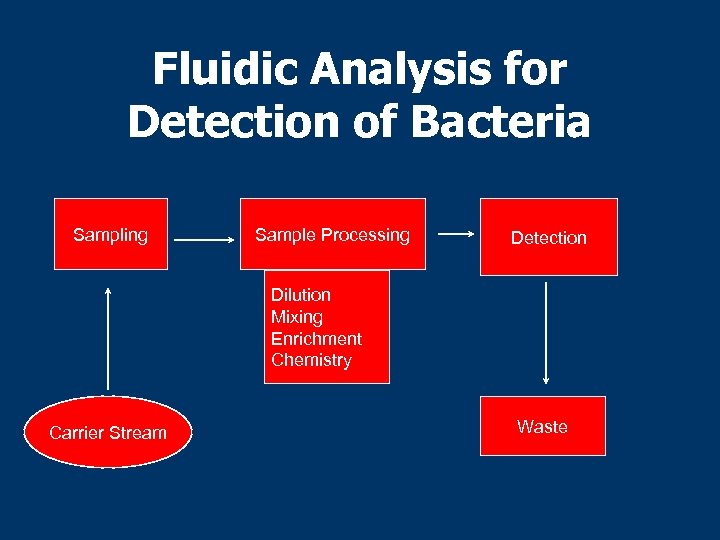
Fluidic Analysis for Detection of Bacteria Sampling Sample Processing Detection Dilution Mixing Enrichment Chemistry Carrier Stream Waste
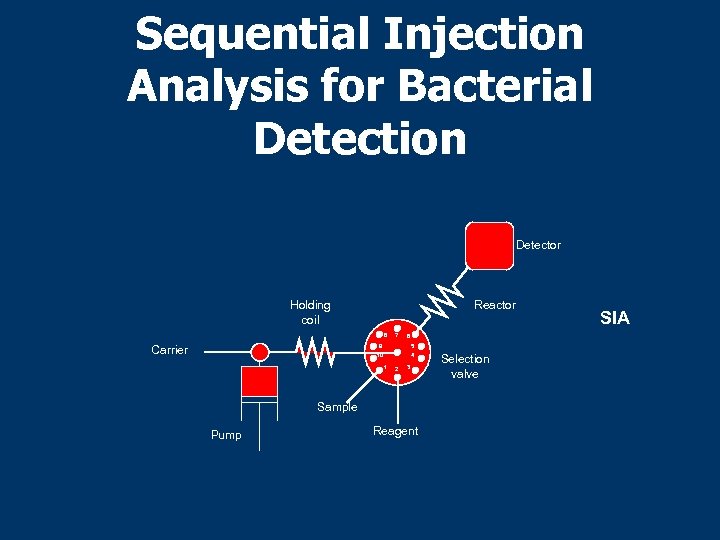
Sequential Injection Analysis for Bacterial Detection Detector Holding coil Reactor 8 7 6 9 Carrier 5 10 4 1 2 3 Sample Pump Reagent Selection valve SIA
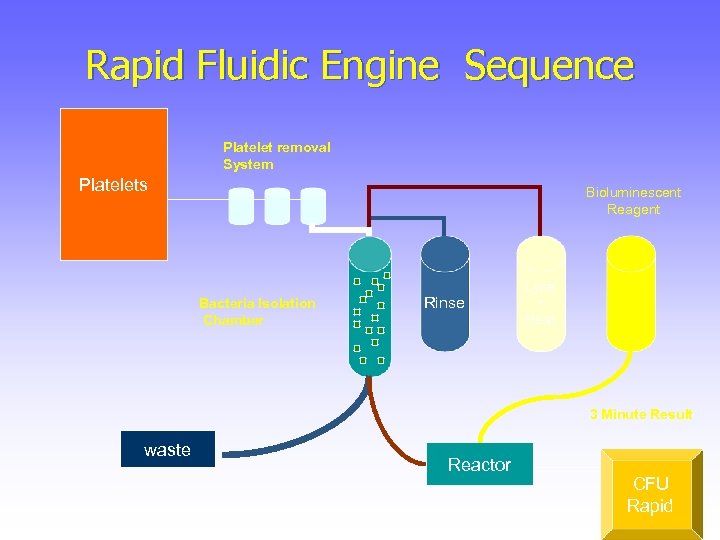
Rapid Fluidic Engine Sequence Platelet removal System Platelets Bioluminescent Reagent Bacteria Isolation Chamber Rinse Lyse + Heat 3 Minute Result waste Reactor CFU Rapid
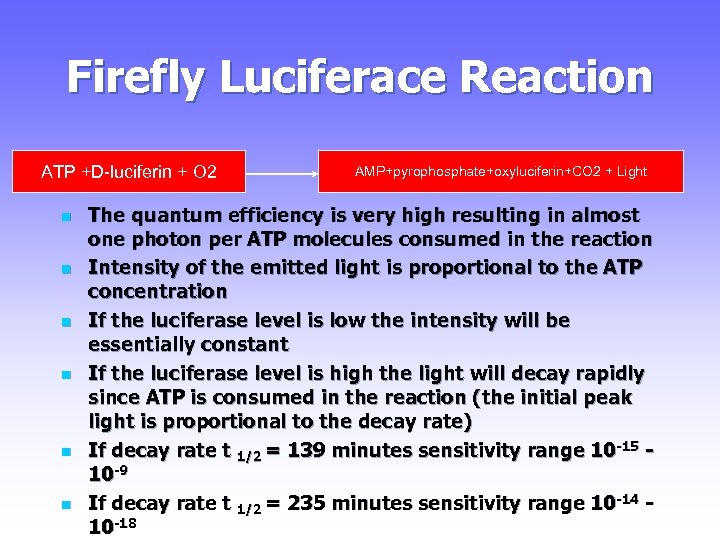
Firefly Luciferace Reaction ATP +D-luciferin + O 2 n n n AMP+pyrophosphate+oxyluciferin+CO 2 + Light The quantum efficiency is very high resulting in almost one photon per ATP molecules consumed in the reaction Intensity of the emitted light is proportional to the ATP concentration If the luciferase level is low the intensity will be essentially constant If the luciferase level is high the light will decay rapidly since ATP is consumed in the reaction (the initial peak light is proportional to the decay rate) If decay rate t 1/2 = 139 minutes sensitivity range 10 -15 10 -9 If decay rate t 1/2 = 235 minutes sensitivity range 10 -14 10 -18
Prototype Device #1
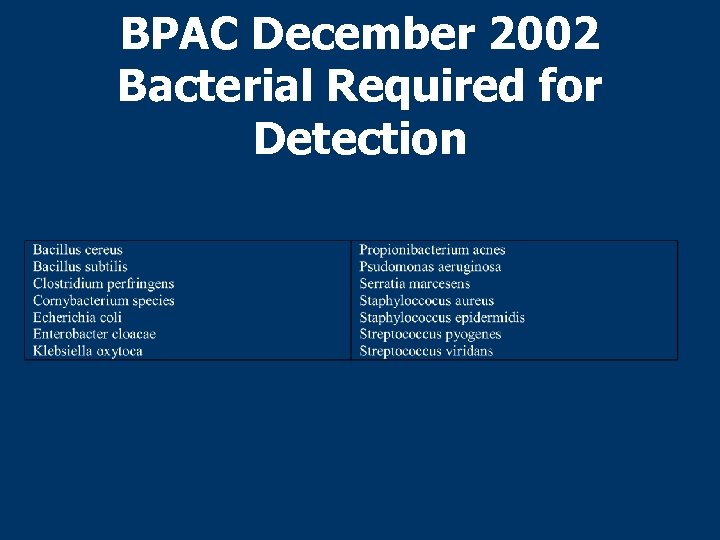
BPAC December 2002 Bacterial Required for Detection
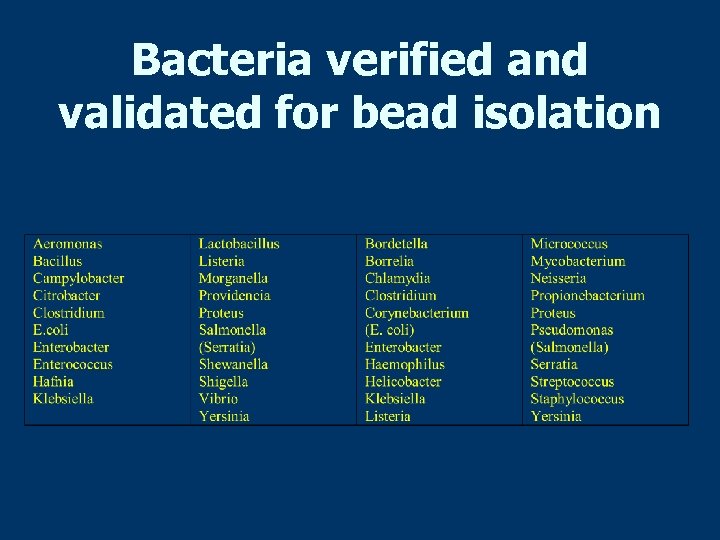
Bacteria verified and validated for bead isolation

Glo. Bac™
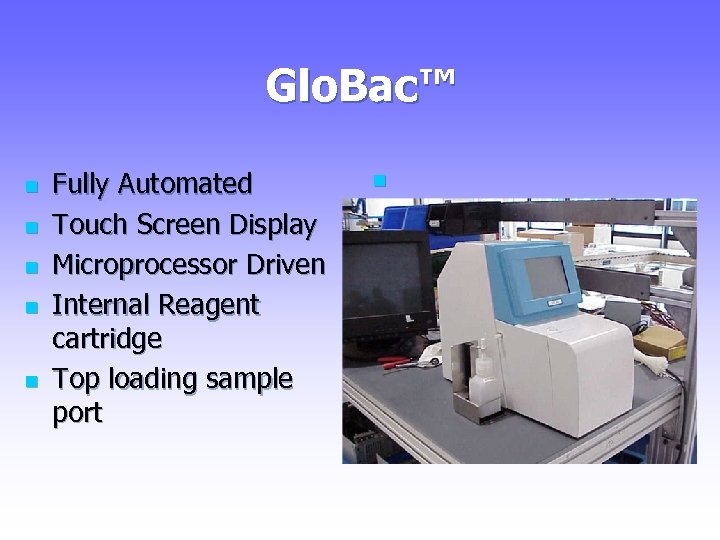
Glo. Bac™ n n n Fully Automated Touch Screen Display Microprocessor Driven Internal Reagent cartridge Top loading sample port n

University of Minnesota Field Evaluation Testing n n n n Dr. Mc. Cullough Dr. Bowman Dr. Gundu Rao Mary Clay: Project Manager Shelley Pulkrabek: Blood Bank Coordinator Debbie Cocking Johnson: Related lab support Nancy Ward: Technical Supervisor

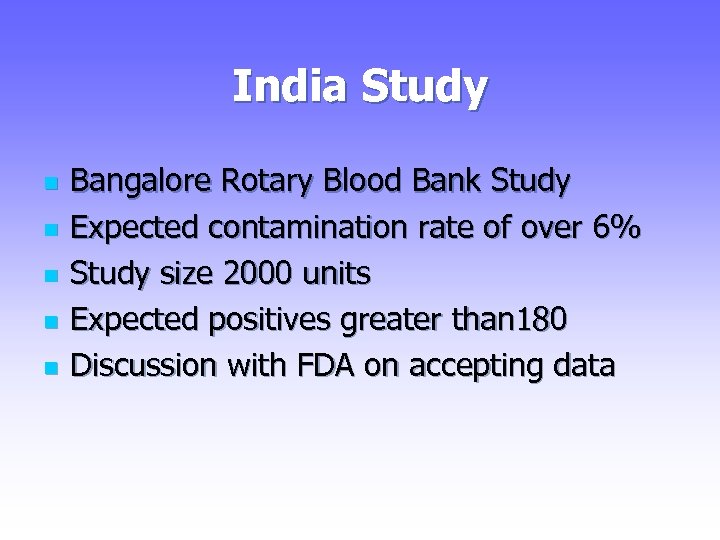
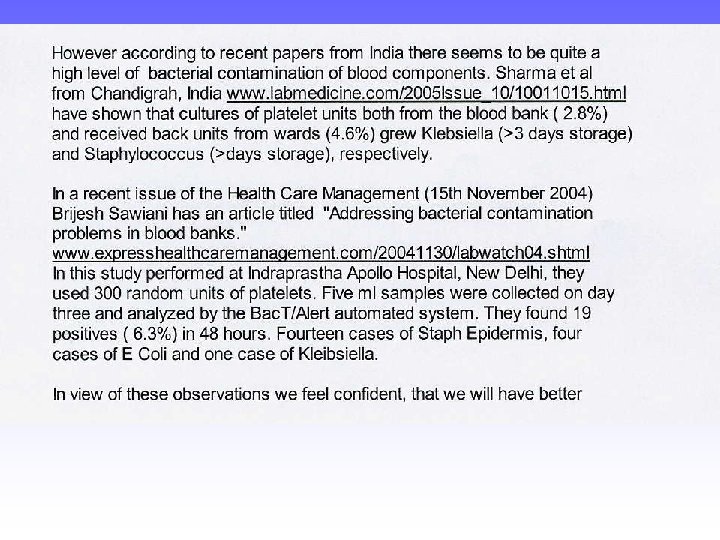
India Study n n n Bangalore Rotary Blood Bank Study Expected contamination rate of over 6% Study size 2000 units Expected positives greater than 180 Discussion with FDA on accepting data
 Скачать презентацию Rapid Bacterial Detection System Fully Automated 4 minute
10bd9cb2bb6fa0244fbdea0605f81e73.ppt