


 Скачать презентацию RAL High Power Targets Group Chris Densham Otto
c2a1c11c720a700c4953b45680dd8b52.ppt
- Количество слайдов: 34
 RAL High Power Targets Group Chris Densham, Otto Caretta, Tristan Davenne, Mike Fitton, Peter Loveridge, Dan Wilcox + Joe O’Dell (PEG) ‘Mission’ • To be a ‘one-stop shop’ (P. Hurh) for target technology • Enable optimum physics performance via sound engineering Chris Densham
 Specific technical expertise • Mechanical & thermal engineering • FLUKA (Monte. Carlo code) • CFX (fluid dynamics code) • ANSYS “classic” (Implicit FEA) • AUTODYN (Explicit FEA) • • • Multi-code integration Specialist joining technology Fluidised powder technology – From conceptual & detailed design through to manufacture, installation & commissioning – energy deposited in target components by the beam – optimisation of useful particle yield – Cooling circuit design – conjugate heat transfer analysis – magnetic, thermal, mechanical analyses – multiphysics simulations – dynamic simulations – Transient & dynamic analysis Chris Densham
 Multi-code integration for physics & engineering analysis • Analysis procedure for LBNE target/horn
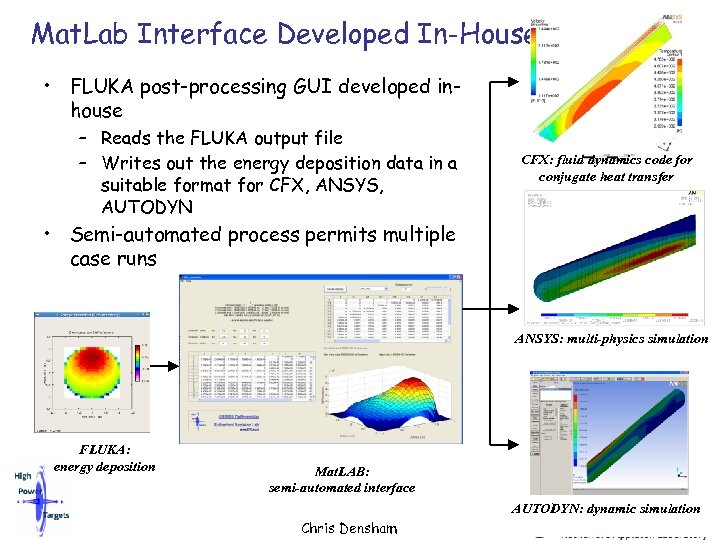 Mat. Lab Interface Developed In-House • FLUKA post-processing GUI developed inhouse – Reads the FLUKA output file – Writes out the energy deposition data in a suitable format for CFX, ANSYS, AUTODYN CFX: fluid dynamics code for conjugate heat transfer • Semi-automated process permits multiple case runs ANSYS: multi-physics simulation FLUKA: energy deposition Mat. LAB: semi-automated interface AUTODYN: dynamic simulation Chris Densham
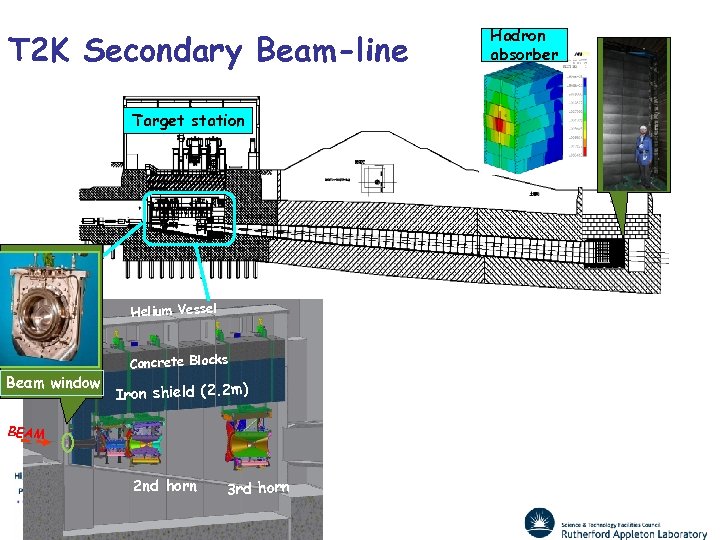 T 2 K Secondary Beam-line Target station Helium Vessel Beam window Concrete Blocks Iron shield (2. 2 m) BEAM 2 nd horn 3 rd horn Hadron absorber
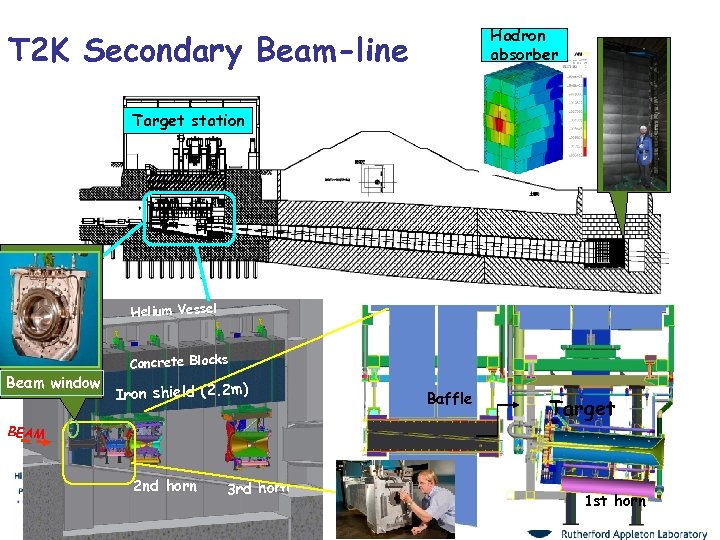 Hadron absorber T 2 K Secondary Beam-line Target station Helium Vessel Beam window Concrete Blocks Iron shield (2. 2 m) Baffle Target BEAM 2 nd horn 3 rd horn 1 st horn
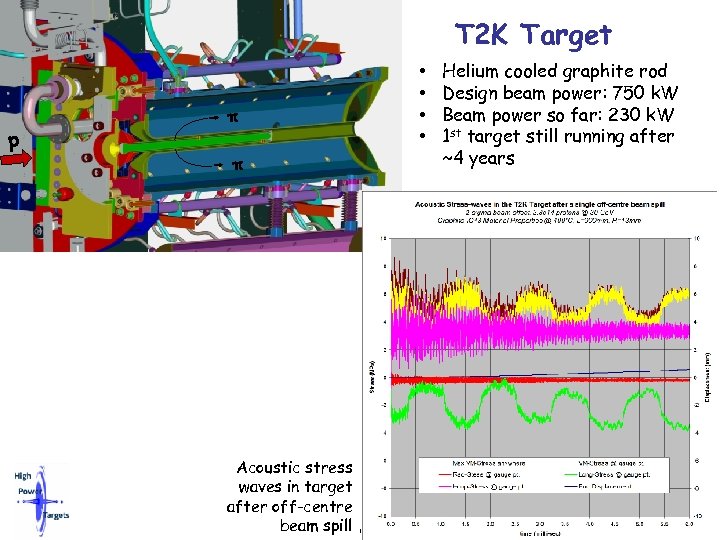 T 2 K Target p π π Acoustic stress waves in target after off-centre beam Densham Chris spill • • Helium cooled graphite rod Design beam power: 750 k. W Beam power so far: 230 k. W 1 st target still running after ~4 years
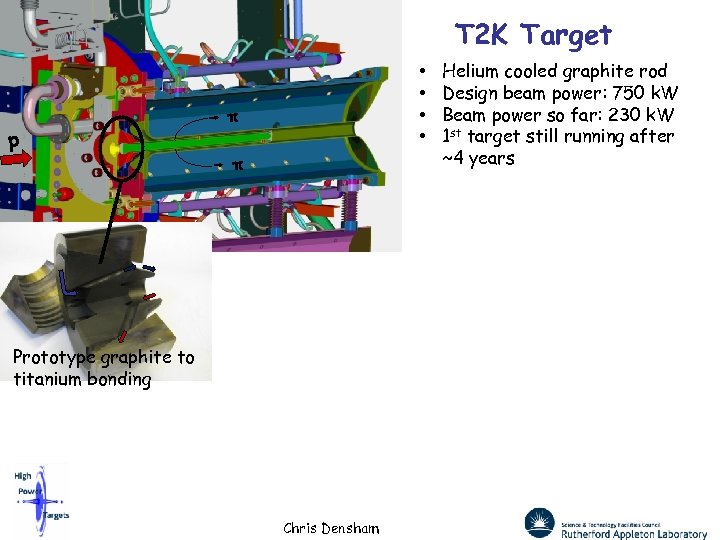 T 2 K Target p • • π π Prototype graphite to titanium bonding Chris Densham Helium cooled graphite rod Design beam power: 750 k. W Beam power so far: 230 k. W 1 st target still running after ~4 years
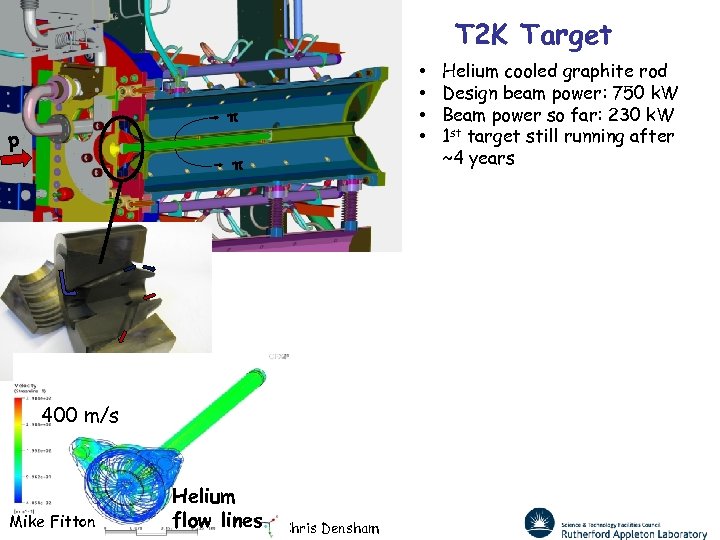 T 2 K Target • • π p π 400 m/s Mike Fitton Helium flow lines Chris Densham Helium cooled graphite rod Design beam power: 750 k. W Beam power so far: 230 k. W 1 st target still running after ~4 years
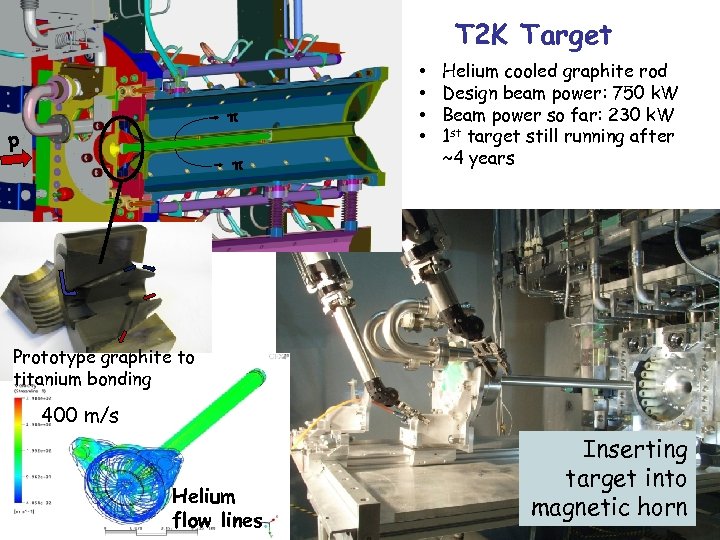 T 2 K Target • • π p π Helium cooled graphite rod Design beam power: 750 k. W Beam power so far: 230 k. W 1 st target still running after ~4 years Prototype graphite to titanium bonding 400 m/s Helium flow lines Chris Densham Inserting target into magnetic horn
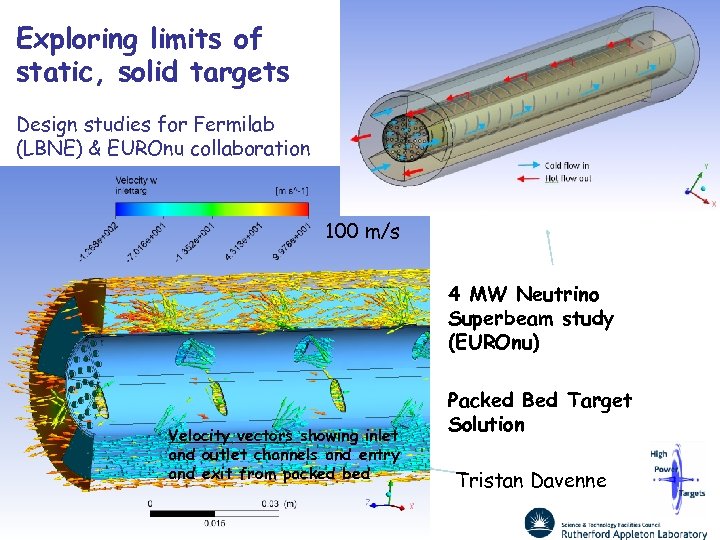 Exploring limits of static, solid targets Design studies for Fermilab (LBNE) & EUROnu collaboration 100 m/s 4 MW Neutrino Superbeam study (EUROnu) Velocity vectors showing inlet and outlet channels and entry and exit from packed bed Packed Bed Target Solution Tristan Davenne
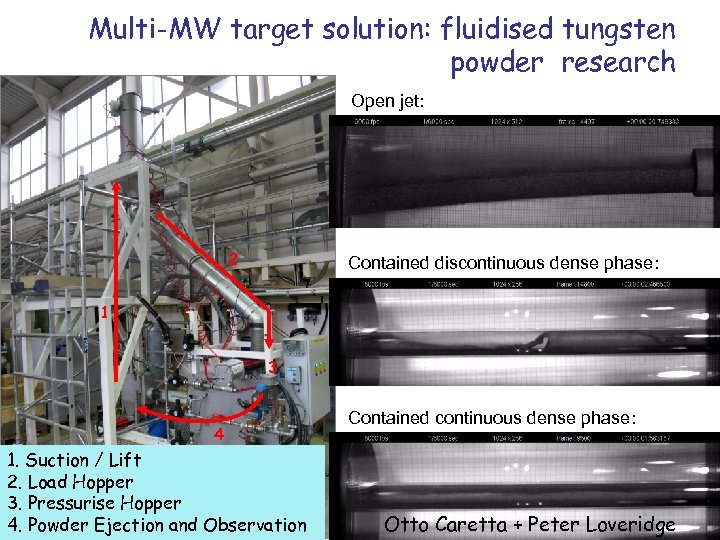 Multi-MW target solution: fluidised tungsten powder research Open jet: 2 Contained discontinuous dense phase: 1 3 4 Contained continuous dense phase: 1. Suction / Lift 2. Load Hopper 3. Pressurise Hopper 4. Powder Ejection and Observation Otto Caretta + Peter Loveridge Chris Densham
 ISIS Capabilities David Jenkins ISIS Target Design Group Leader 3 rd April 2013
 Knowledge and expertise in our people • ISIS Target Design Group – Group of 10 mechanical engineers who: – Support the work of the ISIS Target Operations Group – Design and develop new systems and equipment for ISIS target operations.
 • Target station operation experience
 ISIS First Target Station • In operation for 27 years • Current target – 12 tungsten plates clad in tantalum • Typically 180 m. A of 800 Me. V protons • Maximum power density ~1000 MW/m 3 • Peak energy per pulse ~25 MJ/m 3/pulse
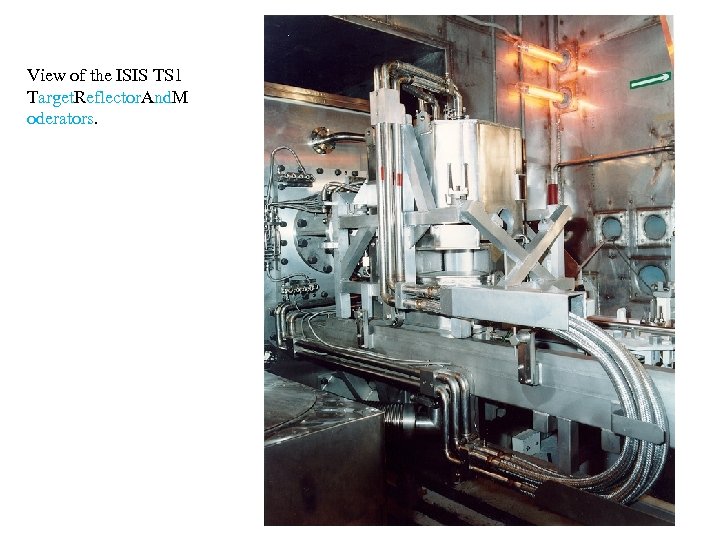 View of the ISIS TS 1 Target. Reflector. And. M oderators.
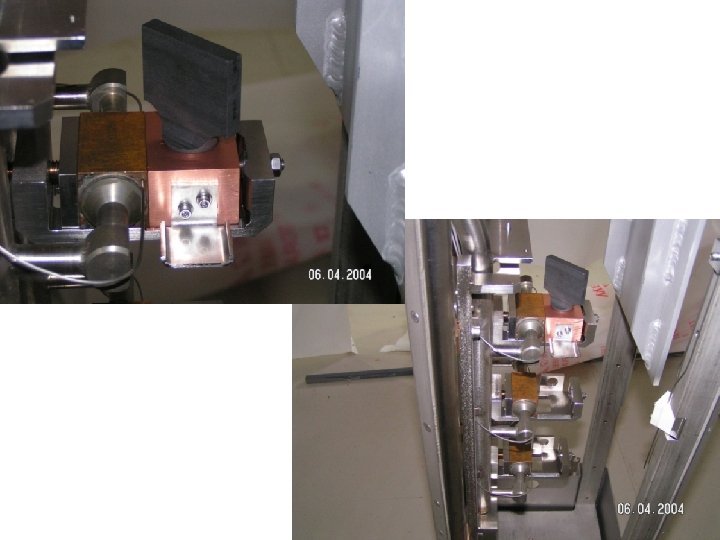
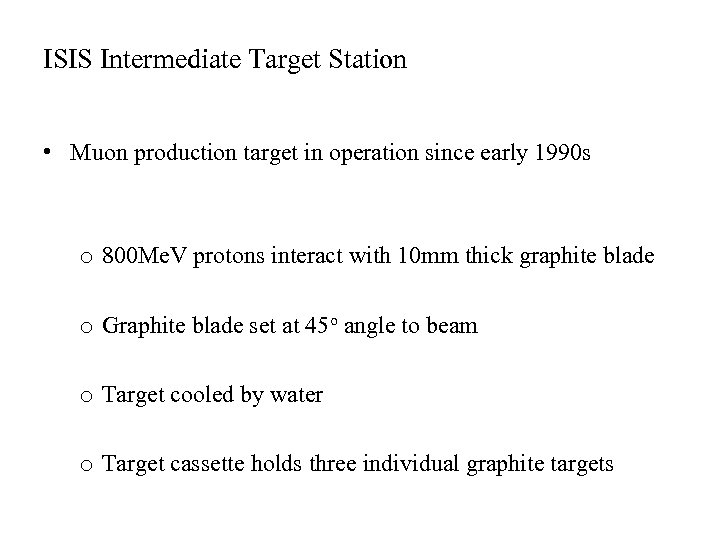 ISIS Intermediate Target Station • Muon production target in operation since early 1990 s o 800 Me. V protons interact with 10 mm thick graphite blade o Graphite blade set at 45 o angle to beam o Target cooled by water o Target cassette holds three individual graphite targets
 ISIS Second Target Station • In operation for 4 years • Target - tungsten cylinder clad in tantalum • Typically 45 m. A of 800 Me. V protons • Maximum power density ~1000 MW/m 3 • Peak energy per pulse ~100 MJ/m 3/pulse.
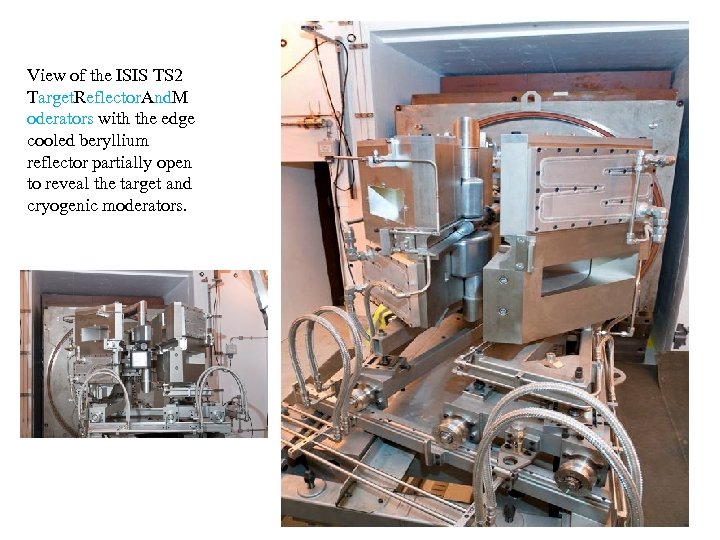 View of the ISIS TS 2 Target. Reflector. And. M oderators with the edge cooled beryllium reflector partially open to reveal the target and cryogenic moderators.
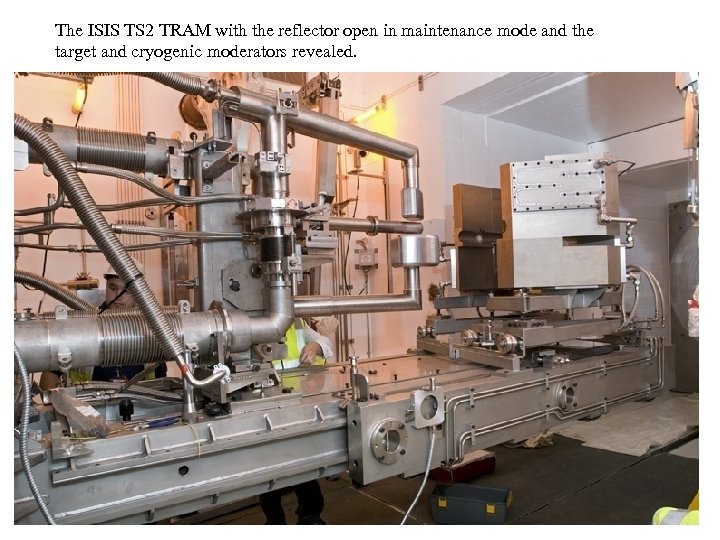 The ISIS TS 2 TRAM with the reflector open in maintenance mode and the target and cryogenic moderators revealed.
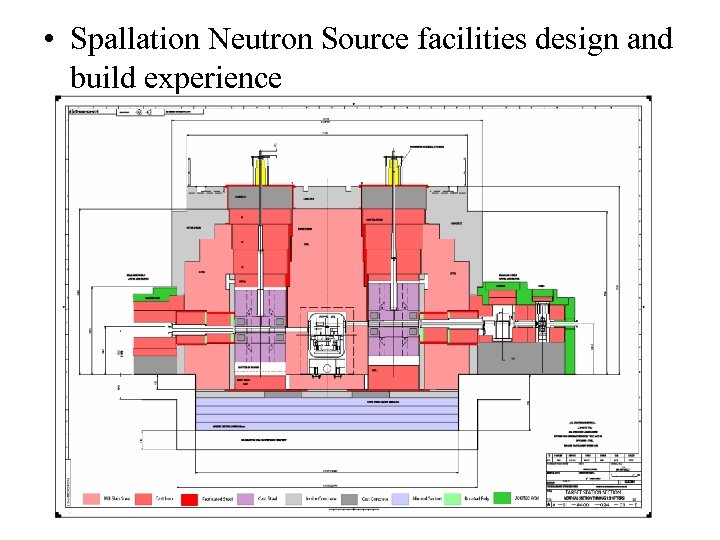 • Spallation Neutron Source facilities design and build experience
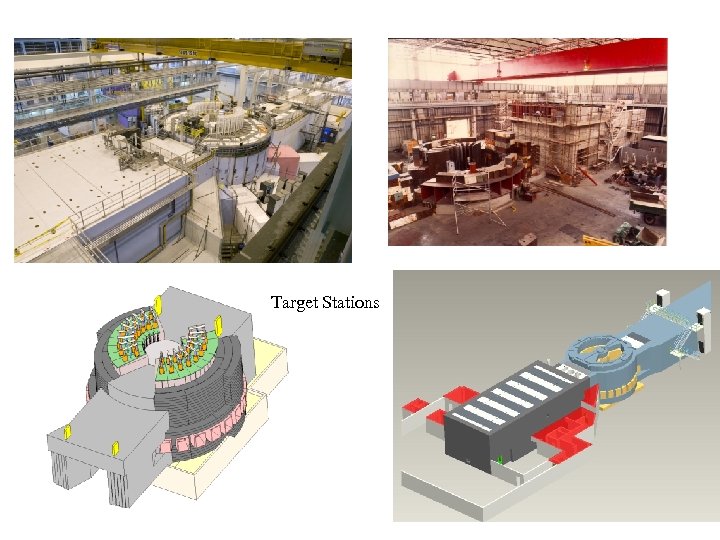 Target Stations
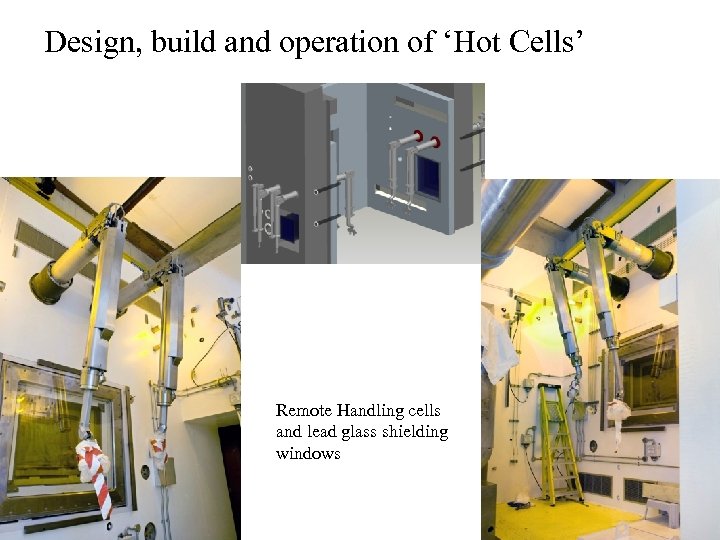 Design, build and operation of ‘Hot Cells’ Remote Handling cells and lead glass shielding windows
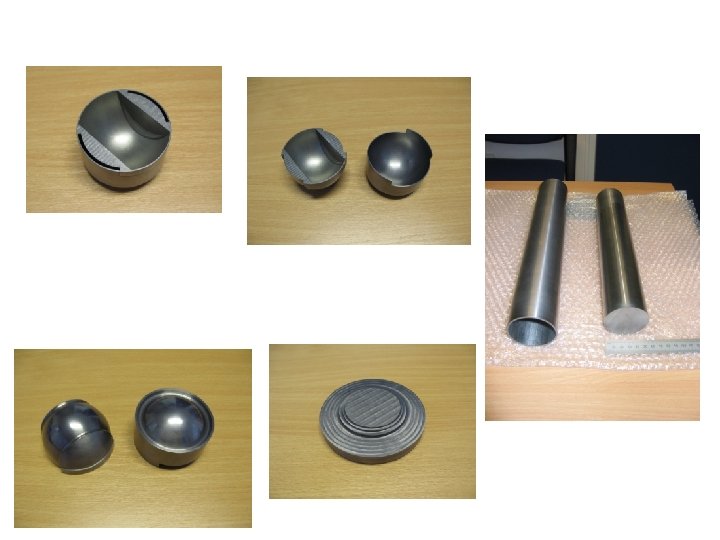
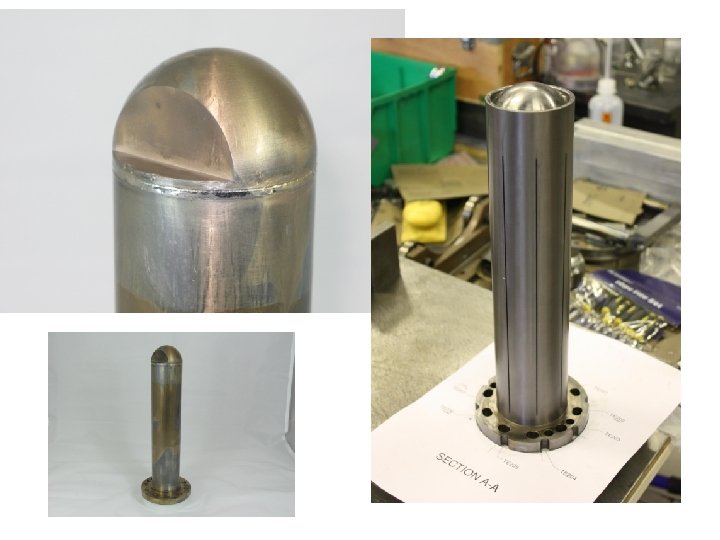
 • Target Manufacturing and Assembly – Precision machining – Machining Tungsten and Tantalum • EDM • 5 axis CNC – EB welding of Tantalum cladding and bulk tantalum – Hot Isostatic Pressing of Tantalum cladding – Target assembly
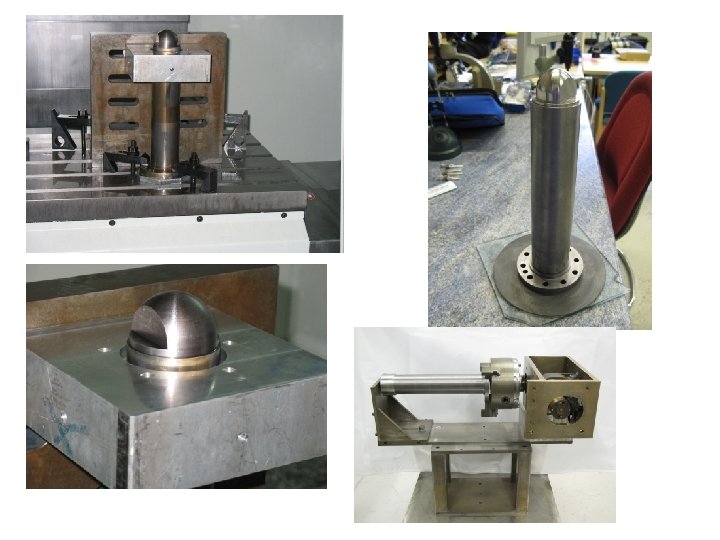
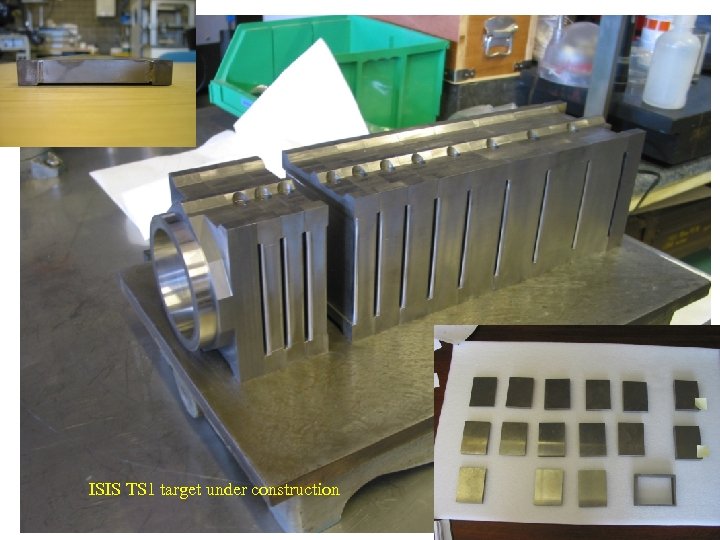 ISIS TS 1 target under construction
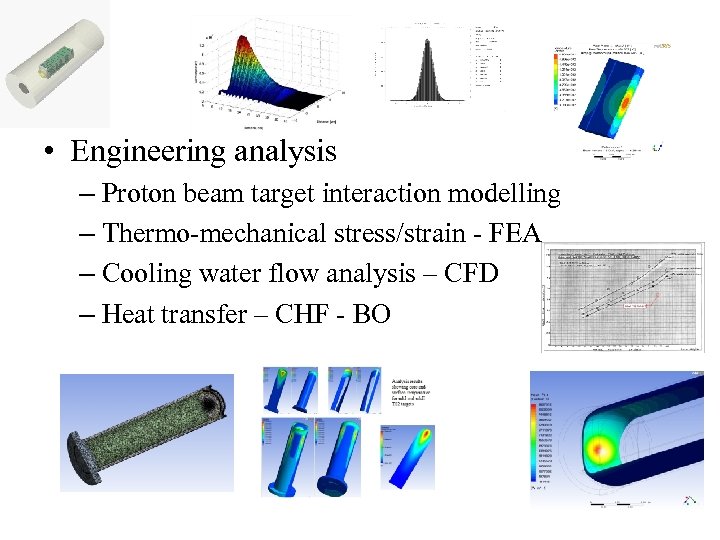 • Engineering analysis – Proton beam target interaction modelling – Thermo-mechanical stress/strain - FEA – Cooling water flow analysis – CFD – Heat transfer – CHF - BO
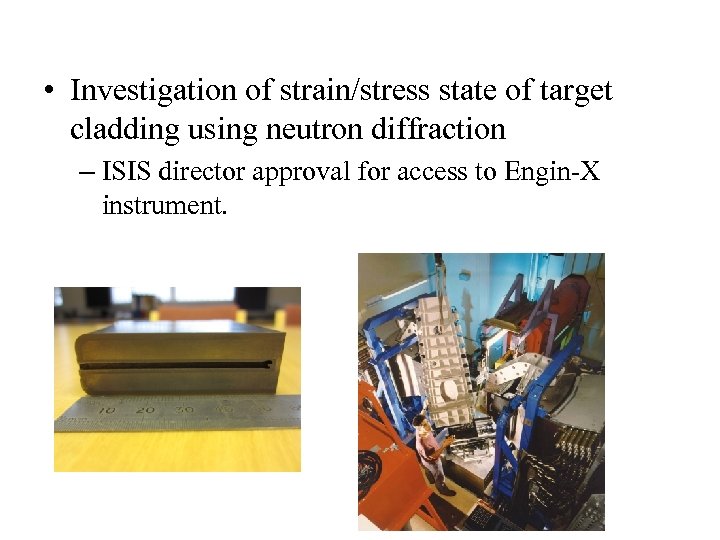 • Investigation of strain/stress state of target cladding using neutron diffraction – ISIS director approval for access to Engin-X instrument.
 ISIS First Target Station upgrade plans • Currently in a definition (feasibility) phase reviewing the options for an upgrade which might include: o An improvement in efficiency o An improvement in reliability o An improvement in specific output o Or a combination of all three. • The existing target station infrastructure will have a strong influence on any upgrade path.
 ISIS Second Target Station upgrade plans • Currently in the middle of the phase II instruments project: o Adding a further 4 instruments to the current suite of 7 o An improvement in flexibility of the beryllium reflector o To accommodate potential future changes to the moderators o Potential changes to the instrument suite. • Again, existing target station infrastructure will have a strong influence on any upgrade path.