


 Скачать презентацию RAINFOREST ALLIANCE TRAINING KENYA TEA -Field version-
2a4aa41291051da1007ee75430b1d376.ppt
- Количество слайдов: 35
 RAINFOREST ALLIANCE TRAINING KENYA (TEA) -Field version- © 2009 Rainforest Alliance
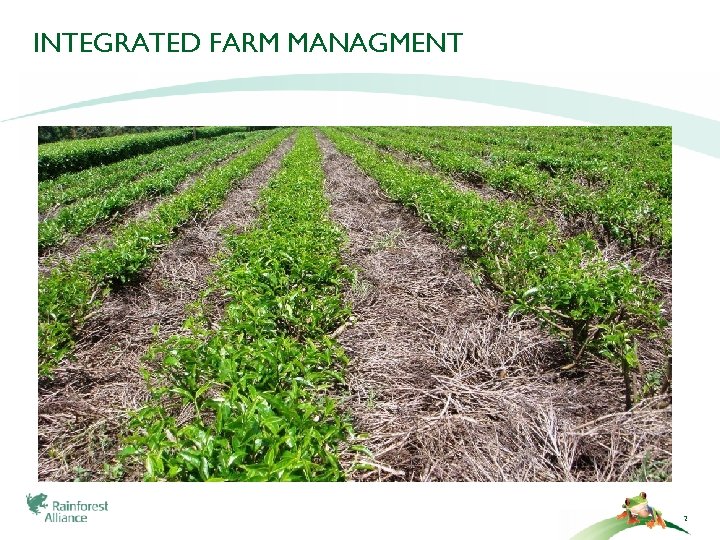 INTEGRATED FARM MANAGMENT 2
 WHAT IS INTEGRATED FARM MANAGEMENT? • To manage production in the whole farm in a way that maintains and enhances the environment for people and wildlife while at the same time producing economic yields of high quality
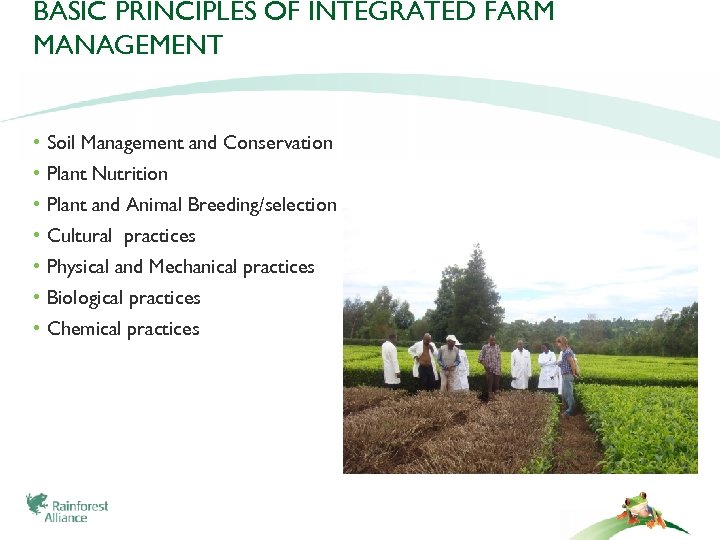 BASIC PRINCIPLES OF INTEGRATED FARM MANAGEMENT • Soil Management and Conservation • Plant Nutrition • Plant and Animal Breeding/selection • Cultural practices • Physical and Mechanical practices • Biological practices • Chemical practices
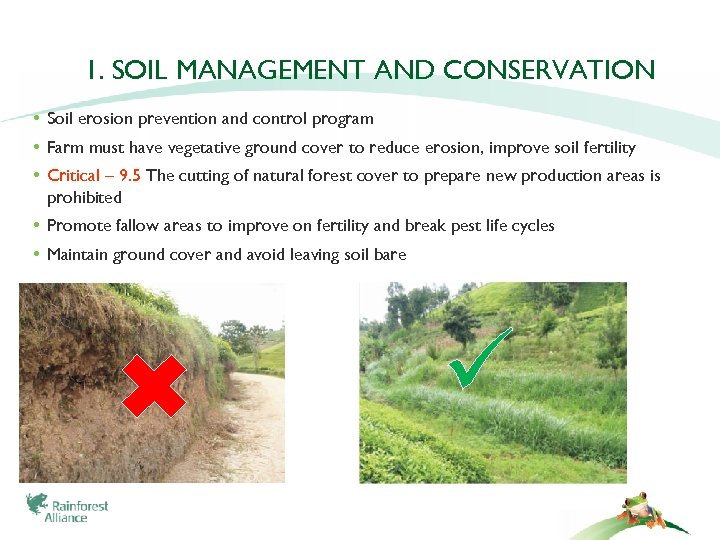 1. SOIL MANAGEMENT AND CONSERVATION • Soil erosion prevention and control program • Farm must have vegetative ground cover to reduce erosion, improve soil fertility • Critical – 9. 5 The cutting of natural forest cover to prepare new production areas is prohibited • Promote fallow areas to improve on fertility and break pest life cycles • Maintain ground cover and avoid leaving soil bare
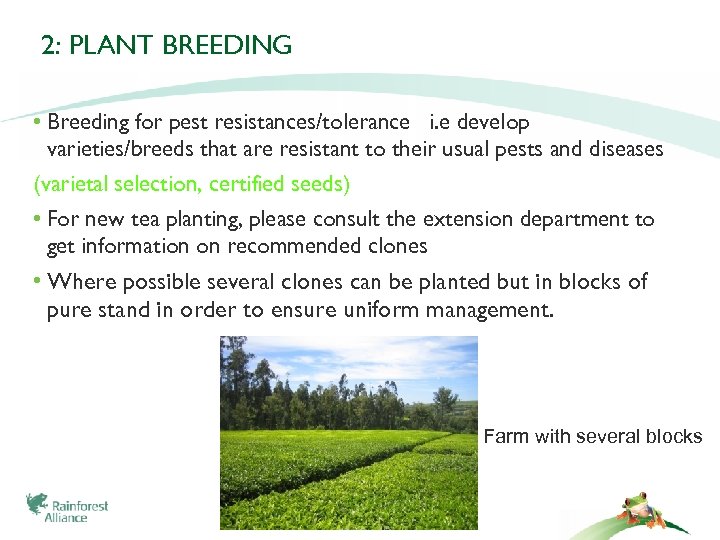 2: PLANT BREEDING • Breeding for pest resistances/tolerance i. e develop varieties/breeds that are resistant to their usual pests and diseases (varietal selection, certified seeds) • For new tea planting, please consult the extension department to get information on recommended clones • Where possible several clones can be planted but in blocks of pure stand in order to ensure uniform management. Farm with several blocks
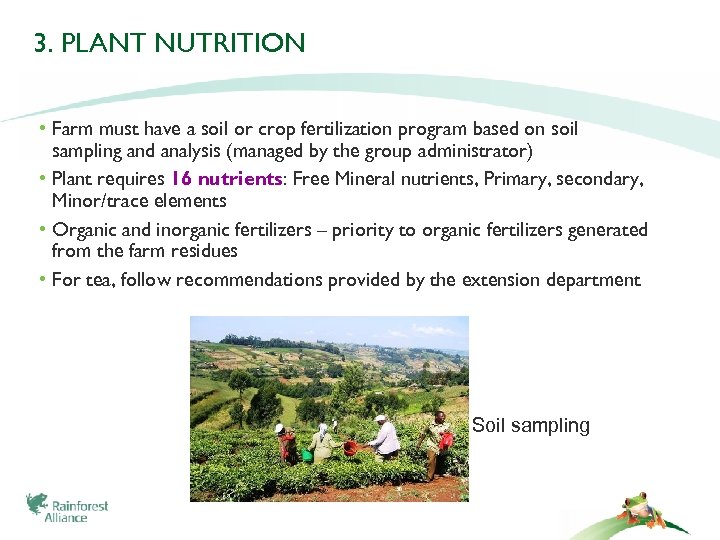 3. PLANT NUTRITION • Farm must have a soil or crop fertilization program based on soil sampling and analysis (managed by the group administrator) • Plant requires 16 nutrients: Free Mineral nutrients, Primary, secondary, Minor/trace elements • Organic and inorganic fertilizers – priority to organic fertilizers generated from the farm residues • For tea, follow recommendations provided by the extension department Soil sampling
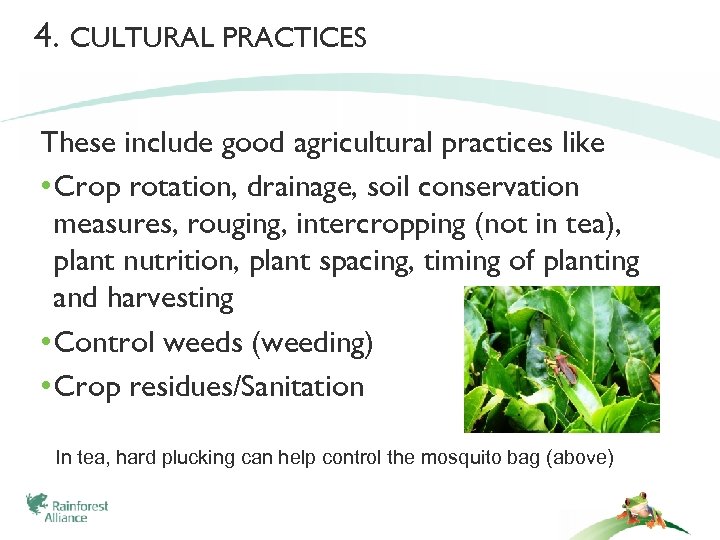 4. CULTURAL PRACTICES These include good agricultural practices like • Crop rotation, drainage, soil conservation measures, rouging, intercropping (not in tea), plant nutrition, plant spacing, timing of planting and harvesting • Control weeds (weeding) • Crop residues/Sanitation In tea, hard plucking can help control the mosquito bag (above)
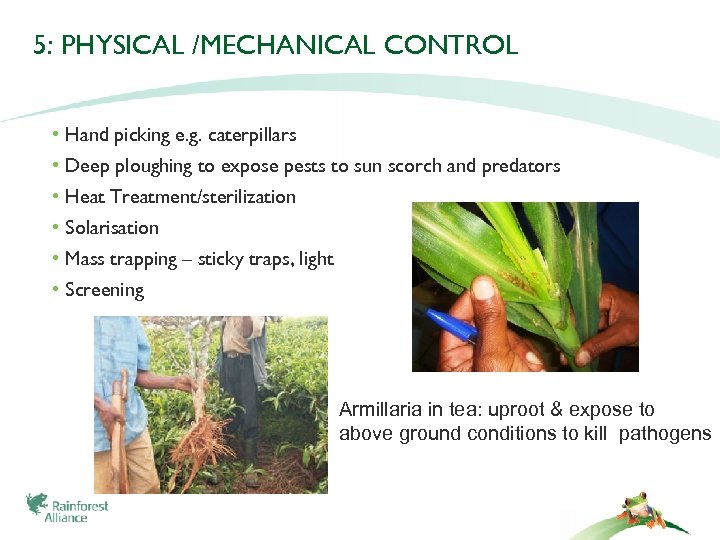 5: PHYSICAL /MECHANICAL CONTROL • Hand picking e. g. caterpillars • Deep ploughing to expose pests to sun scorch and predators • Heat Treatment/sterilization • Solarisation • Mass trapping – sticky traps, light • Screening Armillaria in tea: uproot & expose to above ground conditions to kill pathogens
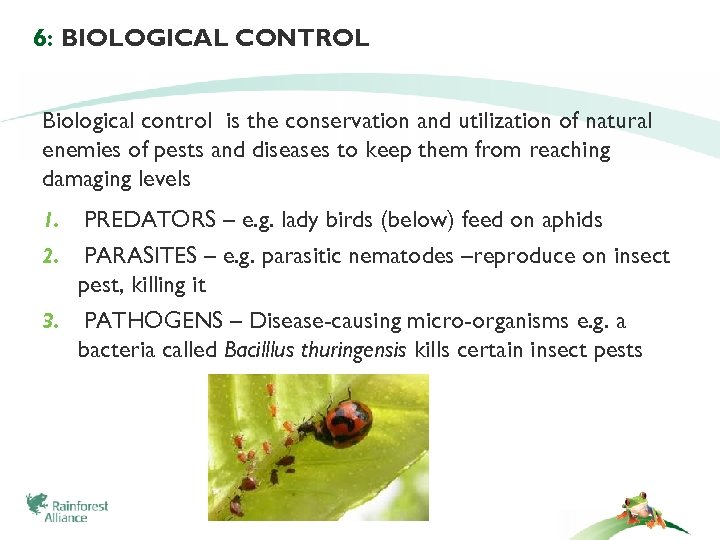 6: BIOLOGICAL CONTROL Biological control is the conservation and utilization of natural enemies of pests and diseases to keep them from reaching damaging levels PREDATORS – e. g. lady birds (below) feed on aphids 2. PARASITES – e. g. parasitic nematodes –reproduce on insect pest, killing it 3. PATHOGENS – Disease-causing micro-organisms e. g. a bacteria called Bacilllus thuringensis kills certain insect pests 1.
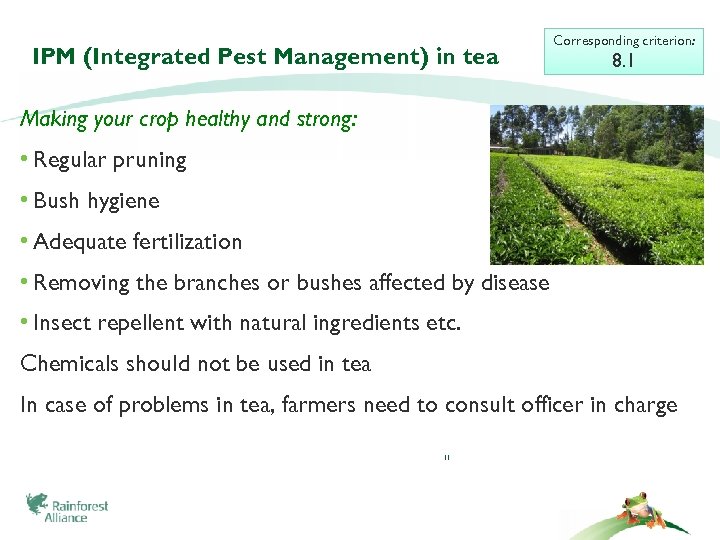 IPM (Integrated Pest Management) in tea Corresponding criterion: 8. 1 Making your crop healthy and strong: • Regular pruning • Bush hygiene • Adequate fertilization • Removing the branches or bushes affected by disease • Insect repellent with natural ingredients etc. Chemicals should not be used in tea In case of problems in tea, farmers need to consult officer in charge 11
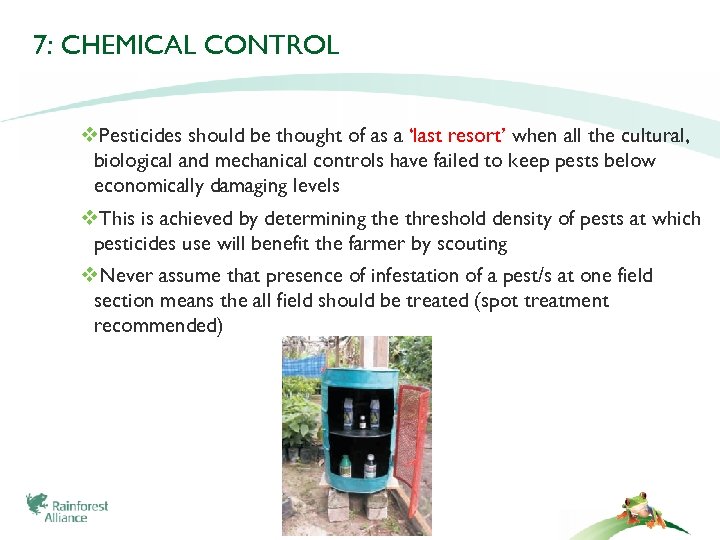 7: CHEMICAL CONTROL v. Pesticides should be thought of as a ‘last resort’ when all the cultural, biological and mechanical controls have failed to keep pests below economically damaging levels v. This is achieved by determining the threshold density of pests at which pesticides use will benefit the farmer by scouting v. Never assume that presence of infestation of a pest/s at one field section means the all field should be treated (spot treatment recommended)
 CONDITIONS FOR USE OF CHEMICALS IN CERTIFIED FARMS 1. Prohibited pesticides are not used 2. Reduction in the use of Who class I and II chemicals 3. There is rotation of chemical products 4. Equipment is calibrated 5. Person spraying is trained 6. Women do not handle chemicals 7. Necessary medical examinations are done 8. Record keeping 9. Safe handling of agrochemicals 10. Chemicals are not used in tea 13
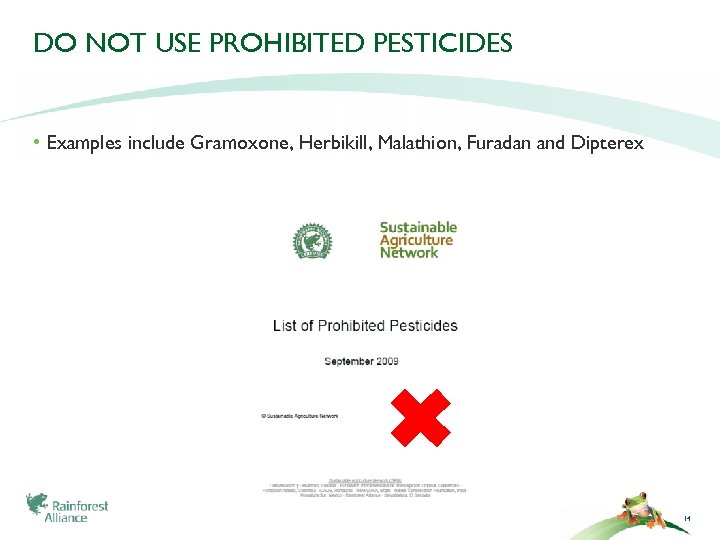 DO NOT USE PROHIBITED PESTICIDES • Examples include Gramoxone, Herbikill, Malathion, Furadan and Dipterex 14
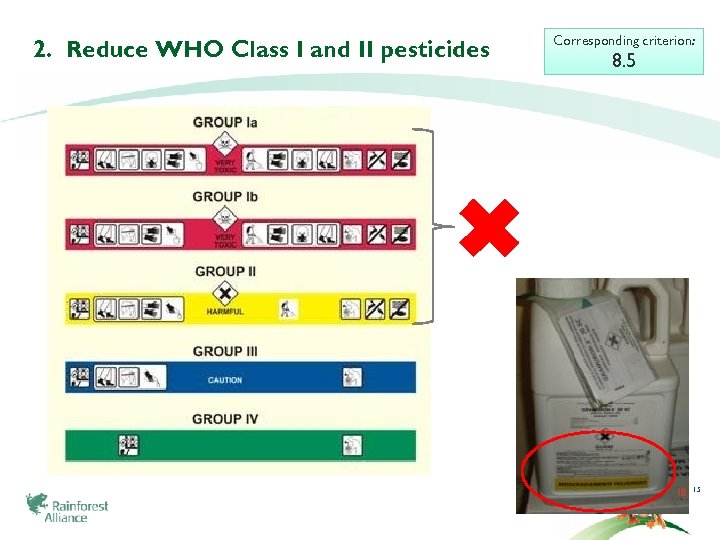 2. Reduce WHO Class I and II pesticides Corresponding criterion: 8. 5 15
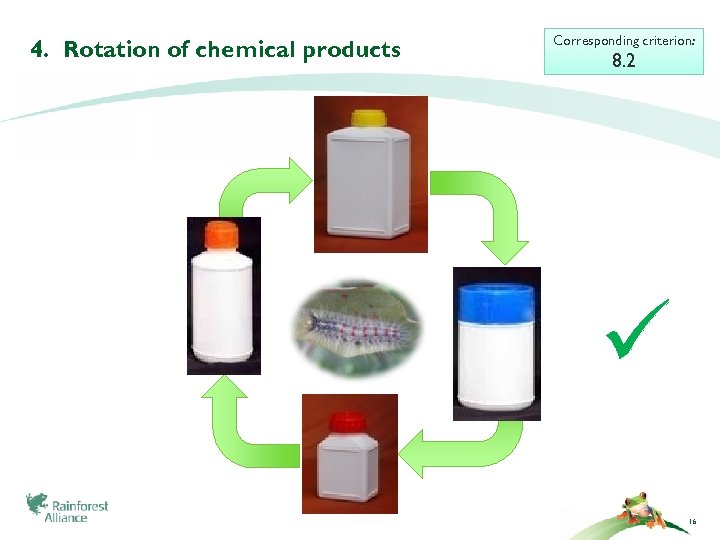 4. Rotation of chemical products Corresponding criterion: 8. 2 16
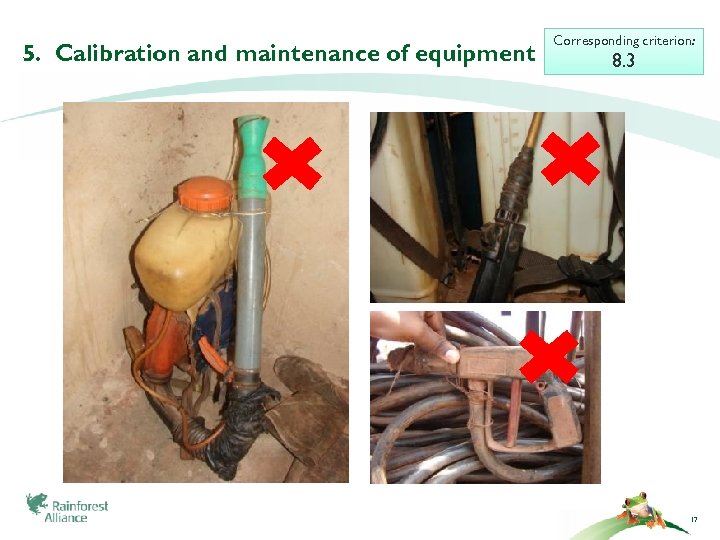 5. Calibration and maintenance of equipment Corresponding criterion: 8. 3 17
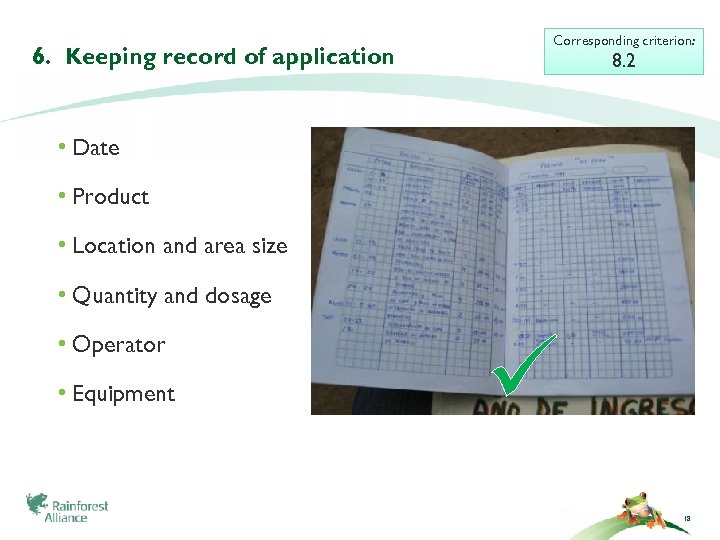 6. Keeping record of application Corresponding criterion: 8. 2 • Date • Product • Location and area size • Quantity and dosage • Operator • Equipment 18
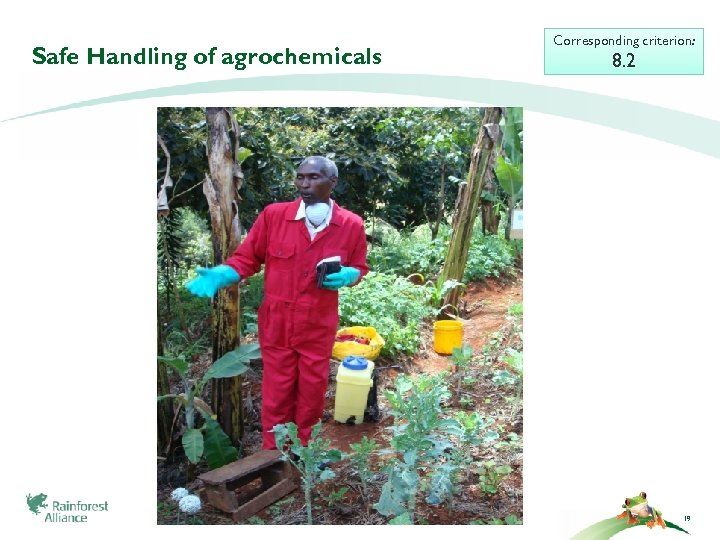 Safe Handling of agrochemicals Corresponding criterion: 8. 2 19
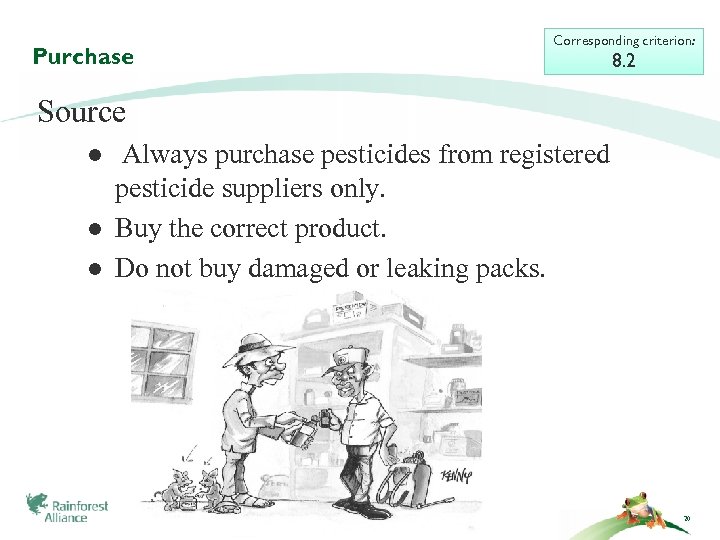 Purchase Corresponding criterion: 8. 2 Source ● Always purchase pesticides from registered pesticide suppliers only. ● Buy the correct product. ● Do not buy damaged or leaking packs. 20
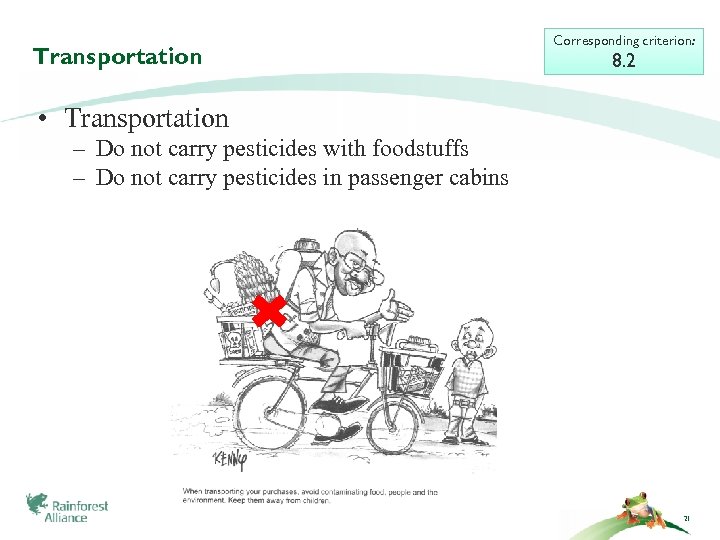 Transportation Corresponding criterion: 8. 2 • Transportation – Do not carry pesticides with foodstuffs – Do not carry pesticides in passenger cabins 21
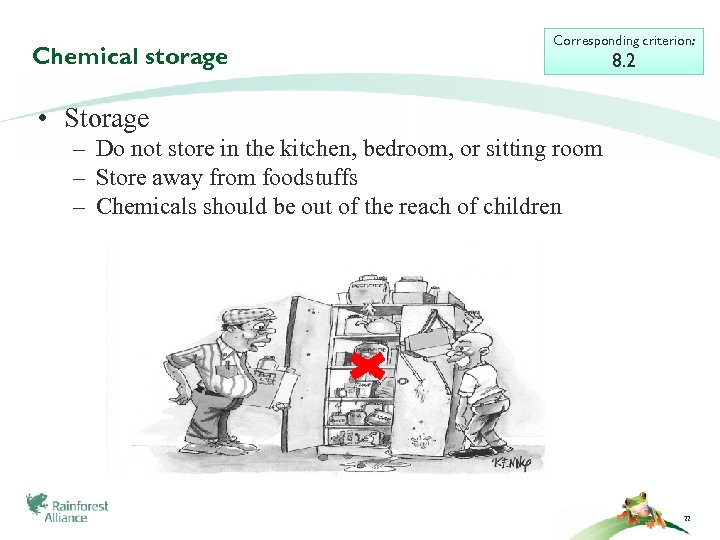 Chemical storage Corresponding criterion: 8. 2 • Storage – Do not store in the kitchen, bedroom, or sitting room – Store away from foodstuffs – Chemicals should be out of the reach of children 22
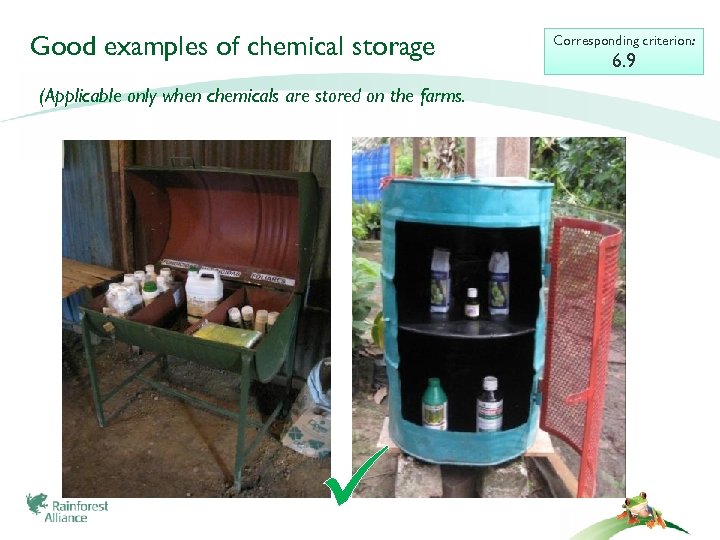 Good examples of chemical storage (Applicable only when chemicals are stored on the farms. Corresponding criterion: 6. 9
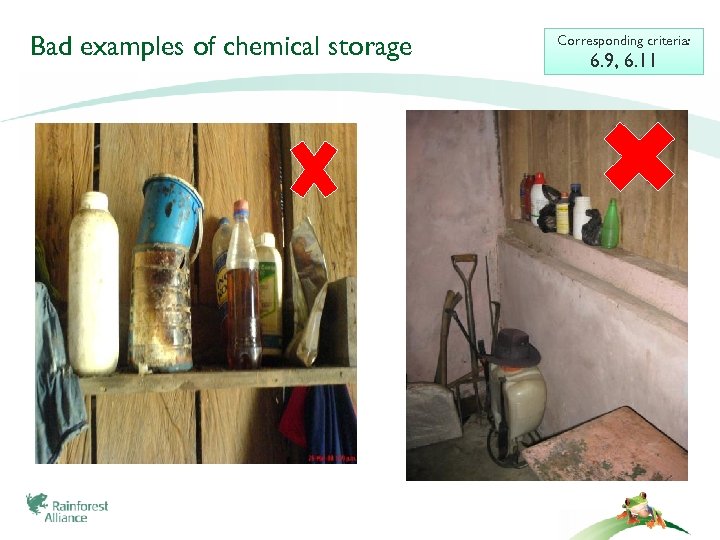 Bad examples of chemical storage Corresponding criteria: 6. 9, 6. 11
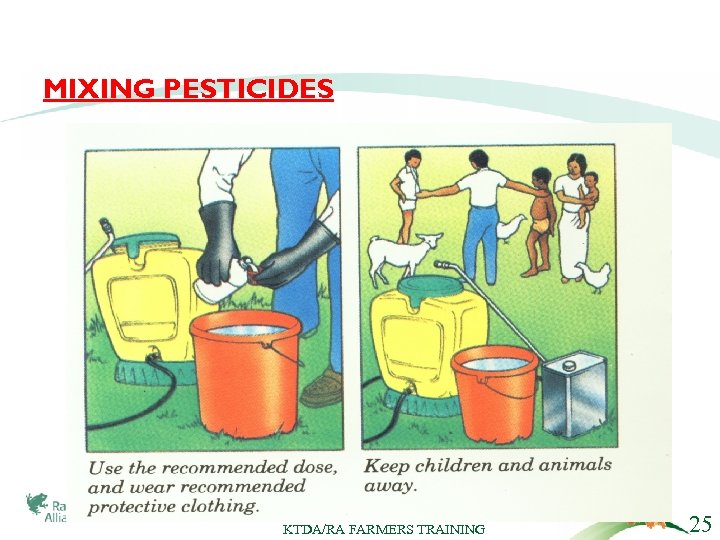 MIXING PESTICIDES KTDA/RA FARMERS TRAINING 25
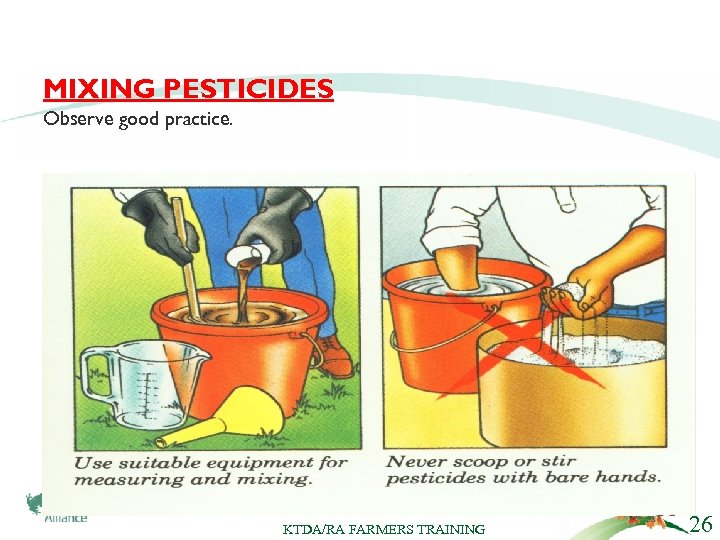 MIXING PESTICIDES Observe good practice. KTDA/RA FARMERS TRAINING 26
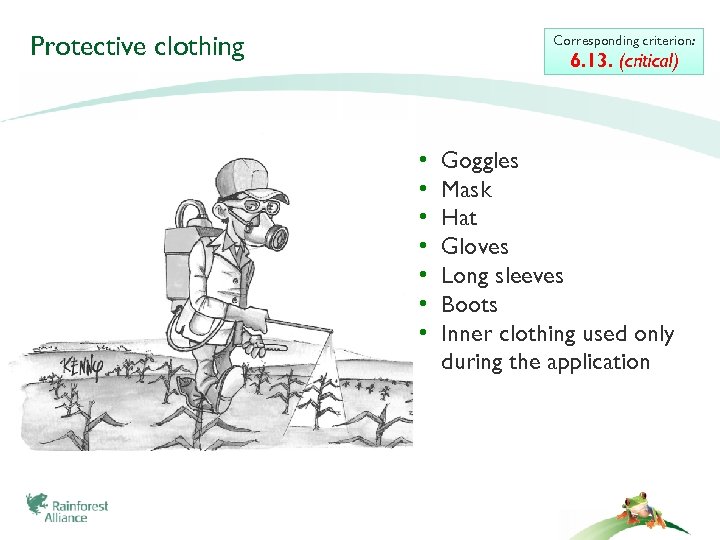 Protective clothing Corresponding criterion: 6. 13. (critical) • • Goggles Mask Hat Gloves Long sleeves Boots Inner clothing used only during the application
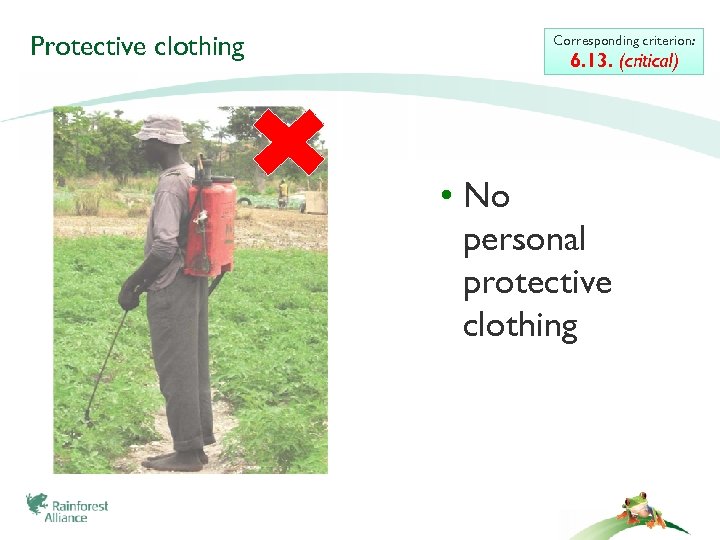 Protective clothing Corresponding criterion: 6. 13. (critical) • No personal protective clothing
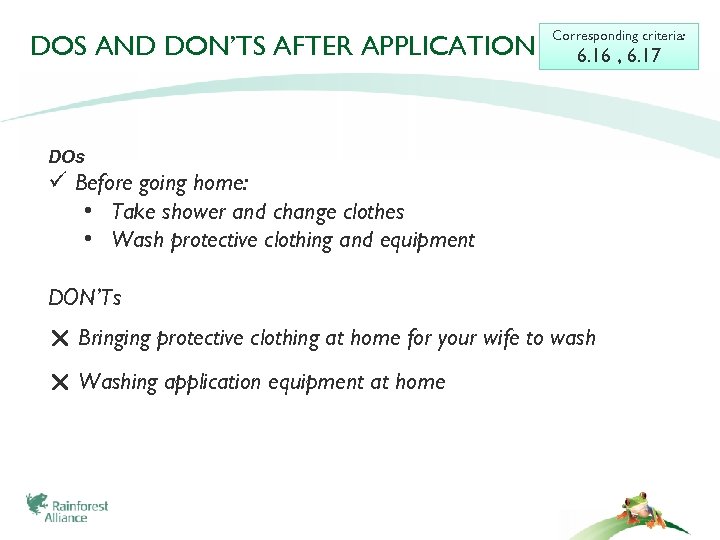 DOS AND DON’TS AFTER APPLICATION Corresponding criteria: 6. 16 , 6. 17 DOs Before going home: • Take shower and change clothes • Wash protective clothing and equipment DON’Ts Bringing protective clothing at home for your wife to wash Washing application equipment at home
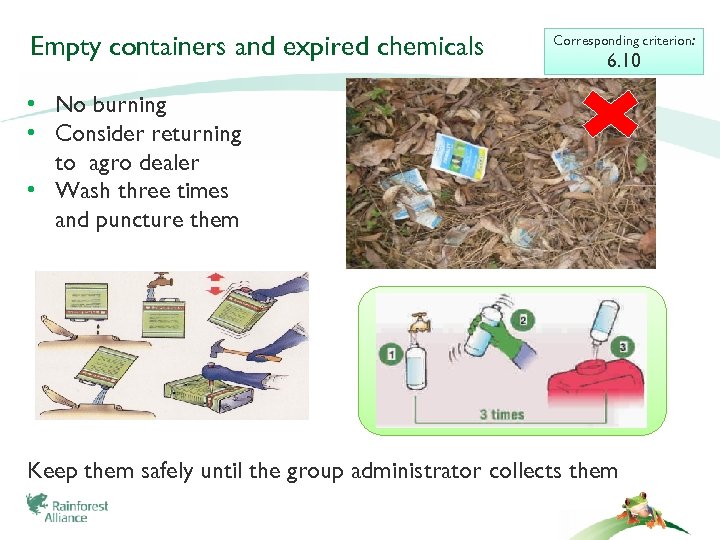 Empty containers and expired chemicals Corresponding criterion: 6. 10 • No burning • Consider returning to agro dealer • Wash three times and puncture them Keep them safely until the group administrator collects them
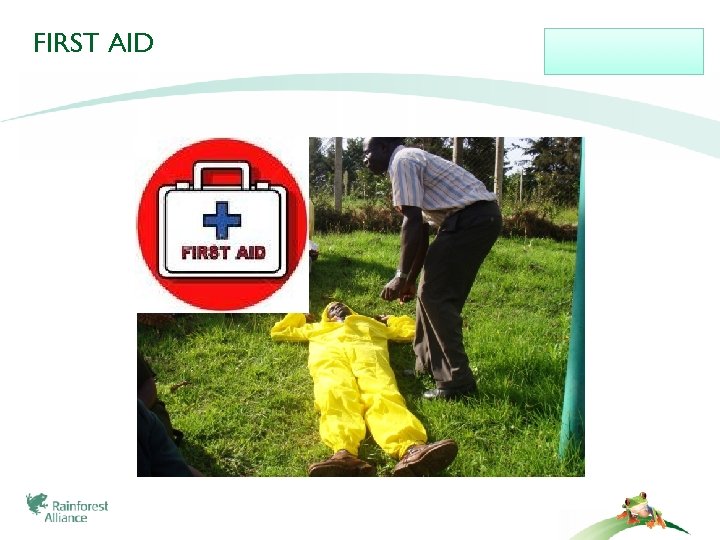 FIRST AID
 FIRST AID ANTIDOTES 1. Normal First Aid Kit • Cotton wool, pair of scissors, bandages • Painkillers • Etc 2. Adequate supply of water 3. Spillage Management 4. Antidotes RULES: 1. Always read label instruction before administering any first aid procedure or antidotes 2. The affected person must be seen by a Medical Doctor
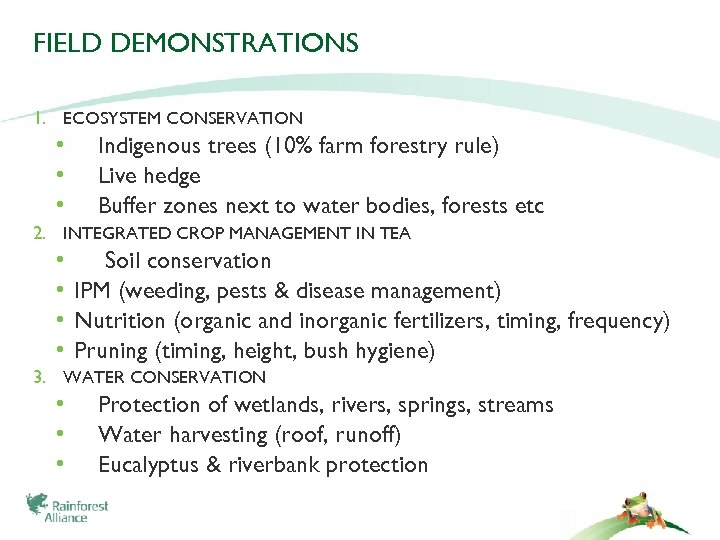 FIELD DEMONSTRATIONS 1. ECOSYSTEM CONSERVATION • • • Indigenous trees (10% farm forestry rule) Live hedge Buffer zones next to water bodies, forests etc 2. INTEGRATED CROP MANAGEMENT IN TEA • Soil conservation • IPM (weeding, pests & disease management) • Nutrition (organic and inorganic fertilizers, timing, frequency) • Pruning (timing, height, bush hygiene) 3. WATER CONSERVATION • • • Protection of wetlands, rivers, springs, streams Water harvesting (roof, runoff) Eucalyptus & riverbank protection
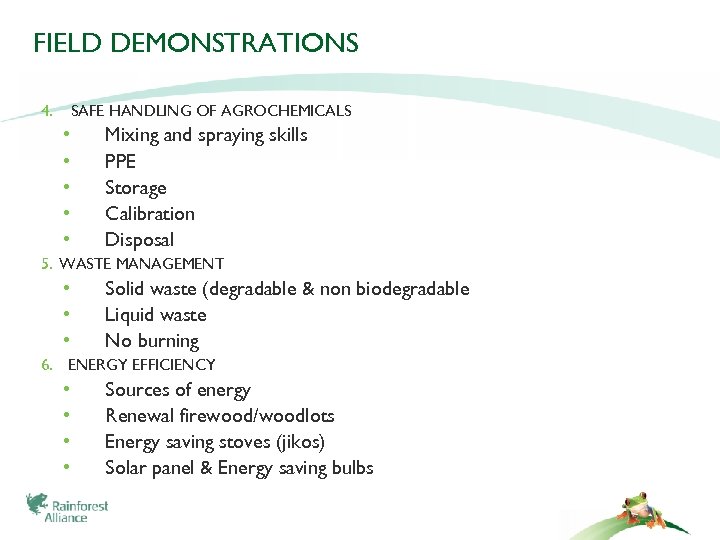 FIELD DEMONSTRATIONS 4. SAFE HANDLING OF AGROCHEMICALS • • • Mixing and spraying skills PPE Storage Calibration Disposal 5. WASTE MANAGEMENT • • • Solid waste (degradable & non biodegradable Liquid waste No burning 6. ENERGY EFFICIENCY • • Sources of energy Renewal firewood/woodlots Energy saving stoves (jikos) Solar panel & Energy saving bulbs
 Thank You for joining us in this journey! The Rainforest Alliance works to conserve biodiversity and ensure sustainable livelihoods by transforming land-use practices, business practices and consumer behavior.