


 Скачать презентацию RAINFOREST ALLIANCE TRAINING KENYA TEA -Factory version-
f3b11f5f971bfeca6c418c073480b041.ppt
- Количество слайдов: 51
 RAINFOREST ALLIANCE TRAINING KENYA (TEA) -Factory version- © 2009 Rainforest Alliance
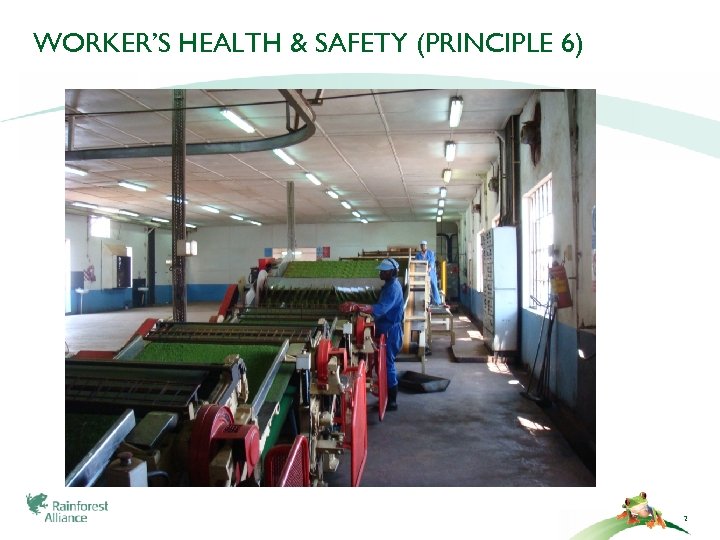 WORKER’S HEALTH & SAFETY (PRINCIPLE 6) 2
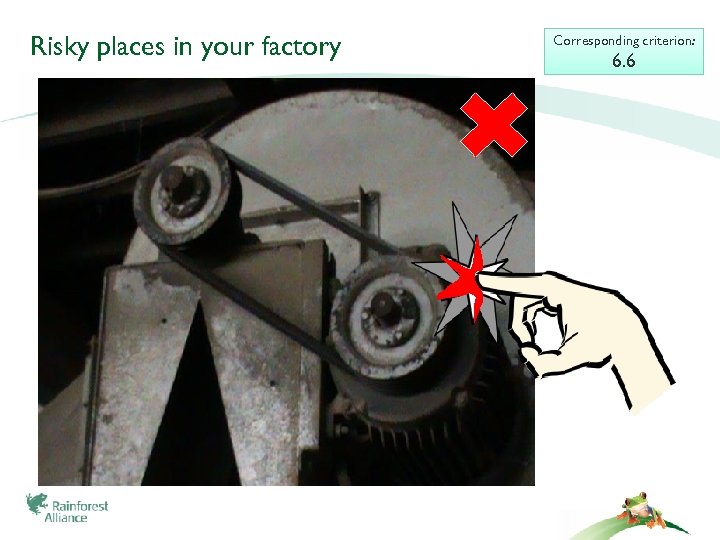 Risky places in your factory Corresponding criterion: 6. 6
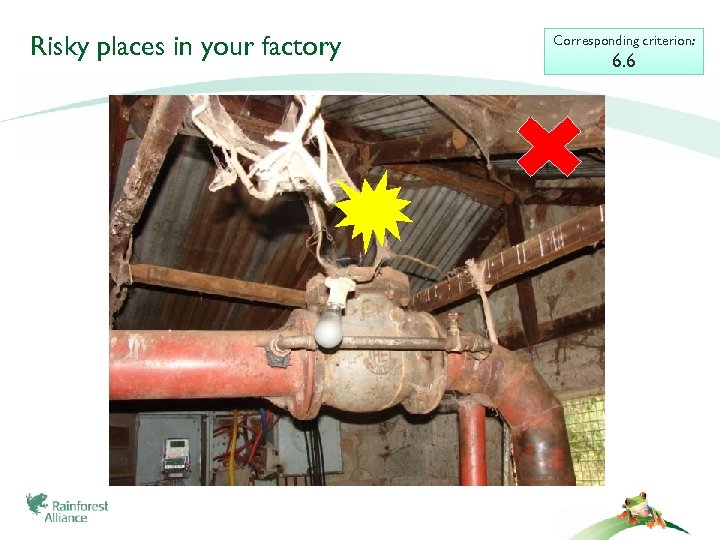 Risky places in your factory Corresponding criterion: 6. 6
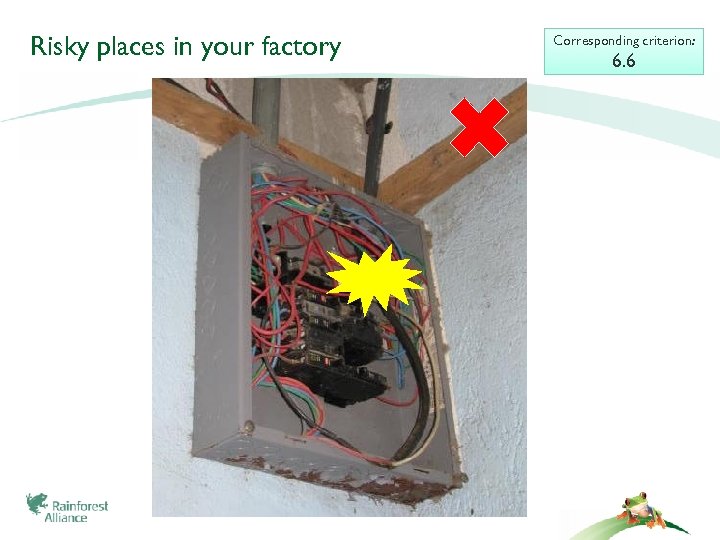 Risky places in your factory Corresponding criterion: 6. 6
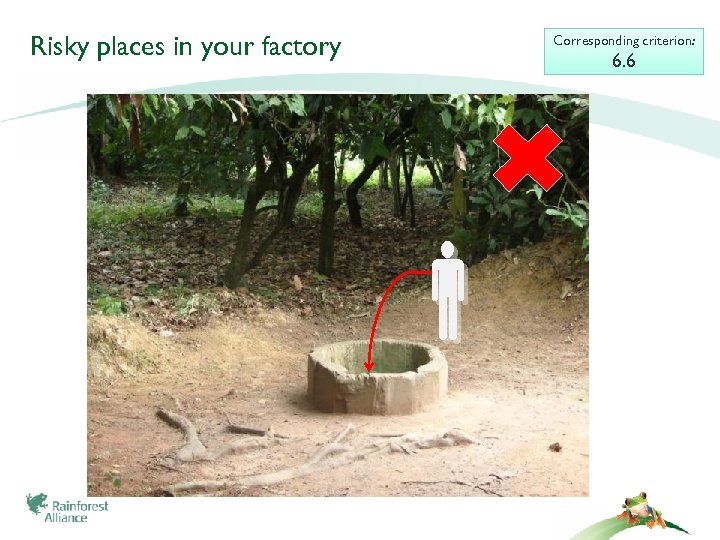 Risky places in your factory Corresponding criterion: 6. 6
 Risky places in your factory Corresponding criterion: 6. 6
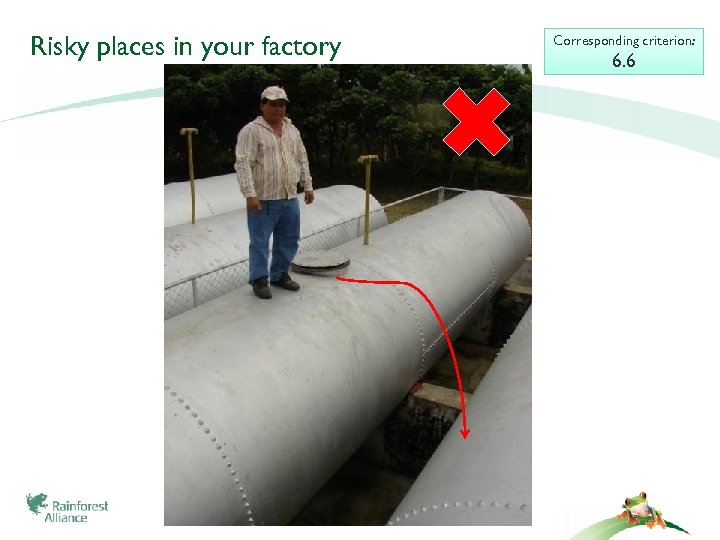 Risky places in your factory Corresponding criterion: 6. 6
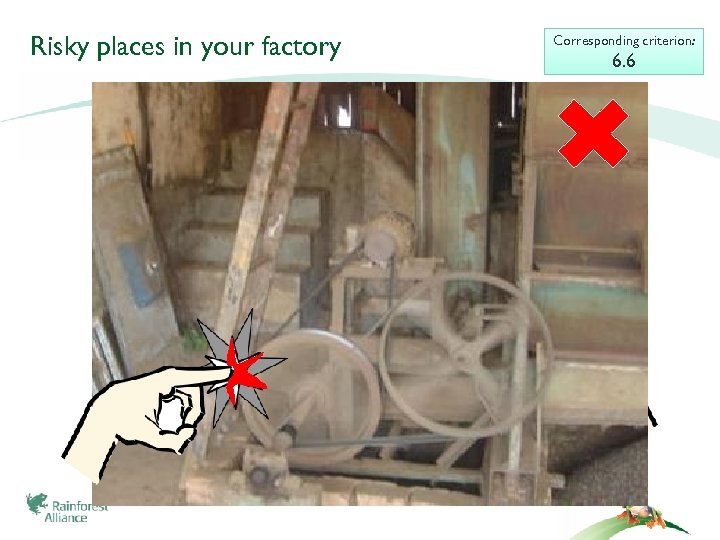 Risky places in your factory Corresponding criterion: 6. 6
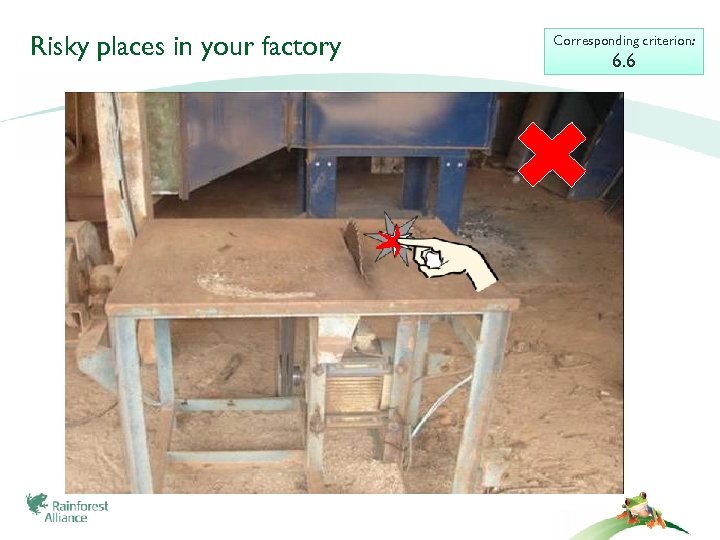 Risky places in your factory Corresponding criterion: 6. 6
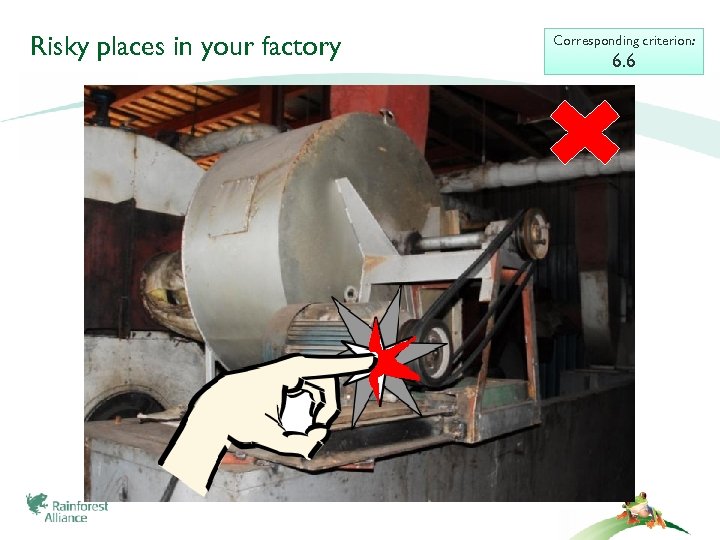 Risky places in your factory Corresponding criterion: 6. 6
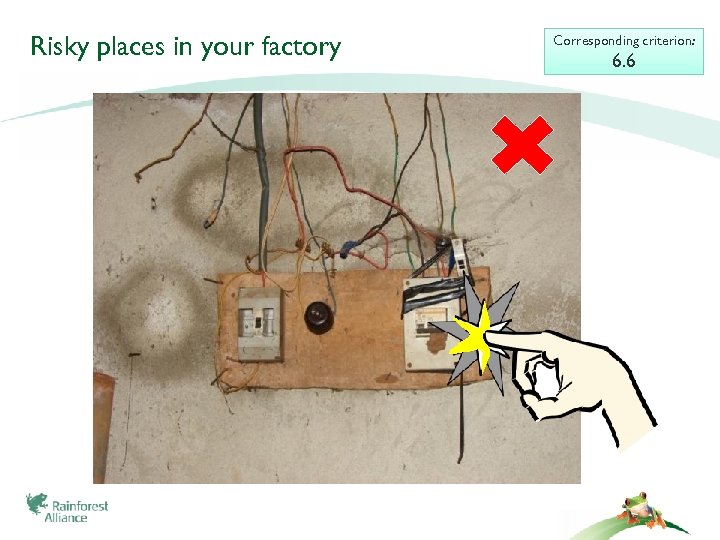 Risky places in your factory Corresponding criterion: 6. 6
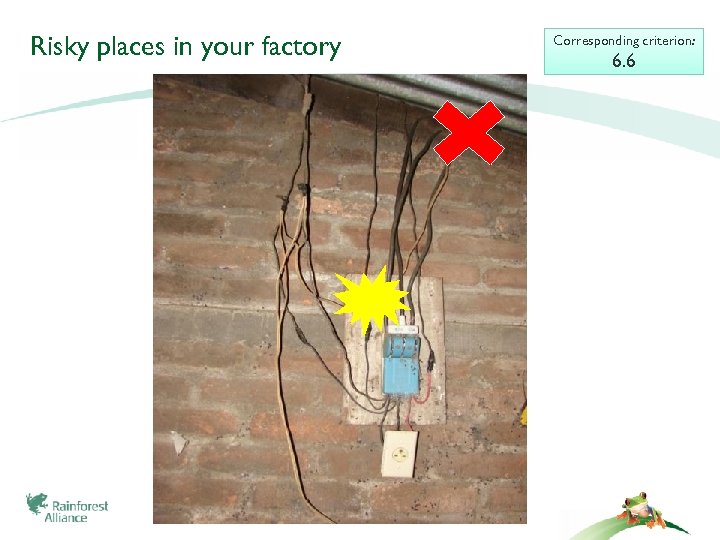 Risky places in your factory Corresponding criterion: 6. 6
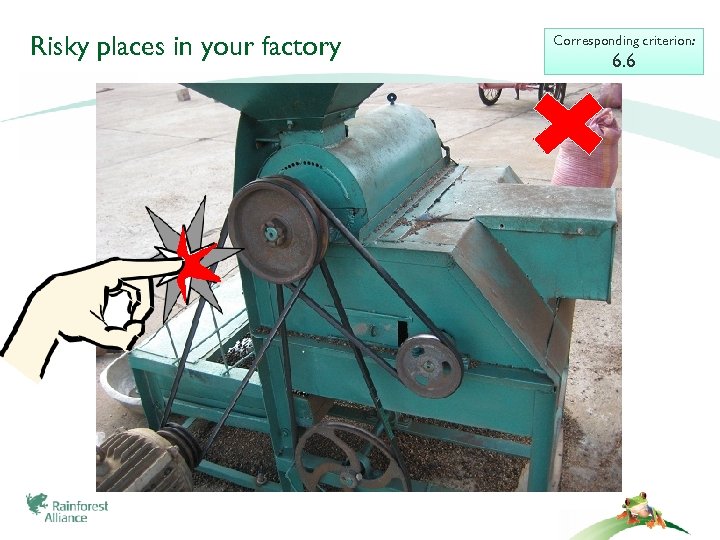 Risky places in your factory Corresponding criterion: 6. 6
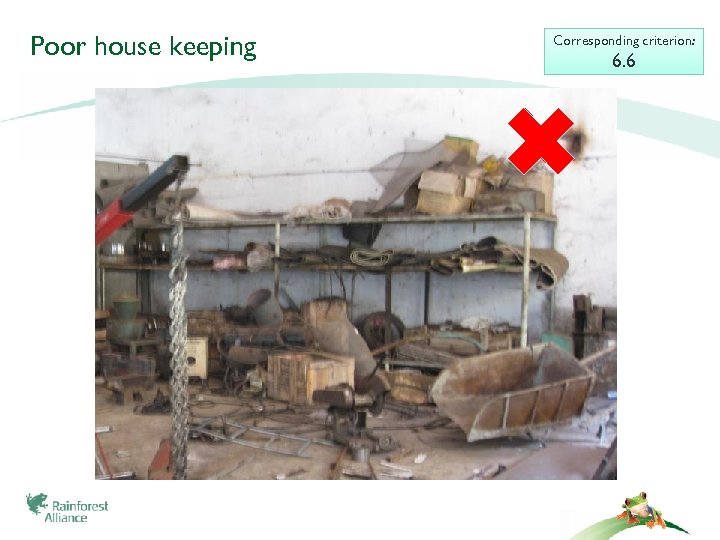 Poor house keeping Corresponding criterion: 6. 6
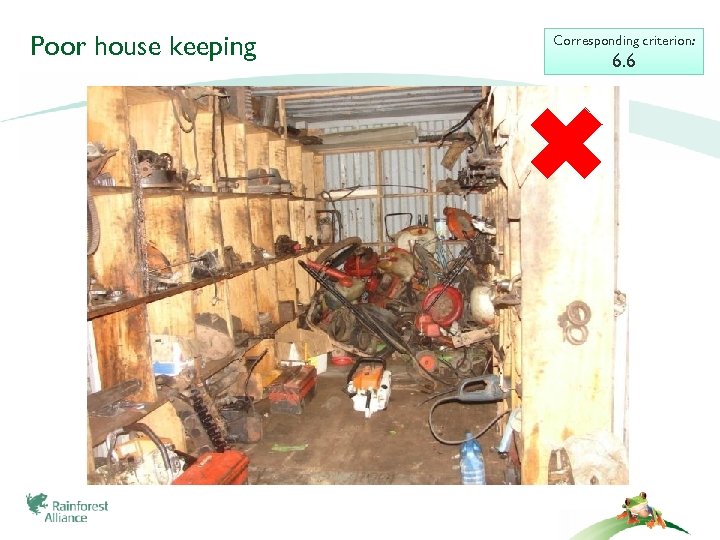 Poor house keeping Corresponding criterion: 6. 6
 HOW TO REDUCE THE RISK • Train workers on: • How to handle the machineries • What protective clothing to use • How to prevent accidents • What to do in case of accidents • etc. • Maintain training records (date, content, trainer and participants) 17
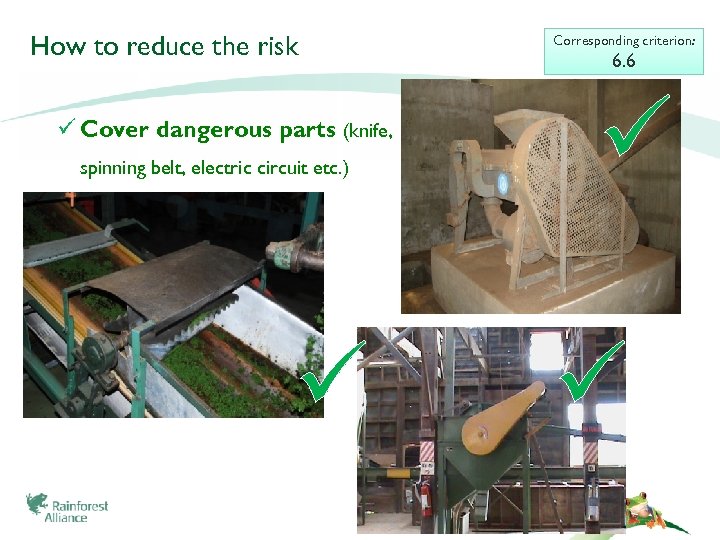 How to reduce the risk Cover dangerous parts (knife, spinning belt, electric circuit etc. ) Corresponding criterion: 6. 6
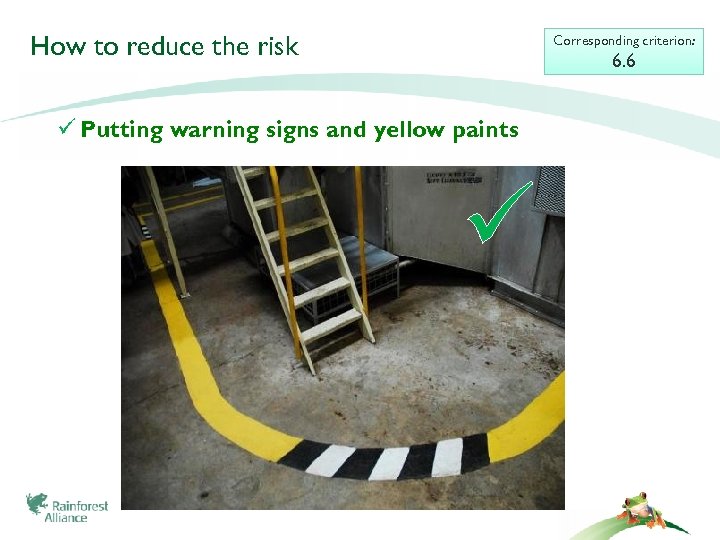 How to reduce the risk Corresponding criterion: 6. 6 Putting warning signs and yellow paints
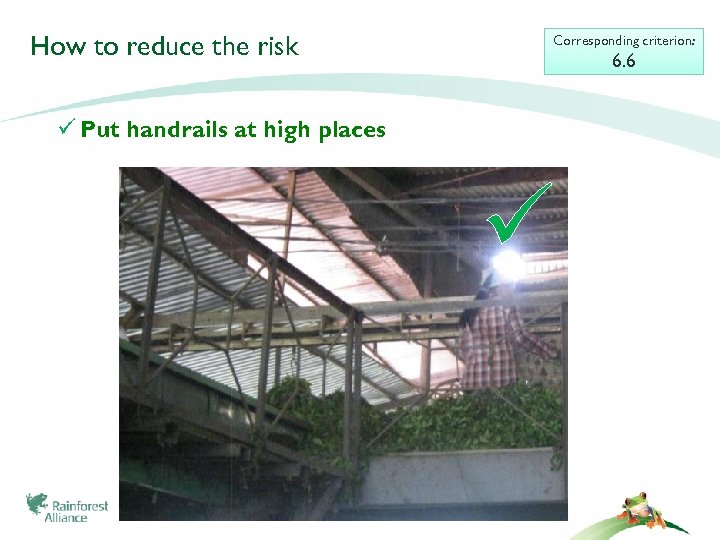 How to reduce the risk Corresponding criterion: 6. 6 Put handrails at high places
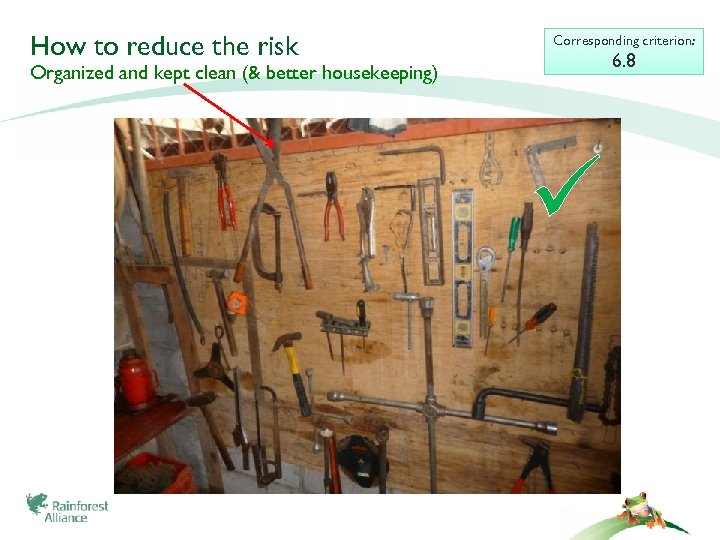 How to reduce the risk Corresponding criterion: 6. 8 Organized and kept clean (& better housekeeping)
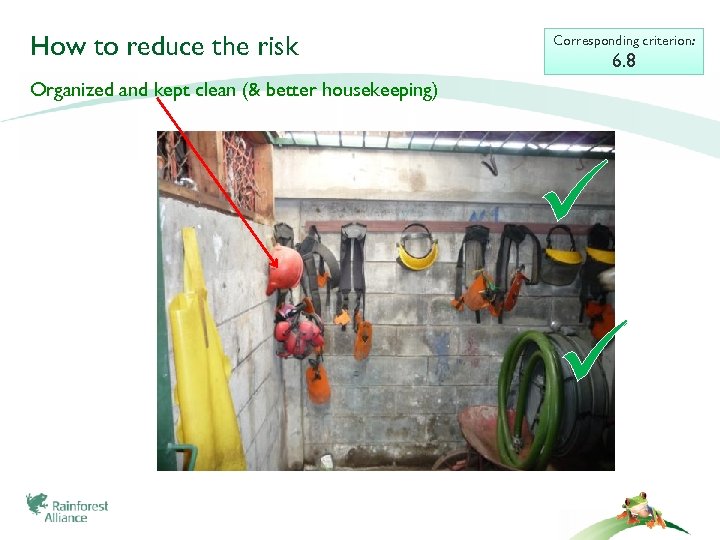 How to reduce the risk Corresponding criterion: 6. 8 Organized and kept clean (& better housekeeping)
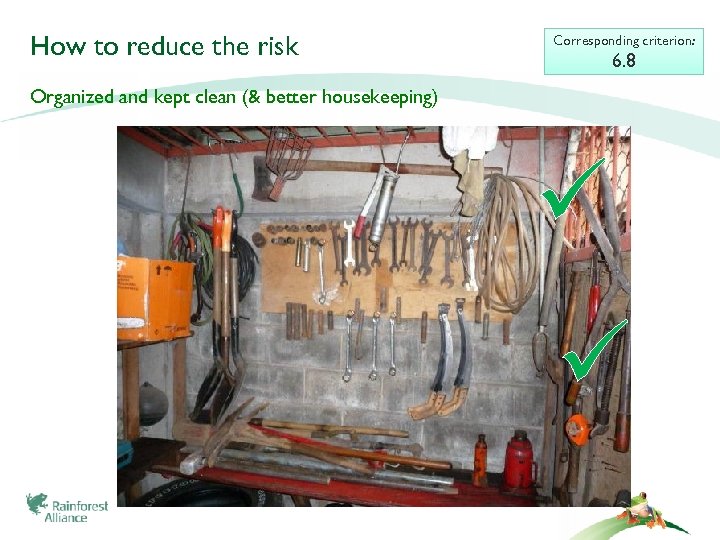 How to reduce the risk Corresponding criterion: 6. 8 Organized and kept clean (& better housekeeping)
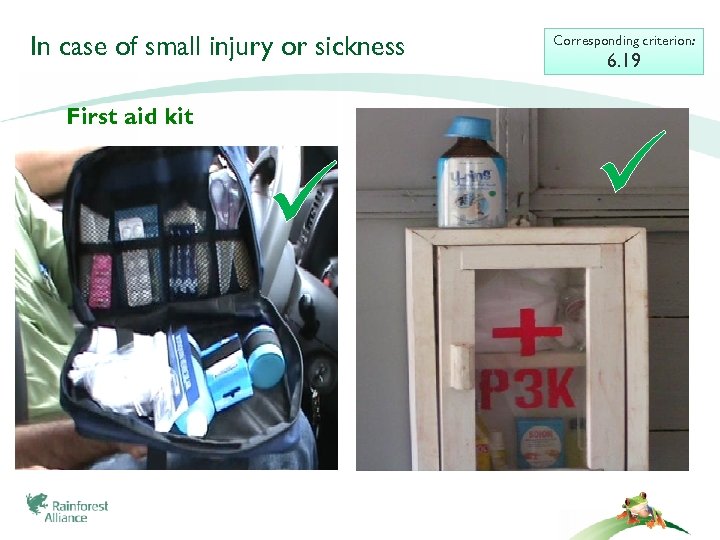 In case of small injury or sickness First aid kit Corresponding criterion: 6. 19
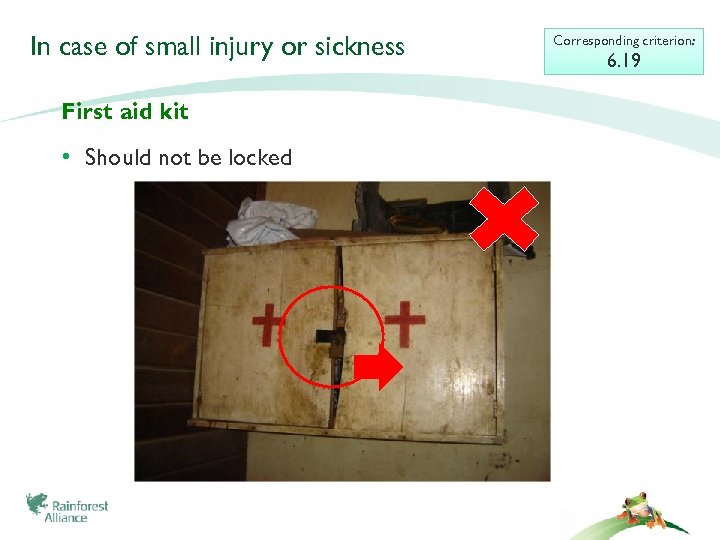 In case of small injury or sickness First aid kit • Should not be locked Corresponding criterion: 6. 19
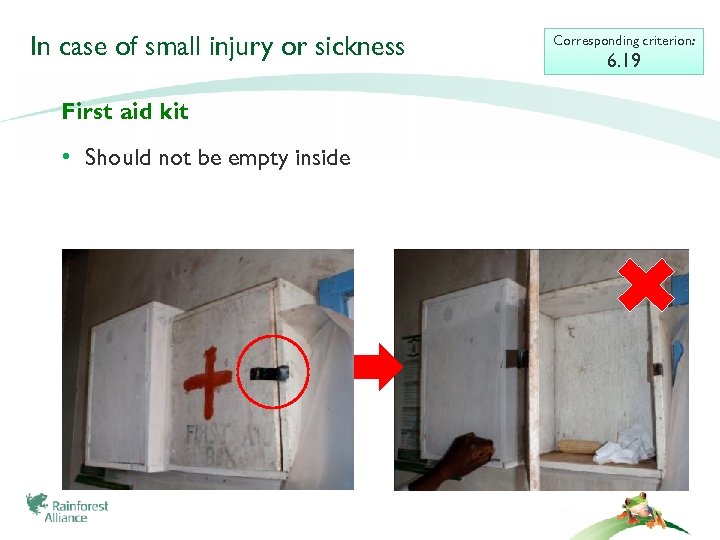 In case of small injury or sickness First aid kit • Should not be empty inside Corresponding criterion: 6. 19
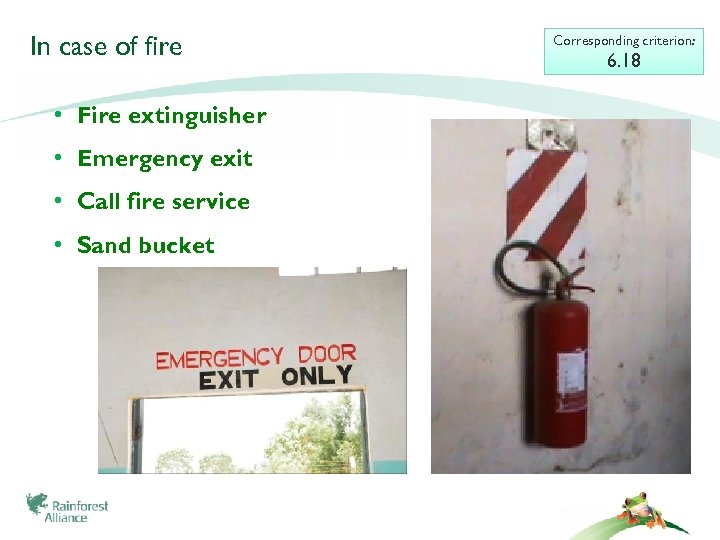 In case of fire • Fire extinguisher • Emergency exit • Call fire service • Sand bucket Corresponding criterion: 6. 18
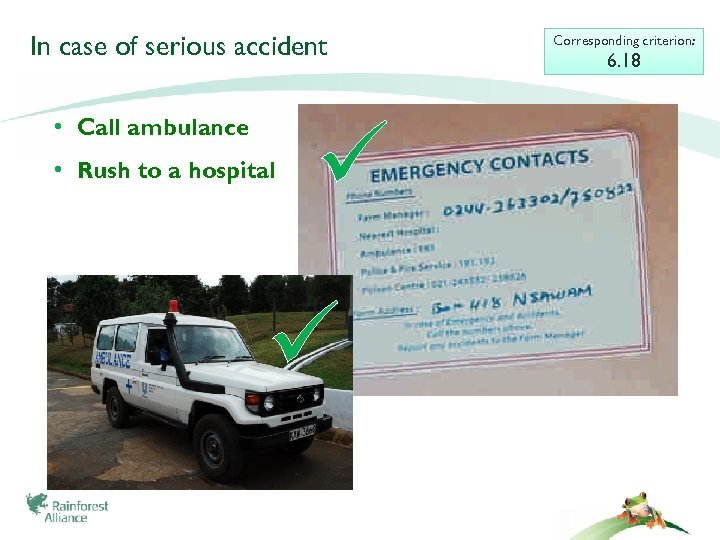 In case of serious accident • Call ambulance • Rush to a hospital Corresponding criterion: 6. 18
 Medical examination Corresponding criteria: 6. 4, 6. 5 • General check-up for workers doing any dangerous activity e. g. lifting heavy weights (check back), noisy areas (check hearing) etc
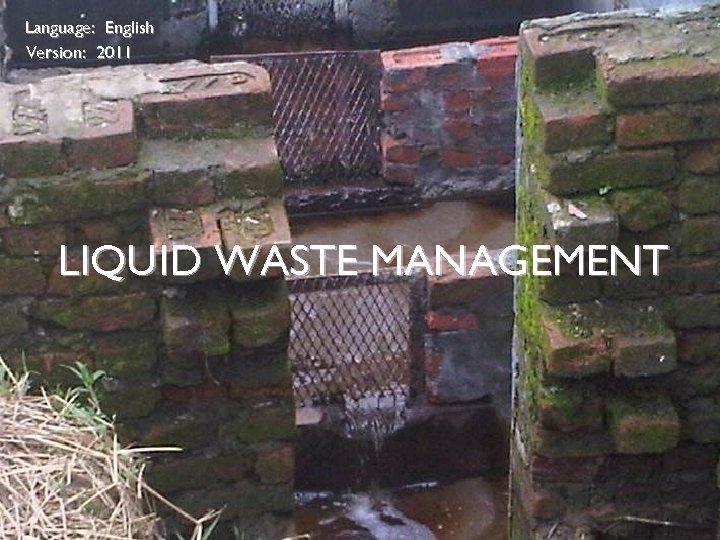 Language: English Version: 2011 LIQUID WASTE MANAGEMENT © 2009 Rainforest Alliance
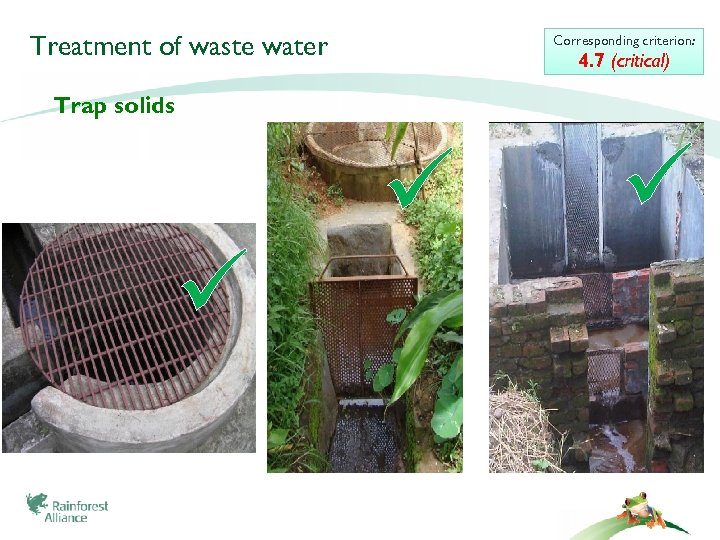 Treatment of waste water Corresponding criterion: 4. 7 (critical) Trap solids
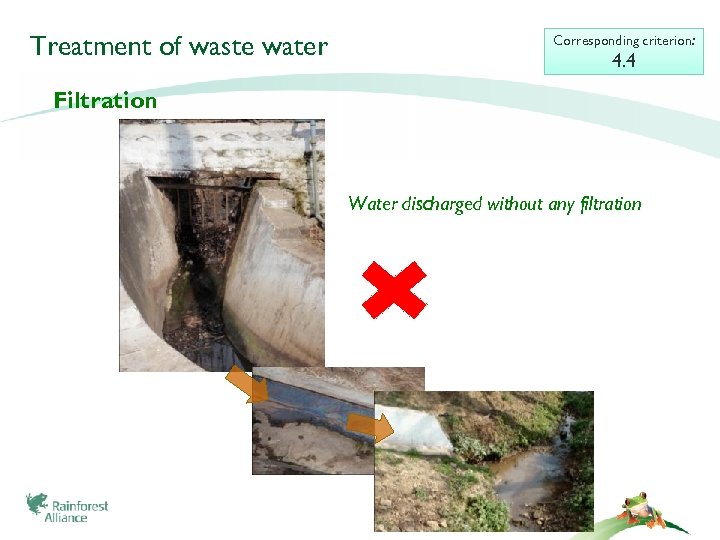 Treatment of waste water Corresponding criterion: 4. 4 Filtration Water discharged without any filtration
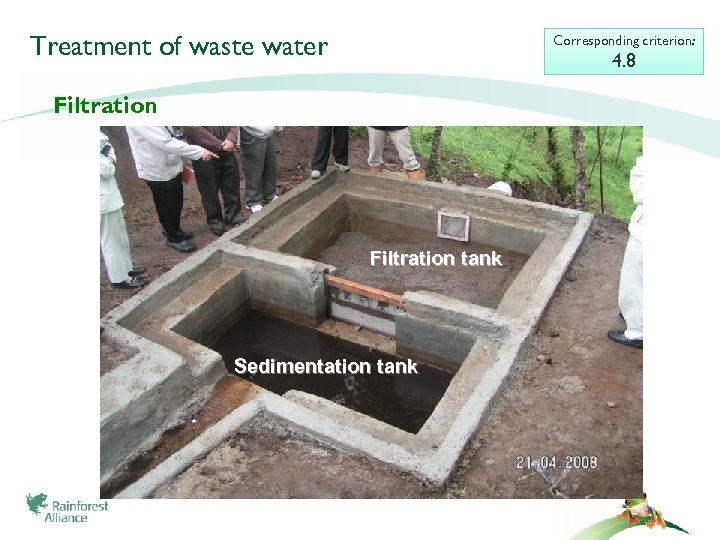 Treatment of waste water Corresponding criterion: 4. 8 Filtration tank Sedimentation tank
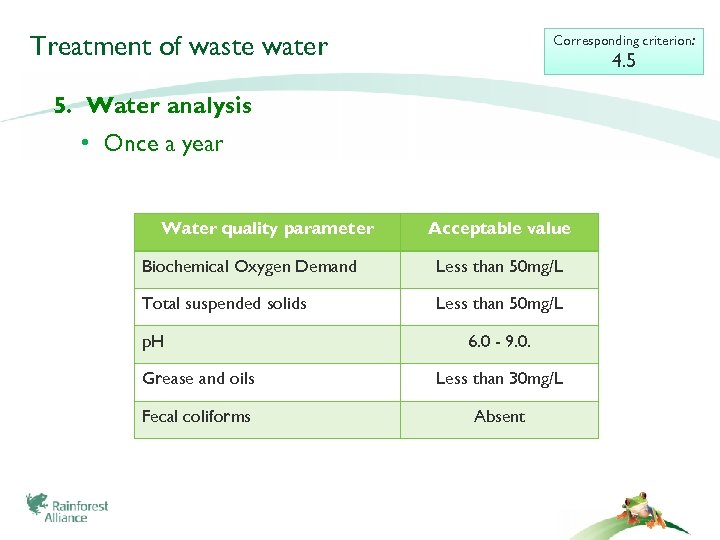 Treatment of waste water Corresponding criterion: 4. 5 5. Water analysis • Once a year Water quality parameter Acceptable value Biochemical Oxygen Demand Less than 50 mg/L Total suspended solids Less than 50 mg/L p. H 6. 0 - 9. 0. Grease and oils Less than 30 mg/L Fecal coliforms Absent
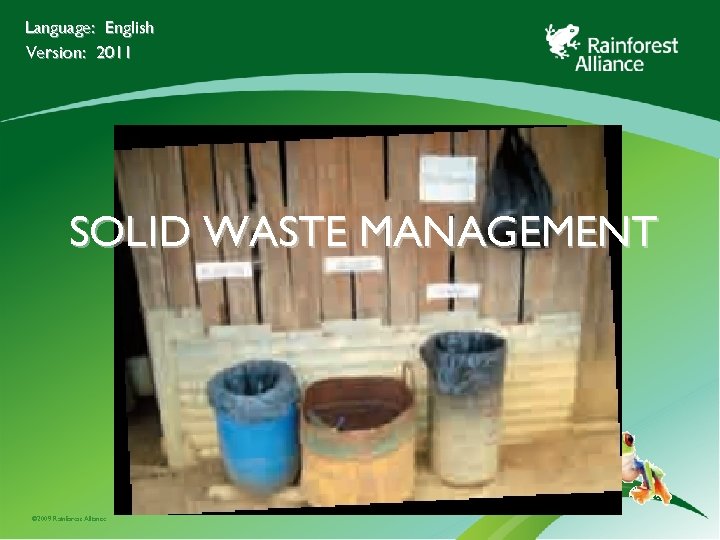 Language: English Version: 2011 SOLID WASTE MANAGEMENT © 2009 Rainforest Alliance
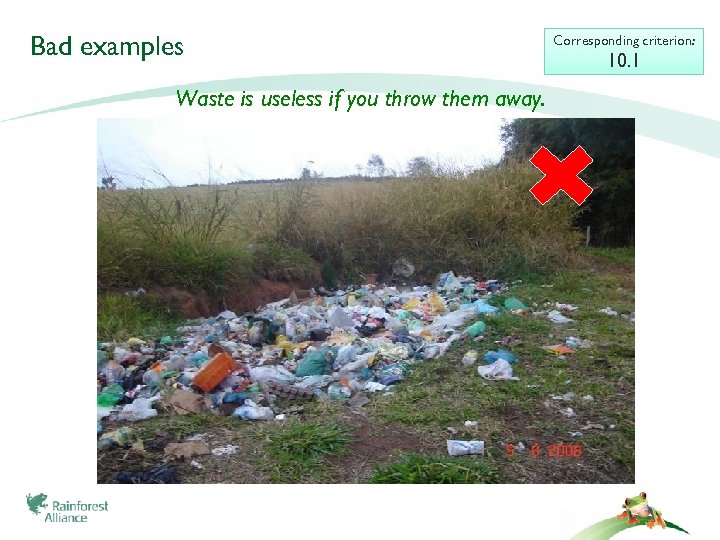 Bad examples Waste is useless if you throw them away. Corresponding criterion: 10. 1
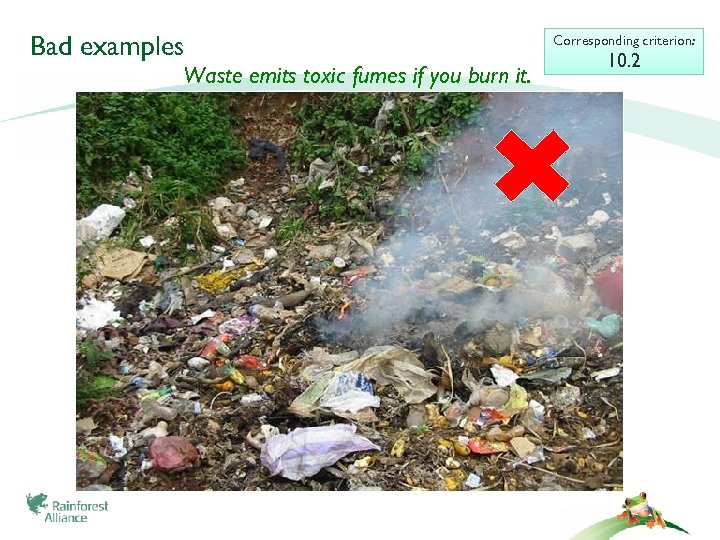 Bad examples Waste emits toxic fumes if you burn it. Corresponding criterion: 10. 2
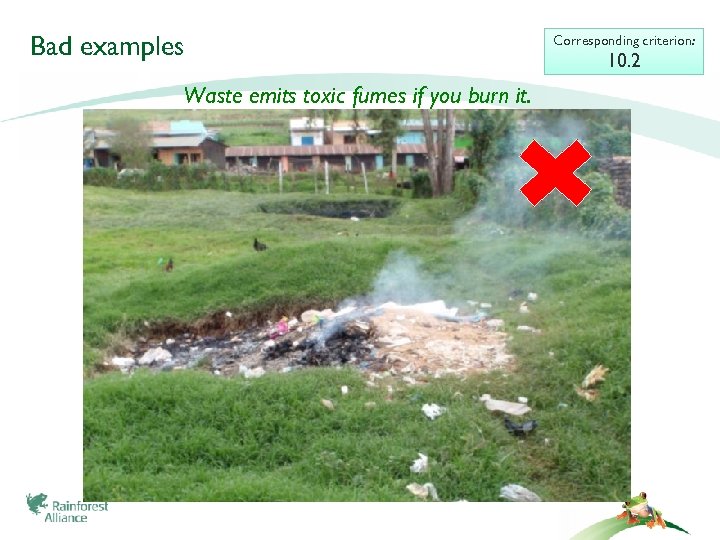 Bad examples Waste emits toxic fumes if you burn it. Corresponding criterion: 10. 2
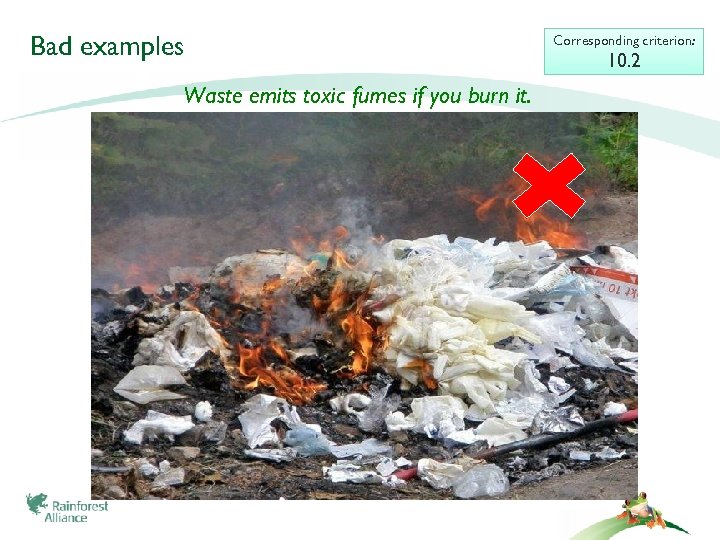 Bad examples Waste emits toxic fumes if you burn it. Corresponding criterion: 10. 2
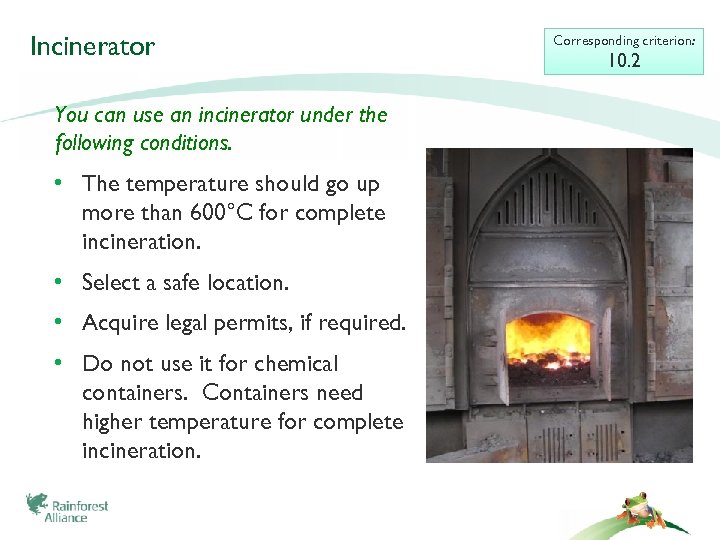 Incinerator You can use an incinerator under the following conditions. • The temperature should go up more than 600°C for complete incineration. • Select a safe location. • Acquire legal permits, if required. • Do not use it for chemical containers. Containers need higher temperature for complete incineration. Corresponding criterion: 10. 2
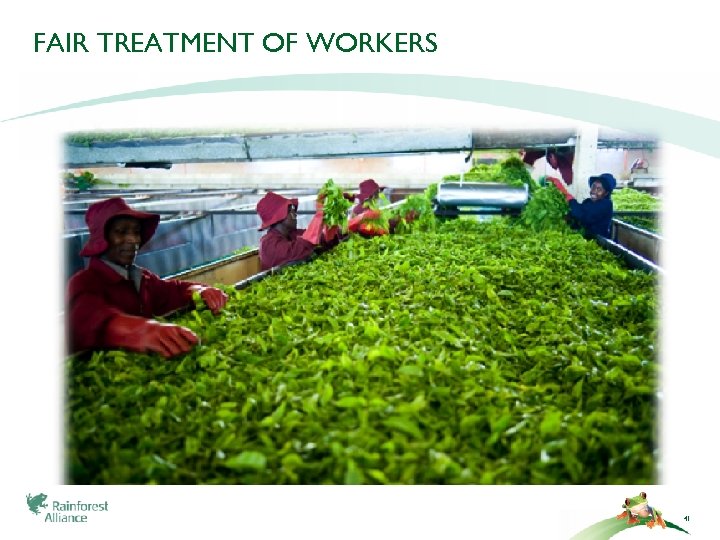 FAIR TREATMENT OF WORKERS 41
 Bad examples Corresponding criteria: Paying less than the legal minimum wage Delayed payment of salary Working hours longer than legally allowed hours Contracting workers indirectly through a third party Forced labor Discrimination due to gender, religion, race etc. Non payment of overtime No rest days and/or Rest days not paid Workers remain seasonal for years CBA & labour laws not followed 5. 1 -5. 13
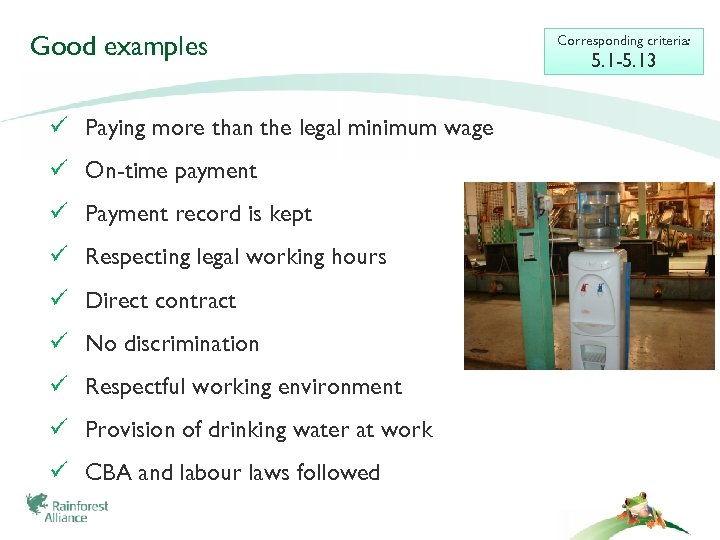 Good examples Paying more than the legal minimum wage On-time payment Payment record is kept Respecting legal working hours Direct contract No discrimination Respectful working environment Provision of drinking water at work CBA and labour laws followed Corresponding criteria: 5. 1 -5. 13
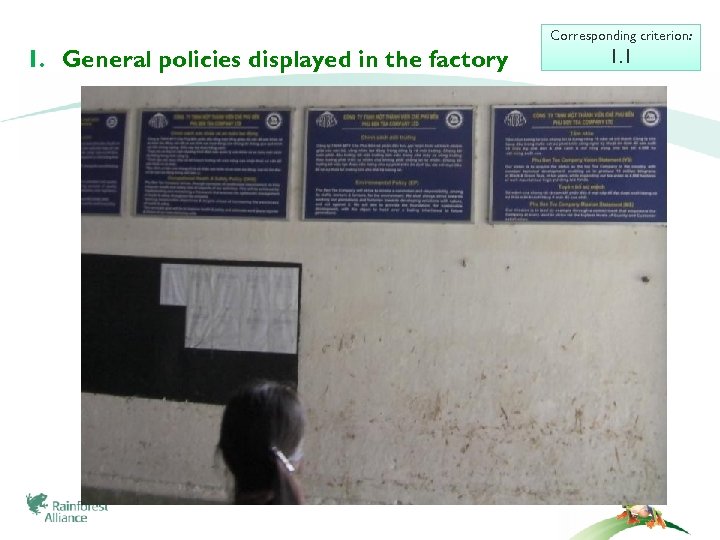 Corresponding criterion: 1. General policies displayed in the factory 1. 1
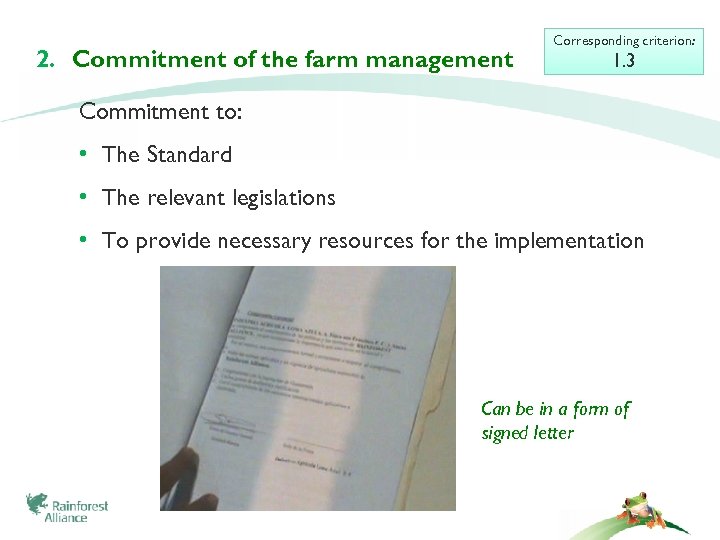 2. Commitment of the farm management Corresponding criterion: 1. 3 Commitment to: • The Standard • The relevant legislations • To provide necessary resources for the implementation Can be in a form of signed letter
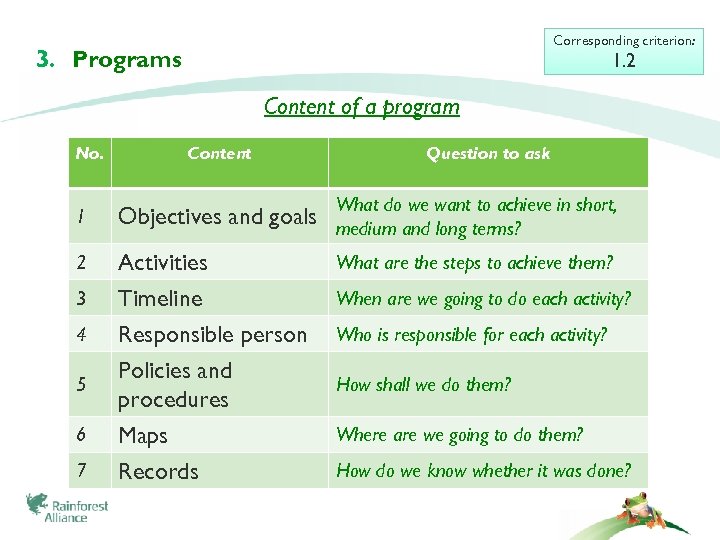 Corresponding criterion: 3. Programs 1. 2 Content of a program No. Content Question to ask 1 Objectives and goals What do we want to achieve in short, medium and long terms? 2 Activities Timeline Responsible person Policies and procedures Maps Records What are the steps to achieve them? 3 4 5 6 7 When are we going to do each activity? Who is responsible for each activity? How shall we do them? Where are we going to do them? How do we know whether it was done?
 4. Evaluation of new work or activities Corresponding criterion: Examples: • Expansion of production areas • Construction of new infrastructure • Change in production system (e. g. Mechanization like CFU) Evaluate social and environmental impacts in advance 1. 6
 5. Evaluation of service providers Corresponding criterion: Examples: • Contractors for construction • Supplier and transporters of agrochemicals Compliance to the relevant criteria of the standard 1. 8
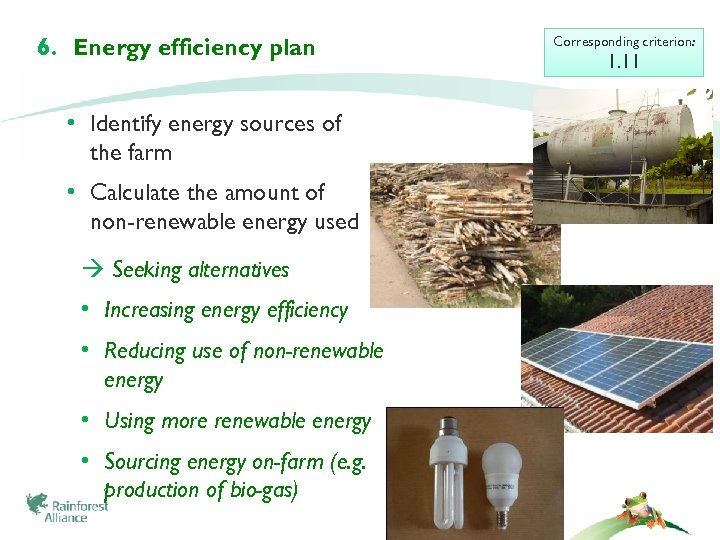 6. Energy efficiency plan • Identify energy sources of the farm • Calculate the amount of non-renewable energy used à Seeking alternatives • Increasing energy efficiency • Reducing use of non-renewable energy • Using more renewable energy • Sourcing energy on-farm (e. g. production of bio-gas) Corresponding criterion: 1. 11
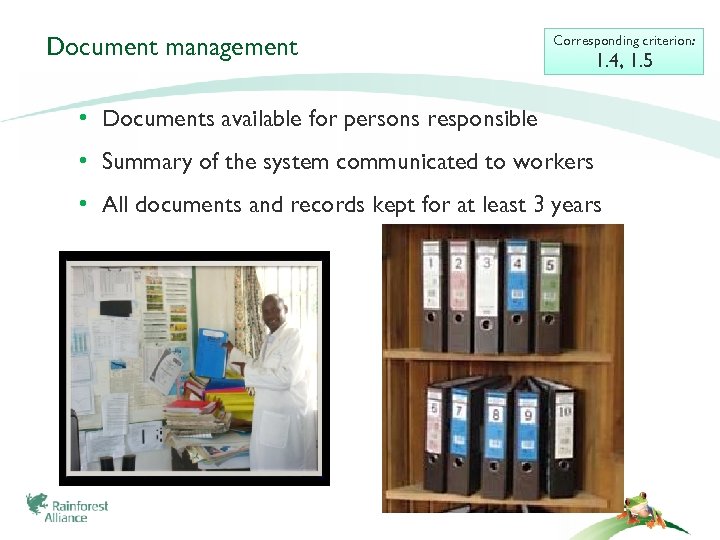 Document management Corresponding criterion: 1. 4, 1. 5 • Documents available for persons responsible • Summary of the system communicated to workers • All documents and records kept for at least 3 years
 The Rainforest Alliance works to conserve biodiversity and ensure sustainable livelihoods by transforming land-use practices, business practices and consumer behavior.