


 Скачать презентацию Rail Safety Update March 31 2016 Area Transportation
319ee629e9e9d8684d5ac2dbe771f260.ppt
- Количество слайдов: 24
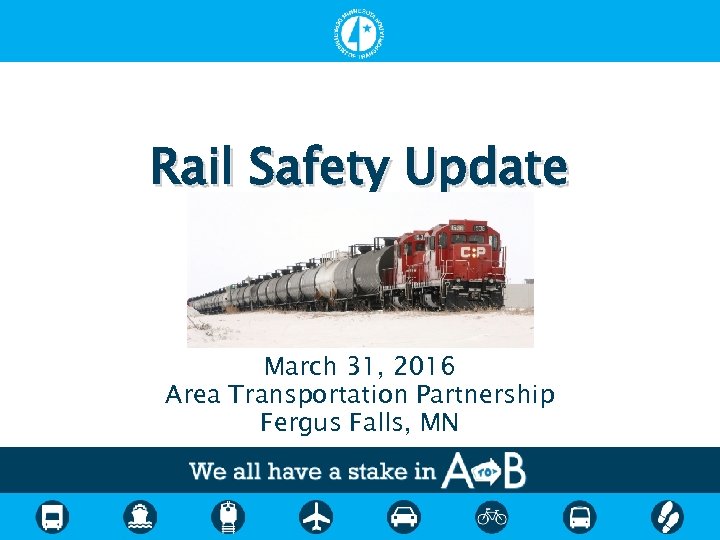 Rail Safety Update March 31, 2016 Area Transportation Partnership Fergus Falls, MN
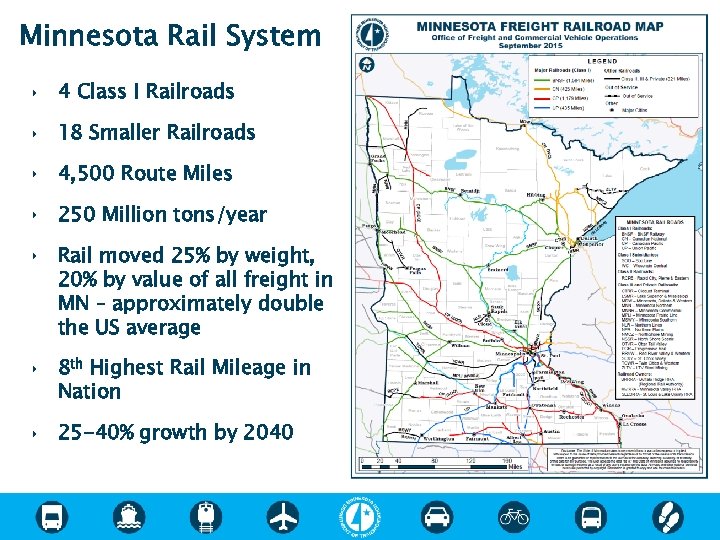 Minnesota Rail System ‣ 4 Class I Railroads ‣ 18 Smaller Railroads ‣ 4, 500 Route Miles ‣ 250 Million tons/year ‣ Rail moved 25% by weight, 20% by value of all freight in MN – approximately double the US average ‣ 8 th Highest Rail Mileage in Nation ‣ 25 -40% growth by 2040
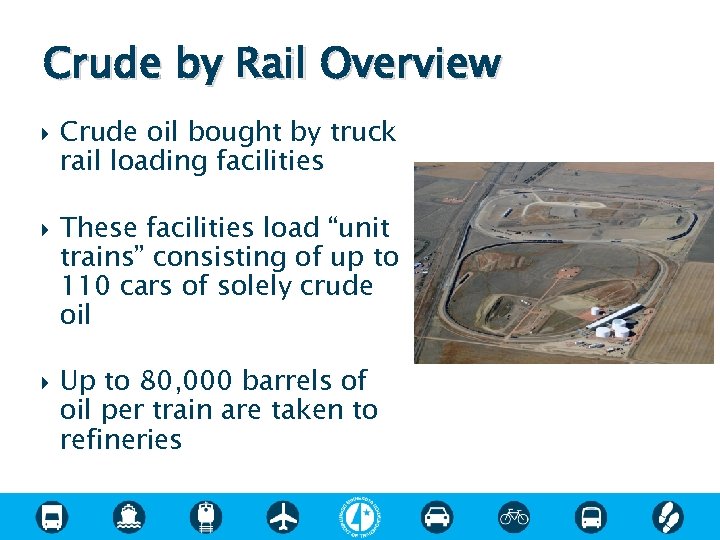 Crude by Rail Overview Crude oil bought by truck rail loading facilities These facilities load “unit trains” consisting of up to 110 cars of solely crude oil Up to 80, 000 barrels of oil per train are taken to refineries
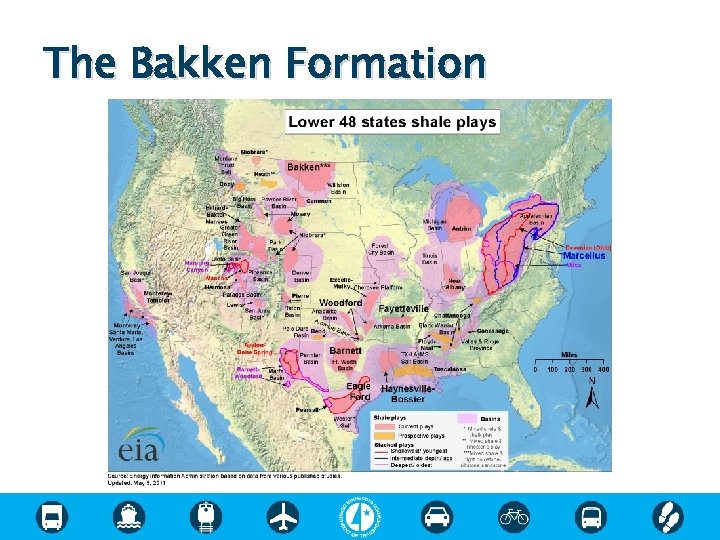 The Bakken Formation
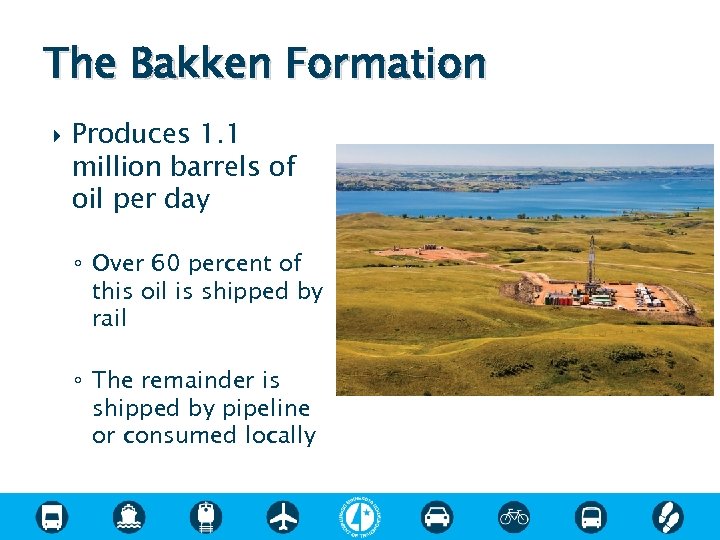 The Bakken Formation Produces 1. 1 million barrels of oil per day ◦ Over 60 percent of this oil is shipped by rail ◦ The remainder is shipped by pipeline or consumed locally
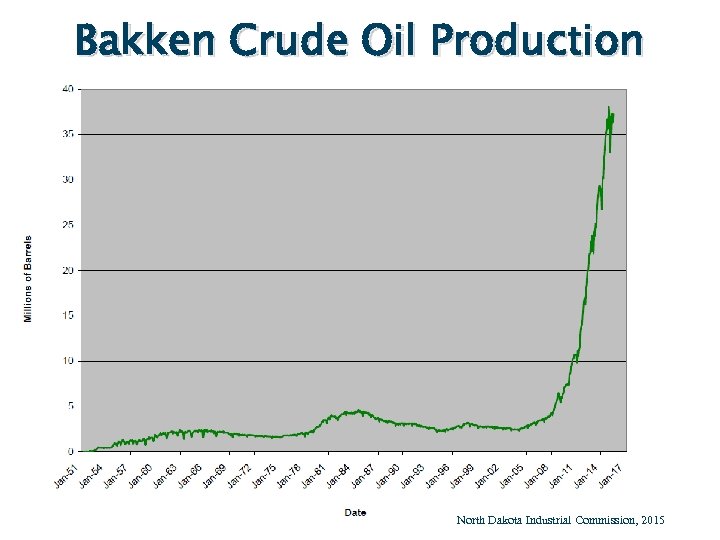 Bakken Crude Oil Production North Dakota Industrial Commission, 2015
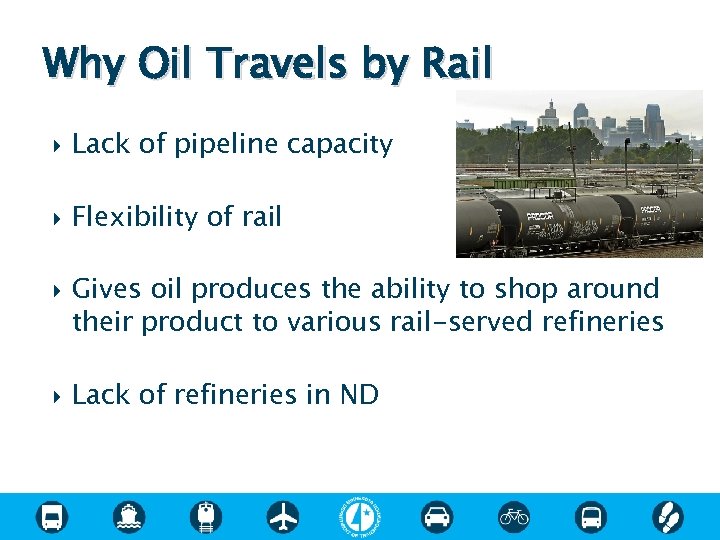 Why Oil Travels by Rail Lack of pipeline capacity Flexibility of rail Gives oil produces the ability to shop around their product to various rail-served refineries Lack of refineries in ND
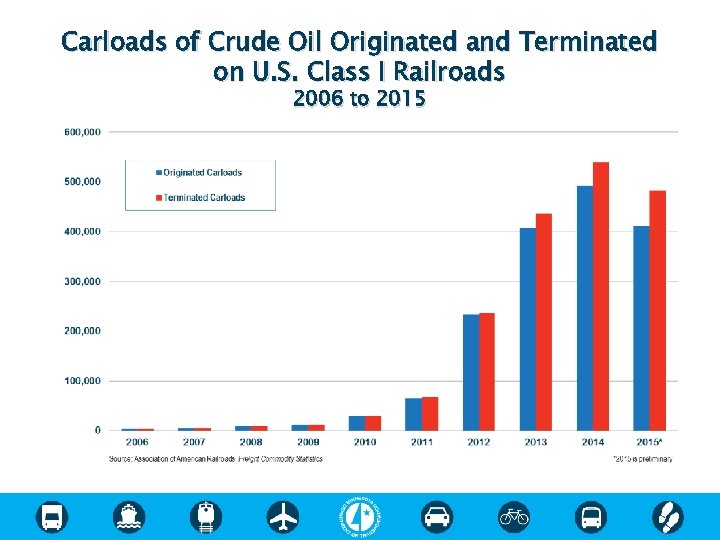 Carloads of Crude Oil Originated and Terminated on U. S. Class I Railroads 2006 to 2015
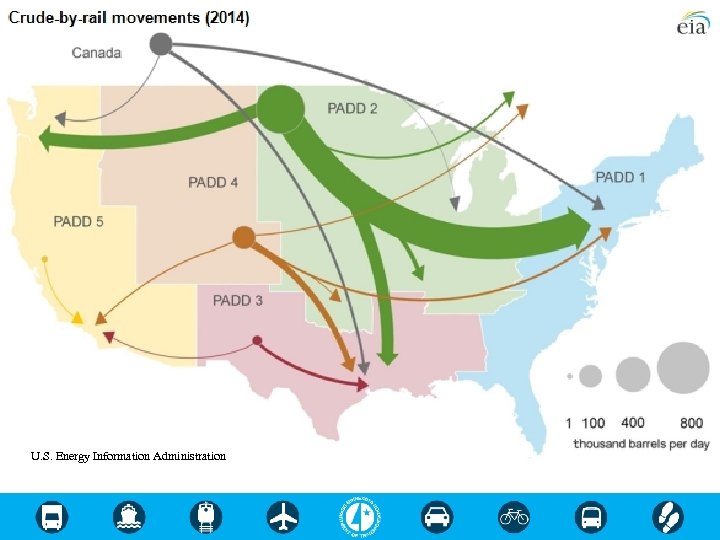 U. S. Energy Information Administration
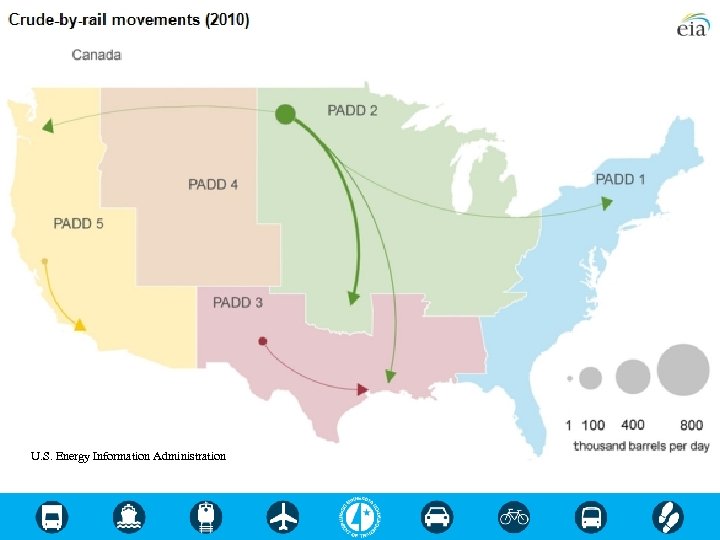 U. S. Energy Information Administration
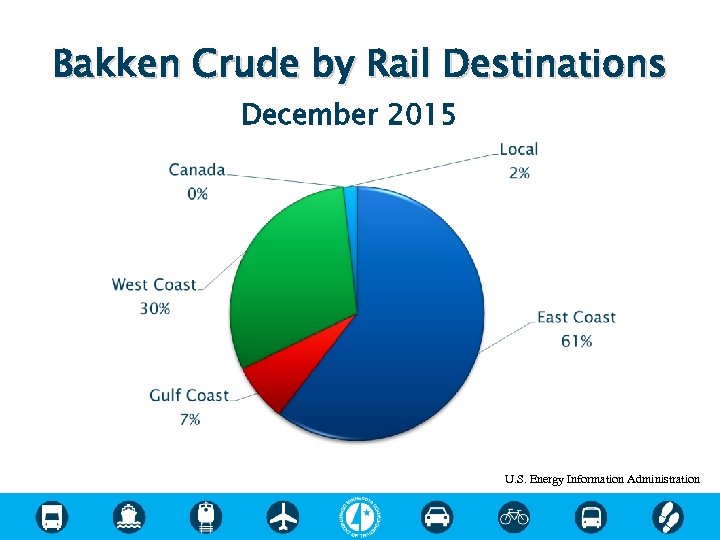 Bakken Crude by Rail Destinations December 2015 U. S. Energy Information Administration
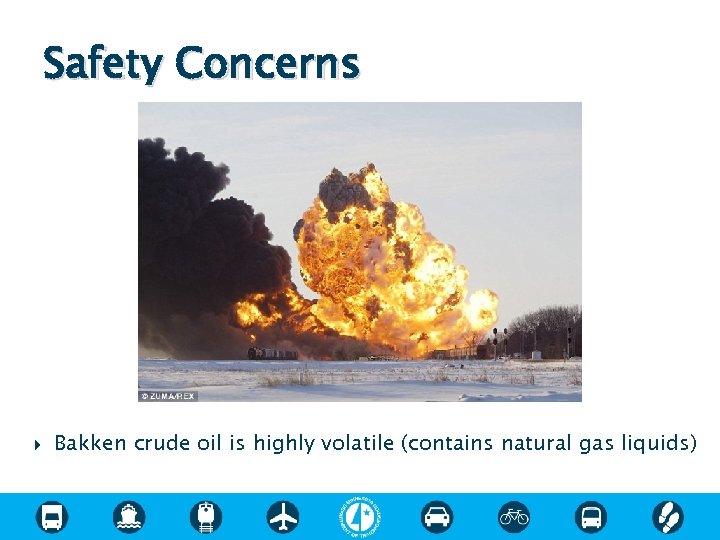 Safety Concerns Bakken crude oil is highly volatile (contains natural gas liquids)
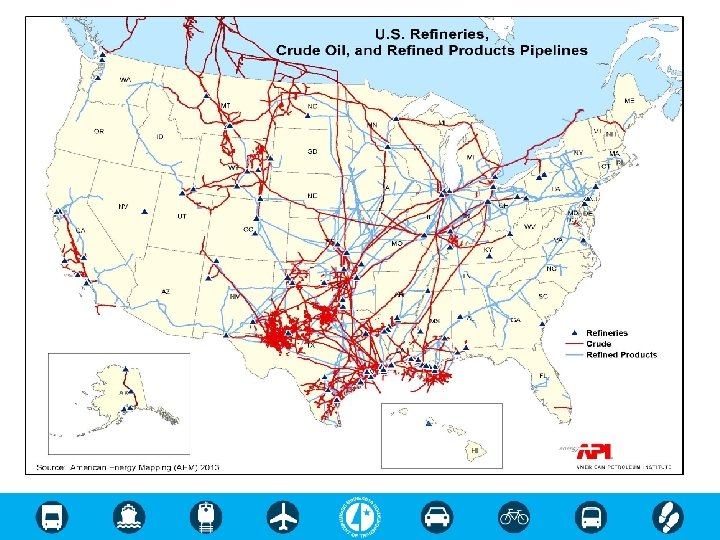
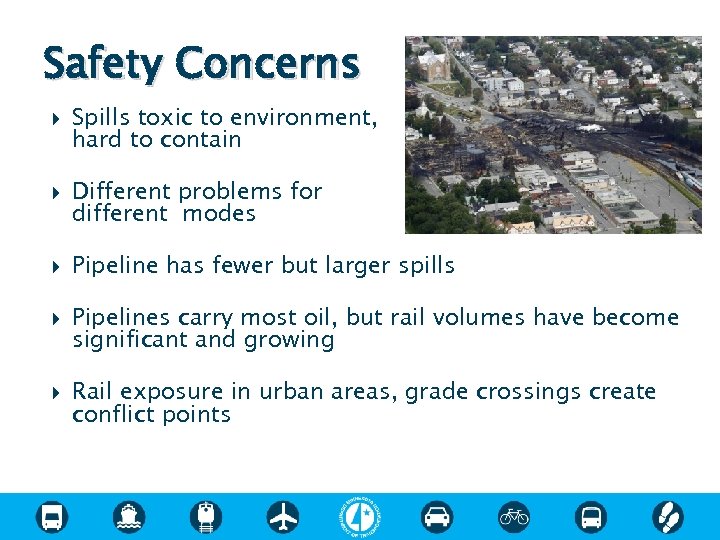 Safety Concerns Spills toxic to environment, hard to contain Different problems for different modes Pipeline has fewer but larger spills Pipelines carry most oil, but rail volumes have become significant and growing Rail exposure in urban areas, grade crossings create conflict points
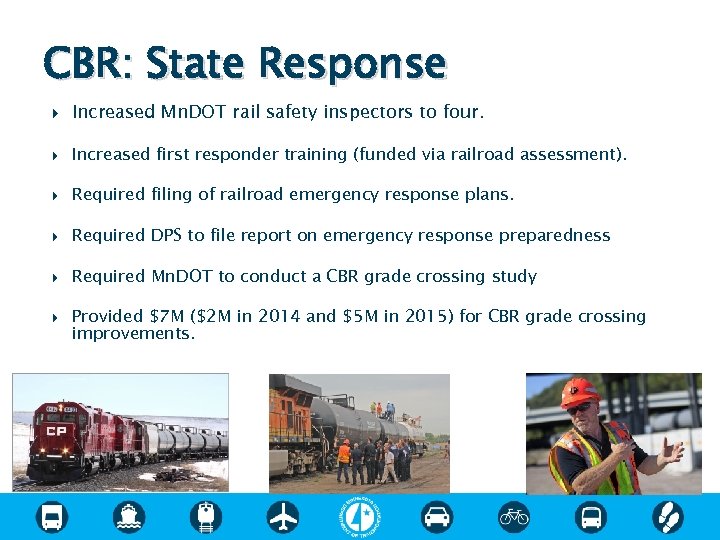 CBR: State Response Increased Mn. DOT rail safety inspectors to four. Increased first responder training (funded via railroad assessment). Required filing of railroad emergency response plans. Required DPS to file report on emergency response preparedness Required Mn. DOT to conduct a CBR grade crossing study Provided $7 M ($2 M in 2014 and $5 M in 2015) for CBR grade crossing improvements.
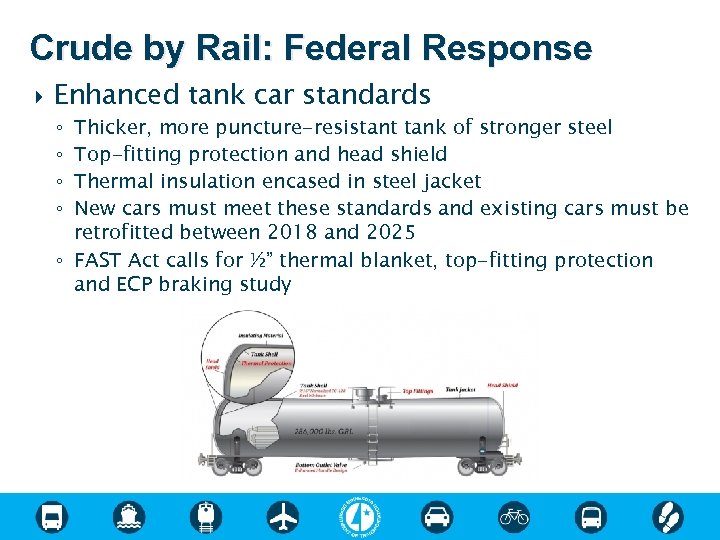 Crude by Rail: Federal Response Enhanced tank car standards Thicker, more puncture-resistant tank of stronger steel Top-fitting protection and head shield Thermal insulation encased in steel jacket New cars must meet these standards and existing cars must be retrofitted between 2018 and 2025 ◦ FAST Act calls for ½” thermal blanket, top-fitting protection and ECP braking study ◦ ◦
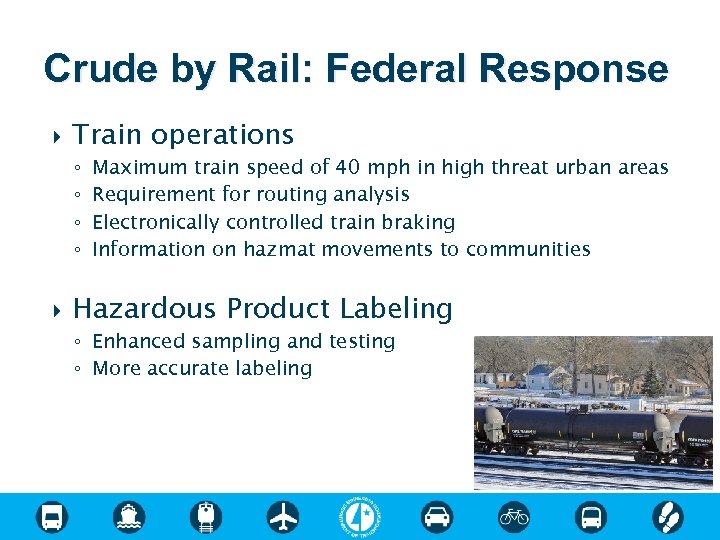 Crude by Rail: Federal Response Train operations ◦ ◦ Maximum train speed of 40 mph in high threat urban areas Requirement for routing analysis Electronically controlled train braking Information on hazmat movements to communities Hazardous Product Labeling ◦ Enhanced sampling and testing ◦ More accurate labeling
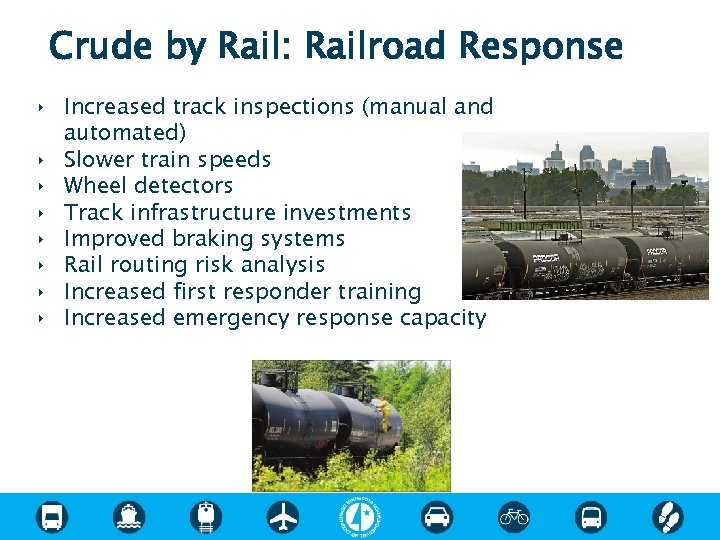 Crude by Rail: Railroad Response ‣ Increased track inspections (manual and automated) ‣ Slower train speeds ‣ Wheel detectors ‣ Track infrastructure investments ‣ Improved braking systems ‣ Rail routing risk analysis ‣ Increased first responder training ‣ Increased emergency response capacity
 2015 State Rail Safety Accomplishments Mn. DOT hired and trained four rail safety inspectors ◦ Two track inspectors enforce federal track safety standards ◦ One hazardous materials inspector enforces federal hazardous materials transportation safety regulations ◦ One motive power & equipment inspector enforces safety regulations for rail cars, locomotives, wheels and brakes During 2015, Mn. DOT’s rail inspectors issued 2, 219 rail safety defects and 12 more serious rail safety violations 19
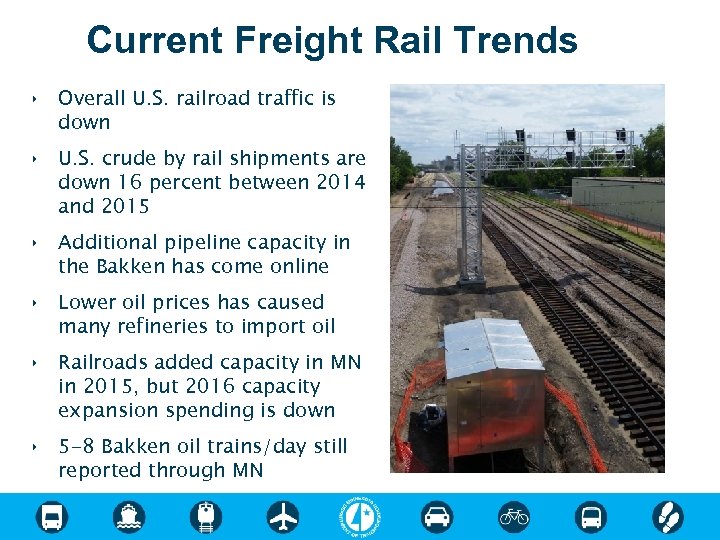 Current Freight Rail Trends ‣ Overall U. S. railroad traffic is down ‣ U. S. crude by rail shipments are down 16 percent between 2014 and 2015 ‣ Additional pipeline capacity in the Bakken has come online ‣ Lower oil prices has caused many refineries to import oil ‣ Railroads added capacity in MN in 2015, but 2016 capacity expansion spending is down ‣ 5 -8 Bakken oil trains/day still reported through MN
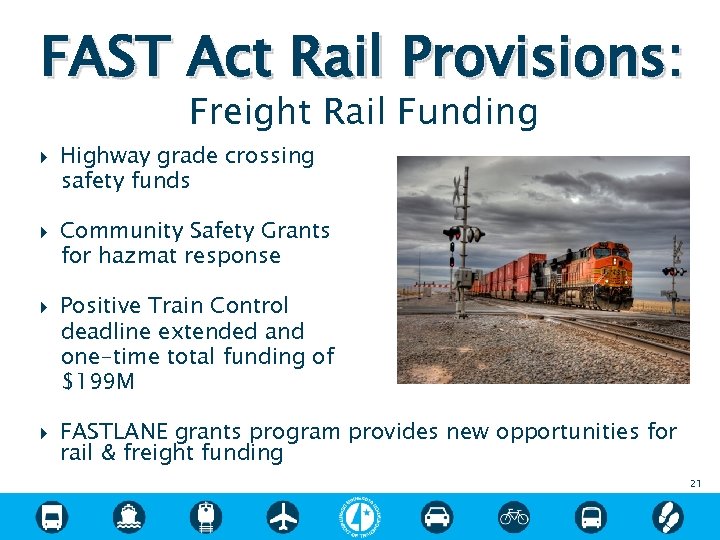 FAST Act Rail Provisions: Freight Rail Funding Highway grade crossing safety funds Community Safety Grants for hazmat response Positive Train Control deadline extended and one-time total funding of $199 M FASTLANE grants program provides new opportunities for rail & freight funding 21
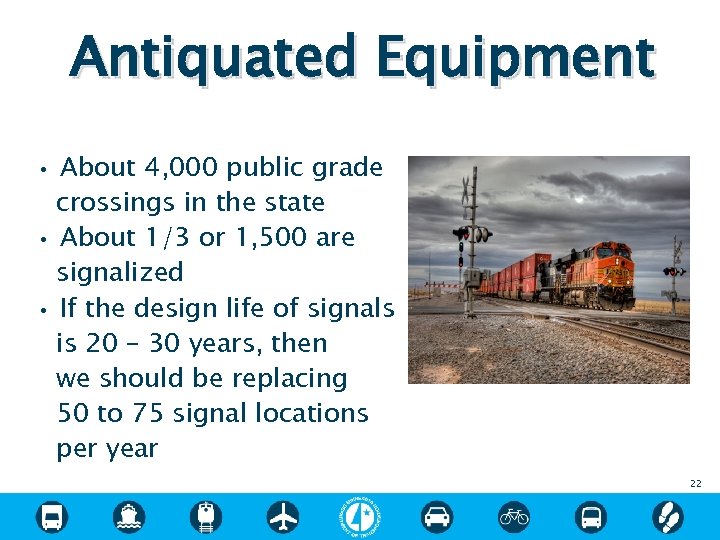 Antiquated Equipment • • • About 4, 000 public grade crossings in the state About 1/3 or 1, 500 are signalized If the design life of signals is 20 – 30 years, then we should be replacing 50 to 75 signal locations per year 22
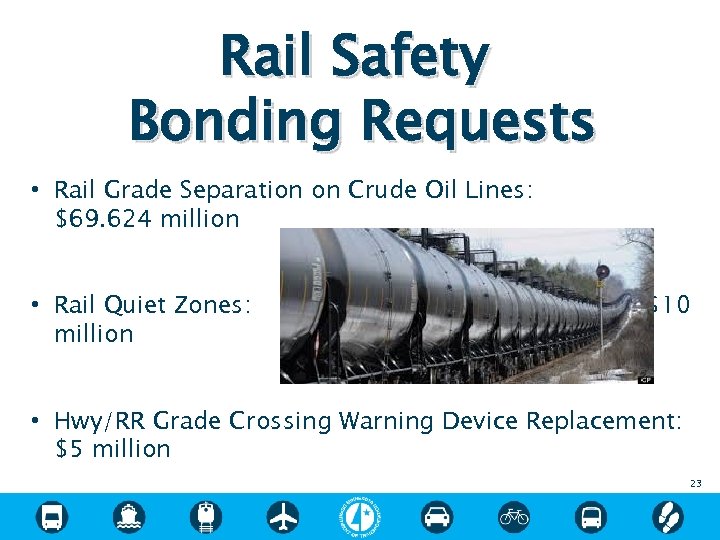 Rail Safety Bonding Requests • Rail Grade Separation on Crude Oil Lines: $69. 624 million • Rail Quiet Zones: million $10 • Hwy/RR Grade Crossing Warning Device Replacement: $5 million 23
 Thank You! Peter Dahlberg Freight, Rail and Waterways Section Office of Freight & Commercial Vehicle Operations