 Скачать презентацию Radio Network Tuning and Optimization for Universal Mobile
718d38b6be1599372d36cac3e5ef0b8d.ppt
- Количество слайдов: 36



Radio Network Tuning and Optimization for Universal Mobile Telecommunications System (UMTS) Osama Bilal Thesis Worker Ericsson Finland 1
Radio Network Tunning and Optimization for UMTS Author: Osama Bilal Supervisor: Prof. Sven-Gustav Häggman Instructor: B. Sc. Jukka Möykkynen Carried out for Ericsson Finland Tuning Activity for a UMTS Operator 2
AGENDA • • Motivation 2 G-3 G, What is different Tuning Process Flow Tools used for Tuning Activity Equipments Configuration Pilot Tuning UE Tuning Final Words 3
MOTIVATION • 3 G networks are becoming commercially available all over the world • To check the functionality of the networks before commercial launch • Network designs are based on propagations models and simulations (coverage verification) • 3 G technology (WCDMA) is different from 2 G • Tools and methods for 3 G Networks 4
Differences compared to 2 G • In General - The Technology is more complicated (Overlapping cells, soft hand over, power control, cell breathing etc) - High performance requirements on products (UE & Network nodes) - In Particular for Tuning & Optimzation - Process & tools are under development - Co-located GSM/3 G sites - Shared Antenna System - Inter-working with GSM 5
Tuning or Optimization, What is the difference • During Tuning No traffic in the network, No subscribers Network tuned only based on drive test data Labour intensive with repeated drive test All is about Pre-launch activities • During Optimization Commercial traffic, subscribers using the network Statistics used widely to monitor network performance Drive testing just in case All is about Post–launch activities 6
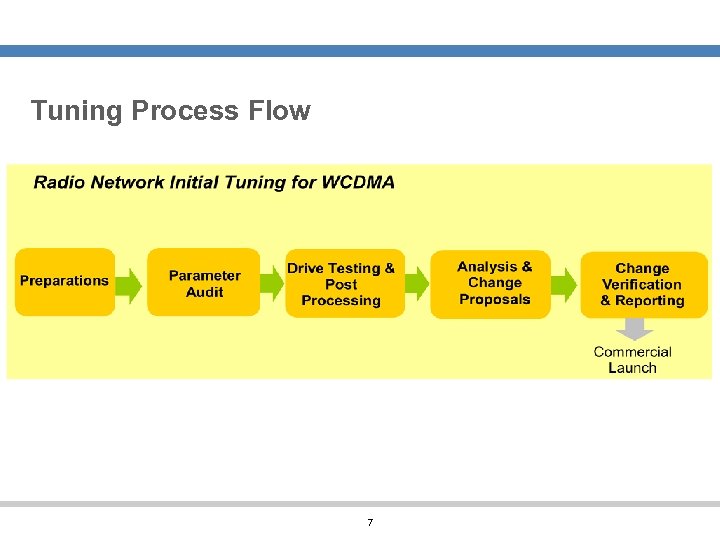
Tuning Process Flow 7
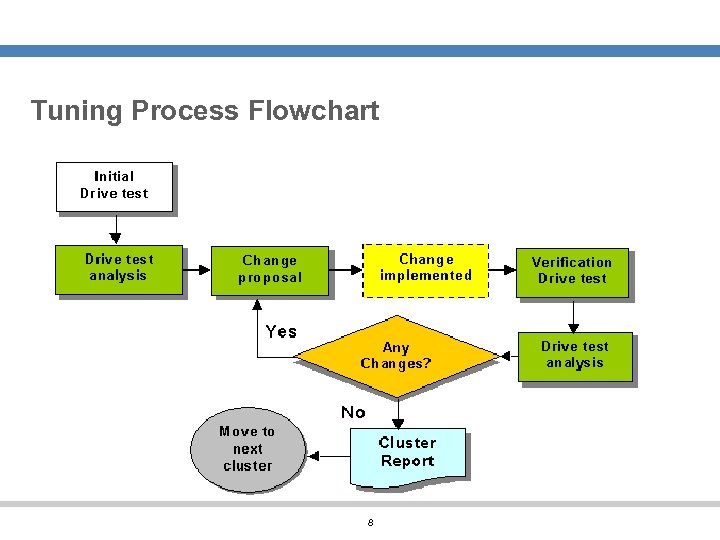
Tuning Process Flowchart 8
Tools For Tuning/Optimization & Data Post Processing Active measurement needed due to lack of statistics • • TEMS Investigation for WCDMA (Software) TEMS Scanner (Software + HW) External GPS User Equipment (UE) TEMS Desk. Cat for post processing MCOM 3 g/Mapinfo MS Access/Excel based tools 9
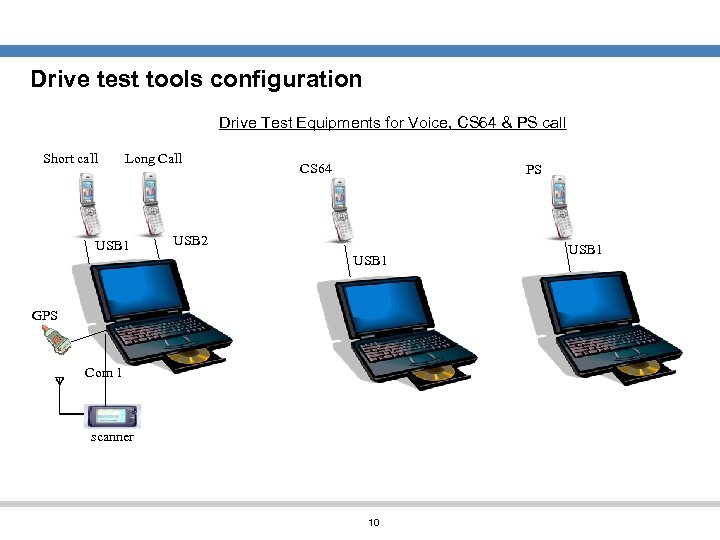
Drive test tools configuration Drive Test Equipments for Voice, CS 64 & PS call Short call Long Call USB 1 CS 64 PS USB 2 USB 1 GPS Com 1 scanner 10 USB 1
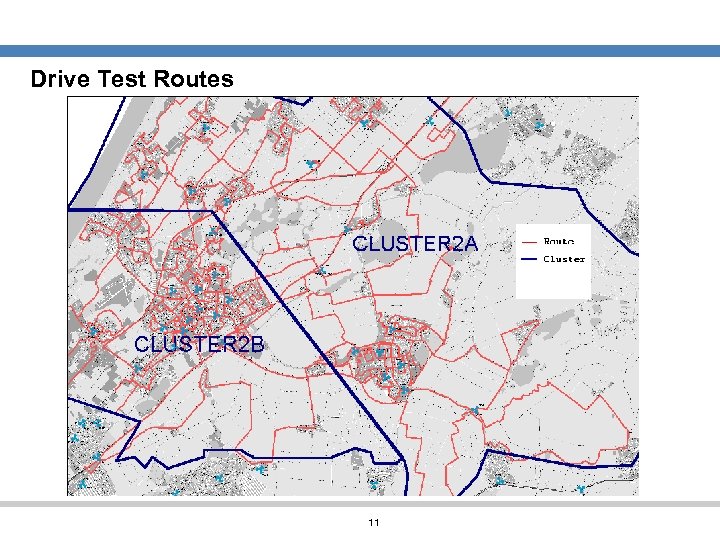
Drive Test Routes 11
PILOT TUNING The basic measurements of scanner are • CPICH_RSCP (received signal code power) • CPICH_Ec/No (received energy per chip divided by the power density in the band) • RSSI (received signal strength indicator) What can you achieve with scanner? • Crossed feeder issues (DL) • Coverage verification • Interference problems (overshooting cell, pilot pollution) • Missing neighbours 12
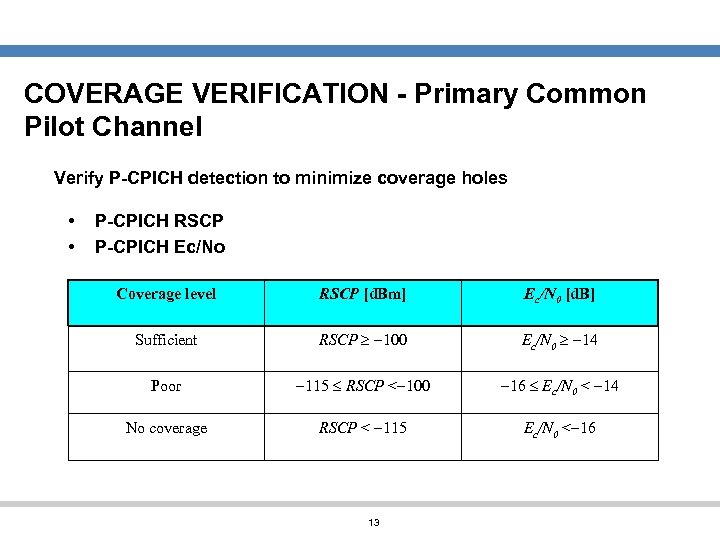
COVERAGE VERIFICATION - Primary Common Pilot Channel Verify P-CPICH detection to minimize coverage holes • • P-CPICH RSCP P-CPICH Ec/No Coverage level RSCP [d. Bm] Ec/N 0 [d. B] Sufficient RSCP 100 Ec/N 0 14 Poor 115 RSCP < 100 16 Ec/N 0 < 14 No coverage RSCP < 115 Ec/N 0 < 16 13
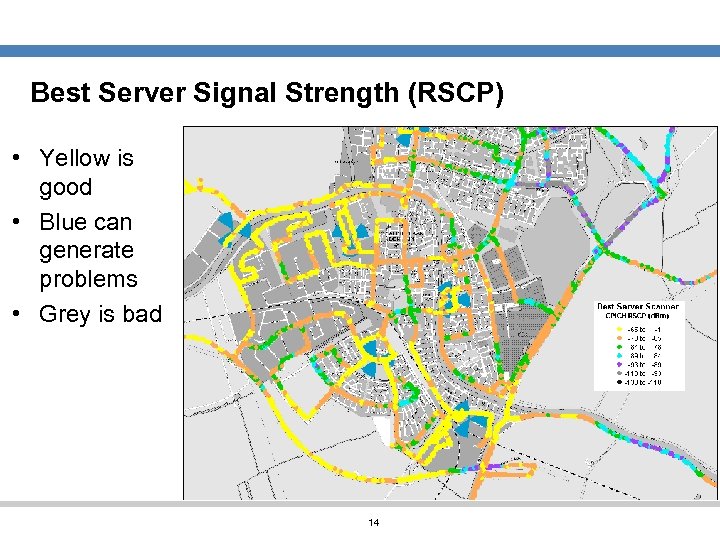
Best Server Signal Strength (RSCP) • Yellow is good • Blue can generate problems • Grey is bad 14
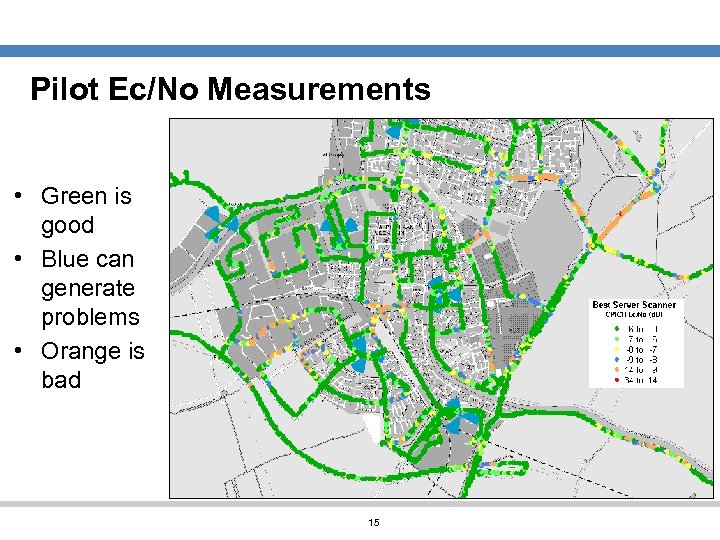
Pilot Ec/No Measurements • Green is good • Blue can generate problems • Orange is bad 15
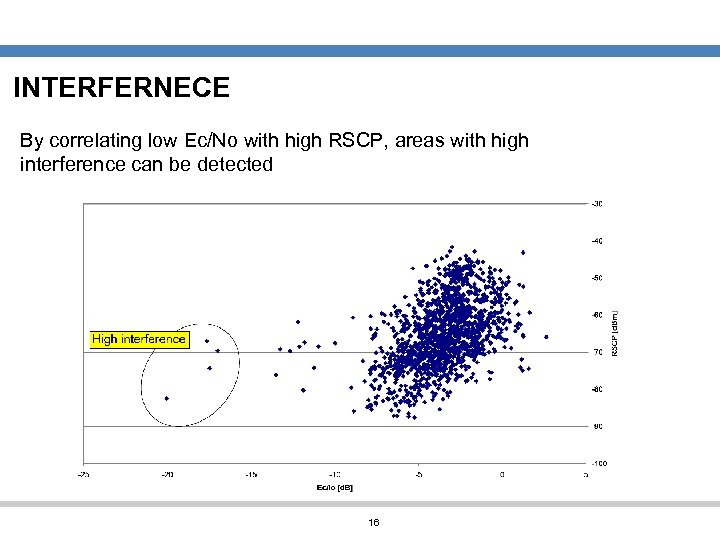
INTERFERNECE By correlating low Ec/No with high RSCP, areas with high interference can be detected 16
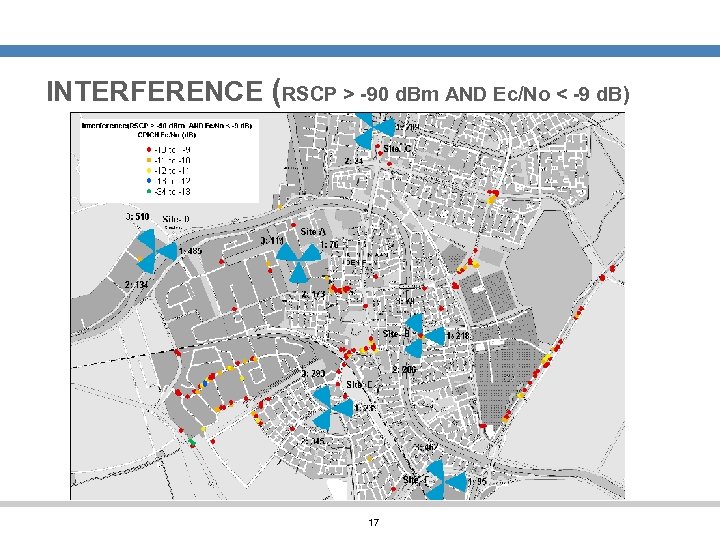
INTERFERENCE (RSCP > -90 d. Bm AND Ec/No < -9 d. B) 17
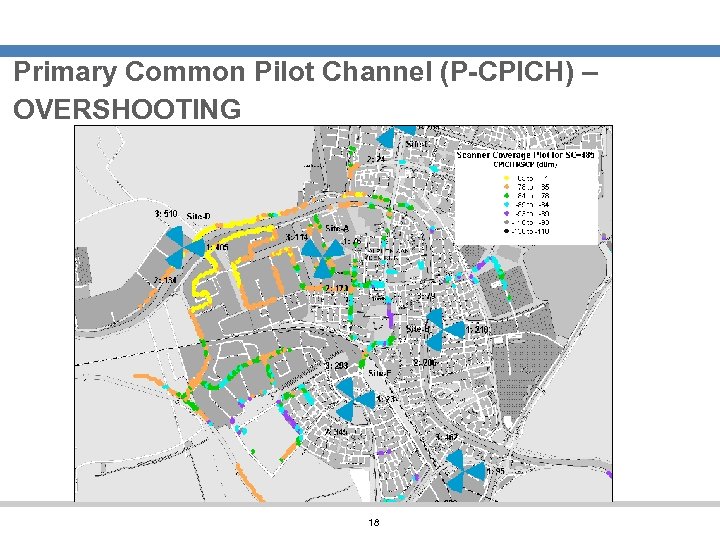
Primary Common Pilot Channel (P-CPICH) – OVERSHOOTING 18
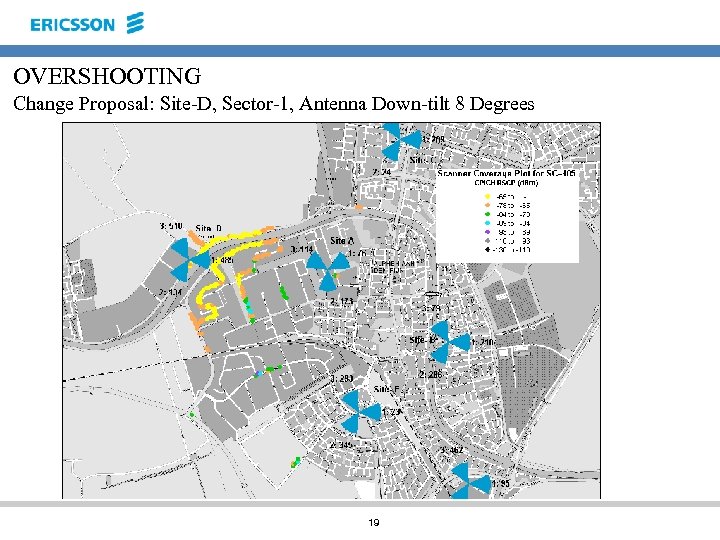
OVERSHOOTING Change Proposal: Site-D, Sector-1, Antenna Down-tilt 8 Degrees 19
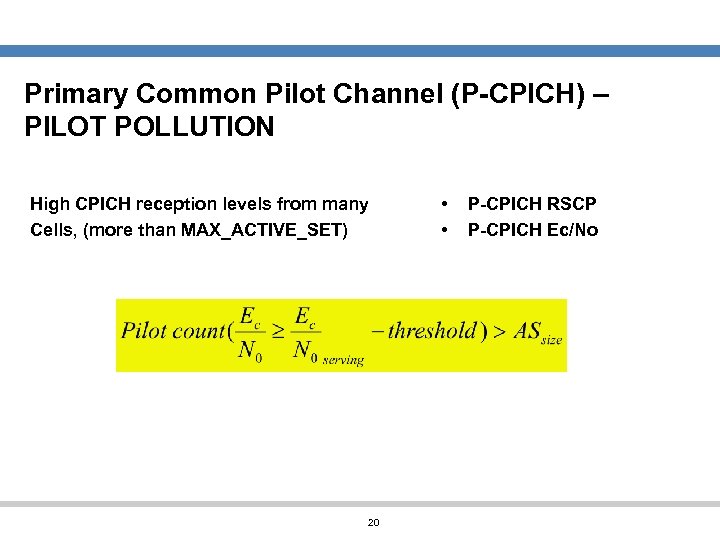
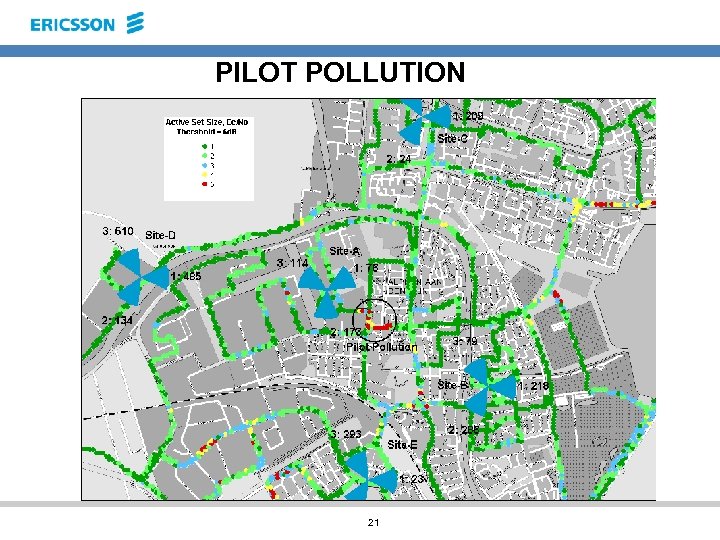
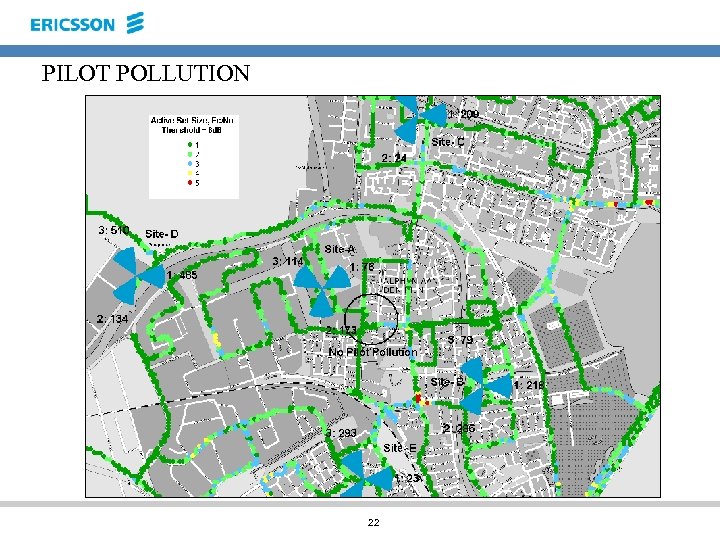
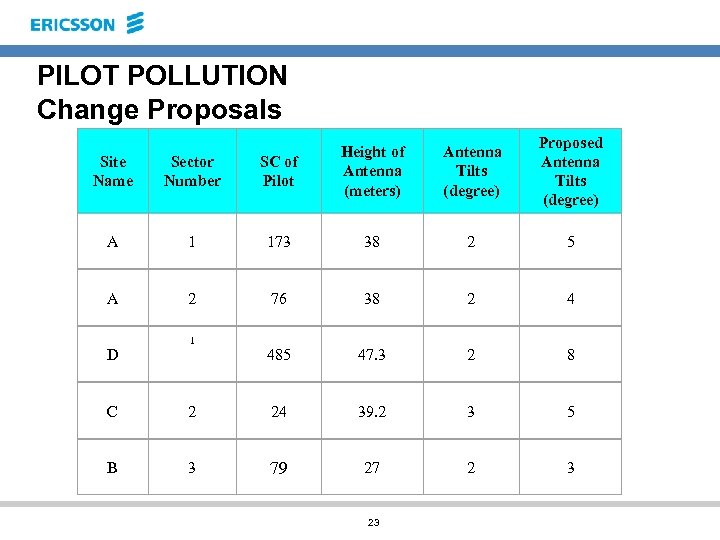
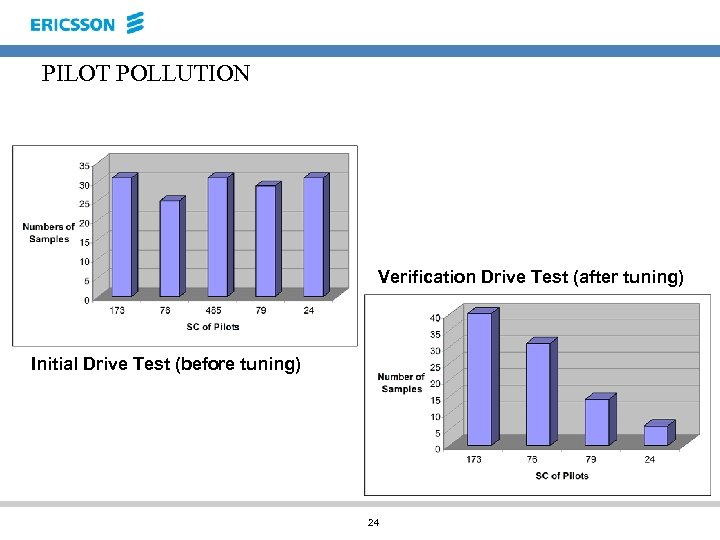
Primary Common Pilot Channel (P-CPICH) – PILOT POLLUTION High CPICH reception levels from many Cells, (more than MAX_ACTIVE_SET) 20 • • P-CPICH RSCP P-CPICH Ec/No
PILOT POLLUTION 21
PILOT POLLUTION 22
PILOT POLLUTION Change Proposals Antenna Tilts (degree) Proposed Antenna Tilts (degree) Site Name Sector Number SC of Pilot Height of Antenna (meters) A 1 173 38 2 5 A 2 76 38 2 4 485 47. 3 2 8 1 D C 2 24 39. 2 3 5 B 3 79 27 2 3 23
PILOT POLLUTION Verification Drive Test (after tuning) Initial Drive Test (before tuning) 24
UE TUNING • Voice /Video/PS calls – Long calls – short calls • Identify problem areas – Blocked calls – Dropped calls – Delay/Throughput 25
Short Calls Analysis Set-up a call and maintain it for a pre-defined time duration (for 15 -60 s) Call set-up failure and drops during short calls can be mainly used to analysis Accessibility failure due to: • UE Failure • Unsuitable Parameters Setting • Coverage Problem • Interference • Others 26
Long Calls Analysis Set-up a call and maintain it until it is drop (used for the analysis of Retainability performace) Drops during long call can be used to identify: • Missing Neighbor Relation • Coverage Problem • UE Problems • Network Characteristics • Best Parameter Setting • Others 27
KEY PERFORMANCE INDICATORS • • Accessability (Call set-up success rate) Retainability (Dropped calls) Mobility (Handover success rate) Integrity (BLER and throughput) 28
Case 1: Drop due to missing neighbor Problem: Detected Nighbor (DN) • UE sends a Measurement Report that contains an event 1 a means adding a new RL (cell) to Active Set • If the reported cell is not in the current neighbor cell list and the reported Ec/No is better than the best serving cell Ec/No in AS by some d. Bs (set by a RNC parameter) • If for any reason the new cell can not be added to AS, call will be released 29
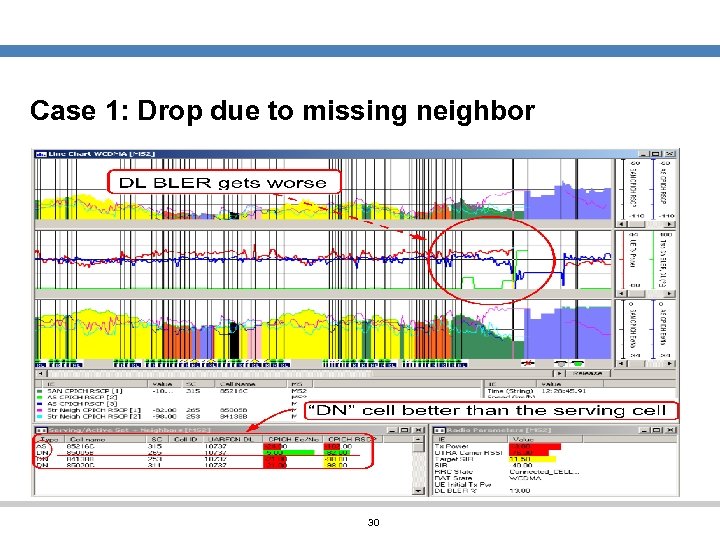
Case 1: Drop due to missing neighbor 30
Case 2: Drop due to Poor Coverage (low RSCP) Problem: Poor DL coverage When UE gets to an area with low RSCP ( < -105 d. Bm) regardless Ec/No values there is high risk for drop. UE will likely ramp up the transmitted power and reach its max power. The DL BLER will probably increase and SIR target cannot maintain anymore, finally the call drops. 31
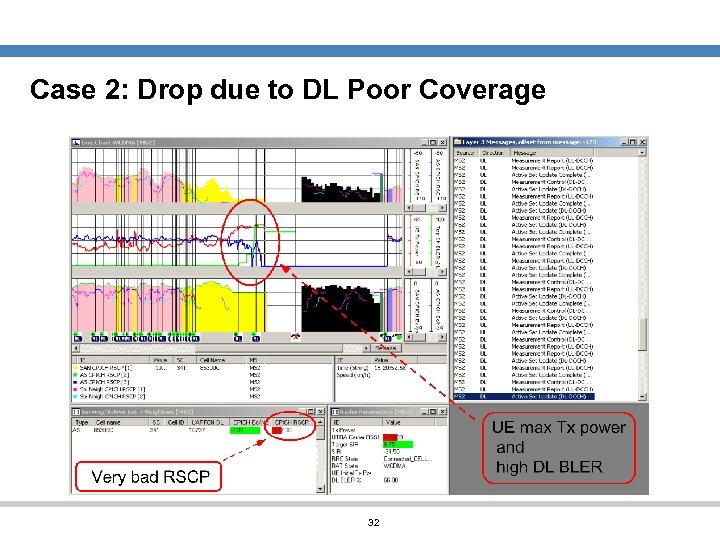
Case 2: Drop due to DL Poor Coverage 32
Case 3: PS: Session Error due to Poor DL Coverage UE enters a very low coverage area (RSCP < – 105 d. Bm). The packet connection is carried on a 64/64 DCH Channel as consequence of the low coverage conditions. The UE will likely ramp up its power to the maximum, goes to Idle Mode and the Application and RLC throughputs go to zero. At this point the RAS application will start the Session Timeout timer, if the throughput is not resumed the Session Error event is triggered with cause “session timeout”. 33
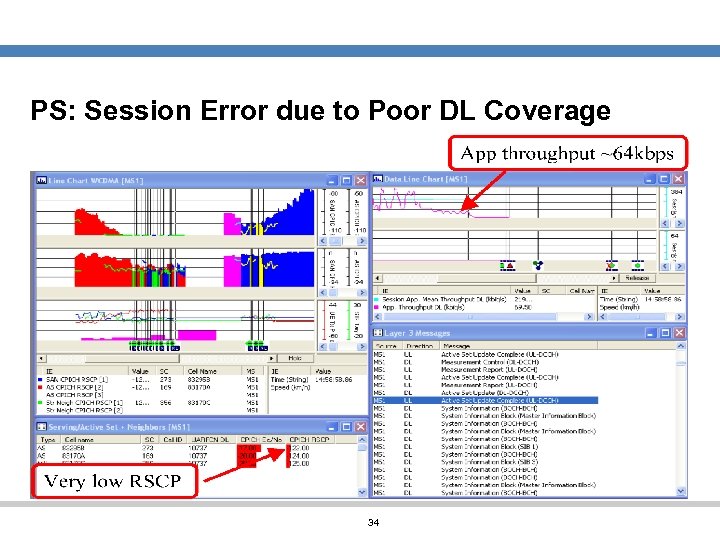
PS: Session Error due to Poor DL Coverage 34
FINAL WORDS • • For network tuning, we need to relay on field measurements which require extensive drive tests Finding the best possible configuration for antenna heights, tilts, azimuths and parameter setting for all the present cells/sectors in the network and also for any new sites that might be needed to improve coverage Power adjustment can also be used for network tuning but can become complicated and result in poor network performance Use of Remote Electrical Tilt (RET) Antenna is preferred over mechanical tilt antenna Neighbour definition is of prime importance in UMTS network (Soft handover gain and interference reduction). Keep neighbour list upto 20. Automated tools are needed that could suggest the best possible neighbour relations, antenna heights and tilts by using both the field measurements and the propagation models & simulations Skilled people, right methods and advanced tools are needed to perform 3 G tuning and optimisation 35
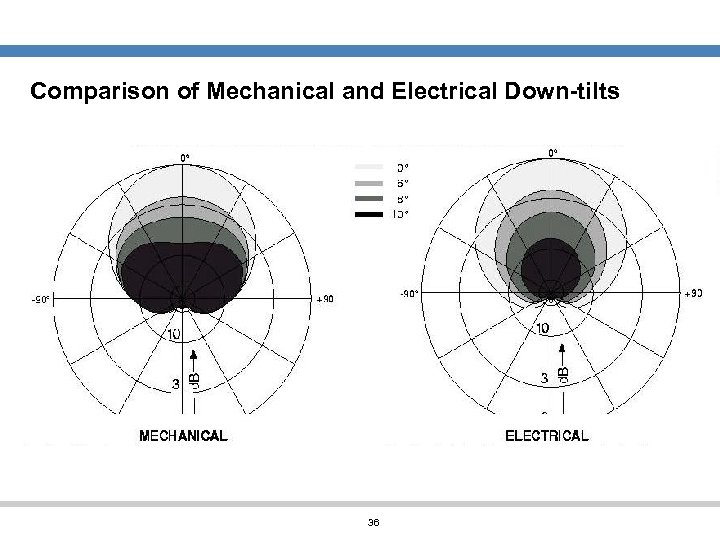
Comparison of Mechanical and Electrical Down-tilts 36
Скачать презентацию Radio Network Tuning and Optimization for Universal Mobile
718d38b6be1599372d36cac3e5ef0b8d.ppt