 Скачать презентацию RADICAL ISLAM IN TAJIKISTAN Dabylova Gaisha Iskander Zhadyra
Radical Islam in Tajikistan.pptx
- Количество слайдов: 22



RADICAL ISLAM IN TAJIKISTAN Dabylova Gaisha Iskander Zhadyra HIR-4 B-C
CONTENTS • Introduction • Causes of Islamic Radicalism rising in Tajikistan • Political Islam in Tajikistan • Radical Islamic groups • Conclusion
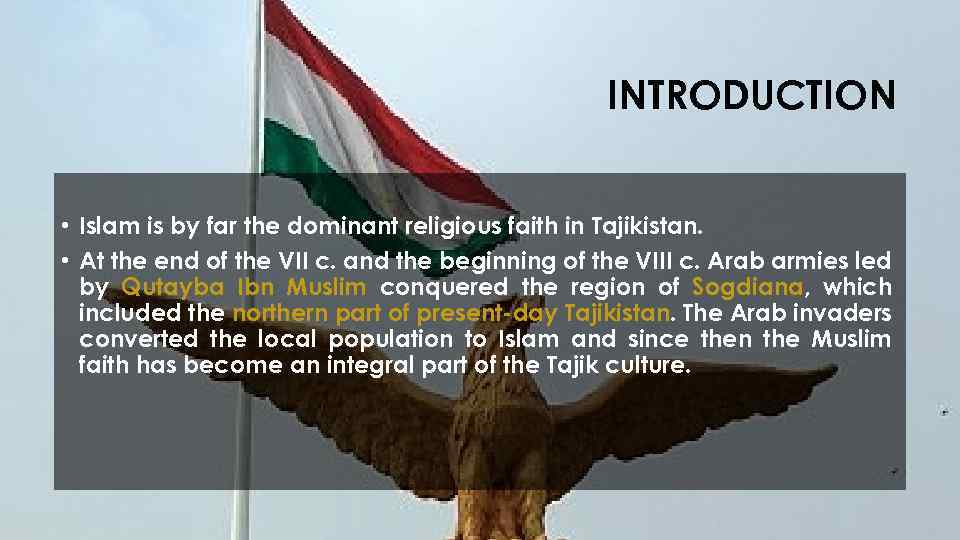
INTRODUCTION • Islam is by far the dominant religious faith in Tajikistan. • At the end of the VII c. and the beginning of the VIII c. Arab armies led by Qutayba Ibn Muslim conquered the region of Sogdiana, which included the northern part of present-day Tajikistan. The Arab invaders converted the local population to Islam and since then the Muslim faith has become an integral part of the Tajik culture.
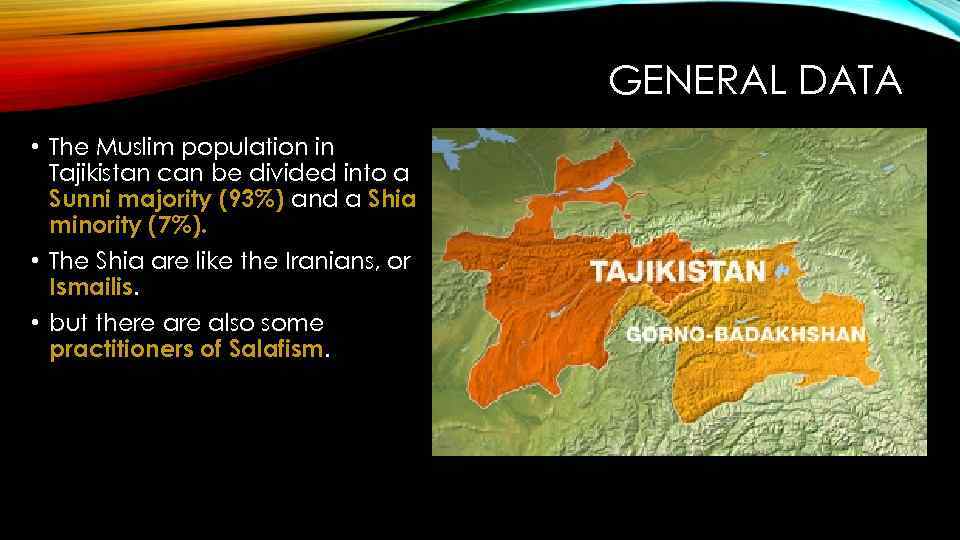
GENERAL DATA • The Muslim population in Tajikistan can be divided into a Sunni majority (93%) and a Shia minority (7%). • The Shia are like the Iranians, or Ismailis. • but there also some practitioners of Salafism.
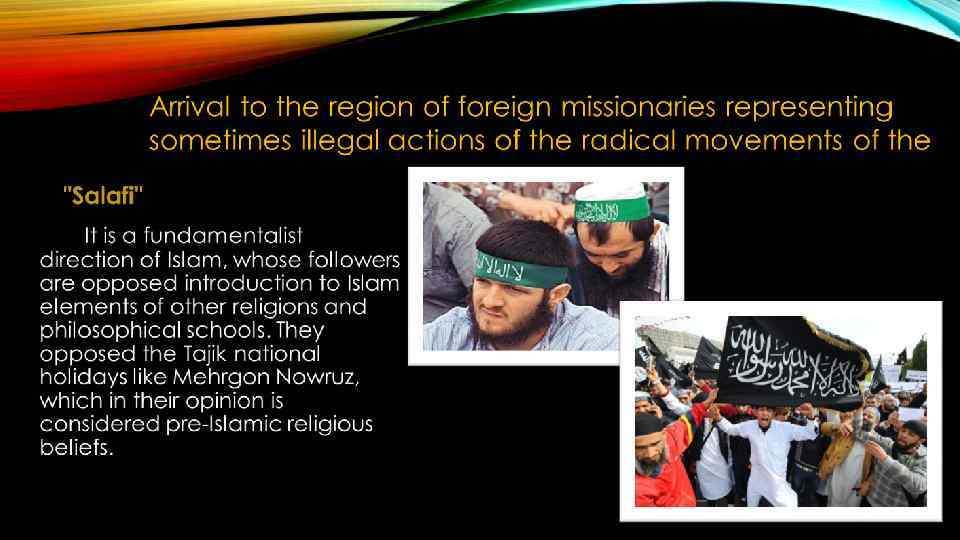
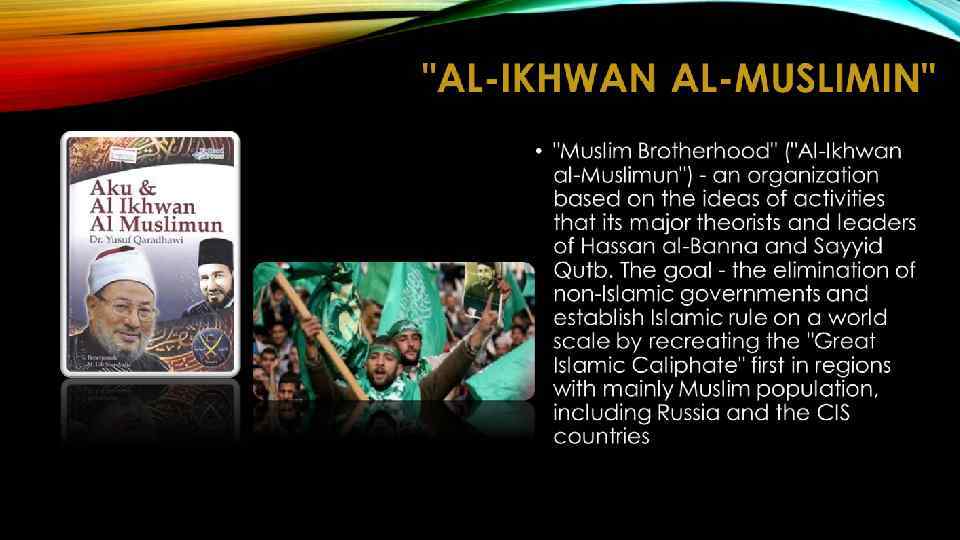
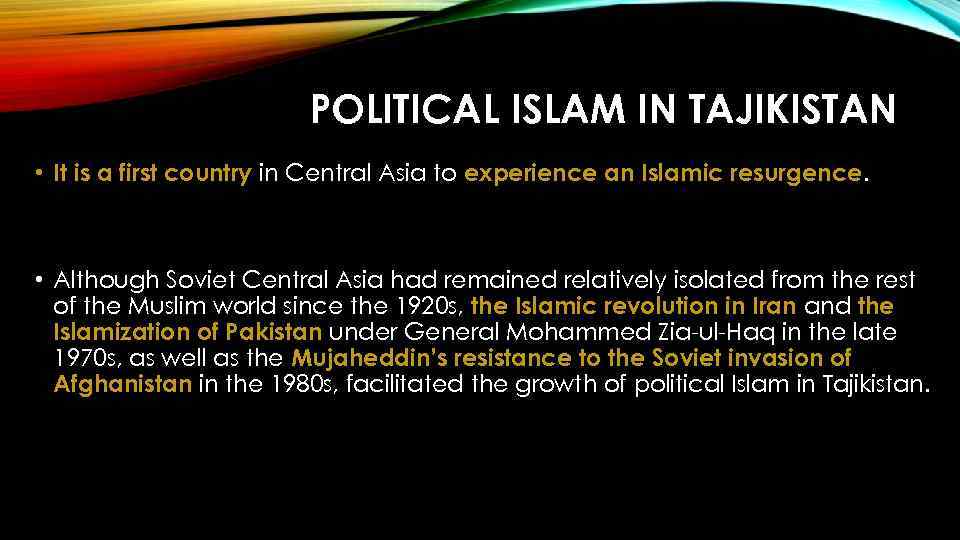
CAUSES OF ISLAMIC RADICALISM RISING IN TAJIKISTAN • clan structure of the power; • socio - economic backwardness, poverty; • the import of religious literature to Tajikistan containing in addition to traditional Hanafi views, ideas of extremist; • arrival to the region of foreign missionaries representing sometimes illegal actions of the radical movements of the "Salafi", "ul-irshod Davat" "Ikhwan ul. Muslimin" and others; • exchange of delegations of religious institutions and the direction to study young citizens of Tajikistan to Islamic schools in Egypt, Pakistan, Saudi Arabia, Turkey, Iran, etc; • economic crisis (which entailed a surge in organized crime, drug trafficking, human trafficking, corruption, unemployment).
POLITICAL ISLAM IN TAJIKISTAN • It is a first country in Central Asia to experience an Islamic resurgence. • Although Soviet Central Asia had remained relatively isolated from the rest of the Muslim world since the 1920 s, the Islamic revolution in Iran and the Islamization of Pakistan under General Mohammed Zia-ul-Haq in the late 1970 s, as well as the Mujaheddin’s resistance to the Soviet invasion of Afghanistan in the 1980 s, facilitated the growth of political Islam in Tajikistan.
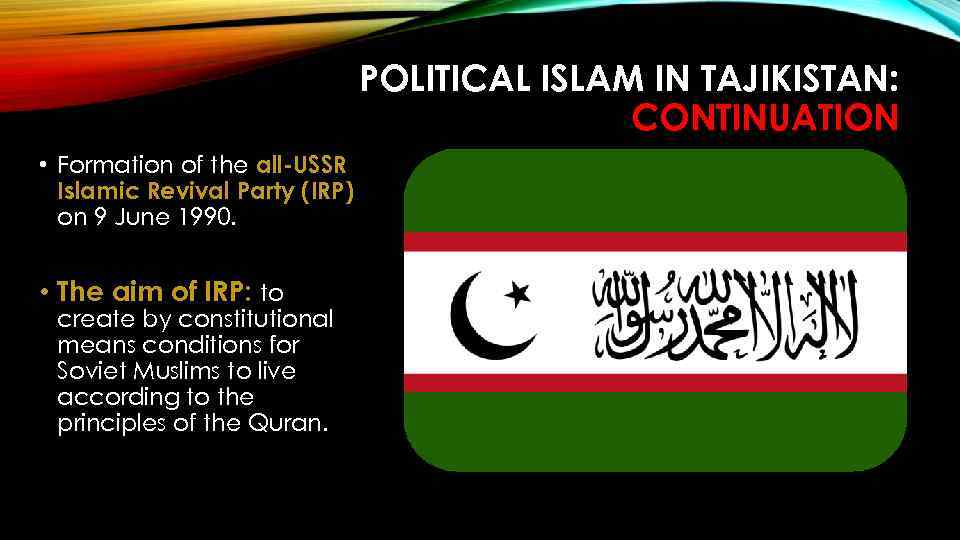
POLITICAL ISLAM IN TAJIKISTAN: CONTINUATION • Formation of the all-USSR Islamic Revival Party (IRP) on 9 June 1990. • The aim of IRP: to create by constitutional means conditions for Soviet Muslims to live according to the principles of the Quran.
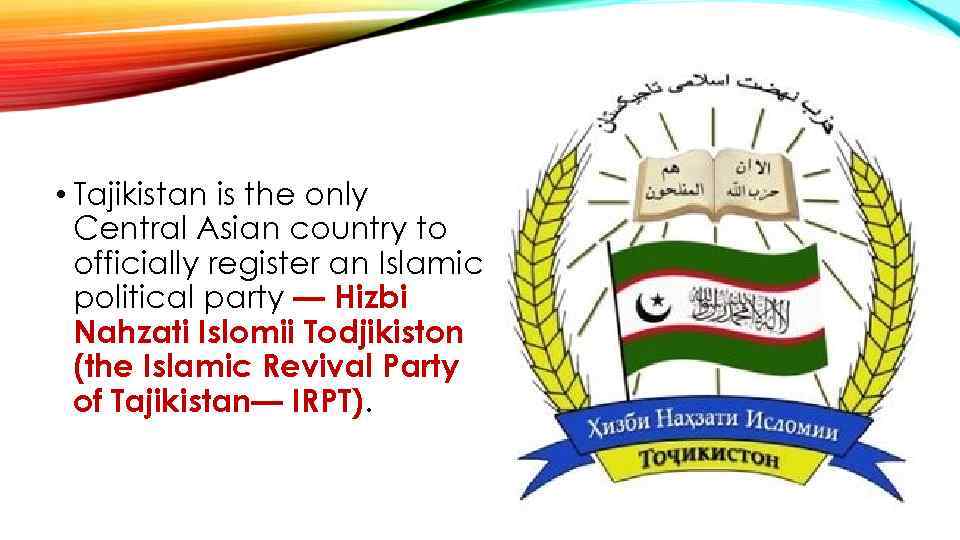
• Tajikistan is the only Central Asian country to officially register an Islamic political party — Hizbi Nahzati Islomii Todjikiston (the Islamic Revival Party of Tajikistan— IRPT).
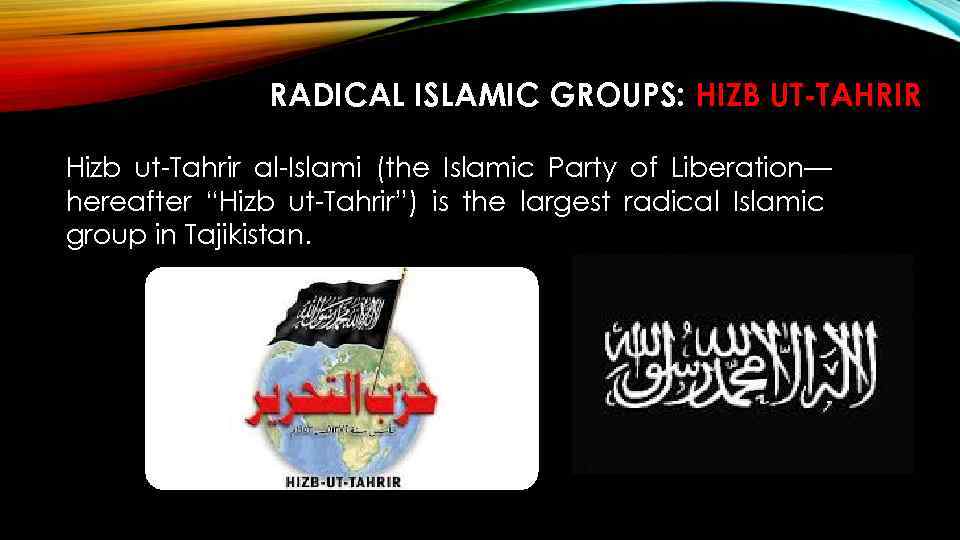
RADICAL ISLAMIC GROUPS: HIZB UT-TAHRIR Hizb ut-Tahrir al-Islami (the Islamic Party of Liberation— hereafter “Hizb ut-Tahrir”) is the largest radical Islamic group in Tajikistan.
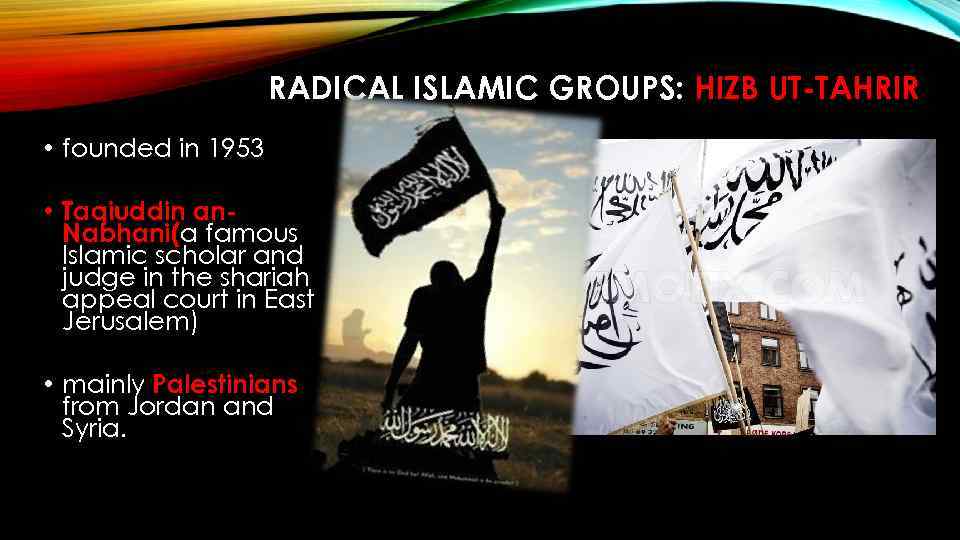
RADICAL ISLAMIC GROUPS: HIZB UT-TAHRIR • founded in 1953 • Taqiuddin an. Nabhani(a famous Islamic scholar and judge in the shariah appeal court in East Jerusalem) • mainly Palestinians from Jordan and Syria.
REASONS OF FORMATION OF HIZB OF UT-TAHRIR 3 sura 104 ayat of Koran: "And let there will be among you a group which calls for good (Islam), orders the approved and forbids the blamed. They are achieved success".
• Influence of radical Islam considerably amplified the last years. • According to one resident of Dushanbe: • "Most of people had a stereotype that uneducated, semiliterate, unsophisticated villagers become members of these parties. But in practice a lot of members in party educated, successful young people, including city youth. Part of the members are dissatisfied with authorities in power, personnel policy of the state, with that there is no opportunity for self-realization".
2000 -2005 • During the announcement of this organization that forbidden in the country there were detained hundreds of activists of this organization, many of which close relatives. • From 2000 to early 2005, the Tajik authorities arrested about 500 alleged members of Hizb ut-Tahrir, but only 189 cases were brought before the courts. • Since the group operates clandestinely, its membership in Tajikistan is unknown. • By some estimations from 1, 000 to 4, 000; by anothere around 2, 500– 3, 000 members and many more sympathizers.
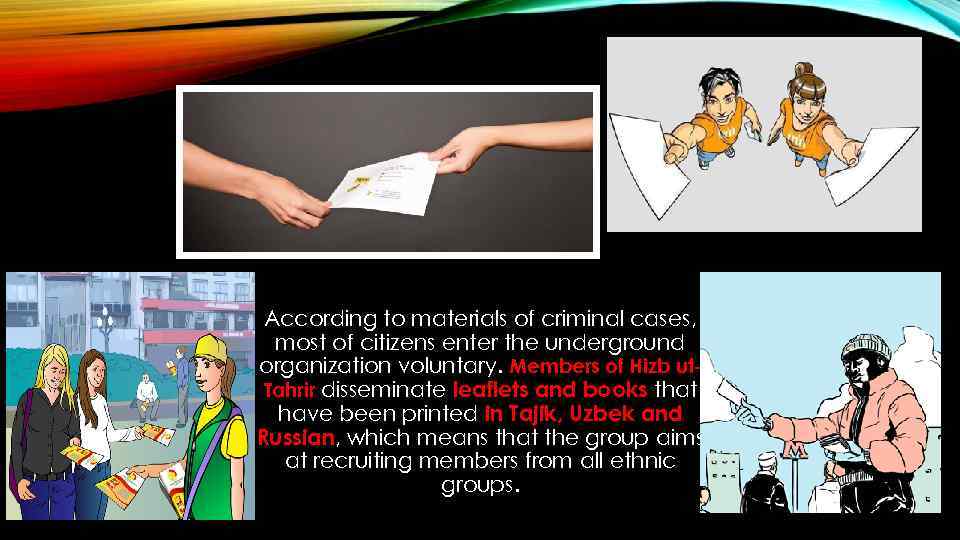
• According to materials of criminal cases, most of citizens enter the underground organization voluntary. Members of Hizb ut. Tahrir disseminate leaflets and books that have been printed in Tajik, Uzbek and Russian, which means that the group aims at recruiting members from all ethnic groups.
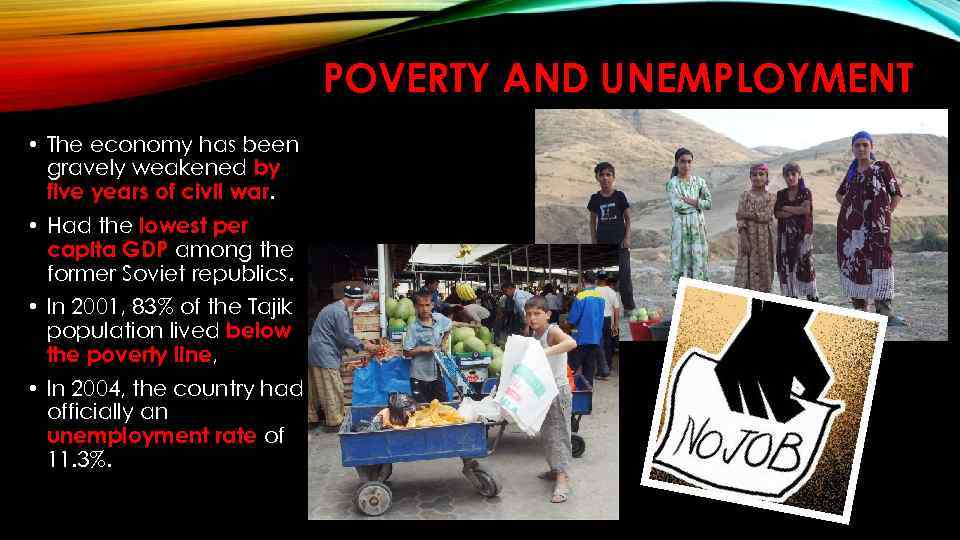
POVERTY AND UNEMPLOYMENT • The economy has been gravely weakened by five years of civil war. • Had the lowest per capita GDP among the former Soviet republics. • In 2001, 83% of the Tajik population lived below the poverty line, • In 2004, the country had officially an unemployment rate of 11. 3%.
Uzbek Minority The Uzbek minority, which accounts for approximately one-quarter of Tajikistan’s population, has constantly complained about institutional discrimination. Hizb ut-Tahrir has become popular among ethnic Uzbeks because it does not emphasize ethnicity and promotes Muslim solidarity.
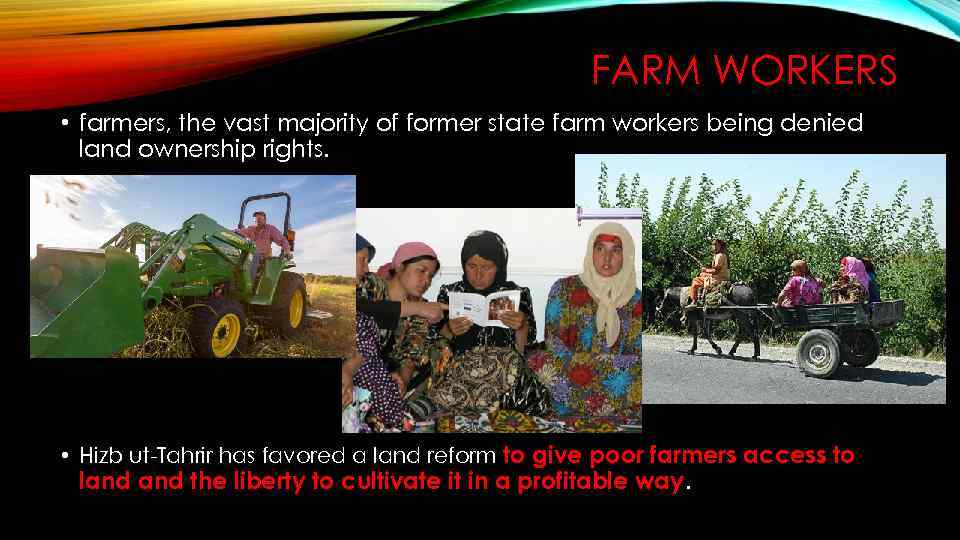
FARM WORKERS • farmers, the vast majority of former state farm workers being denied land ownership rights. • Hizb ut-Tahrir has favored a land reform to give poor farmers access to land the liberty to cultivate it in a profitable way.
The group became active in Tajikistan in the late 1990 s. In the beginning of 1990 this organization freely carried out its activities. 2001, prohibited by the Supreme Court. Entered to the list of extremist organizations.
The emergence of Hizb ut-Tahrir in Tajikistan is a worrying phenomenon which has complex roots. The structural-functional problems suggests that the group has emerged as a new force in Tajik politics due to the political, economic and social hardships of the post-Soviet transition. In other words, Tajiks join Hizb ut. Tahrir in order to cope with political and socio-economic. The radical ideas of Hizb ut-Tahrir have penetrated the most religious factions within the society.

THANK YOU FOR YOUR ATTENTION!!!
Скачать презентацию RADICAL ISLAM IN TAJIKISTAN Dabylova Gaisha Iskander Zhadyra
Radical Islam in Tajikistan.pptx