


 Скачать презентацию RADIATION DETECTION MONITORING DEVICES AND THEIR USE Module
2e548e5cd1e8d8937ed20e32ec6a6bef.ppt
- Количество слайдов: 28
 RADIATION DETECTION MONITORING DEVICES AND THEIR USE Module V
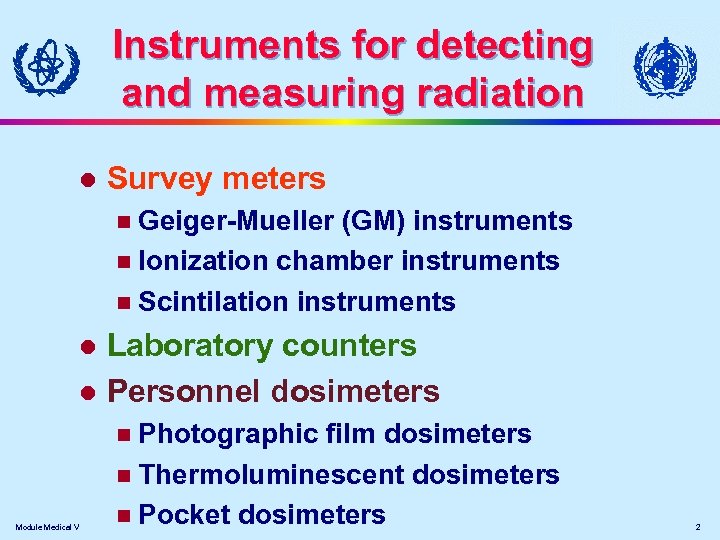 Instruments for detecting and measuring radiation l Survey meters Geiger-Mueller (GM) instruments n Ionization chamber instruments n Scintilation instruments n Laboratory counters l Personnel dosimeters l Photographic film dosimeters n Thermoluminescent dosimeters n Pocket dosimeters n Module Medical V 2
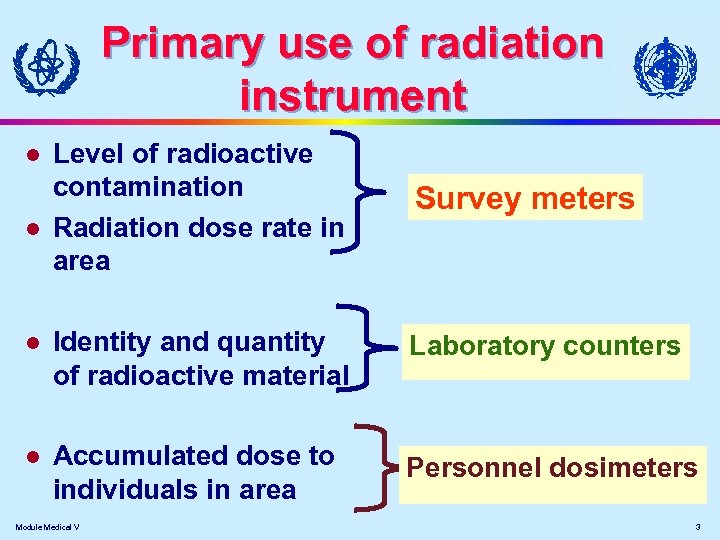 Primary use of radiation instrument Level of radioactive contamination Radiation dose rate in area Survey meters l Identity and quantity of radioactive material Laboratory counters l Accumulated dose to individuals in area Personnel dosimeters l l Module Medical V 3
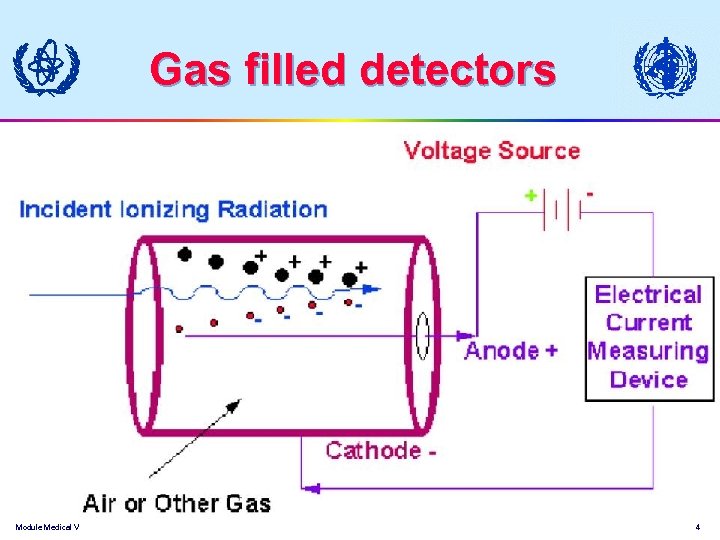 Gas filled detectors Module Medical V 4
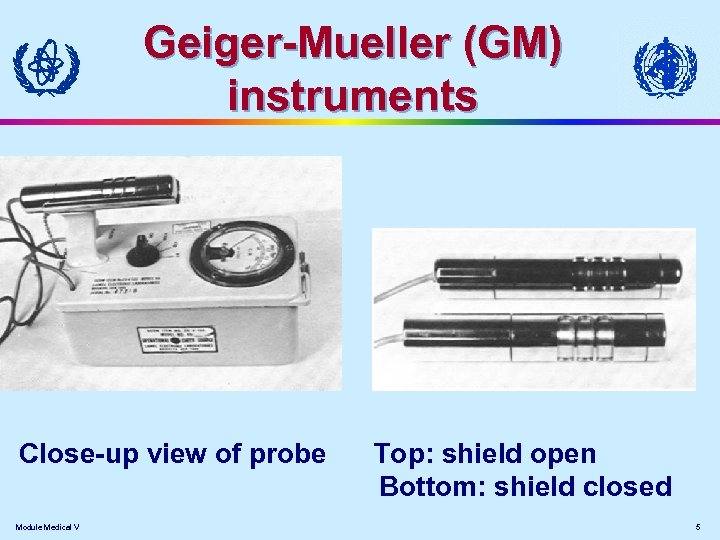 Geiger-Mueller (GM) instruments Close-up view of probe Module Medical V Top: shield open Bottom: shield closed 5
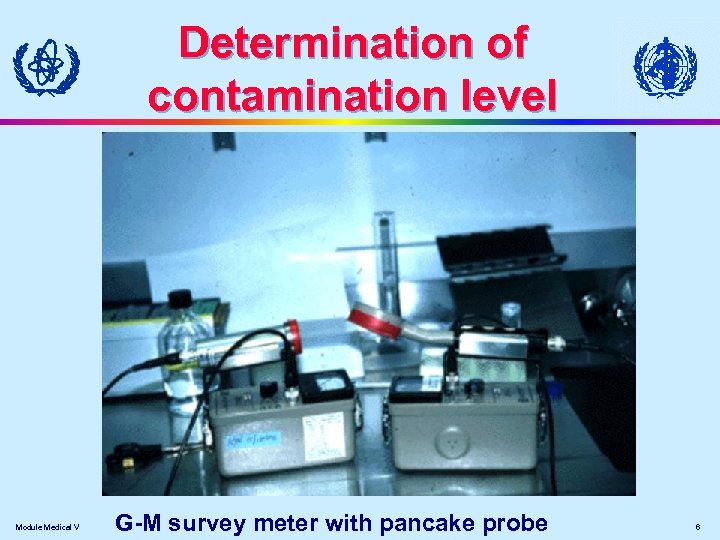 Determination of contamination level Module Medical V G-M survey meter with pancake probe 6
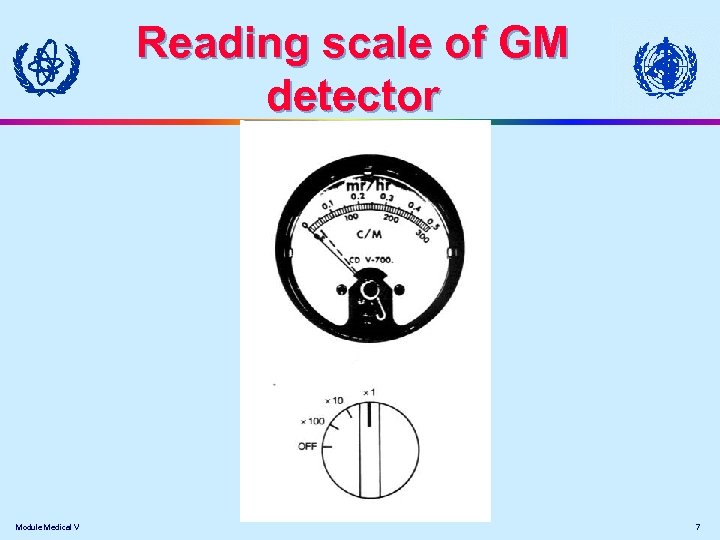 Reading scale of GM detector Module Medical V 7
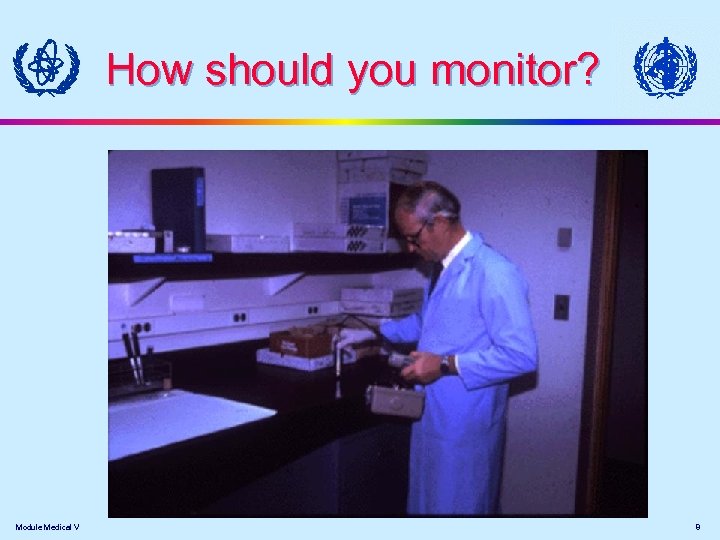 How should you monitor? Module Medical V 8
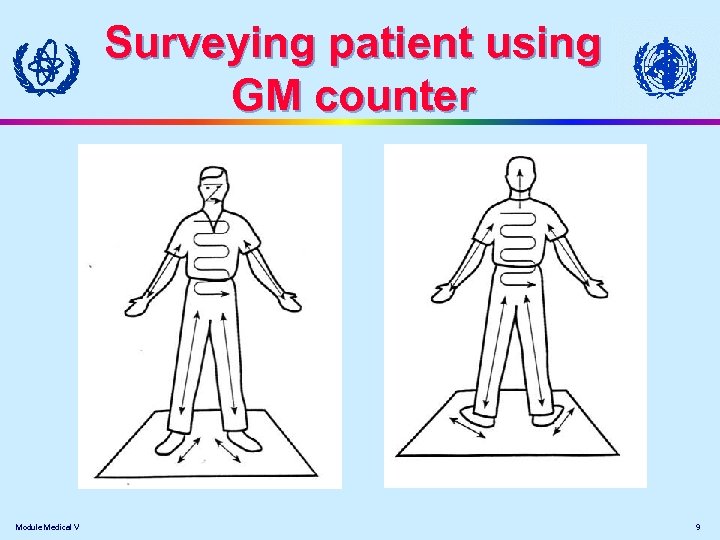 Surveying patient using GM counter Module Medical V 9
 Limitations of GM counters l will not detect very low energy betas such as those from tritium l may miss alpha contamination if any type of shielding is present, such as gauze, thin layer of blood or more than 5 cm of air Module Medical V 10
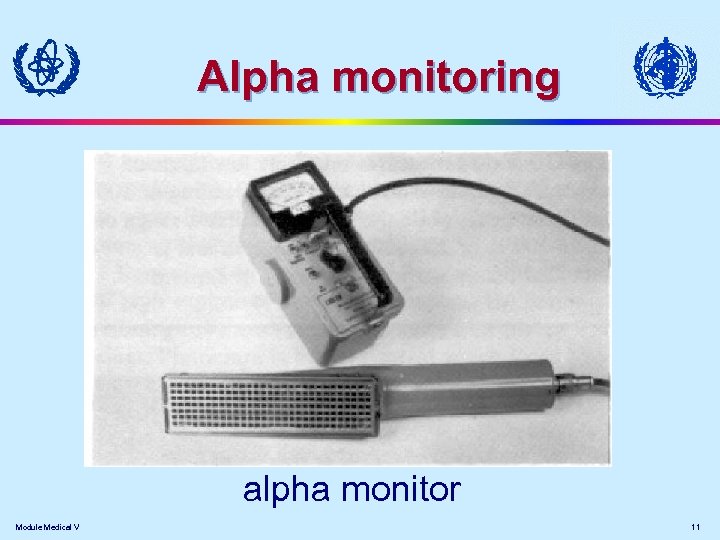 Alpha monitoring alpha monitor Module Medical V 11
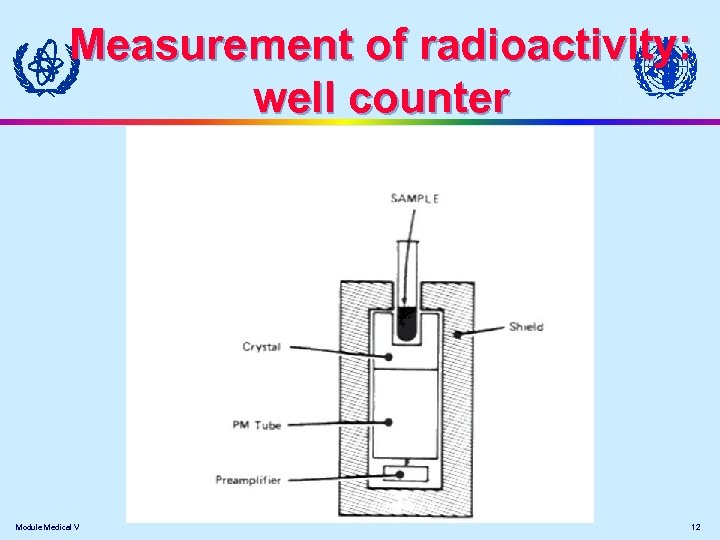 Measurement of radioactivity: well counter Module Medical V 12
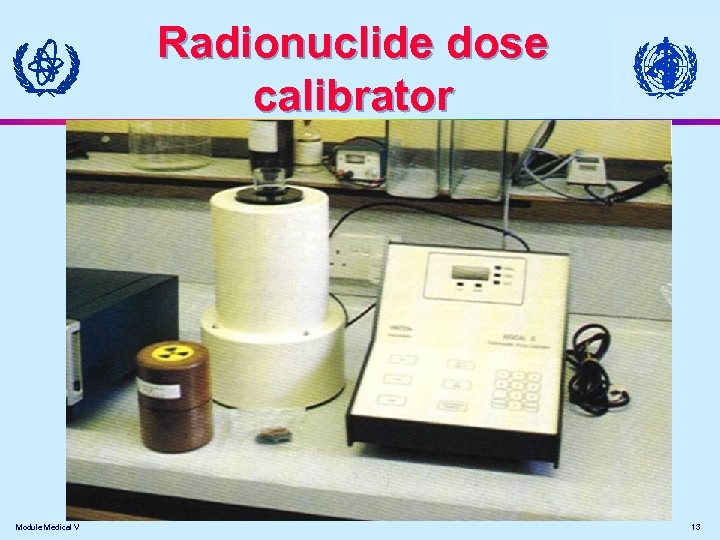 Radionuclide dose calibrator Module Medical V 13
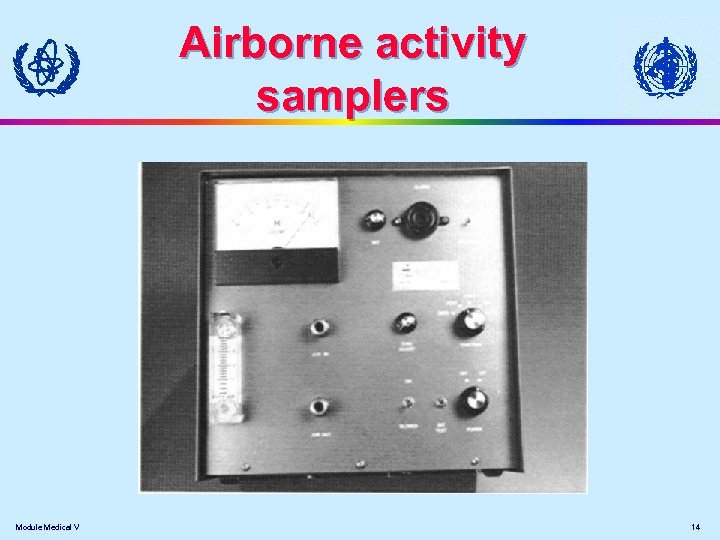 Airborne activity samplers Module Medical V 14
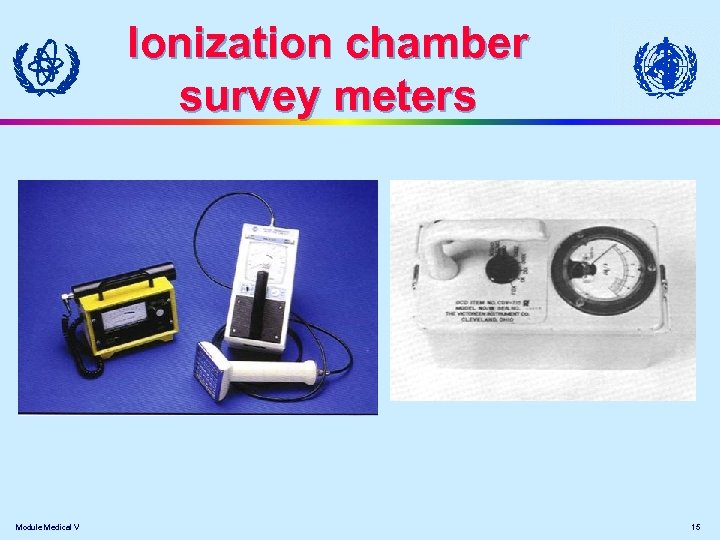 Ionization chamber survey meters Module Medical V 15
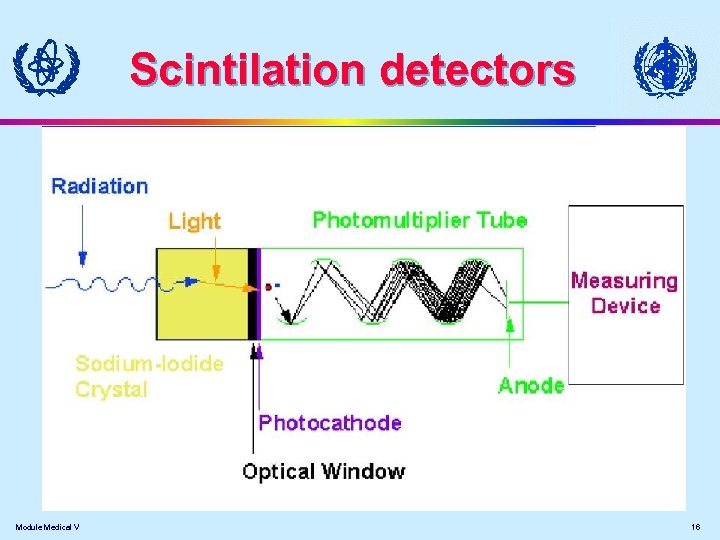 Scintilation detectors Module Medical V 16
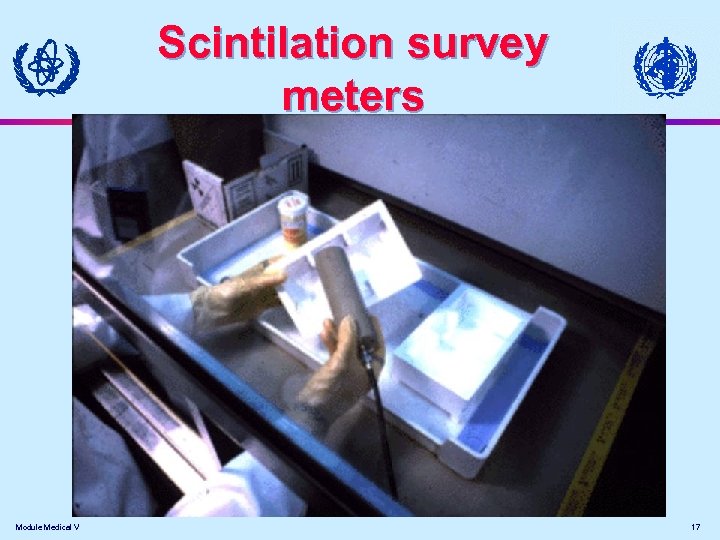 Scintilation survey meters Module Medical V 17
 Determination of type and activity of radioactive material Module Medical V 18
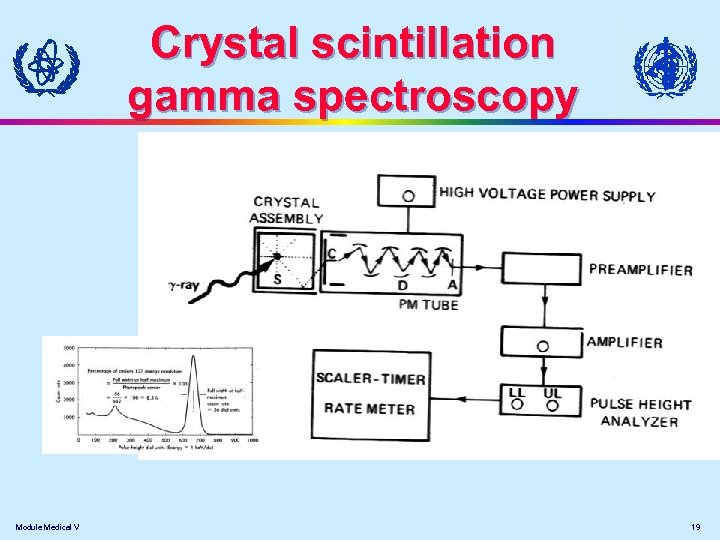 Crystal scintillation gamma spectroscopy Module Medical V 19
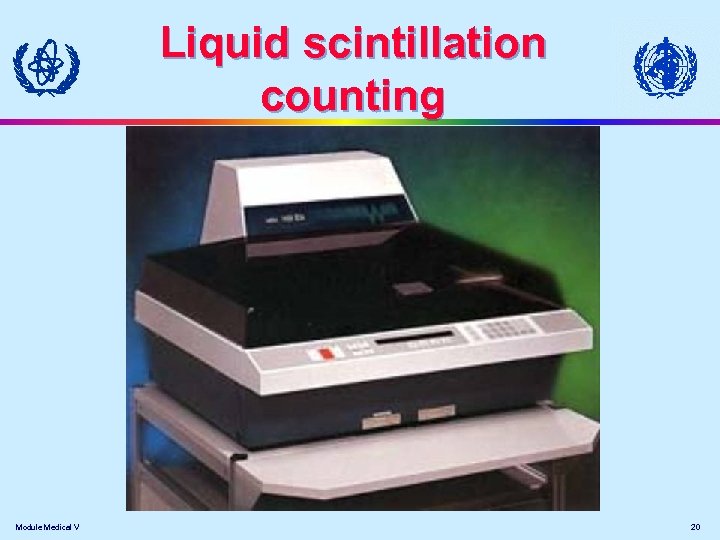 Liquid scintillation counting Module Medical V 20
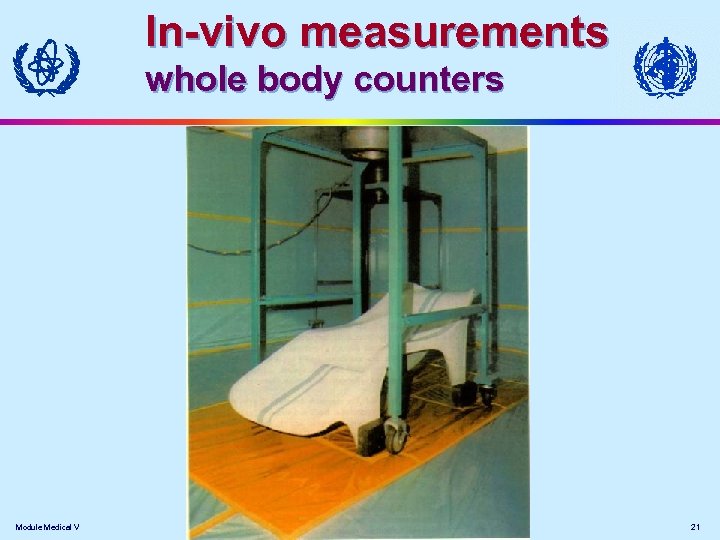 In-vivo measurements whole body counters Module Medical V 21
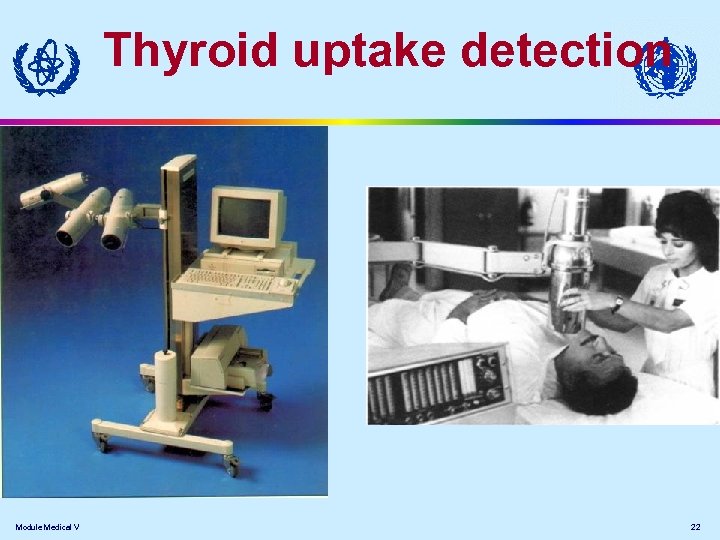 Thyroid uptake detection Module Medical V 22
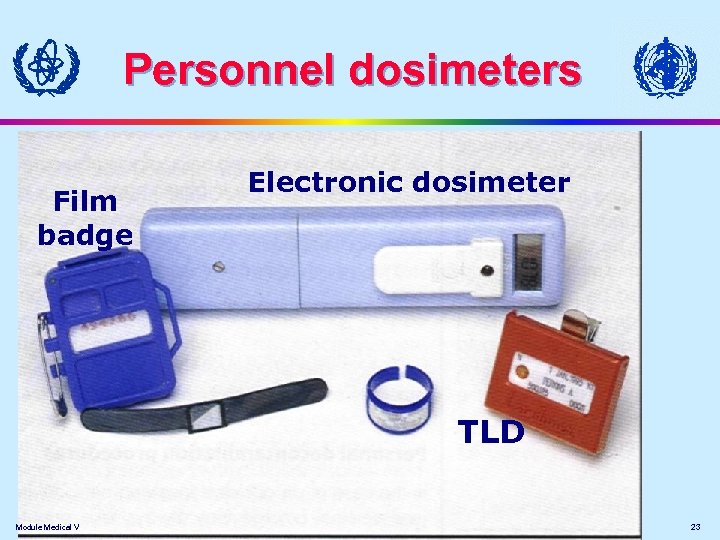 Personnel dosimeters Film badge Electronic dosimeter TLD Module Medical V 23
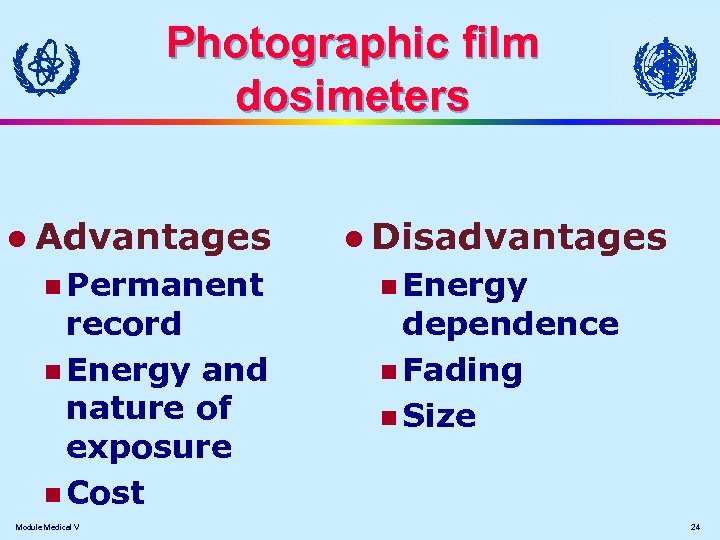 Photographic film dosimeters l Advantages n Permanent record n Energy and nature of exposure n Cost Module Medical V l Disadvantages n Energy dependence n Fading n Size 24
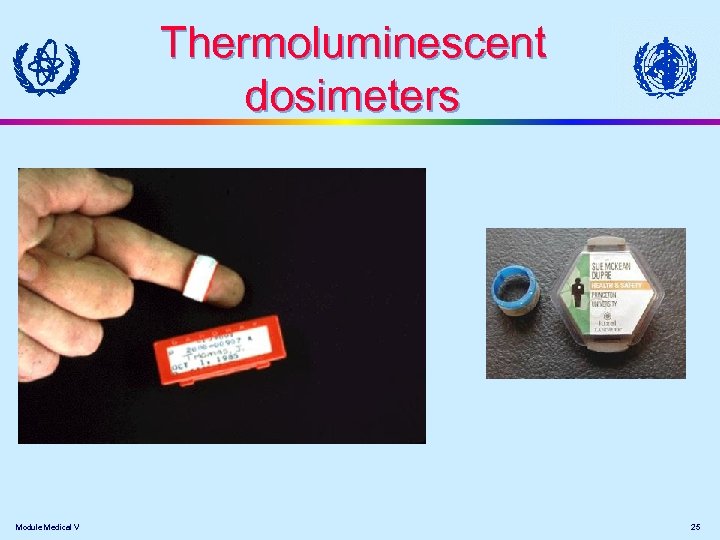 Thermoluminescent dosimeters Module Medical V 25
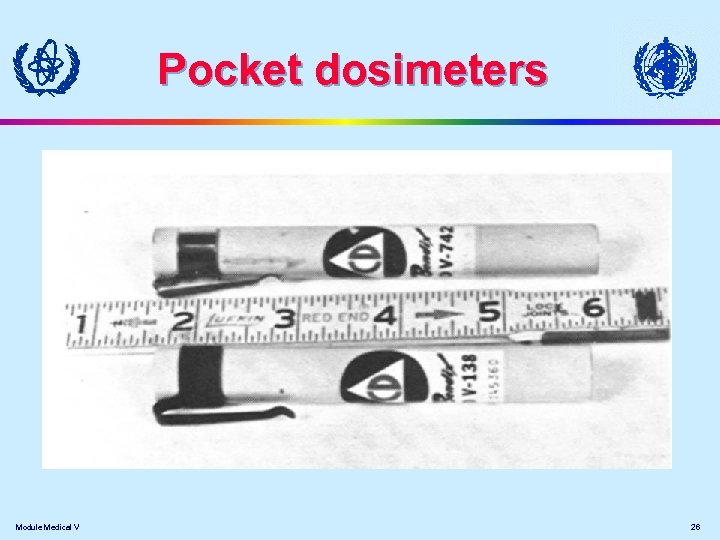 Pocket dosimeters Module Medical V 26
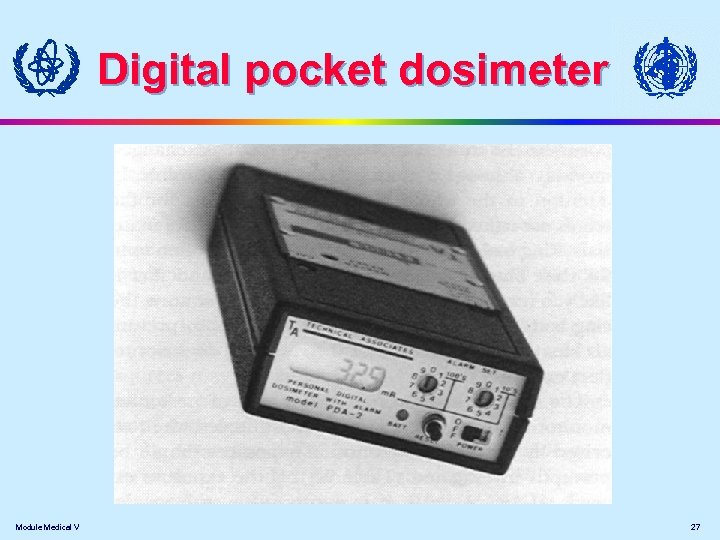 Digital pocket dosimeter Module Medical V 27
 Review points • Determination of contamination level often most important measurement in medical emergency setting Usually done with GM probe called pancake detector • Identification of radioactive material typically done by relatively sophisticated lab equipment (gamma- or alphaspectrometer) Samples collected from patient or clothing often used for analysis • Instruments to measure accumulated dose commonly referred to as dosimeters, worn by person to measure accumulated individual dose. Two types normally used: direct read-out devices (pocket dosimeters) and indirect TLDs & film badges