


 Скачать презентацию Radiation and electro pulse treatment of N 32
326b5f7df778c83ec35e0b4cc3f5e3e1.ppt
- Количество слайдов: 16
 Radiation and electro pulse treatment of N 32 tumours on flank of rats. Bertil R. R. Persson 1), Per E. Engström 1), Arne Brun 2), and Leif G. Salford 3) Departments of Radiation Physics 1), Neuropathology 2) and Neurosurgery 3) Lund University, S‑ 221 85 LUND, Sweden.
 Previous studies We have found that a combination of chemotherapy and intracranial el-pulse treatment in vivo increases the survival of rats with RG 2 brain tumours implanted in the brain. Salford et al. Biochem. Biophys. Res. Com. 194 (2) 938 -343, 1993, Engström et al Bioelectrochemistry and Bioenergetics 47, 163 -166, 1998.
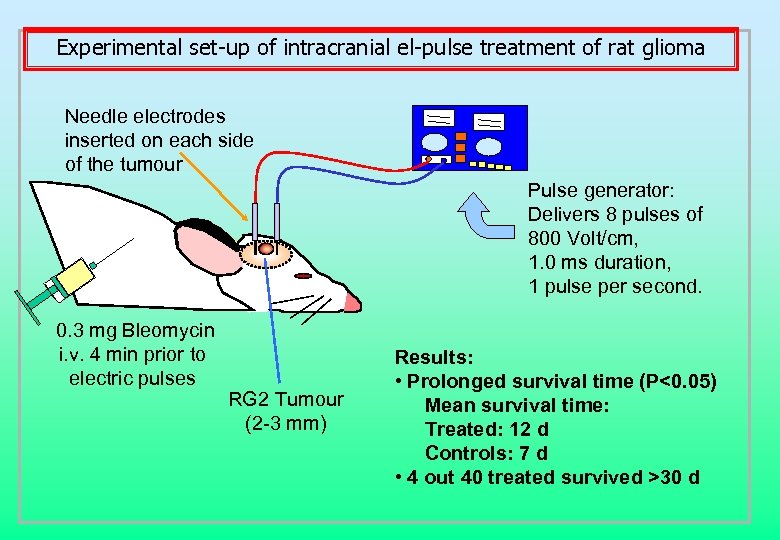 Experimental set-up of intracranial el-pulse treatment of rat glioma Needle electrodes inserted on each side of the tumour Pulse generator: Delivers 8 pulses of 800 Volt/cm, 1. 0 ms duration, 1 pulse per second. 0. 3 mg Bleomycin i. v. 4 min prior to electric pulses RG 2 Tumour (2 -3 mm) Results: • Prolonged survival time (P<0. 05) Mean survival time: Treated: 12 d Controls: 7 d • 4 out 40 treated survived >30 d
 AIM OF PRESENT STUDY • The purpose of the study was to investigate the effect of el-pulse treatment (EPT) on rat glioma tumours Ø In the present study we have applied el-pulses combined with radiotherapy (EPX) for treatment of N 32 brain tumours implanted under the skin of the thigh of Fisher-344 rats.
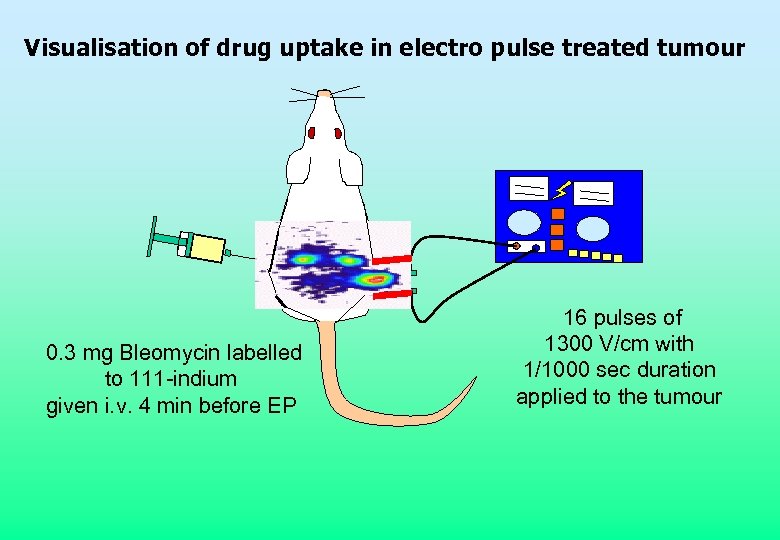 Visualisation of drug uptake in electro pulse treated tumour 0. 3 mg Bleomycin labelled to 111 -indium given i. v. 4 min before EP 16 pulses of 1300 V/cm with 1/1000 sec duration applied to the tumour
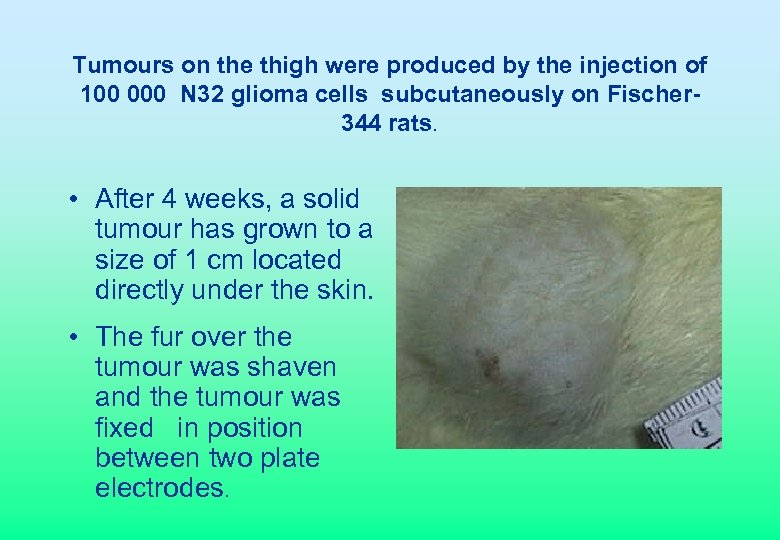 Tumours on the thigh were produced by the injection of 100 000 N 32 glioma cells subcutaneously on Fischer 344 rats. • After 4 weeks, a solid tumour has grown to a size of 1 cm located directly under the skin. • The fur over the tumour was shaven and the tumour was fixed in position between two plate electrodes.
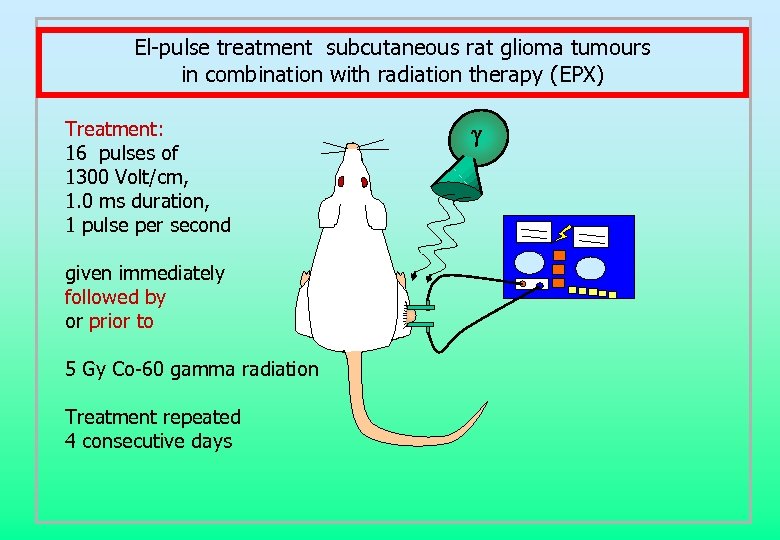 El-pulse treatment subcutaneous rat glioma tumours in combination with radiation therapy (EPX) Treatment: 16 pulses of 1300 Volt/cm, 1. 0 ms duration, 1 pulse per second given immediately followed by or prior to 5 Gy Co-60 gamma radiation Treatment repeated 4 consecutive days
 El-pulse treatment • Electrocardial paste was used to achieve good electric conductivity between tissue and electrodes. Electric pulses were delivered through two flat brass electrodes sized 2´ 2 cm and mounted on a slide calliper to set the correct distance between the electrodes. • 16 el-pulses with a field strength of 1300 V/cm and a time constant of 1. 0 ms were delivered at approximately one pulse per second. • All animals were treated during four consecutive days. • Animals were sacrificed when tumour volume reached 5 cm 3
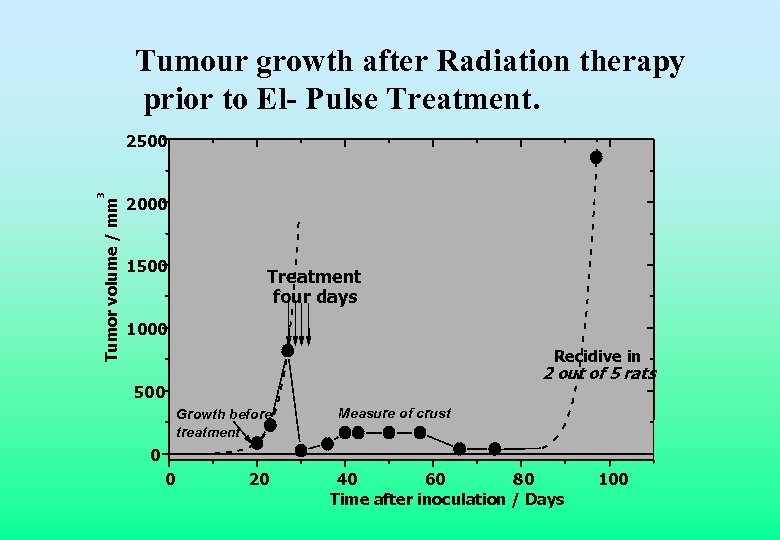 Tumour growth after Radiation therapy prior to El- Pulse Treatment. Tumor volume / mm 3 2500 2000 1500 Treatment four days 1000 Recidive in 2 out of 5 rats 500 Growth before treatment Measure of crust 0 0 20 40 60 80 Time after inoculation / Days 100
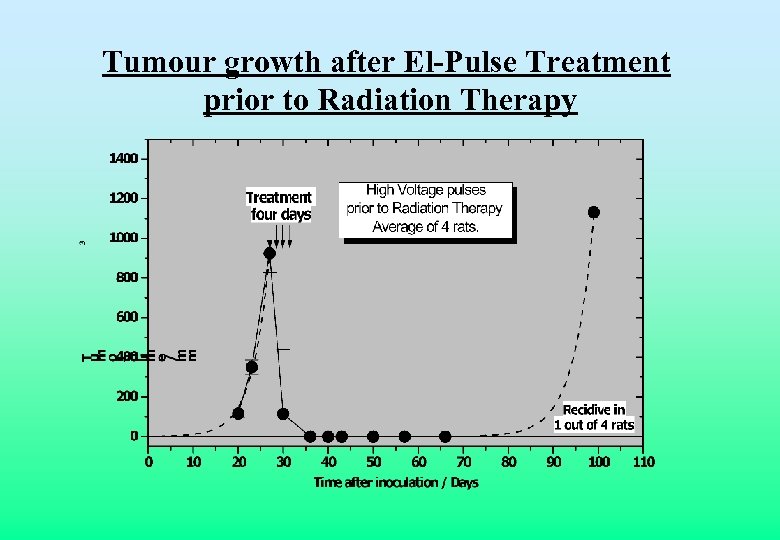 Tumour growth after El-Pulse Treatment prior to Radiation Therapy

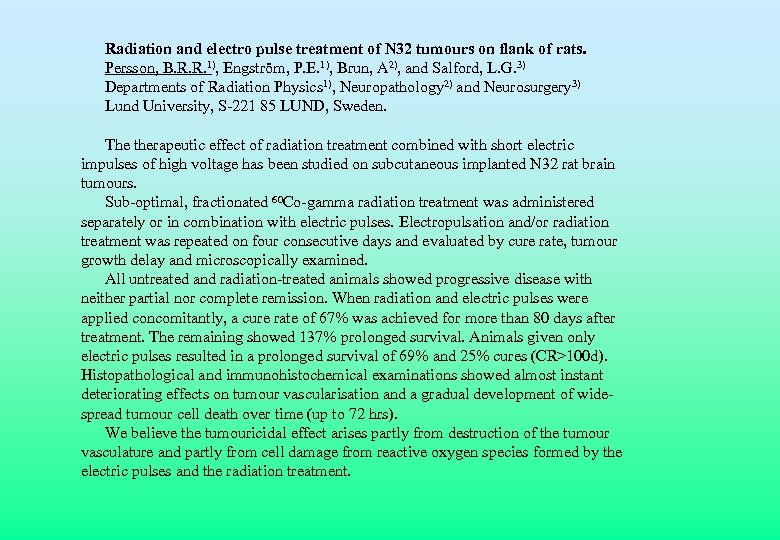 Radiation and electro pulse treatment of N 32 tumours on flank of rats. Persson, B. R. R. 1), Engström, P. E. 1), Brun, A 2), and Salford, L. G. 3) Departments of Radiation Physics 1), Neuropathology 2) and Neurosurgery 3) Lund University, S‑ 221 85 LUND, Sweden. The therapeutic effect of radiation treatment combined with short electric impulses of high voltage has been studied on subcutaneous implanted N 32 rat brain tumours. Sub-optimal, fractionated 60 Co-gamma radiation treatment was administered separately or in combination with electric pulses. Electropulsation and/or radiation treatment was repeated on four consecutive days and evaluated by cure rate, tumour growth delay and microscopically examined. All untreated and radiation-treated animals showed progressive disease with neither partial nor complete remission. When radiation and electric pulses were applied concomitantly, a cure rate of 67% was achieved for more than 80 days after treatment. The remaining showed 137% prolonged survival. Animals given only electric pulses resulted in a prolonged survival of 69% and 25% cures (CR>100 d). Histopathological and immunohistochemical examinations showed almost instant deteriorating effects on tumour vascularisation and a gradual development of widespread tumour cell death over time (up to 72 hrs). We believe the tumouricidal effect arises partly from destruction of the tumour vasculature and partly from cell damage from reactive oxygen species formed by the electric pulses and the radiation treatment.
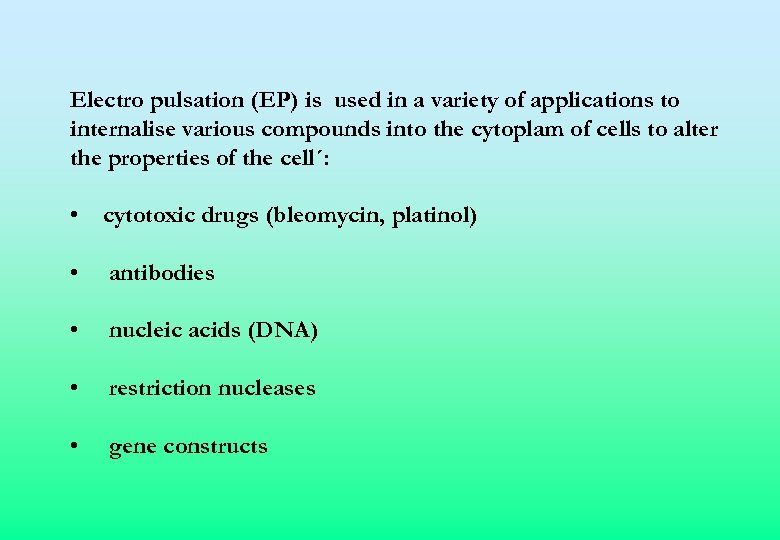 Electro pulsation (EP) is used in a variety of applications to internalise various compounds into the cytoplam of cells to alter the properties of the cell´: • cytotoxic drugs (bleomycin, platinol) • antibodies • nucleic acids (DNA) • restriction nucleases • gene constructs
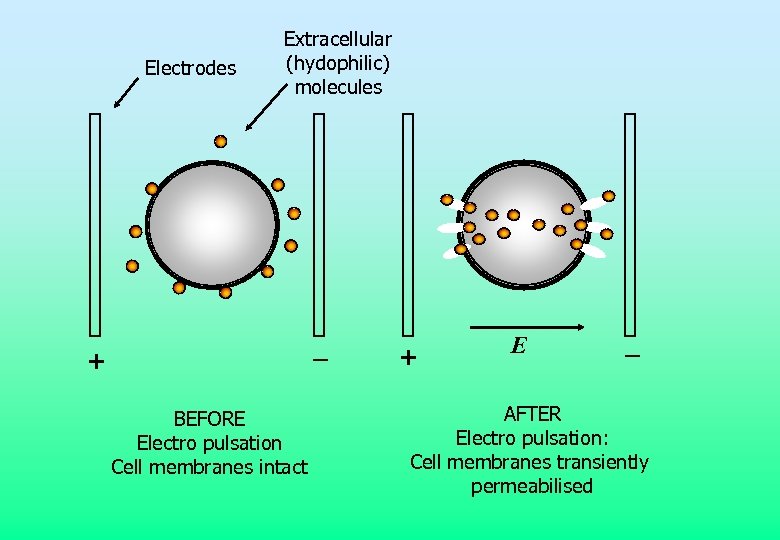 Electrodes Extracellular (hydophilic) molecules _ + BEFORE Electro pulsation Cell membranes intact + E _ AFTER Electro pulsation: Cell membranes transiently permeabilised
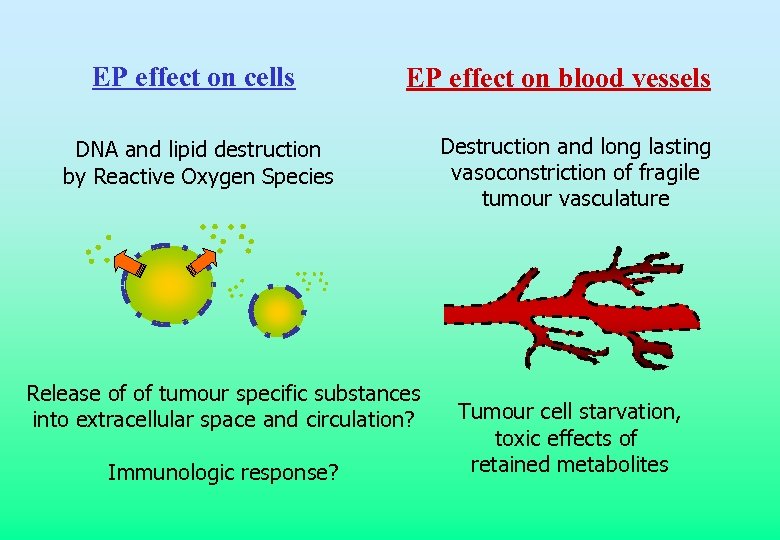 EP effect on cells EP effect on blood vessels DNA and lipid destruction by Reactive Oxygen Species Release of of tumour specific substances into extracellular space and circulation? Immunologic response? Destruction and long lasting vasoconstriction of fragile tumour vasculature Tumour cell starvation, toxic effects of retained metabolites
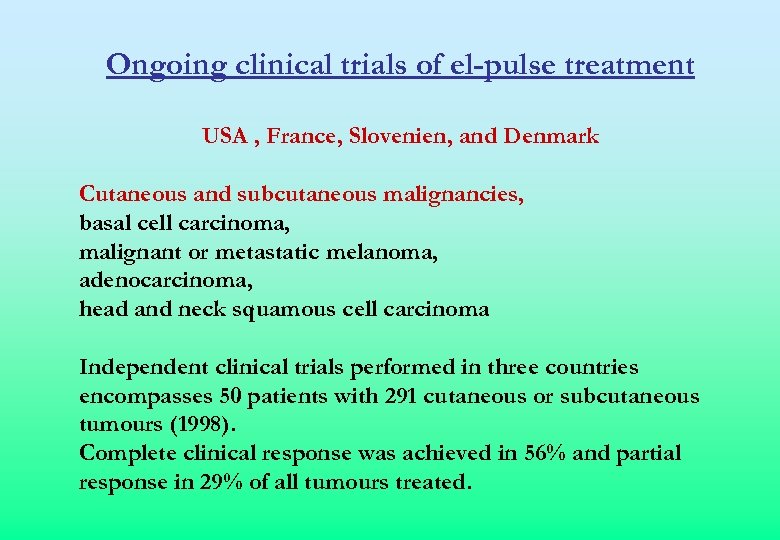 Ongoing clinical trials of el-pulse treatment USA , France, Slovenien, and Denmark Cutaneous and subcutaneous malignancies, basal cell carcinoma, malignant or metastatic melanoma, adenocarcinoma, head and neck squamous cell carcinoma Independent clinical trials performed in three countries encompasses 50 patients with 291 cutaneous or subcutaneous tumours (1998). Complete clinical response was achieved in 56% and partial response in 29% of all tumours treated.