


 Скачать презентацию Racial Ethnic Differences in Health 10 Key Facts David
80946dc17f8924ce2d8b179b6503256a.ppt
- Количество слайдов: 59
 Racial/Ethnic Differences in Health: 10 Key Facts David R. Williams, Ph. D. , MPH Senior Research Scientist, and Harold W. Cruse Collegiate Professor of Sociology & Epidemiology Institute for Social Research University of Michigan
 Key Fact #1 Racial differences in health are large
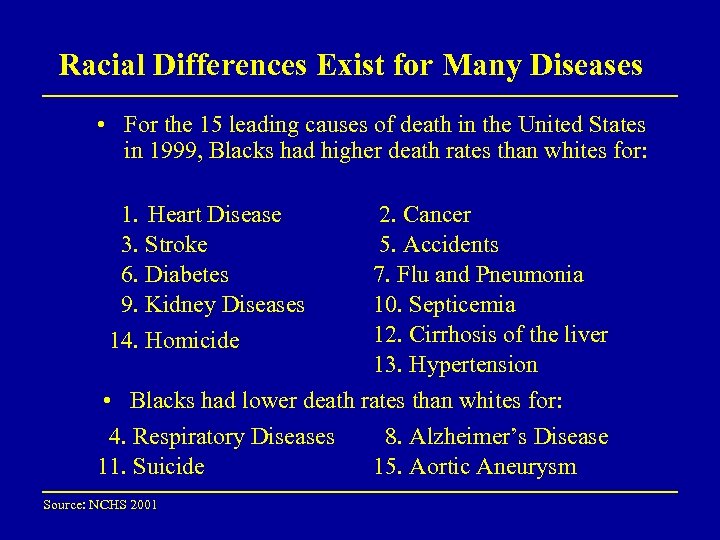 Racial Differences Exist for Many Diseases • For the 15 leading causes of death in the United States in 1999, Blacks had higher death rates than whites for: 1. Heart Disease 3. Stroke 6. Diabetes 9. Kidney Diseases 14. Homicide 2. Cancer 5. Accidents 7. Flu and Pneumonia 10. Septicemia 12. Cirrhosis of the liver 13. Hypertension • Blacks had lower death rates than whites for: 4. Respiratory Diseases 8. Alzheimer’s Disease 11. Suicide 15. Aortic Aneurysm Source: NCHS 2001
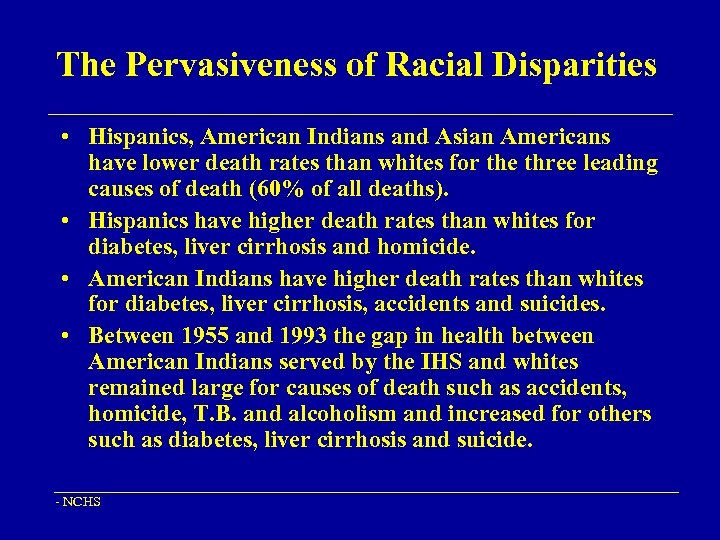 The Pervasiveness of Racial Disparities • Hispanics, American Indians and Asian Americans have lower death rates than whites for the three leading causes of death (60% of all deaths). • Hispanics have higher death rates than whites for diabetes, liver cirrhosis and homicide. • American Indians have higher death rates than whites for diabetes, liver cirrhosis, accidents and suicides. • Between 1955 and 1993 the gap in health between American Indians served by the IHS and whites remained large for causes of death such as accidents, homicide, T. B. and alcoholism and increased for others such as diabetes, liver cirrhosis and suicide. - NCHS
 Racial Differences in Mortality Reflect: • Higher incidence of disease • Earlier onset of disease • Poorer survival
 Pattern I: Immigration • Hispanics and Asian Americans (groups with high proportions of immigrants) tend to have equivalent or better health status than whites. • Immigrants of all racial/ethnic groups tend to have better health than their native born counterparts. • With length of stay in the U. S. , the health advantage of Asian and Latino immigrants declines. • Latinos and Asians differ markedly in their levels of human capital upon arrival in the U. S. • Given the low SES profile of Hispanic immigrants and their ongoing difficulties with educational and occupational. opportunities, the health of Latinos is likely to decline more rapidly than that of Asians and to be worse than the U. S. average in the future.
 Pattern 2: Socioeconomic Disadvantage and Geographic Marginalization • African Americans, American Indians, (and Native Hawaiians and other Pacific Islanders) tend to have poorer health outcomes than whites across the life course. • These differences are remarkably persistent across place and time. • Racial disparities in health persist in the context of overall improvements in health.
 Key Fact #2 In the last 50 years, although overall health has improved, racial differences in health are unchanged or have widened.
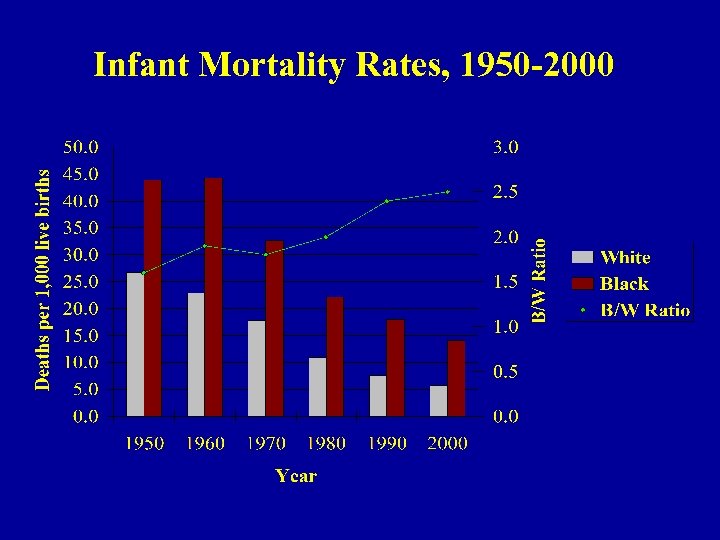 Infant Mortality Rates, 1950 -2000
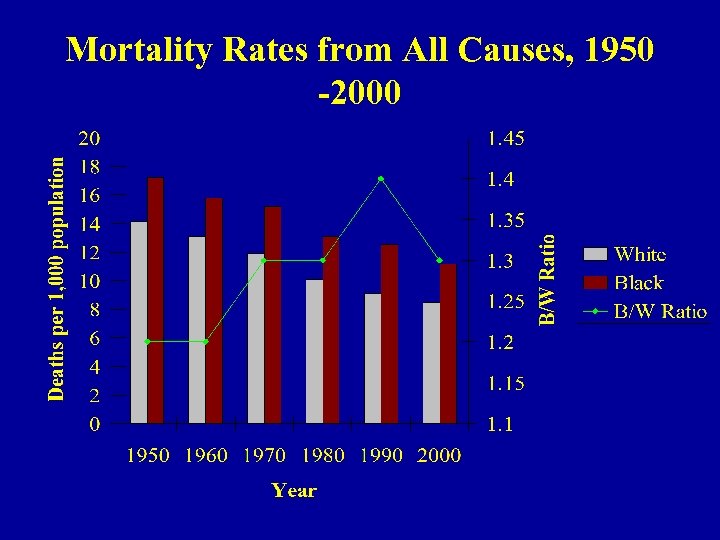 Mortality Rates from All Causes, 1950 -2000
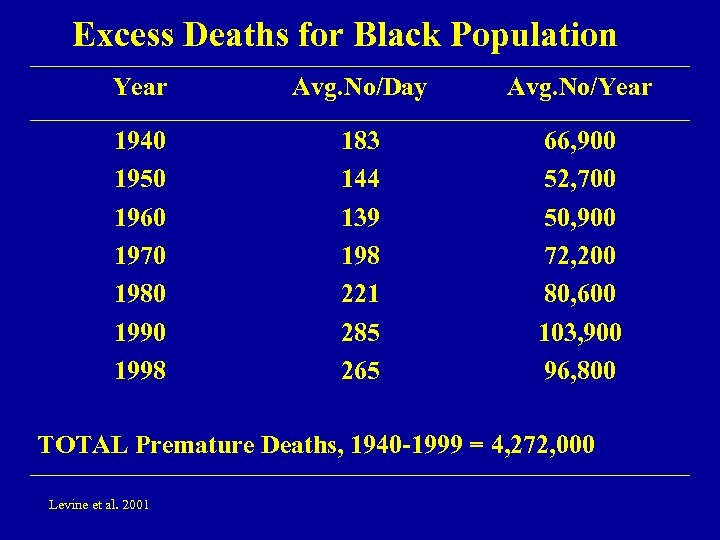 Excess Deaths for Black Population Year Avg. No/Day Avg. No/Year 1940 1950 1960 1970 1980 1998 183 144 139 198 221 285 265 66, 900 52, 700 50, 900 72, 200 80, 600 103, 900 96, 800 TOTAL Premature Deaths, 1940 -1999 = 4, 272, 000 Levine et al. 2001
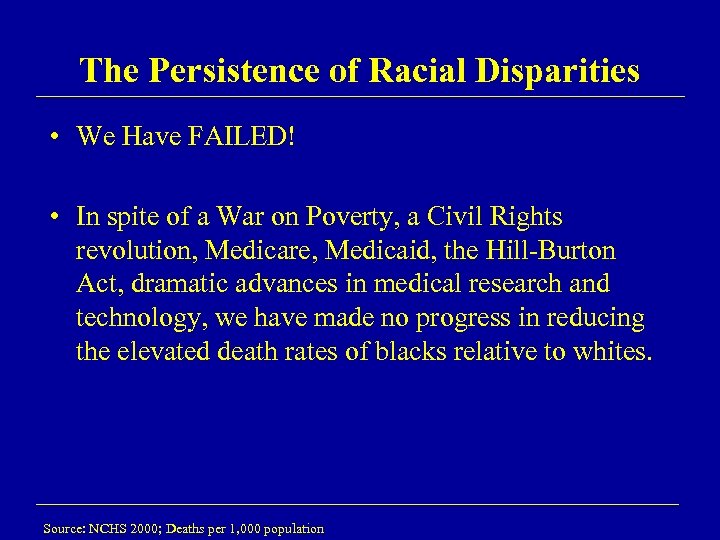 The Persistence of Racial Disparities • We Have FAILED! • In spite of a War on Poverty, a Civil Rights revolution, Medicare, Medicaid, the Hill-Burton Act, dramatic advances in medical research and technology, we have made no progress in reducing the elevated death rates of blacks relative to whites. Source: NCHS 2000; Deaths per 1, 000 population
 Key Fact #3 Racial differences in health are not primarily caused by genetic factors
 The Limits of Biology • Our racial categories predate scientific theories of genetics and modern genetic studies and do not capture well the distribution of genetic characteristics across populations. • Groups with similar physical characteristics can be very different genetically. • “The fact that we know what race we belong to tells us more about our society than our biological makeup” 1 • “Race is a pigment of our imagination” 2 • We need to understand how risk factors/resources in the social/physical environment interact with biological predispositions to affect health 1 Krieger and Bassett, 1986; 2 Ruben Rumbaut
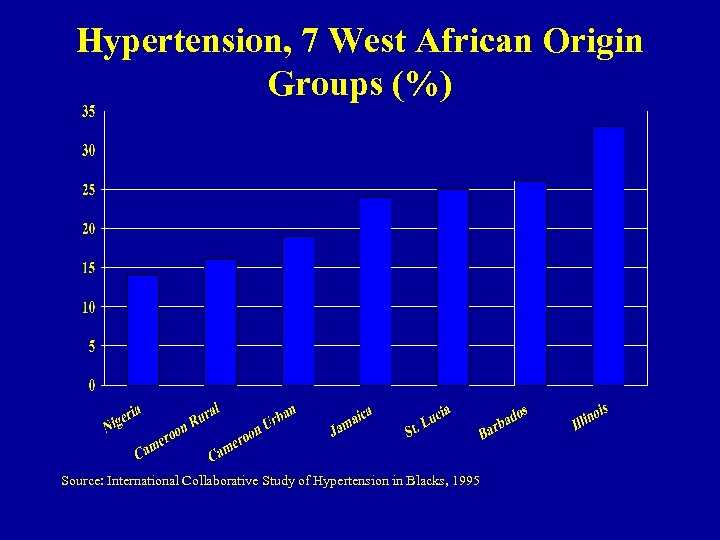 Hypertension, 7 West African Origin Groups (%) Source: International Collaborative Study of Hypertension in Blacks, 1995
 Key Fact #4 Socioeconomic Status (SES) is a central but incomplete explanation of racial differences in health.
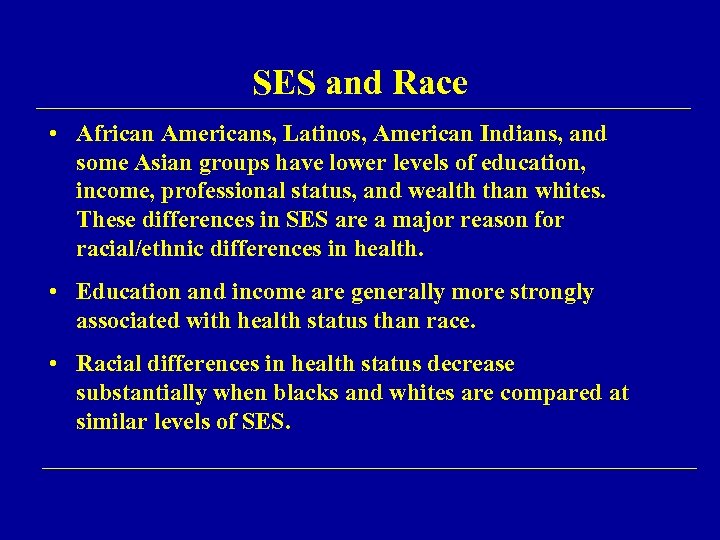 SES and Race • African Americans, Latinos, American Indians, and some Asian groups have lower levels of education, income, professional status, and wealth than whites. These differences in SES are a major reason for racial/ethnic differences in health. • Education and income are generally more strongly associated with health status than race. • Racial differences in health status decrease substantially when blacks and whites are compared at similar levels of SES.
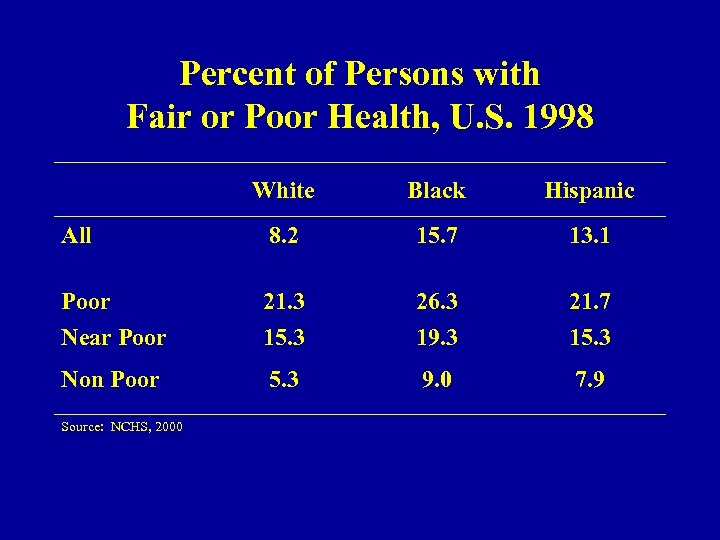 Percent of Persons with Fair or Poor Health, U. S. 1998 White Black Hispanic All 8. 2 15. 7 13. 1 Poor 21. 3 26. 3 21. 7 Near Poor 15. 3 19. 3 15. 3 Non Poor 5. 3 9. 0 7. 9 Source: NCHS, 2000
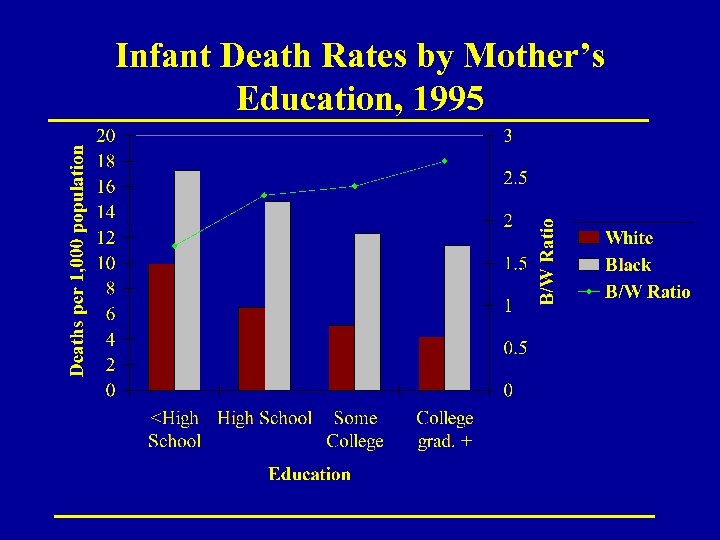 Infant Death Rates by Mother’s Education, 1995
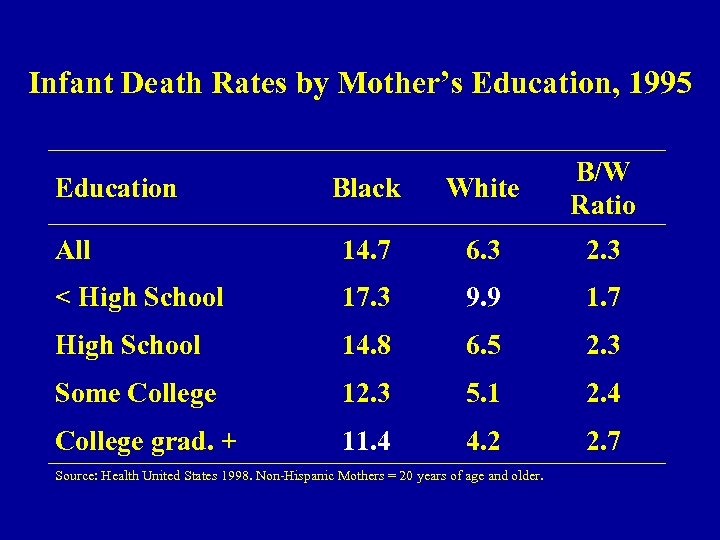 Infant Death Rates by Mother’s Education, 1995 Black White B/W Ratio All 14. 7 6. 3 2. 3 < High School 17. 3 9. 9 1. 7 High School 14. 8 6. 5 2. 3 Some College 12. 3 5. 1 2. 4 College grad. + 11. 4 4. 2 2. 7 Education Source: Health United States 1998. Non-Hispanic Mothers = 20 years of age and older.
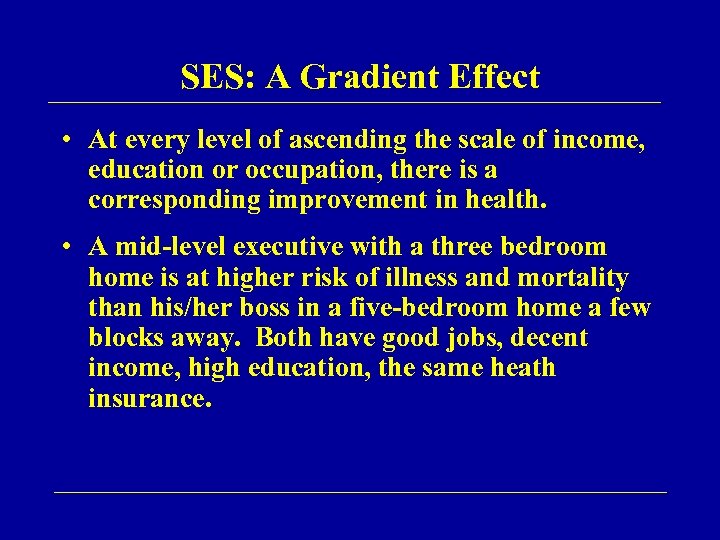 SES: A Gradient Effect • At every level of ascending the scale of income, education or occupation, there is a corresponding improvement in health. • A mid-level executive with a three bedroom home is at higher risk of illness and mortality than his/her boss in a five-bedroom home a few blocks away. Both have good jobs, decent income, high education, the same heath insurance.
 Key Fact #5 All indicators of SES are not the same across racial/ethnic groups.
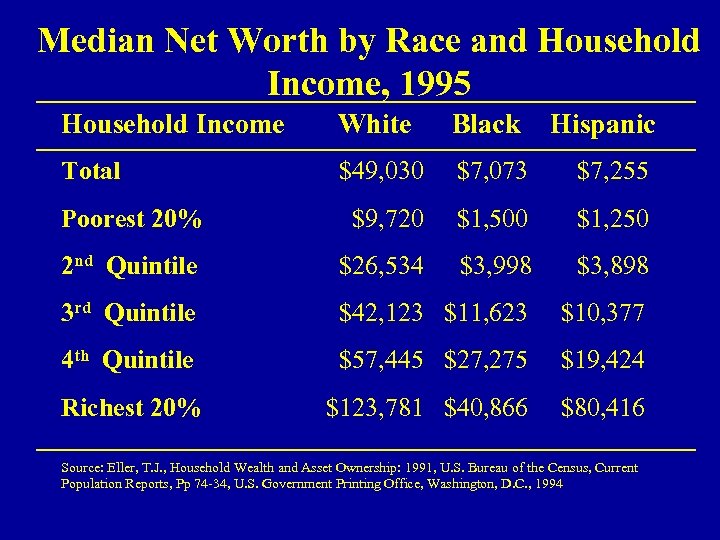 Median Net Worth by Race and Household Income, 1995 Household Income White Black Hispanic Total $49, 030 $7, 073 $7, 255 Poorest 20% $9, 720 $1, 500 $1, 250 2 nd Quintile $26, 534 $3, 998 $3, 898 3 rd Quintile $42, 123 $11, 623 $10, 377 4 th Quintile $57, 445 $27, 275 $19, 424 Richest 20% $123, 781 $40, 866 $80, 416 Source: Eller, T. J. , Household Wealth and Asset Ownership: 1991, U. S. Bureau of the Census, Current Population Reports, Pp 74 -34, U. S. Government Printing Office, Washington, D. C. , 1994
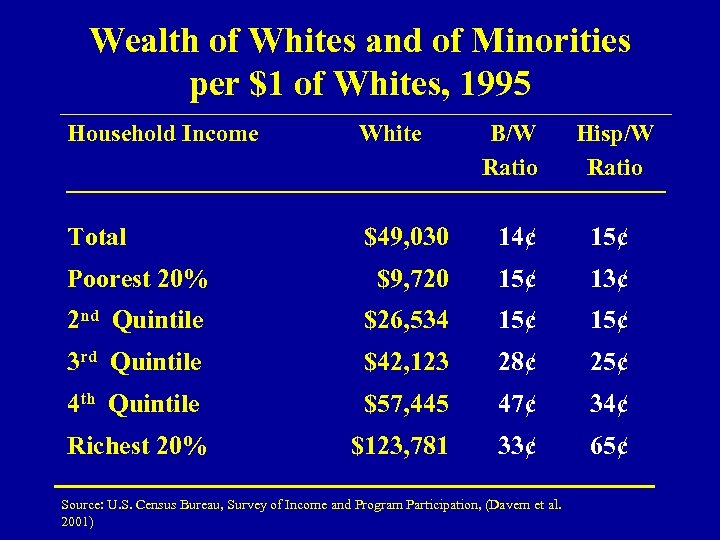 Wealth of Whites and of Minorities per $1 of Whites, 1995 Household Income White B/W Ratio Total $49, 030 14¢ 15¢ Poorest 20% $9, 720 15¢ 13¢ 2 nd Quintile $26, 534 15¢ 3 rd Quintile $42, 123 28¢ 25¢ 4 th Quintile $57, 445 47¢ 34¢ Richest 20% $123, 781 33¢ 65¢ Source: U. S. Census Bureau, Survey of Income and Program Participation, (Davern et al. 2001) Hisp/W Ratio
 Key Fact #6 In addition to SES, other factors linked to race/ethnicity (including racism) are an added burden.
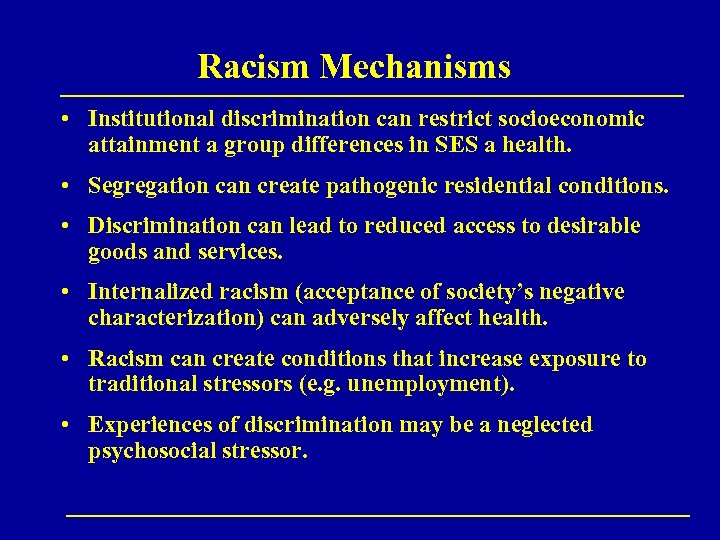 Racism Mechanisms • Institutional discrimination can restrict socioeconomic attainment a group differences in SES a health. • Segregation can create pathogenic residential conditions. • Discrimination can lead to reduced access to desirable goods and services. • Internalized racism (acceptance of society’s negative characterization) can adversely affect health. • Racism can create conditions that increase exposure to traditional stressors (e. g. unemployment). • Experiences of discrimination may be a neglected psychosocial stressor.
 Key Fact #7 Place makes an added contribution to health.
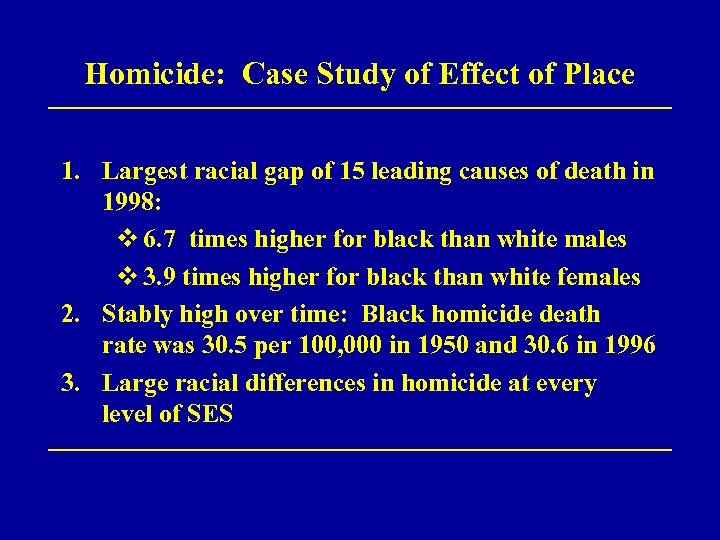 Homicide: Case Study of Effect of Place 1. Largest racial gap of 15 leading causes of death in 1998: v 6. 7 times higher for black than white males v 3. 9 times higher for black than white females 2. Stably high over time: Black homicide death rate was 30. 5 per 100, 000 in 1950 and 30. 6 in 1996 3. Large racial differences in homicide at every level of SES
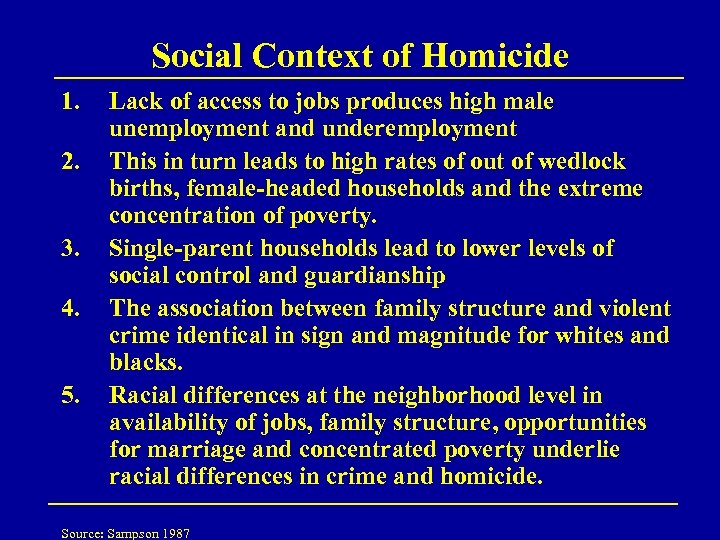 Social Context of Homicide 1. 2. 3. 4. 5. Lack of access to jobs produces high male unemployment and underemployment This in turn leads to high rates of out of wedlock births, female-headed households and the extreme concentration of poverty. Single-parent households lead to lower levels of social control and guardianship The association between family structure and violent crime identical in sign and magnitude for whites and blacks. Racial differences at the neighborhood level in availability of jobs, family structure, opportunities for marriage and concentrated poverty underlie racial differences in crime and homicide. Source: Sampson 1987
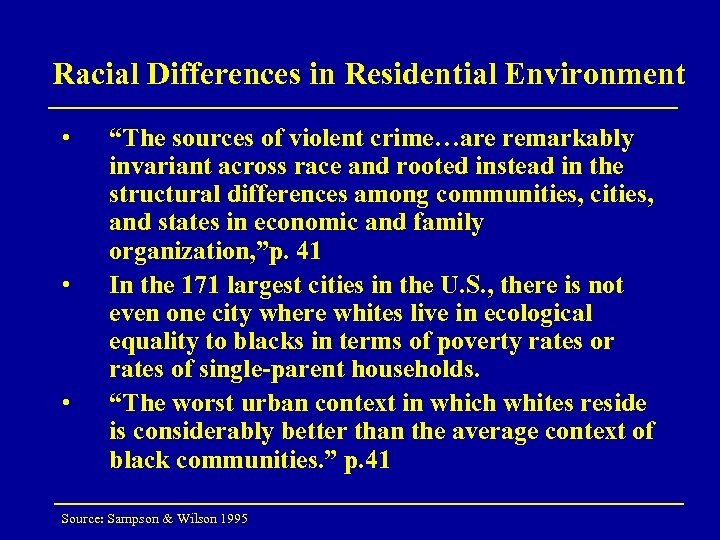 Racial Differences in Residential Environment • • • “The sources of violent crime…are remarkably invariant across race and rooted instead in the structural differences among communities, cities, and states in economic and family organization, ”p. 41 In the 171 largest cities in the U. S. , there is not even one city where whites live in ecological equality to blacks in terms of poverty rates or rates of single-parent households. “The worst urban context in which whites reside is considerably better than the average context of black communities. ” p. 41 Source: Sampson & Wilson 1995
 Residential Segregation and SES A study of the effects of segregation on young African American adults found that the elimination of segregation would erase blackwhite differences in §Earnings §High School Graduation Rate §Unemployment And reduce racial differences in single motherhood by two-thirds Cutler, Glaeser & Vigdor, 1997
 Key Fact #8 There are racial/ethnic differences in access to care and the quality of care
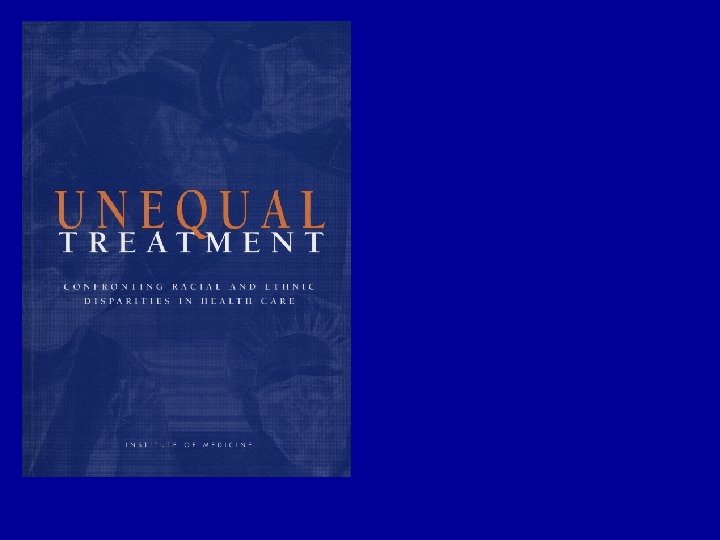
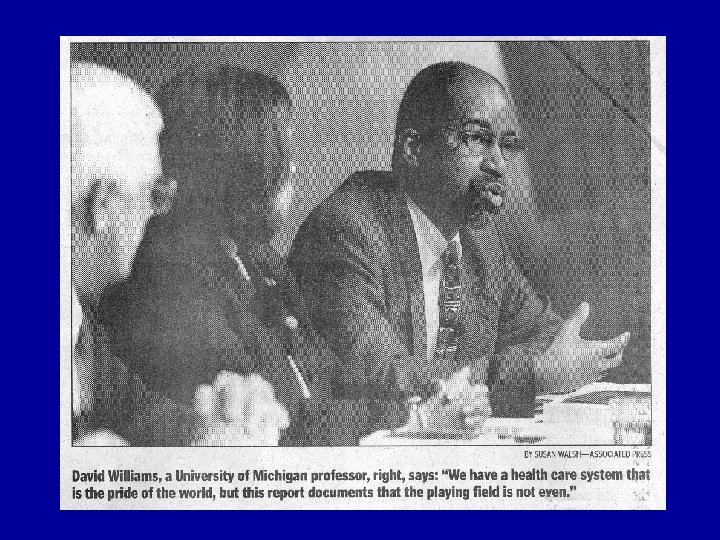
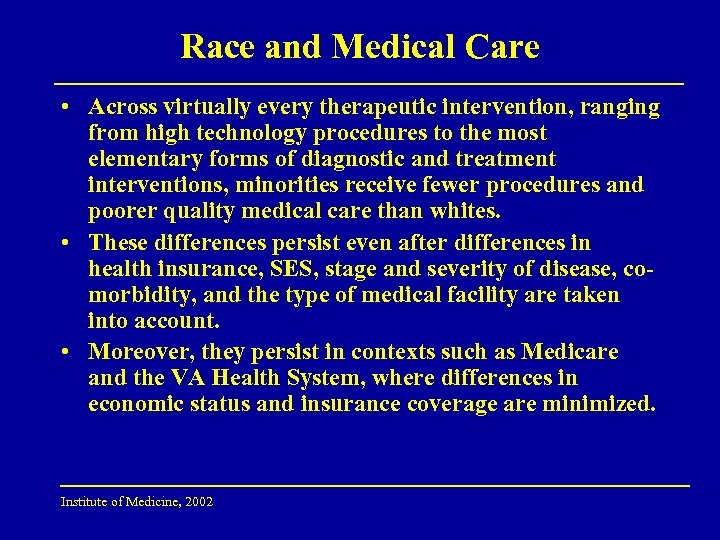 Race and Medical Care • Across virtually every therapeutic intervention, ranging from high technology procedures to the most elementary forms of diagnostic and treatment interventions, minorities receive fewer procedures and poorer quality medical care than whites. • These differences persist even after differences in health insurance, SES, stage and severity of disease, comorbidity, and the type of medical facility are taken into account. • Moreover, they persist in contexts such as Medicare and the VA Health System, where differences in economic status and insurance coverage are minimized. Institute of Medicine, 2002
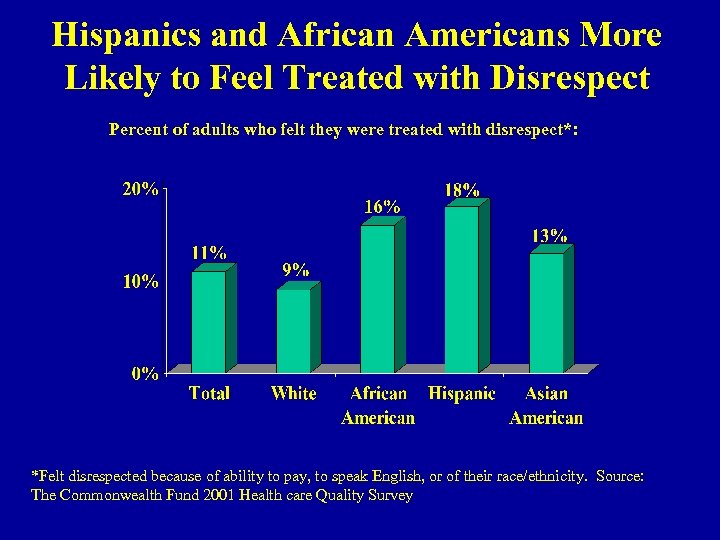 Hispanics and African Americans More Likely to Feel Treated with Disrespect Percent of adults who felt they were treated with disrespect*: *Felt of ability to pay, to speak English, or of their race/ethnicity. *Felt disrespected because of ability to pay, to speak English, or of their Source: The Commonwealth Fund 2001 Health Care Quality Survey The Commonwealth Fund 2001 Health care Quality Survey
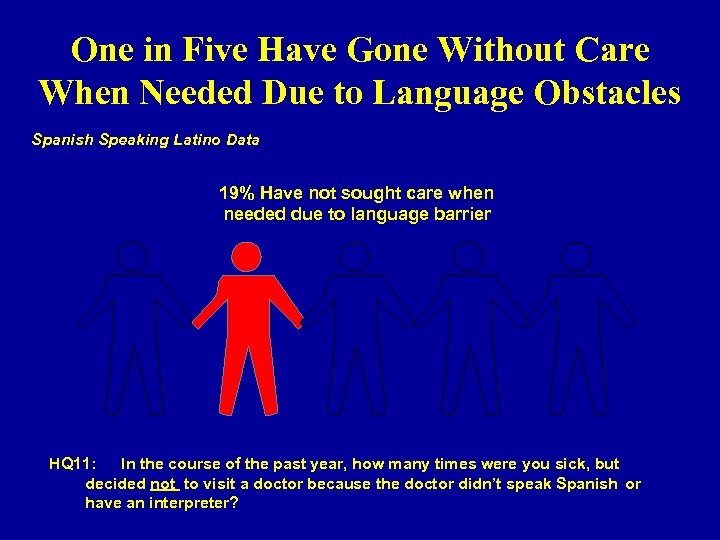 One in Five Have Gone Without Care When Needed Due to Language Obstacles Spanish Speaking Latino Data 19% Have not sought care when needed due to language barrier HQ 11: In the course of the past year, how many times were you sick, but decided not to visit a doctor because the doctor didn’t speak Spanish or have an interpreter?
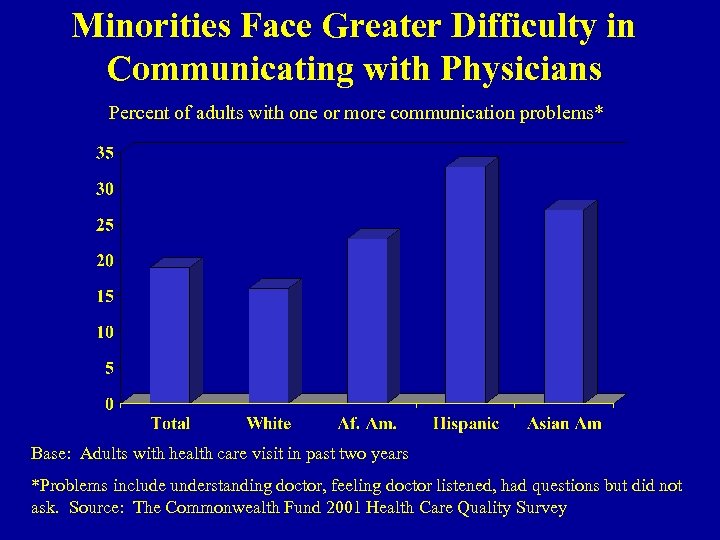 Minorities Face Greater Difficulty in Communicating with Physicians Percent of adults with one or more communication problems* Base: Adults with health care visit in past two years *Problems include understanding doctor, feeling doctor listened, had questions but did not ask. Source: The Commonwealth Fund 2001 Health Care Quality Survey
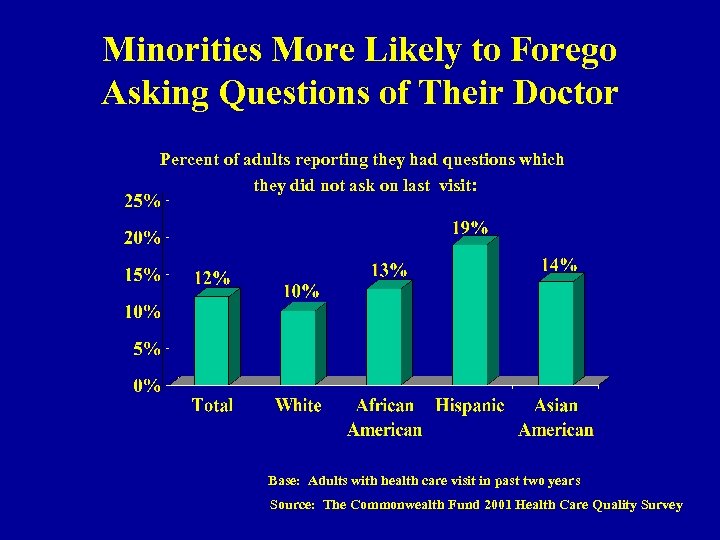 Minorities More Likely to Forego Asking Questions of Their Doctor Percent of adults reporting they had questions which they did not ask on last visit: Base: Adults with health care visit in past two years Source: The Commonwealth Fund 2001 Health Care Quality Survey
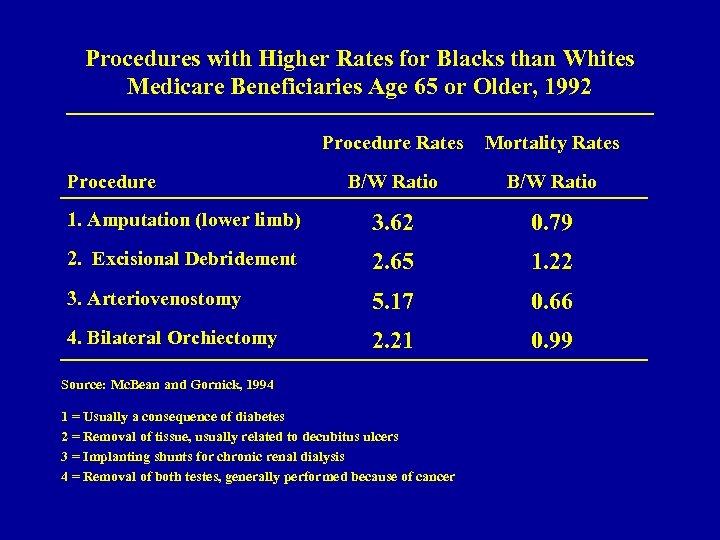 Procedures with Higher Rates for Blacks than Whites Medicare Beneficiaries Age 65 or Older, 1992 Procedure Rates Mortality Rates B/W Ratio 1. Amputation (lower limb) 3. 62 0. 79 2. Excisional Debridement 2. 65 1. 22 3. Arteriovenostomy 5. 17 0. 66 4. Bilateral Orchiectomy 2. 21 0. 99 Procedure Source: Mc. Bean and Gornick, 1994 1 = Usually a consequence of diabetes 2 = Removal of tissue, usually related to decubitus ulcers 3 = Implanting shunts for chronic renal dialysis 4 = Removal of both testes, generally performed because of cancer
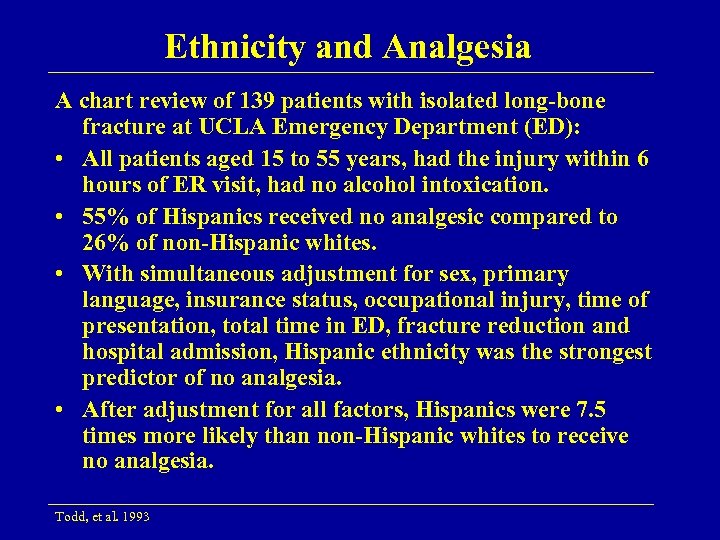 Ethnicity and Analgesia A chart review of 139 patients with isolated long-bone fracture at UCLA Emergency Department (ED): • All patients aged 15 to 55 years, had the injury within 6 hours of ER visit, had no alcohol intoxication. • 55% of Hispanics received no analgesic compared to 26% of non-Hispanic whites. • With simultaneous adjustment for sex, primary language, insurance status, occupational injury, time of presentation, total time in ED, fracture reduction and hospital admission, Hispanic ethnicity was the strongest predictor of no analgesia. • After adjustment for all factors, Hispanics were 7. 5 times more likely than non-Hispanic whites to receive no analgesia. Todd, et al. 1993
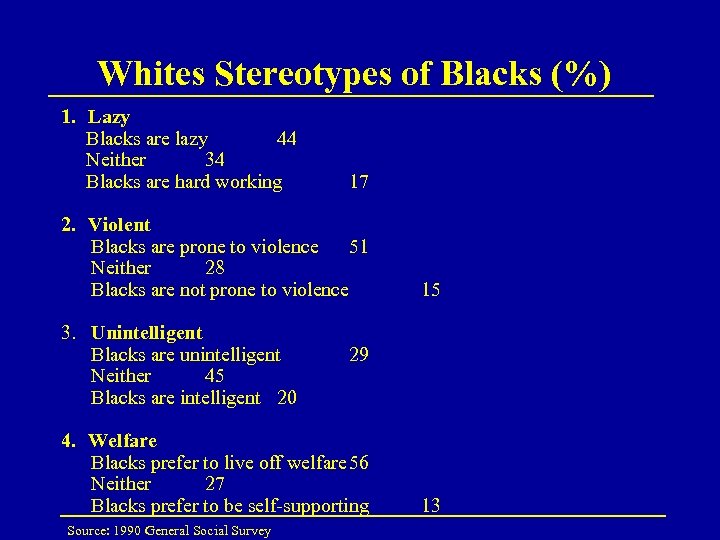 Whites Stereotypes of Blacks (%) 1. Lazy Blacks are lazy 44 Neither 34 Blacks are hard working 17 2. Violent Blacks are prone to violence 51 Neither 28 Blacks are not prone to violence 3. Unintelligent Blacks are unintelligent Neither 45 Blacks are intelligent 20 29 4. Welfare Blacks prefer to live off welfare 56 Neither 27 Blacks prefer to be self-supporting Source: 1990 General Social Survey 15 13
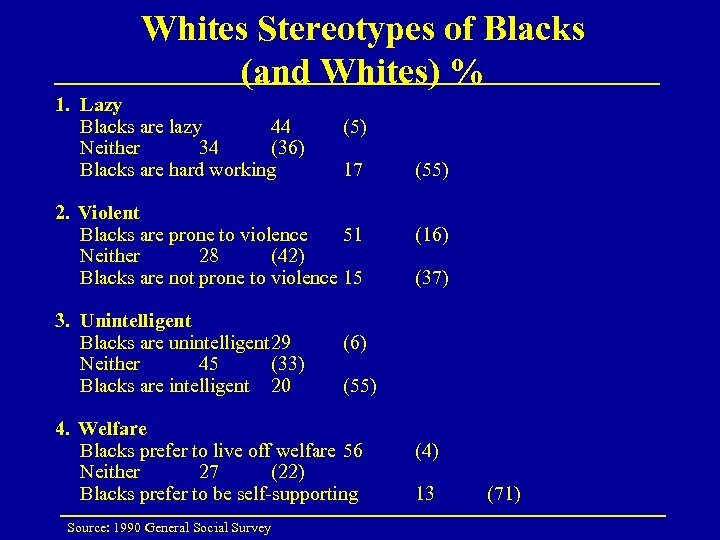 Whites Stereotypes of Blacks (and Whites) % 1. Lazy Blacks are lazy 44 Neither 34 (36) Blacks are hard working (5) 17 2. Violent Blacks are prone to violence 51 Neither 28 (42) Blacks are not prone to violence 15 3. Unintelligent Blacks are unintelligent 29 Neither 45 (33) Blacks are intelligent 20 (16) (37) (6) (55) 4. Welfare Blacks prefer to live off welfare 56 Neither 27 (22) Blacks prefer to be self-supporting Source: 1990 General Social Survey (55) (4) 13 (71)
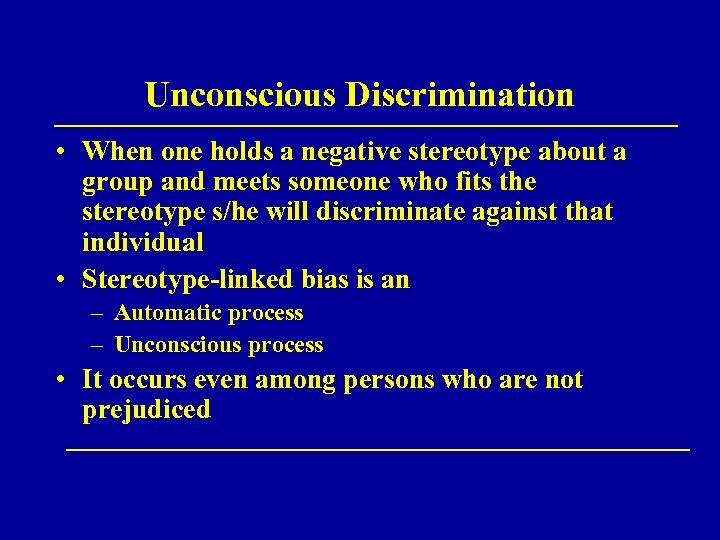 Unconscious Discrimination • When one holds a negative stereotype about a group and meets someone who fits the stereotype s/he will discriminate against that individual • Stereotype-linked bias is an – Automatic process – Unconscious process • It occurs even among persons who are not prejudiced
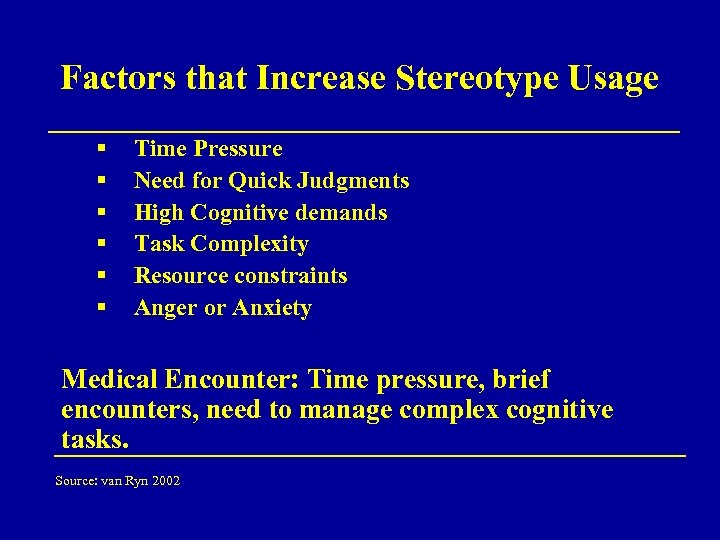 Factors that Increase Stereotype Usage § § § Time Pressure Need for Quick Judgments High Cognitive demands Task Complexity Resource constraints Anger or Anxiety Medical Encounter: Time pressure, brief encounters, need to manage complex cognitive tasks. Source: van Ryn 2002
 Key Fact #9 Minorities are still underrepresented among health professionals.
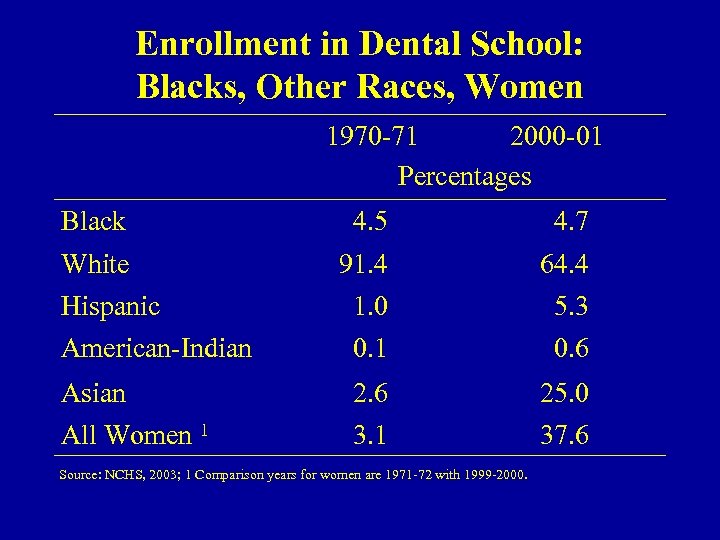 Enrollment in Dental School: Blacks, Other Races, Women 1970 -71 2000 -01 Percentages Black 4. 5 4. 7 White 91. 4 64. 4 Hispanic 1. 0 5. 3 American-Indian 0. 1 0. 6 Asian 2. 6 25. 0 All Women 1 37. 6 Source: NCHS, 2003; 1 Comparison years for women are 1971 -72 with 1999 -2000.
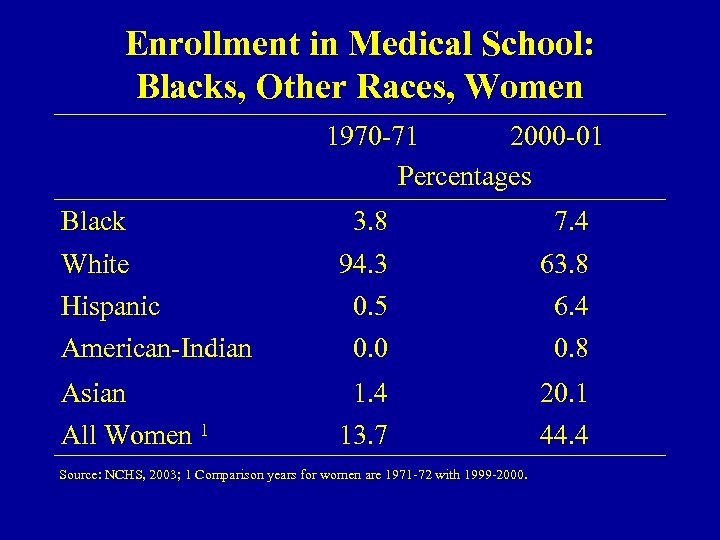 Enrollment in Medical School: Blacks, Other Races, Women 1970 -71 2000 -01 Percentages Black 3. 8 7. 4 White 94. 3 63. 8 Hispanic 0. 5 6. 4 American-Indian 0. 0 0. 8 Asian 1. 4 20. 1 13. 7 44. 4 All Women 1 Source: NCHS, 2003; 1 Comparison years for women are 1971 -72 with 1999 -2000.
 Key Fact #10 African Americans have much better mental health than expected
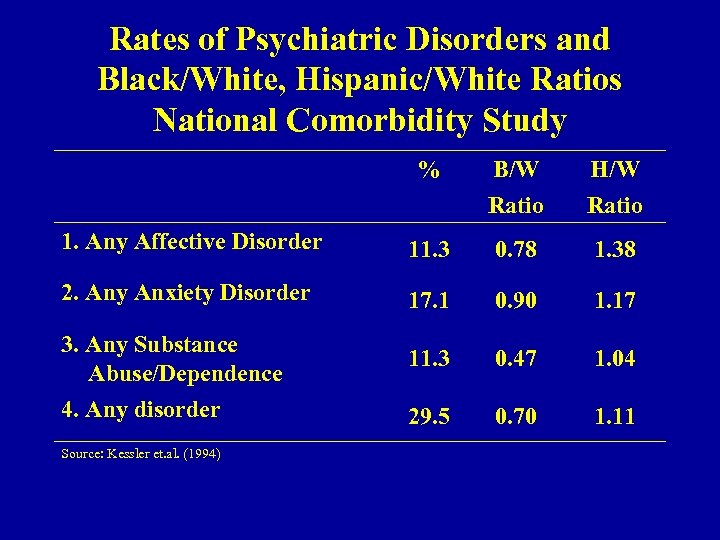 Rates of Psychiatric Disorders and Black/White, Hispanic/White Ratios National Comorbidity Study % B/W H/W Ratio 1. Any Affective Disorder 11. 3 0. 78 1. 38 2. Any Anxiety Disorder 17. 1 0. 90 1. 17 3. Any Substance Abuse/Dependence 11. 3 0. 47 1. 04 4. Any disorder 29. 5 0. 70 1. 11 Source: Kessler et. al. (1994)
 Disparities in Mental Health Care Compared with whites: • Minorities have less access to, and availability of, mental health services. • Minorities are less likely to receive needed mental health services. • Minorities in treatment often receive a poorer quality of mental health care. • Minorities are underrepresented in mental health research. Source: Mental Health: Culture, Race, and Ethnicity (2001) [Supplement to the Surgeon General’s Report on Mental Health]
 Health Enhancing Resources? The Case of Religious Involvement • The role of the clergy as intermediaries between clients and the health care system. • The role of religious institutions as support resources. • The role of religious congregants as sources of support and of stress. • The role of public religious participation as an alternative form of therapy. • Religious belief systems can facilitate coping. • Religious belief systems can lead to poorer adaptation. • The role of religion in encouraging health practices.
 The Bottom-Line Policies to reduce inequalities in health must address fundamental non-medical determinants.
 Reducing Inequalities Address Underlying Determinants of Health- I • Improve living standards for poor persons and households • Increase access to employment opportunities • Increase education and training that provide basic skills for the unskilled and better job ladders for the least skilled • Invest in improved educational quality in the early years and reduce educational failure
 Reducing Inequalities Address Underlying Determinants of Health- II • Improve conditions of work, re-design workplaces to reduce injuries and job stress • Enrich the quality of neighborhood environments and increase economic development in poor areas • Improve housing quality and the safety of neighborhood environments
 Reducing Inequalities Health Care • Improve access to care and the quality of care • Give emphasis to the prevention of illness • Provide effective treatment • Develop incentives to reduce inequalities in the quality of care
 Reducing Inequalities Engage Multiple Communities • Knowledge of the extent of disparities and their causes is a prerequisite for effective action • In the U. S. , over 50% of whites and over 50% of blacks are unaware that racial disparities in health exist. • Partnerships needed with government, industry, and other private organizations • Important role for community involvement in the identification and management of interventions • Strengthen the capacity of community organizations to take action
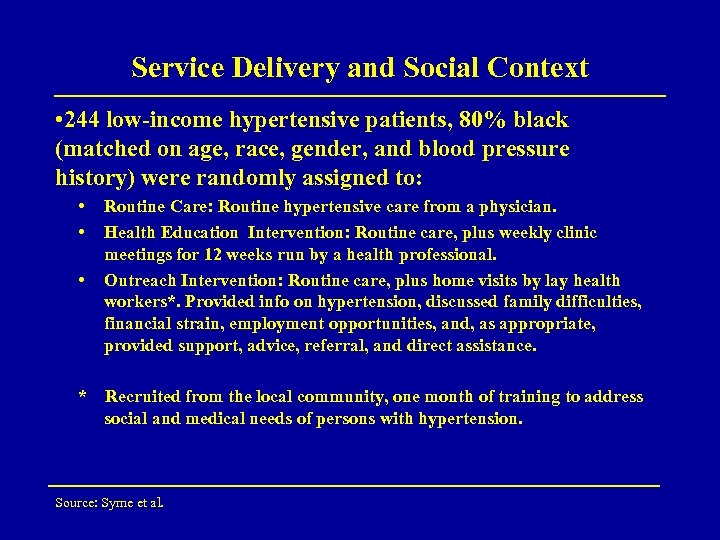 Service Delivery and Social Context • 244 low-income hypertensive patients, 80% black (matched on age, race, gender, and blood pressure history) were randomly assigned to: • • • * Routine Care: Routine hypertensive care from a physician. Health Education Intervention: Routine care, plus weekly clinic meetings for 12 weeks run by a health professional. Outreach Intervention: Routine care, plus home visits by lay health workers*. Provided info on hypertension, discussed family difficulties, financial strain, employment opportunities, and, as appropriate, provided support, advice, referral, and direct assistance. Recruited from the local community, one month of training to address social and medical needs of persons with hypertension. Source: Syme et al.
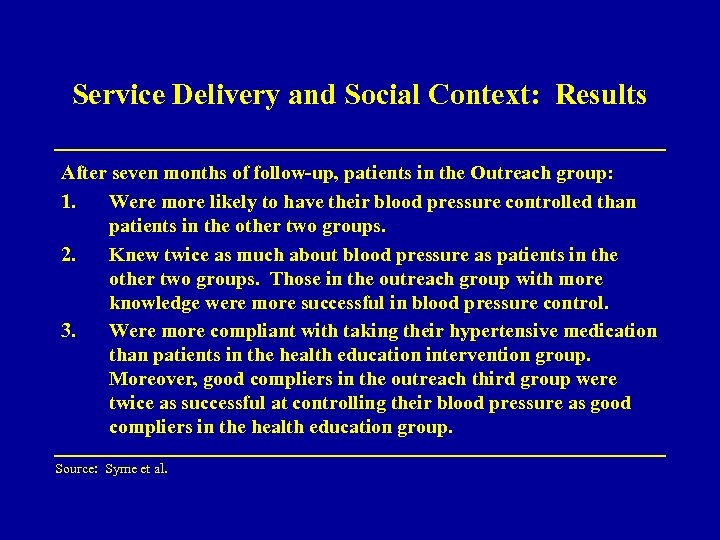 Service Delivery and Social Context: Results After seven months of follow-up, patients in the Outreach group: 1. Were more likely to have their blood pressure controlled than patients in the other two groups. 2. Knew twice as much about blood pressure as patients in the other two groups. Those in the outreach group with more knowledge were more successful in blood pressure control. 3. Were more compliant with taking their hypertensive medication than patients in the health education intervention group. Moreover, good compliers in the outreach third group were twice as successful at controlling their blood pressure as good compliers in the health education group. Source: Syme et al.