


 Скачать презентацию Rachel Hamarman 4 th Grade What is
762c3c07b35d6c916f9357772a371bc8.ppt
- Количество слайдов: 30
 Rachel Hamarman 4 th Grade
 What is Recycling?
 • Recycling is a term used to describe a series of activities that includes collecting recyclable materials that would otherwise be considered waste.
 What does the Recycling Symbol Mean?
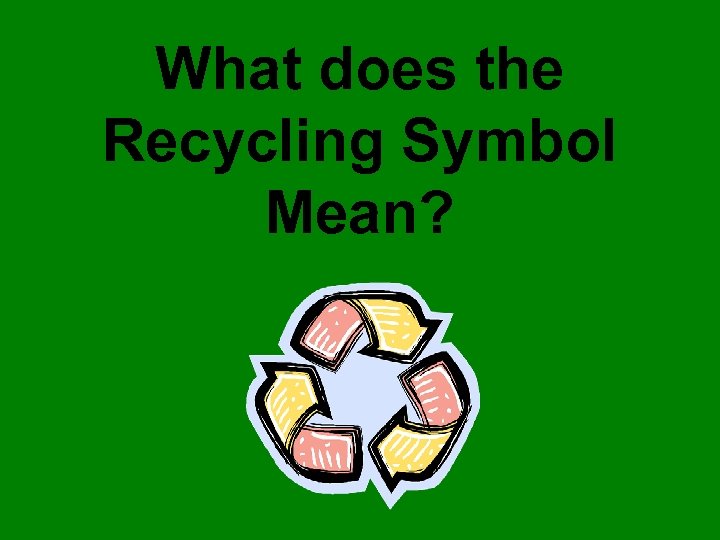
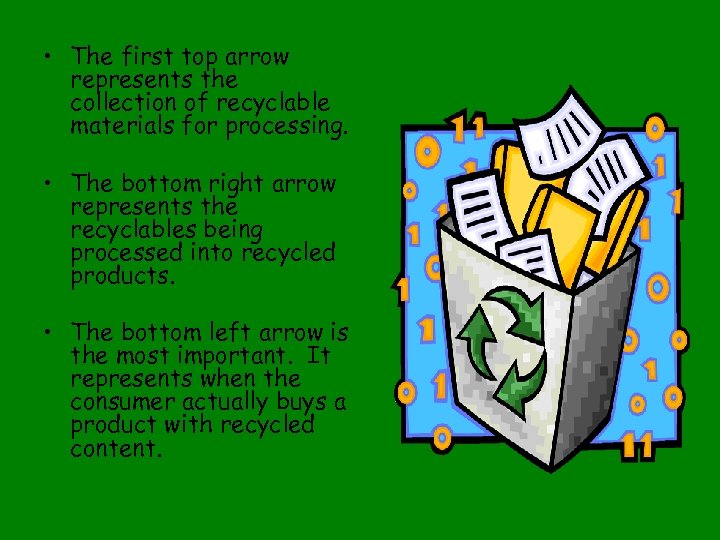 • The first top arrow represents the collection of recyclable materials for processing. • The bottom right arrow represents the recyclables being processed into recycled products. • The bottom left arrow is the most important. It represents when the consumer actually buys a product with recycled content.
 What are three R’s of Recycling?
 Reduce • Reduce means to use less of something. Some examples are: 1. Use a handkerchief instead of tissues. 2. Use a cotton rag when cleaning house instead of paper towels. 3. Use a sports bottle instead of buying bottled water everyday.
 Reuse • Reuse is to put again into service without changing. Examples are: 1. Wrapping paper 2. Floppy disks 3. Plastic grocery bags
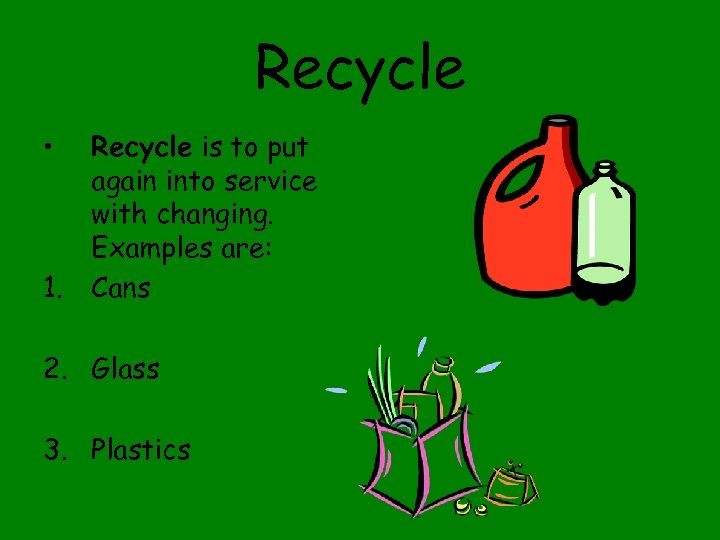 Recycle • 1. Recycle is to put again into service with changing. Examples are: Cans 2. Glass 3. Plastics
 What are some things I can Recycle?
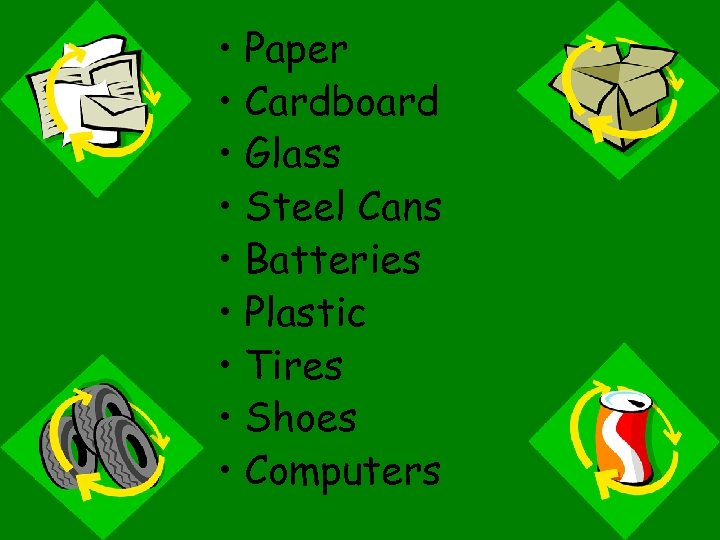 • Paper • Cardboard • Glass • Steel Cans • Batteries • Plastic • Tires • Shoes • Computers
 What are some items that I cannot Recycle?
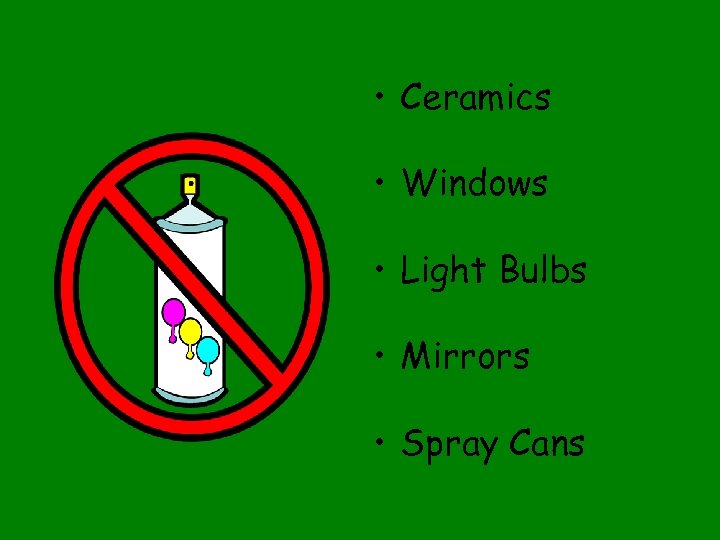 • Ceramics • Windows • Light Bulbs • Mirrors • Spray Cans
 Where do I take my Recyclables
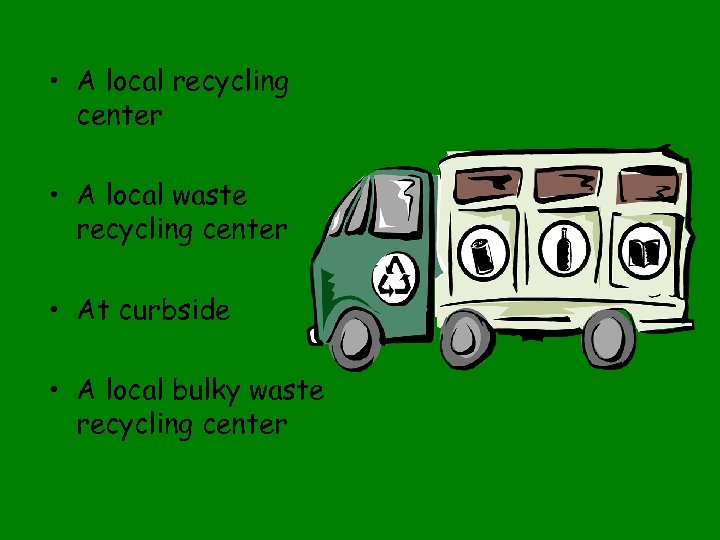 • A local recycling center • A local waste recycling center • At curbside • A local bulky waste recycling center
 How can Recycling conserve our natural resources?
 • Recycling conserves natural resources by substituting “secondary resources” such as glass, metal, and paper for raw materials extracted. • By recycling paper the need to cut down trees reduces. • By recycling aluminum it minimizes the need for mining new minerals, thereby decreasing damage to the wilderness.
 How does Recycling save energy?
 • The energy required to manufacture paper, plastics, glass, and metal from recycled materials is usually less than the energy required to produce them from new materials. • The steps such as collection, processing, and transportation is also usually less energy then the steps in supplying new materials.
 How can students start a Recycling program at their school?
 There are 3 steps to starting one • The first step is to get key questions answered such as: 1. Who will run the program? 2. What kind of Recyclables does the school produce? 3. How will the Recyclables get to the centers?
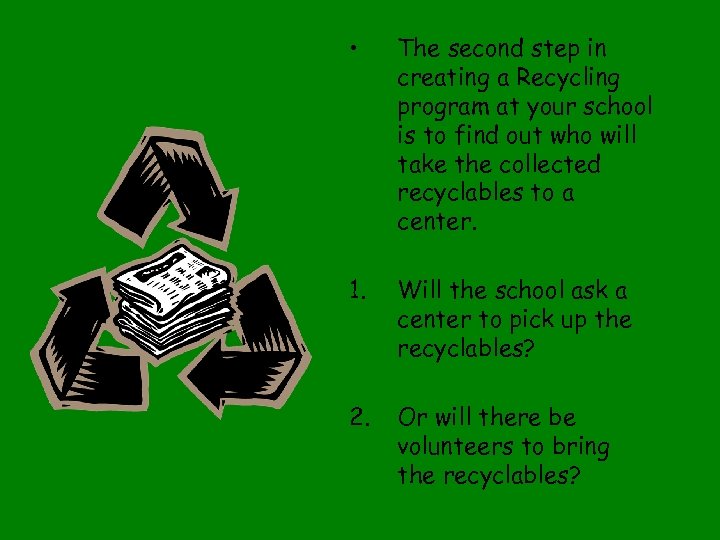 • The second step in creating a Recycling program at your school is to find out who will take the collected recyclables to a center. 1. Will the school ask a center to pick up the recyclables? 2. Or will there be volunteers to bring the recyclables?
 • The final step is to put the program into gear by having a recycling club to manage it. 1. Each classroom should have a bin to put their recyclables in. 2. The schools offices should also have bins.
 Recycling Club should: • Have the task of emptying the classroom and office bins. • Oversee the collection in their area and be a check to see if what is being recycled is recyclable. • Inform new students of the recycling program. • Remind students of what can be recycled. • Encourage participation from classmates and teacher.
 What can I do now in school to help?
 • Bring your lunch in reusable lunch bags with reusable silverware. • Reuse paper if you can. • When typing use a smaller font and bigger margins. • Use refillable pens and pencils.
 What can I do at home to help?
 • Bring old glasses to eye doctors. • Bring your old clothes to Goodwill. • Use glass cups and plates instead of paper. • Use cloth napkins instead of paper. • Buy in bulk rather then buying smaller bottles of something. • Reuse glass bottles or containers.
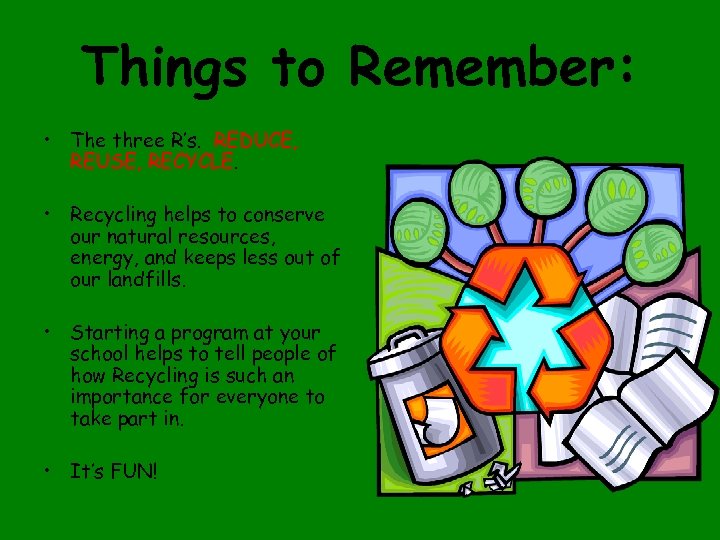 Things to Remember: • The three R’s. REDUCE, REUSE, RECYCLE. • Recycling helps to conserve our natural resources, energy, and keeps less out of our landfills. • Starting a program at your school helps to tell people of how Recycling is such an importance for everyone to take part in. • It’s FUN!
 Sources • www. co. hennipin. mn. us/enviornment/learning/w rchecklist. html • www. ci. fort-collings. co. us/recycling/school • http: //philcoservices. com/Recycling. Facts. phtml • www. rice. edu/armadillo/projects/star/facilitators • www. 1800 cleanup. org • www. obviously. com/recycle/guides • www. purea. com/images/3 -prong_plug