


 Скачать презентацию Race Thursday August 18 2016
0bc9799d118dd50e1b137da2cd26fc1a.ppt
- Количество слайдов: 15
 + Race Thursday, August 18, 2016
 + Galatians 3: 28 There is neither _______ nor _____, neither ____ nor _______, nor is there _____and _____, for you are all one in Christ Jesus. Dalam hal ini tidak ada _____atau ____, tidak ada _____atau ______, tidak ada ______atau _____, karena kamu semua adalah satu di dalam Kristus Yesus.
 + Social Differentiation n Race: Physical traits of a person that have, over time, become socially significant n Remember, theoretically, race and ethnicity are considered part of social differentiation. No race is better than another and no ethnicity is better than another. n However, race was socially constructed (aka created by humans), which means that race does have social significance.
 + Book page 14 -16 n Outdated
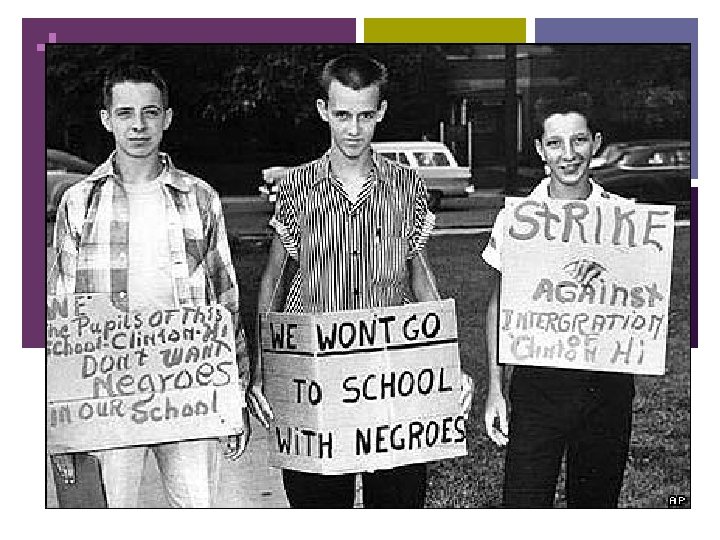
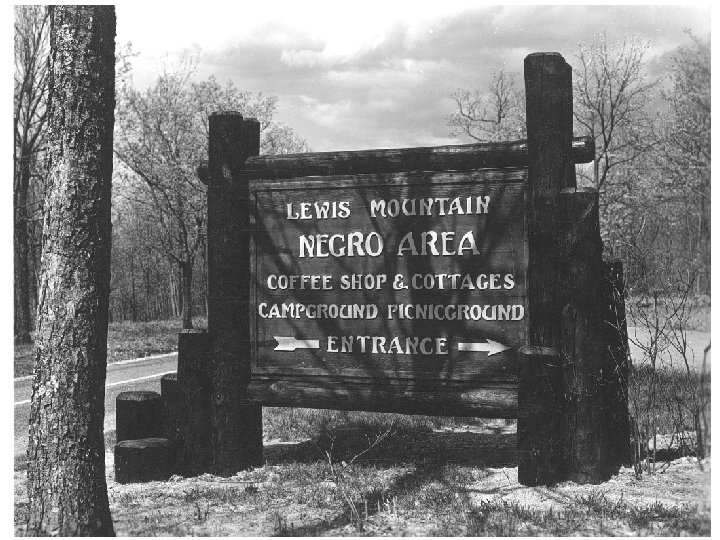
 + Why can’t we say “Negro? ” or “Negroid” n From time of slavery to the 1960 s, white Americans used “Negro” to describe black people. n It is derogatory (kata yang menghina). n It is socially unacceptable, offensive, and considered racist to say “Negro” or “colored” in the USA today.
 +
+
 +
+
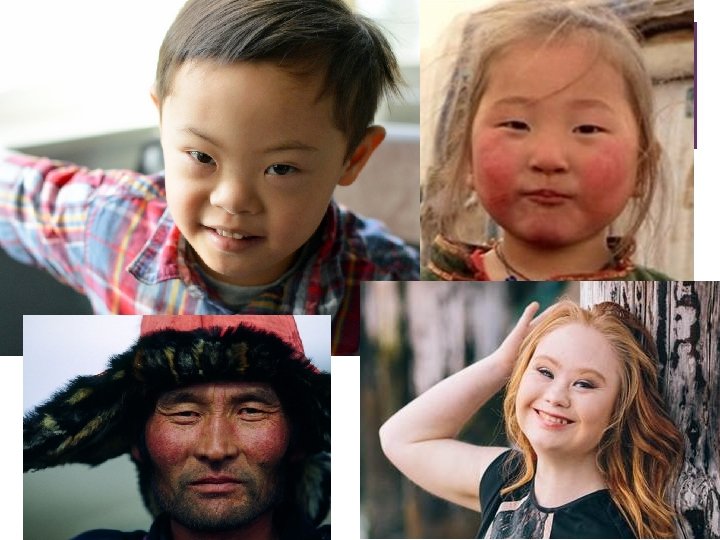
 + Why can’t we say “Mongoloid” or “Mongol” n Using mongol and mongoloid as a term for Down’s syndrome actually dates back to the 1860 s, when a doctor called John Langdon Down published a paper, Observations on an Ethnic Classification of Idiots. n Source: http: //www. independent. co. uk/
 +
+
 + Where did racial differences really come from? n Body mass n Appendages n Body Hair n Eyes n Nose n Skin color
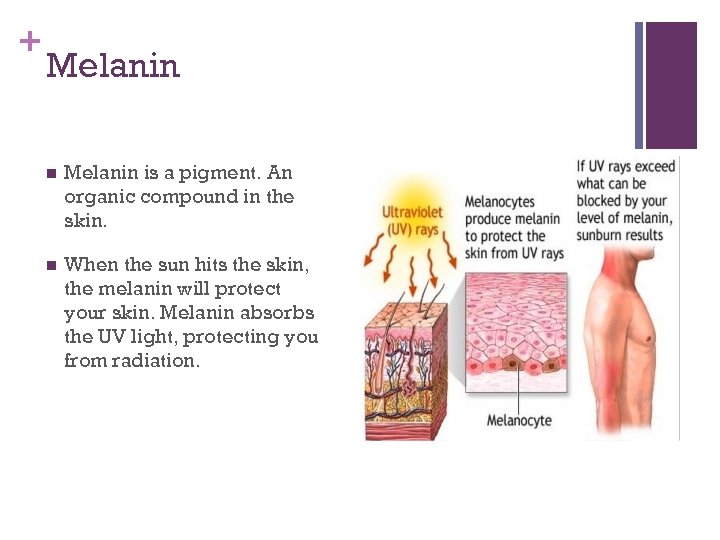 + Melanin n Melanin is a pigment. An organic compound in the skin. n When the sun hits the skin, the melanin will protect your skin. Melanin absorbs the UV light, protecting you from radiation.
 + Report to us after reading! Everyone take notes on this stuff! n Name of the body part n How does your body part adapt? n In different races/parts of the world, what would this body part look like?
 + Evolutionary theories n Out of Africa (this theory is more widely believed today) n Multiregional
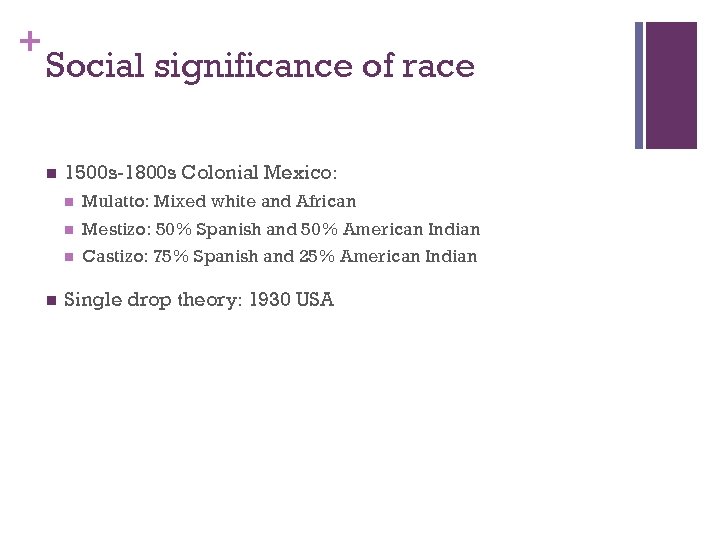 + Social significance of race n 1500 s-1800 s Colonial Mexico: n n Mestizo: 50% Spanish and 50% American Indian n n Mulatto: Mixed white and African Castizo: 75% Spanish and 25% American Indian Single drop theory: 1930 USA
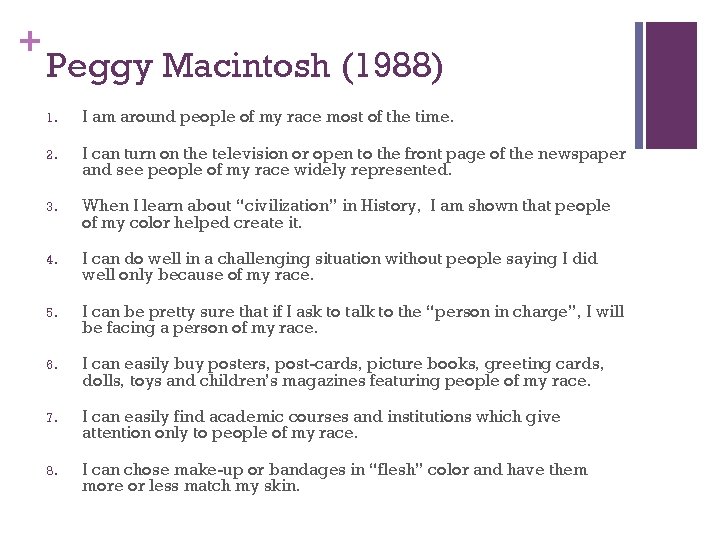 + Peggy Macintosh (1988) 1. I am around people of my race most of the time. 2. I can turn on the television or open to the front page of the newspaper and see people of my race widely represented. 3. When I learn about “civilization” in History, I am shown that people of my color helped create it. 4. I can do well in a challenging situation without people saying I did well only because of my race. 5. I can be pretty sure that if I ask to talk to the “person in charge”, I will be facing a person of my race. 6. I can easily buy posters, post-cards, picture books, greeting cards, dolls, toys and children’s magazines featuring people of my race. 7. I can easily find academic courses and institutions which give attention only to people of my race. 8. I can chose make-up or bandages in “flesh” color and have them more or less match my skin.