


 Скачать презентацию r Roadmapping as a Planning Tool to Assess
872791c1f40f15e8c9faa24350c3d745.ppt
- Количество слайдов: 27
 r Roadmapping as a Planning Tool to Assess Strategies in a Rapidly Changing Market Bob Mc. Carthy, Ph. D. Director, Strategic Market Planning Roche Molecular Biochemicals Phone: 317 -576 -7475, Fax: 317 -576 -7317 e mail: robert-c. mccarthy@roche. com
 r “Commentators have “We used to think the future was in the stars. Now we know its in our genes. ” James Watson, Visions (1997) sought to set the project in a historical context by likening to the. . Manhattan Project and the moon shot. . . Rather, the Human Genome project aims to produce biology’s periodic table- not 100 elements, but 100, 000 genes…. The challenge ahead is to turn the periodic table produced by the era of structural genomics into tools for the coming era of functional genomics” Eric S. Lander, Science 274: 536 (1996)
 r “We used to think the future was in the stars. Now we know its in our genes. ” James Watson, Visions (1997) “There’s a gene rush on out there. In the next three years or so, the entire human genome will be known, and all the interesting targets claimed. Companies that don’t invest and secure rights to disease-modifying gene discoveries will be shut out. ” J Hartwig, WSJ 24 Sept. 1998
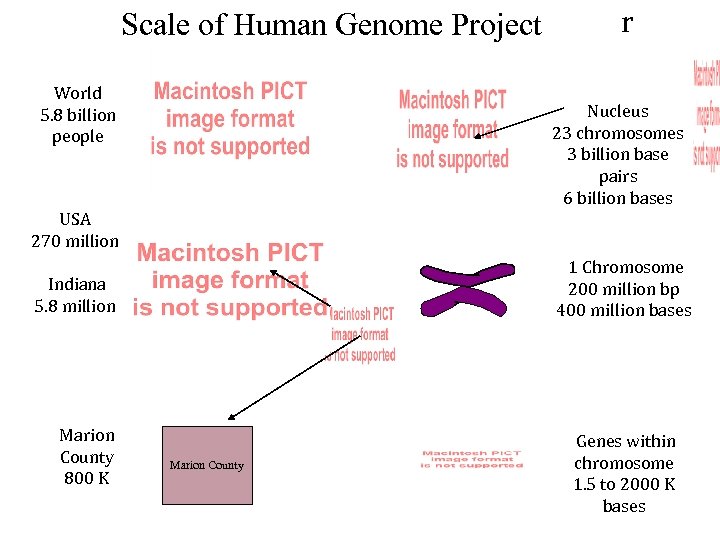 Scale of Human Genome Project World 5. 8 billion people r Nucleus 23 chromosomes 3 billion base pairs 6 billion bases USA 270 million 1 Chromosome 200 million bp 400 million bases Indiana 5. 8 million Marion County 800 K Marion County Genes within chromosome 1. 5 to 2000 K bases
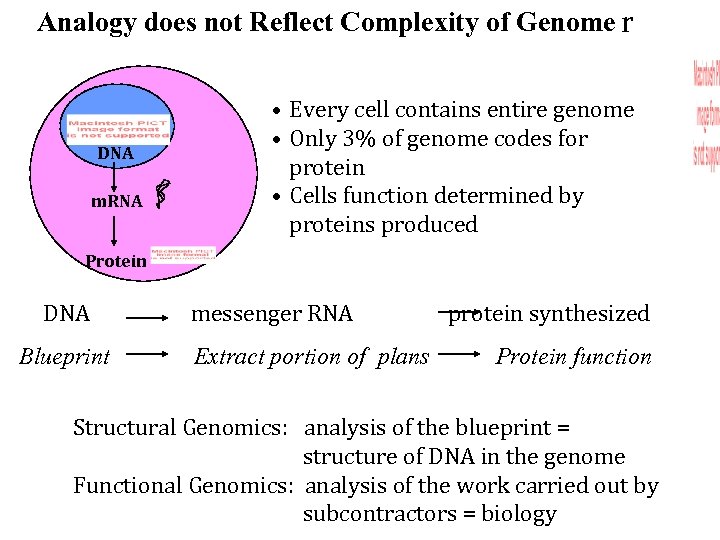 Analogy does not Reflect Complexity of Genome r DNA m. RNA • Every cell contains entire genome • Only 3% of genome codes for protein • Cells function determined by proteins produced Protein DNA Blueprint messenger RNA Extract portion of plans protein synthesized Protein function Structural Genomics: analysis of the blueprint = structure of DNA in the genome Functional Genomics: analysis of the work carried out by subcontractors = biology
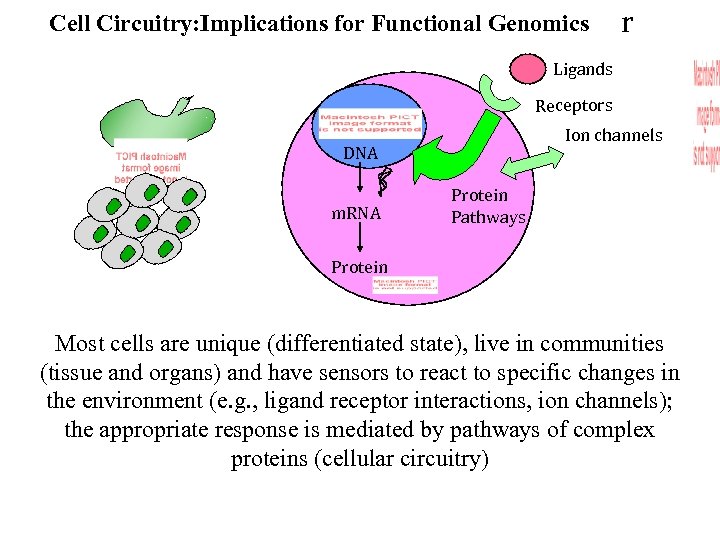 Cell Circuitry: Implications for Functional Genomics r Ligands Receptors Ion channels DNA m. RNA Protein Pathways Protein Most cells are unique (differentiated state), live in communities (tissue and organs) and have sensors to react to specific changes in the environment (e. g. , ligand receptor interactions, ion channels); the appropriate response is mediated by pathways of complex proteins (cellular circuitry)
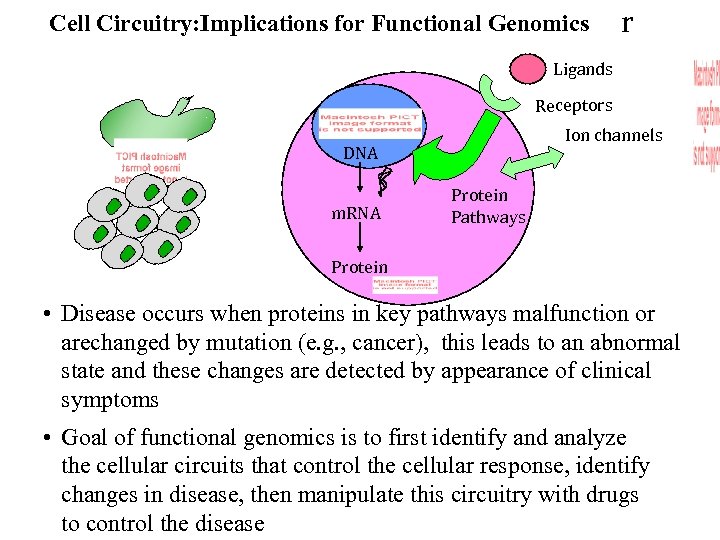 Cell Circuitry: Implications for Functional Genomics r Ligands Receptors Ion channels DNA m. RNA Protein Pathways Protein • Disease occurs when proteins in key pathways malfunction or arechanged by mutation (e. g. , cancer), this leads to an abnormal state and these changes are detected by appearance of clinical symptoms • Goal of functional genomics is to first identify and analyze the cellular circuits that control the cellular response, identify changes in disease, then manipulate this circuitry with drugs to control the disease
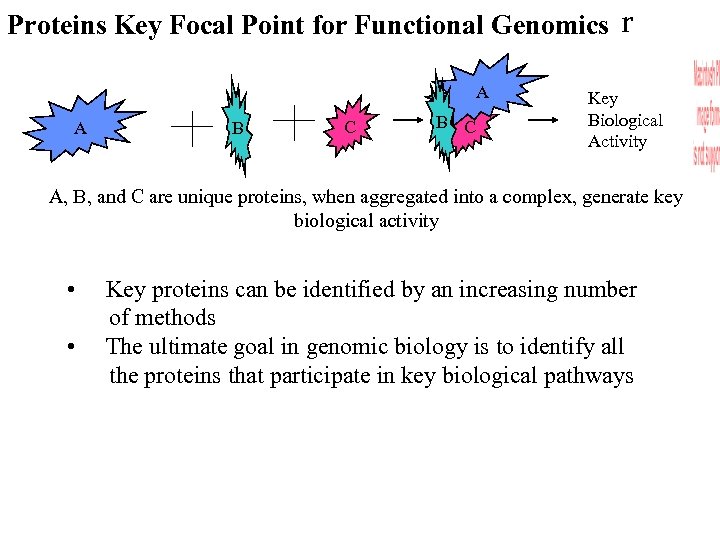 Proteins Key Focal Point for Functional Genomics r A A B C Key Biological Activity A, B, and C are unique proteins, when aggregated into a complex, generate key biological activity • • Key proteins can be identified by an increasing number of methods The ultimate goal in genomic biology is to identify all the proteins that participate in key biological pathways
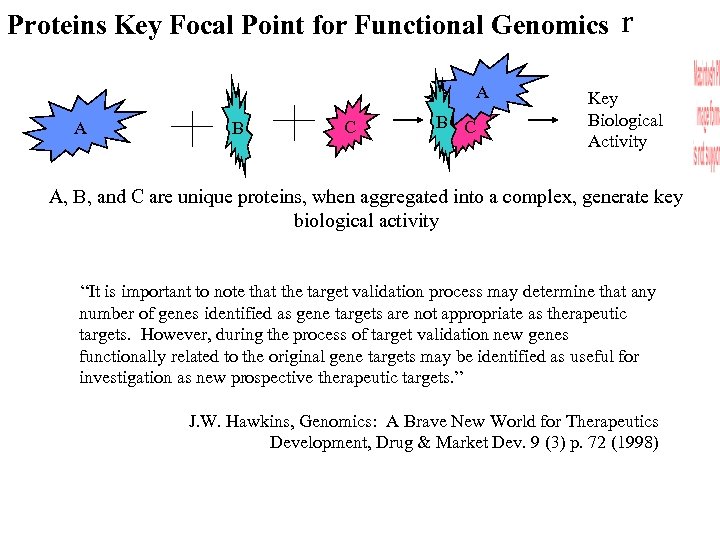 Proteins Key Focal Point for Functional Genomics r A A B C Key Biological Activity A, B, and C are unique proteins, when aggregated into a complex, generate key biological activity “It is important to note that the target validation process may determine that any number of genes identified as gene targets are not appropriate as therapeutic targets. However, during the process of target validation new genes functionally related to the original gene targets may be identified as useful for investigation as new prospective therapeutic targets. ” J. W. Hawkins, Genomics: A Brave New World for Therapeutics Development, Drug & Market Dev. 9 (3) p. 72 (1998)
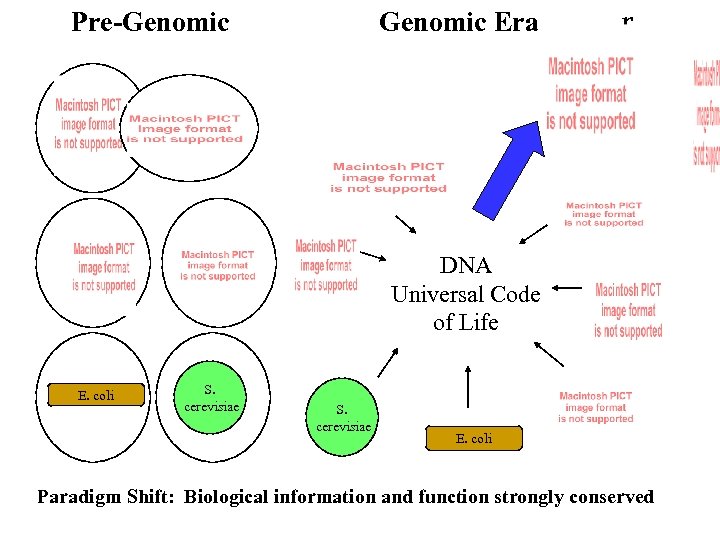 Pre-Genomic Era r DNA Universal Code of Life E. coli S. cerevisiae E. coli Paradigm Shift: Biological information and function strongly conserved
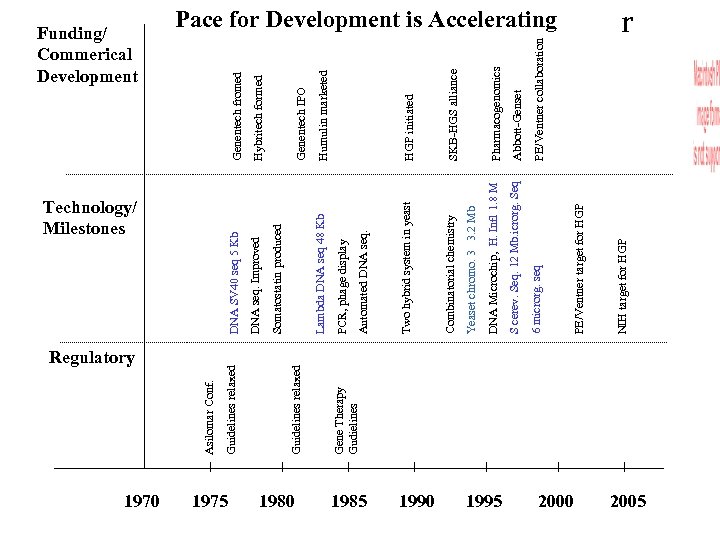 1970 Regulatory 1975 1980 Gene Therapy Gudielines Guidelines relaxed Genentech fromed 1985 HGP initiated Humulin marketed 1990 Pharmacogenomics Combinatorial chemistry 1995 PE/Ventner collaboration S cerev. Seq. 12 Mb. icrorg. Seq 6 microrg. seq Pace for Development is Accelerating 2000 NIH target for HGP PE/Ventner target for HGP Abbott-Genset DNA Microchip, H. Infl 1. 8 M Yeaset chromo. 3 3. 2 Mb SKB-HGS alliance Two hybrid system in yeast Automated DNA seq. PCR, phage display Lambda DNA seq 48 Kb Genentech IPO DNA seq. Improved Somatostatin produced Hybritech formed DNA SV 40 seq 5 Kb Technology/ Milestones Guidelines relaxed Asilomar Conf. Funding/ Commerical Development r 2005
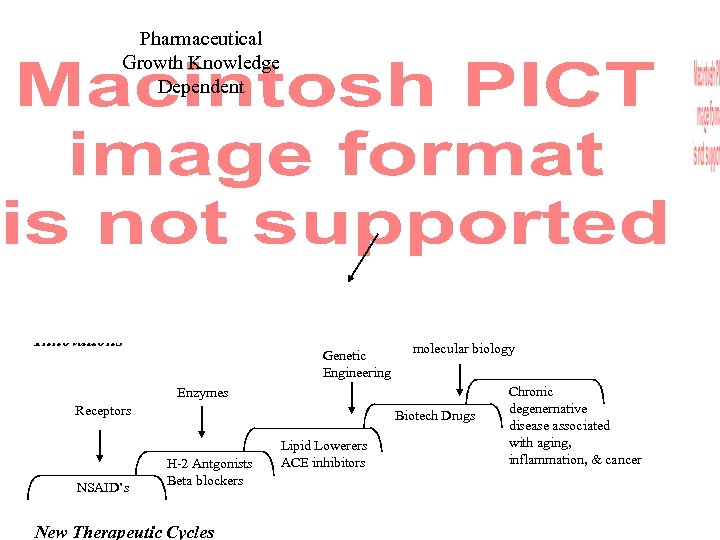 r Pharmaceutical Growth Knowledge Dependent 500 drug targets 3000 -10, 000 drug targets Innovations Genetic Engineering Cell pharmacology/ molecular biology Enzymes Receptors NSAID’s Biotech Drugs H-2 Antgonists Beta blockers New Therapeutic Cycles Lipid Lowerers ACE inhibitors Chronic degenernative disease associated with aging, inflammation, & cancer
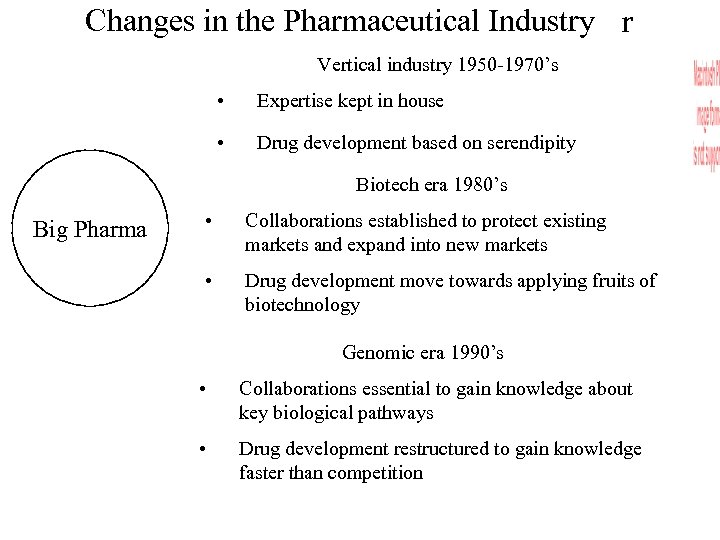 Changes in the Pharmaceutical Industry r Vertical industry 1950 -1970’s • Expertise kept in house • Drug development based on serendipity Biotech era 1980’s Big Pharma • Collaborations established to protect existing markets and expand into new markets • Drug development move towards applying fruits of biotechnology Genomic era 1990’s • Collaborations essential to gain knowledge about key biological pathways • Drug development restructured to gain knowledge faster than competition
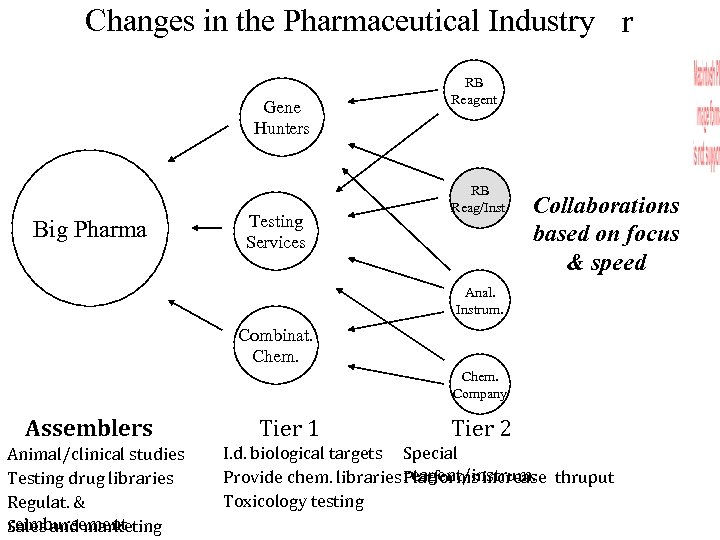 Changes in the Pharmaceutical Industry r Gene Hunters Big Pharma Testing Services RB Reagent RB Reag/Inst. Collaborations based on focus & speed Anal. Instrum. Combinat. Chem. Company Assemblers Animal/clinical studies Testing drug libraries Regulat. & reimbursement Sales and marketing Tier 1 Tier 2 I. d. biological targets Special Provide chem. libraries reagent/instrum. thruput Platforms increase Toxicology testing
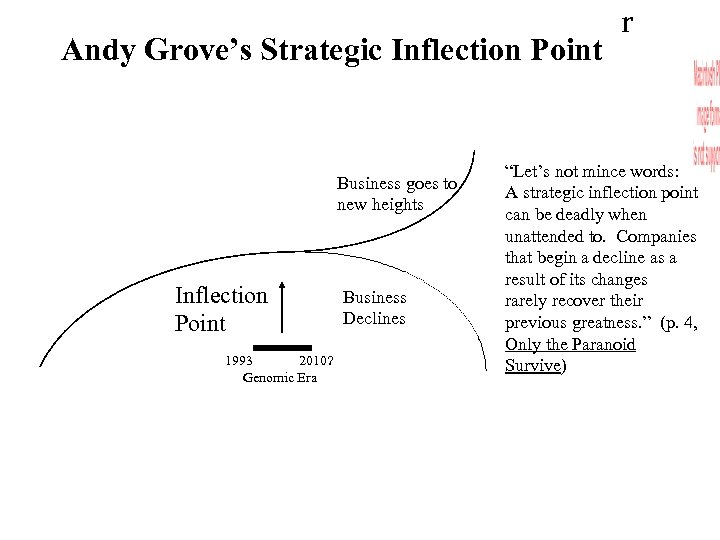 Andy Grove’s Strategic Inflection Point Business goes to new heights Inflection Point 1993 2010? Genomic Era Business Declines r “Let’s not mince words: A strategic inflection point can be deadly when unattended to. Companies that begin a decline as a result of its changes rarely recover their previous greatness. ” (p. 4, Only the Paranoid Survive)
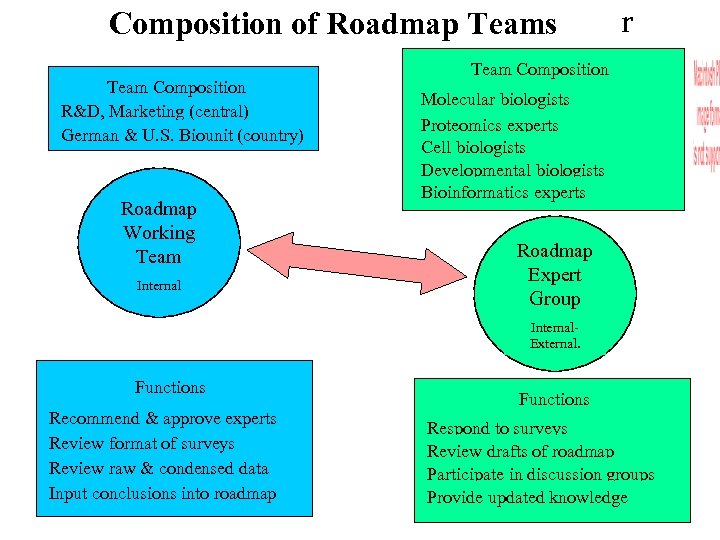 Composition of Roadmap Teams Team Composition R&D, Marketing (central) German & U. S. Biounit (country) Roadmap Working Team Internal r Team Composition Molecular biologists Proteomics experts Cell biologists Developmental biologists Bioinformatics experts Roadmap Expert Group Internal. External. Functions Recommend & approve experts Review format of surveys Review raw & condensed data Input conclusions into roadmap Functions Respond to surveys Review drafts of roadmap Participate in discussion groups Provide updated knowledge
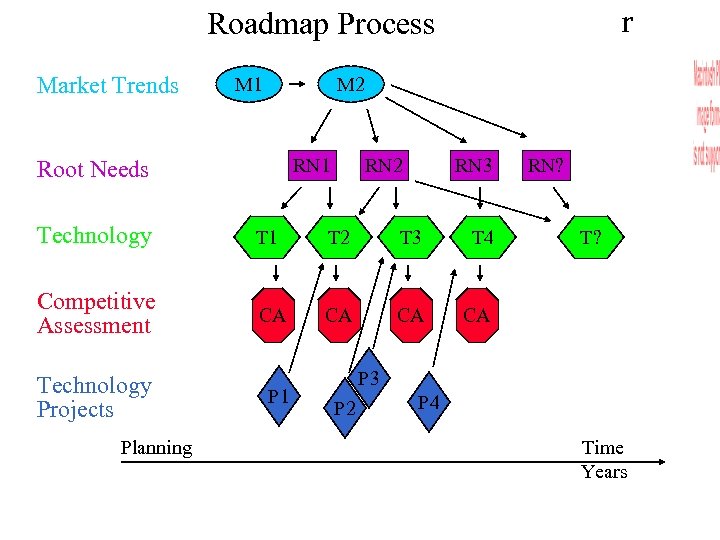 r Roadmap Process Market Trends M 1 M 2 RN 1 Root Needs RN 2 RN 3 Technology T 1 T 2 T 3 T 4 Competitive Assessment CA CA CA RN? CA Technology Projects Planning P 1 T? P 3 P 2 P 4 Time Years
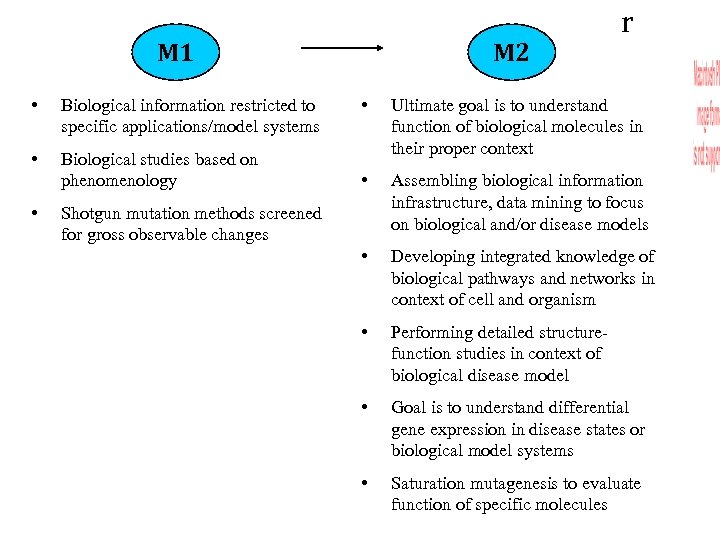 M 1 • Biological information restricted to specific applications/model systems • Biological studies based on phenomenology • M 2 r • Ultimate goal is to understand function of biological molecules in their proper context • Assembling biological information infrastructure, data mining to focus on biological and/or disease models • Developing integrated knowledge of biological pathways and networks in context of cell and organism • Performing detailed structurefunction studies in context of biological disease model • Goal is to understand differential gene expression in disease states or biological model systems • Saturation mutagenesis to evaluate function of specific molecules Shotgun mutation methods screened for gross observable changes
 Root Needs r
 Technology r
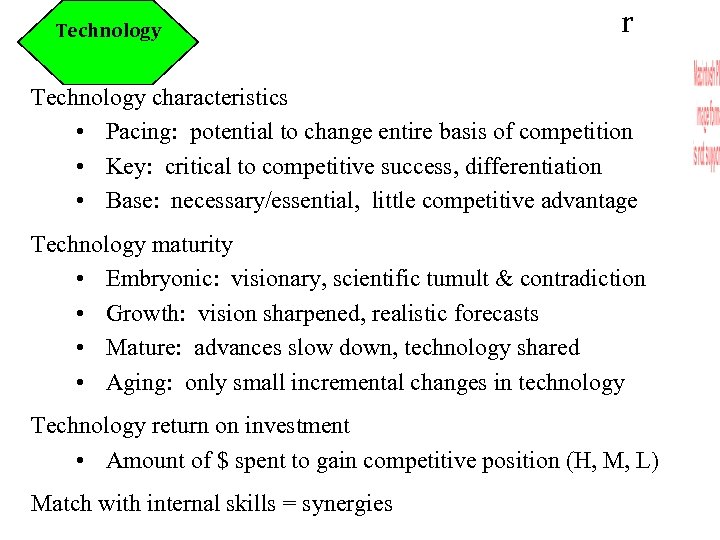 Technology r Technology characteristics • Pacing: potential to change entire basis of competition • Key: critical to competitive success, differentiation • Base: necessary/essential, little competitive advantage Technology maturity • Embryonic: visionary, scientific tumult & contradiction • Growth: vision sharpened, realistic forecasts • Mature: advances slow down, technology shared • Aging: only small incremental changes in technology Technology return on investment • Amount of $ spent to gain competitive position (H, M, L) Match with internal skills = synergies
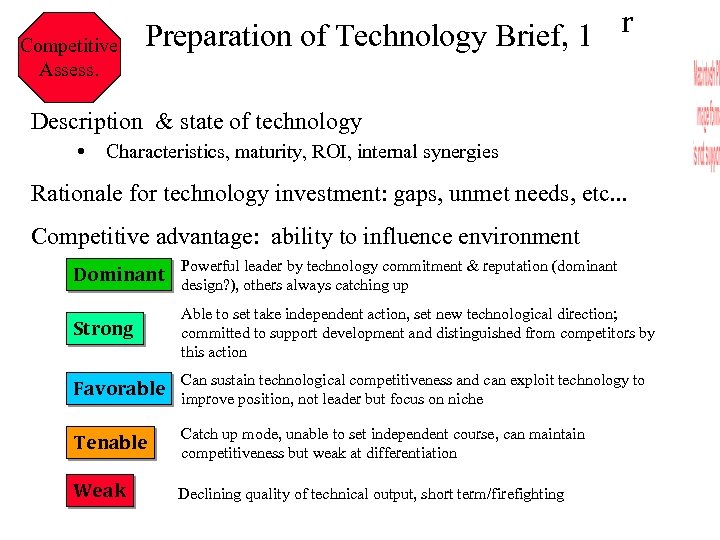 Competitive Assess. Preparation of Technology Brief, 1 r Description & state of technology Characteristics, maturity, ROI, internal synergies Rationale for technology investment: gaps, unmet needs, etc. . . Competitive advantage: ability to influence environment Dominant Powerful leader by technology commitment & reputation (dominant design? ), others always catching up Strong Able to set take independent action, set new technological direction; committed to support development and distinguished from competitors by this action Favorable Can sustain technological competitiveness and can exploit technology to improve position, not leader but focus on niche Tenable Catch up mode, unable to set independent course, can maintain competitiveness but weak at differentiation Weak Declining quality of technical output, short term/firefighting
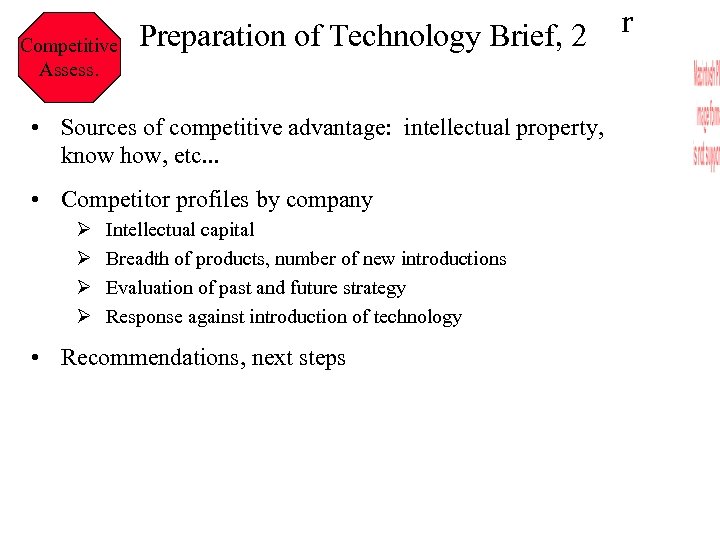 Competitive Assess. Preparation of Technology Brief, 2 • Sources of competitive advantage: intellectual property, know how, etc. . . • Competitor profiles by company Intellectual capital Breadth of products, number of new introductions Evaluation of past and future strategy Response against introduction of technology • Recommendations, next steps r
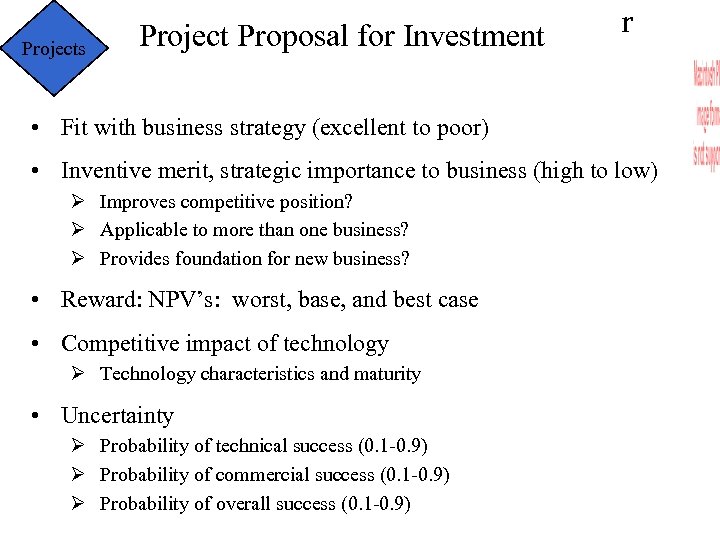 Projects Project Proposal for Investment r • Fit with business strategy (excellent to poor) • Inventive merit, strategic importance to business (high to low) Improves competitive position? Applicable to more than one business? Provides foundation for new business? • Reward: NPV’s: worst, base, and best case • Competitive impact of technology Technology characteristics and maturity • Uncertainty Probability of technical success (0. 1 -0. 9) Probability of commercial success (0. 1 -0. 9) Probability of overall success (0. 1 -0. 9)
 Projects Project Proposal for Investment, 2 r • Implementation plan Proposal for resources and competencies required to complete the project Propose timing for technology reviews: agreement on specifics that drives the review (e. g, time, dollars, achievements, etc…) • Risk R&D costs to first milestone and costs to completion (range if appropriate) Time to first milestone and to completion (range if appropriate) Capital and/or marketing investment required to exploit technical success (range if appropriate)
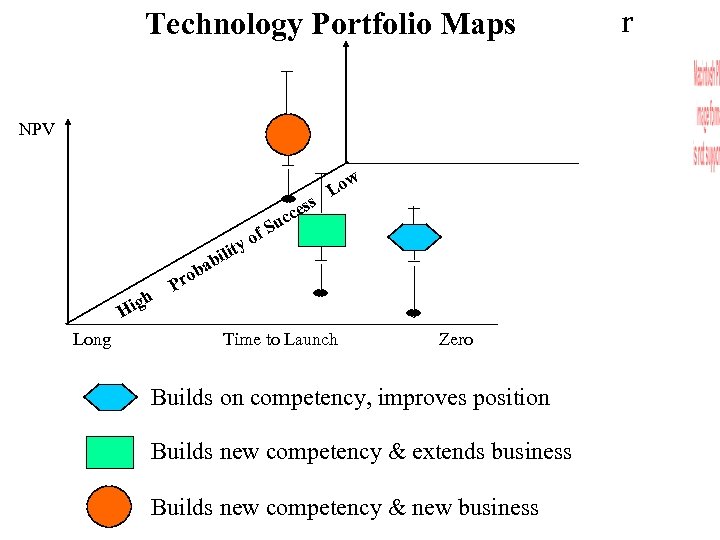 Technology Portfolio Maps NPV w s ces c Lo u it bil gh Hi Long y S of a rob P Time to Launch Zero Builds on competency, improves position Builds new competency & extends business Builds new competency & new business r
 Benefits of Roadmaps r • Cross-functional understanding of strategic issues • Sensitization to following • Technology trends • Gaps in technology in meeting needs • Competitive position for technology • Easily understood process to communicate issues regarding allocation of resources • Proposal that includes management of projects through structured technology review • Learning that can be applied when evaluating future technology opportunities