


 Скачать презентацию Quick Reminder of the Theory of Consumer Choice
978996e77e42f2e2a20e44650c455b52.ppt
- Количество слайдов: 45
 Quick Reminder of the Theory of Consumer Choice Professor Roberto Chang Rutgers University January 2007
 • Reminder of Theory of Consumer Choice, as given by Mankiw, Principles of Economics, chapter 21, and other elementary textbooks.
 A Canonical Problem • Consider the problem of a consumer that may choose to buy apples (x) or bananas (y) • Suppose the price of apples is px and the price of bananas is py. • Finally, suppose that he has I dollars to spend.
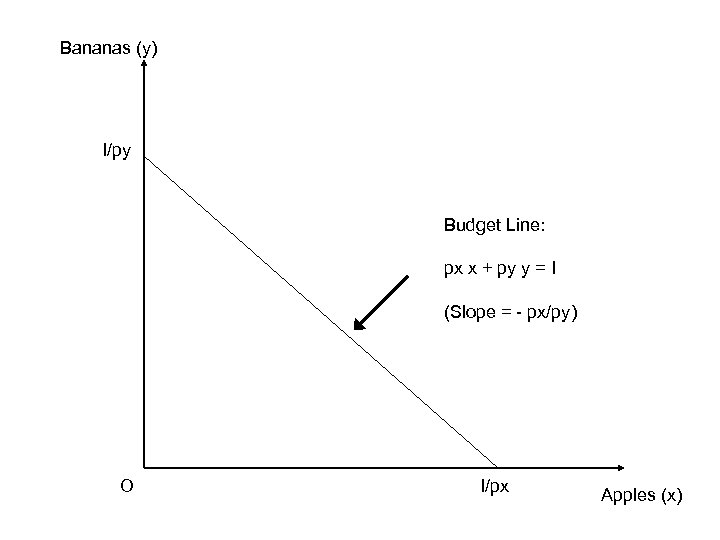
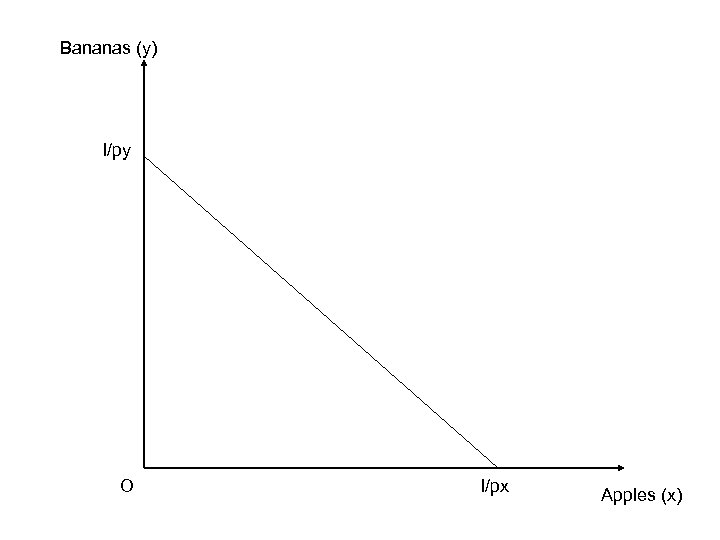
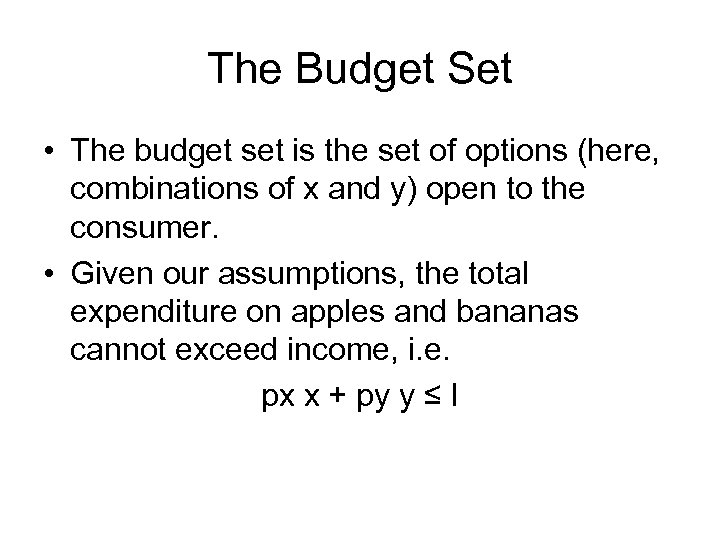 The Budget Set • The budget set is the set of options (here, combinations of x and y) open to the consumer. • Given our assumptions, the total expenditure on apples and bananas cannot exceed income, i. e. px x + py y ≤ I
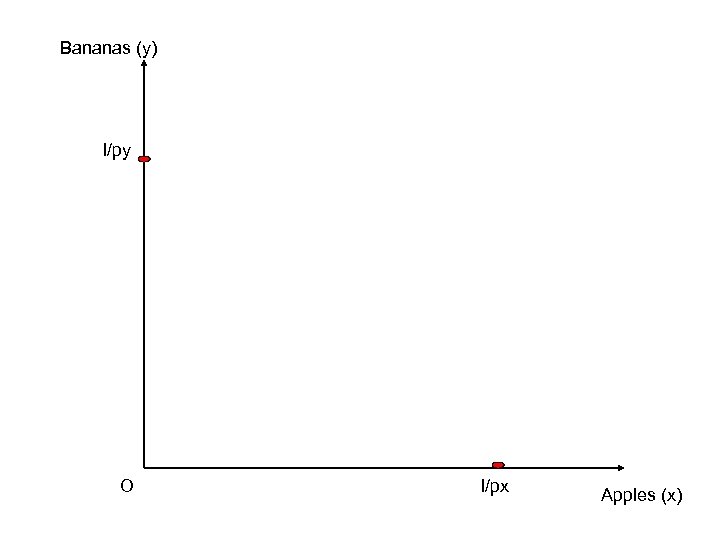
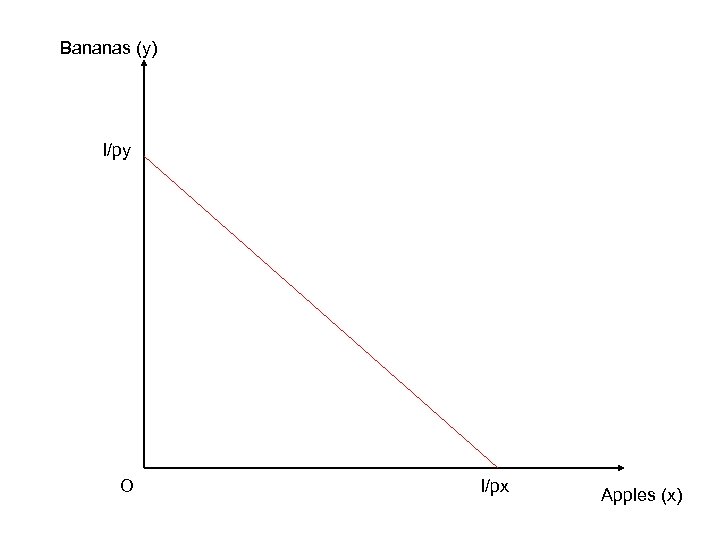
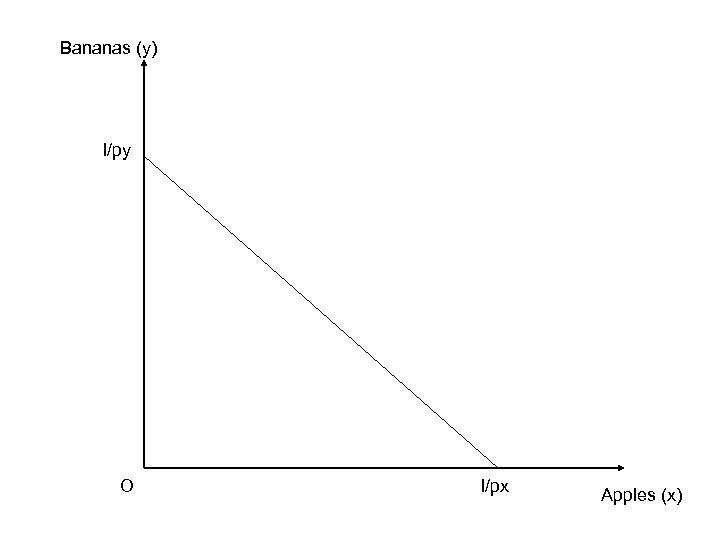
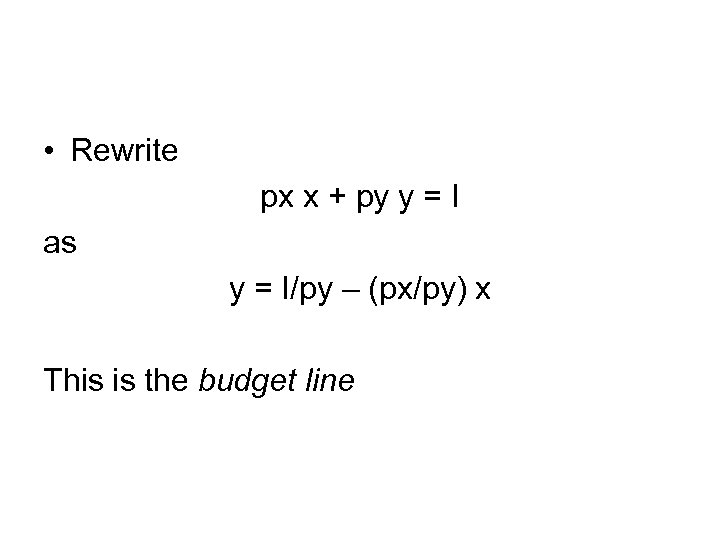 • Rewrite px x + py y = I as y = I/py – (px/py) x This is the budget line
 Bananas (y) I/py O I/px Apples (x)
 Bananas (y) I/py O I/px Apples (x)
 Bananas (y) I/py Budget Line: px x + py y = I (Slope = - px/py) O I/px Apples (x)
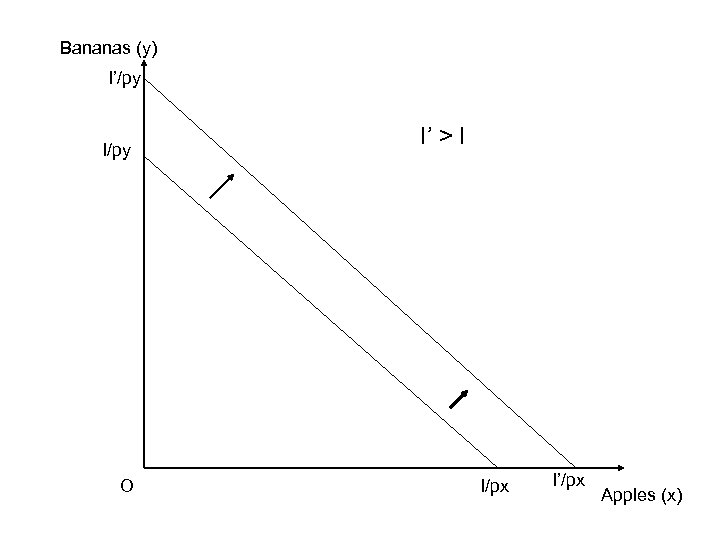
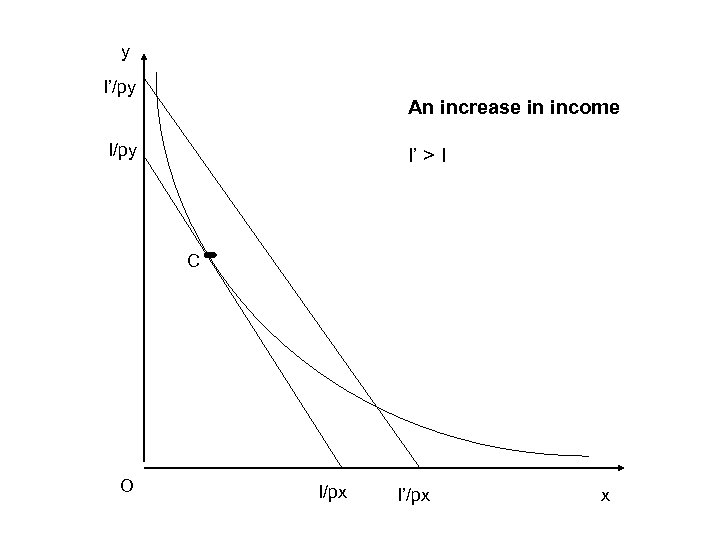
 • If I increases, the new budget line is higher and parallel to the old one.
 Bananas (y) I/py O I/px Apples (x)
 Bananas (y) I’/py I/py O I’ > I I/px I’/px Apples (x)
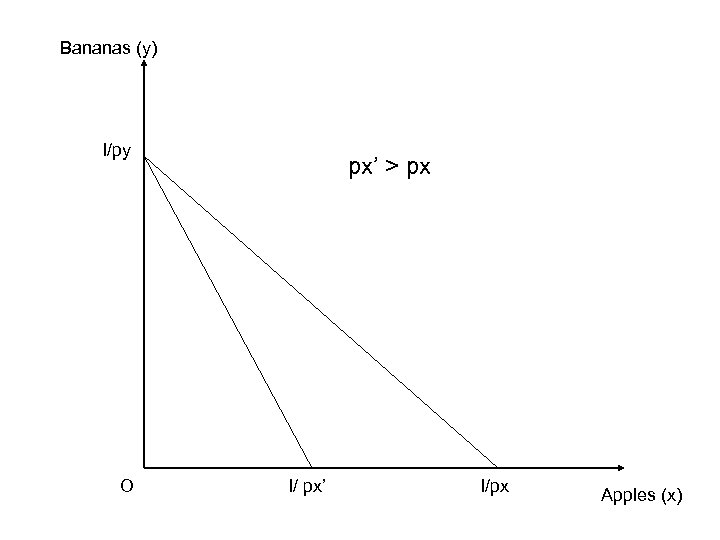
 • If px increases, the budget line retains the same vertical intercept, but the horizontal intercept shrinks
 Bananas (y) I/py O I/px Apples (x)
 Bananas (y) I/py O px’ > px I/ px’ I/px Apples (x)
 Preferences • Now that we have identified the options open to the consumer, which one will he choose? • The choice will depend on his preferences, i. e. his relative taste for apples or bananas. • In Economics, preferences are usually assumed to be given by a utility function.
 Utility Functions • In this case, a utility function is a function U = U(x, y) , where U is the level of satisfaction derived from consumption of (x, y). • For example, one may assume that U = log x + log y or that U = xy
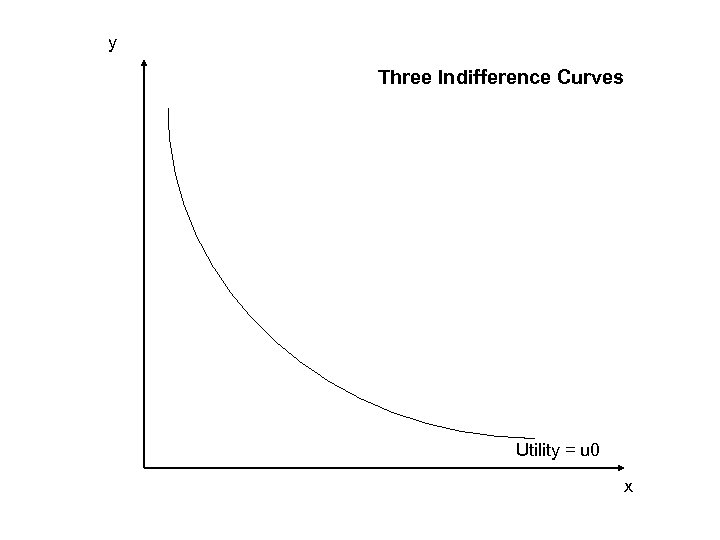
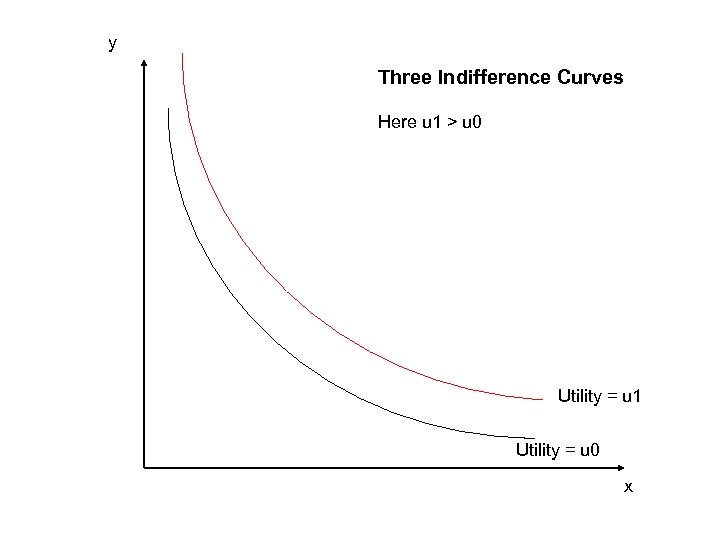
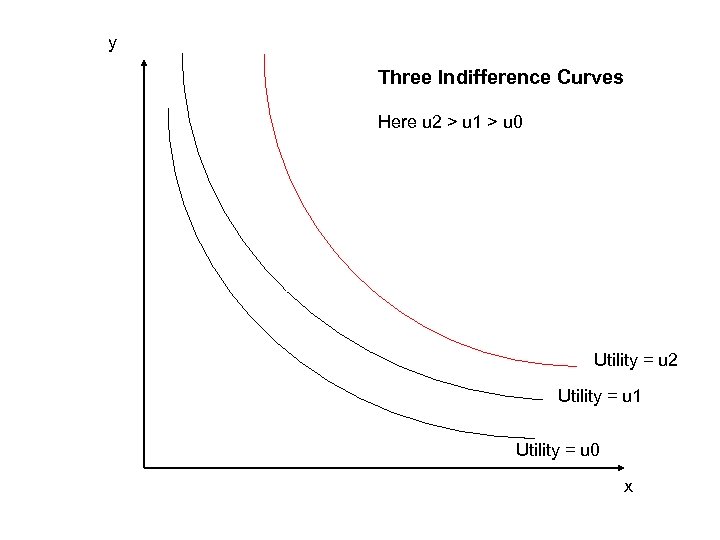
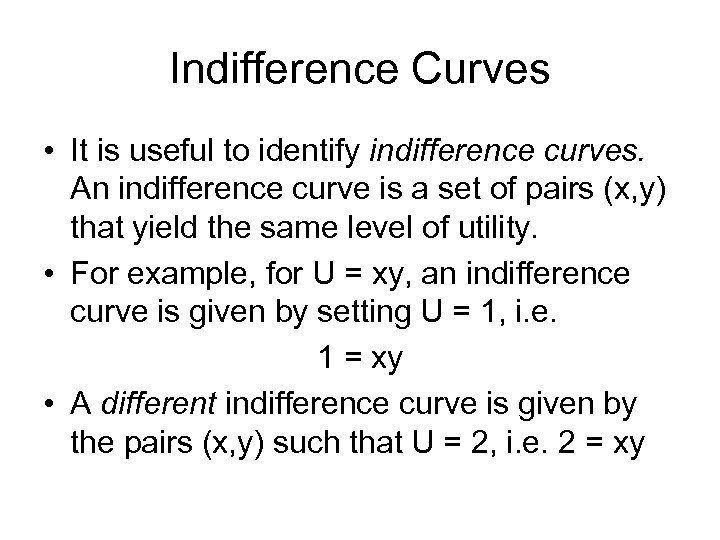 Indifference Curves • It is useful to identify indifference curves. An indifference curve is a set of pairs (x, y) that yield the same level of utility. • For example, for U = xy, an indifference curve is given by setting U = 1, i. e. 1 = xy • A different indifference curve is given by the pairs (x, y) such that U = 2, i. e. 2 = xy
 y Three Indifference Curves Utility = u 0 x
 y Three Indifference Curves Here u 1 > u 0 Utility = u 1 Utility = u 0 x
 y Three Indifference Curves Here u 2 > u 1 > u 0 Utility = u 2 Utility = u 1 Utility = u 0 x
 Properties of Indifference Curves • Higher indifference curves represent higher levels of utility • Indifference curves slope down • They do not cross • They “bow inward”
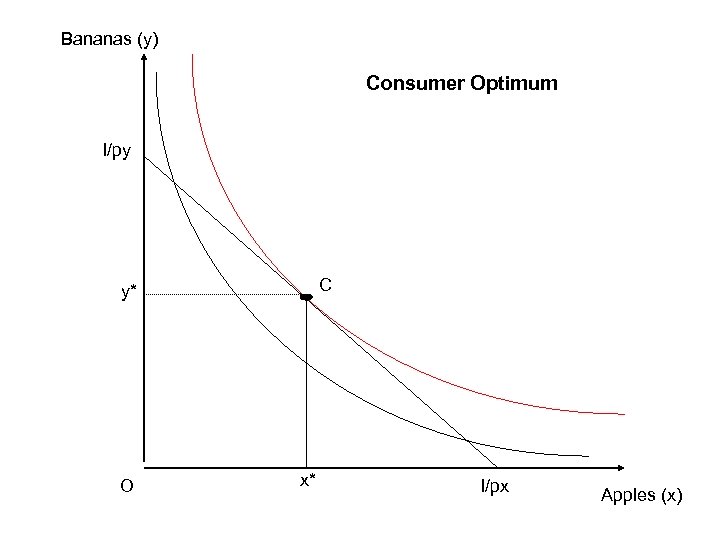
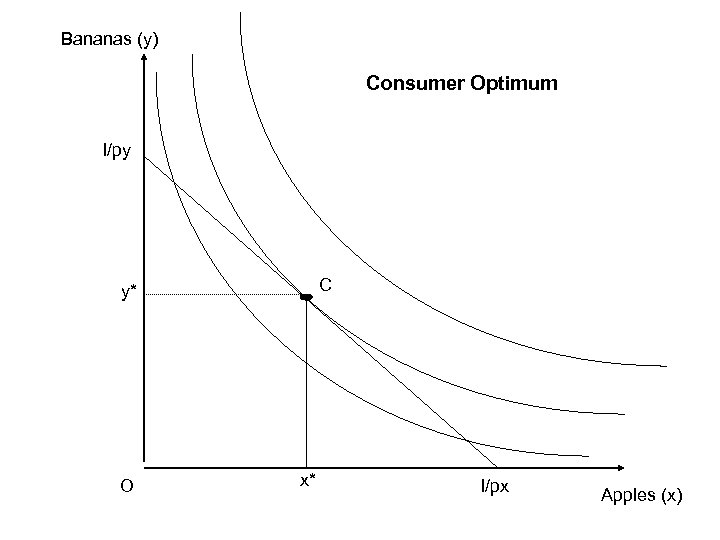
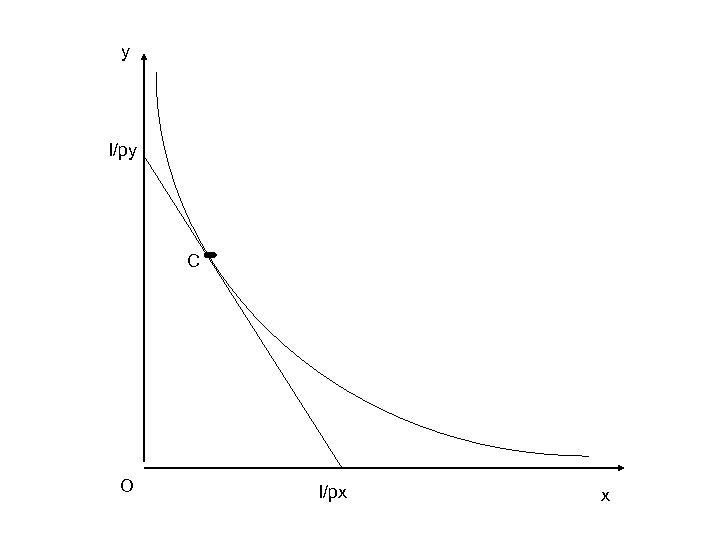
 Optimal Consumption • In Economics we assume that the consumer will pick the best feasible combination of apples and bananas. • “Feasible” means that (x*, y*) must be in the budget set • “Best” means that (x*, y*) must attain the highest possible indifference curve
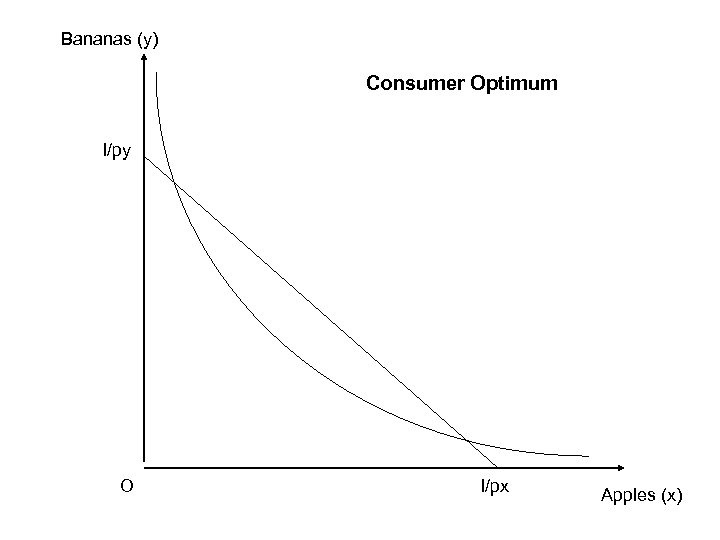 Bananas (y) Consumer Optimum I/py O I/px Apples (x)
 Bananas (y) Consumer Optimum I/py C y* O x* I/px Apples (x)
 Bananas (y) Consumer Optimum I/py C y* O x* I/px Apples (x)
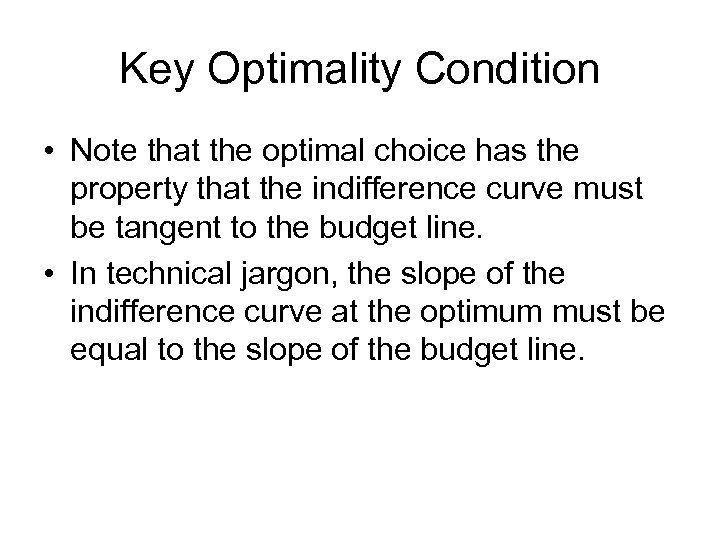 Key Optimality Condition • Note that the optimal choice has the property that the indifference curve must be tangent to the budget line. • In technical jargon, the slope of the indifference curve at the optimum must be equal to the slope of the budget line.
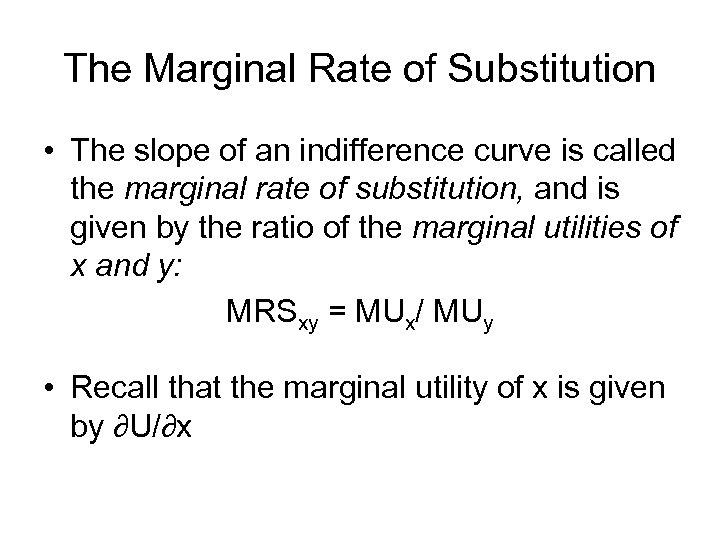 The Marginal Rate of Substitution • The slope of an indifference curve is called the marginal rate of substitution, and is given by the ratio of the marginal utilities of x and y: MRSxy = MUx/ MUy • Recall that the marginal utility of x is given by ∂U/∂x
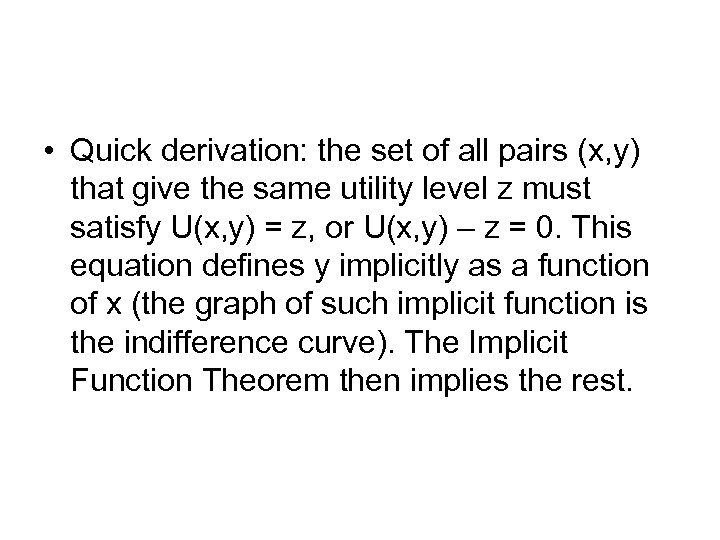 • Quick derivation: the set of all pairs (x, y) that give the same utility level z must satisfy U(x, y) = z, or U(x, y) – z = 0. This equation defines y implicitly as a function of x (the graph of such implicit function is the indifference curve). The Implicit Function Theorem then implies the rest.
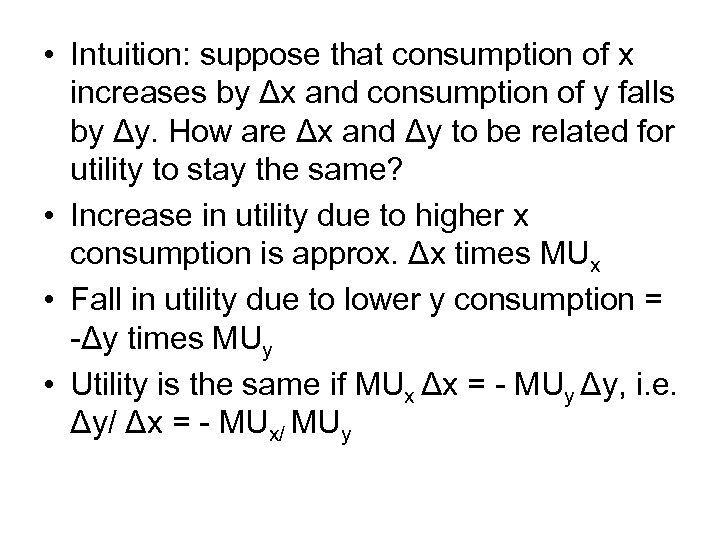 • Intuition: suppose that consumption of x increases by Δx and consumption of y falls by Δy. How are Δx and Δy to be related for utility to stay the same? • Increase in utility due to higher x consumption is approx. Δx times MUx • Fall in utility due to lower y consumption = -Δy times MUy • Utility is the same if MUx Δx = - MUy Δy, i. e. Δy/ Δx = - MUx/ MUy
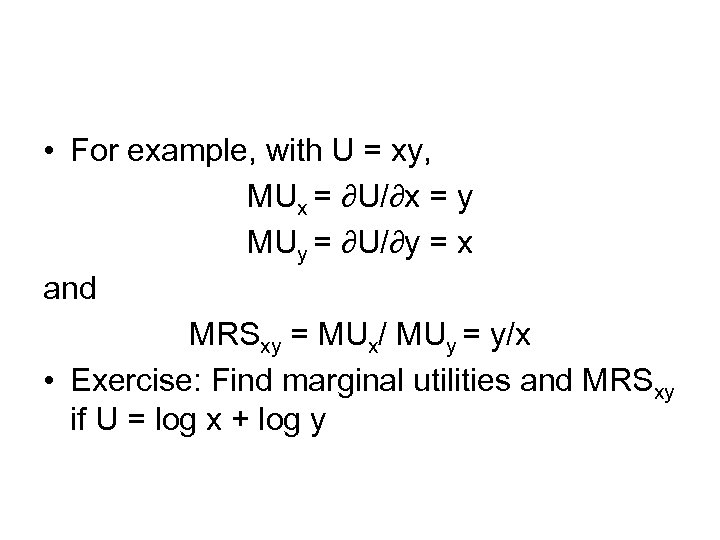 • For example, with U = xy, MUx = ∂U/∂x = y MUy = ∂U/∂y = x and MRSxy = MUx/ MUy = y/x • Exercise: Find marginal utilities and MRSxy if U = log x + log y
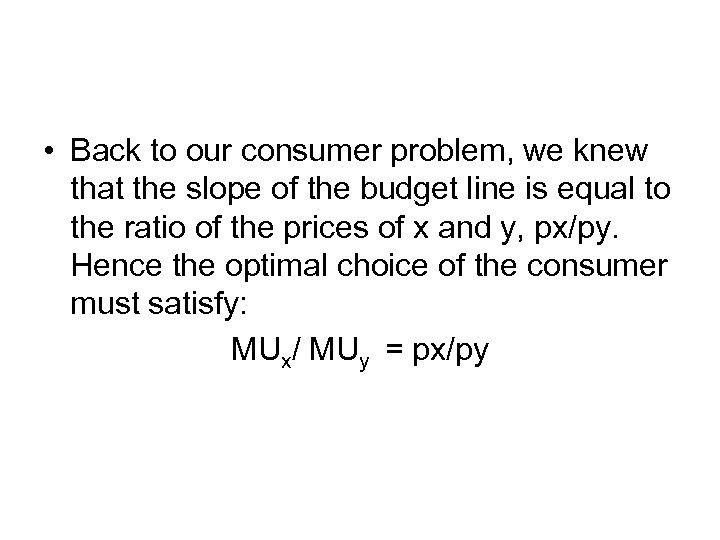 • Back to our consumer problem, we knew that the slope of the budget line is equal to the ratio of the prices of x and y, px/py. Hence the optimal choice of the consumer must satisfy: MUx/ MUy = px/py
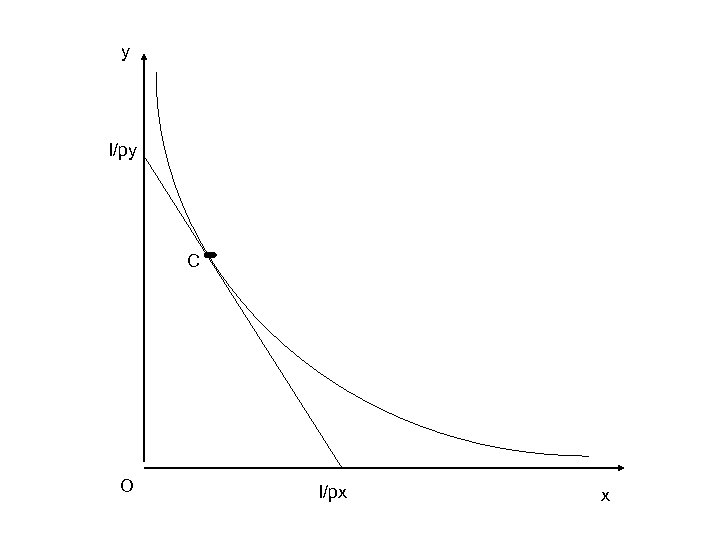
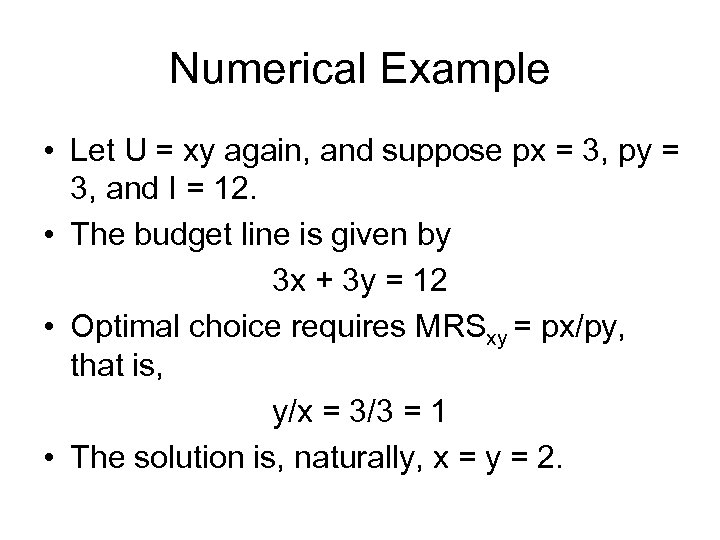 Numerical Example • Let U = xy again, and suppose px = 3, py = 3, and I = 12. • The budget line is given by 3 x + 3 y = 12 • Optimal choice requires MRSxy = px/py, that is, y/x = 3/3 = 1 • The solution is, naturally, x = y = 2.
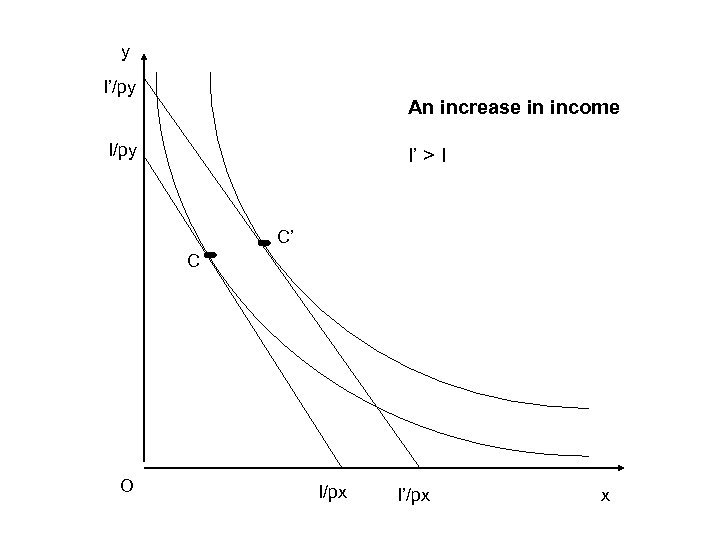
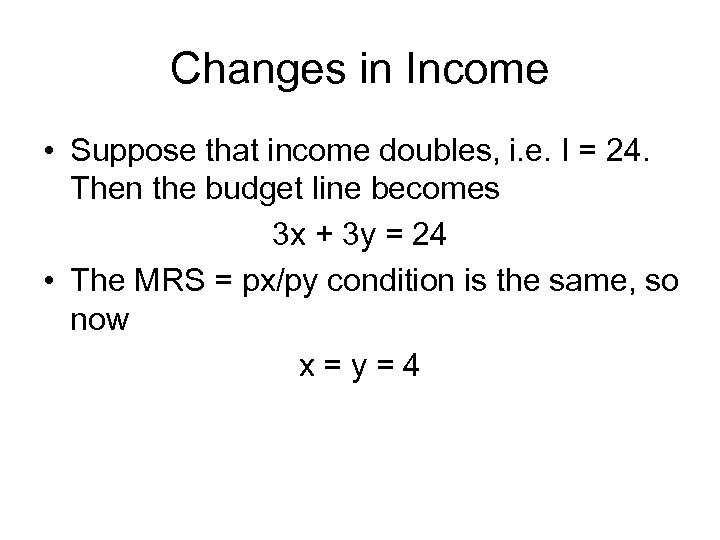 Changes in Income • Suppose that income doubles, i. e. I = 24. Then the budget line becomes 3 x + 3 y = 24 • The MRS = px/py condition is the same, so now x=y=4
 y I/py C O I/px x
 y I’/py An increase in income I/py I’ > I C O I/px I’/px x
 y I’/py An increase in income I/py I’ > I C’ C O I/px I’/px x
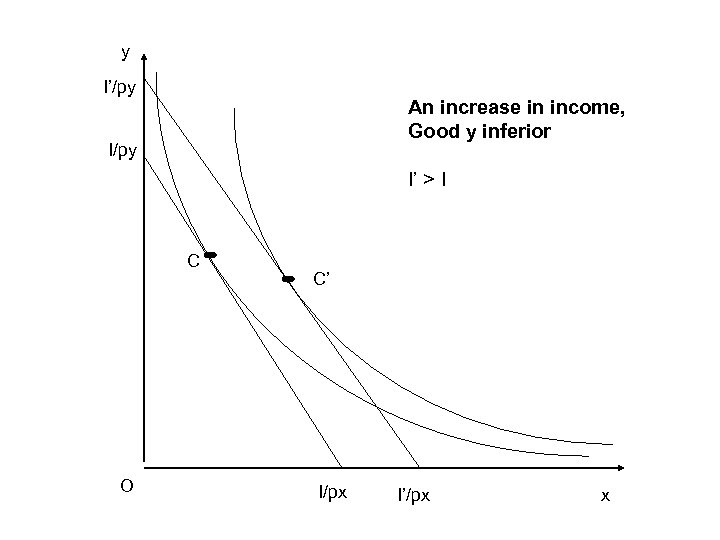
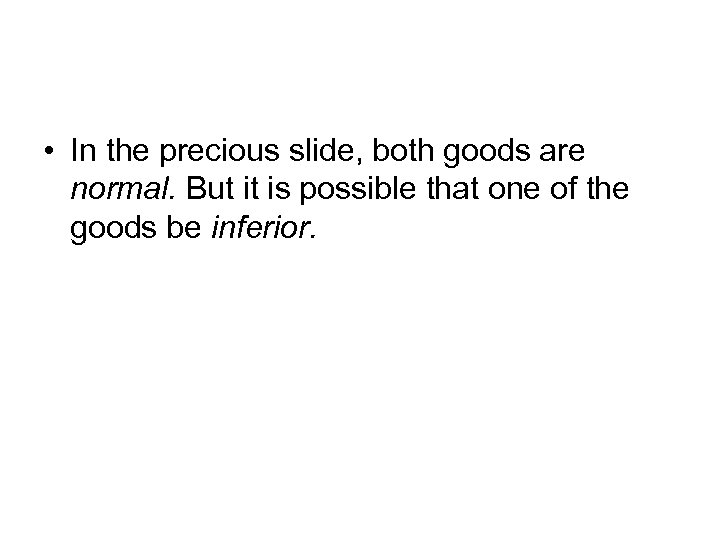 • In the precious slide, both goods are normal. But it is possible that one of the goods be inferior.
 y I’/py An increase in income, Good y inferior I/py I’ > I C O C’ I/px I’/px x
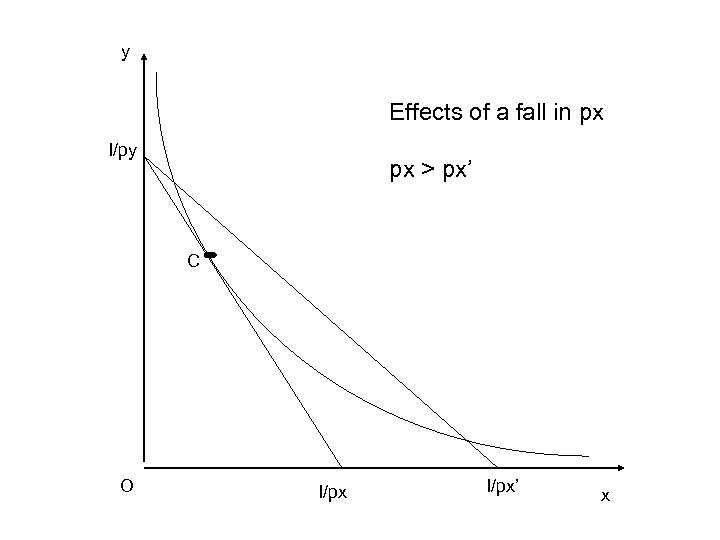
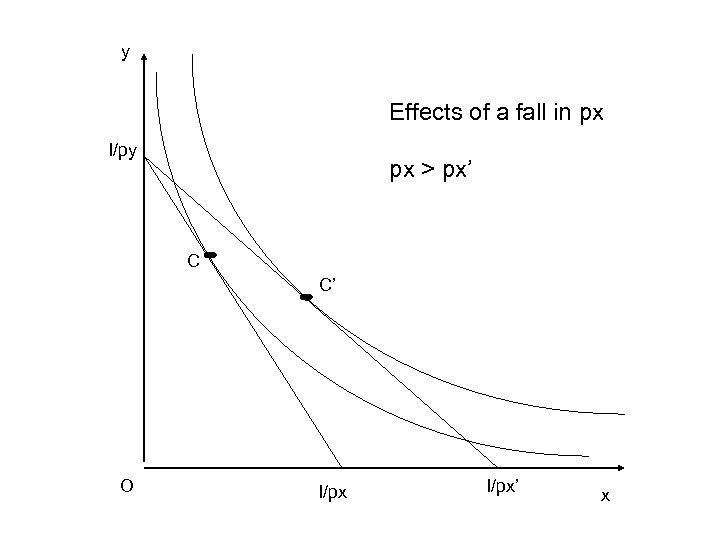
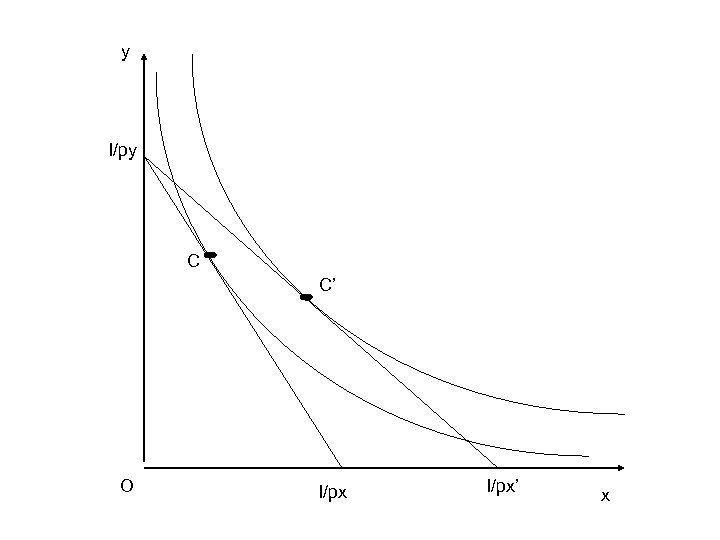
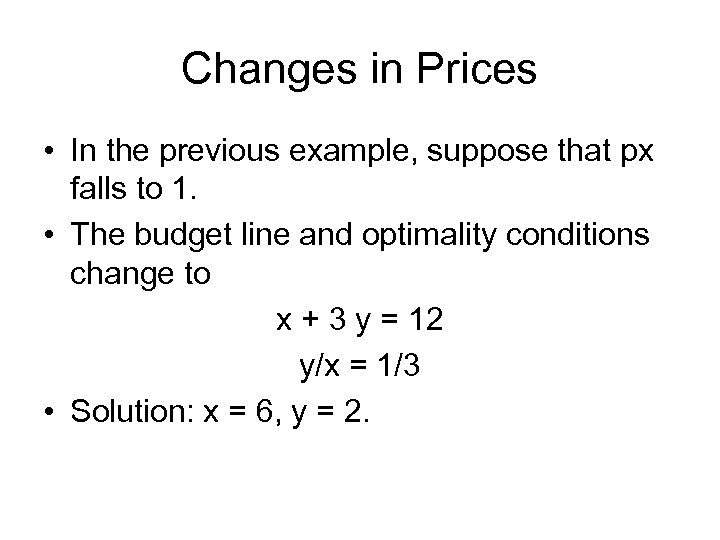 Changes in Prices • In the previous example, suppose that px falls to 1. • The budget line and optimality conditions change to x + 3 y = 12 y/x = 1/3 • Solution: x = 6, y = 2.
 y I/py C O I/px x
 y Effects of a fall in px I/py px > px’ C O I/px’ x
 y Effects of a fall in px I/py px > px’ C C’ O I/px’ x
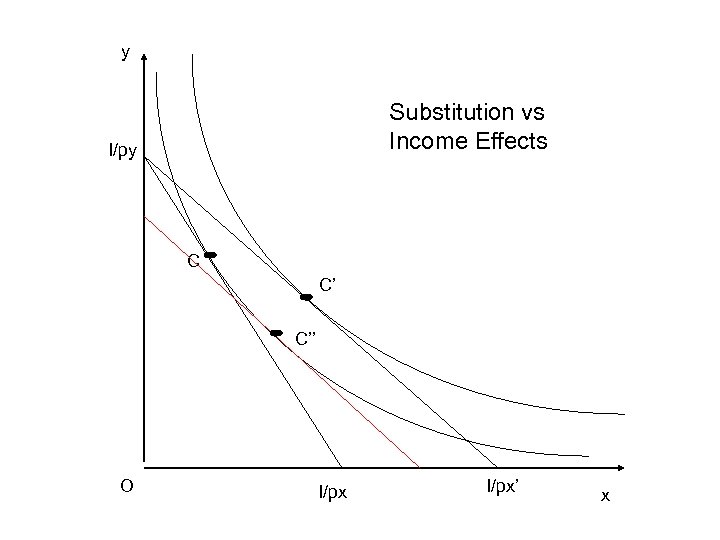
 • If x is a normal good, a fall in its price will result in an increase in the quantity purchased (this is the Law of Demand) • This is because the so called substitution and income effects reinforce each other.
 y I/py C C’ O I/px’ x
 y Substitution vs Income Effects I/py C C’ C’’ O I/px’ x