


 Скачать презентацию Questions Are the Answer Getting patients involved in
a1e6c3ea869169b9e981007a9f207c1e.ppt
- Количество слайдов: 14
 Questions Are the Answer: Getting patients involved in their healthcare Doug Seubert Quality Improvement and Care Management Marshfield Clinic September 9, 2008
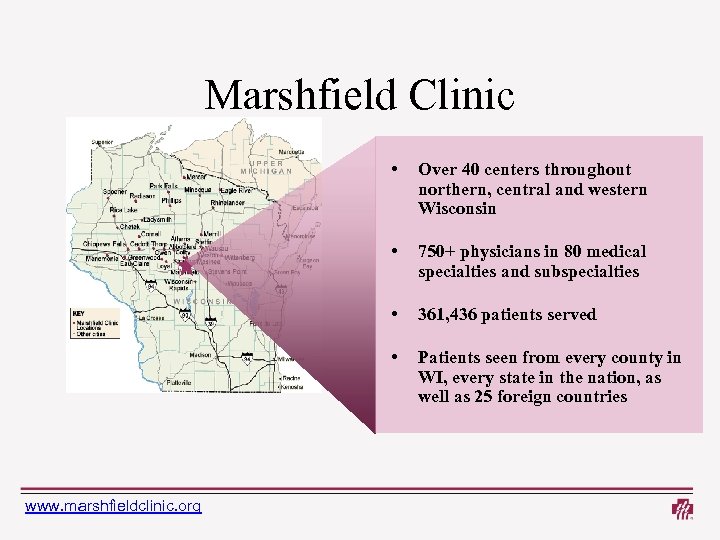 Marshfield Clinic • • 750+ physicians in 80 medical specialties and subspecialties • 361, 436 patients served • www. marshfieldclinic. org Over 40 centers throughout northern, central and western Wisconsin Patients seen from every county in WI, every state in the nation, as well as 25 foreign countries
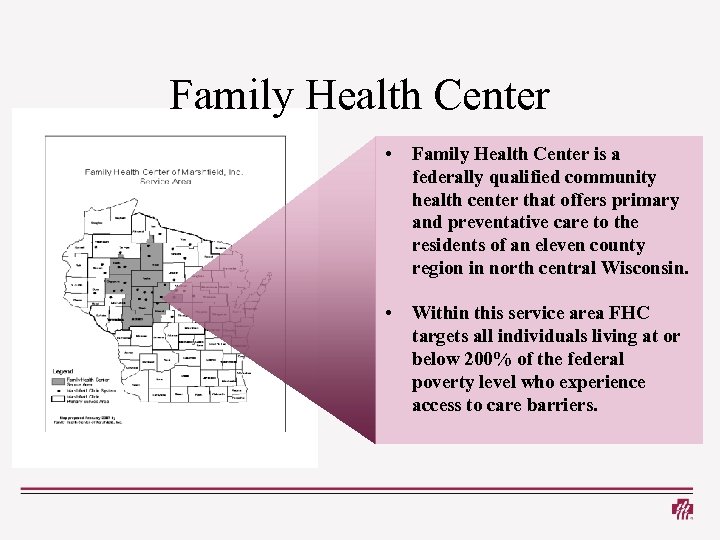 Family Health Center • Family Health Center is a federally qualified community health center that offers primary and preventative care to the residents of an eleven county region in north central Wisconsin. • Within this service area FHC targets all individuals living at or below 200% of the federal poverty level who experience access to care barriers.
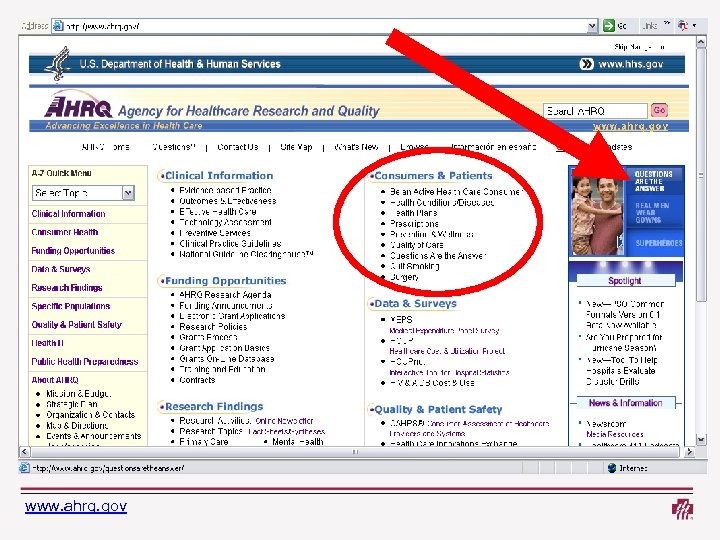 The AHRQ Web site The Agency for Healthcare Research and Quality web site offers resources for consumers and patients. www. ahrq. gov
 Improving Health Care Quality is a Team Effort “The single most important way you can stay healthy is to be an active member of your own health care team. One way to get highquality health care is to find and use information and take an active role in all of the decisions made about your care. ” AHRQ Web site
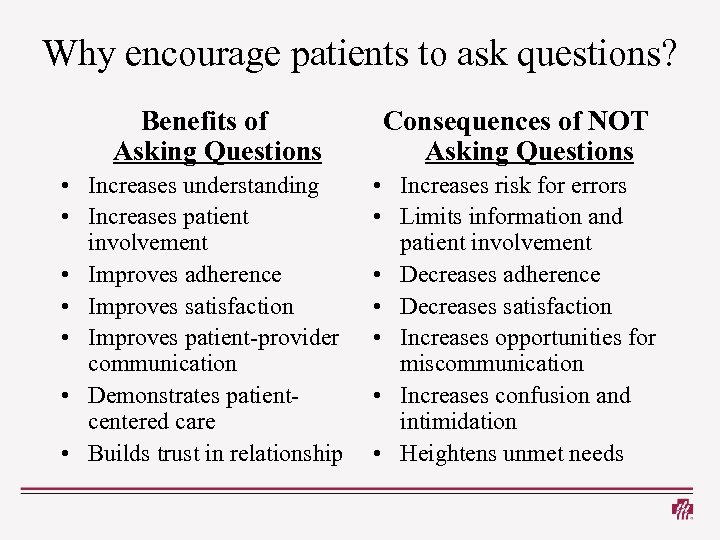 Why encourage patients to ask questions? Benefits of Asking Questions • Increases understanding • Increases patient involvement • Improves adherence • Improves satisfaction • Improves patient-provider communication • Demonstrates patientcentered care • Builds trust in relationship Consequences of NOT Asking Questions • Increases risk for errors • Limits information and patient involvement • Decreases adherence • Decreases satisfaction • Increases opportunities for miscommunication • Increases confusion and intimidation • Heightens unmet needs
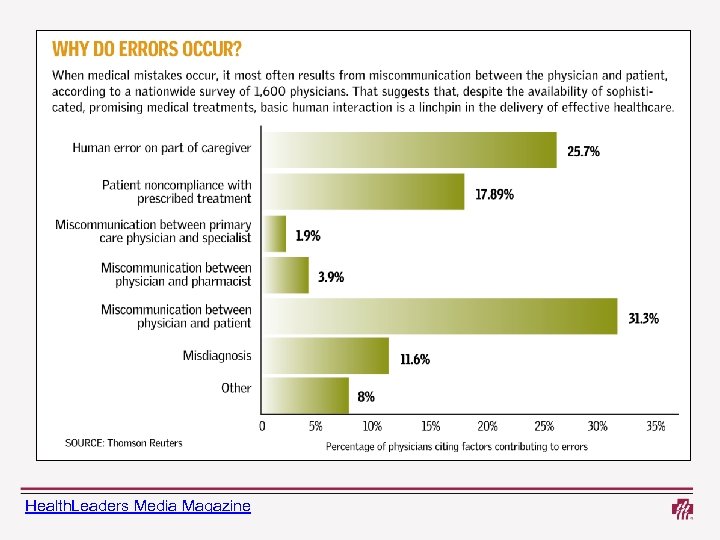 Why do errors occur? When medical mistakes occur, it most often results from miscommunication between the physician and patient, according to a nationwide survey of 1, 600 physicians. That suggests that, despite the availability of sophisticated, promising medical treatments, basic human interaction is a linchpin in the delivery of effective healthcare. (Published in Health Leaders Media Magazine, August 2008) Health. Leaders Media Magazine
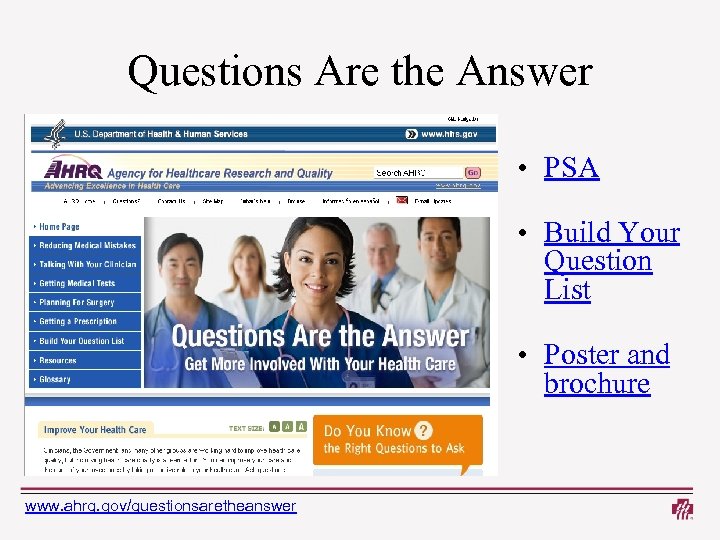 Questions Are the Answer The Questions Are the Answer Web site offers great information. You can watch or download a video of the public service announcement. (click “PSA” to view video) There is an interactive tool called Build Your Question List, an extensive list of important questions to ask divided into categories to help patients pick the ones they want to ask. The list of questions can be printed with the page pre-formatted with space to write in the answers. (click “Build Your Question List” to view the question builder tool) The AHRQ Web site also provides printable versions of Questions Are the Answer as posters and brochures. (Click “posters and brochures” to see an example) www. ahrq. gov/questionsaretheanswer • PSA • Build Your Question List • Poster and brochure

 Simple Ways to Incorporate Questions Are the Answer • Links to AHRQ on organization’s Web site • Run PSA (video) on in-house TV channels • Order (or download and print) information – AHRQ Publications Online Store • Display and distribute • Incorporate into physician and staff education Copyright Considerations and Linking to AHRQ Site: Referrals
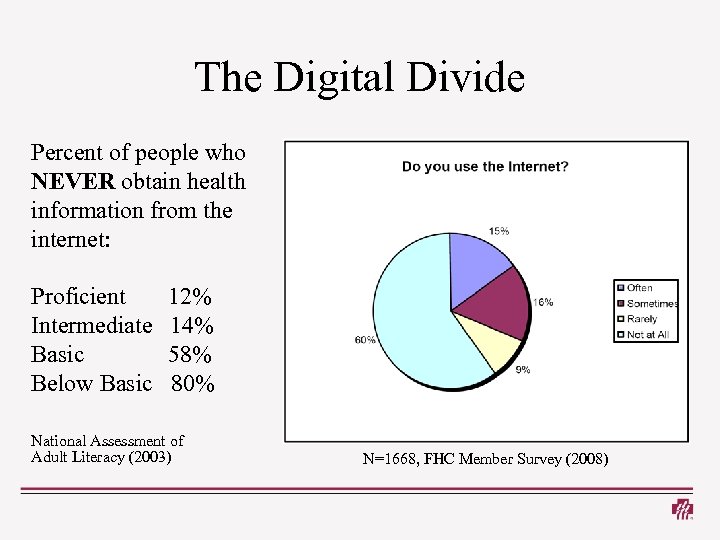 The Digital Divide Percent of people who NEVER obtain health information from the internet: Proficient Intermediate Basic Below Basic 12% 14% 58% 80% National Assessment of Adult Literacy (2003) The way to reach patients who would most benefit from health literacy initiatives, then, is not through the Internet. The information and tools are out there, but health care providers/organizations need to find ways to make this information accessible to those who do not use the Internet. In a recent survey of Family Health Center members, 60% reported that they never use the Internet, and another 9% said they rarely use it. N=1668, FHC Member Survey (2008)
 Beyond the Internet • Newsletters and mailings – provide link for more information – provide option to mail “hard copy” on request – 1 -800 -931 -AHRQ (2477) • Appointment reminders – letters and phone calls • Agenda setting – “be prepared for medical appointments” – posters/tear-offs in waiting and exam rooms
 A Community Effort Health literacy curriculum for adult literacy learners, English language learners, and senior citizens. Partners: • Marshfield Clinic • Family Health Center • Mid-State Technical College • Literacy Council • Community organizations and social services Topics include: • Where to find health care in the community • Family history • Medication safety • Preventive care • Talking to your doctor • Questions are the answer
 “Questions Are the Answer” in the Curriculum • • • View PSA (video) Discuss importance of asking questions Demonstrate “build your list of questions” Provide copy of the brochure Role play and practice Include asking for clarification, note taking, recording, bringing a family member