


 Скачать презентацию Q Skills for Success Think Critically Succeed Academically
Q skills SueP.pptx
- Количество слайдов: 29

 Q Skills for Success. Think Critically Succeed Academically Sue Parminter
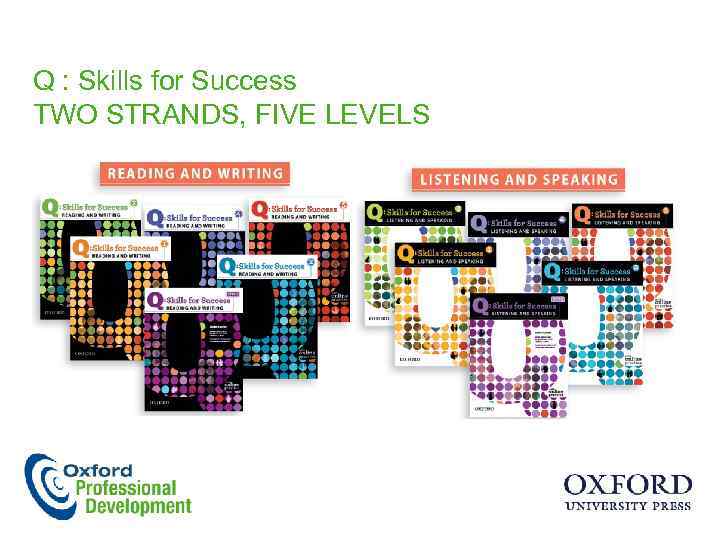 Q : Skills for Success TWO STRANDS, FIVE LEVELS
 Session Overview 1. What do we mean by critical thinking and why is it important? 2. How does Q Skills combine language learning and critical thinking? 3. How does Q Skills work in class?
 A challenge to think
 How did you think?
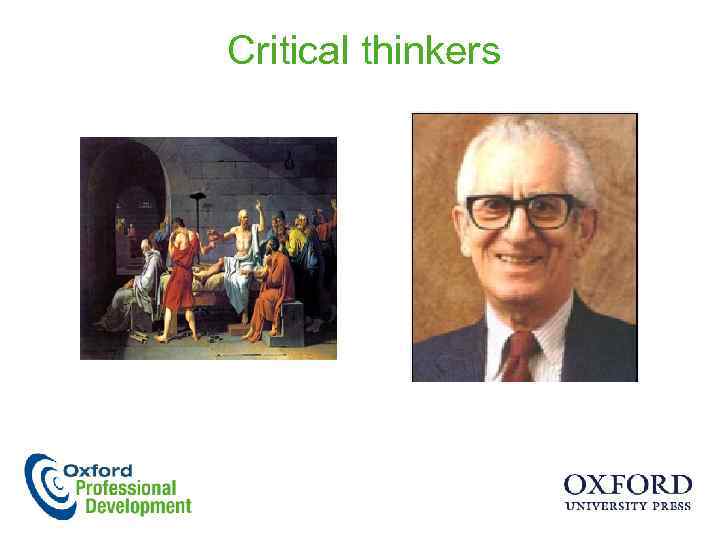 Critical thinkers

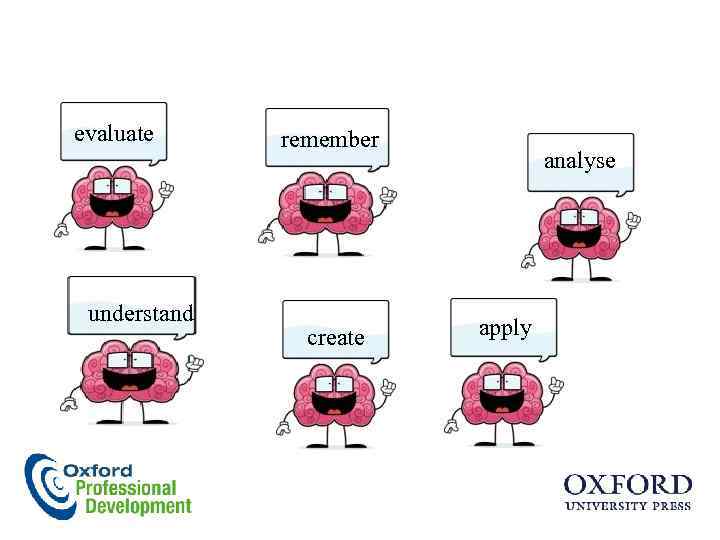 evaluate understand remember create analyse apply
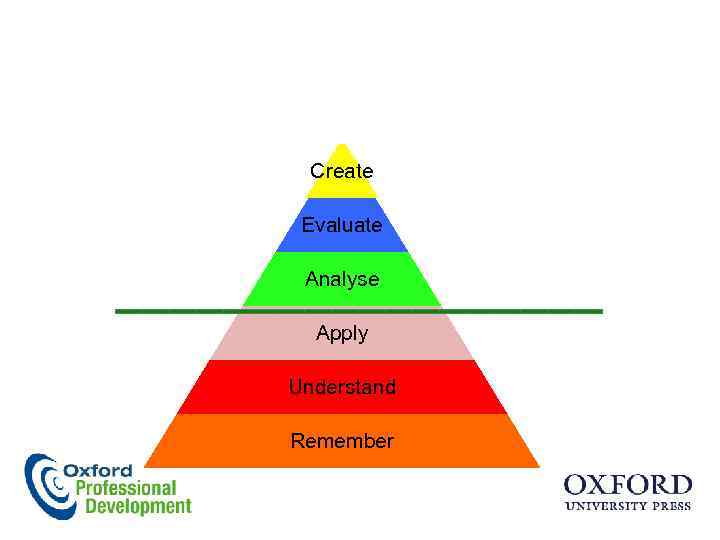 Create Evaluate Analyse Apply Understand Remember
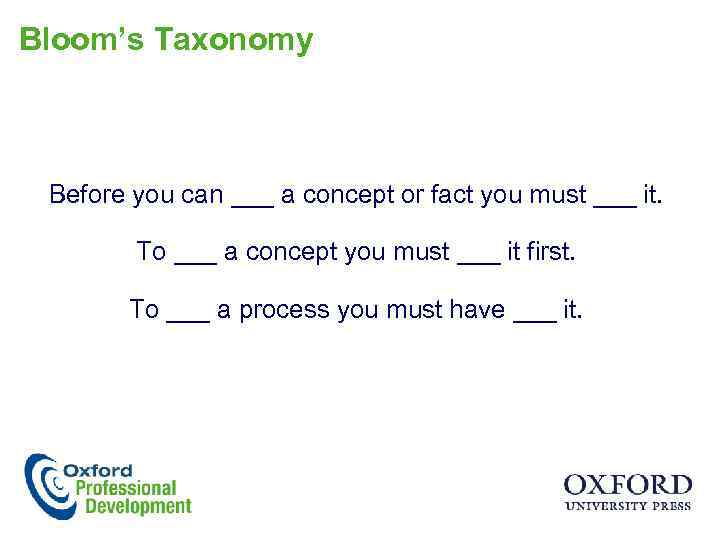 Bloom’s Taxonomy Before you can ___ a concept or fact you must ___ it. To ___ a concept you must ___ it first. To ___ a process you must have ___ it.
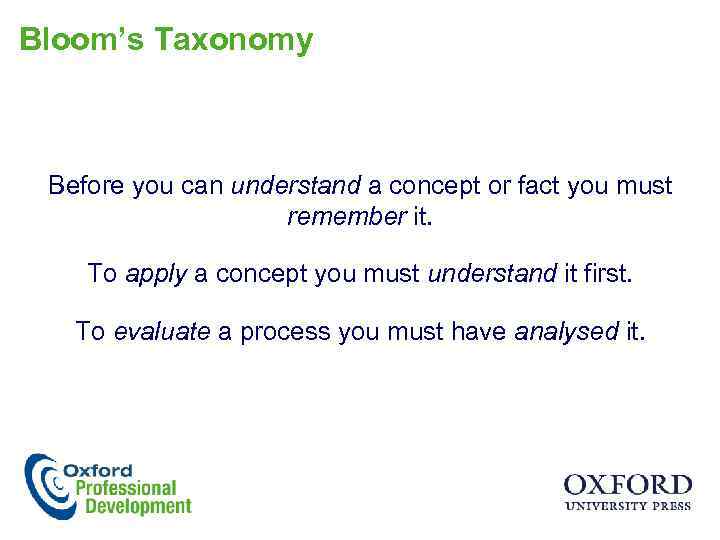 Bloom’s Taxonomy Before you can understand a concept or fact you must remember it. To apply a concept you must understand it first. To evaluate a process you must have analysed it.
 Thinking questions
 uestioning is at the core of Critical Thinking and Critical Thinking is at the core of
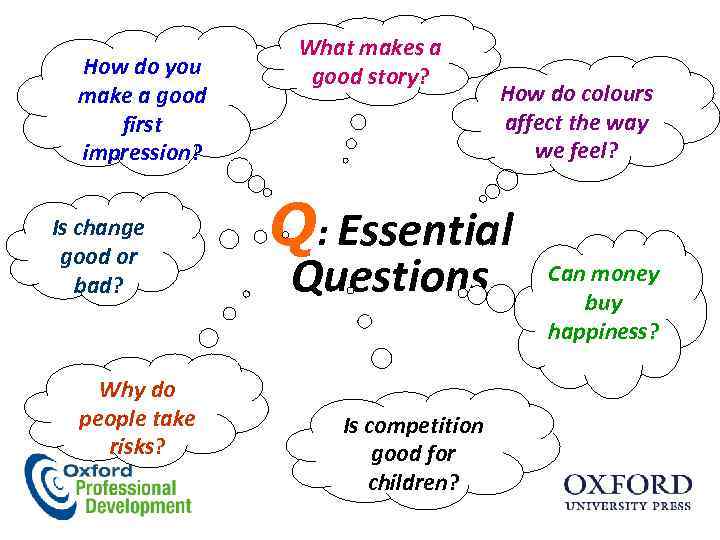 How do you make a good first impression? Is change good or bad? Why do people take risks? What makes a good story? How do colours affect the way we feel? Q: Essential Questions Is competition good for children? Can money buy happiness?
 “Teaching the answers without first raising the questions takes most of the meaning out of education. ” -- Francis Slater
 Thinking Questions What are the traits of a thinking question? § Probing § Encourages more than understanding § Requires complex answer § Endures, shifts, and evolves § Not necessarily answerable § Potentially frustrating Adapted from: questioning. org/mar 05/essential. html
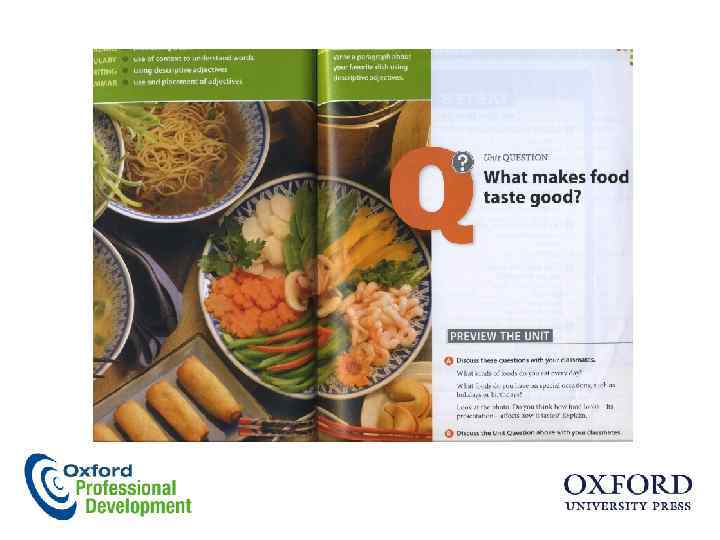
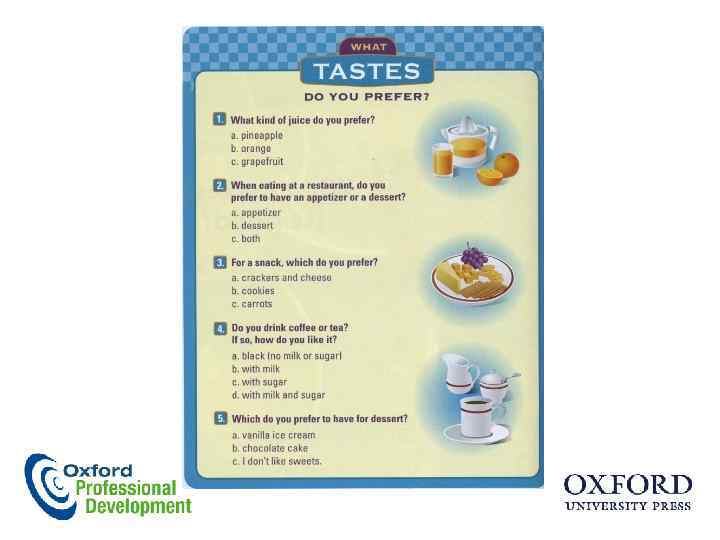

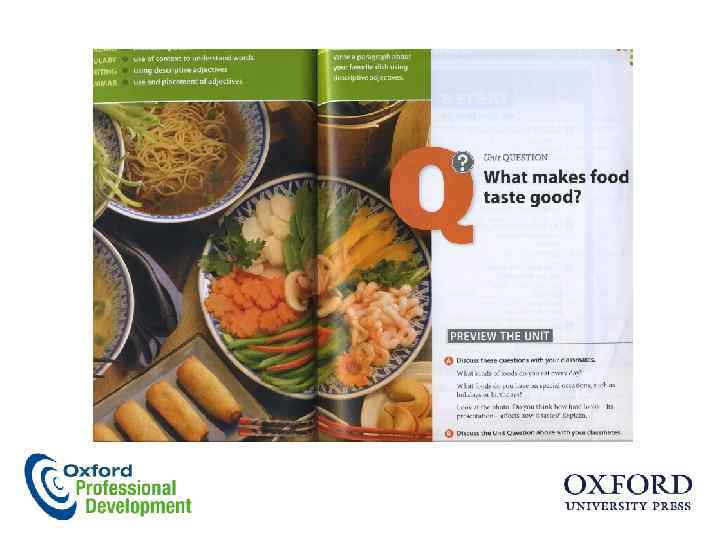
 Do you think you are a nontaster, medium taster or supertaster? Why? What foods do you really like or dislike? Choose one food and describe what you like or dislike about it? What are other possible reasons why people like certain foods and don't like others?
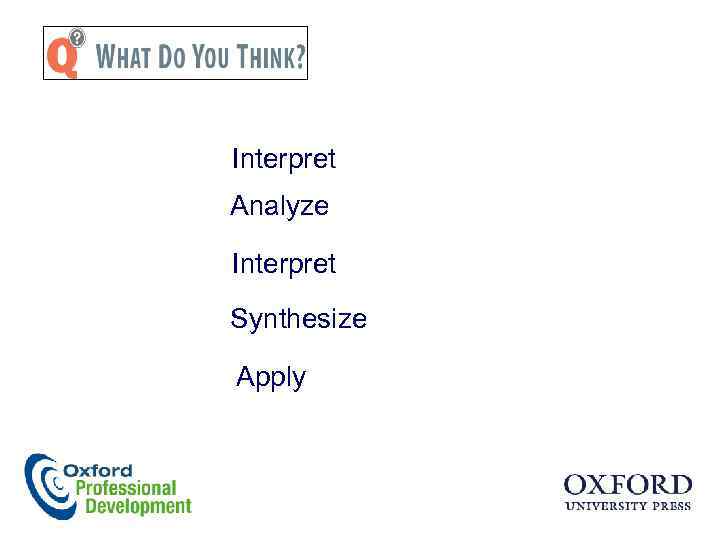 Interpret Analyze Interpret Synthesize Apply
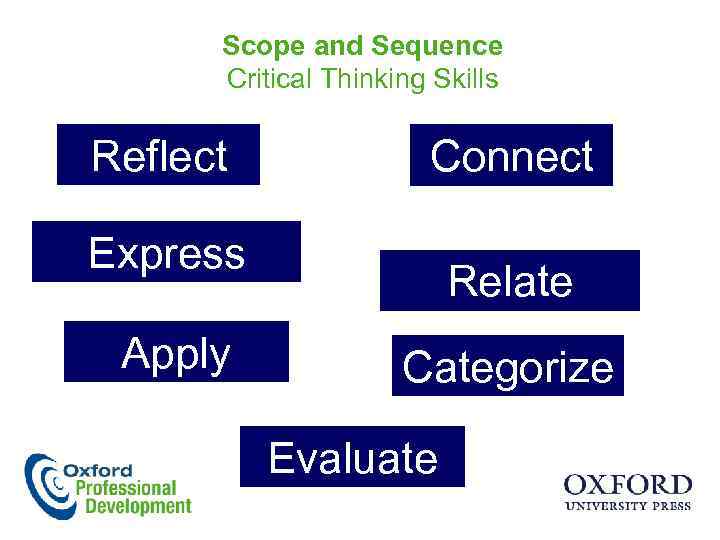 Scope and Sequence Critical Thinking Skills Reflect Connect Express Apply Relate Categorize Evaluate
 Q Questions promote learning Learning targets Checkpoints Evaluation tools
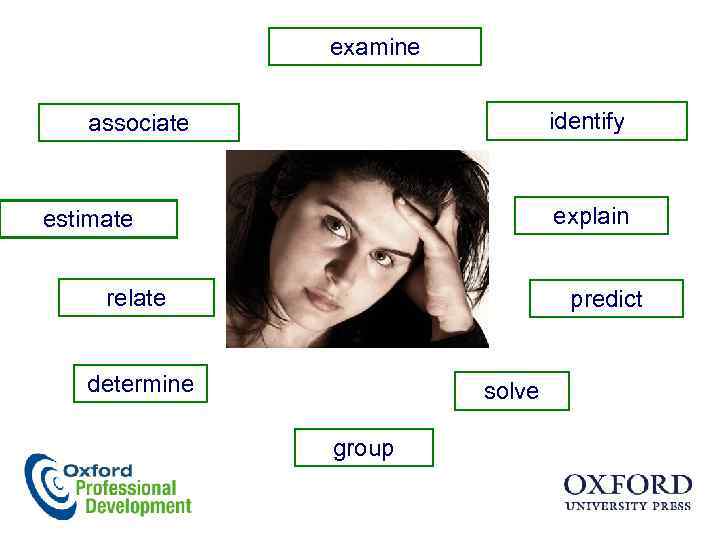 examine identify associate explain estimate relate predict determine solve group
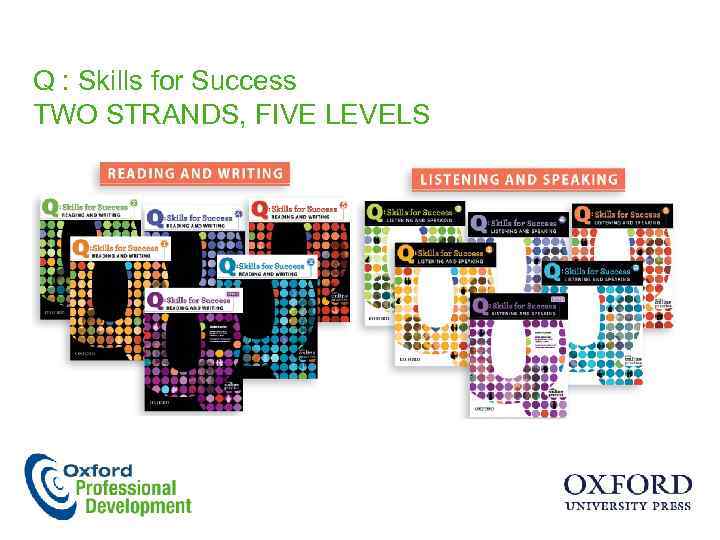 Q : Skills for Success TWO STRANDS, FIVE LEVELS