


 Скачать презентацию Q Group Spring Seminar 03 -05 April 2005
4ff974569a1632344bc891d0619bd20a.ppt
- Количество слайдов: 57
 Q Group Spring Seminar 03 -05 April 2005 Key Largo The Tactical and Strategic Value of Commodity Futures Claude B. Erb Campbell R. Harvey TCW, Los Angeles, CA USA Duke University, Durham, NC USA NBER, Cambridge, MA USA
 Commodity Futures: Summary Statistics • Since 1969, the Goldman Sachs Commodity Index (GSCI) has outperformed the S&P 500 • What does this imply about our asset allocation decision to commodity futures? • The critical question is whether the past will repeat.
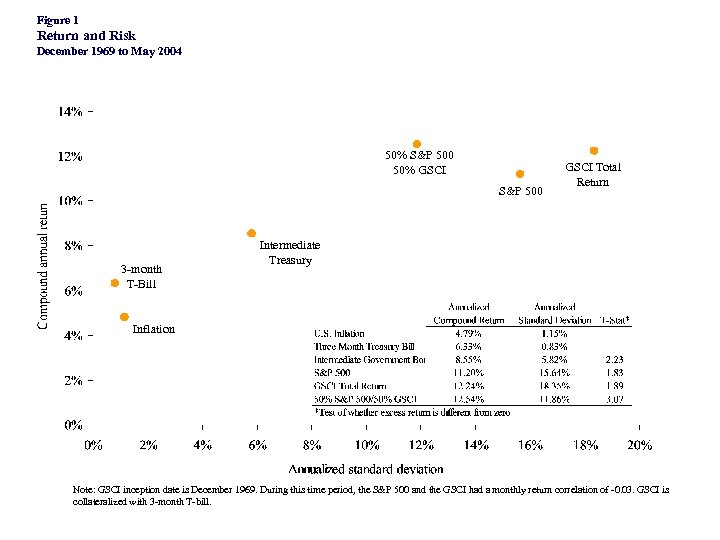 Figure 1 Return and Risk December 1969 to May 2004 50% S&P 500 50% GSCI S&P 500 3 -month T-Bill GSCI Total Return Intermediate Treasury Inflation Note: GSCI inception date is December 1969. During this time period, the S&P 500 and the GSCI had a monthly return correlation of -0. 03. GSCI is collateralized with 3 -month T-bill.
 Commodity Futures: Different Indices GSCI – Production weighted • Dow-Jones AIG – Production and liquidity • Reuters-CRB – Equal weighted •
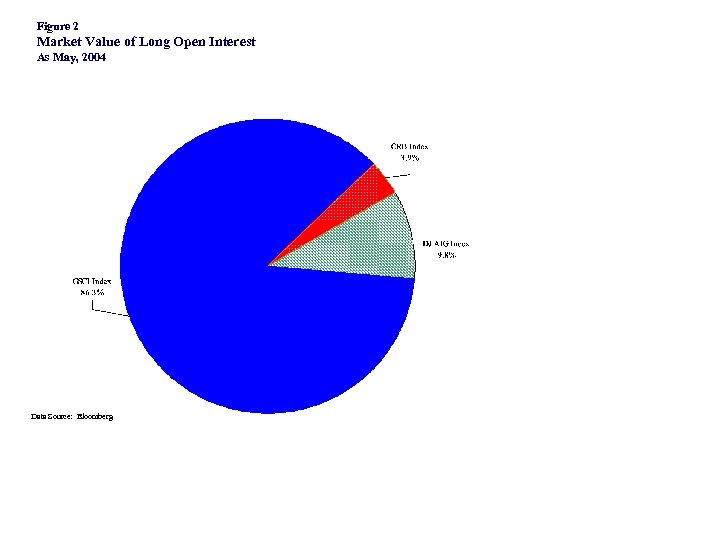 Figure 2 Market Value of Long Open Interest As May, 2004 Data Source: Bloomberg
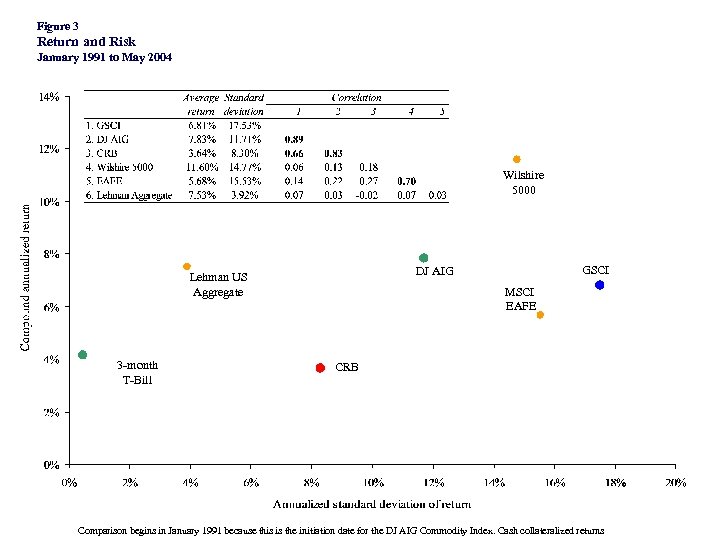 Figure 3 Return and Risk January 1991 to May 2004 Wilshire 5000 3 -month T-Bill GSCI DJ AIG Lehman US Aggregate MSCI EAFE CRB Comparison begins in January 1991 because this is the initiation date for the DJ AIG Commodity Index. Cash collateralized returns
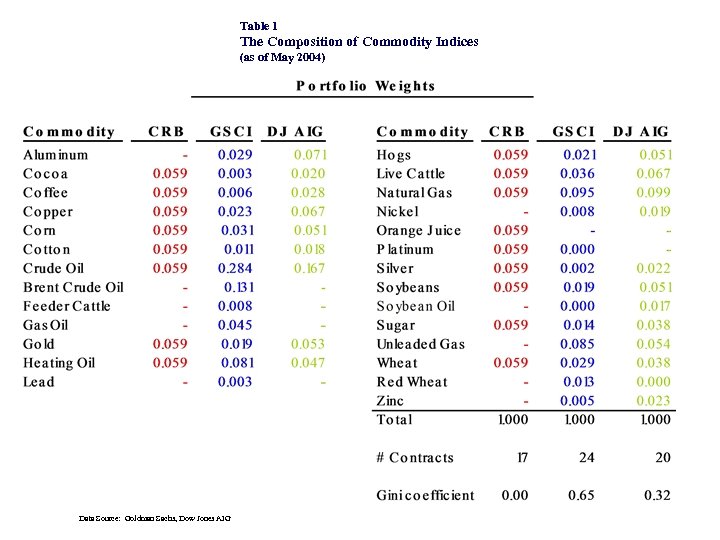 Table 1 The Composition of Commodity Indices (as of May 2004) Data Source: Goldman Sachs, Dow Jones AIG
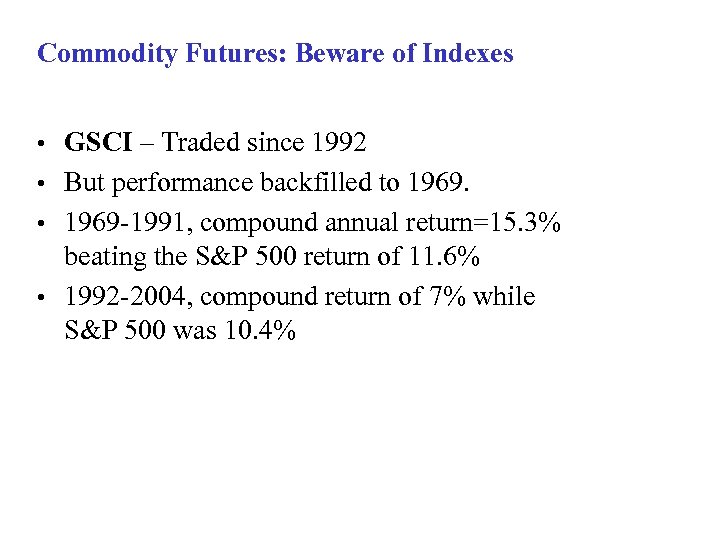 Commodity Futures: Beware of Indexes GSCI – Traded since 1992 • But performance backfilled to 1969. • 1969 -1991, compound annual return=15. 3% beating the S&P 500 return of 11. 6% • 1992 -2004, compound return of 7% while S&P 500 was 10. 4% •
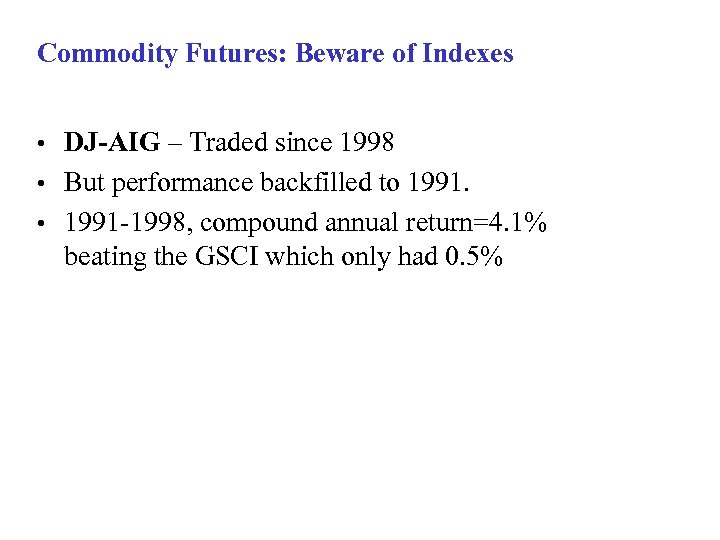 Commodity Futures: Beware of Indexes DJ-AIG – Traded since 1998 • But performance backfilled to 1991. • 1991 -1998, compound annual return=4. 1% beating the GSCI which only had 0. 5% •
 Commodity Futures: Beware of Indexes CRB – Traded since 1986 • But performance backfilled to 1982. •
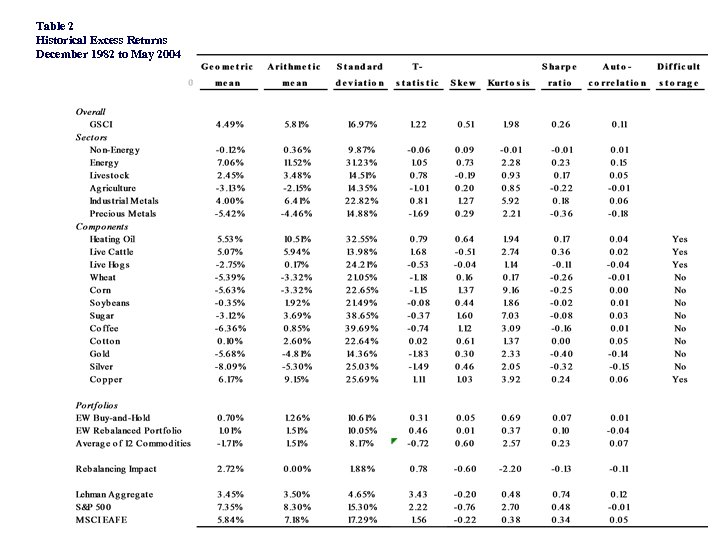 Table 2 Historical Excess Returns December 1982 to May 2004
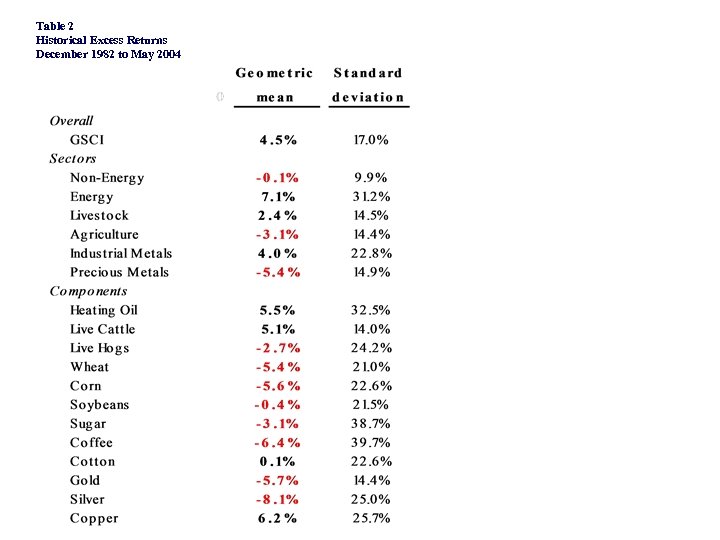 Table 2 Historical Excess Returns December 1982 to May 2004
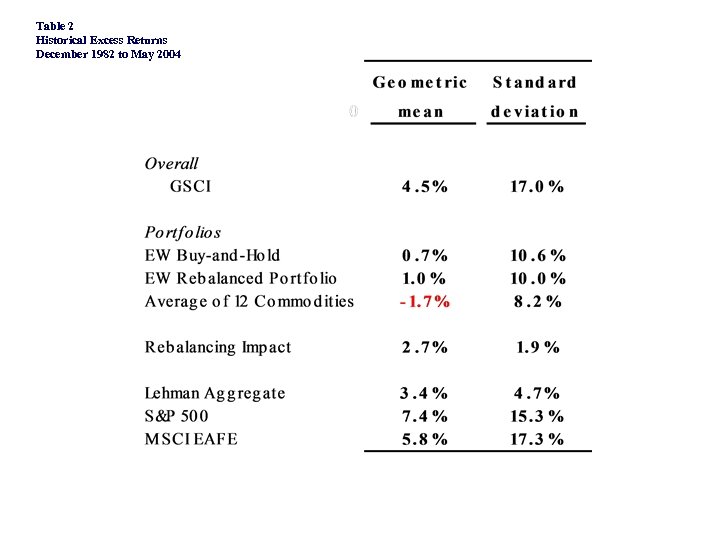 Table 2 Historical Excess Returns December 1982 to May 2004
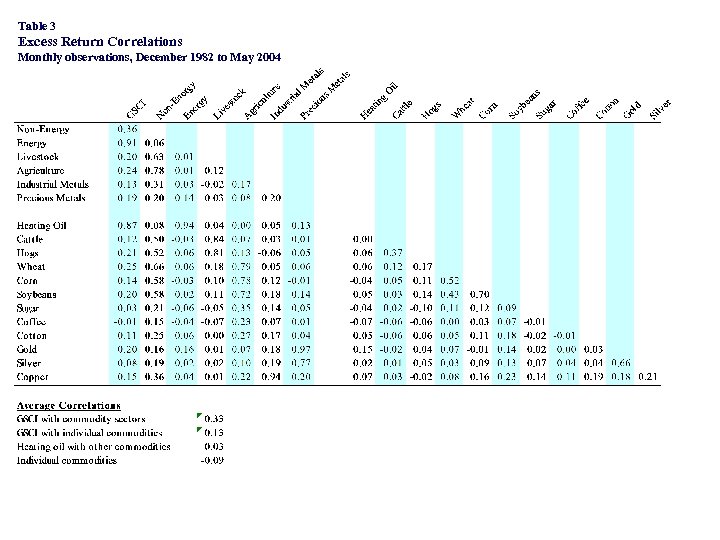 Table 3 Excess Return Correlations Monthly observations, December 1982 to May 2004
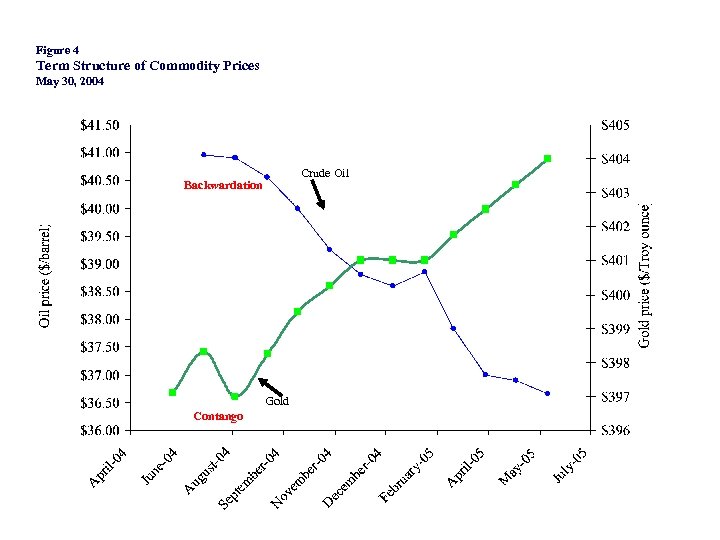 Figure 4 Term Structure of Commodity Prices May 30, 2004 Crude Oil Backwardation Gold Contango
 Commodity Futures: Roll Returns The excess return consists of a spot return and a roll return. • The spot return is the change in the price of the nearby futures contract. • Since futures contracts have an expiration date investors who want to maintain a commodity futures position have to periodically sell an expiring futures contract and buy the next to expire contract. •
 Commodity Futures: Roll Returns This is called rolling a futures position. • If the term structure of futures prices is upward sloping, an investor rolls from a lower priced expiring contract into a higher priced next nearest futures contract. • If the term structure of futures prices is downward sloping, an investor rolls from a higher priced expiring contract into a lower priced next nearest futures contract. • This suggests that the term structure of futures prices drives the roll return. •
 Commodity Futures: Roll Returns The excess return for gold futures was about -5. 7% per annum, the spot price return was -0. 8% and the roll return was about -4. 8%. • The roll return was negative because the gold futures market is almost always in contango. • The average spot return of heating oil and gold futures was close to zero. The 11. 2% excess return difference between heating oil and gold was largely driven by a 9. 5% difference in roll returns. • The 1. 7% difference in spot returns was a relatively minor source of the overall return difference between heating oil and gold. • This example illustrates that excess returns and spot returns need not be the same if roll returns differ from zero •
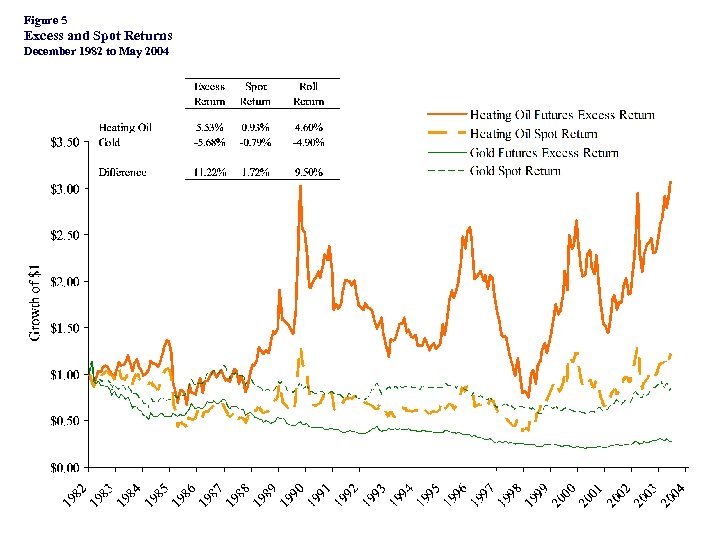 Figure 5 Excess and Spot Returns December 1982 to May 2004
 Commodity Futures: Normal Backwardation? How important have roll returns been in explaining the cross-section of individual commodity futures excess returns? • Long-only normal backwardation suggests that commodity futures excess returns should be positive, for both backwardated and contangoed commodity futures. • In fact, Gorton and Rouwenhorst (2004) suggest that under normal backwardation there should be no relationship between the term structure of commodity futures prices and the returns from investing in commodity futures. •
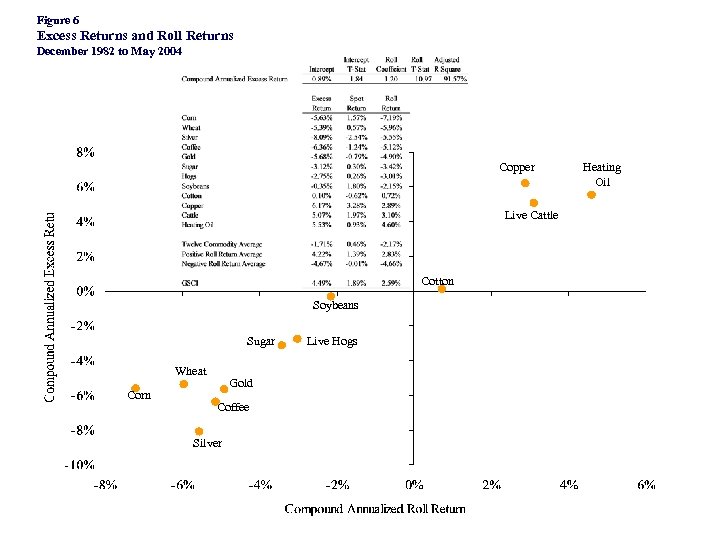 Figure 6 Excess Returns and Roll Returns December 1982 to May 2004 Copper Live Cattle Cotton Soybeans Sugar Wheat Corn Gold Coffee Silver Live Hogs Heating Oil
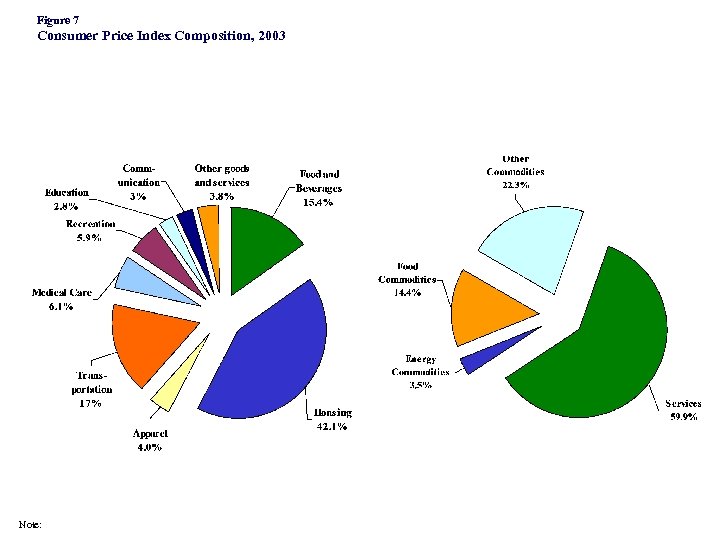 Figure 7 Consumer Price Index Composition, 2003 Note:
 Commodity Futures: Inflation Hedge? Inflation • Unexpected Inflation • Expected Inflation • Change in Inflation •
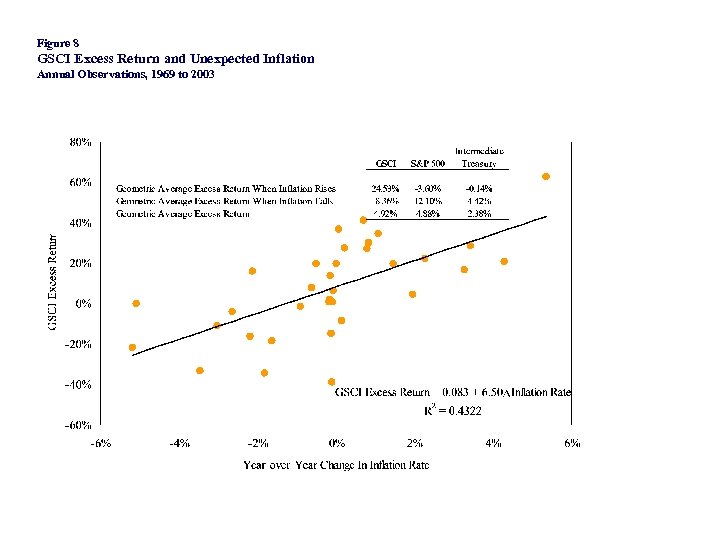 Figure 8 GSCI Excess Return and Unexpected Inflation Annual Observations, 1969 to 2003
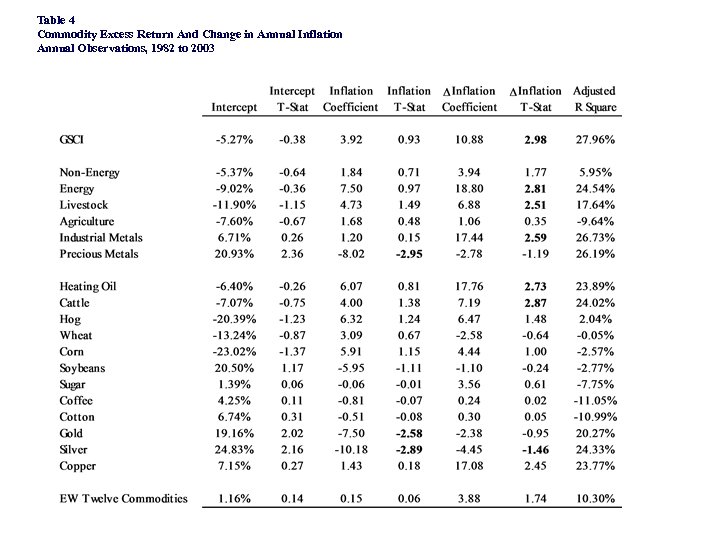 Table 4 Commodity Excess Return And Change in Annual Inflation Annual Observations, 1982 to 2003
 Commodity Futures: Inflation Hedge? Variation across commodities • Link to roll return •
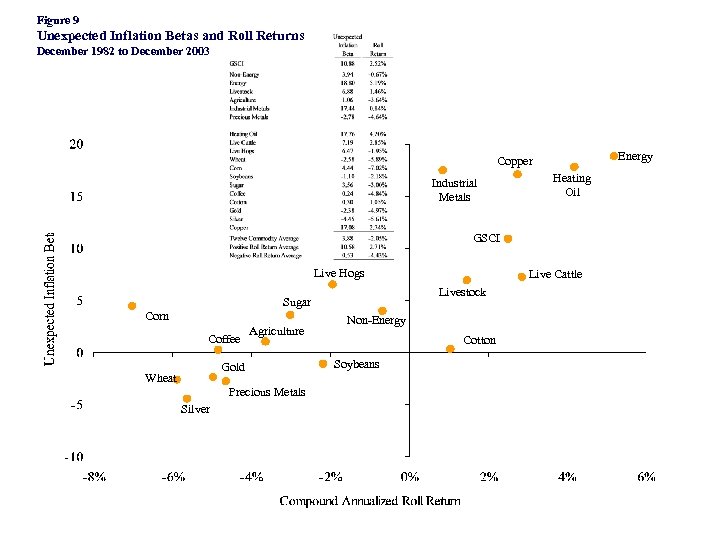 Figure 9 Unexpected Inflation Betas and Roll Returns December 1982 to December 2003 Energy Copper Industrial Metals Heating Oil GSCI Live Hogs Livestock Sugar Corn Coffee Agriculture Gold Wheat Precious Metals Silver Live Cattle Non-Energy Cotton Soybeans
 Commodity Futures: What is the Risk? Risk Factors • Market • Term • Default • SML • HML • Change in FX
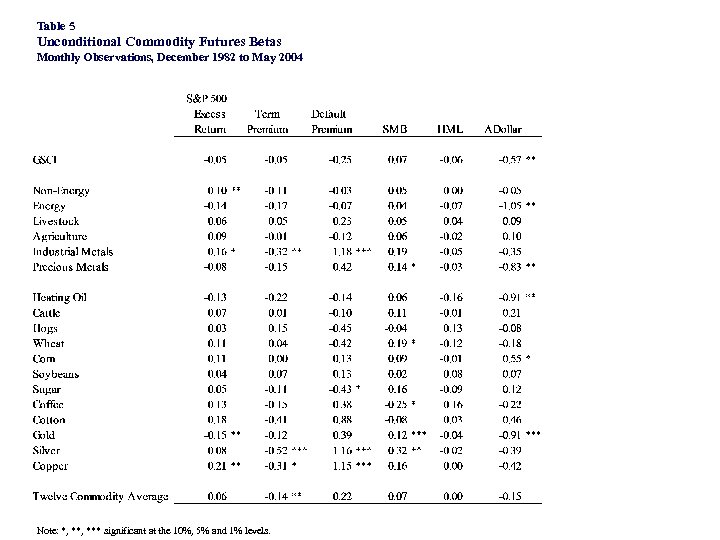 Table 5 Unconditional Commodity Futures Betas Monthly Observations, December 1982 to May 2004 Note: *, *** significant at the 10%, 5% and 1% levels.
 Commodity Futures: Diversification Return Need to rebalance portfolio • What is the return due to rebalancing? •
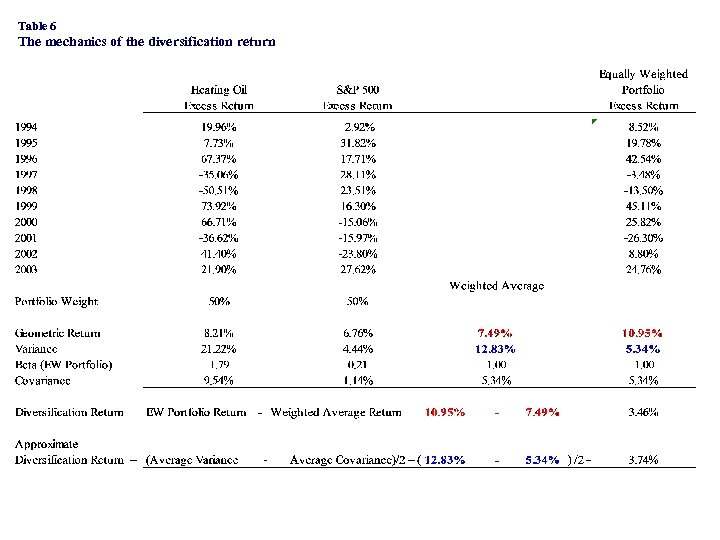 Table 6 The mechanics of the diversification return
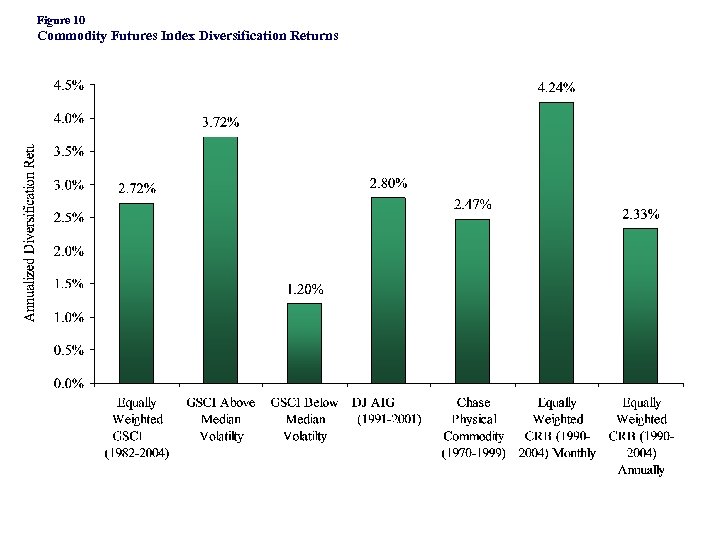 Figure 10 Commodity Futures Index Diversification Returns
 Commodity Futures: Strategic Allocation Mean variance analysis • What do you collateralize with? •
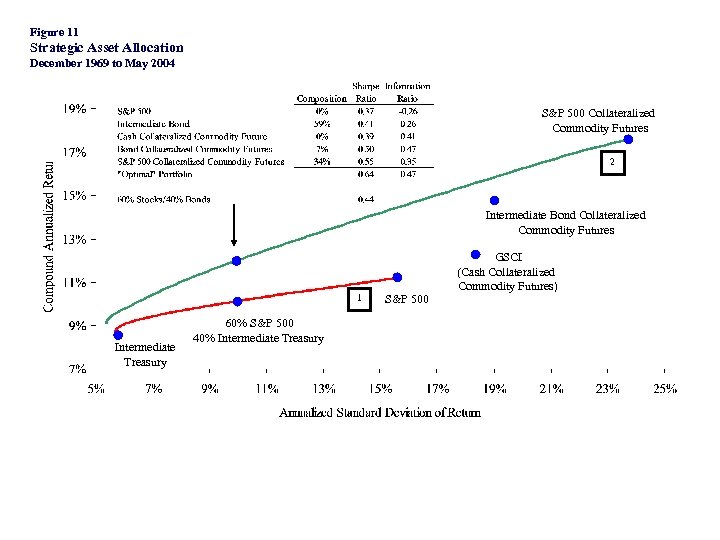 Figure 11 Strategic Asset Allocation December 1969 to May 2004 S&P 500 Collateralized Commodity Futures 2 Intermediate Bond Collateralized Commodity Futures 1 Intermediate Treasury 60% S&P 500 40% Intermediate Treasury S&P 500 GSCI (Cash Collateralized Commodity Futures)
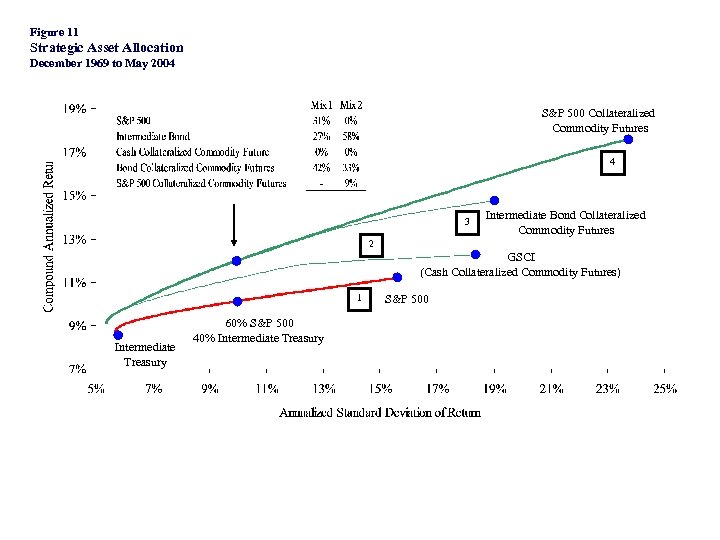 Figure 11 Strategic Asset Allocation December 1969 to May 2004 S&P 500 Collateralized Commodity Futures 4 3 Intermediate Bond Collateralized Commodity Futures 2 GSCI (Cash Collateralized Commodity Futures) 1 Intermediate Treasury 60% S&P 500 40% Intermediate Treasury S&P 500
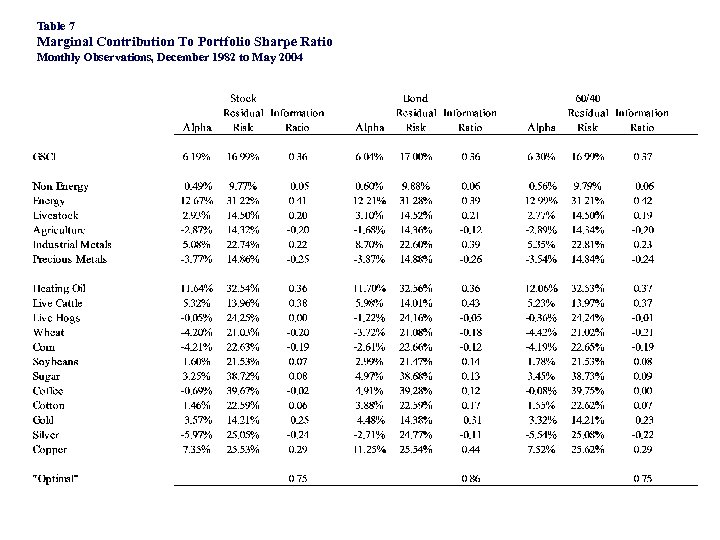 Table 7 Marginal Contribution To Portfolio Sharpe Ratio Monthly Observations, December 1982 to May 2004
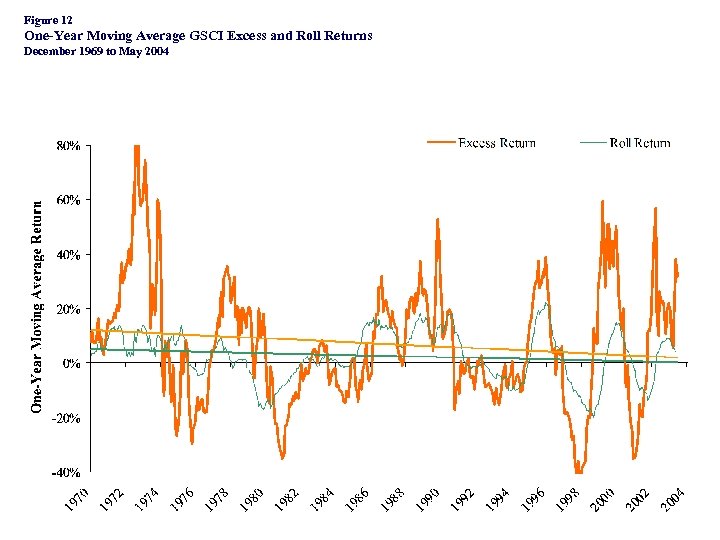 Figure 12 One-Year Moving Average GSCI Excess and Roll Returns December 1969 to May 2004
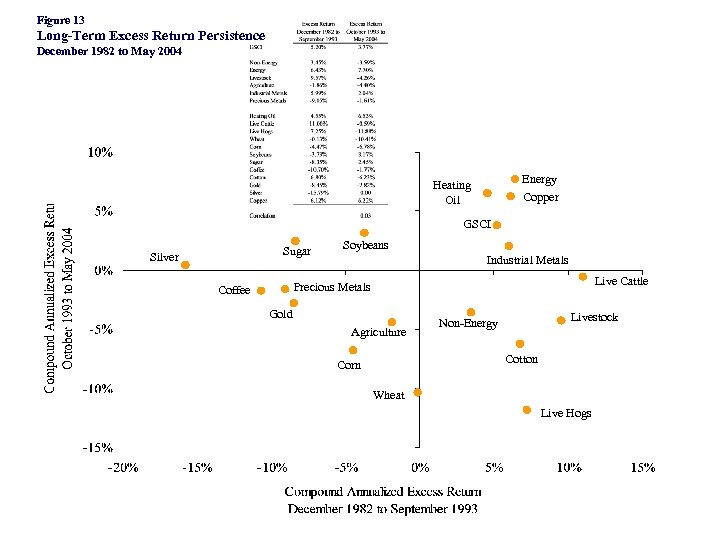 Figure 13 Long-Term Excess Return Persistence December 1982 to May 2004 Energy Copper Heating Oil GSCI Sugar Silver Soybeans Industrial Metals Live Cattle Precious Metals Coffee Gold Agriculture Livestock Non-Energy Cotton Corn Wheat Live Hogs
 Commodity Futures: Tactical Allocation Figure 14 shows the pay-off to a strategy of going long the GSCI for one month if the previous one year excess return has been positive or going long the GSCI if the previous one year excess return has been negative. • This result is stable over time. • While the momentum effect is strongest in the first 13 years of the sample, the effect is robust in the more recent period. •
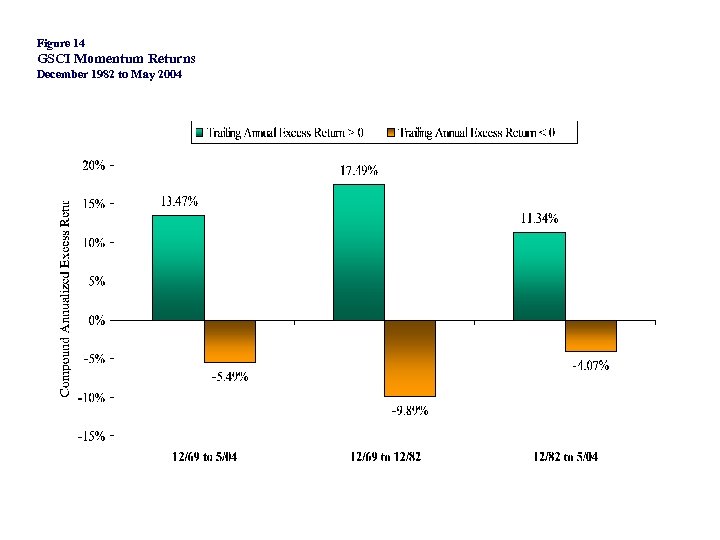 Figure 14 GSCI Momentum Returns December 1982 to May 2004
 Commodity Futures: Tactical Allocation Table 8 illustrates the pay-off to an investment strategy that invests 100% of portfolio assets in one of four strategies: cash, bonds, cash collateralized commodity futures or bond collateralized commodity futures. • The decision rule is to invest in the strategy that has the highest previous twelve month return. •
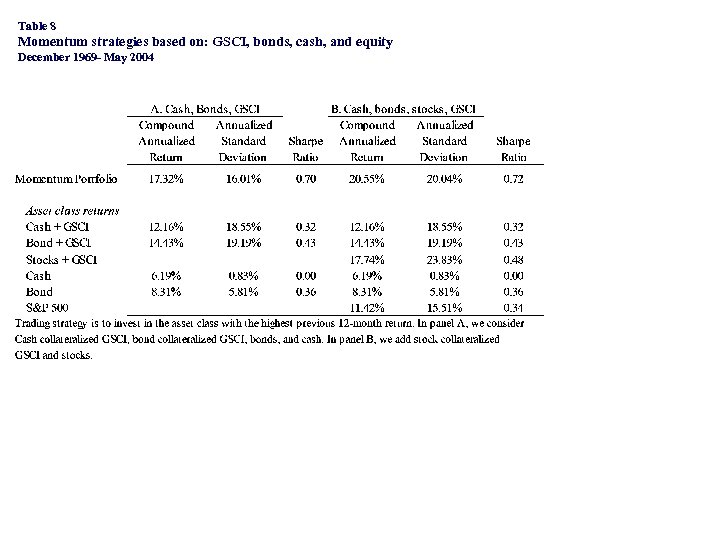 Table 8 Momentum strategies based on: GSCI, bonds, cash, and equity December 1969 - May 2004
 Commodity Futures: Tactical Allocation • Figure 15 examines the pay-off to investing in an equally-weighted portfolio of the four commodity futures with the highest prior twelve month returns, a portfolio of the worst performing commodity futures, and a long/short portfolio fashioned from these two portfolios.
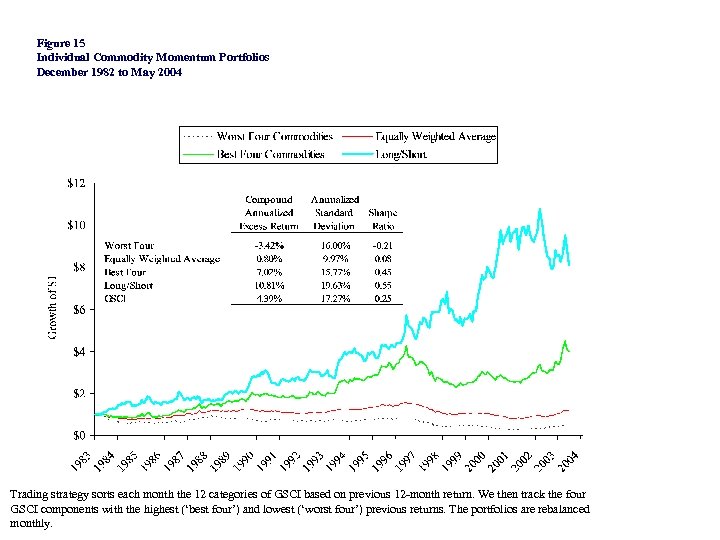 Figure 15 Individual Commodity Momentum Portfolios December 1982 to May 2004 Trading strategy sorts each month the 12 categories of GSCI based on previous 12 -month return. We then track the four GSCI components with the highest (‘best four’) and lowest (‘worst four’) previous returns. The portfolios are rebalanced monthly.
 Commodity Futures: Tactical Allocation We now consider a variation of the strategy that uses the sign of the previous 12 -month’s return. We create an “insurance providing” proxy portfolio by buying commodities that have had a positive return over the past 12 months and selling those that have had a negative return. • We use the insurance term because going long a backwardated commodity provides price insurance as does going short a contangoed commodity. It is possible that in a particular month that all past returns are positive or negative. •
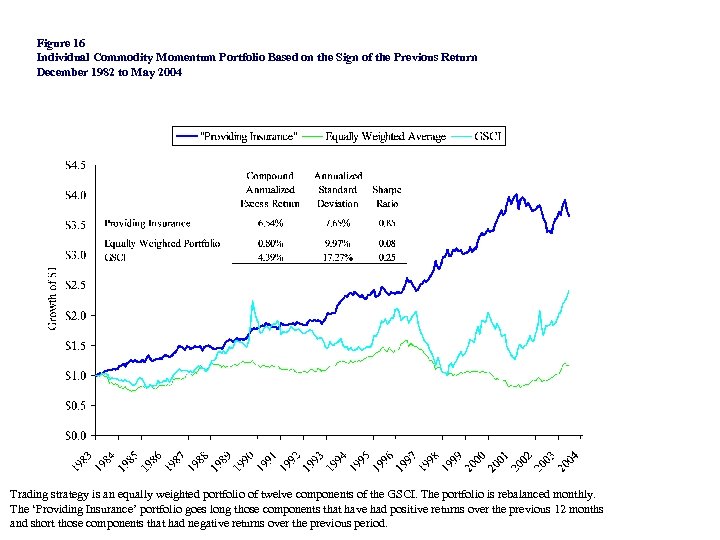 Figure 16 Individual Commodity Momentum Portfolio Based on the Sign of the Previous Return December 1982 to May 2004 Trading strategy is an equally weighted portfolio of twelve components of the GSCI. The portfolio is rebalanced monthly. The ‘Providing Insurance’ portfolio goes long those components that have had positive returns over the previous 12 months and short those components that had negative returns over the previous period.
 Commodity Futures: Tactical Allocation When the price of the nearby GSCI futures contract is greater than the price of the next nearby futures contract (when the GSCI is backwardated), we expect that the long only excess return should, on average, be positive. • Table 9 uses the information in the term structure. •
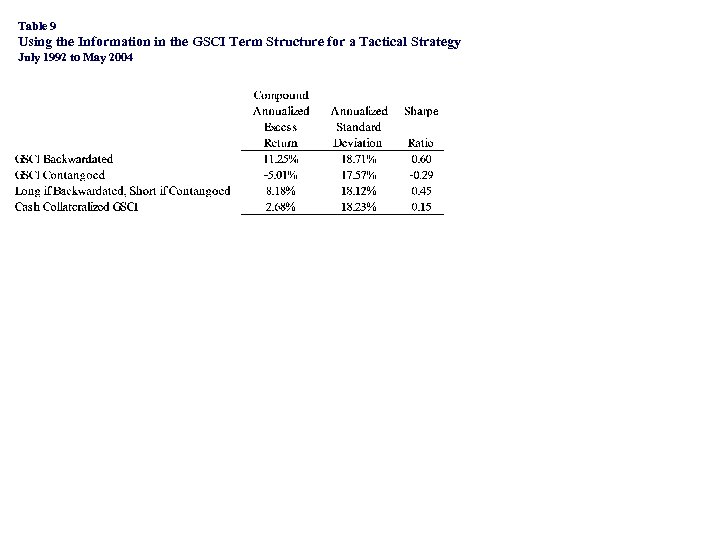 Table 9 Using the Information in the GSCI Term Structure for a Tactical Strategy July 1992 to May 2004
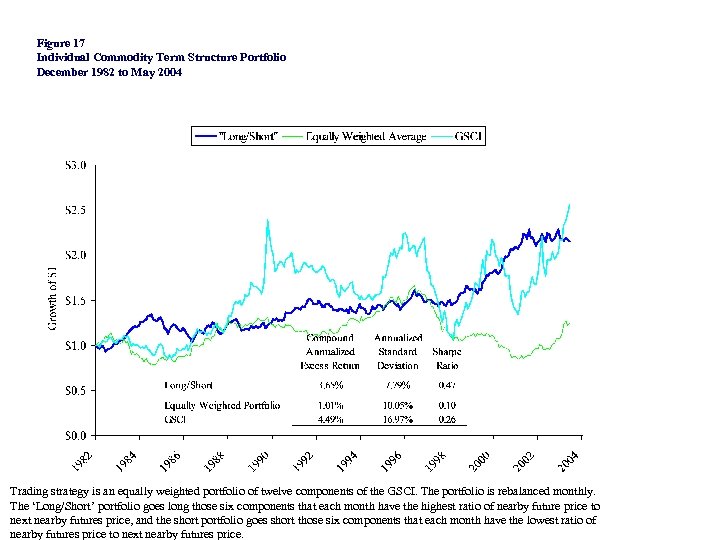 Figure 17 Individual Commodity Term Structure Portfolio December 1982 to May 2004 Trading strategy is an equally weighted portfolio of twelve components of the GSCI. The portfolio is rebalanced monthly. The ‘Long/Short’ portfolio goes long those six components that each month have the highest ratio of nearby future price to next nearby futures price, and the short portfolio goes short those six components that each month have the lowest ratio of nearby futures price to next nearby futures price.
 Commodity Futures: Conclusion • Myths and Reality
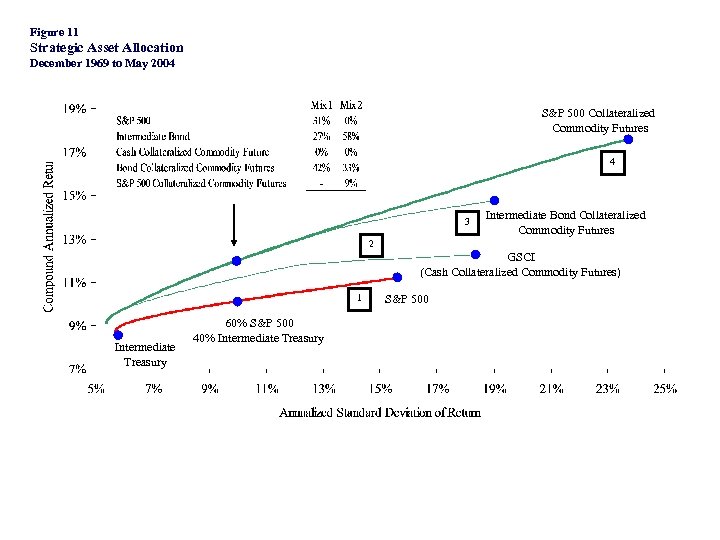 Figure 11 Strategic Asset Allocation December 1969 to May 2004 S&P 500 Collateralized Commodity Futures 4 3 Intermediate Bond Collateralized Commodity Futures 2 GSCI (Cash Collateralized Commodity Futures) 1 Intermediate Treasury 60% S&P 500 40% Intermediate Treasury S&P 500
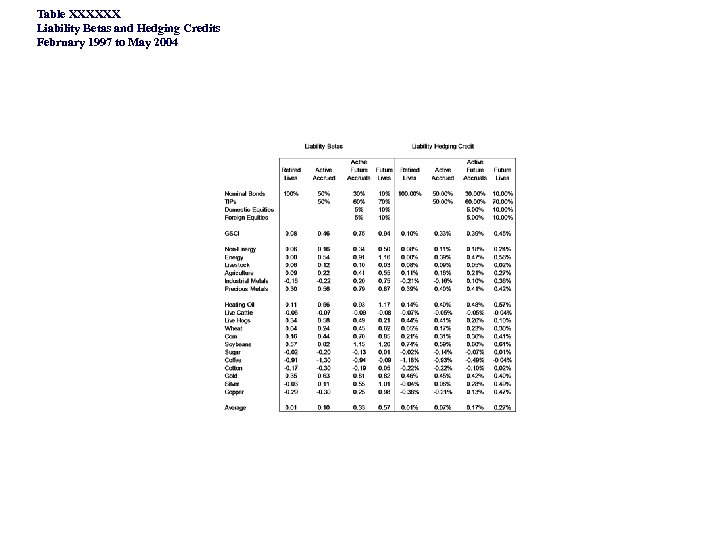 Table XXXXXX Liability Betas and Hedging Credits February 1997 to May 2004
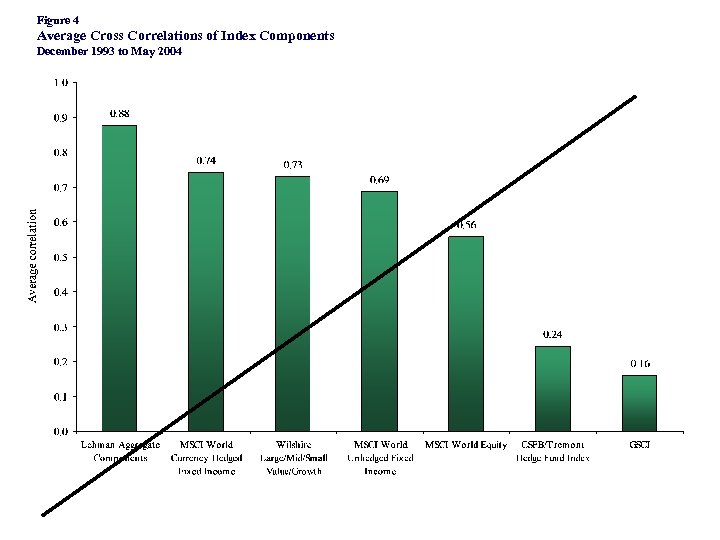 Figure 4 Average Cross Correlations of Index Components December 1993 to May 2004
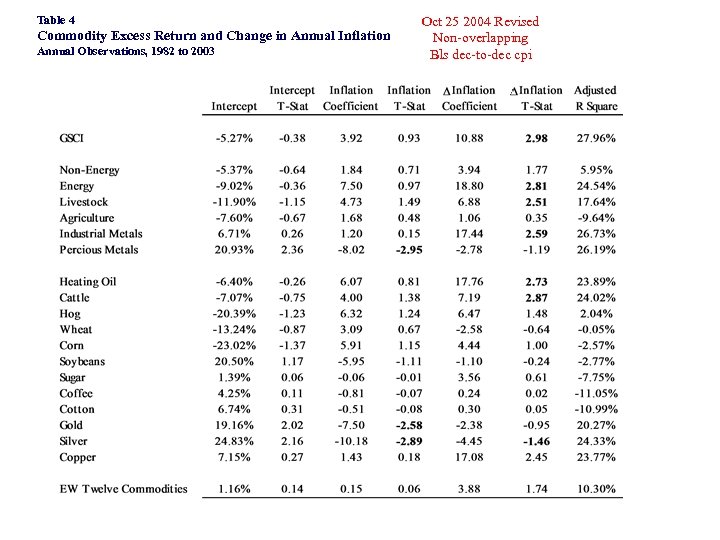 Table 4 Commodity Excess Return and Change in Annual Inflation Annual Observations, 1982 to 2003 Oct 25 2004 Revised Non-overlapping Bls dec-to-dec cpi
![Table X [No longer used] Sensitivity to Inflation Linked Bond Returns Monthly Excess Returns](https://present5.com/presentation/4ff974569a1632344bc891d0619bd20a/image-56.jpg "Table X [No longer used] Sensitivity to Inflation Linked Bond Returns Monthly Excess Returns") Table X [No longer used] Sensitivity to Inflation Linked Bond Returns Monthly Excess Returns February 1997 to May 2004
Table X [No longer used] Sensitivity to Inflation Linked Bond Returns Monthly Excess Returns February 1997 to May 2004
![Figure XX[No longer used] The Economist Industrial Commodity Price Index Cashin, P. and Mc.](https://present5.com/presentation/4ff974569a1632344bc891d0619bd20a/image-57.jpg "Figure XX[No longer used] The Economist Industrial Commodity Price Index Cashin, P. and Mc.") Figure XX[No longer used] The Economist Industrial Commodity Price Index Cashin, P. and Mc. Dermott, C. J. (2002), 'The Long-Run Behavior of Commodity Prices: Small Trends and Big Variability', IMF Staff Papers 49, 175 -99.
Figure XX[No longer used] The Economist Industrial Commodity Price Index Cashin, P. and Mc. Dermott, C. J. (2002), 'The Long-Run Behavior of Commodity Prices: Small Trends and Big Variability', IMF Staff Papers 49, 175 -99.