


 Скачать презентацию PXG WINE Controller Winery Application April 2006 Fuji
e7df21561b713b77ad833917596975a9.ppt
- Количество слайдов: 44
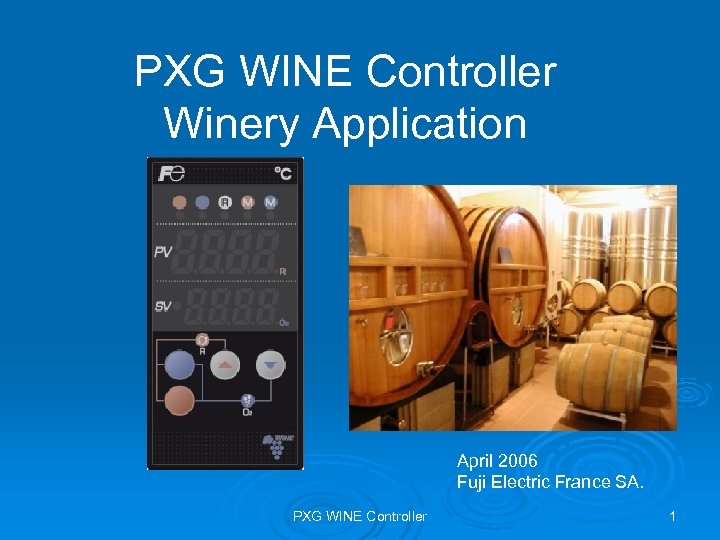 PXG WINE Controller Winery Application April 2006 Fuji Electric France SA. PXG WINE Controller 1
 The Report Constat Ø Since several years, the permanent concern for improve the quality of wine has force winery exploitations to be equipped with measure and control instruments. An investigation realized in 2004 has shown that although many wine storehouses or cooperative cellars are partially or totally equipped, it existed a potential still important of structures more interested by this problem. This interest especially emanates from exploitations of 10 -20 hectares, but also of structures more important who want renew their equipment in end of race or technically exceeded. More and more vats, so more and more controllers: in order to answer to the competition, each vine is converted separately according to its own degree of maturity in thermo-controlled vats in stainless still or in concrete with epoxy coating. PXG WINE Controller 2
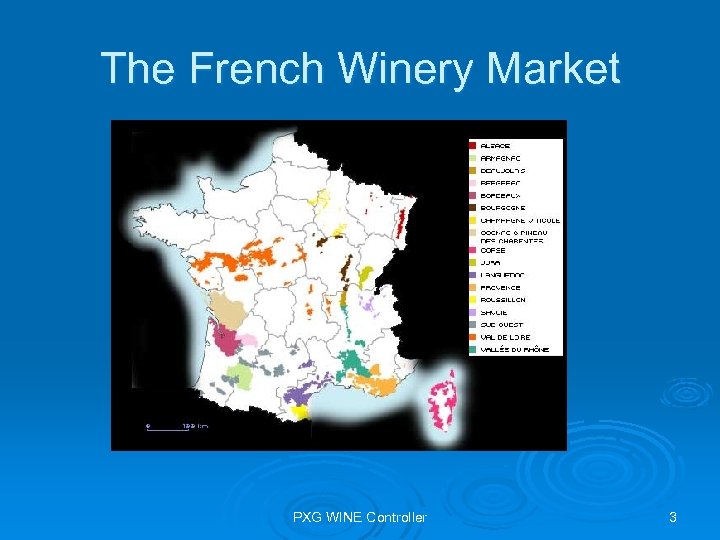 The French Winery Market PXG WINE Controller 3
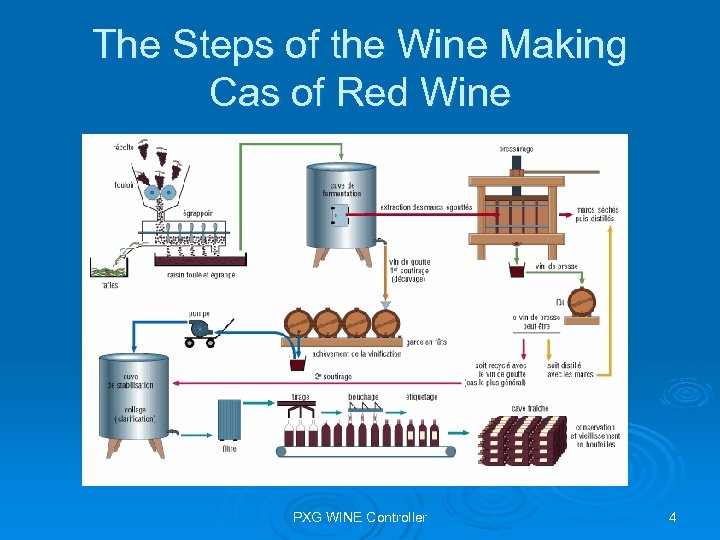 The Steps of the Wine Making Cas of Red Wine PXG WINE Controller 4
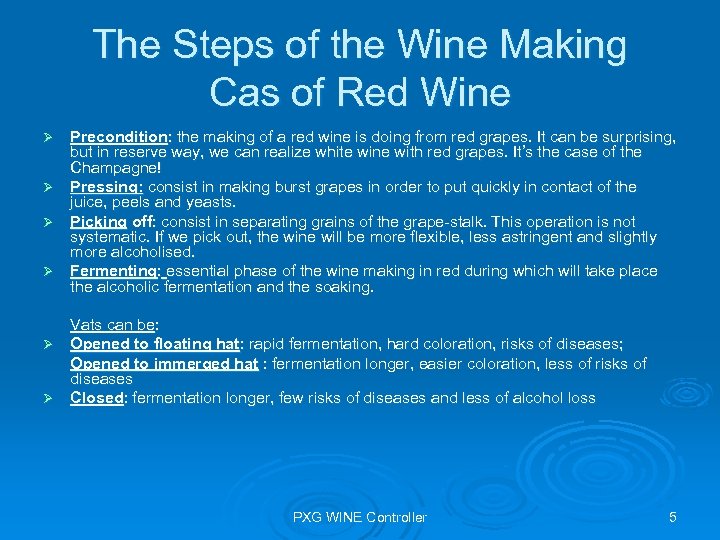 The Steps of the Wine Making Cas of Red Wine Ø Ø Ø Precondition: the making of a red wine is doing from red grapes. It can be surprising, but in reserve way, we can realize white wine with red grapes. It’s the case of the Champagne! Pressing: consist in making burst grapes in order to put quickly in contact of the juice, peels and yeasts. Picking off: consist in separating grains of the grape-stalk. This operation is not systematic. If we pick out, the wine will be more flexible, less astringent and slightly more alcoholised. Fermenting: essential phase of the wine making in red during which will take place the alcoholic fermentation and the soaking. Vats can be: Opened to floating hat: rapid fermentation, hard coloration, risks of diseases; Opened to immerged hat : fermentation longer, easier coloration, less of risks of diseases Closed: fermentation longer, few risks of diseases and less of alcohol loss PXG WINE Controller 5
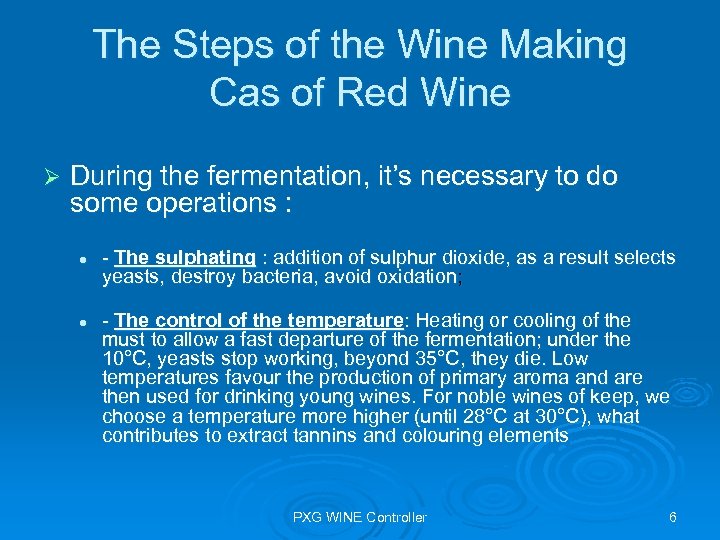 The Steps of the Wine Making Cas of Red Wine Ø During the fermentation, it’s necessary to do some operations : l l - The sulphating : addition of sulphur dioxide, as a result selects yeasts, destroy bacteria, avoid oxidation; - The control of the temperature: Heating or cooling of the must to allow a fast departure of the fermentation; under the 10°C, yeasts stop working, beyond 35°C, they die. Low temperatures favour the production of primary aroma and are then used for drinking young wines. For noble wines of keep, we choose a temperature more higher (until 28°C at 30°C), what contributes to extract tannins and colouring elements PXG WINE Controller 6
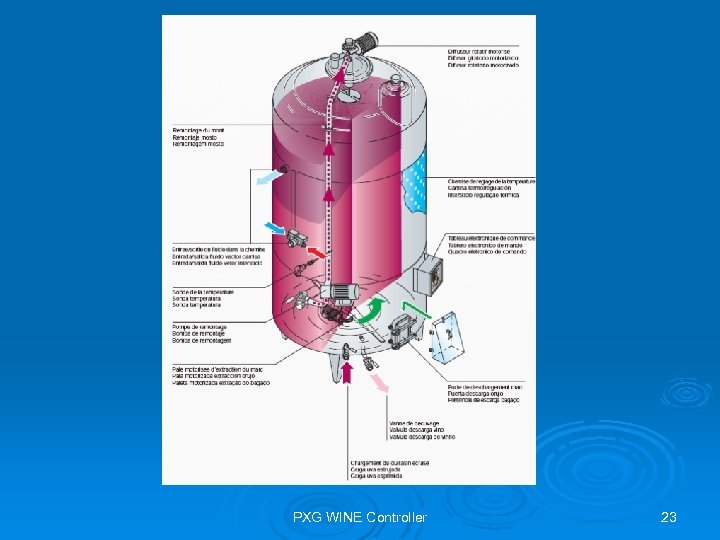
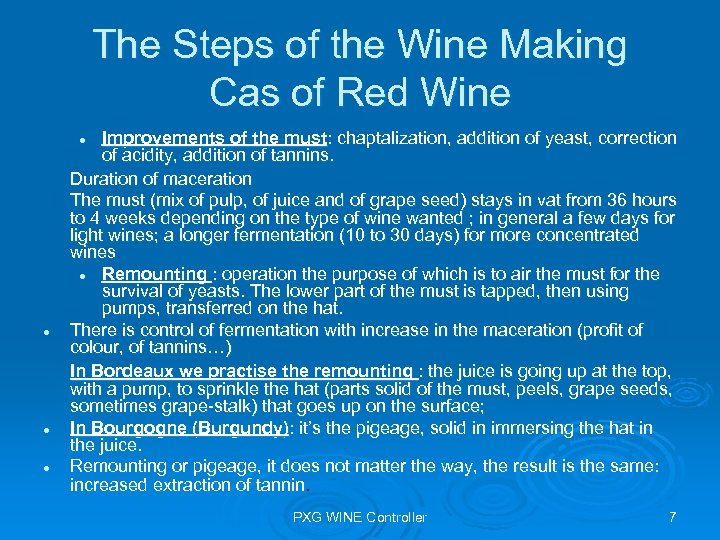 The Steps of the Wine Making Cas of Red Wine Improvements of the must: chaptalization, addition of yeast, correction of acidity, addition of tannins. Duration of maceration The must (mix of pulp, of juice and of grape seed) stays in vat from 36 hours to 4 weeks depending on the type of wine wanted ; in general a few days for light wines; a longer fermentation (10 to 30 days) for more concentrated wines l Remounting : operation the purpose of which is to air the must for the survival of yeasts. The lower part of the must is tapped, then using pumps, transferred on the hat. There is control of fermentation with increase in the maceration (profit of colour, of tannins…) In Bordeaux we practise the remounting : the juice is going up at the top, with a pump, to sprinkle the hat (parts solid of the must, peels, grape seeds, sometimes grape-stalk) that goes up on the surface; In Bourgogne (Burgundy): it’s the pigeage, solid in immersing the hat in the juice. Remounting or pigeage, it does not matter the way, the result is the same: increased extraction of tannin. l l PXG WINE Controller 7
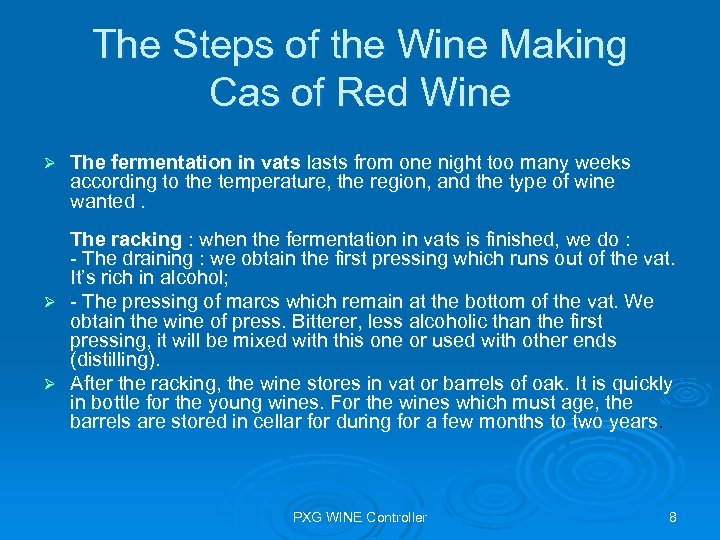 The Steps of the Wine Making Cas of Red Wine Ø The fermentation in vats lasts from one night too many weeks according to the temperature, the region, and the type of wine wanted. The racking : when the fermentation in vats is finished, we do : - The draining : we obtain the first pressing which runs out of the vat. It’s rich in alcohol; Ø - The pressing of marcs which remain at the bottom of the vat. We obtain the wine of press. Bitterer, less alcoholic than the first pressing, it will be mixed with this one or used with other ends (distilling). Ø After the racking, the wine stores in vat or barrels of oak. It is quickly in bottle for the young wines. For the wines which must age, the barrels are stored in cellar for during for a few months to two years. PXG WINE Controller 8
 Control of temperature in the wine making– Why ? Ø The control of temperatures doesn’t create news conditions of wine making or breeding of the wines : it is satisfied to reproduce the best aspects of them. Ø Grape at glass, each period of its life, each wine deserve to be prepared, vinified, stabilized, consumed at an optimal temperature with weak acceptable variations. At every moment, this ideal temperature contributes to improve the various aspects of the quality of the wine. · Development of the flavours of the grape and fermentation · Clarification of musts and wines · Optimal development then inhibition of yeasts and bacteria · Extraction of the pellicular compounds: tannins, anthocyanes · Optimization of the phenomena of oxydo-reduction and etherification · BLOOMING OF THE OLFACTIVE AND GUSTATORY CHARACTERS Ø Ø Ø Notice: In the majority of the cases, a good control of temperatures allows also to optimize the use vats of wine making like that the buildings of breeding of the wines or storage of the bottles. PXG WINE Controller 9
 Control of temperature in the wine making – Why ? Ø Control and temperature control in the process of wine making are very importance. All biological, physical and chemical processes being held in the grape or in the must and determining the final character of the wine, depend on the temperature. The system cooling or heating allows the user to intervene in an active way in the processes being held in the vat during the wine making, to modify them if necessary and to direct them in the desired direction. Ø Different systems of cooling or heating are available, and can be automated in a great measure using electronics control component and temperature controllers. Ø l The control and the temperature control has an influence on : • • • The beginning of the fermentation (initial temperature) The intensity of fermentation The stabilization of wine The temperature of stored wine etc. PXG WINE Controller 10
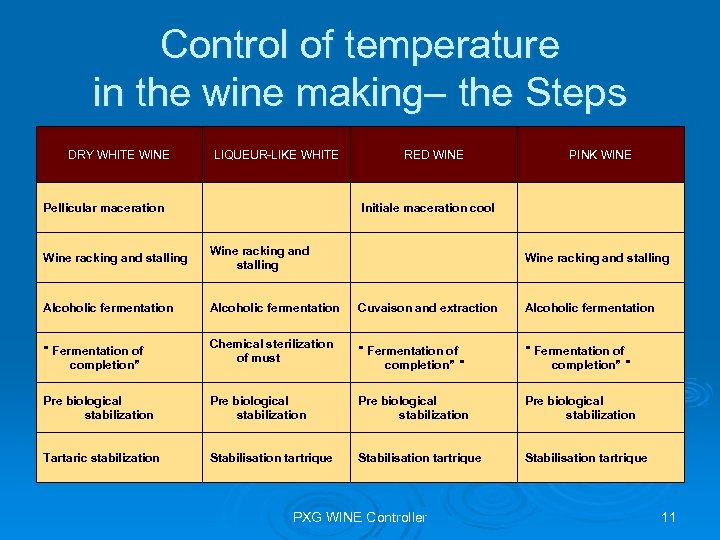 Control of temperature in the wine making– the Steps DRY WHITE WINE LIQUEUR-LIKE WHITE RED WINE PINK WINE Pellicular maceration Initiale maceration cool Wine racking and stalling Alcoholic fermentation Cuvaison and extraction Alcoholic fermentation " Fermentation of completion” " " Fermentation of completion” Chemical sterilization of must Pre biological stabilization Tartaric stabilization Stabilisation tartrique PXG WINE Controller 11
 Control of temperature in the wine making – the Steps Ø Initial maceration cool l l Ø STABILIZATION OF WINES BY TREATMENT FOR HEAT l Ø The technique consists in delaying the departure in fermentation of the red vintage to favorise the exchanges between berry skins and juices and bring colour and aroma. The wines are more structured, rounder (aqueous medium, thus the grape seeds are not attacked by alcohol and don’t release their too hard tannins). The I. M. C is carried during the encuvage by contribution of dry ice and lasts 10 to 15 days. Temperature, the vintage is cooled at a temperature near to 41, 00°F maintained by daily contributions of dry ice. The cooling must be fast to induce a thermal shock which involves a bursting of the cell by deep freezing of the strips. It’s necessary to heat the vintage for the starting in fermentation. The heating of wines at high temperature allows the destruction of yeasts and bacteria and ensures their biological stability: we speak then about pasteurization, thermolisation… TARTARIC STABILIZATION OF WINES BY THE COOL l In low temperature- near 0°C and under- the potassium bitartrate in super saturation in wines precipitate and is eliminated by filtration; we remove the risks of tartaric precipitations in bottle. PXG WINE Controller 12
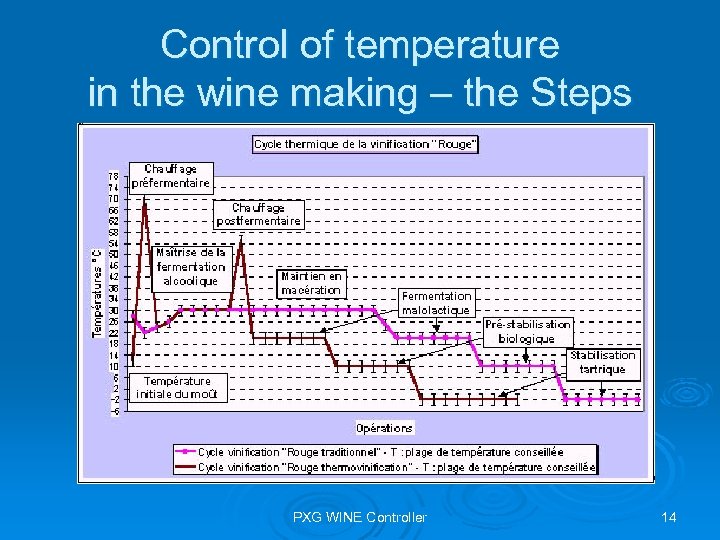
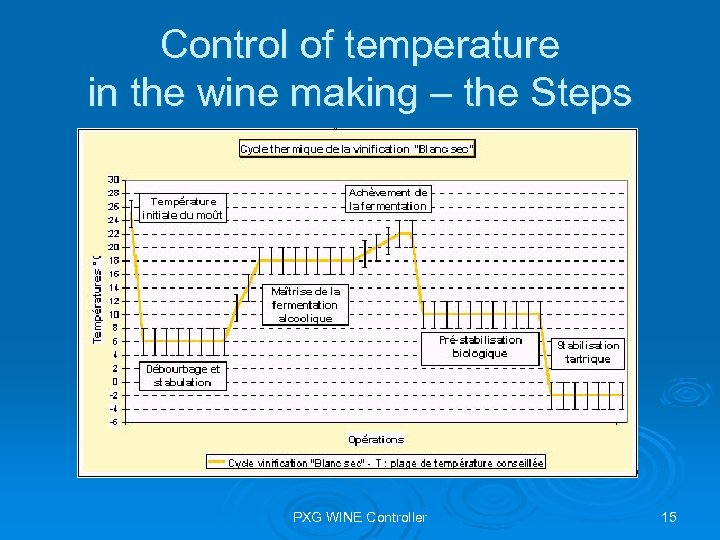
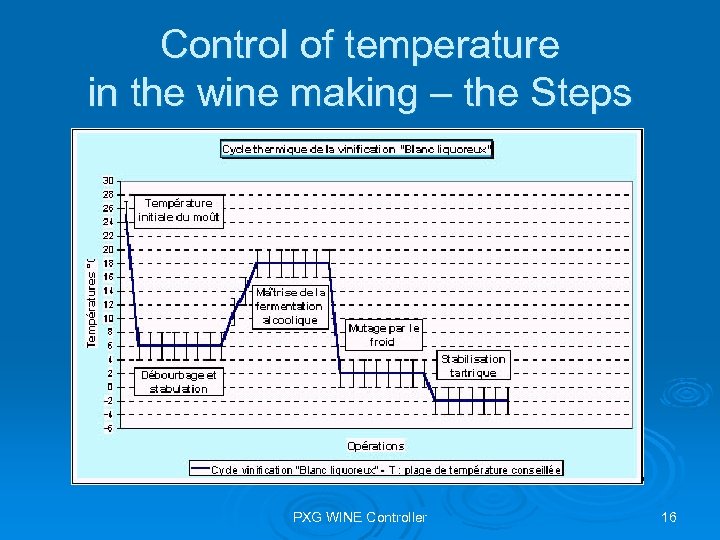
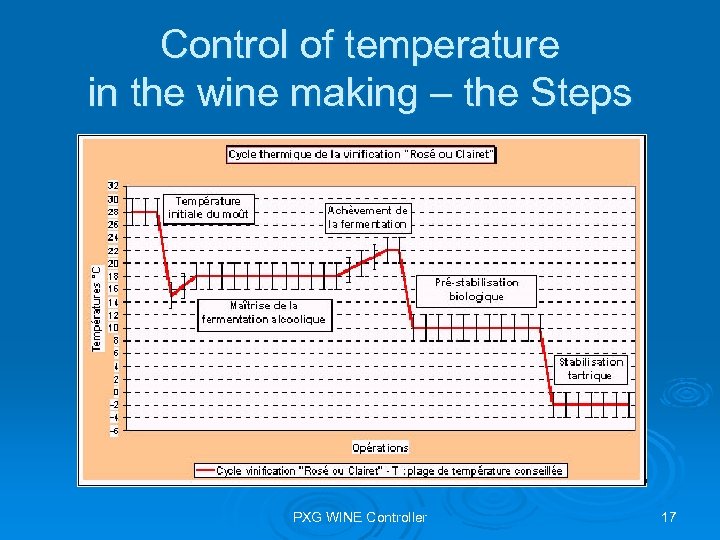
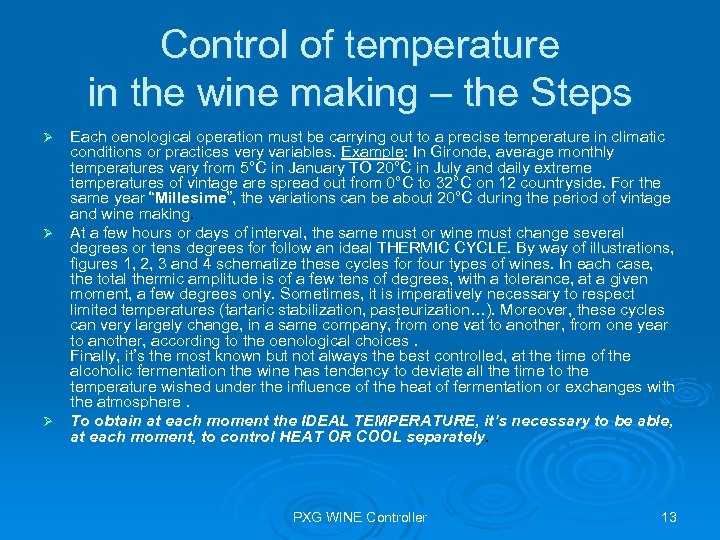 Control of temperature in the wine making – the Steps Each oenological operation must be carrying out to a precise temperature in climatic conditions or practices very variables. Example: In Gironde, average monthly temperatures vary from 5°C in January TO 20°C in July and daily extreme temperatures of vintage are spread out from 0°C to 32°C on 12 countryside. For the same year “Millesime”, the variations can be about 20°C during the period of vintage and wine making. Ø At a few hours or days of interval, the same must or wine must change several degrees or tens degrees for follow an ideal THERMIC CYCLE. By way of illustrations, figures 1, 2, 3 and 4 schematize these cycles for four types of wines. In each case, the total thermic amplitude is of a few tens of degrees, with a tolerance, at a given moment, a few degrees only. Sometimes, it is imperatively necessary to respect limited temperatures (tartaric stabilization, pasteurization…). Moreover, these cycles can very largely change, in a same company, from one vat to another, from one year to another, according to the oenological choices. Finally, it’s the most known but not always the best controlled, at the time of the alcoholic fermentation the wine has tendency to deviate all the time to the temperature wished under the influence of the heat of fermentation or exchanges with the atmosphere. Ø To obtain at each moment the IDEAL TEMPERATURE, it’s necessary to be able, at each moment, to control HEAT OR COOL separately. Ø PXG WINE Controller 13
 Control of temperature in the wine making – the Steps PXG WINE Controller 14
 Control of temperature in the wine making – the Steps PXG WINE Controller 15
 Control of temperature in the wine making – the Steps PXG WINE Controller 16
 Control of temperature in the wine making – the Steps PXG WINE Controller 17
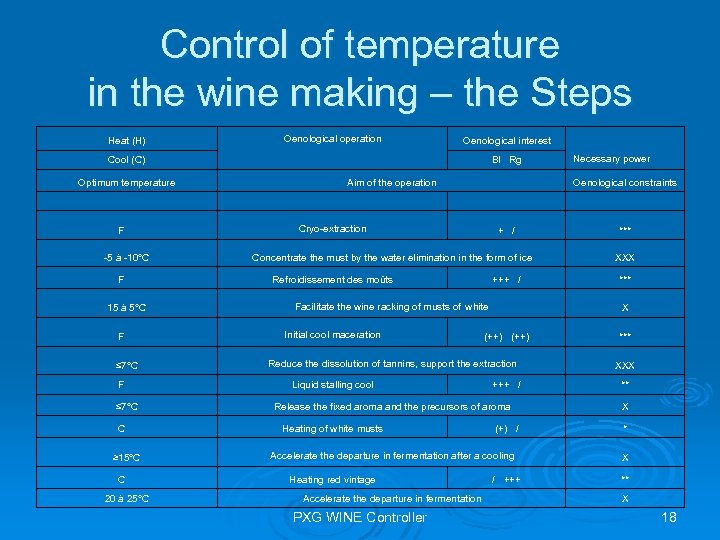 Control of temperature in the wine making – the Steps Oenological operation Heat (H) Oenological interest Cool (C) Bl Rg Optimum temperature F -5 à -10°C F 15 à 5°C F ≤ 7°C C ≥ 15°C C 20 à 25°C Aim of the operation Oenological constraints Cryo-extraction + / Concentrate the must by the water elimination in the form of ice Refroidissement des moûts +++ / Facilitate the wine racking of musts of white Initial cool maceration (++) Liquid stalling cool +++ / Release the fixed aroma and the precursors of aroma Heating of white musts (+) / Accelerate the departure in fermentation XXX *** XXX ** X Accelerate the departure in fermentation after a cooling Heating red vintage *** X Reduce the dissolution of tannins, support the extraction PXG WINE Controller Necessary power / +++ * X ** X 18
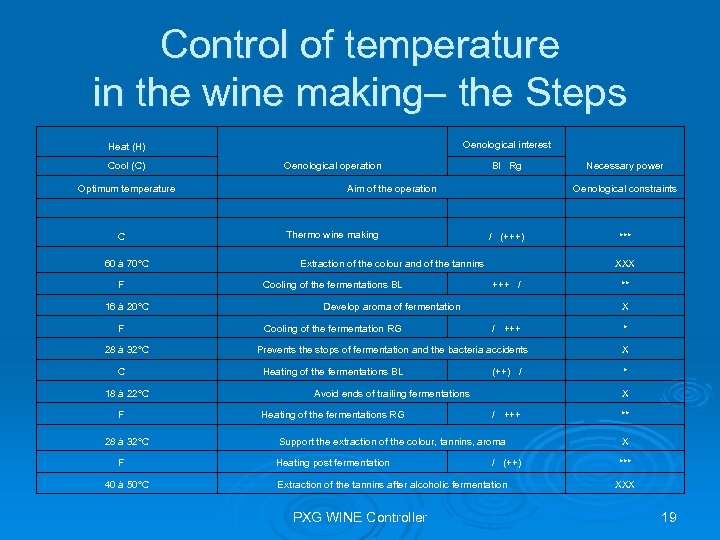 Control of temperature in the wine making– the Steps Oenological interest Heat (H) Cool (C) Optimum temperature C 60 à 70°C F 16 à 20°C F 28 à 32°C C 18 à 22°C F 28 à 32°C F 40 à 50°C Bl Rg Oenological operation Aim of the operation Oenological constraints Thermo wine making / (+++) Extraction of the colour and of the tannins Cooling of the fermentations BL Cooling of the fermentation RG +++ / / +++ (++) / Avoid ends of trailing fermentations / +++ / (++) Extraction of the tannins after alcoholic fermentation PXG WINE Controller * X Support the extraction of the colour, tannins, aroma Heating post fermentation ** X Prevents the stops of fermentation and the bacteria accidents Heating of the fermentations BL *** XXX Develop aroma of fermentation Heating of the fermentations RG Necessary power ** X *** XXX 19
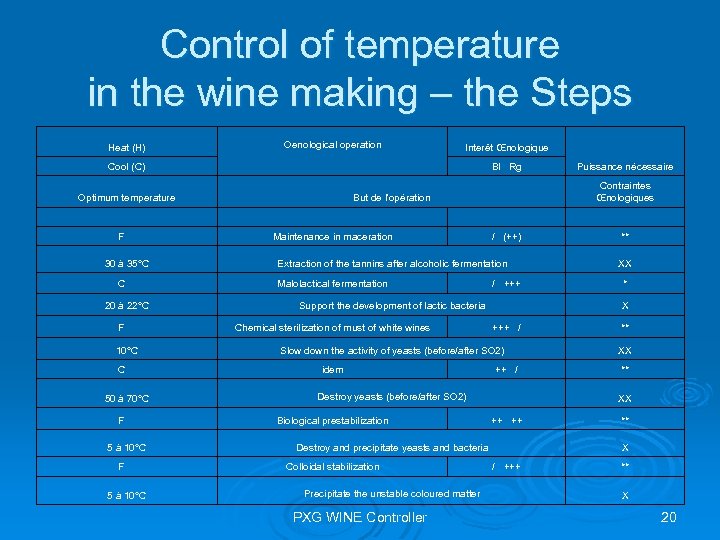 Control of temperature in the wine making – the Steps Oenological operation Heat (H) Interêt Œnologique Cool (C) Bl Rg Optimum temperature F 30 à 35°C C 20 à 22°C F 10°C C 50 à 70°C F 5 à 10°C Puissance nécessaire Contraintes Œnologiques But de l'opération Maintenance in maceration / (++) Extraction of the tannins after alcoholic fermentation Malolactical fermentation / +++ Support the development of lactic bacteria Chemical sterilization of must of white wines Slow down the activity of yeasts (before/after SO 2) ++ / Destroy yeasts (before/after SO 2) * ** XX Biological prestabilization ++ Destroy and precipitate yeasts and bacteria Colloidal stabilization ** X / +++ Precipitate the unstable coloured matter PXG WINE Controller XX X +++ / idem ** ** X 20
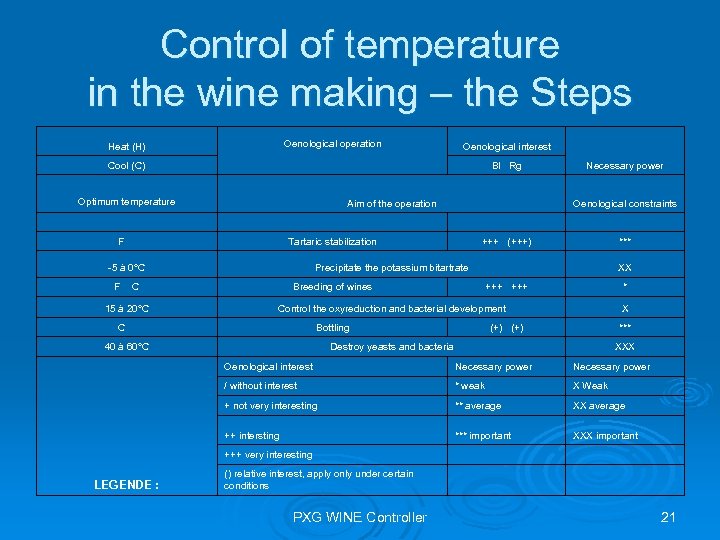 Control of temperature in the wine making – the Steps Oenological operation Heat (H) Oenological interest Cool (C) Bl Rg Optimum temperature Aim of the operation Tartaric stabilization -5 à 0°C +++ (+++) *** Precipitate the potassium bitartrate F C 15 à 20°C Oenological constraints F Necessary power Breeding of wines XX +++ * Control the oxyreduction and bacterial development C Bottling 40 à 60°C X (+) *** Destroy yeasts and bacteria XXX Oenological interest Necessary power / without interest * weak X Weak + not very interesting ** average XX average ++ intersting *** important XXX important +++ very interesting LEGENDE : Necessary power () relative interest, apply only under certain conditions PXG WINE Controller 21
 The micro-oxygenation of the wines Ø The micro-oxygenation of red wines in the course of wine making and breeding developed much these last ten years following work illustrating the interest of the oxygen contribution proportioned on the evolution and the structuration of phenolic components. Ø From a practical point of view, the micro-oxygenation is generally practised at two key times of the wine making, before malolactic fermentation to contribute to formation of ethanol bridges between on the one hand anthocyanes and tannins, after malolactic fermentation on the other hand, with a triple objective of structuration, of polymerization of the phenolic compounds and of contribution to the aromatic expression of the wines in the course of breeding. PXG WINE Controller 22
 PXG WINE Controller 23
 Developpement : PXG Wine Ø Develop in close cooperation with an oenological cabinet at Bordeaux Fuji partner of the oenology research Ø Fuji listening to winemakers Ø The power of an electronic international group at the oenology service. PXG WINE Controller 24
 Basic Caracteristics as Standard ØInput PT 100 0/150°C Ø 2 relay outputs (heat/cool) ØAC/DC 24 V Power Supply Ø 1 relay output (remounting/pigeage) Ø 1 relay output (oxygenation) ØFormat 48 x 96 depth 79 mm ØON/OFF or PID control mode PXG WINE Controller 25
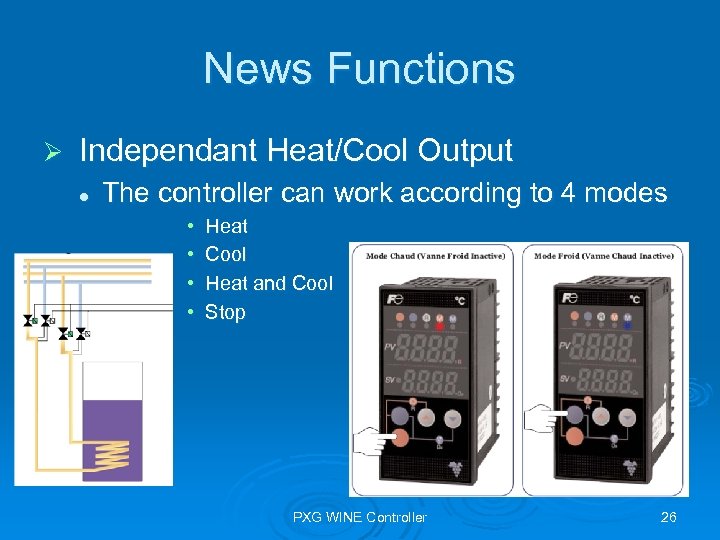 News Functions Ø Independant Heat/Cool Output l The controller can work according to 4 modes • • Heat Cool Heat and Cool Stop PXG WINE Controller 26
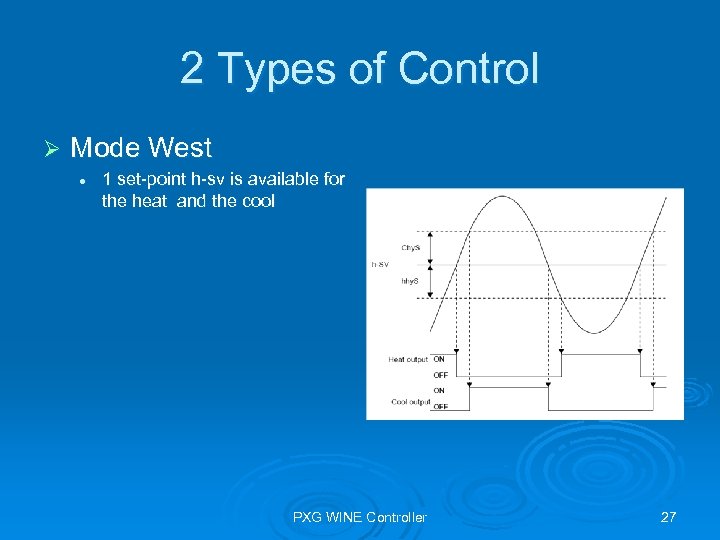 2 Types of Control Ø Mode West l 1 set-point h-sv is available for the heat and the cool PXG WINE Controller 27
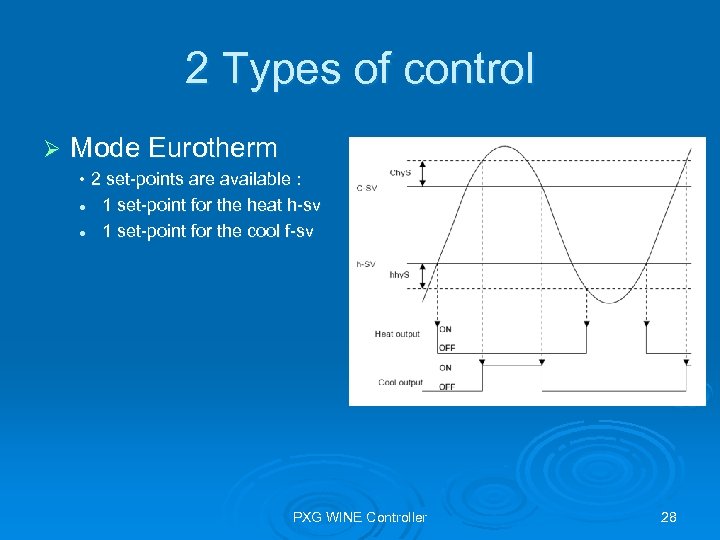 2 Types of control Ø Mode Eurotherm • 2 set-points are available : l 1 set-point for the heat h-sv l 1 set-point for the cool f-sv PXG WINE Controller 28
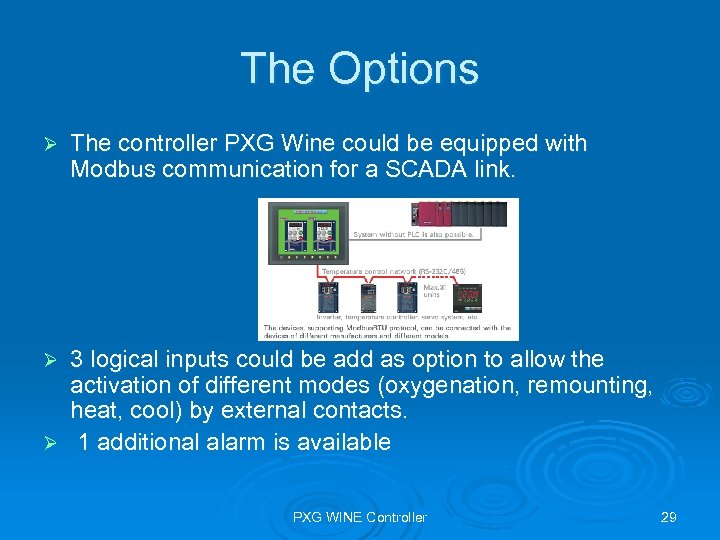 The Options Ø The controller PXG Wine could be equipped with Modbus communication for a SCADA link. 3 logical inputs could be add as option to allow the activation of different modes (oxygenation, remounting, heat, cool) by external contacts. Ø 1 additional alarm is available Ø PXG WINE Controller 29
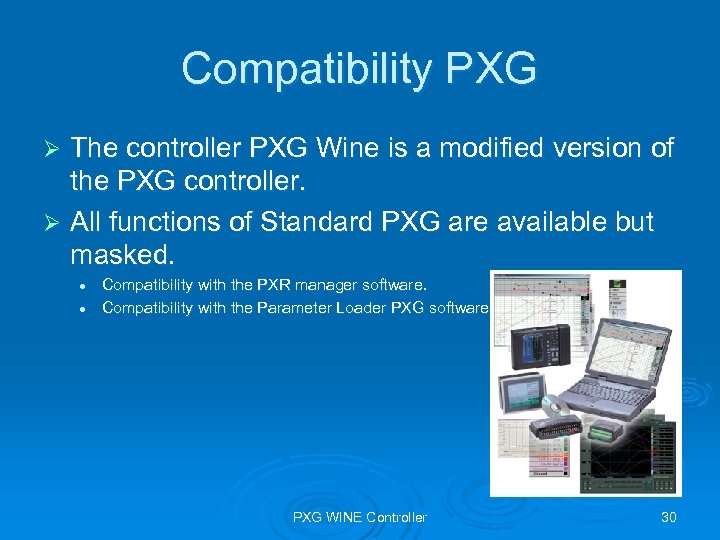 Compatibility PXG The controller PXG Wine is a modified version of the PXG controller. Ø All functions of Standard PXG are available but masked. Ø l l Compatibility with the PXR manager software. Compatibility with the Parameter Loader PXG software. PXG WINE Controller 30
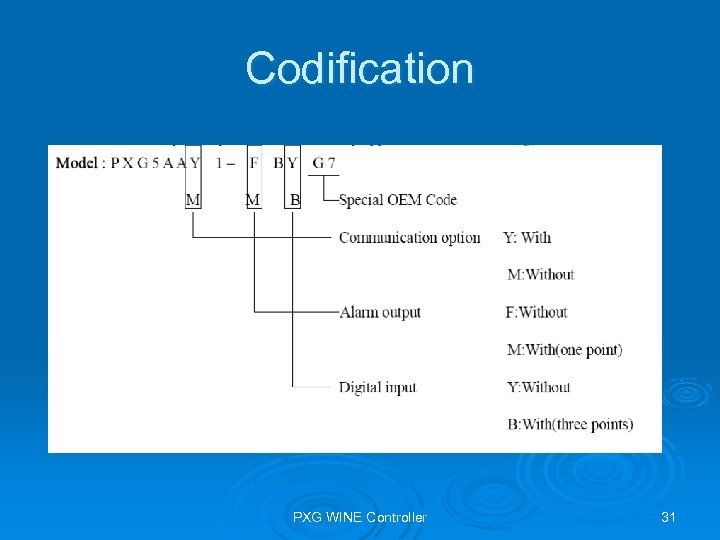 Codification PXG WINE Controller 31
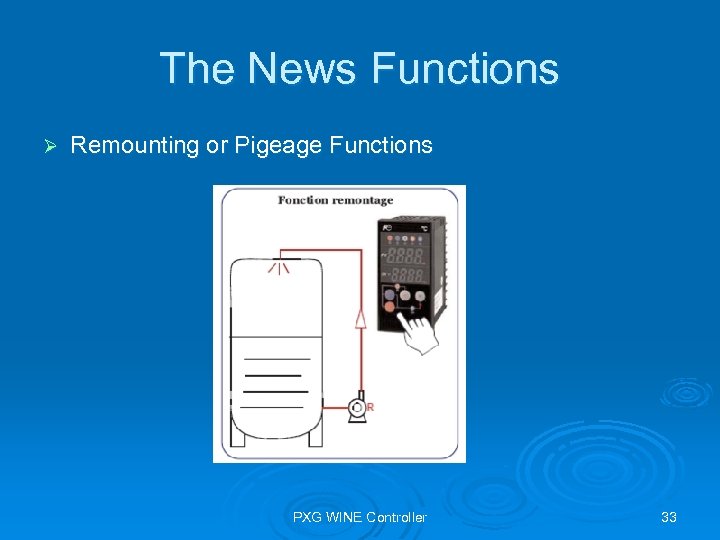
 The News Functions Ø Remounting or Pigeage Functions l This operation consists in going up the wine bottom of the vat toward the top of the vat for an increased extraction of tannin. l We go up the wine while activing a remounting thanks to a controller relay output. l Adjustment of the remounting frequency and running time to be set on the controller. l It’s possible to use this function for mixing. (Champagne…. . ) PXG WINE Controller 32
 The News Functions Ø Remounting or Pigeage Functions PXG WINE Controller 33
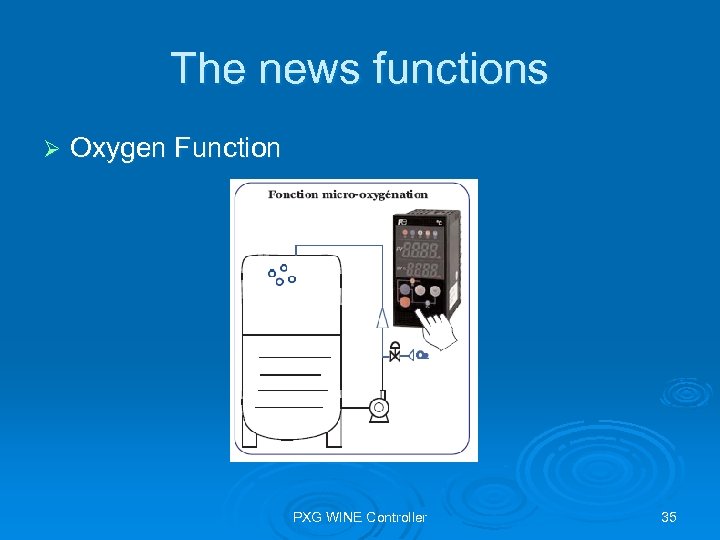
 The news functions Ø Oxygen Function l This operation consists to add oxygen in the wine. l We oxygenate the wine while activing a oxygenation valve thanks to controller relay output. l Adjustment of the oxygenation frequency and running time to be set on the controller. PXG WINE Controller 34
 The news functions Ø Oxygen Function PXG WINE Controller 35
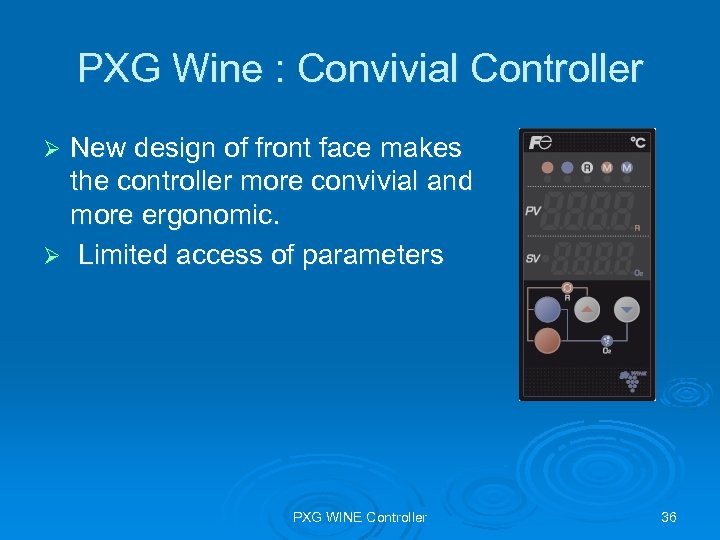 PXG Wine : Convivial Controller New design of front face makes the controller more convivial and more ergonomic. Ø Limited access of parameters Ø PXG WINE Controller 36
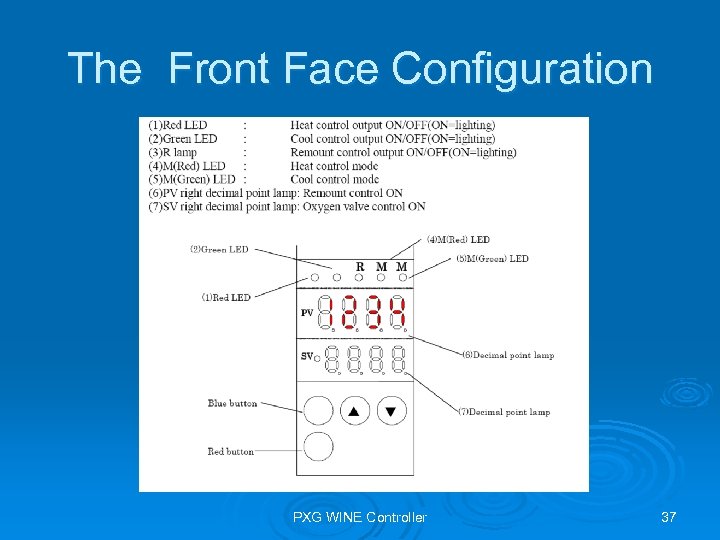 The Front Face Configuration PXG WINE Controller 37
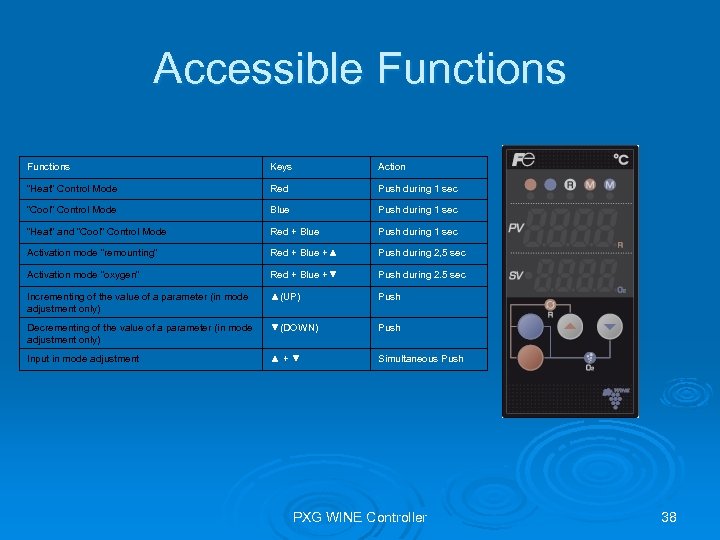 Accessible Functions Keys Action “Heat” Control Mode Red Push during 1 sec “Cool” Control Mode Blue Push during 1 sec “Heat” and “Cool” Control Mode Red + Blue Push during 1 sec Activation mode “remounting” Red + Blue +▲ Push during 2, 5 sec Activation mode “oxygen” Red + Blue +▼ Push during 2. 5 sec Incrementing of the value of a parameter (in mode adjustment only) ▲(UP) Push Decrementing of the value of a parameter (in mode adjustment only) ▼(DOWN) Push Input in mode adjustment ▲ + ▼ Simultaneous Push PXG WINE Controller 38
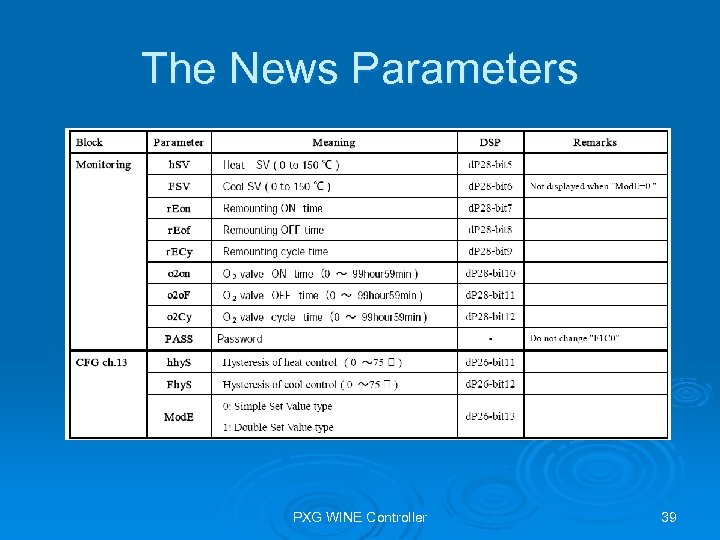 The News Parameters PXG WINE Controller 39
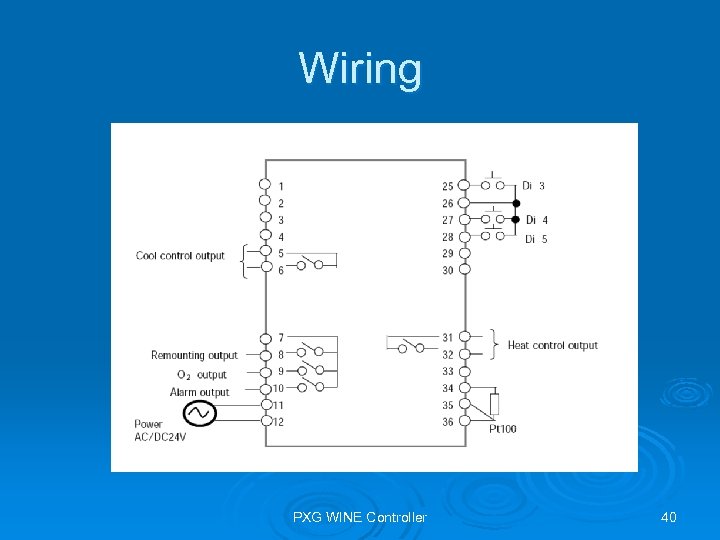 Wiring PXG WINE Controller 40
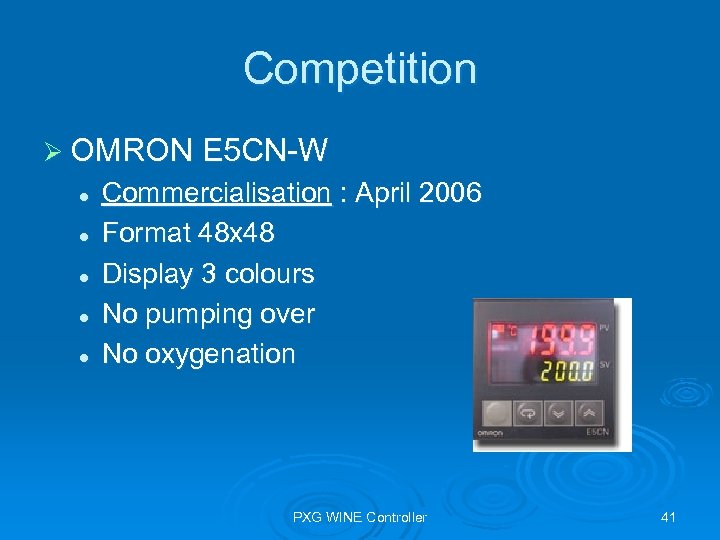 Competition Ø OMRON E 5 CN-W l l l Commercialisation : April 2006 Format 48 x 48 Display 3 colours No pumping over No oxygenation PXG WINE Controller 41
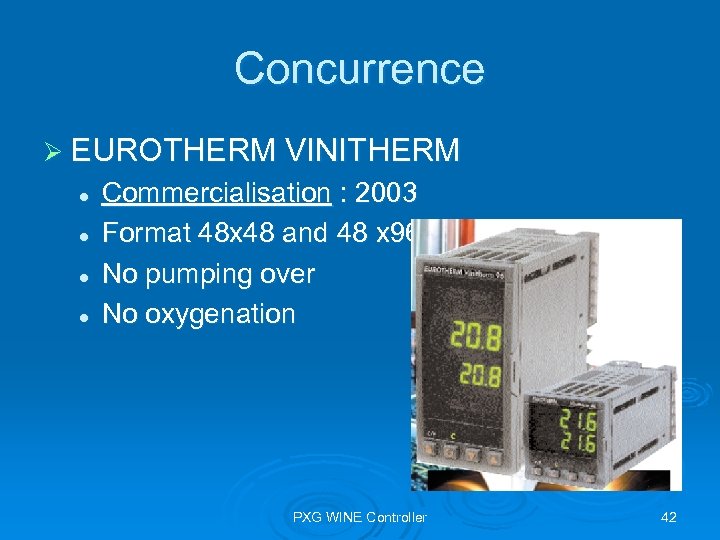 Concurrence Ø EUROTHERM VINITHERM l l Commercialisation : 2003 Format 48 x 48 and 48 x 96 No pumping over No oxygenation PXG WINE Controller 42
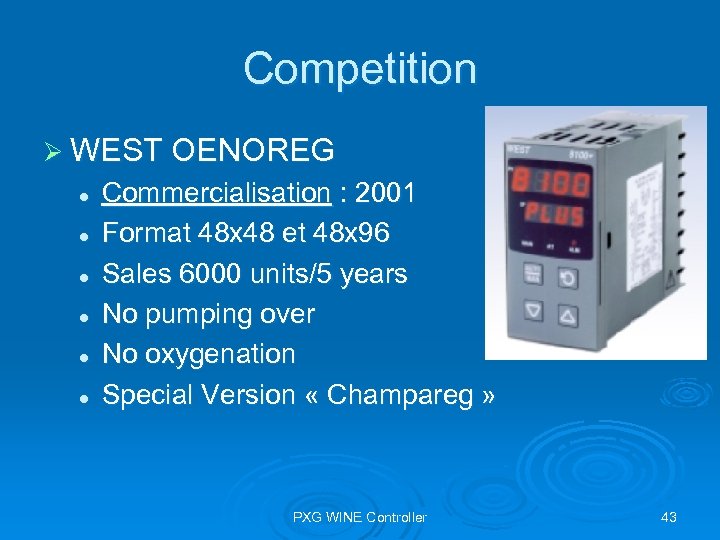 Competition Ø WEST OENOREG l l l Commercialisation : 2001 Format 48 x 48 et 48 x 96 Sales 6000 units/5 years No pumping over No oxygenation Special Version « Champareg » PXG WINE Controller 43
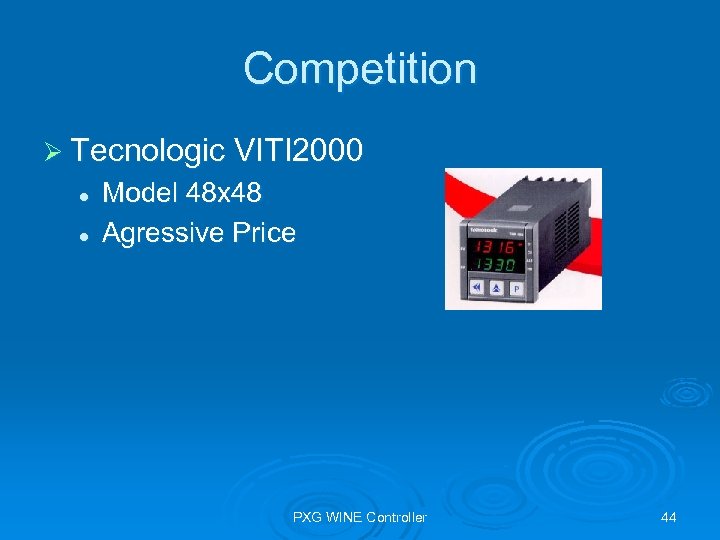 Competition Ø Tecnologic VITI 2000 l l Model 48 x 48 Agressive Price PXG WINE Controller 44