 Скачать презентацию Publishing Vocabularies on the Web Guus Schreiber Antoine
3b9957a9a53c0fc251e97ad84359cee1.ppt
- Количество слайдов: 57



Publishing Vocabularies on the Web Guus Schreiber Antoine Isaac Vrije Universiteit Amsterdam
Acknowledgements § Alistair Miles, Dan Brickley, Mark van Assem, Jan Wielemaker, Bob Wielinga § Participants of the W 3 C Semantic Web Best Practices and the Semantic Web Deployment Working Groups 2
Overview § Issues in conversion to RDF/OWL – Example: Union List of Artist Names (ULAN) – Example: Word. Net 2. 0 § Work within the W 3 C Semantic Web Deployment Working Group – SKOS model for thesauri – Recipes for Web access to published vocabularies – RDFa: embedding RDF metadata in HTML 3
Thesauri / vocabularies § Controlled vocabularies Thesauri, classification schemes, taxonomies, subject heading lists, authority lists… § Large bodies of knowledge that represent consensus in particular domains § Often lots of implicit semantics available § Semantic Web Challenge showed that thesauri are important resources for SW applications § Representation is typically relational database and/or XML 4
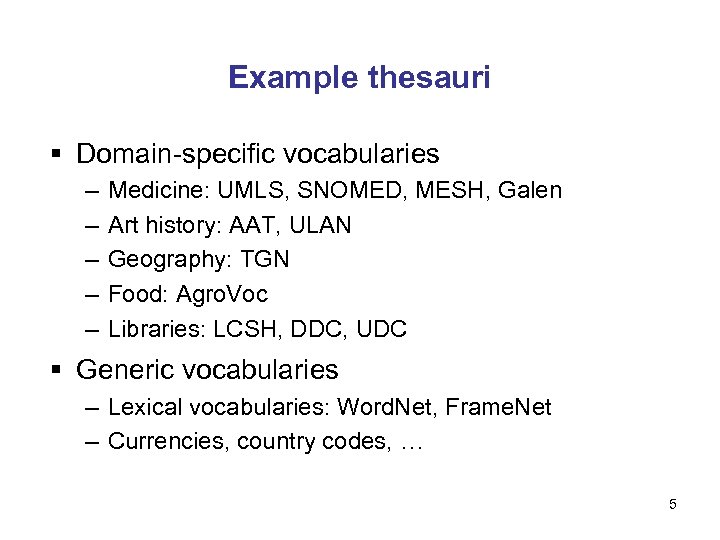
Example thesauri § Domain-specific vocabularies – – – Medicine: UMLS, SNOMED, MESH, Galen Art history: AAT, ULAN Geography: TGN Food: Agro. Voc Libraries: LCSH, DDC, UDC § Generic vocabularies – Lexical vocabularies: Word. Net, Frame. Net – Currencies, country codes, … 5
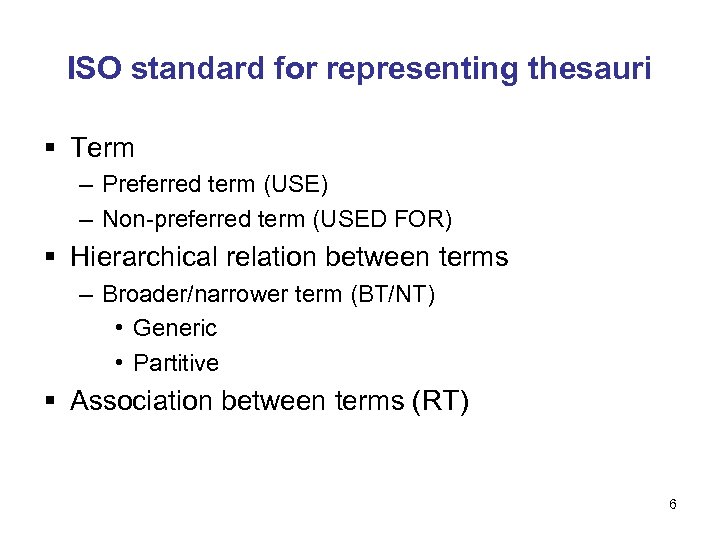
ISO standard for representing thesauri § Term – Preferred term (USE) – Non-preferred term (USED FOR) § Hierarchical relation between terms – Broader/narrower term (BT/NT) • Generic • Partitive § Association between terms (RT) 6
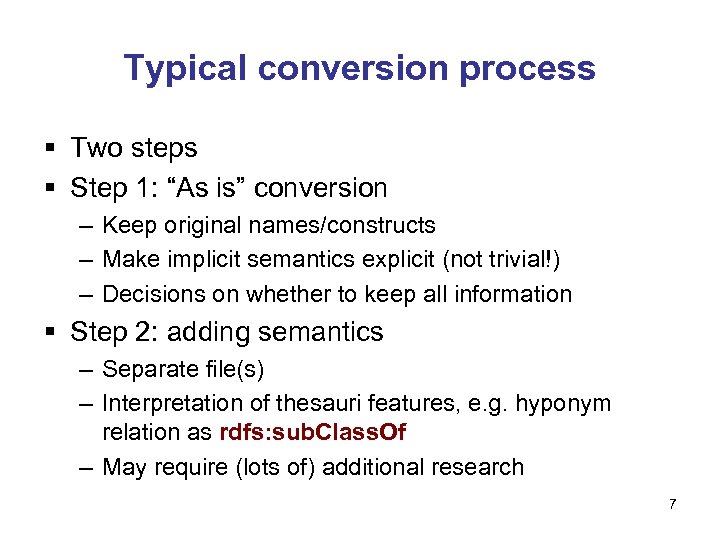
Typical conversion process § Two steps § Step 1: “As is” conversion – Keep original names/constructs – Make implicit semantics explicit (not trivial!) – Decisions on whether to keep all information § Step 2: adding semantics – Separate file(s) – Interpretation of thesauri features, e. g. hyponym relation as rdfs: sub. Class. Of – May require (lots of) additional research 7
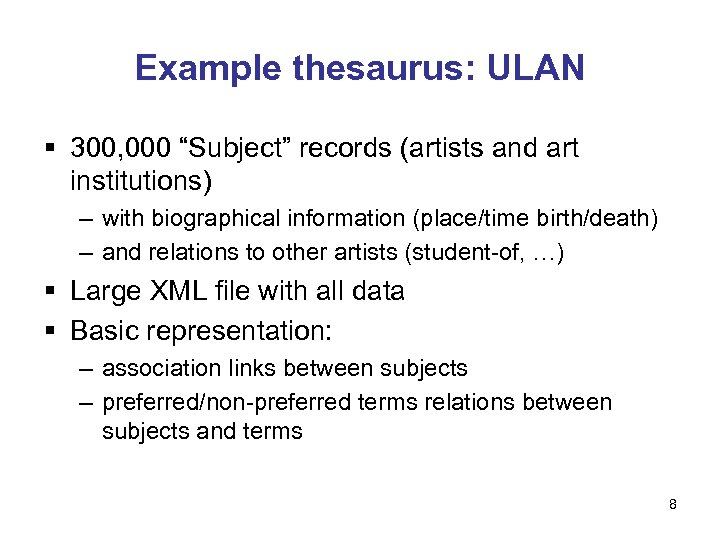
Example thesaurus: ULAN § 300, 000 “Subject” records (artists and art institutions) – with biographical information (place/time birth/death) – and relations to other artists (student-of, …) § Large XML file with all data § Basic representation: – association links between subjects – preferred/non-preferred terms relations between subjects and terms 8
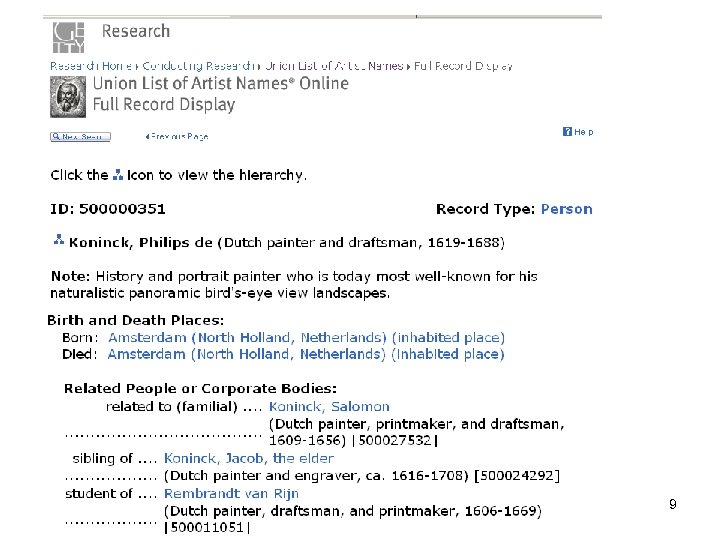
9
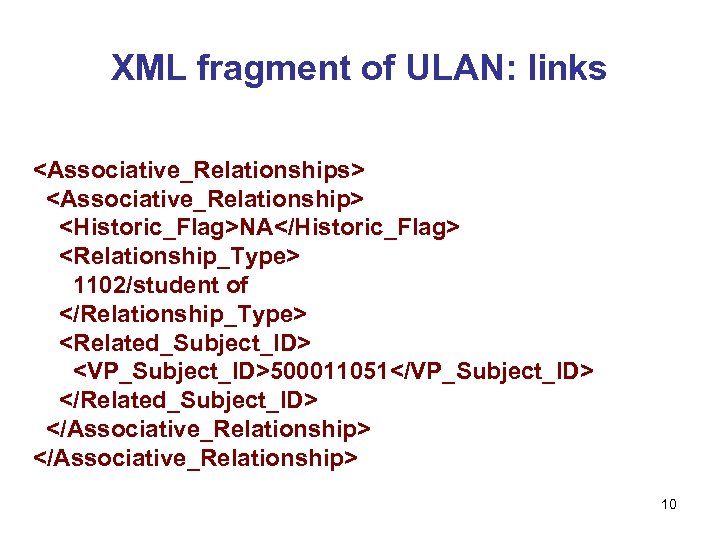
XML fragment of ULAN: links <Associative_Relationships> <Associative_Relationship> <Historic_Flag>NA</Historic_Flag> <Relationship_Type> 1102/student of </Relationship_Type> <Related_Subject_ID> <VP_Subject_ID>500011051</VP_Subject_ID> </Related_Subject_ID> </Associative_Relationship> 10
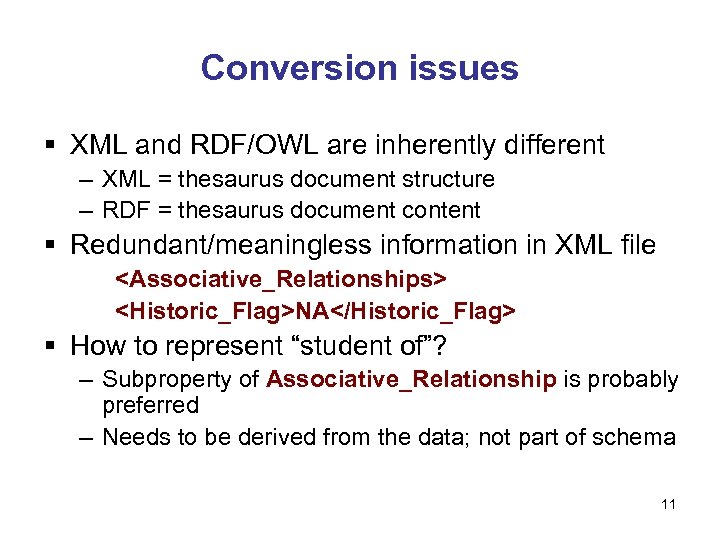
Conversion issues § XML and RDF/OWL are inherently different – XML = thesaurus document structure – RDF = thesaurus document content § Redundant/meaningless information in XML file <Associative_Relationships> <Historic_Flag>NA</Historic_Flag> § How to represent “student of”? – Subproperty of Associative_Relationship is probably preferred – Needs to be derived from the data; not part of schema 11
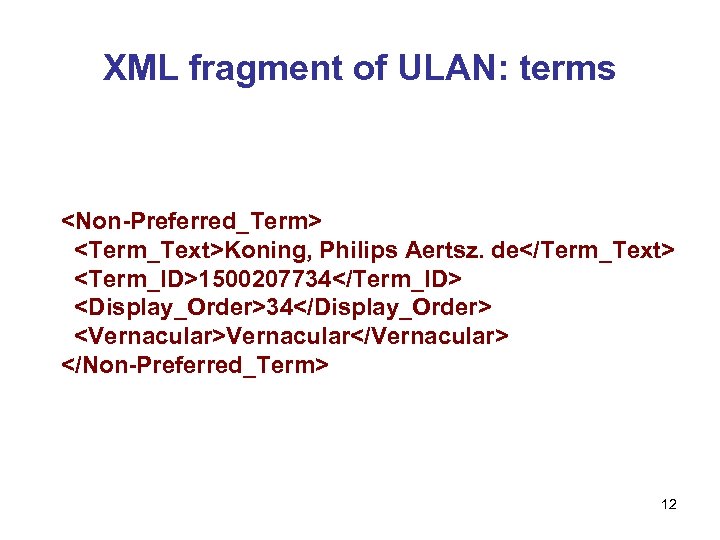
XML fragment of ULAN: terms <Non-Preferred_Term> <Term_Text>Koning, Philips Aertsz. de</Term_Text> <Term_ID>1500207734</Term_ID> <Display_Order>34</Display_Order> <Vernacular>Vernacular</Vernacular> </Non-Preferred_Term> 12
Conversion issues § Do we include all information in the conversion? – Display order § Should each term have a URI? § Making language explicit – “vernacular” means the string is written in the original language – Multi-linguality is an important issue for thesauri 13
14
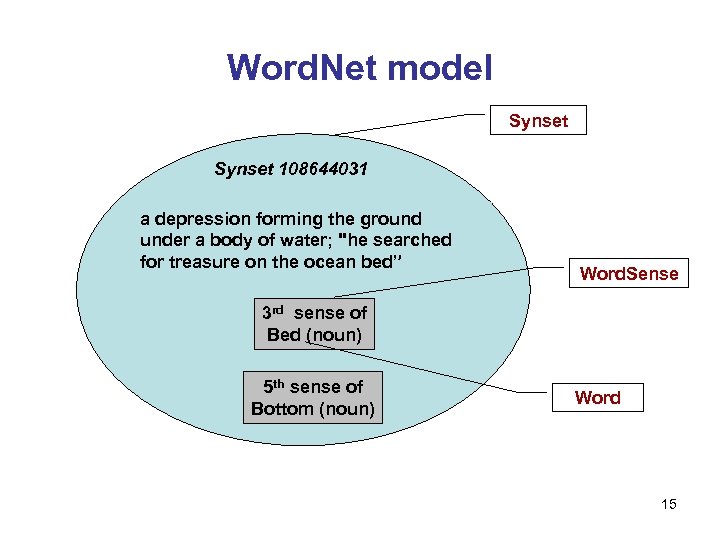
Word. Net model Synset 108644031 a depression forming the ground under a body of water; "he searched for treasure on the ocean bed” Word. Sense 3 rd sense of Bed (noun) 5 th sense of Bottom (noun) Word 15
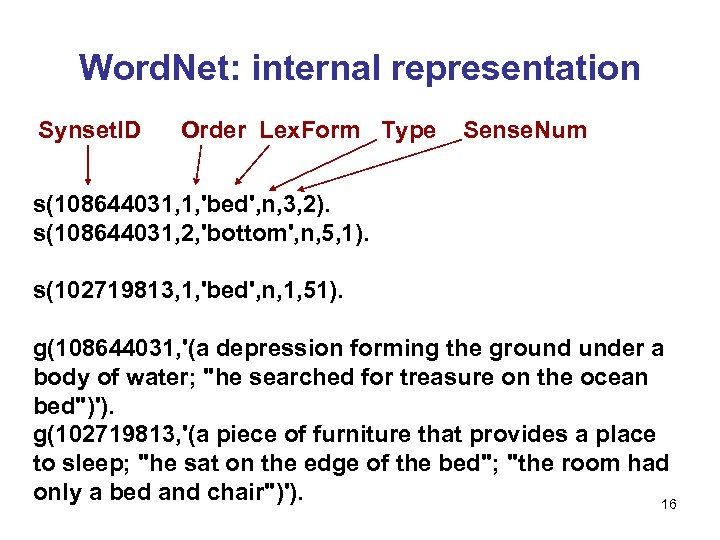
Word. Net: internal representation Synset. ID Order Lex. Form Type Sense. Num s(108644031, 1, 'bed', n, 3, 2). s(108644031, 2, 'bottom', n, 5, 1). s(102719813, 1, 'bed', n, 1, 51). g(108644031, '(a depression forming the ground under a body of water; "he searched for treasure on the ocean bed")'). g(102719813, '(a piece of furniture that provides a place to sleep; "he sat on the edge of the bed"; "the room had only a bed and chair")'). 16
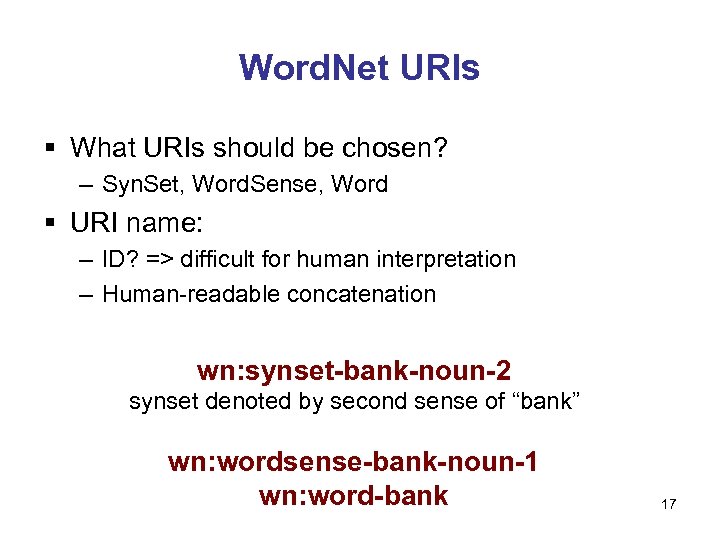
Word. Net URIs § What URIs should be chosen? – Syn. Set, Word. Sense, Word § URI name: – ID? => difficult for human interpretation – Human-readable concatenation wn: synset-bank-noun-2 synset denoted by second sense of “bank” wn: wordsense-bank-noun-1 wn: word-bank 17
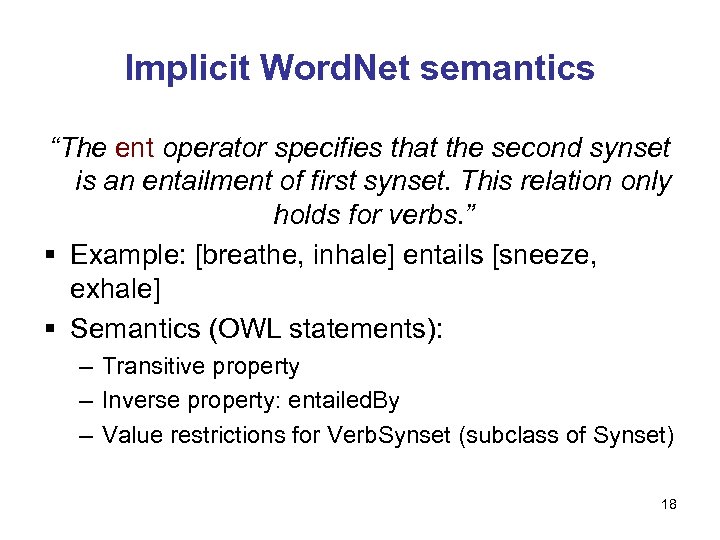
Implicit Word. Net semantics “The ent operator specifies that the second synset is an entailment of first synset. This relation only holds for verbs. ” § Example: [breathe, inhale] entails [sneeze, exhale] § Semantics (OWL statements): – Transitive property – Inverse property: entailed. By – Value restrictions for Verb. Synset (subclass of Synset) 18
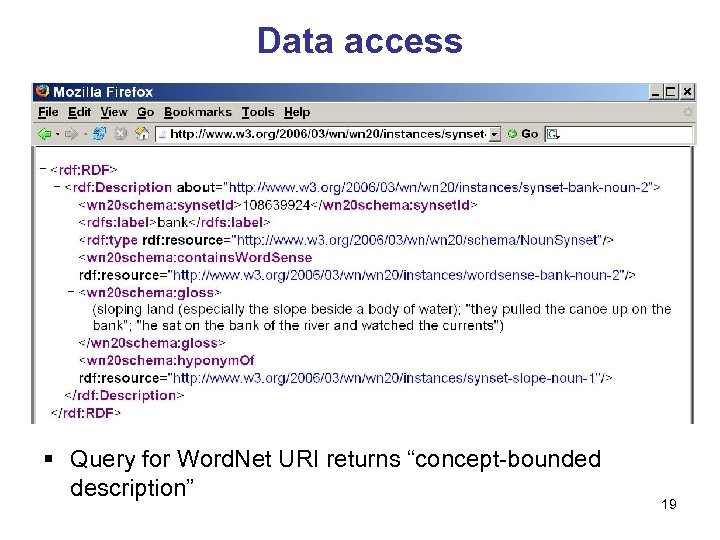
Data access § Query for Word. Net URI returns “concept-bounded description” 19
Overview § Issues in conversion to RDF/OWL – Example: Union List of Artist Names (ULAN) – Example: Word. Net 2. 0 § Work within the W 3 C Semantic Web Deployment Working Group – SKOS model for thesauri – Recipes for Web access to published vocabularies – RDFa: embedding RDF metadata in HTML 20
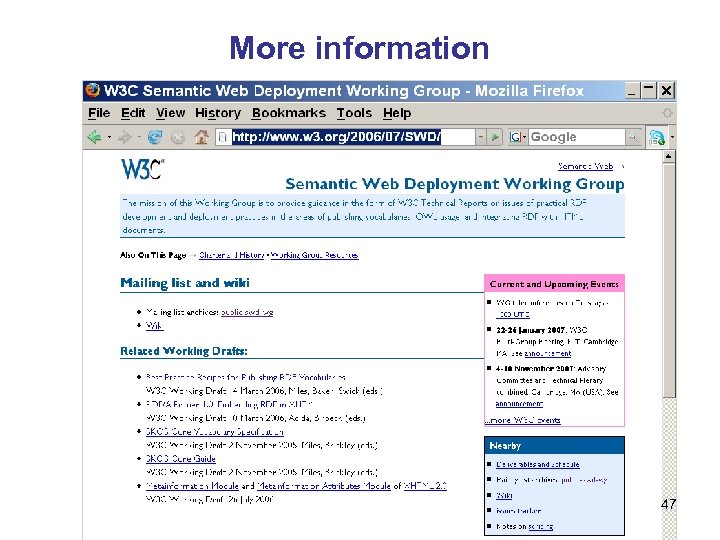
W 3 C Semantic Web Deployment Working Group Making vocabularies/thesauri/ontologies available on the Web http: //www. w 3. org/2006/07/SWD/
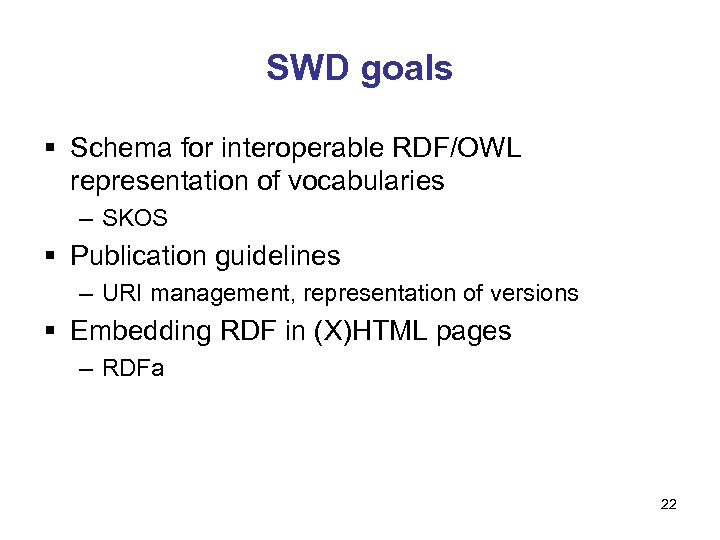
SWD goals § Schema for interoperable RDF/OWL representation of vocabularies – SKOS § Publication guidelines – URI management, representation of versions § Embedding RDF in (X)HTML pages – RDFa 22
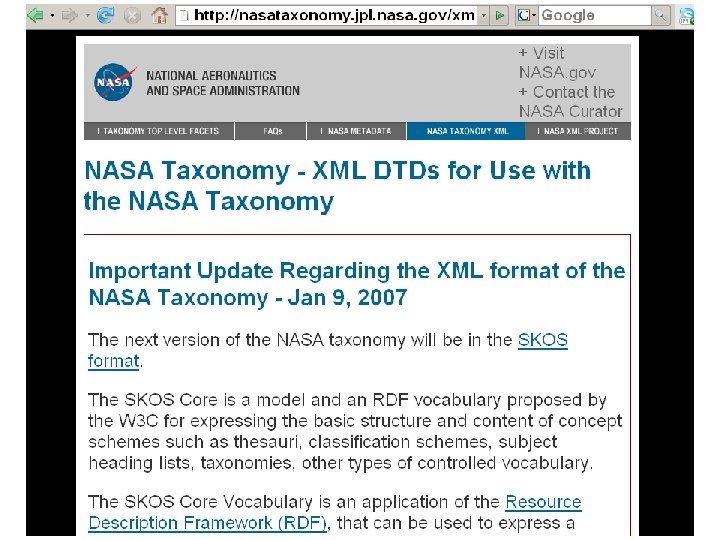
23
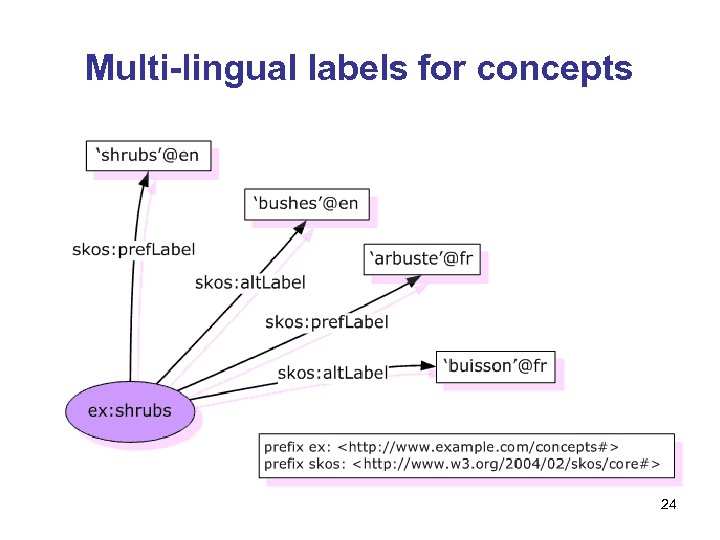
Multi-lingual labels for concepts 24
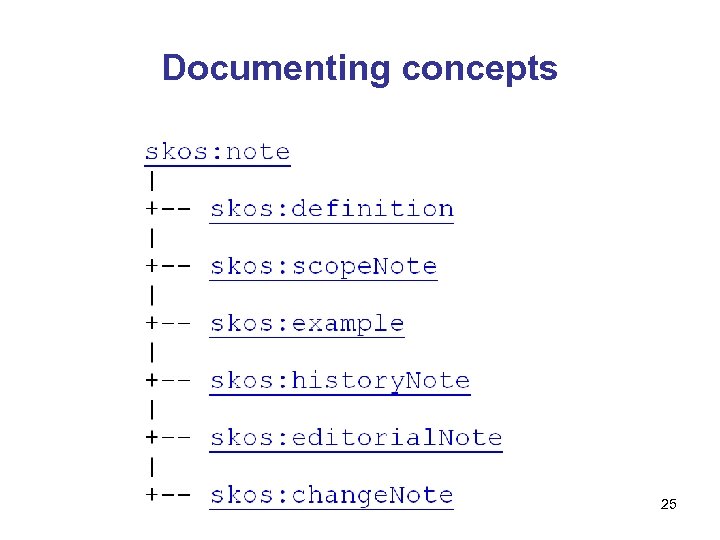
Documenting concepts 25
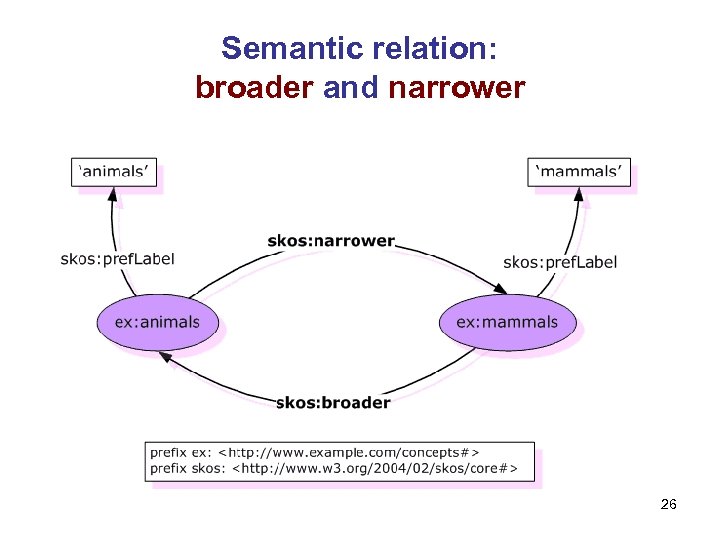
Semantic relation: broader and narrower 26
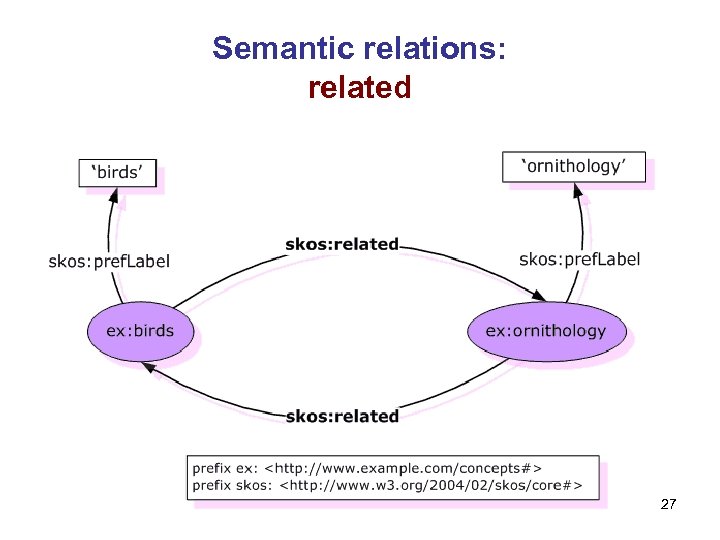
Semantic relations: related 27
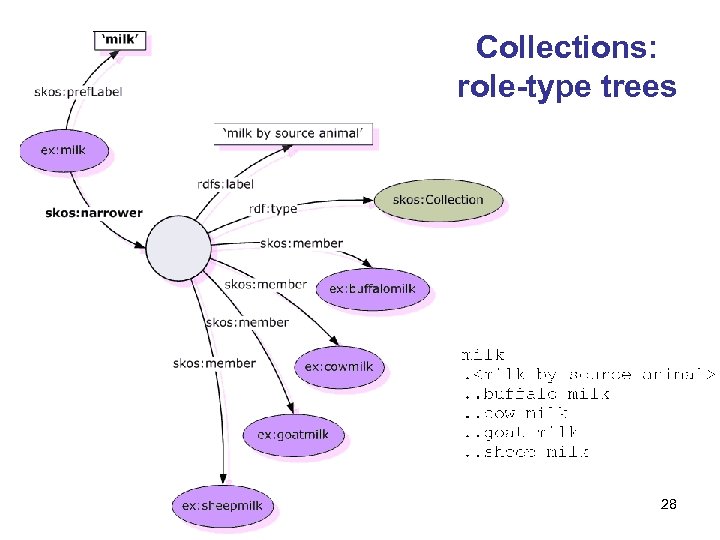
Collections: role-type trees 28
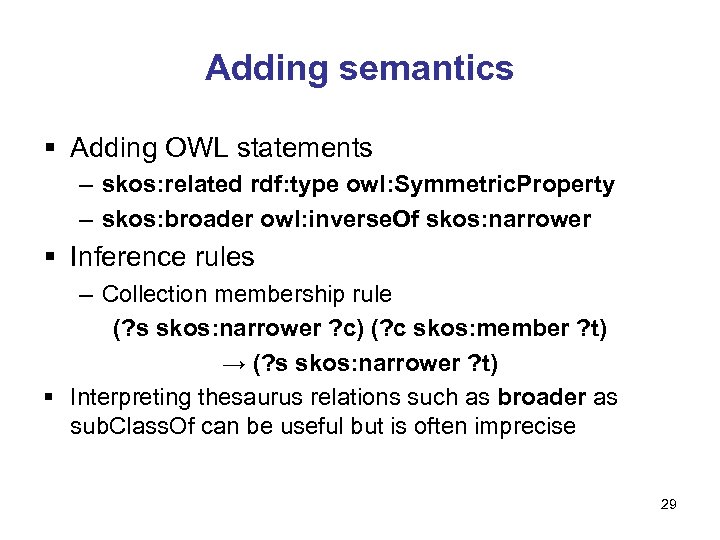
Adding semantics § Adding OWL statements – skos: related rdf: type owl: Symmetric. Property – skos: broader owl: inverse. Of skos: narrower § Inference rules – Collection membership rule (? s skos: narrower ? c) (? c skos: member ? t) → (? s skos: narrower ? t) § Interpreting thesaurus relations such as broader as sub. Class. Of can be useful but is often imprecise 29
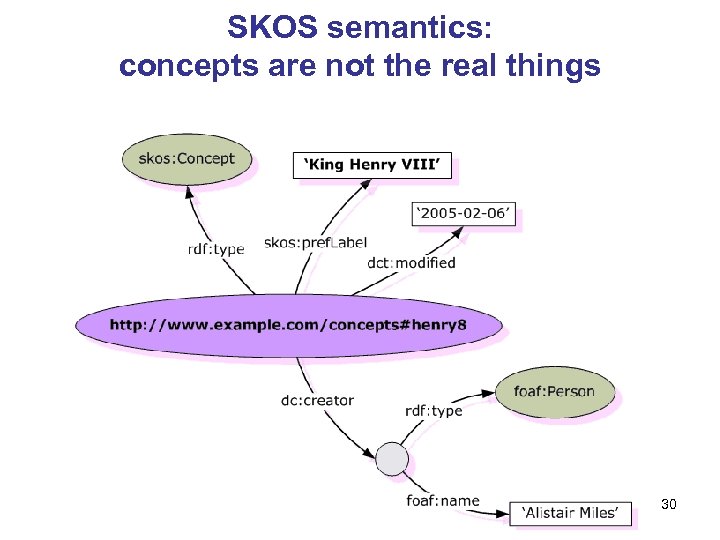
SKOS semantics: concepts are not the real things 30
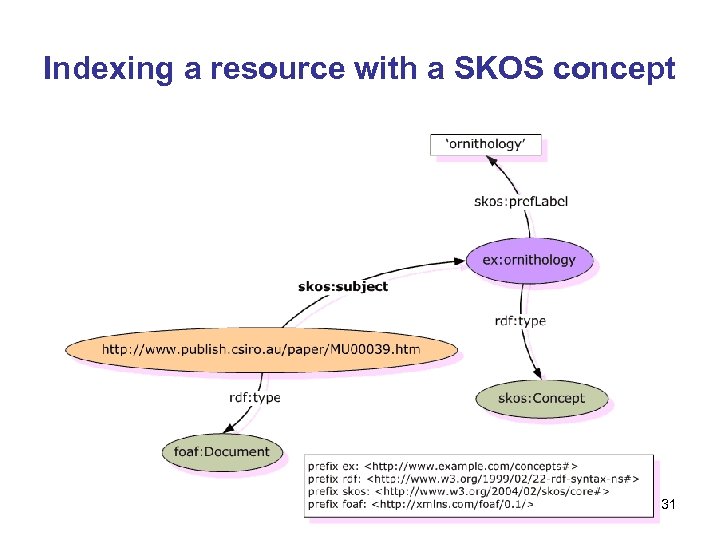
Indexing a resource with a SKOS concept 31
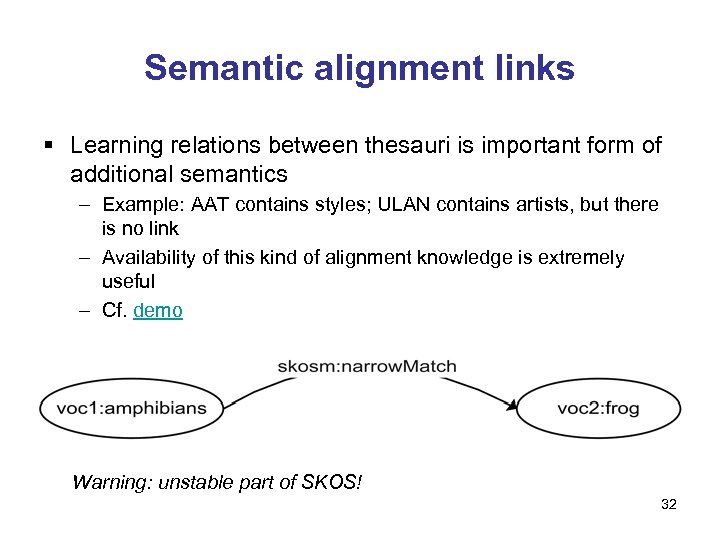
Semantic alignment links § Learning relations between thesauri is important form of additional semantics – Example: AAT contains styles; ULAN contains artists, but there is no link – Availability of this kind of alignment knowledge is extremely useful – Cf. demo Warning: unstable part of SKOS! 32
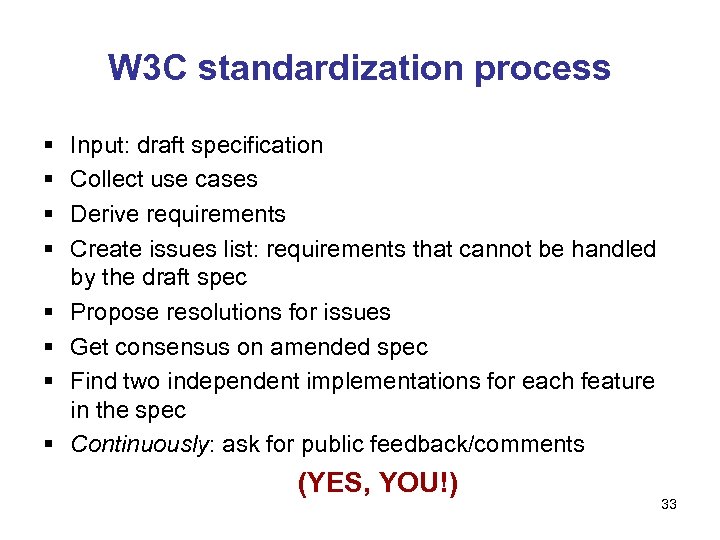
W 3 C standardization process § § § § Input: draft specification Collect use cases Derive requirements Create issues list: requirements that cannot be handled by the draft spec Propose resolutions for issues Get consensus on amended spec Find two independent implementations for each feature in the spec Continuously: ask for public feedback/comments (YES, YOU!) 33
34
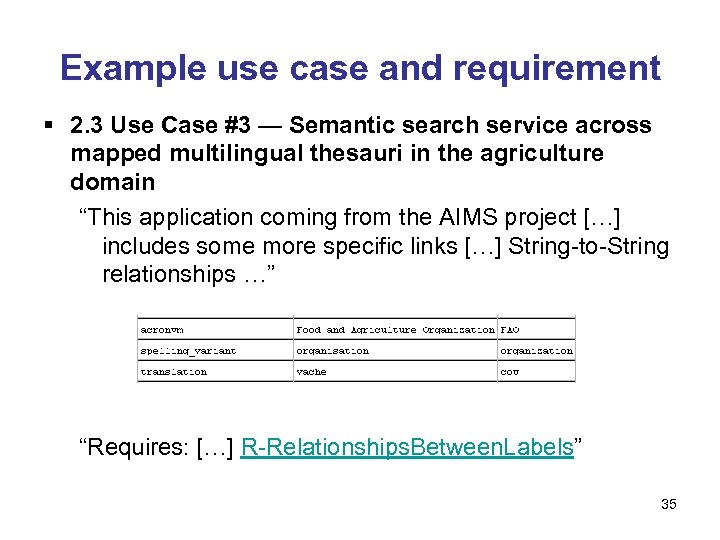
Example use case and requirement § 2. 3 Use Case #3 — Semantic search service across mapped multilingual thesauri in the agriculture domain “This application coming from the AIMS project […] includes some more specific links […] String-to-String relationships …” “Requires: […] R-Relationships. Between. Labels” 35
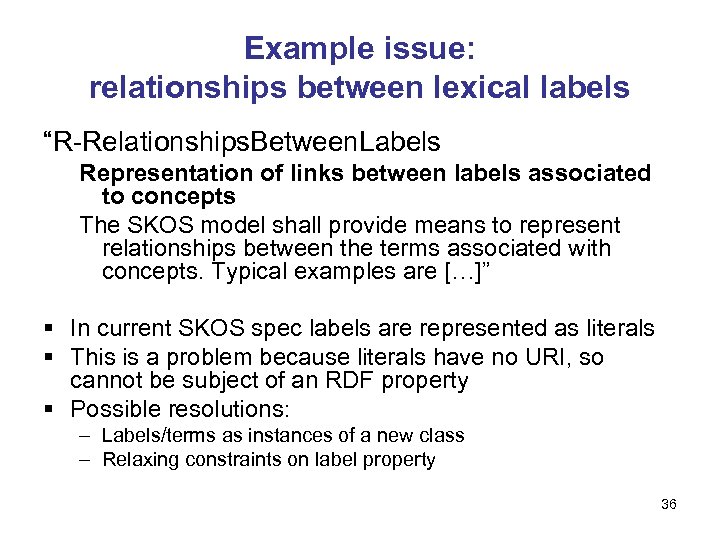
Example issue: relationships between lexical labels “R-Relationships. Between. Labels Representation of links between labels associated to concepts The SKOS model shall provide means to represent relationships between the terms associated with concepts. Typical examples are […]” § In current SKOS spec labels are represented as literals § This is a problem because literals have no URI, so cannot be subject of an RDF property § Possible resolutions: – Labels/terms as instances of a new class – Relaxing constraints on label property 36
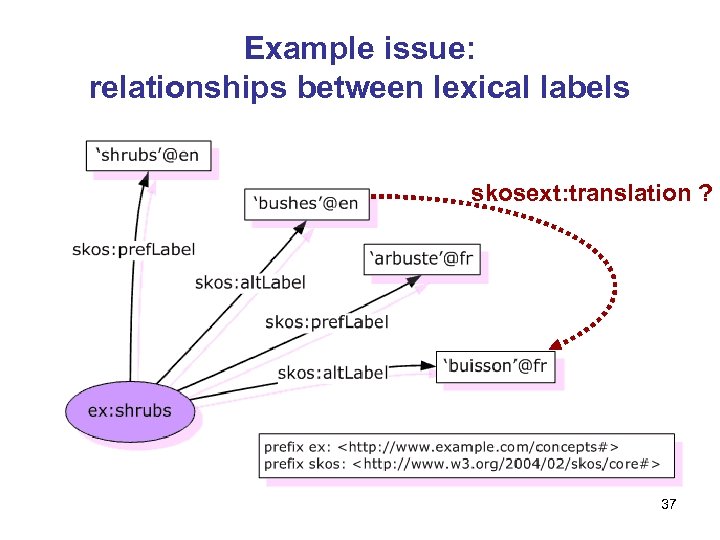
Example issue: relationships between lexical labels skosext: translation ? 37
SWD goals § Schema for interoperable RDF/OWL representation of vocabularies – SKOS § Publication guidelines – URI management, representation of versions § Embedding RDF in (X)HTML pages – RDFa 38
Recipes for vocabulary URIs § Simplified rule: – Use “hash" variant” for vocabularies that are relatively small and require frequent access http: //www. w 3. org/2004/02/skos/core#Concept – Use “slash” variant for large vocabularies, where you do not want always the whole vocabulary to be retrieved http: //www. w 3. org/[. . . ]/instances/synset-bank-noun 2 39
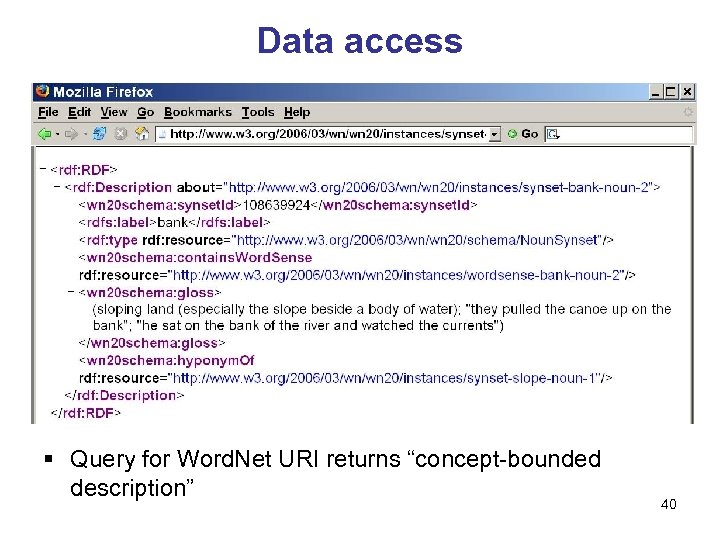
Data access § Query for Word. Net URI returns “concept-bounded description” 40
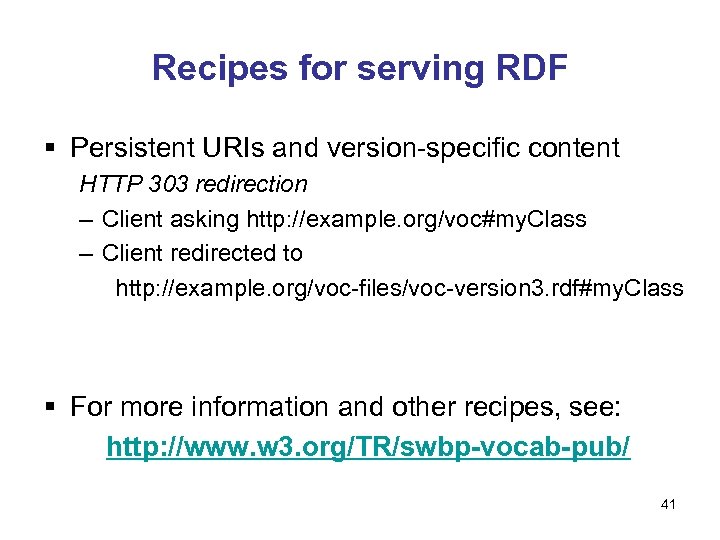
Recipes for serving RDF § Persistent URIs and version-specific content HTTP 303 redirection – Client asking http: //example. org/voc#my. Class – Client redirected to http: //example. org/voc-files/voc-version 3. rdf#my. Class § For more information and other recipes, see: http: //www. w 3. org/TR/swbp-vocab-pub/ 41
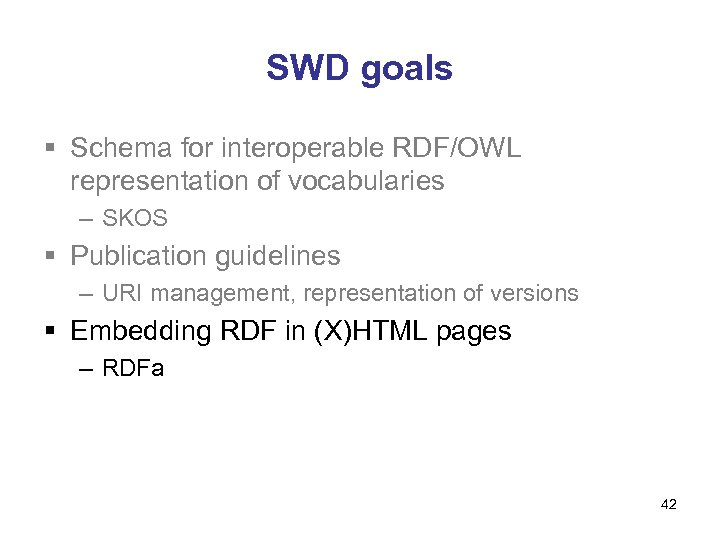
SWD goals § Schema for interoperable RDF/OWL representation of vocabularies – SKOS § Publication guidelines – URI management, representation of versions § Embedding RDF in (X)HTML pages – RDFa 42
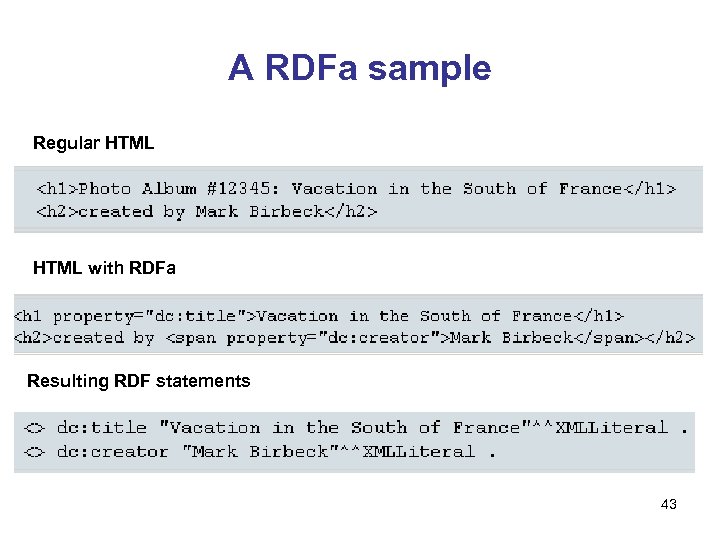
A RDFa sample Regular HTML with RDFa Resulting RDF statements 43
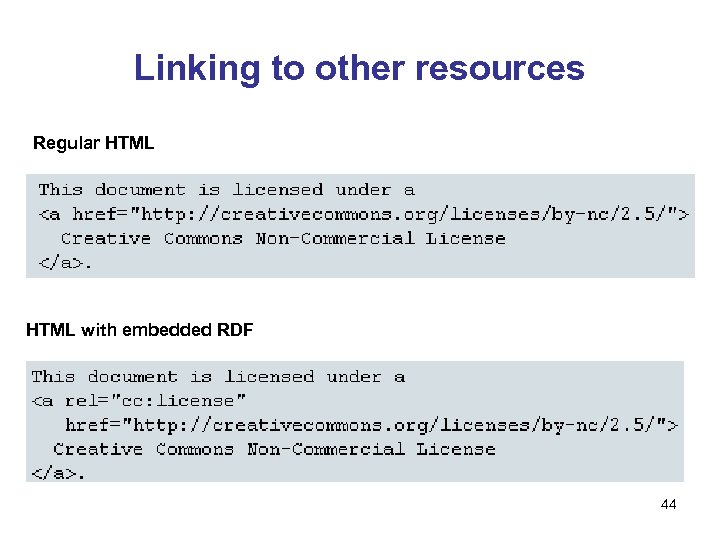
Linking to other resources Regular HTML with embedded RDF 44
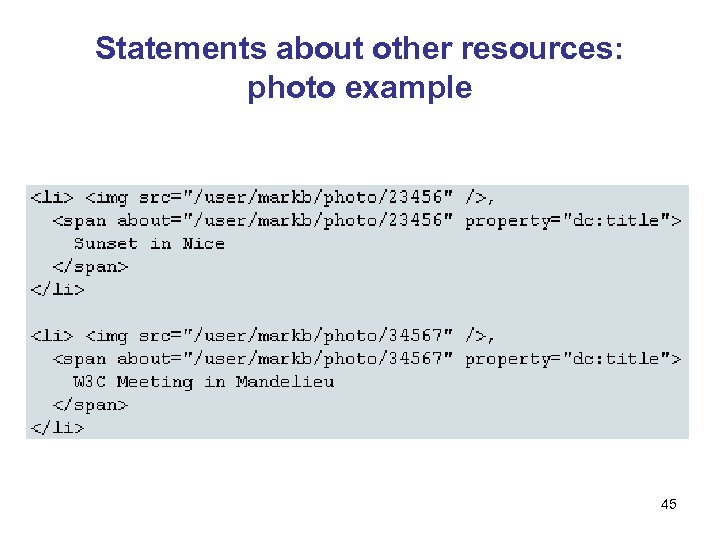
Statements about other resources: photo example 45
RDFa demo § Having time, feeling lucky and online? § Slides 46
More information 47
Thanks § Reminder: we ask for feedback! – Questions and comments highly welcome § aisaac at few. vu. nl § schreiber at cs. vu. nl § Continue for demo? 48
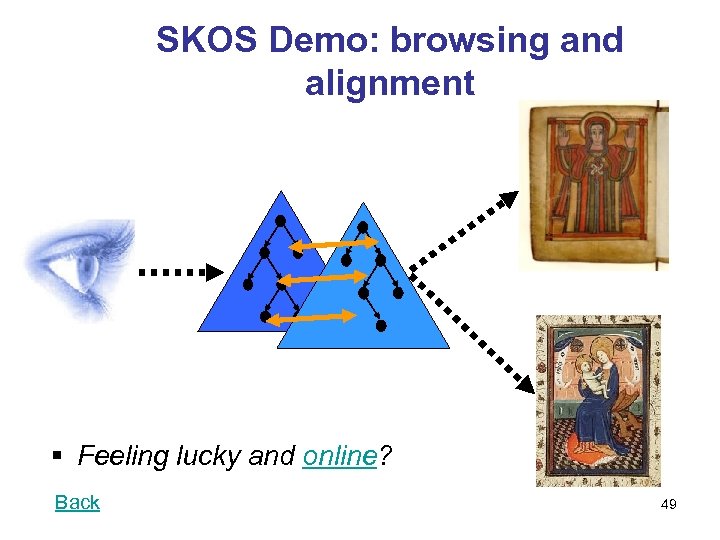
SKOS Demo: browsing and alignment § Feeling lucky and online? Back 49
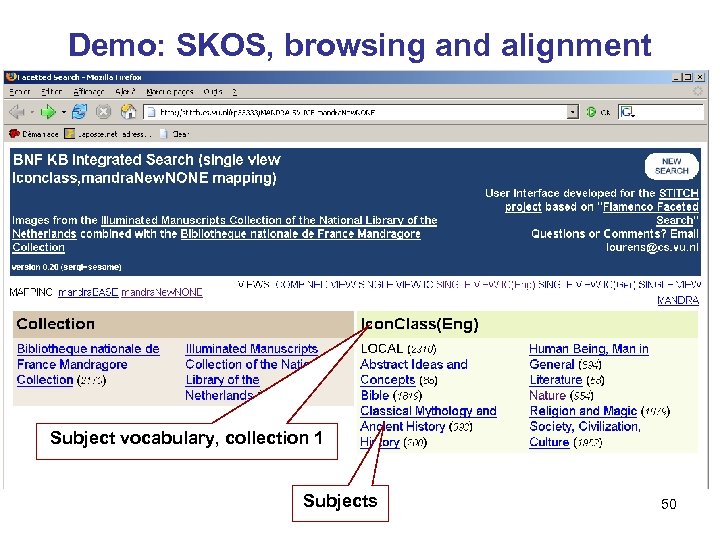
Demo: SKOS, browsing and alignment Subject vocabulary, collection 1 Subjects 50
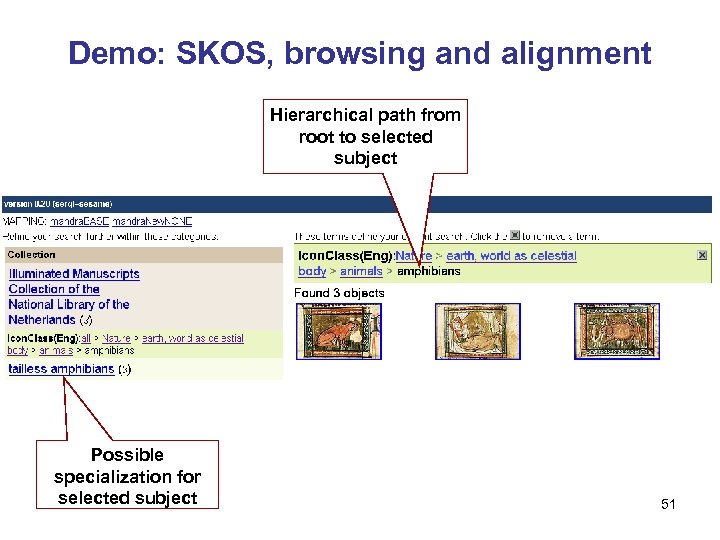
Demo: SKOS, browsing and alignment Hierarchical path from root to selected subject Possible specialization for selected subject 51
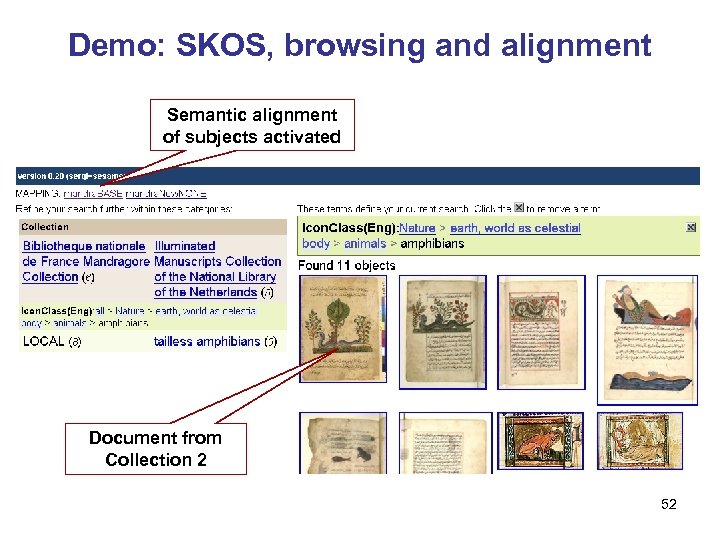
Demo: SKOS, browsing and alignment Semantic alignment of subjects activated Document from Collection 2 52
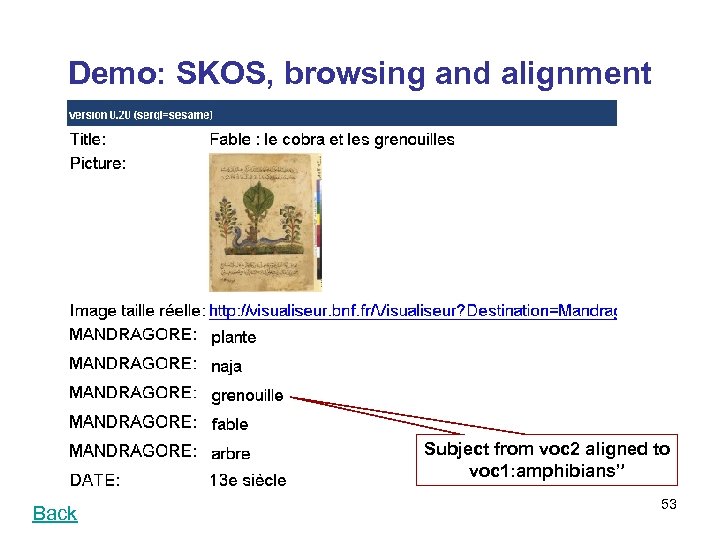
Demo: SKOS, browsing and alignment Subject from voc 2 aligned to voc 1: amphibians” Back 53
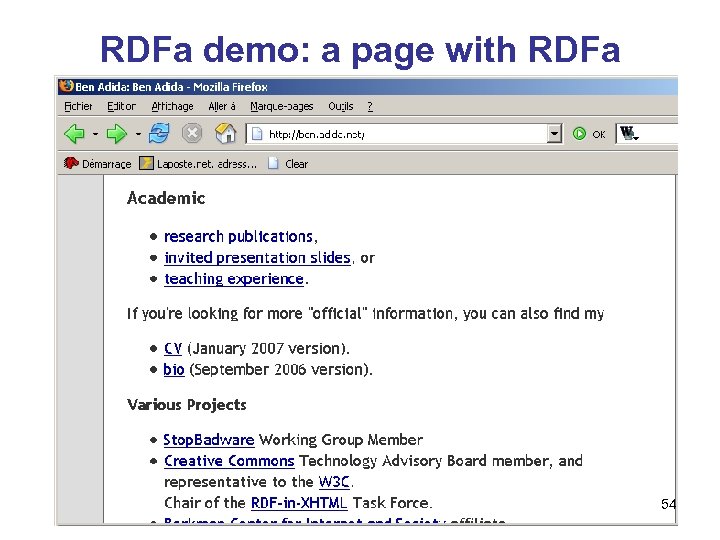
RDFa demo: a page with RDFa 54
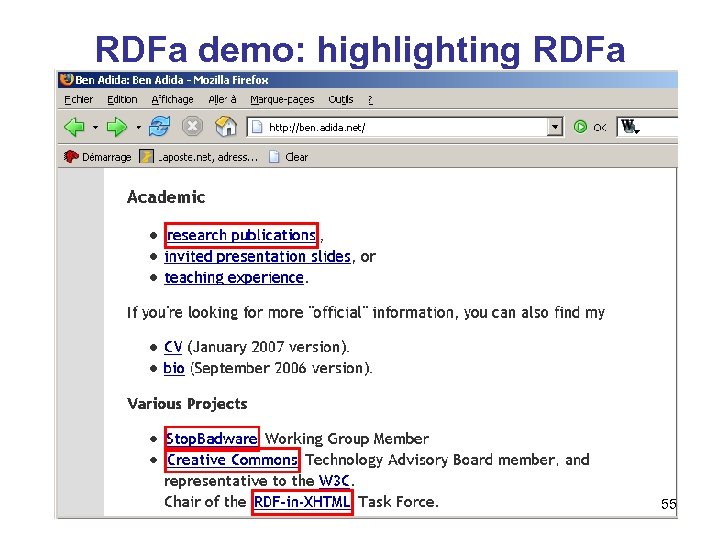
RDFa demo: highlighting RDFa 55
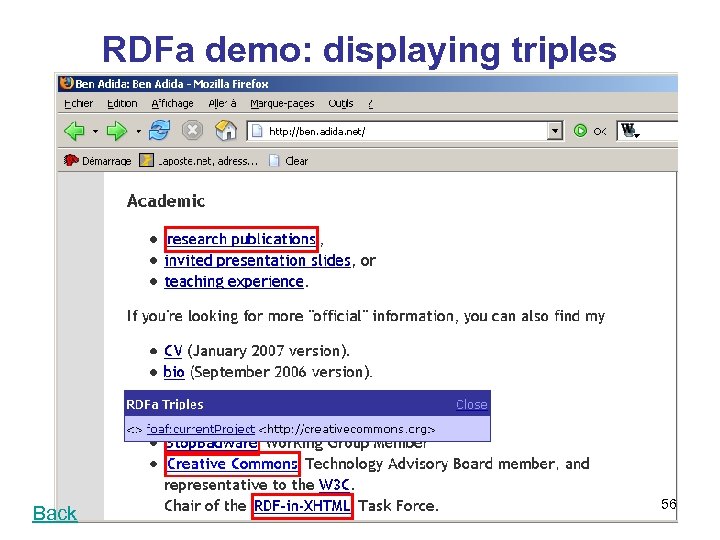
RDFa demo: displaying triples Back 56

57
Скачать презентацию Publishing Vocabularies on the Web Guus Schreiber Antoine
3b9957a9a53c0fc251e97ad84359cee1.ppt