 Скачать презентацию Public Transit ITS Data Collection and Analysis Large-
dafc1bf7ebd00a420ac52db0cfd155f7.ppt
- Количество слайдов: 51



Public Transit ITS Data Collection and Analysis: Large- and Small- Agency Lessons Learned Talking Technology and Transportation (T 3) Presentation June 20, 2007 1
Today’s Speakers Host: Charlene Wilder Office of Mobility Innovation Federal Transit Administration Presenters: Thomas Guggisberg David Gehrs Capital District Transportation Authority (CDTA) Albany, NY Michael Haynes Chicago Transit Authority (CTA) Chicago, IL 2
Disclaimer n This presentation contains references to brand names and proprietary technologies. This information is provided in the specific descriptions of ITS applications at the presenting agencies, and does not in any way constitute an endorsement of those brands or technologies by US DOT. 3
ITS Peer-to-Peer Program n n Sponsored by the US DOT’s ITS Joint Program Office, in cooperation with ITS America Provides short-term technical assistance on ITS planning, procurement, deployment, and operational challenges Connects agencies with an existing base of ITS knowledge and expertise within the transportation community AKA “P 2 P” 4
How the P 2 P Visit Came About n n n CDTA contacted the ITS P 2 P Program about increasing its understanding of how another transit agency uses data for service planning ITS P 2 P agreed to support two CDTA staff members’ travel for a site visit with Chicago Transit The two agencies produced a report detailing outcomes 5
The Purpose of the P 2 P Visit To share experiences and improve… § …the processes behind managing data and disseminating information § …data collection and analysis techniques § …large-scale ITS project deployments § …how we “operationalize” ITS and data § …how we make better use of service standards § …relationships with internal/external stakeholders § …the challenges to both large and small agencies 6
CTA & CDTA Side-by-Side n CTA n n n n $1 billion operating budget (FY 2006) 10 k+ employees Bus fleet of over 2, 000 vehicles serving Chicago and 40 suburban communities Over 4 million people live in service area 154 regular routes 1. 55 million daily boardings (0. 95 m bus 0. 60 m rail) 2, 530 miles of bus routes, 224 miles of rail lines n CDTA n n n n $64 mil. operating budget (FY 2007 -2008) 500+ employees Bus fleet of 250 vehicles serving a 4 -county service area that encompasses over 2300 square miles Over 750, 000 people live in the service area 44 regular routes 35, 000 daily boardings 400 one-way paratransit trips daily 7
Presentation Outline 1. Overview of ITS/Data Experiences at CDTA and CTA 2. Analysis Challenges 3. New Data Analysis and ITS Projects 4. Summary of Findings from the P 2 P Visit 5. P 2 P and Speaker Contact Information 8
1. Overview of ITS/Data Experiences at CDTA and CTA 9
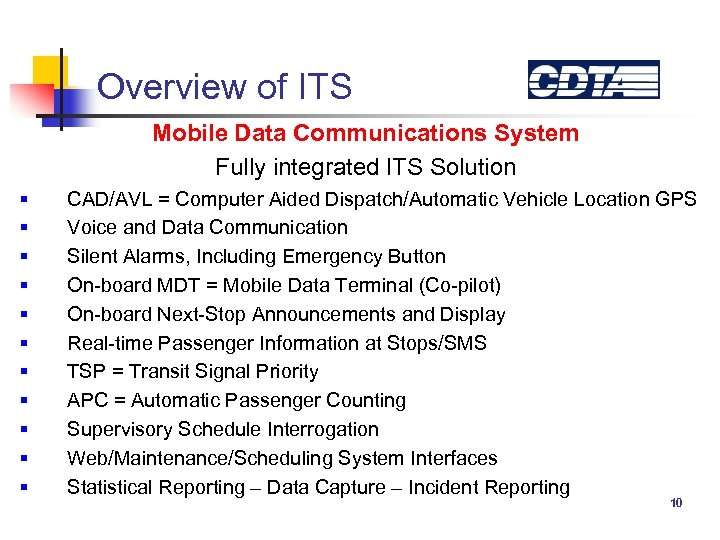
Overview of ITS Mobile Data Communications System Fully integrated ITS Solution § § § CAD/AVL = Computer Aided Dispatch/Automatic Vehicle Location GPS Voice and Data Communication Silent Alarms, Including Emergency Button On-board MDT = Mobile Data Terminal (Co-pilot) On-board Next-Stop Announcements and Display Real-time Passenger Information at Stops/SMS TSP = Transit Signal Priority APC = Automatic Passenger Counting Supervisory Schedule Interrogation Web/Maintenance/Scheduling System Interfaces Statistical Reporting – Data Capture – Incident Reporting 10
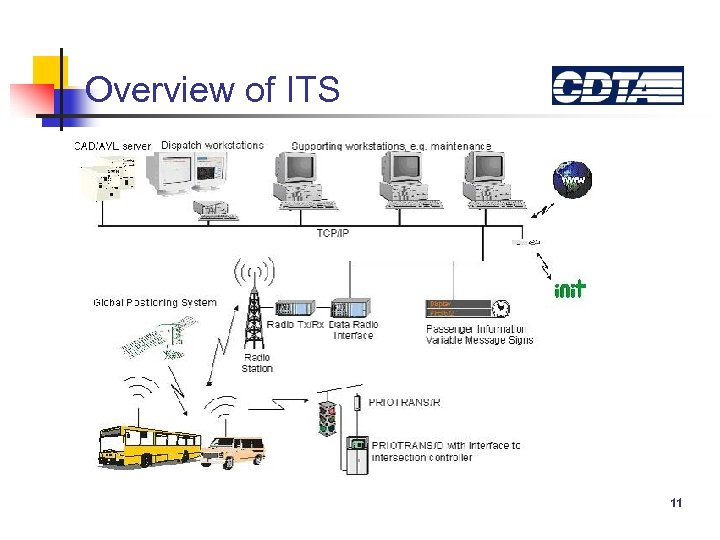
Overview of ITS 11
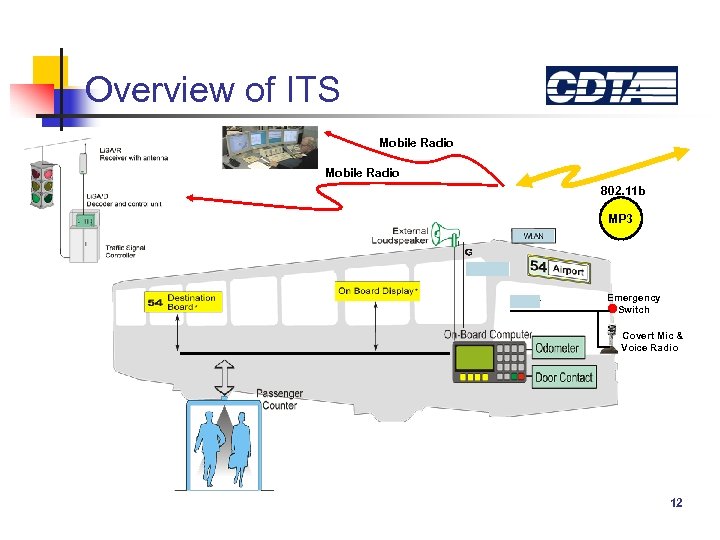
Overview of ITS Mobile Radio 802. 11 b MP 3 Emergency Switch Covert Mic & Voice Radio 12
ITS Data - Goals & Objectives n n n Convert data to useful information to support operating and marketing decisions Provide data of the right quality, detail, relevance and timeliness to appropriate staff Assist staff in using data to drive decisions 13
Data Sources § Farebox data – record for each customer boarding § HASTUS (scheduling) – record for each trip, timepoint § INIT (AVL, APC) – record for each stop (AVL) and each customer boarding (APC) 14
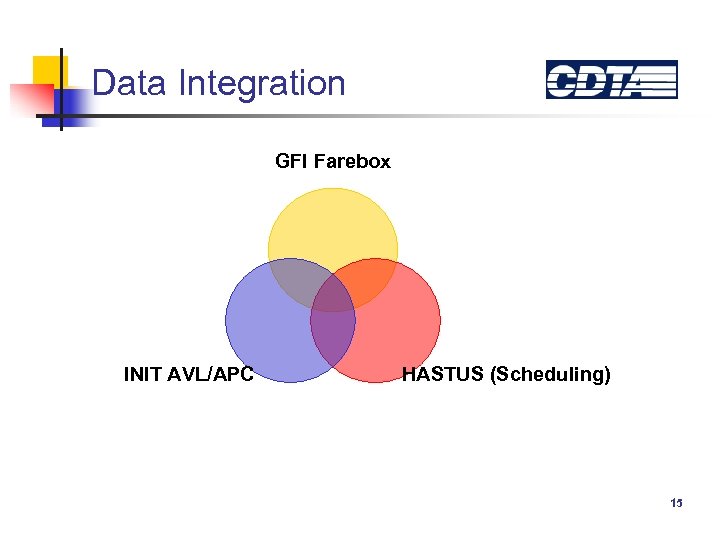
Data Integration GFI Farebox INIT AVL/APC HASTUS (Scheduling) 15
Data Integration Examples n Farebox, AVL – location of all boardings n Farebox, scheduling – boardings by trip n Scheduling, AVL – on-time and running time n Farebox, scheduling, AVL – diagnostic data route, segment, and time period 16
Overview of ITS Data n CAD/AVL Incident Reporting – Crystal Reports n Statistical Reporting – CAD/AVL n n Example: Automatic Passenger Counting, event lists/logs, on-time performance, etc. Integration of Fare Collection/ Scheduling/AVL Data n Example: Trip-by-trip running times 17
CAD/AVL Incident Reporting n n n Accident Bus shelter Daily capacity Driver problem Incident Mechanical Problem Radio check Service deviation Service performance Service protection 18
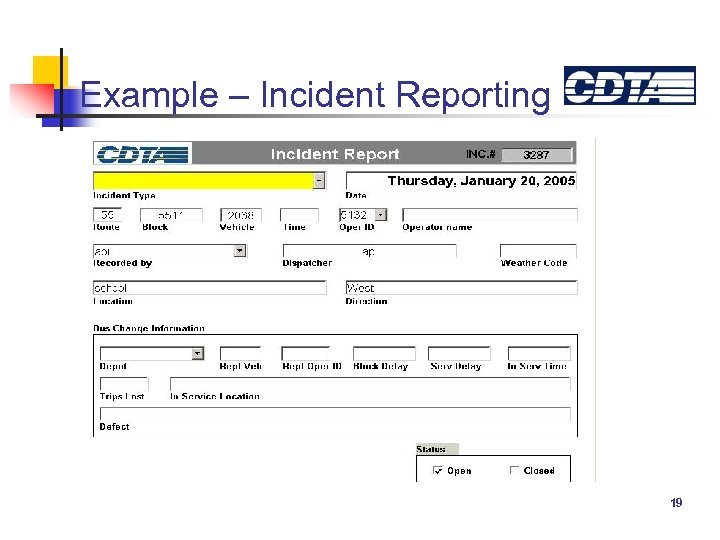
Example – Incident Reporting 19
Statistical Reporting n Passenger counts n Driver log-ins n Schedule adherence n Alarms 20
Decision Examples § Running times § § Trip Between timepoints § Service frequency and span § Route alignment § Express/limited service § Fare and fare products 21
Data Analysis from ITS Data n n Background & data flow Analysis architecture and development timeline Sample web-based reports Analysis methodologies & samples 22
ITS Project Background n n The Americans with Disabilities Act (ADA) drives need to automate stop announcements A desire for comprehensive performance data with declining resources drives data collection n n Automated Passenger Counting (APC) Automate running-time analysis (AVL data) Both systems require accurate geolocation of bus stops on board the bus from a navigation system (GPS/odometer) Integration of systems provides for efficient use of complementary resources 23
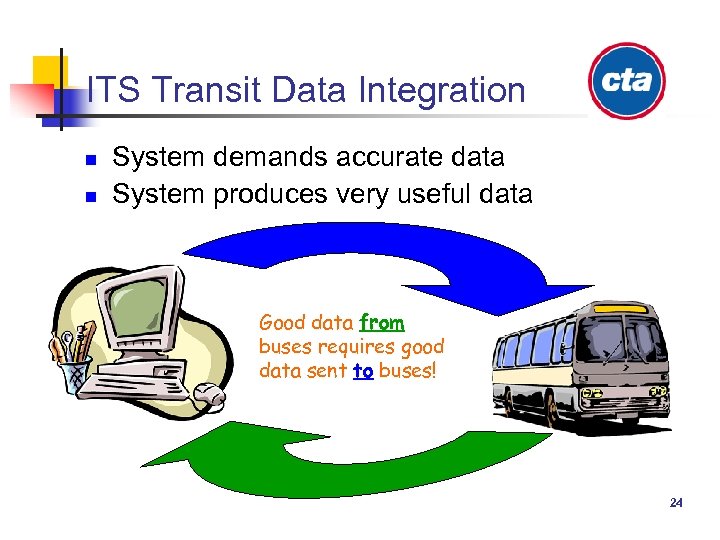
ITS Transit Data Integration n n System demands accurate data System produces very useful data Good data from buses requires good data sent to buses! 24
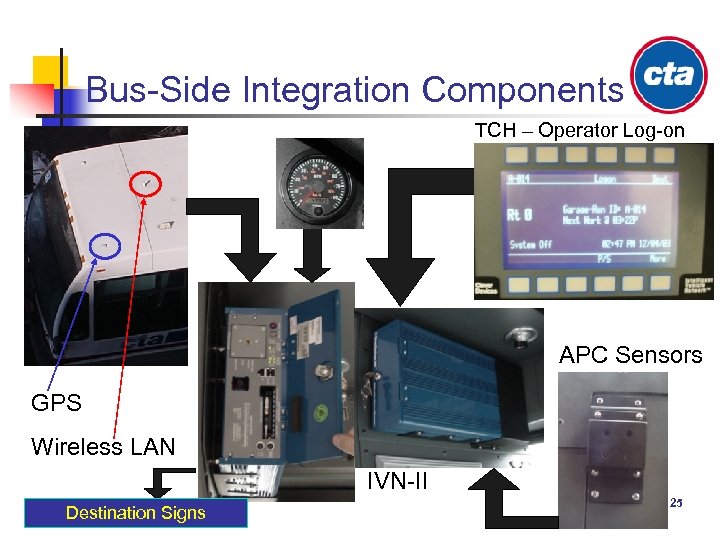
Bus-Side Integration Components TCH – Operator Log-on APC Sensors GPS Wireless LAN IVN-II Destination Signs 25
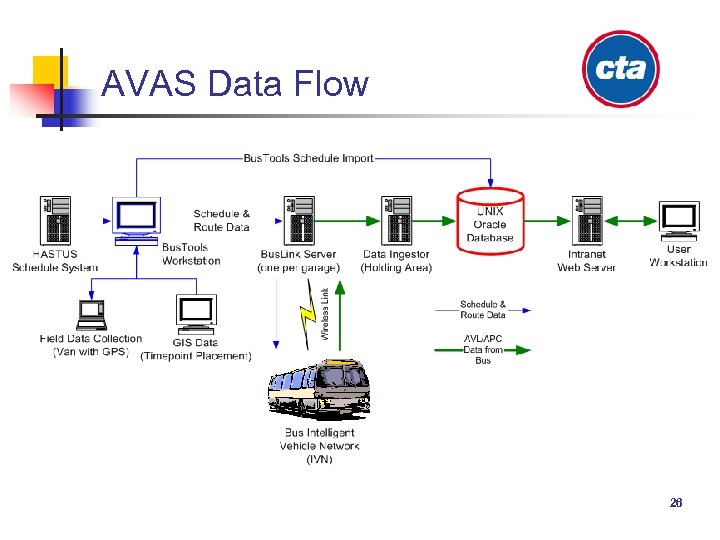
AVAS Data Flow 26
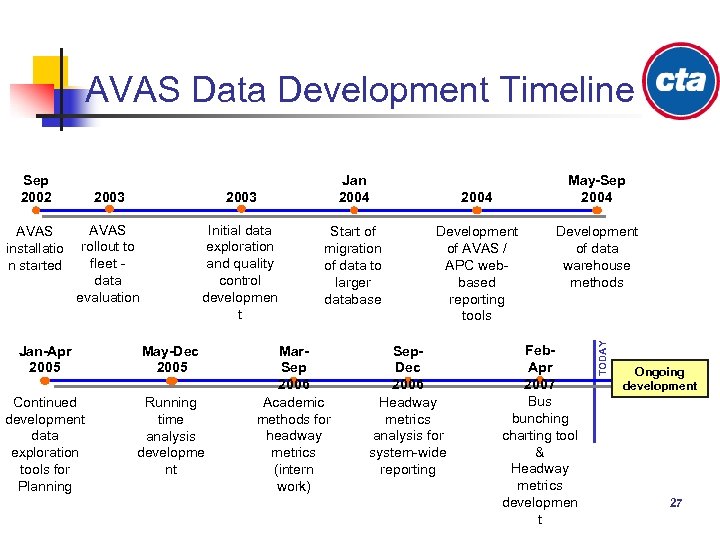
AVAS Data Development Timeline AVAS installatio n started 2003 AVAS rollout to fleet - data evaluation Initial data exploration and quality control developmen t Jan 2004 Jan-Apr 2005 May-Dec 2005 Continued development data exploration tools for Planning Running time analysis developme nt Start of migration of data to larger database Mar. Sep 2006 Academic methods for headway metrics (intern work) May-Sep 2004 Development of AVAS / APC webbased reporting tools Sep. Dec 2006 Headway metrics analysis for system-wide reporting Development of data warehouse methods Feb. Apr 2007 Bus bunching charting tool & Headway metrics developmen t TODAY Sep 2002 Ongoing development 27
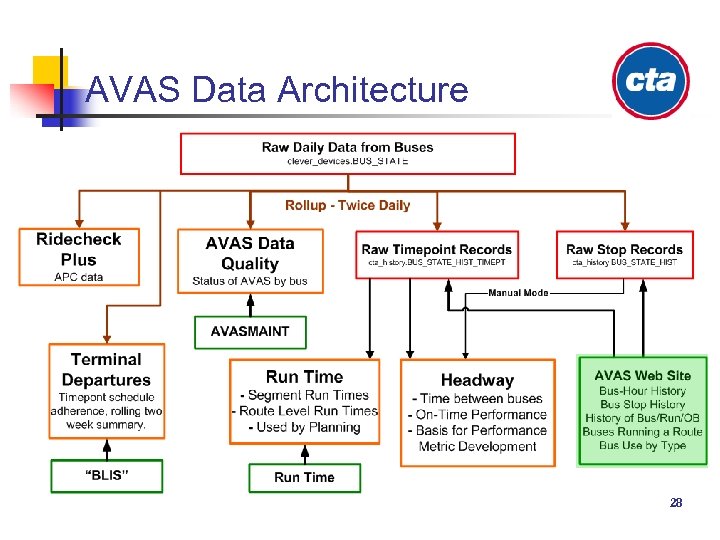
AVAS Data Architecture 28
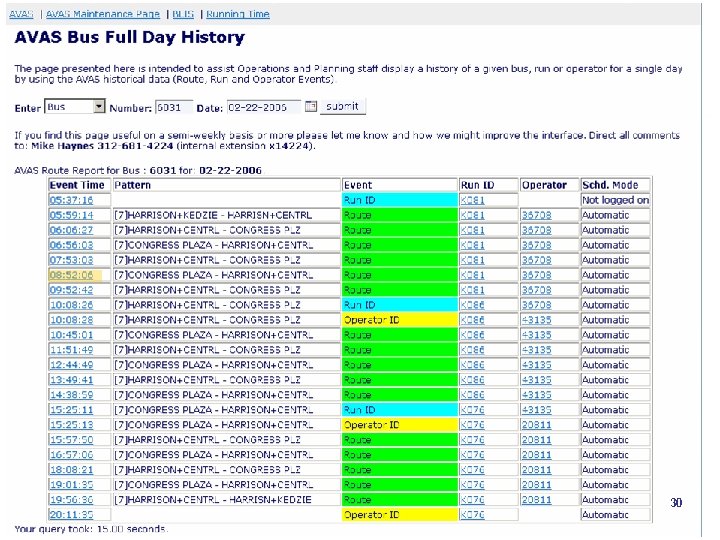
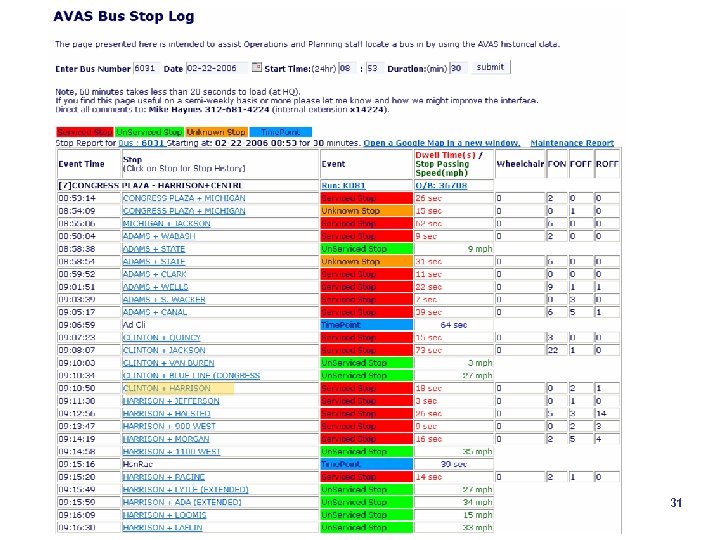
Web-Based Data Exploration n n n n Terminal departure performance (BLIS) Maintenance status & system performance history Daily route history Daily or hourly bus history Stop-level history Monthly bus use by garage and type Trip/route summaries from Ridecheck Plus Max load and route profiles (from RCP data) Run-time analysis to build better schedules 29
30
31
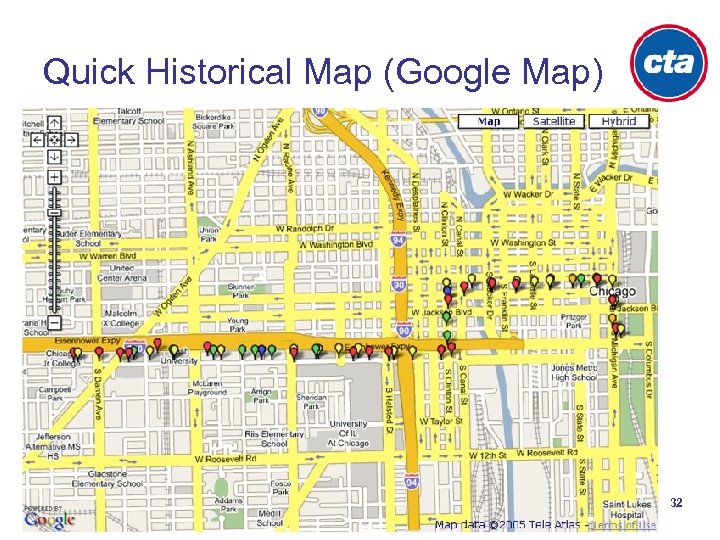
Quick Historical Map (Google Map) 32
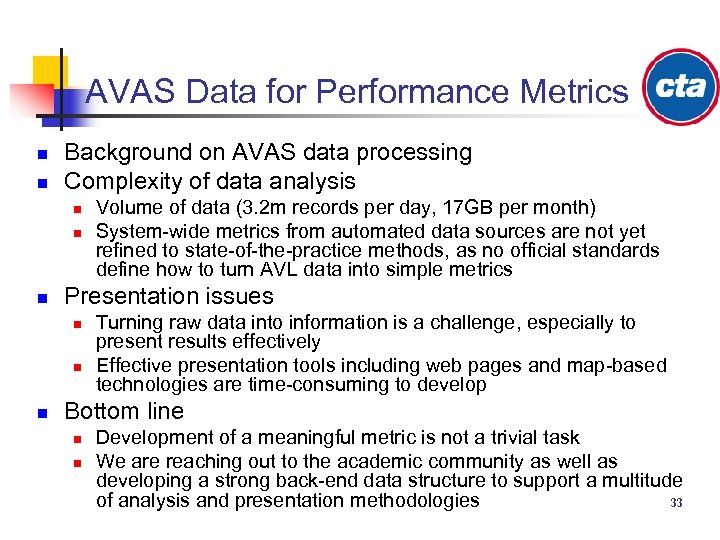
AVAS Data for Performance Metrics n n Background on AVAS data processing Complexity of data analysis n n n Presentation issues n n n Volume of data (3. 2 m records per day, 17 GB per month) System-wide metrics from automated data sources are not yet refined to state-of-the-practice methods, as no official standards define how to turn AVL data into simple metrics Turning raw data into information is a challenge, especially to present results effectively Effective presentation tools including web pages and map-based technologies are time-consuming to develop Bottom line n n Development of a meaningful metric is not a trivial task We are reaching out to the academic community as well as developing a strong back-end data structure to support a multitude of analysis and presentation methodologies 33
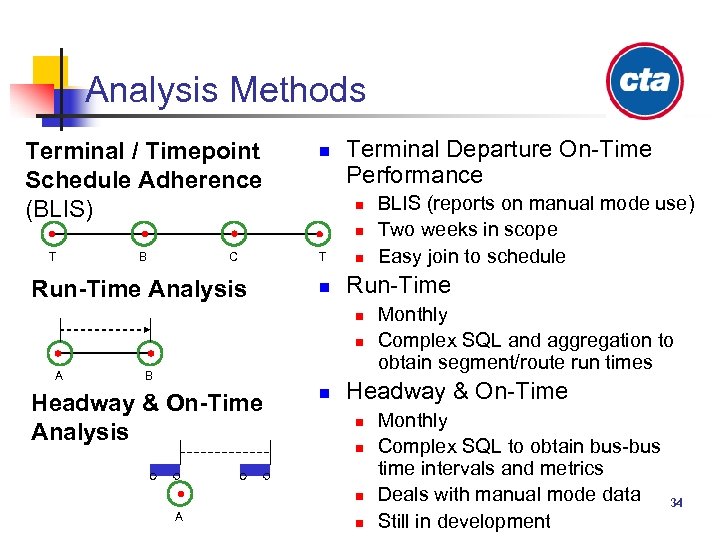
Analysis Methods Terminal / Timepoint Schedule Adherence (BLIS) n Terminal Departure On-Time Performance n n T B C Run-Time Analysis T n n Run-Time n n A B Headway & On-Time Analysis n Monthly Complex SQL and aggregation to obtain segment/route run times Headway & On-Time n n n A BLIS (reports on manual mode use) Two weeks in scope Easy join to schedule n Monthly Complex SQL to obtain bus-bus time intervals and metrics Deals with manual mode data 34 Still in development
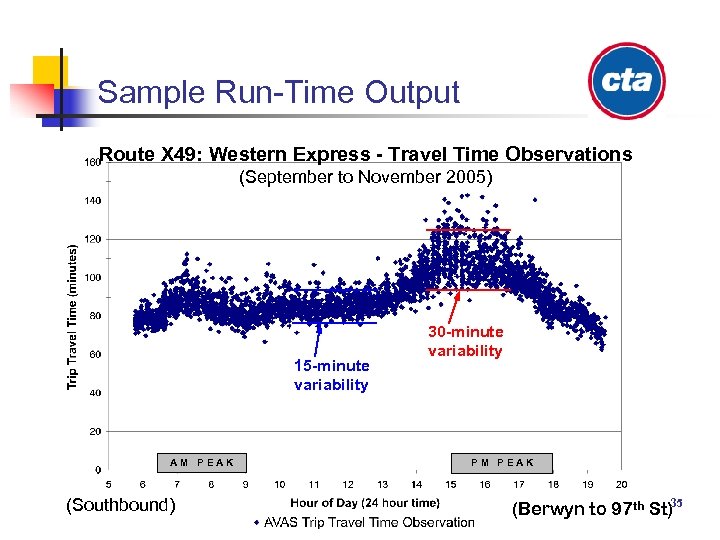
Sample Run-Time Output Route X 49: Western Express - Travel Time Observations (September to November 2005) 15 -minute variability AM PEAK (Southbound) 30 -minute variability PM PEAK 35 (Berwyn to 97 th St)
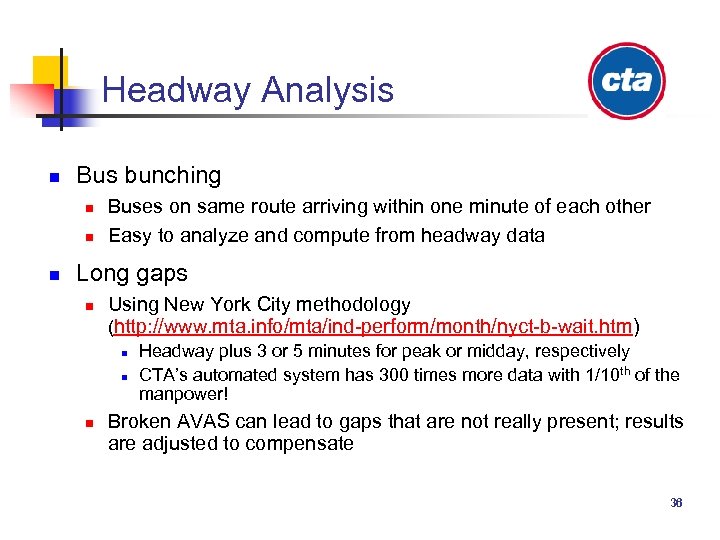
Headway Analysis n Bus bunching n n n Buses on same route arriving within one minute of each other Easy to analyze and compute from headway data Long gaps n Using New York City methodology (http: //www. mta. info/mta/ind-perform/month/nyct-b-wait. htm) n n n Headway plus 3 or 5 minutes for peak or midday, respectively CTA’s automated system has 300 times more data with 1/10 th of the manpower! Broken AVAS can lead to gaps that are not really present; results are adjusted to compensate 36
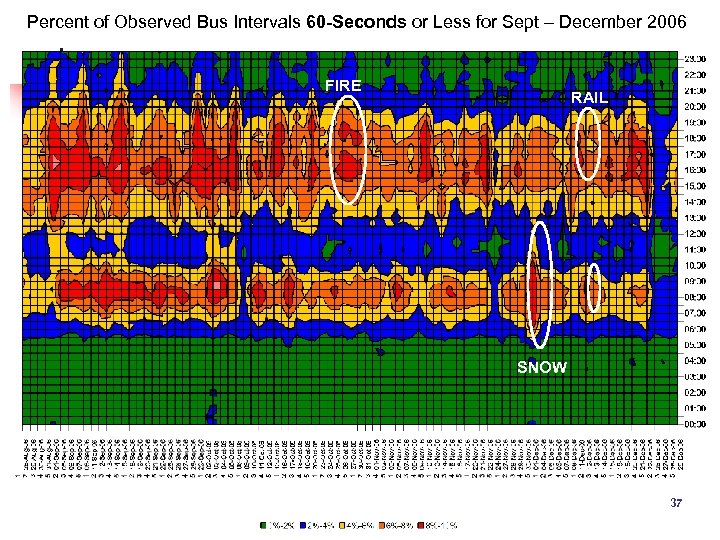
Percent of Observed Bus Intervals 60 -Seconds or Less for Sept – December 2006 FIRE RAIL SNOW 37
2. Analysis Challenges 38
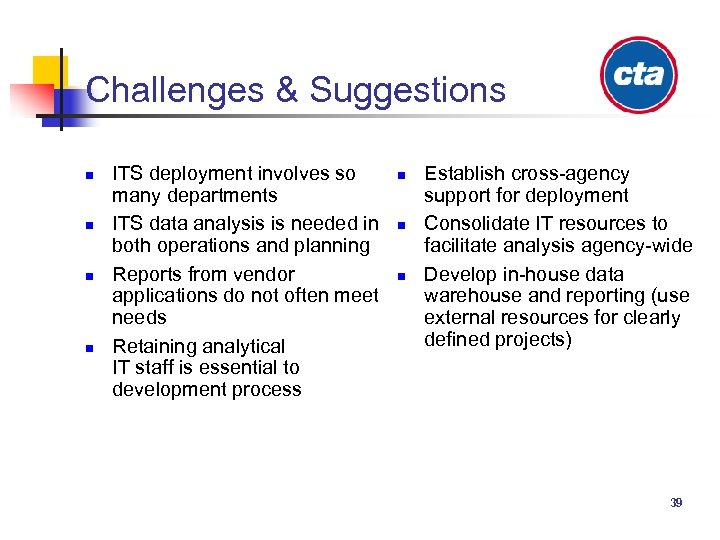
Challenges & Suggestions n n ITS deployment involves so many departments ITS data analysis is needed in both operations and planning Reports from vendor applications do not often meet needs Retaining analytical IT staff is essential to development process n n n Establish cross-agency support for deployment Consolidate IT resources to facilitate analysis agency-wide Develop in-house data warehouse and reporting (use external resources for clearly defined projects) 39
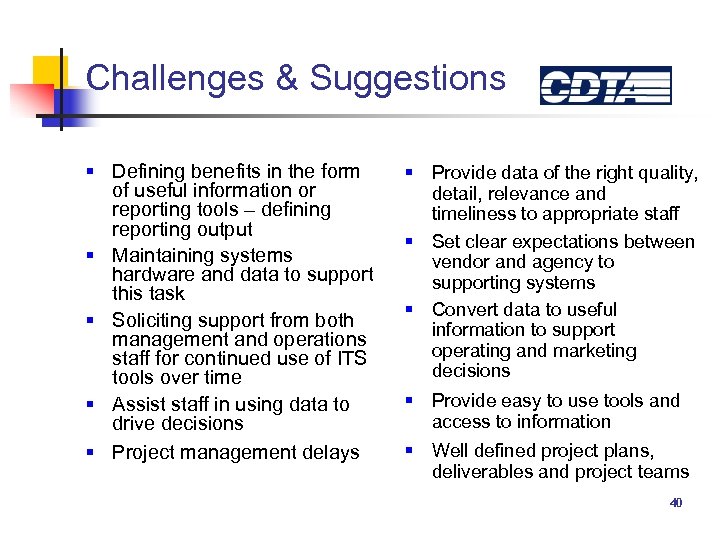
Challenges & Suggestions § Defining benefits in the form of useful information or reporting tools – defining reporting output § Maintaining systems hardware and data to support this task § Soliciting support from both management and operations staff for continued use of ITS tools over time § Assist staff in using data to drive decisions § Project management delays § Provide data of the right quality, detail, relevance and timeliness to appropriate staff § Set clear expectations between vendor and agency to supporting systems § Convert data to useful information to support operating and marketing decisions § Provide easy to use tools and access to information § Well defined project plans, deliverables and project teams 40
3. New Data Analysis and ITS Projects 41
New ITS Data Analysis Initiatives n Headway / On-time / Trips Completed n n n Service Standards n n n Working on developing more reports from headway, run-time and the raw data store to compute meaningful metrics Looking to use data to both improve operations through planning and report on operations Working to use processed APC data to apply to service standards find discrepancies Effort is now reaching a more mature phase as we have renewed staff interest Route-by-Stop Analysis n n Using AFC data to scale up APC data to find stops with the highest passenger activity Data presented using GIS to help identify the most important stops 42
New ITS Data Analysis Initiatives § Test trial on Routes 1, 10, 80, and 85 § Graphics (map) output § Common data interface § Common user interface § User-defined reporting § Simple data transfer from other systems § Staff training 43
New ITS Initiatives n Bus Time – Real-time next-bus predictions n n n Communications integration of a mobile access router with cellular card and existing on-board ITS (AVAS) Web-based bus predictions currently piloted on one route TSP – Transit Signal Priority n n Working to integrate with existing on-board ITS Pilot expected by end of 2007 44
New ITS Initiatives § § § § Mobile Data Communications System Project Completion Fare Collection/AVL/Scheduling System Data – Web Portal Information Management Study Trip Planner – Web Real-Time Information Signs Enterprise Web Portal Transportation Development Plan Bus Rapid Transit - BRT 45
4. Summary of Findings from the Peer-to-Peer Visit 46
Summary of Findings § Small & large agencies have the same problems § § § Operations “buy-in” Project deployment Issues are the same Dedicated staffing for “new” technologies is necessary for “success” Challenge of coordinating needs of Planning, Marketing, Operations Project tips § § § Next-stop arrival information – include route and bus number Dedicated vehicle for maintaining real-world data Use fellow agencies experiences to eliminate unnecessary project delays 47
5. P 2 P and Speaker Contact Information 48
ITS Peer-to-Peer Program n To inquire about utilizing the ITS Peer-to-Peer Program: n n n Call 1 -888 -700 -PEER (1 -888 -700 -7337) E-mail p 2 p@volpe. dot. gov Program Contacts: Terry Regan Ron Giguere US DOT Volpe Center ITS Joint Program Office n To learn more, visit www. pcb. its. dot. gov/res_peer. asp 49
Speaker Contact Information Capital District Transportation Authority Thomas Guggisberg - Director of Information Technology thomas@cdta. org - 518 -437 -8326 David Gehrs - Planner/Analyst David. G@cdta. org - 518 -437 -6853 Chicago Transit Authority Michael Haynes - Project Manager michael. haynes@transitchicago. com - 312 -681 -3619 FTA Office of Mobility Innovation Charlene Wilder – ITS Program Manager charlene. wilder@fta. dot. gov - 50
Questions? 51
Скачать презентацию Public Transit ITS Data Collection and Analysis Large-
dafc1bf7ebd00a420ac52db0cfd155f7.ppt