 Скачать презентацию Public Speaking Among Many Fears
9d7eee611d8681432a982e22c001f01b.ppt
- Количество слайдов: 51



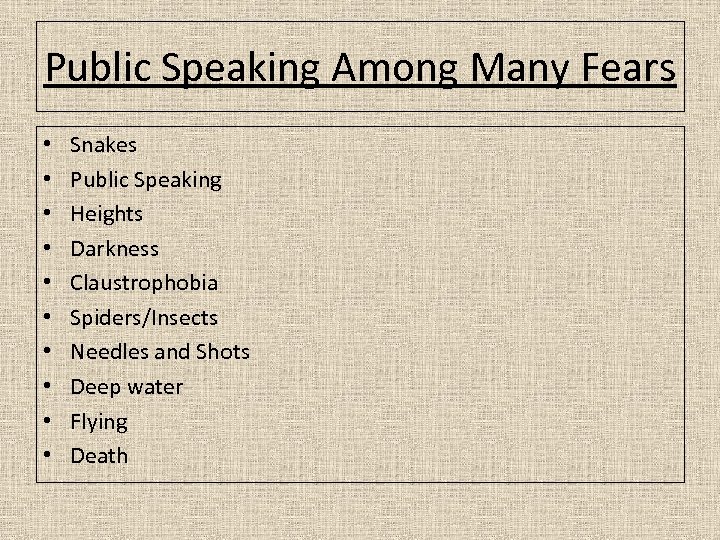
Public Speaking Among Many Fears • • • Snakes Public Speaking Heights Darkness Claustrophobia Spiders/Insects Needles and Shots Deep water Flying Death

Public Speaking:

During This Session We Will • Define public speaking • Address some of the fears people have about speaking in public • Identify some tips for more effective presentations • Listen to some great speakers! • Practice effective public speaking techniques
Video • https: //www. youtube. com/watch? v=OFPw. De 22 Co. Y&ebc=ANy. Px. Kpilg. Kyh. BFCKEu 9 ob 8 NQt. Et sa. S 4 Eh 0 CAb. Xei. Tjku. Vjd 6 z. Td. LNt. IYDxzdk 7 r. OOQrx 0 Ip. WK 134 T_im. VRr. WXOSVAr 5 J 0 b. Jw
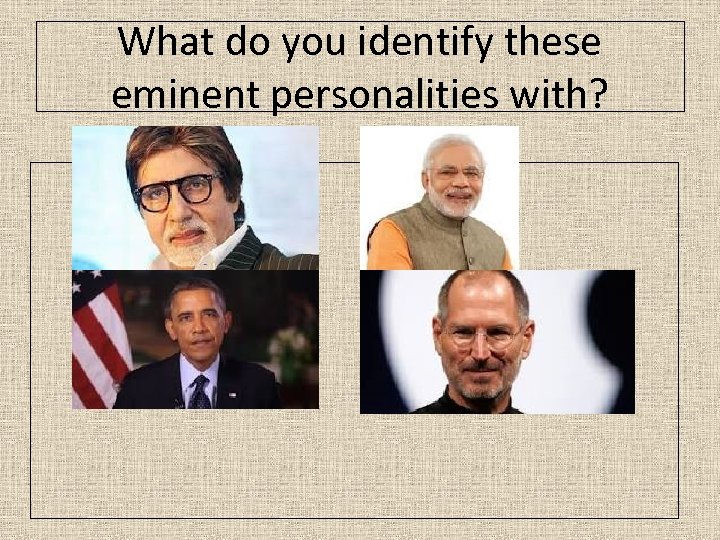
What do you identify these eminent personalities with?
Definition of PUBLIC SPEAKING Merriam-Webster Online Dictionary 1: the act or process of making speeches in public 2: the art of effective oral communication with an audience
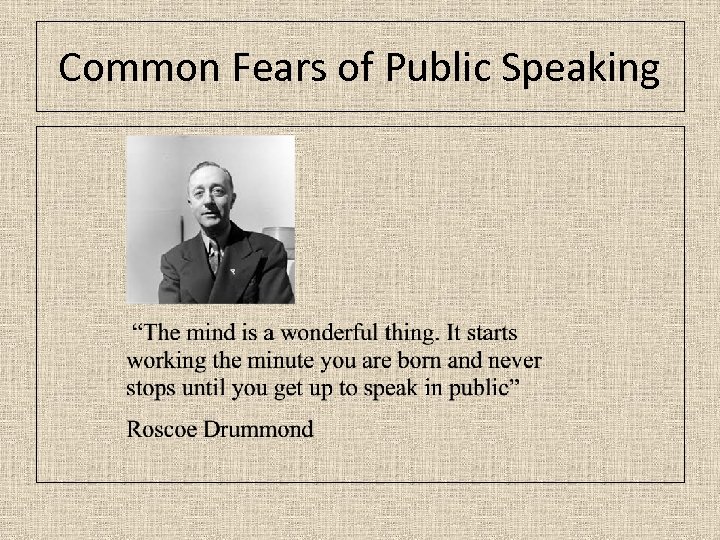
Common Fears of Public Speaking
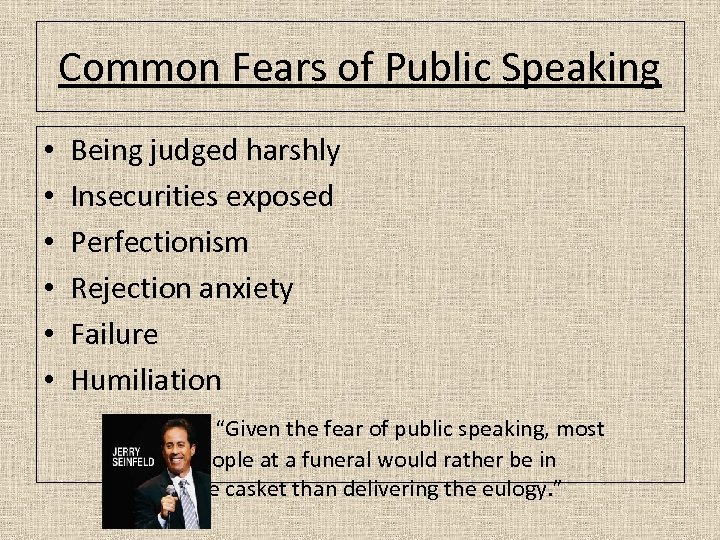
Common Fears of Public Speaking • • • Being judged harshly Insecurities exposed Perfectionism Rejection anxiety Failure Humiliation “Given the fear of public speaking, most people at a funeral would rather be in the casket than delivering the eulogy. ”
Public Speaking in Every Day Use • Workplace – Persuading others to adopt your ideas – Reporting out to your department – Educating your co-workers • Private life – PTA meetings – Appearing before your city counsel – Toasting the new bride and groom

Public Speaking Produces Anxiety in Most People
Overcoming Speech Anxiety • Acknowledge Your Fear • Act Confident • Channel Nervous Energy • Practice, Practice • Simulate Setting at Home • Ask Friends to Be Practice Audience • Visualize Your Success • Use Deep-breathing Techniques • Focus on Message, not Fear • Give Yourself a Mental Pep Talk
Understand Audience and Listening • People Think Faster Than Hear • Have Short Attention Span • Jump to Conclusions • Easily Distracted
Understand The Speech Context • Audience • Setting
The Audience • Size • Demographics • Beliefs and Values • Receptive/Antagonistic
Listening Remedies • Keep Speech Focused • Divide Speech into Compact Segments • Analyze Audience Carefully • Adapt to Situation
Context - The Setting • Indoor/Outdoor • Size and Shape of Room • Arrangement of Seating • Equipment Available • Lighting • Acoustics
Understand & Define Your Purpose • • • Inform Inspire / Persuade Entertain Introduce Accept Pay Tribute
Understand the Speech Making Process • • • Choosing/Narrowing a Topic Researching Topic Organizing Your Speech Developing an Outline Rehearsing Speech Delivering Speech
Choosing an Appropriate Topic • Is It Important to You? • Is It Important to Your Audience? • Will It Hold Audience’s Attention? • Is It Manageable in the Time Available? • Is It Appropriate for Oral Presentation? • Is It Clear?
Develop Central Idea Write a one sentence summary of speech.
Generate Main Idea • Does It Have Logical Divisions? • Are There Reasons Why It Is True? • Can You Support It? A. . . B. . . C. . . Because. . .
Narrowing a Topic - Example Protecting the Environment Water Quality in My State Well Water Problems Utilizing Home Well Assessments to Reduce Contamination Risk
Getting Topic Feedback • From Members of Potential Audience • From Friends • From Family
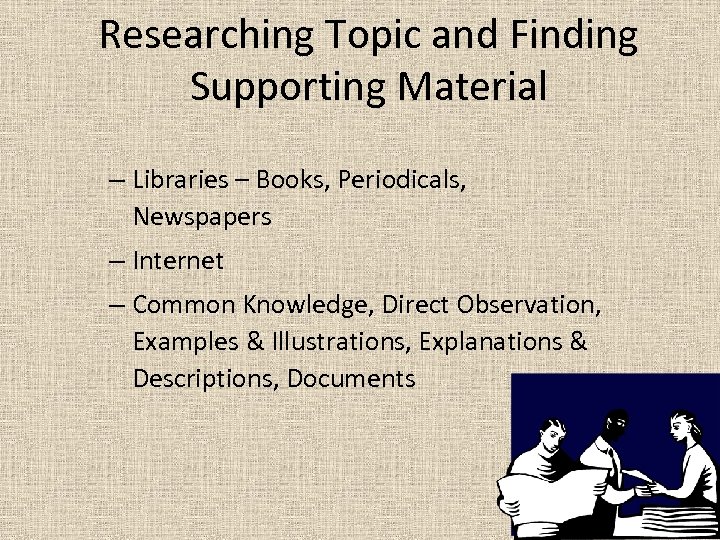
Researching Topic and Finding Supporting Material – Libraries – Books, Periodicals, Newspapers – Internet – Common Knowledge, Direct Observation, Examples & Illustrations, Explanations & Descriptions, Documents
Special Considerations for Online Information • In Physical Print, Quality Is Controlled by Experts – Journals - Peer Review – Periodicals - Editors – Published Texts - Editors, Librarians • Online, Must Do Own Quality Control – Beware! Everything On the Web Is Not ALL True
Types of Outlines • Preliminary Outline (Rough-Draft) – Main points to research +Preparation Outline +Title & Topic +Purpose +Introduction +Main and Sub-Points +Transitions +Conclusion +Support/Evidence
Ethics in Speech Preparation Researching • Take Accurate Notes When Researching • Record Complete Source Citations • Credit Source of Ideas • When in Doubt, Cite Source
Don’t Use Someone Else’s Speech!
Introductions Types Functions
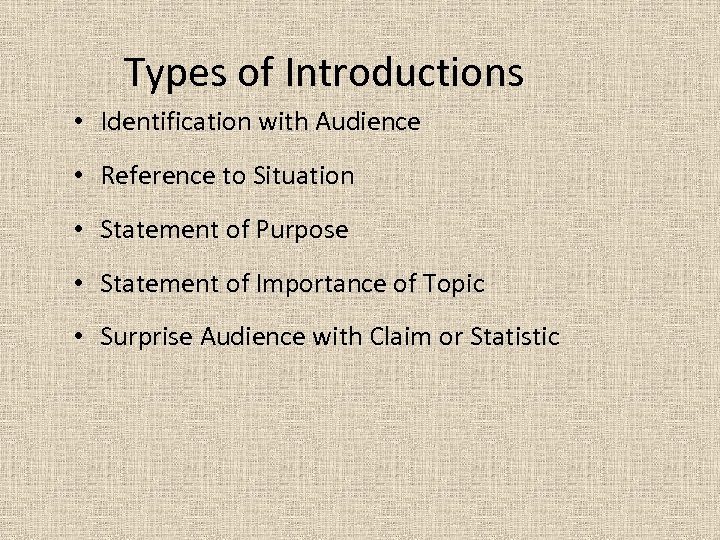
Types of Introductions • Identification with Audience • Reference to Situation • Statement of Purpose • Statement of Importance of Topic • Surprise Audience with Claim or Statistic
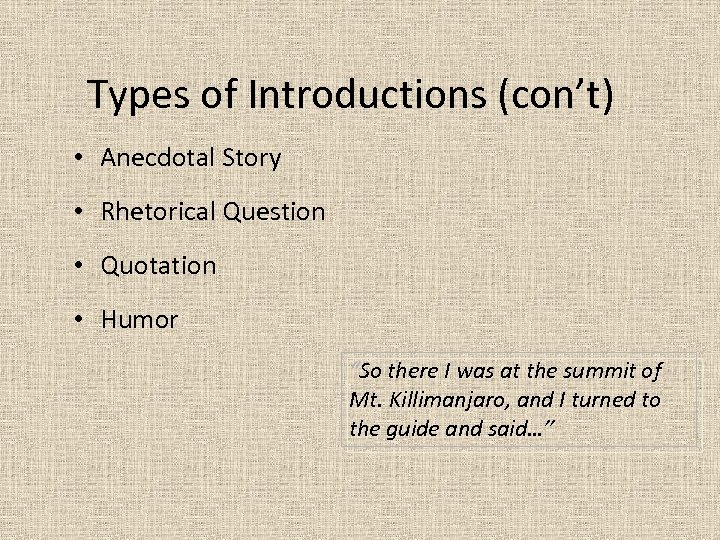
Types of Introductions (con’t) • Anecdotal Story • Rhetorical Question • Quotation • Humor “So there I was at the summit of Mt. Killimanjaro, and I turned to the guide and said…”
Conclusions Types Functions
Functions of Introductions • Get Attention • Introduce Topic • Provide Motivation • Establish Credibility • Preview Speech
Functions of Conclusions • Summarize Speech • Reemphasize Main Idea • Motivate Response • Provide Closure
Types of Conclusions • Summary • Quotation • Personal Reference • Challenge to Audience • Offer Vision of the Future • Anecdotal Story • Rhetorical Question • Quotation • Humor Remember what Dwight D. Eisenhower once said: “Things are more like they are now, than they have ever been before. ”
Methods of Delivery • Manuscript Reading • Memorized • Impromptu • Extemporaneous
Delivering Speech - Beginning • Walk Calmly with Confidence to Front • Establish Eye Contact • Smile Naturally • Deliver Introduction
Delivering Speech - During • Use Effective Eye Contact • Use Effective Language • Use Effective Gestures • Be Enthusiastic • Use Conversational Style • Use Notes As Needed
Delivering Speech - Ending • “Frame” the Speech • Pause before Returning to Seat – But Don’t Ask for Questions • Accept Applause Graciously
Elements of Vocal Delivery • Speech Rate and Pauses • Volume • Inflection and Pitch • Quality of Voice • Pronunciation and Articulation
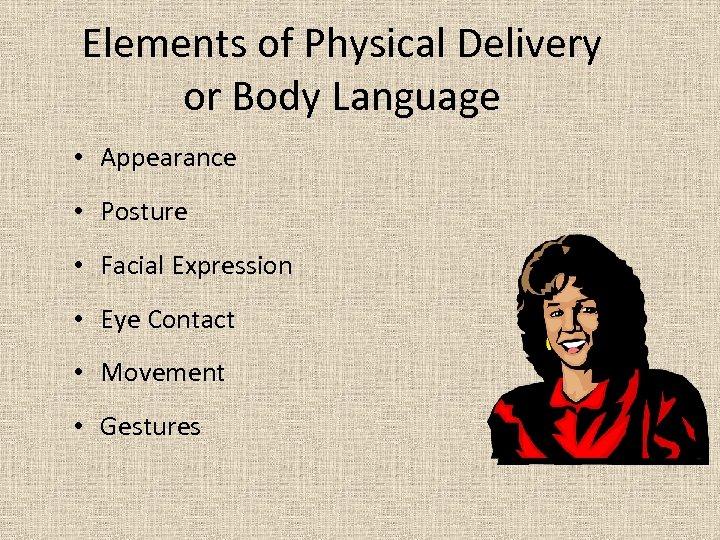
Elements of Physical Delivery or Body Language • Appearance • Posture • Facial Expression • Eye Contact • Movement • Gestures

Rehearsing Speech • Recreate Setting • Practice Without Memorizing • Time Speech • Practice Out Loud • Practice Standing Up • Watch Yourself • Practice Gestures • Practice Eye Contact • Practice Volume
Plan, Prepare, Polish, Practice, Present The better you know your material the less anxious you’ll be about presenting it. Smile and act natural. Don’t apologize for being nervous. No one will know you’re nervous unless you call attention to it.
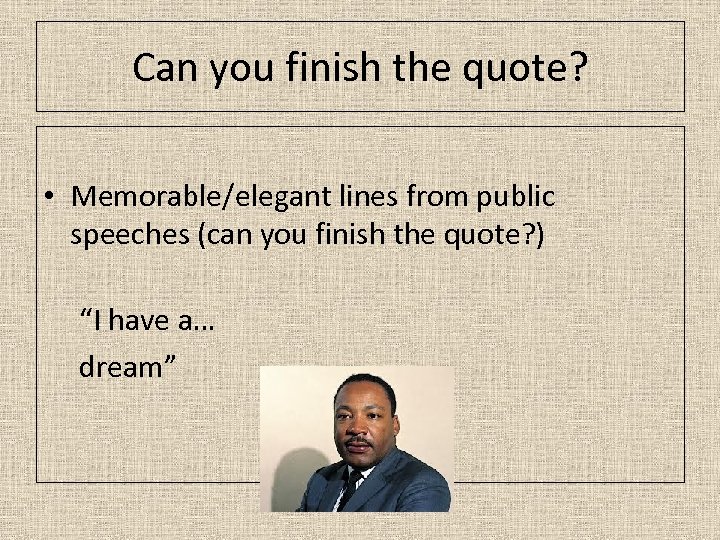
Can you finish the quote? • Memorable/elegant lines from public speeches (can you finish the quote? ) “I have a… dream”
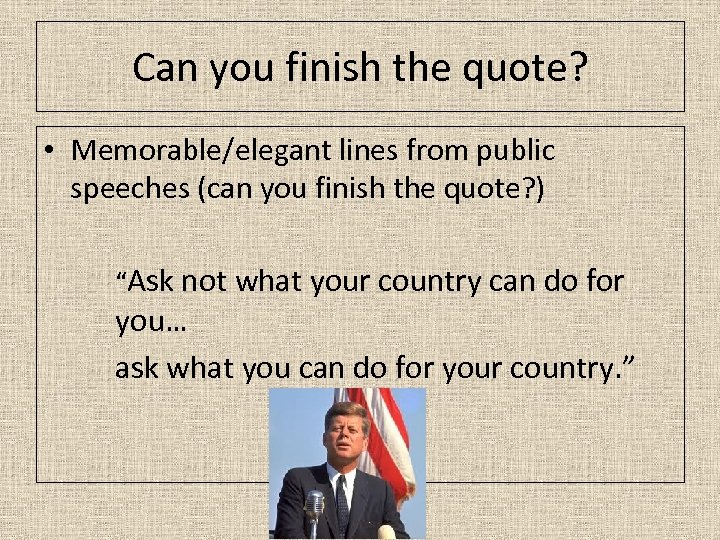
Can you finish the quote? • Memorable/elegant lines from public speeches (can you finish the quote? ) “Ask not what your country can do for you… ask what you can do for your country. ”
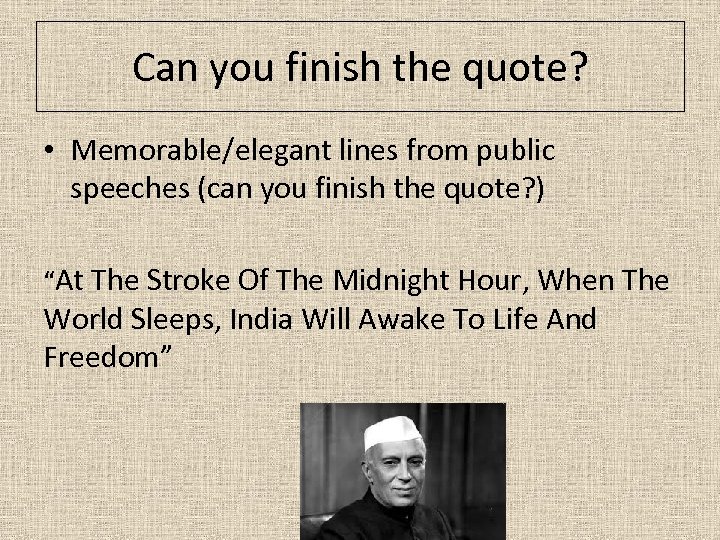
Can you finish the quote? • Memorable/elegant lines from public speeches (can you finish the quote? ) “At The Stroke Of The Midnight Hour, When The World Sleeps, India Will Awake To Life And Freedom”
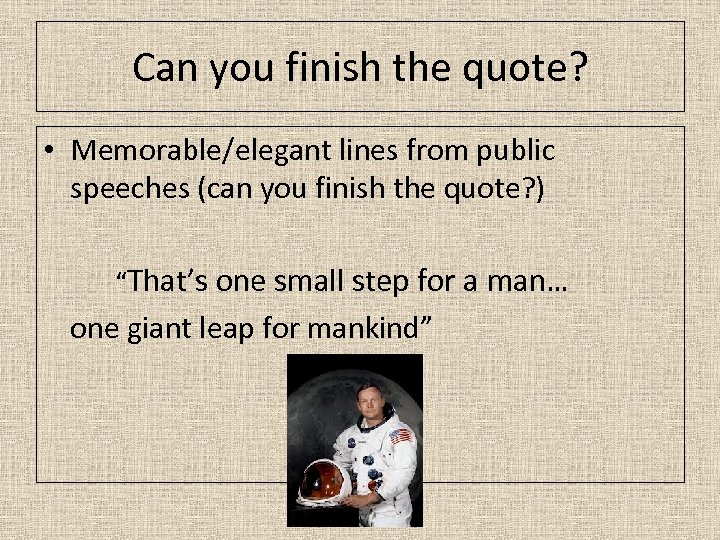
Can you finish the quote? • Memorable/elegant lines from public speeches (can you finish the quote? ) “That’s one small step for a man… one giant leap for mankind”
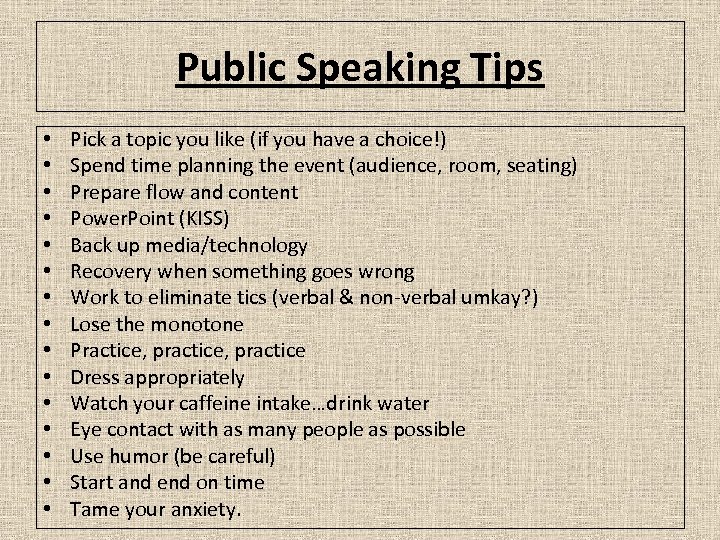
Public Speaking Tips • • • • Pick a topic you like (if you have a choice!) Spend time planning the event (audience, room, seating) Prepare flow and content Power. Point (KISS) Back up media/technology Recovery when something goes wrong Work to eliminate tics (verbal & non-verbal umkay? ) Lose the monotone Practice, practice Dress appropriately Watch your caffeine intake…drink water Eye contact with as many people as possible Use humor (be careful) Start and end on time Tame your anxiety.
Where to go for more information • Toastmasters International www. toastmasters. org • TED Talks ted. com/talks • Ignite (5 minute speeches) igniteshow. com
Final Words • The most important word begins the phrase “public speaking. ” • Plan, Prepare, Polish, Practice, Present • Mitigate anxiety to the best of your ability. • Remember-the audience wants you to succeed!
Thank you for attending!
Скачать презентацию Public Speaking Among Many Fears
9d7eee611d8681432a982e22c001f01b.ppt