 Скачать презентацию Public Sector Contracting of NGOs to Deliver HIV AIDS
97c07d2d4f05e112f3a765a21774a4bf.ppt
- Количество слайдов: 18




Public Sector Contracting of NGOs to Deliver HIV/AIDS Services: Case Studies from Brazil and Guatemala Partnerships for Health Reform XIII International AIDS Conference Durban, South Africa July 2000 Catherine Connor &Courtney Barnett
These case studies were prepared by the PHR Project at the request of the HIV/AIDS Division of the United States Agency for International Development Partnerships for Health Reform
Why contract NGOs for HIV/AIDS? s s Reach certain target groups (sex workers, men who have sex with men, intravenous drug users) Tap their commitment and creativity Deliver services that the public sector is not able or willing to deliver Deliver services more efficiently than the public sector
Who can contract NGOs? s s s Ministries of Health Regional, State, Municipal Health Authorities International Donors International NGOs (“mentor” NGOs) Donor-funded projects
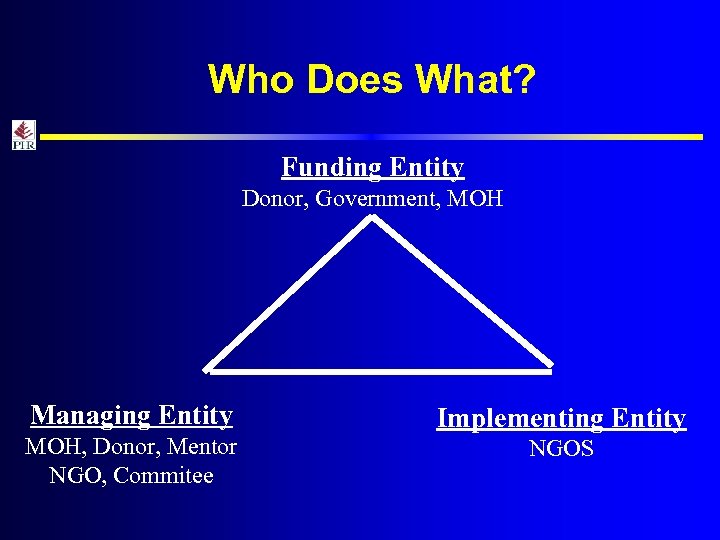
Who Does What? Funding Entity Donor, Government, MOH Managing Entity MOH, Donor, Mentor NGO, Commitee Implementing Entity NGOS
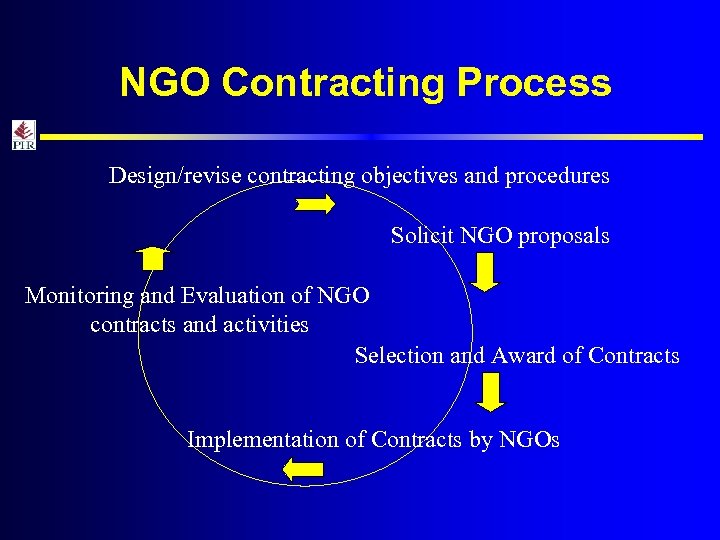
NGO Contracting Process Design/revise contracting objectives and procedures Solicit NGO proposals Monitoring and Evaluation of NGO contracts and activities Selection and Award of Contracts Implementation of Contracts by NGOs
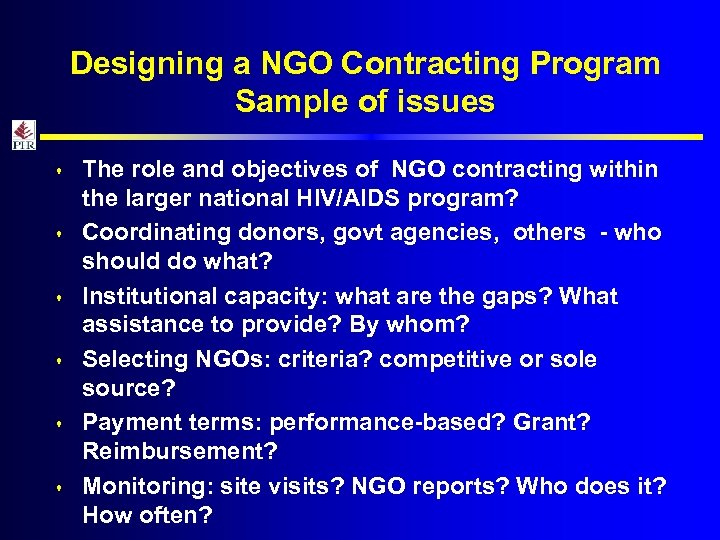
Designing a NGO Contracting Program Sample of issues s s s The role and objectives of NGO contracting within the larger national HIV/AIDS program? Coordinating donors, govt agencies, others - who should do what? Institutional capacity: what are the gaps? What assistance to provide? By whom? Selecting NGOs: criteria? competitive or sole source? Payment terms: performance-based? Grant? Reimbursement? Monitoring: site visits? NGO reports? Who does it? How often?
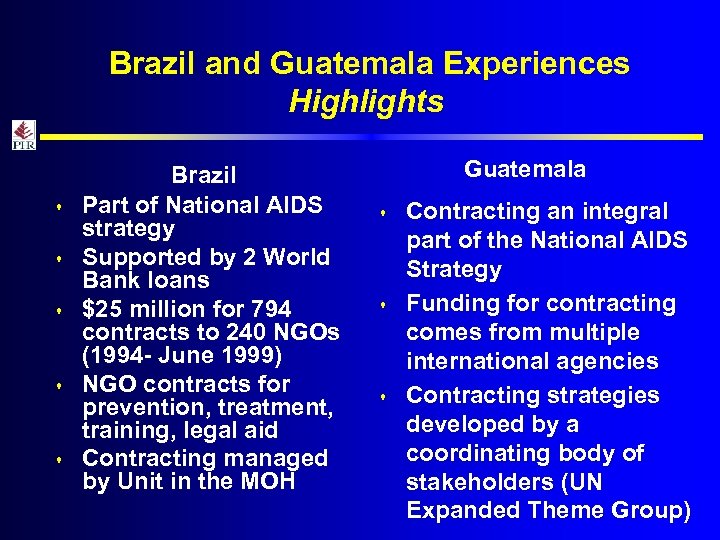
Brazil and Guatemala Experiences Highlights s s Brazil Part of National AIDS strategy Supported by 2 World Bank loans $25 million for 794 contracts to 240 NGOs (1994 - June 1999) NGO contracts for prevention, treatment, training, legal aid Contracting managed by Unit in the MOH Guatemala s s s Contracting an integral part of the National AIDS Strategy Funding for contracting comes from multiple international agencies Contracting strategies developed by a coordinating body of stakeholders (UN Expanded Theme Group)
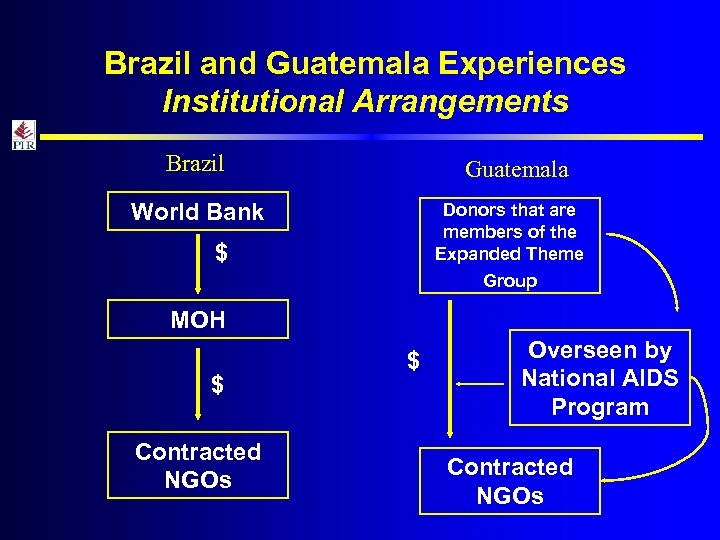
Brazil and Guatemala Experiences Institutional Arrangements Brazil Guatemala World Bank Donors that are members of the Expanded Theme Group $ MOH $ Contracted NGOs $ Overseen by National AIDS Program Contracted NGOs
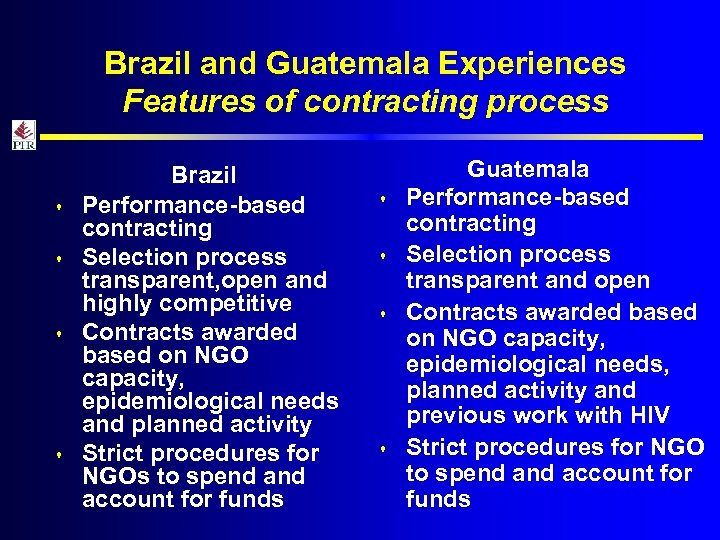
Brazil and Guatemala Experiences Features of contracting process s s Brazil Performance-based contracting Selection process transparent, open and highly competitive Contracts awarded based on NGO capacity, epidemiological needs and planned activity Strict procedures for NGOs to spend account for funds s s Guatemala Performance-based contracting Selection process transparent and open Contracts awarded based on NGO capacity, epidemiological needs, planned activity and previous work with HIV Strict procedures for NGO to spend account for funds
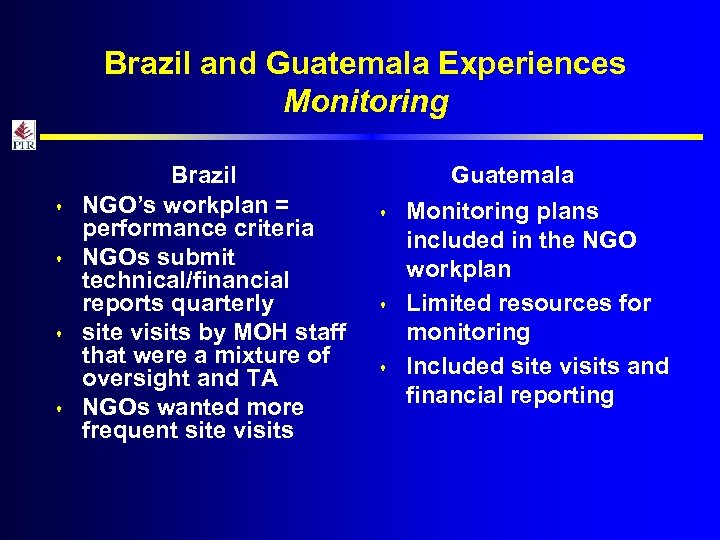
Brazil and Guatemala Experiences Monitoring s s Brazil NGO’s workplan = performance criteria NGOs submit technical/financial reports quarterly site visits by MOH staff that were a mixture of oversight and TA NGOs wanted more frequent site visits s Guatemala Monitoring plans included in the NGO workplan Limited resources for monitoring Included site visits and financial reporting
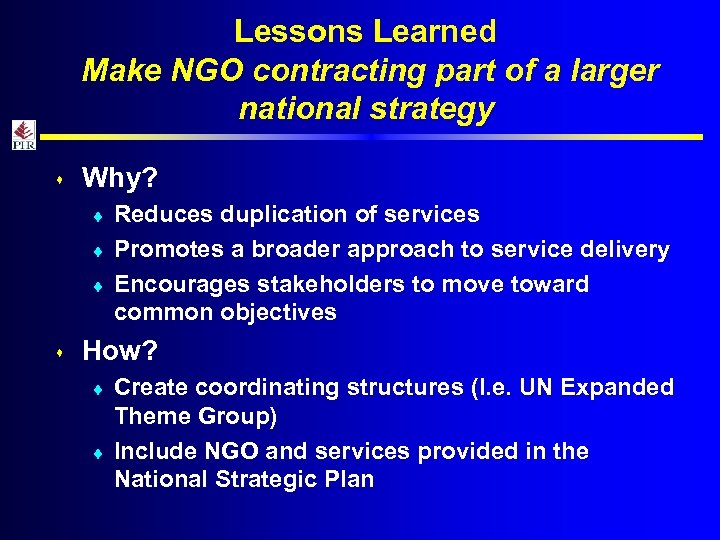
Lessons Learned Make NGO contracting part of a larger national strategy s Why? ¨ ¨ ¨ s Reduces duplication of services Promotes a broader approach to service delivery Encourages stakeholders to move toward common objectives How? ¨ ¨ Create coordinating structures (I. e. UN Expanded Theme Group) Include NGO and services provided in the National Strategic Plan
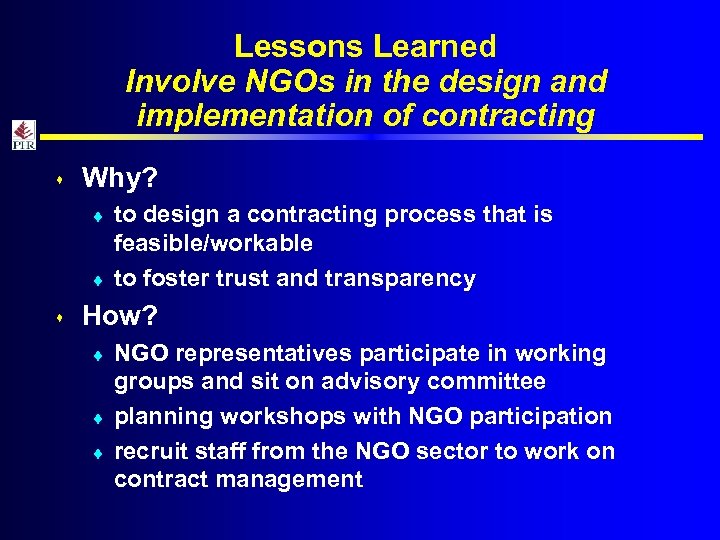
Lessons Learned Involve NGOs in the design and implementation of contracting s Why? ¨ ¨ s to design a contracting process that is feasible/workable to foster trust and transparency How? ¨ ¨ ¨ NGO representatives participate in working groups and sit on advisory committee planning workshops with NGO participation recruit staff from the NGO sector to work on contract management
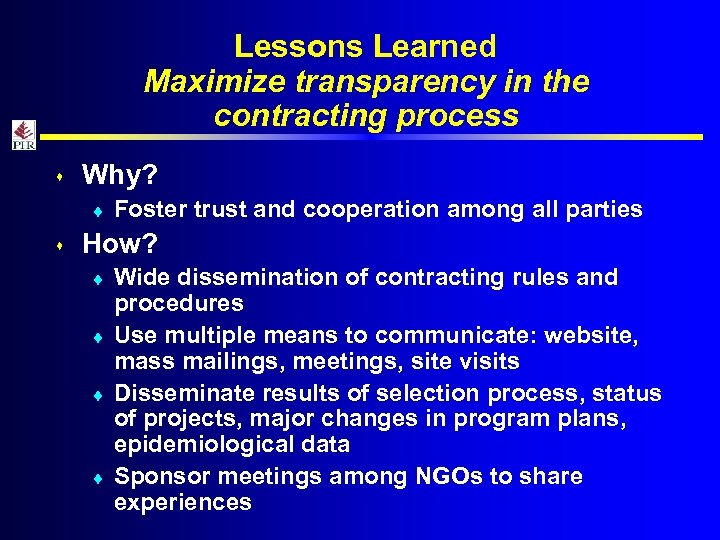
Lessons Learned Maximize transparency in the contracting process s Why? ¨ s Foster trust and cooperation among all parties How? ¨ ¨ Wide dissemination of contracting rules and procedures Use multiple means to communicate: website, mass mailings, meetings, site visits Disseminate results of selection process, status of projects, major changes in program plans, epidemiological data Sponsor meetings among NGOs to share experiences
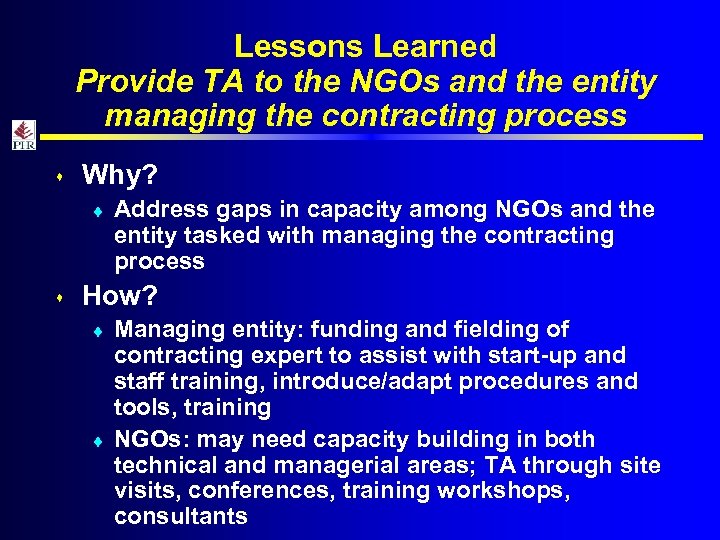
Lessons Learned Provide TA to the NGOs and the entity managing the contracting process s Why? ¨ s Address gaps in capacity among NGOs and the entity tasked with managing the contracting process How? ¨ ¨ Managing entity: funding and fielding of contracting expert to assist with start-up and staff training, introduce/adapt procedures and tools, training NGOs: may need capacity building in both technical and managerial areas; TA through site visits, conferences, training workshops, consultants
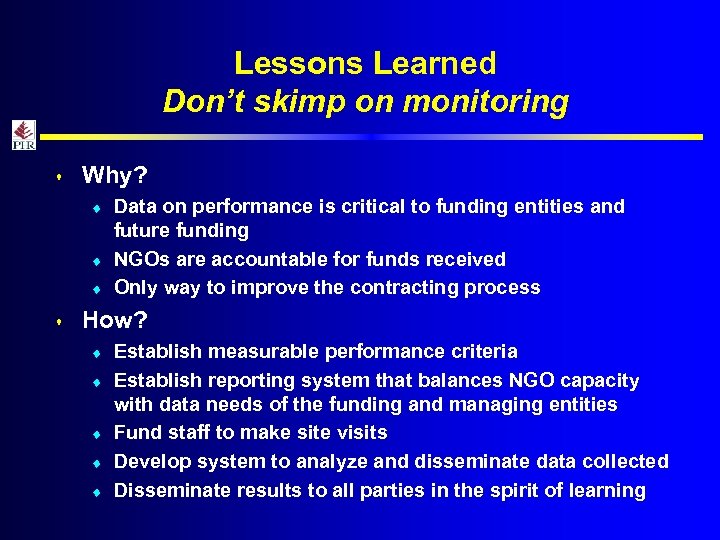
Lessons Learned Don’t skimp on monitoring s Why? ¨ ¨ ¨ s Data on performance is critical to funding entities and future funding NGOs are accountable for funds received Only way to improve the contracting process How? ¨ ¨ ¨ Establish measurable performance criteria Establish reporting system that balances NGO capacity with data needs of the funding and managing entities Fund staff to make site visits Develop system to analyze and disseminate data collected Disseminate results to all parties in the spirit of learning
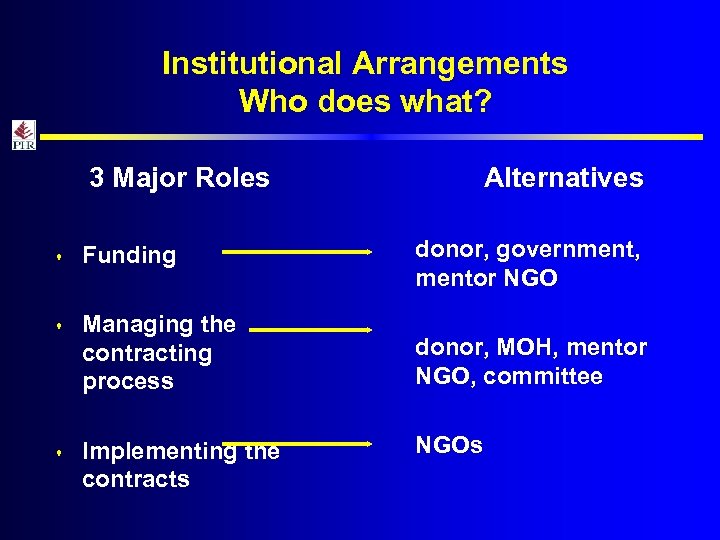
Institutional Arrangements Who does what? 3 Major Roles Alternatives s Funding donor, government, mentor NGO s Managing the contracting process donor, MOH, mentor NGO, committee s Implementing the contracts NGOs
For more information Or for copies of the reports on NGO Contracting for HIV/AIDS in Brazil and Guatemala Please contact: Catherine Connor catherine_connor@abtassoc. com or Courtney Barnett courtney_barnett@abtassoc. com At the Partnerships For Health Reform Project
Скачать презентацию Public Sector Contracting of NGOs to Deliver HIV AIDS
97c07d2d4f05e112f3a765a21774a4bf.ppt