 Скачать презентацию Public School Issues for 2011 Horace Mann School
bbd36133776e451513277c91caca30b4.ppt
- Количество слайдов: 25



Public School Issues for 2011 Horace Mann School October 7, 2010
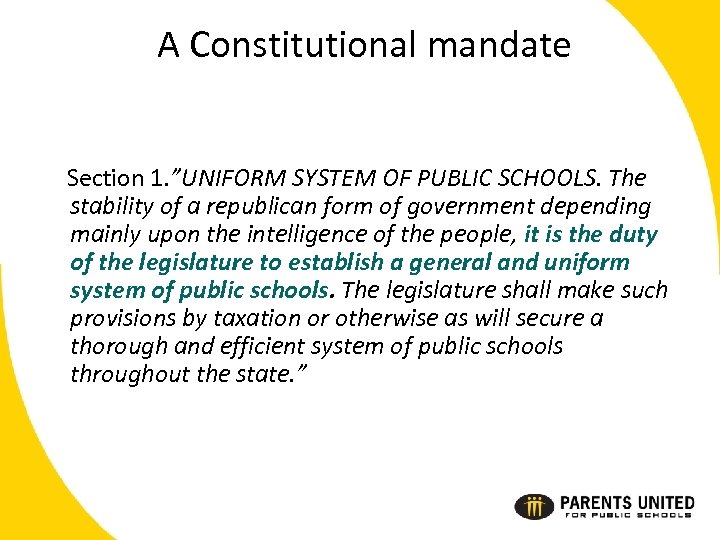
A Constitutional mandate Section 1. ”UNIFORM SYSTEM OF PUBLIC SCHOOLS. The stability of a republican form of government depending mainly upon the intelligence of the people, it is the duty of the legislature to establish a general and uniform system of public schools. The legislature shall make such provisions by taxation or otherwise as will secure a thorough and efficient system of public schools throughout the state. ”
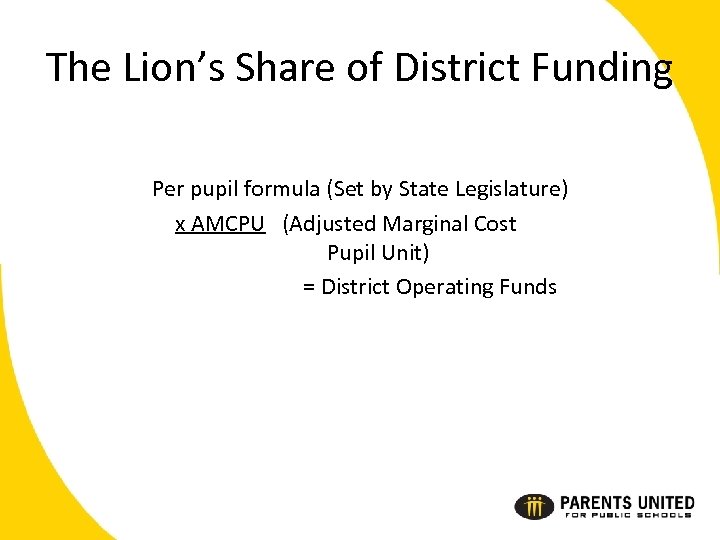
The Lion’s Share of District Funding Per pupil formula (Set by State Legislature) x AMCPU (Adjusted Marginal Cost Pupil Unit) = District Operating Funds
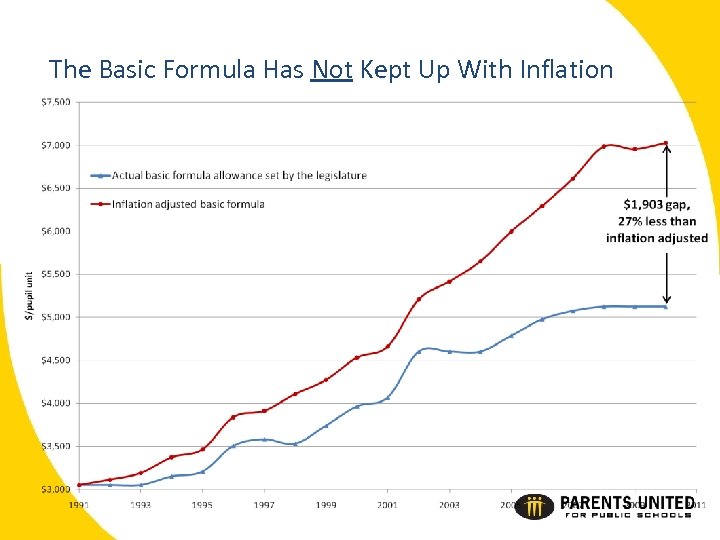
The Basic Formula Has Not Kept Up With Inflation
Tax Reform in the 90’s State policies reforming property tax Ø Lowered taxes on commercial property Ø Agricultural and recreational land removed from the equation for school taxes The 2001 General Education Buy Down Ø The state picked up school costs once paid by local property taxes Ø Passed half of the legislation—the liability was accepted, without a stated revenue stream to support it.
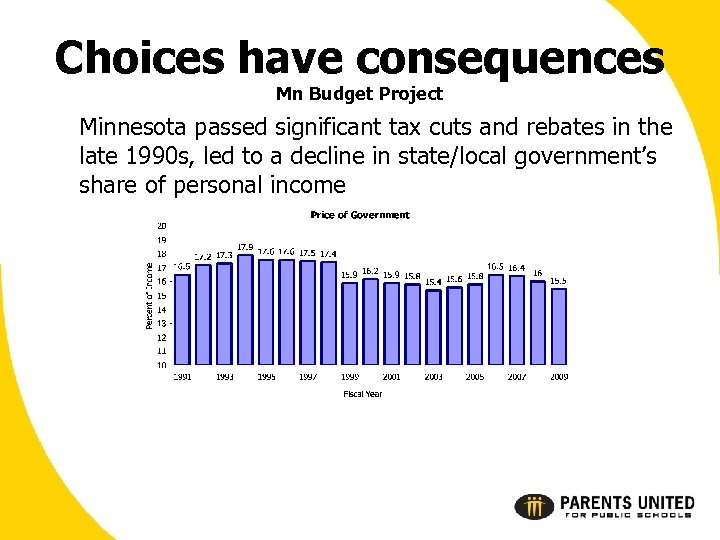
Choices have consequences Mn Budget Project Minnesota passed significant tax cuts and rebates in the late 1990 s, led to a decline in state/local government’s share of personal income
Requirements for public schools grew while revenue did not • • • Testing Standards Special education mandates Transportation English Language Learning Health and safety mandates Physical Education HIV/AIDS Sex Education Drug/Alcohol Abuse Education Bus Safety Title 1 programs 100% Rule
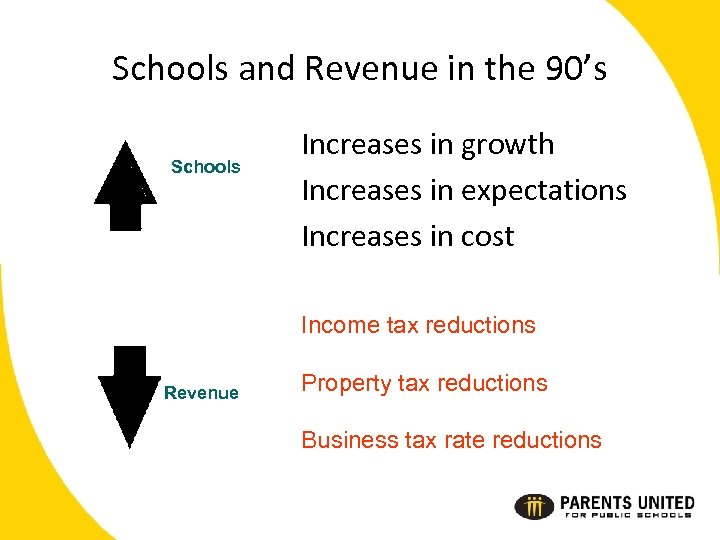
Schools and Revenue in the 90’s Schools Increases in growth Increases in expectations Increases in cost Income tax reductions Revenue Property tax reductions Business tax rate reductions
How did schools survive? • • Growth Cuts Spent fund balances down Passed Local Levies
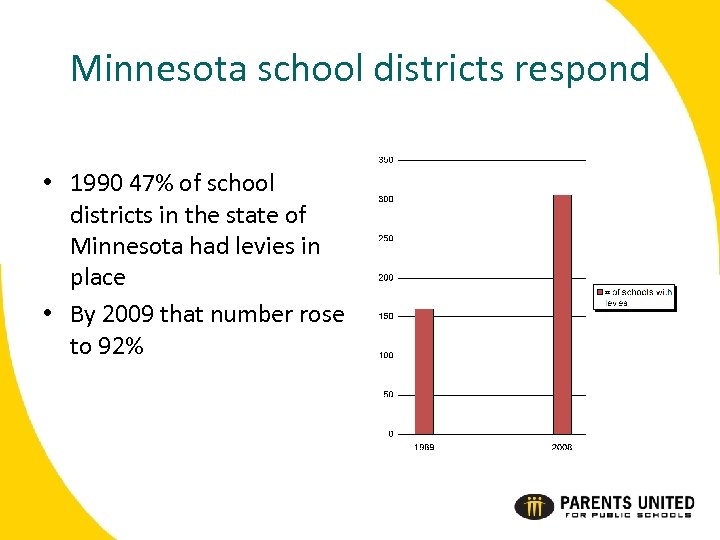
Minnesota school districts respond • 1990 47% of school districts in the state of Minnesota had levies in place • By 2009 that number rose to 92%
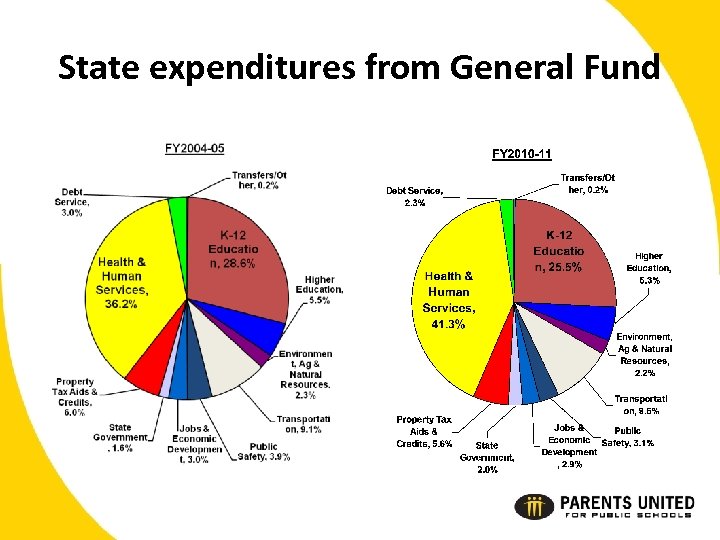
State expenditures from General Fund
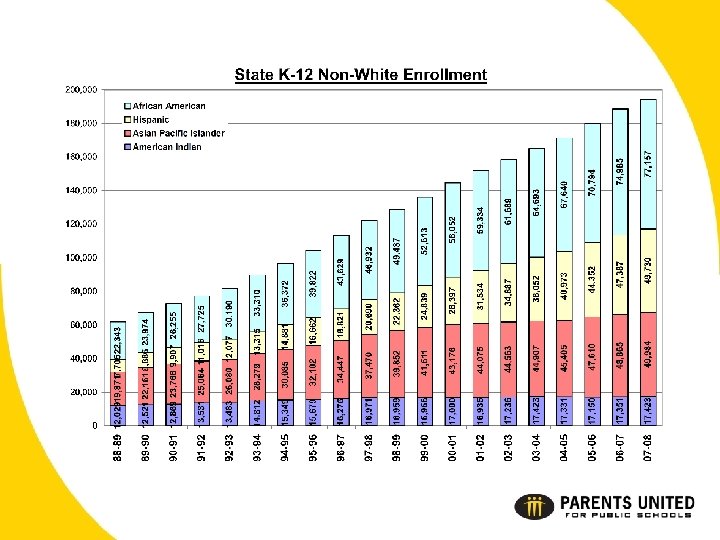
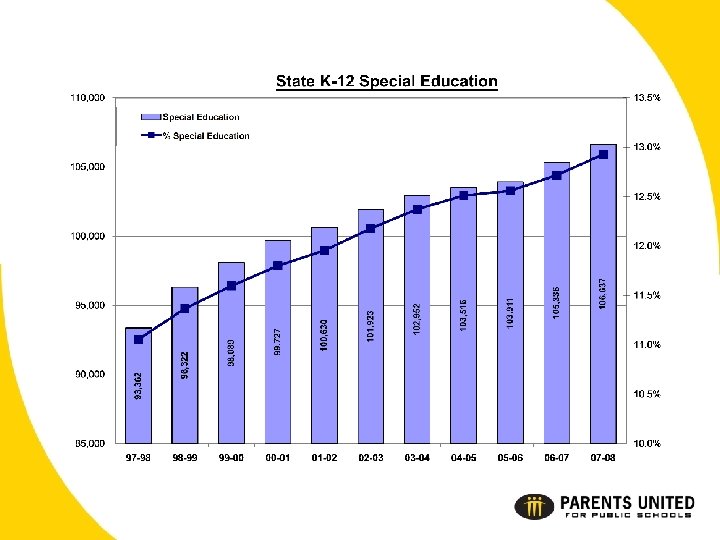
In Minnesota, who are the st students of the 21 Century?
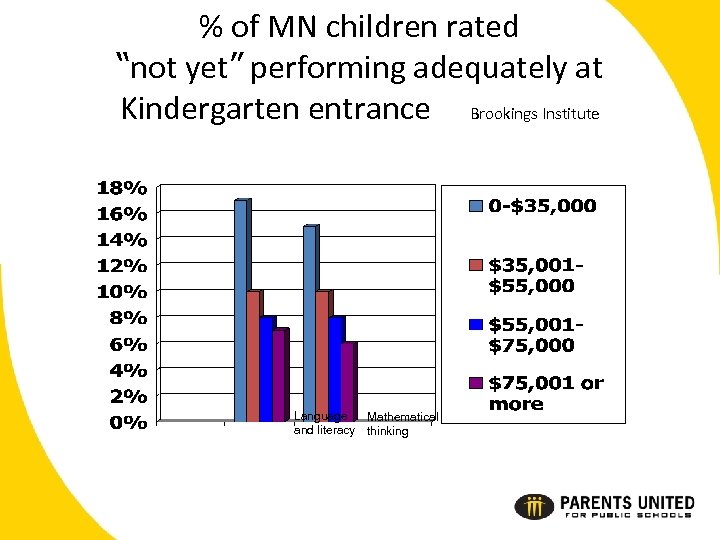
% of MN children rated “not yet” performing adequately at Kindergarten entrance Brookings Institute Language Mathematical and literacy thinking
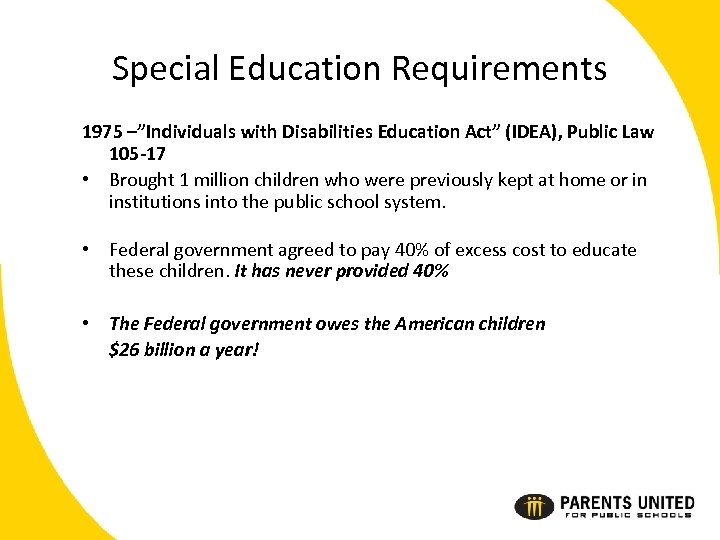
Special Education Requirements 1975 –”Individuals with Disabilities Education Act” (IDEA), Public Law 105 -17 • Brought 1 million children who were previously kept at home or in institutions into the public school system. • Federal government agreed to pay 40% of excess cost to educate these children. It has never provided 40% • The Federal government owes the American children $26 billion a year!
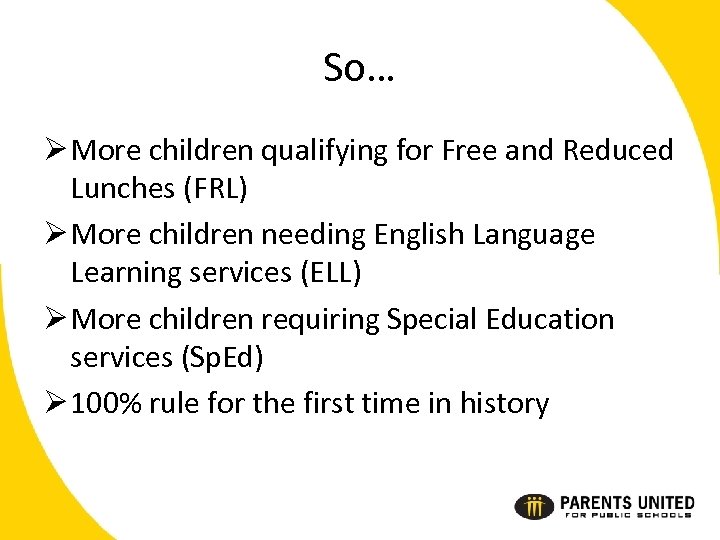
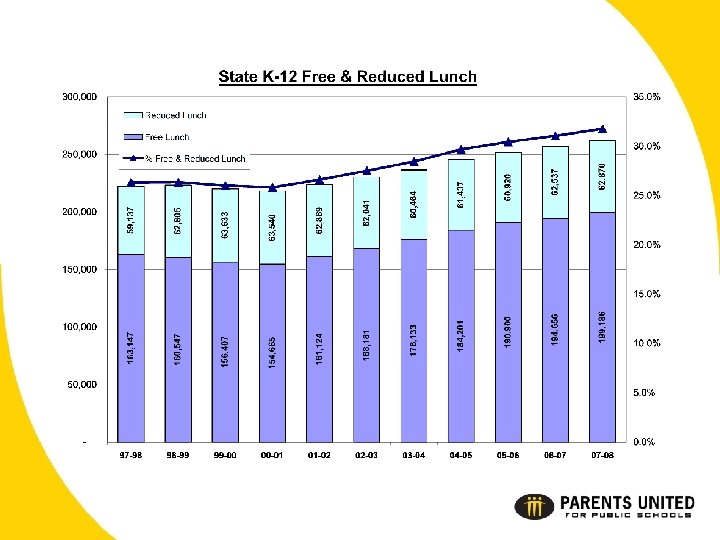
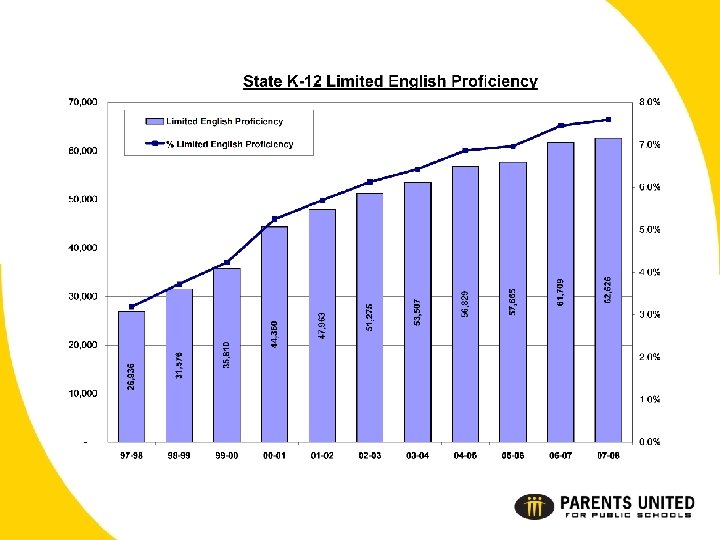
So… Ø More children qualifying for Free and Reduced Lunches (FRL) Ø More children needing English Language Learning services (ELL) Ø More children requiring Special Education services (Sp. Ed) Ø 100% rule for the first time in history
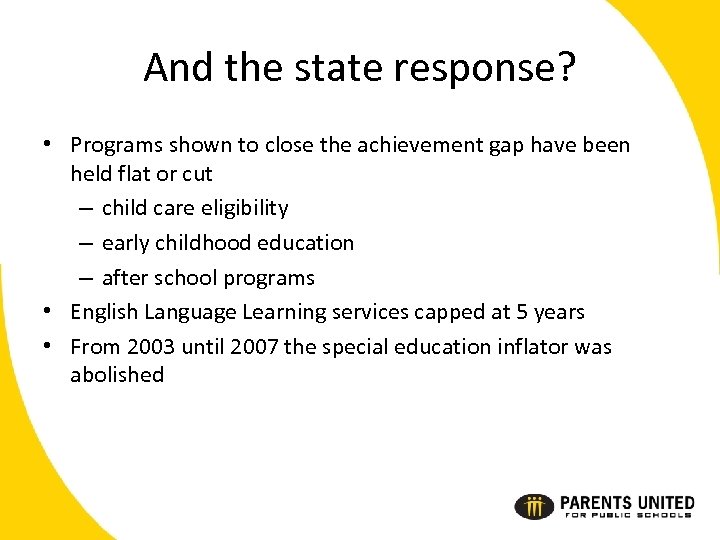
And the state response? • Programs shown to close the achievement gap have been held flat or cut – child care eligibility – early childhood education – after school programs • English Language Learning services capped at 5 years • From 2003 until 2007 the special education inflator was abolished
And the conversation for 2011? • More student testing • Alternative routes to licensing teachers • Connecting teacher/principal evaluations to student performance (Student performance defined as increased test scores) • Nationally-increasing charter schools, firing ineffective teachers/ principals, closing “low-performing schools” • Vague conversation about early childhood education • NO conversation about money or more student learning time
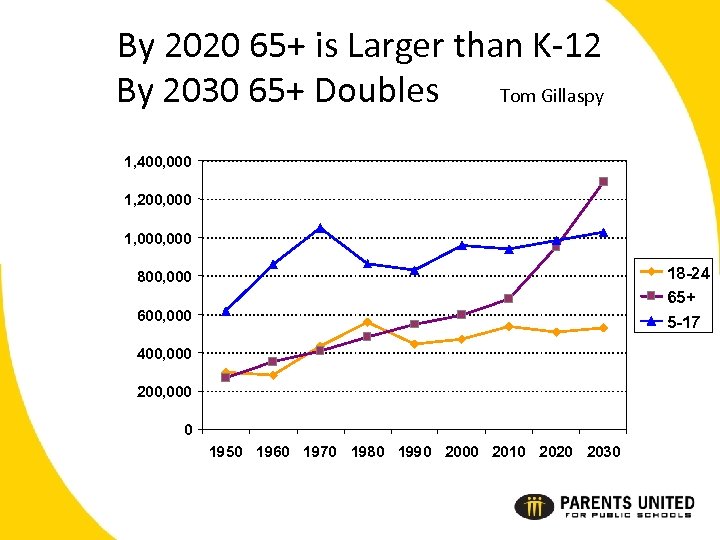
By 2020 65+ is Larger than K-12 By 2030 65+ Doubles Tom Gillaspy 1, 400, 000 1, 200, 000 1, 000 18 -24 65+ 5 -17 800, 000 600, 000 400, 000 200, 000 0 1950 1960 1970 1980 1990 2000 2010 2020 2030
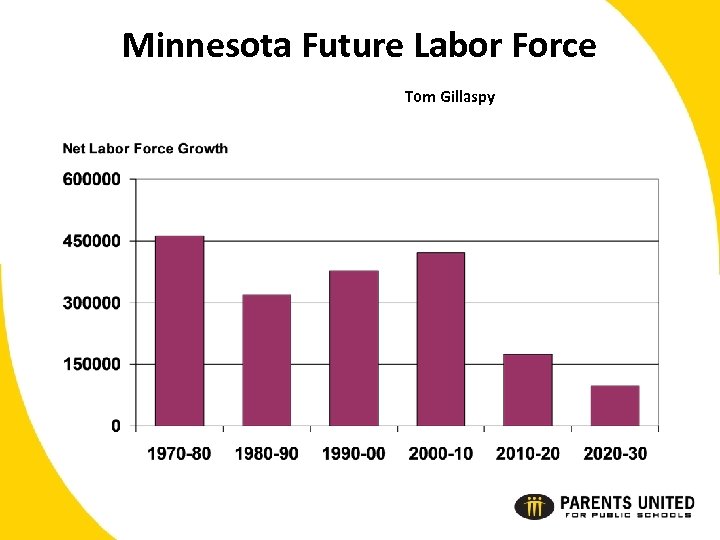
Minnesota Future Labor Force Tom Gillaspy
What is needed in 2011 • • A broader definition of “reform” A broader definition of “effectiveness” A broader definition of “student success” Increased funding and stability in that funding
Parents United Working to engage concerned citizens in the conversation around public policy and its effect on our public schools www. parentsunited. org Advocates for Minnesota’s Public Schools
Скачать презентацию Public School Issues for 2011 Horace Mann School
bbd36133776e451513277c91caca30b4.ppt