 Скачать презентацию Public Private Partnerships The SSAFE Initiative Will Hueston
90126fbb9ed90d8bac8bd490d7d92cd3.ppt
- Количество слайдов: 53



Public Private Partnerships: The SSAFE Initiative Will Hueston, University of Minnesota Mike Robach, President, SSAFE
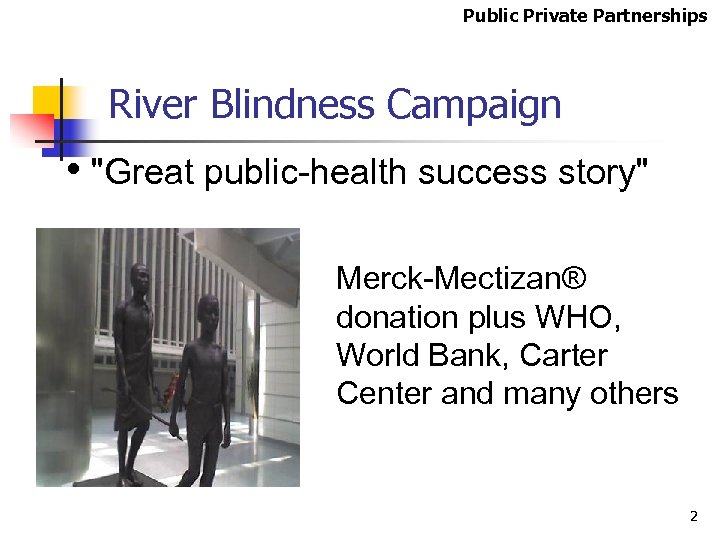
Public Private Partnerships River Blindness Campaign • "Great public-health success story" Merck-Mectizan® donation plus WHO, World Bank, Carter Center and many others 2
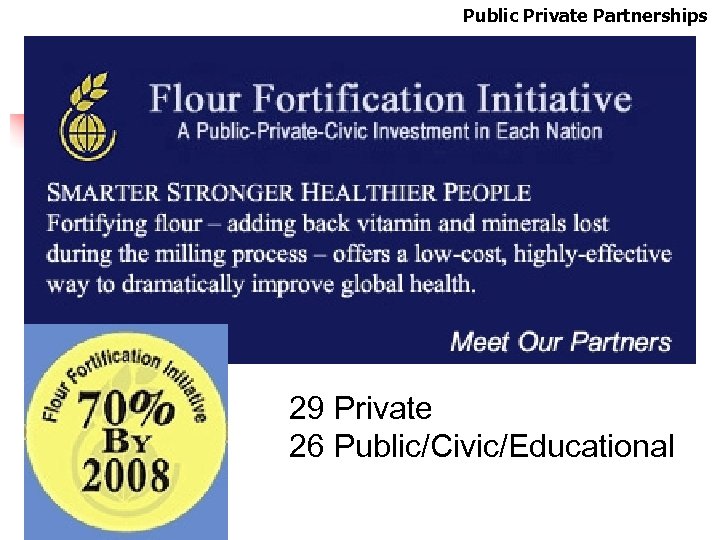
Public Private Partnerships Flour Fortification Initiative 29 Private 26 Public/Civic/Educational
Public Private Partnerships Why public-private partnerships? • Public Private Partnerships offer unique opportunities to leverage comparative strengths among government, industry, NGOs and academia
Public Private Partnerships Successful public-private partnerships: • • • Focus on shared interests Identify mutual benefits Clearly articulate goals, objectives and responsibilities Adapt to changing realities and needs Can withstand public scrutiny
Public Private Partnerships The origin of SSAFE n Outbreak of Avian Influenza (AI) in chickens in Thailand (Feb 2004) n n n Highlighted inconsistent responses to the problem Exposed vulnerability of the global supply chain Demonstrated the lack of alignment among food industry, governments, researchers
Public Private Partnerships Evolution of SSAFE n Stakeholder meetings in March & July 2005 co-sponsored by OIE and Center for Animal Health & Food Safety (U. Minnesota) n n Consensus that Global Food Safety was a critically important issue that needs focus and alignment among all stakeholders Identified the strong links between Human Health & Animal Health
Public Private Partnerships The SSAFE Objectives n Protect human and animal health n n Support an uninterrupted, sustainable food supply chain to/from all countries n n through science-based standards and their global implementation consistent, affordable source of food everywhere in the world Help developing nations to improve local infrastructure capacity n feed their population, increase stability, promote economic growth, education
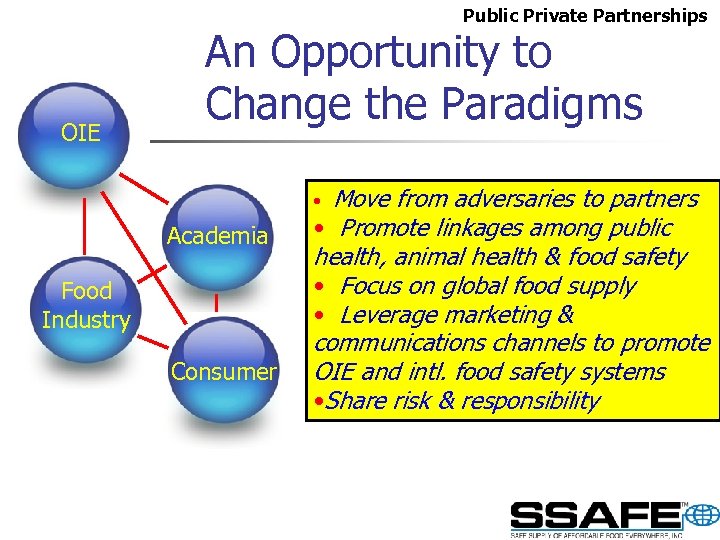
Public Private Partnerships OIE An Opportunity to Change the Paradigms Move from adversaries to partners • Promote linkages among public health, animal health & food safety • Focus on global food supply • Leverage marketing & communications channels to promote OIE and intl. food safety systems • Share risk & responsibility • Academia Food Industry Consumer
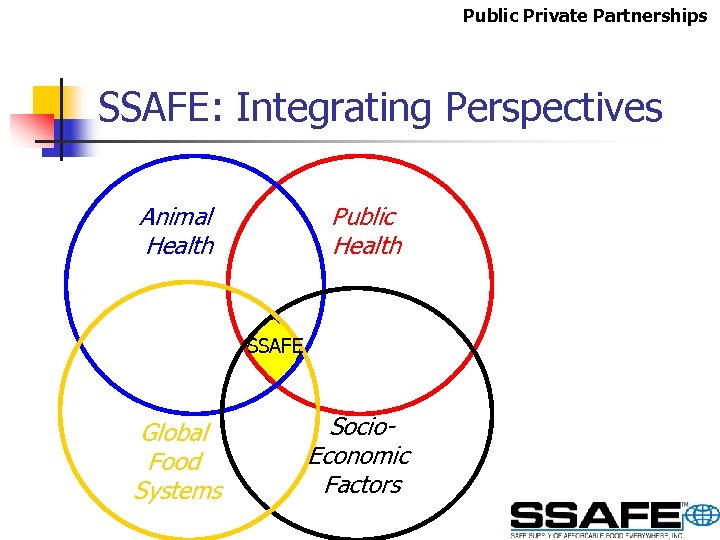
Public Private Partnerships SSAFE: Integrating Perspectives Animal Health Public Health SSAFE Global Food Systems Socio. Economic Factors
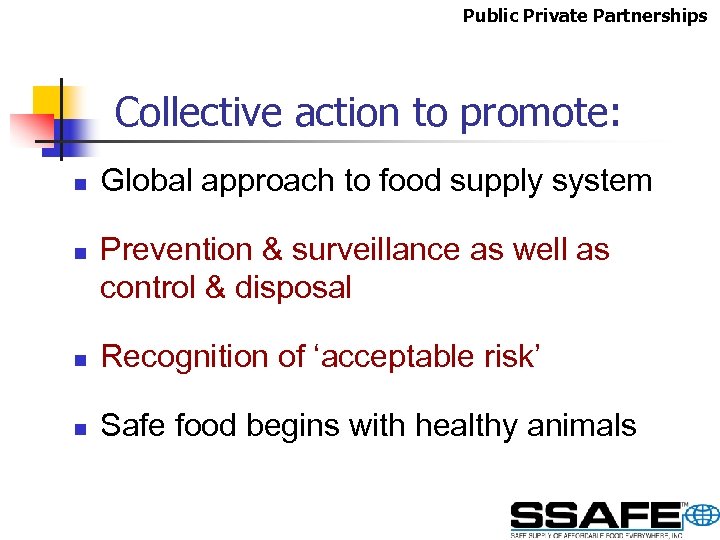
Public Private Partnerships Collective action to promote: n n Global approach to food supply system Prevention & surveillance as well as control & disposal n Recognition of ‘acceptable risk’ n Safe food begins with healthy animals
SSAFE Vision Global Food Security: All people will have access to safe, nutritious, and affordable food
Public Private Partnerships SSAFE Commitments n n n Leverage resources through publicprivate partnerships for collective action Provide trusting, respectful environment to discuss and share ideas Facilitate and enable progress at local and international levels to strengthen the global food safety system
Public Private Partnerships SSAFE immediate opportunities n Advocate for global standards n n Promote public private partnerships n n Poultry meat and egg cooking temperatures to inactivate HPAI Sponsor speakers, meeting sessions Partner with intergovernmental agencies n Memoranda of understanding OIE & FAO
Public Private Partnerships SSAFE Projects Identified with OIE and World Bank - Paris 2006 n Short Term – Veterinary Capacity Building in Africa n Intermediate Term – South America project to demonstrate “Compartmentalization” n Long Term – Veterinary services capacity building & public-private collaboration in Asia.
Update on SSAFE Projects SSAFE Board Meeting October 8, 2007
Public Private Partnerships Veterinary Capacity Building - Africa n n Raise awareness around the importance of veterinary public health infrastructure and public-private collaboration. Facilitate public-private dialogue to establish a shared vision and strategy for the benefit of Mozambique citizens.
At the request of the Mozambique CVO, facilitation of Public-Private Dialogue “Strengthening Mozambique’s Veterinary Public Health Services”
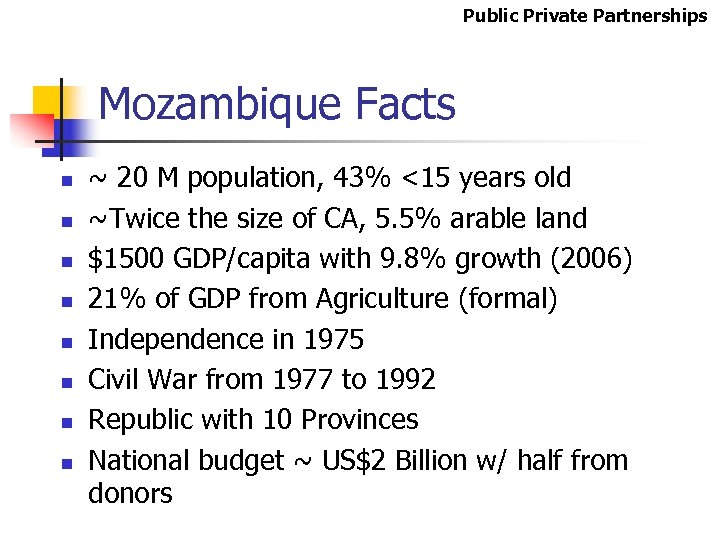
Public Private Partnerships Mozambique Facts n n n n ~ 20 M population, 43% <15 years old ~Twice the size of CA, 5. 5% arable land $1500 GDP/capita with 9. 8% growth (2006) 21% of GDP from Agriculture (formal) Independence in 1975 Civil War from 1977 to 1992 Republic with 10 Provinces National budget ~ US$2 Billion w/ half from donors
Public Private Partnerships Photo: D. Harlan
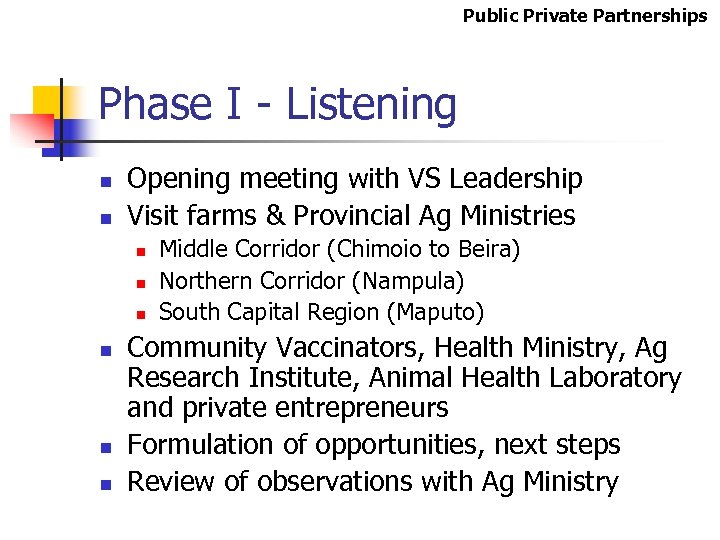
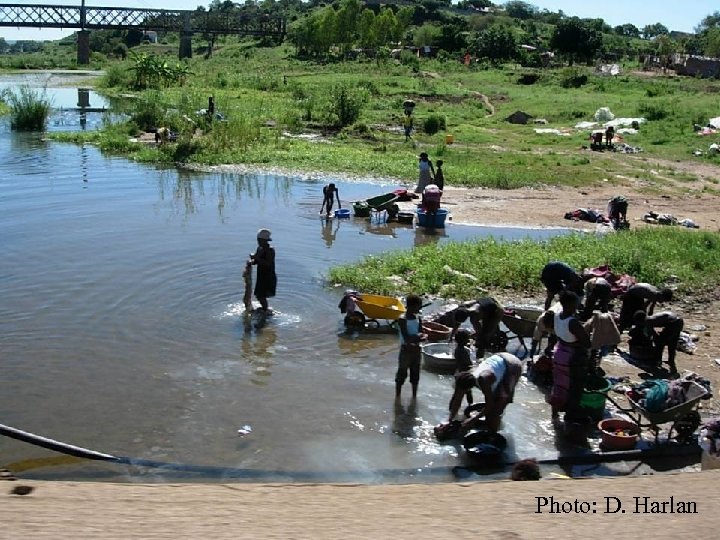
Public Private Partnerships Phase I - Listening n n Opening meeting with VS Leadership Visit farms & Provincial Ag Ministries n n n Middle Corridor (Chimoio to Beira) Northern Corridor (Nampula) South Capital Region (Maputo) Community Vaccinators, Health Ministry, Ag Research Institute, Animal Health Laboratory and private entrepreneurs Formulation of opportunities, next steps Review of observations with Ag Ministry
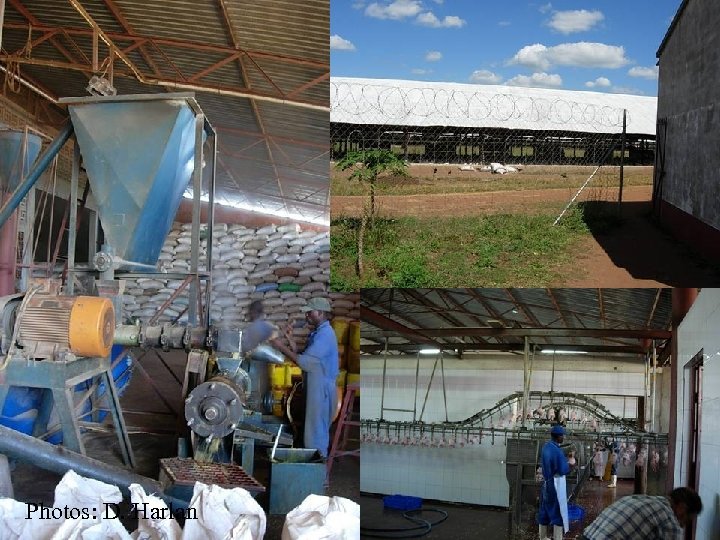
Public Private Partnerships Photos: D. Harlan
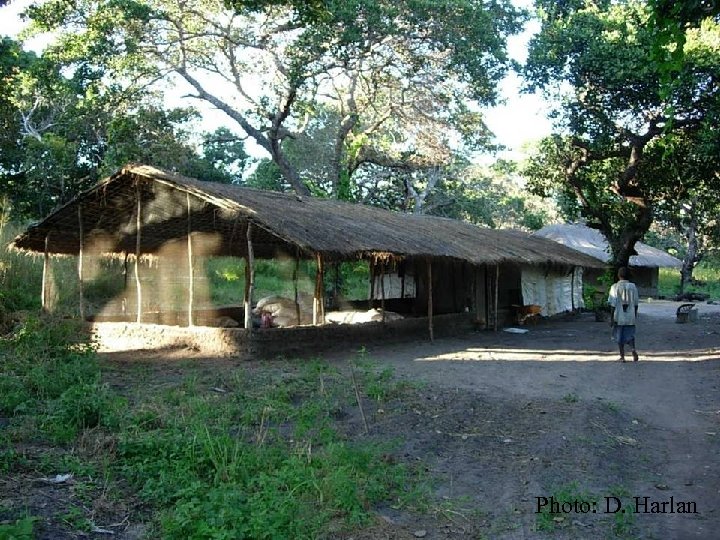
Public Private Partnerships Photo: D. Harlan
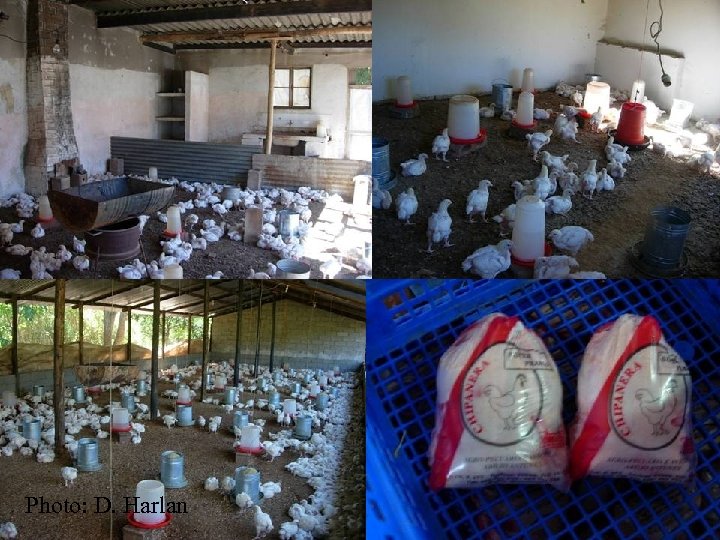
Public Private Partnerships Photo: D. Harlan
Public Private Partnerships Community Vaccination n n n Several model programs in Mozambique Specific to Newcastle Disease vaccination Limited use on other animal health issues Some data collection for animal census Vaccinators are part of local community While part-time business model, in reality a voluntary community service
Public Private Partnerships Observations n n n Animal Health Services are highly engaged and seeking assistance/advice Within Agriculture, animal health is low priority Disease surveillance is a major challenge Socioeconomic value of livestock and poultry are likely underestimated Community Animal Health programs, while limited in scope and geography, appeared to be sustainable with little funding
Public Private Partnerships Opportunities n n n Evaluate socioeconomic value of animal agriculture Showcase and expand the Community Vaccination program Establish an Public-Private Animal Health Leadership Team Integrate family sector animal health programs into the commercial sector Raise awareness on the importance of healthy animals
Public Private Partnerships Next steps… n Develop sustainable “Community Animal Health” program n n n n Strengthen existing programs (ND, census) Expand scope to include other basic services Collaboration with commercial sector Enabling technologies Focus on Nampula Province Public-Private Leadership team development Goal to create a model success story for other provinces and developing countries
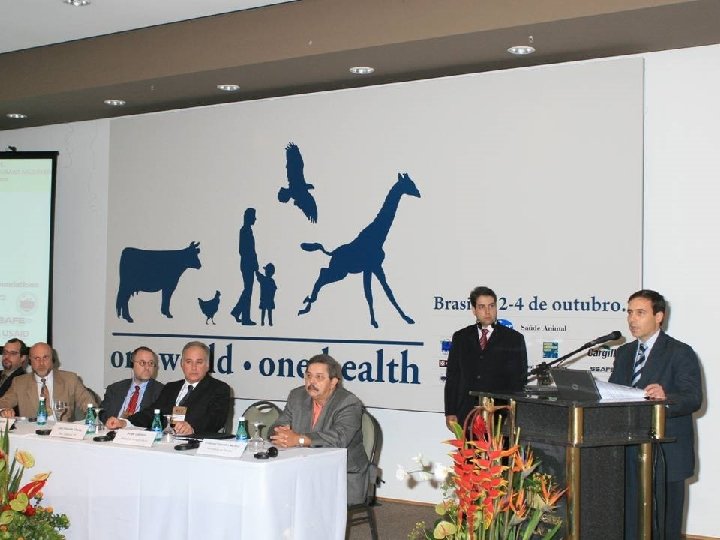
Public Private Partnerships South America Compartmentalization project for animal production n n Co-sponsor of “One World One Health” meeting in Brasilia, Brazil October 2007 Establish and validate model production compartments that are recognized by a significant trading partner. n n Dialogue with poultry industry and government OIE project with potential World Bank funding
Public Private Partnerships
Public Private One World – One Health Partnerships principle The earnestness and effectiveness of humankind’s environmental stewardship and the future of health have never been more clearly linked. To win the disease battles of the 21 st Century while ensuring the biological integrity of the Earth for future generations requires interdisciplinary and cross-sectoral approaches to disease prevention, surveillance, monitoring, control and mitigation as well as to environmental conservation more broadly.
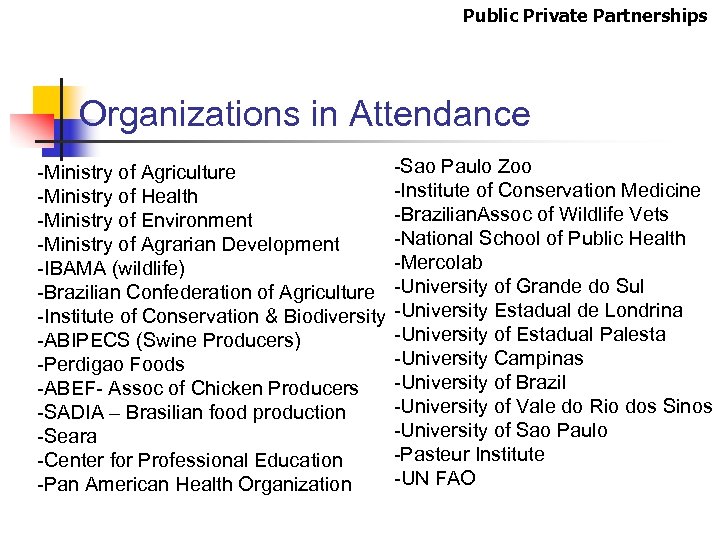
Public Private Partnerships Organizations in Attendance -Ministry of Agriculture -Ministry of Health -Ministry of Environment -Ministry of Agrarian Development -IBAMA (wildlife) -Brazilian Confederation of Agriculture -Institute of Conservation & Biodiversity -ABIPECS (Swine Producers) -Perdigao Foods -ABEF- Assoc of Chicken Producers -SADIA – Brasilian food production -Seara -Center for Professional Education -Pan American Health Organization -Sao Paulo Zoo -Institute of Conservation Medicine -Brazilian. Assoc of Wildlife Vets -National School of Public Health -Mercolab -University of Grande do Sul -University Estadual de Londrina -University of Estadual Palesta -University Campinas -University of Brazil -University of Vale do Rio dos Sinos -University of Sao Paulo -Pasteur Institute -UN FAO
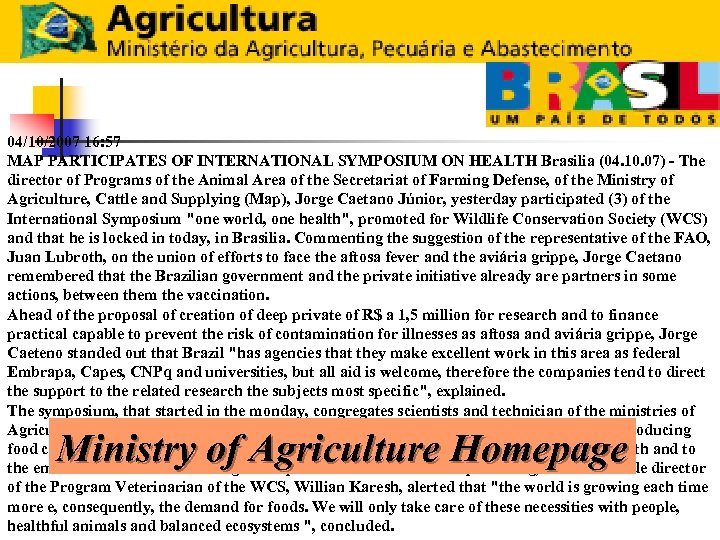
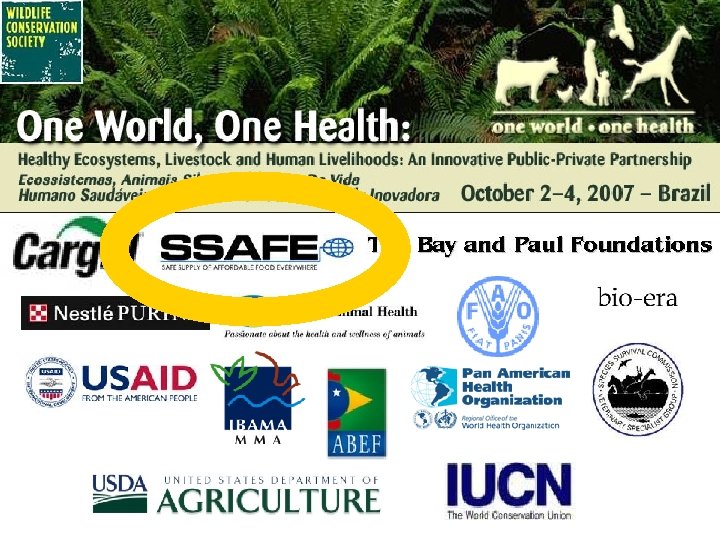
Public Private Partnerships 04/10/2007 16: 57 MAP PARTICIPATES OF INTERNATIONAL SYMPOSIUM ON HEALTH Brasilia (04. 10. 07) - The director of Programs of the Animal Area of the Secretariat of Farming Defense, of the Ministry of Agriculture, Cattle and Supplying (Map), Jorge Caetano Júnior, yesterday participated (3) of the International Symposium "one world, one health", promoted for Wildlife Conservation Society (WCS) and that he is locked in today, in Brasilia. Commenting the suggestion of the representative of the FAO, Juan Lubroth, on the union of efforts to face the aftosa fever and the aviária grippe, Jorge Caetano remembered that the Brazilian government and the private initiative already are partners in some actions, between them the vaccination. Ahead of the proposal of creation of deep private of R$ a 1, 5 million for research and to finance practical capable to prevent the risk of contamination for illnesses as aftosa and aviária grippe, Jorge Caeteno standed out that Brazil "has agencies that they make excellent work in this area as federal Embrapa, Capes, CNPq and universities, but all aid is welcome, therefore the companies tend to direct the support to the related research the subjects most specific", explained. The symposium, that started in the monday, congregates scientists and technician of the ministries of Agriculture, Health and of the Environment, beyond not governmental organizations and producing food companies, to search solutions to the challenges to the health human being, animal health and to the environment. When detaching the importance of food Brazil as producing, the world-wide director of the Program Veterinarian of the WCS, Willian Karesh, alerted that "the world is growing each time more e, consequently, the demand for foods. We will only take care of these necessities with people, healthful animals and balanced ecosystems ", concluded. Ministry of Agriculture Homepage
Public Private Partnerships
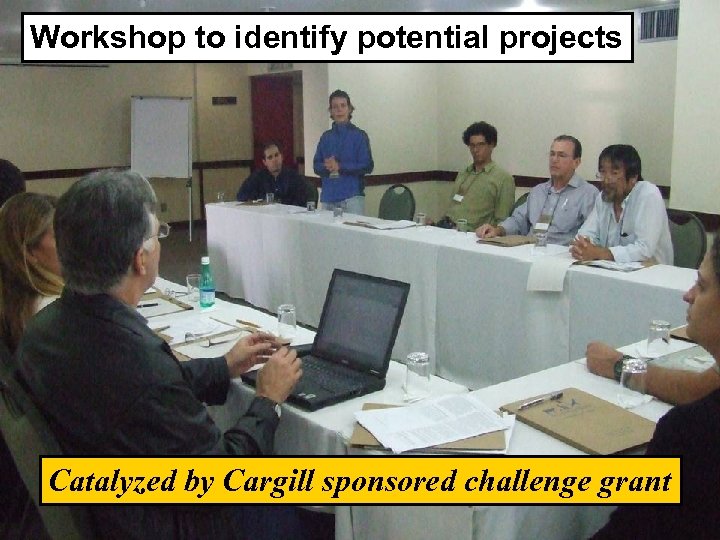
Public Private Partnerships Workshop to identify potential projects Catalyzed by Cargill sponsored challenge grant
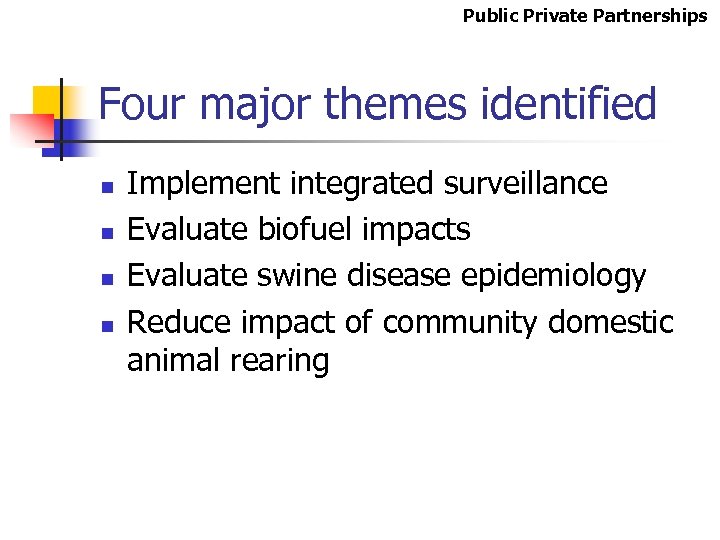
Public Private Partnerships Four major themes identified n n Implement integrated surveillance Evaluate biofuel impacts Evaluate swine disease epidemiology Reduce impact of community domestic animal rearing
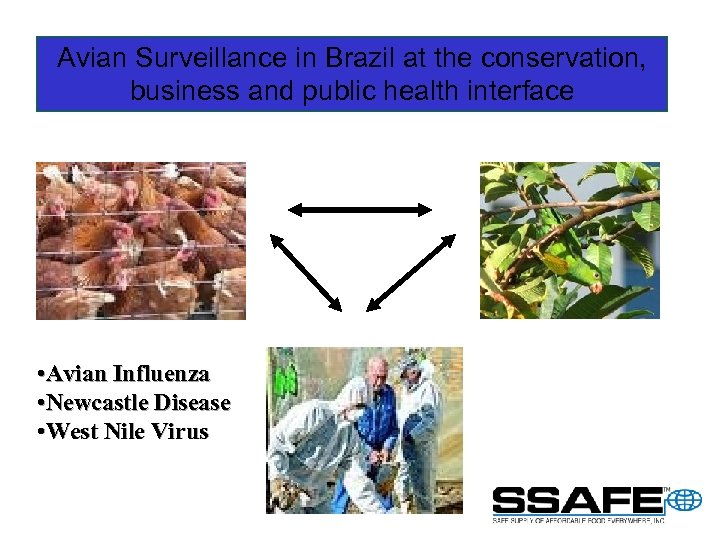
Avian Surveillance in Brazil at the conservation, business and public health interface • Avian Influenza • Newcastle Disease • West Nile Virus
Public Private Partnerships Epidemiology of Swine Diseases n n n ASPECTS: Characterize pathogens and host species Characterize and correlated disease profiles between wild and domescit species Public health risk Create an integrated management and risk plan n n n n PARTICIPANTS: Field researchers Health authorities Industry Universities EMBRAPA Diagnostic laboratories IBAMA/ICMBio
Public Private Partnerships Reduction of impact of community domestic animal rearing n n n ASPECTS: Sustainable and healthy domestic animal rearing Family/community scale Organic certification in the mid term Evaluation of circulating pathogens between domestic and wild animals n n n n n PARTICIPANTS: AMLD NGOs EMATER-RJ FIOCRUZ (Public Health Institute) UNIVERSITIES SEBRAE LOCAL GOVERNMENTS IBAMA/ICMBIO
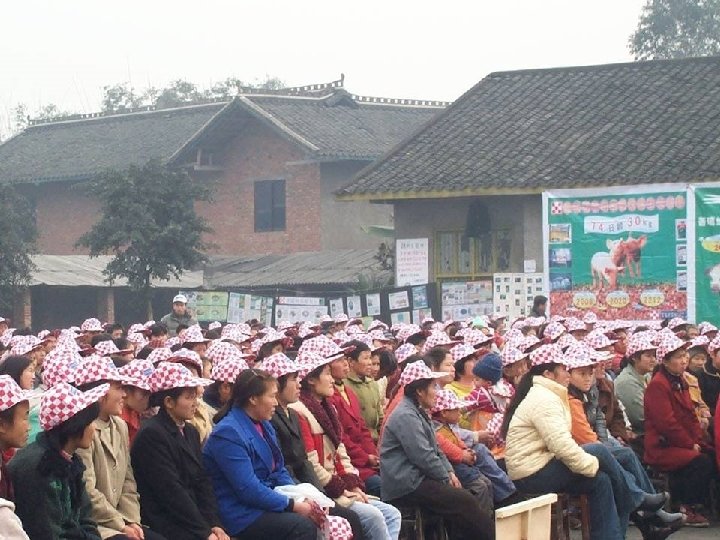
Public Private Partnerships Long Term SSAFE Projects Capacity building in Asia n n n Deliver education and Awareness programs n Educational programs on food safety & personal/family protection Support laboratory capacity building Apply model programs to developing countries in SE Asia n Public-Private dialogue n Small scale biosecurity demonstration projects
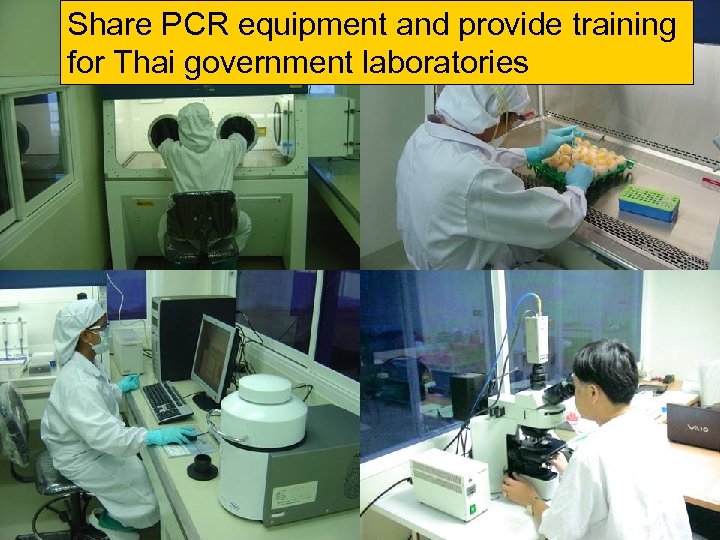
Public Private Partnerships Share PCR equipment and provide training for Thai government laboratories
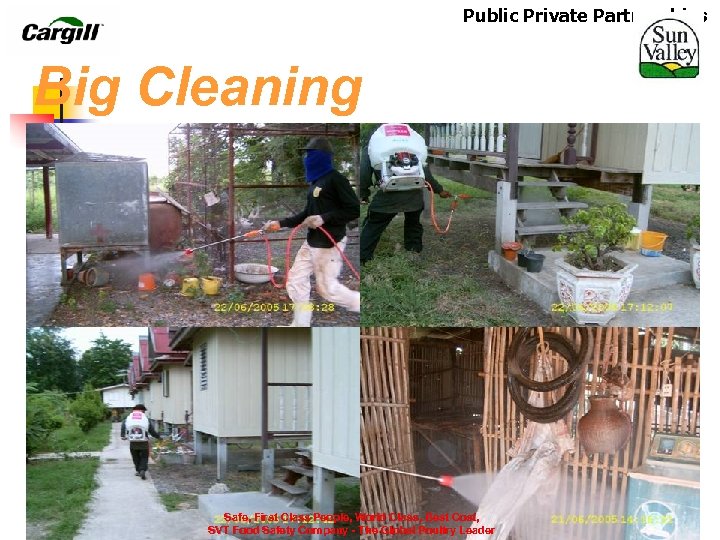
Public Private Partnerships Big Cleaning Safe, First Class People, World Class, Best Cost, SVT Food Safety Company - The Global Poultry Leader
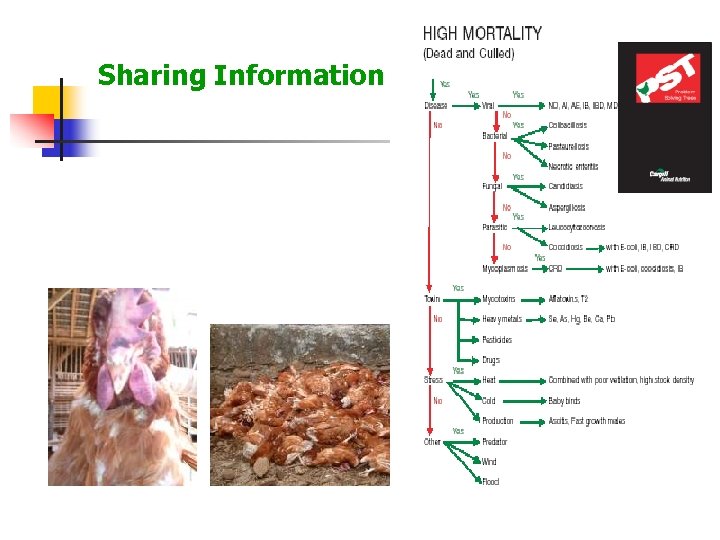
Public Private Partnerships Sharing Information
Public Private Partnerships
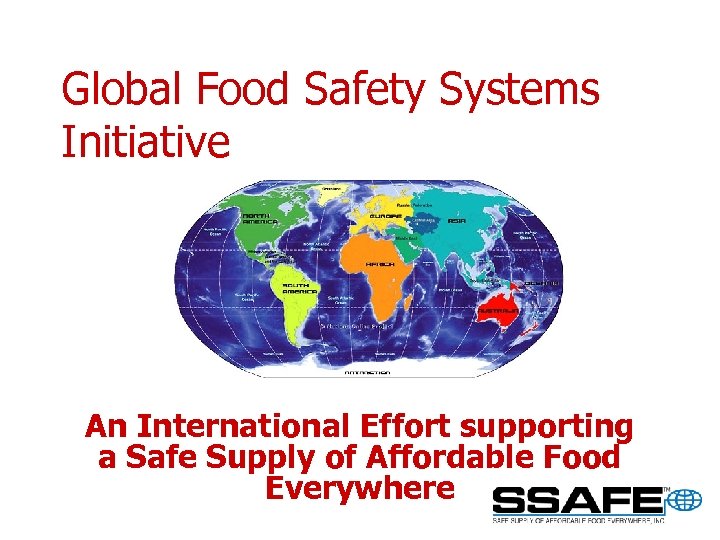
Global Food Safety Systems Initiative An International Effort supporting a Safe Supply of Affordable Food Everywhere
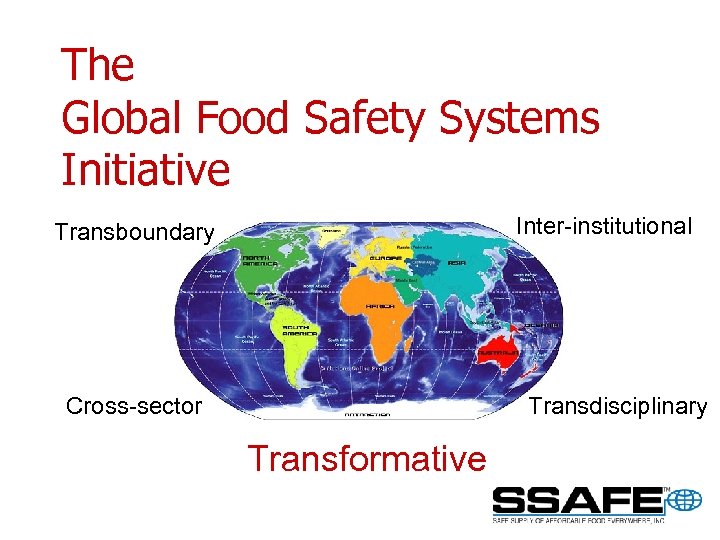
The Global Food Safety Systems Initiative Inter-institutional Transboundary Cross-sector Transdisciplinary Transformative
Public Private Partnerships The Need (1) New leaders An international network of motivated leaders to identify, address and prevent threats to the global food supply.
Public Private Partnerships The Need (2) New thinking n n A sustainable global food safety system Supply chain continuity and food security Business risk management for agricultural production and food safety Science as the basis for agricultural health and food safety standards and policies
Public Private Partnerships The Program A global consortium of academic institutions focused on developing the next generation of food safety systems leaders
Public Private Partnerships Initial Support n n Initial commitment from SSAFE UMN and Cargill: $2, 000 each for Global Food Safety endowed chair UMN College of Veterinary Medicine: annual infrastructure support of $500, 000 UMN School of Public Health: two new faculty positions
Public Private Partnerships What Success will look like in 5 Years n n Awareness and interest from every region of the world (North America, South America, Europe, Asia, Africa) Successful program delivery n n n Transfer of best practices Improved food system safety Emerging leaders with a global supply chain mindset
Public Private Partnerships The ultimate measure of success n n n This initiative becomes the program of choice for global public health leadership development This initiative becomes the catalyst of choice for public and private partnerships in Global Food Safety Systems This initiative becomes the resource of choice for science-based global food safety system guidance
Public Private Partnerships The Vision Together we can assure an abundant, affordable and safe food supply for all…
Скачать презентацию Public Private Partnerships The SSAFE Initiative Will Hueston
90126fbb9ed90d8bac8bd490d7d92cd3.ppt