 Скачать презентацию Public-Private Partnership PPP Alstom Transport s experience Philippe Pegorier
7999aa97c33eee15fc5a7ecda3e86805.ppt
- Количество слайдов: 25



Public-Private Partnership (PPP) Alstom Transport’s experience Philippe Pegorier, Martin Vaujour 03/06/2011
Agenda ALSTOM GROUP ALSTOM TRANSPORT TURNKEY SYSTEMS PPP – AT’s EXPERIENCE CONCLUSION
Alstom
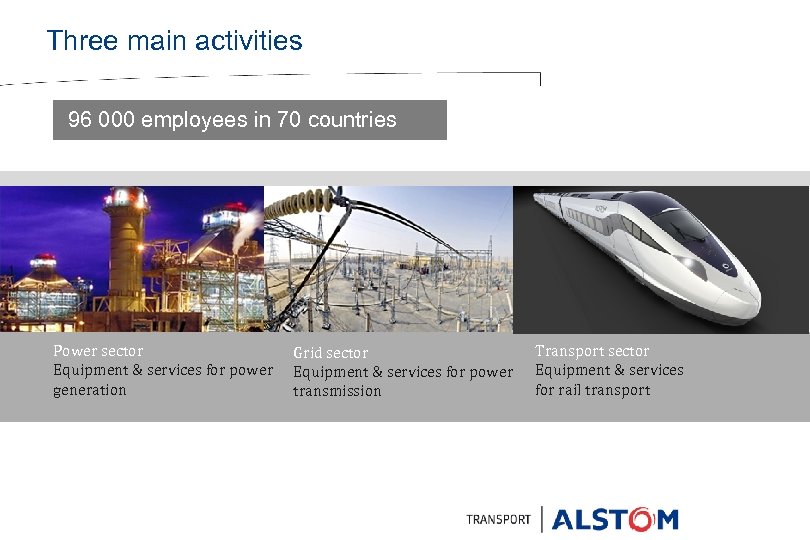
Three main activities 96 000 employees in 70 countries Power sector Equipment & services for power generation Grid sector Equipment & services for power transmission Transport sector Equipment & services for rail transport
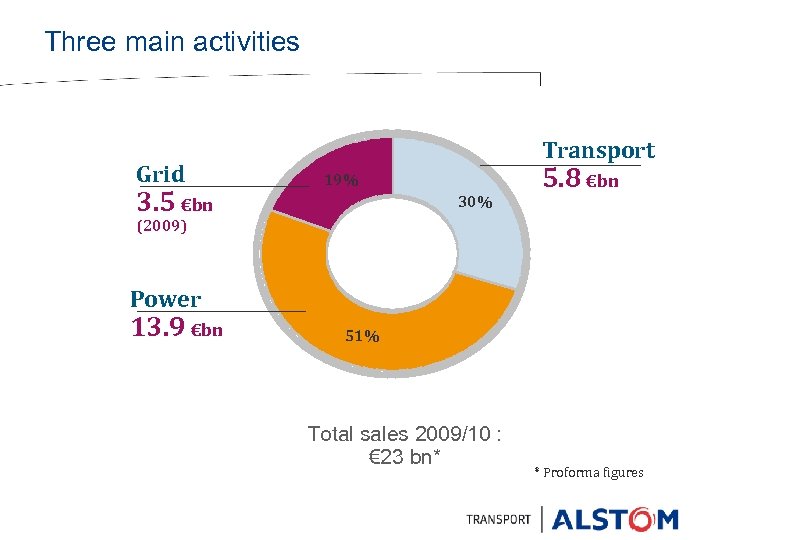
Three main activities Grid 3. 5 €bn Transport 19% 30% 5. 8 €bn (2009) Power 13. 9 €bn 51% Total sales 2009/10 : € 23 bn* * Proforma figures
Alstom Transport
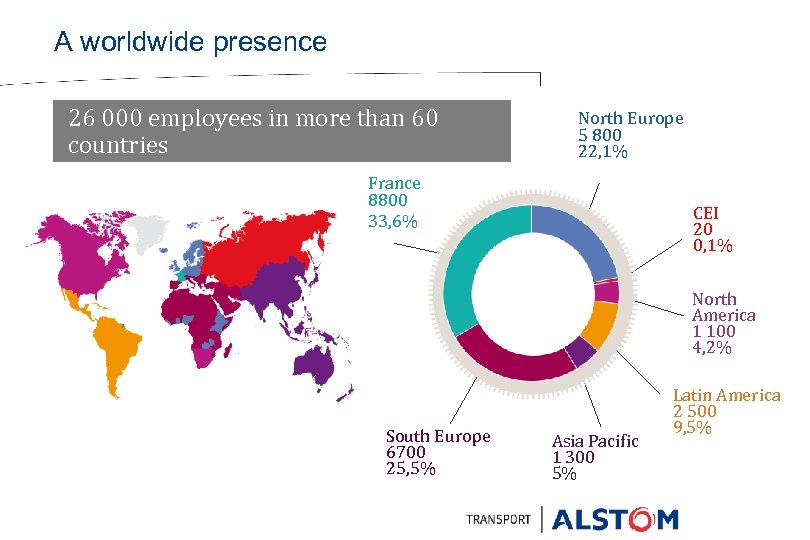
A worldwide presence 26 000 employees in more than 60 countries North Europe 5 800 22, 1% France 8800 33, 6% CEI 20 0, 1% North America 1 100 4, 2% South Europe 6700 25, 5% Asia Pacific 1 300 5% Latin America 2 500 9, 5%
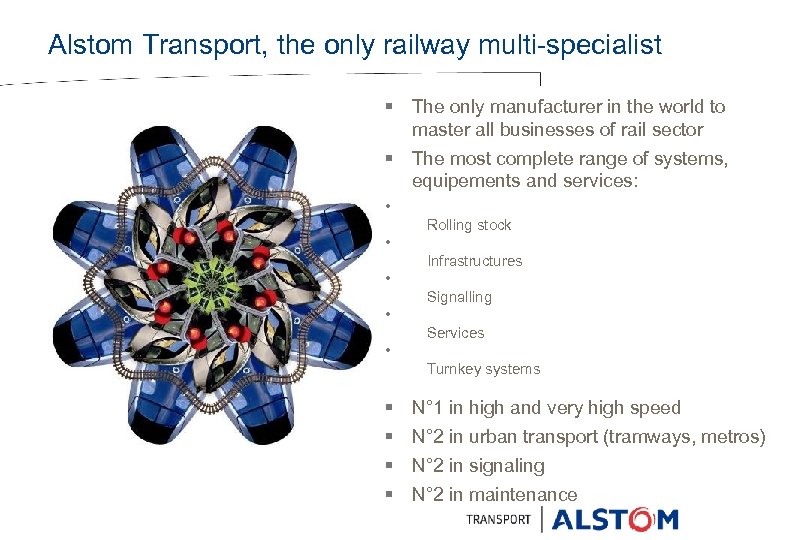
Alstom Transport, the only railway multi-specialist § The only manufacturer in the world to master all businesses of rail sector § The most complete range of systems, equipements and services: • Rolling stock • Infrastructures • Signalling • Services • Turnkey systems § § N° 1 in high and very high speed N° 2 in urban transport (tramways, metros) N° 2 in signaling N° 2 in maintenance
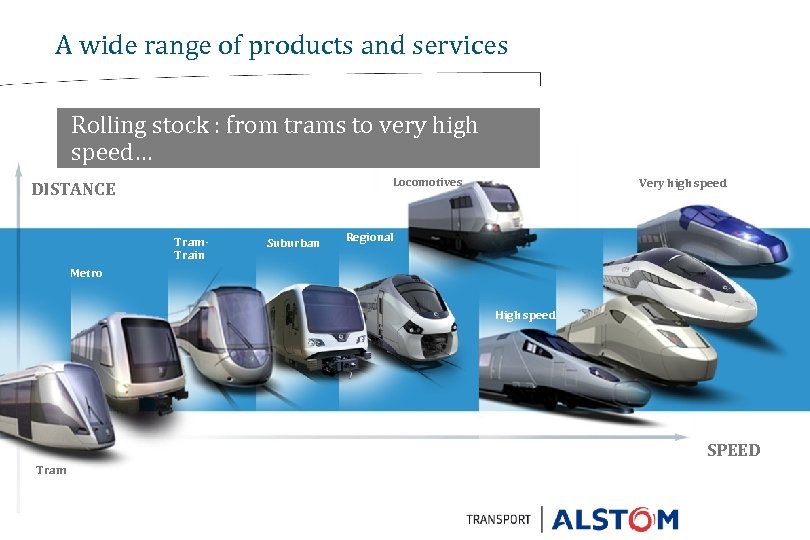
A wide range of products and services Rolling stock : from trams to very high speed… Locomotives DISTANCE Tram. Train Suburban Very high speed Regional Metro High speed SPEED Tram
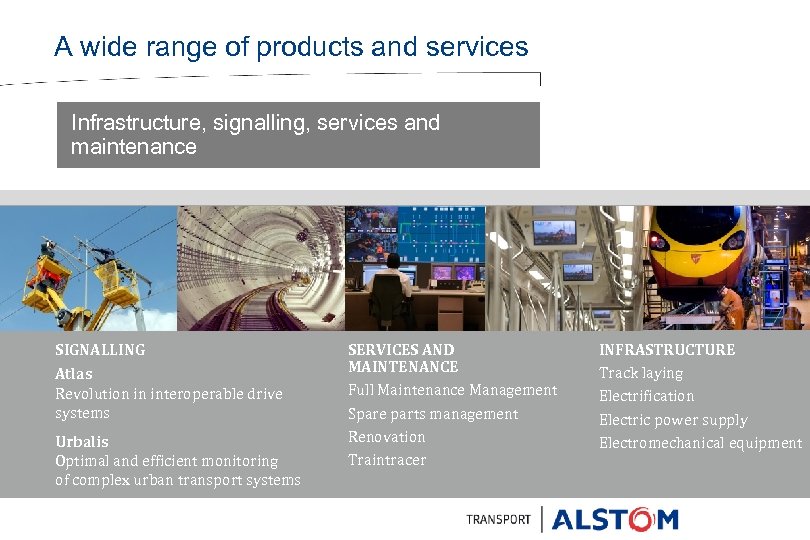
A wide range of products and services Infrastructure, signalling, services and maintenance SIGNALLING Atlas Revolution in interoperable drive systems Urbalis Optimal and efficient monitoring of complex urban transport systems SERVICES AND MAINTENANCE Full Maintenance Management Spare parts management Renovation Traintracer INFRASTRUCTURE Track laying Electrification Electric power supply Electromechanical equipment
Turnkey systems
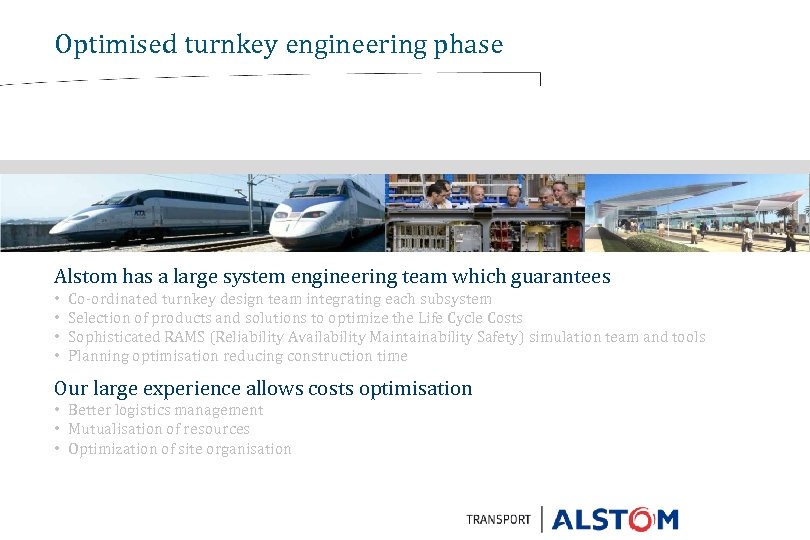
Optimised turnkey engineering phase Alstom has a large system engineering team which guarantees • • Co-ordinated turnkey design team integrating each subsystem Selection of products and solutions to optimize the Life Cycle Costs Sophisticated RAMS (Reliability Availability Maintainability Safety) simulation team and tools Planning optimisation reducing construction time Our large experience allows costs optimisation • Better logistics management • Mutualisation of resources • Optimization of site organisation
Public-Private Partnership AT’s experience in railway projects
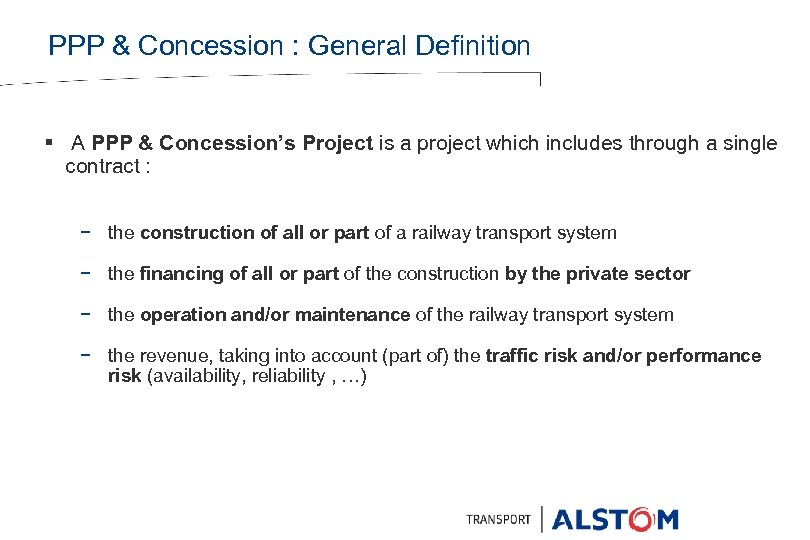
PPP & Concession : General Definition § A PPP & Concession’s Project is a project which includes through a single contract : − the construction of all or part of a railway transport system − the financing of all or part of the construction by the private sector − the operation and/or maintenance of the railway transport system − the revenue, taking into account (part of) the traffic risk and/or performance risk (availability, reliability , …)
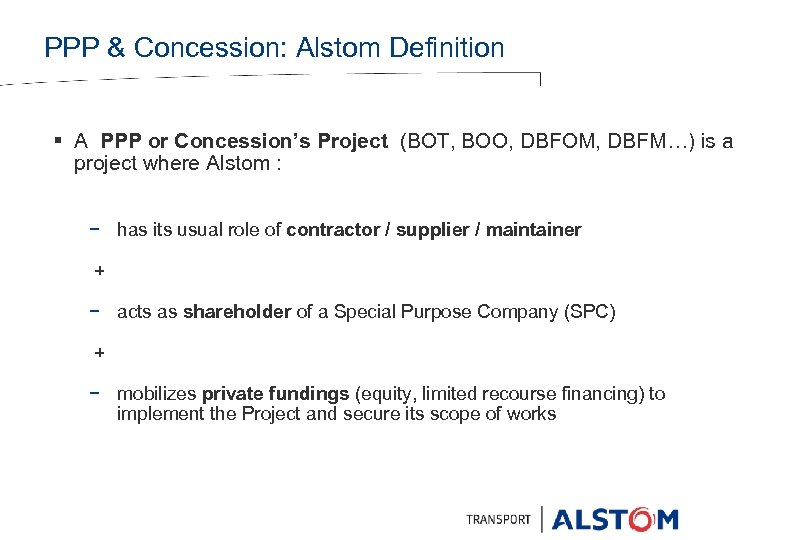
PPP & Concession: Alstom Definition § A PPP or Concession’s Project (BOT, BOO, DBFOM, DBFM…) is a project where Alstom : − has its usual role of contractor / supplier / maintainer + − acts as shareholder of a Special Purpose Company (SPC) + − mobilizes private fundings (equity, limited recourse financing) to implement the Project and secure its scope of works
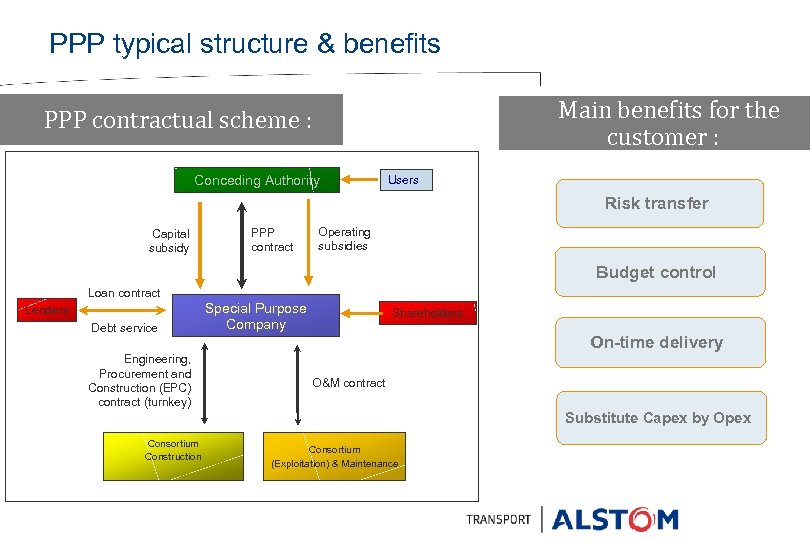
PPP typical structure & benefits Main benefits for the customer : PPP contractual scheme : Conceding Authority Users Risk transfer Capital subsidy PPP contract Operating subsidies Budget control Loan contract Lenders Debt service Engineering, Procurement and Construction (EPC) contract (turnkey) Special Purpose Company Shareholders On-time delivery O&M contract Substitute Capex by Opex Consortium Construction Consortium (Exploitation) & Maintenance
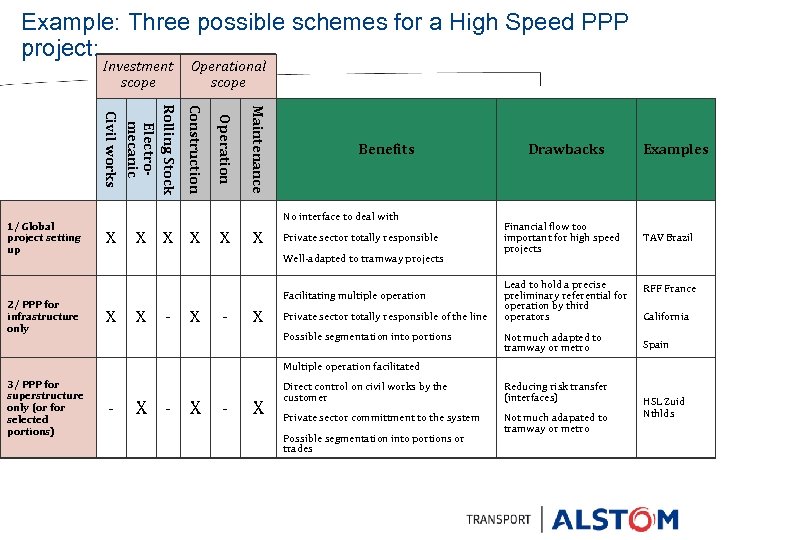
Maintenance 2/ PPP for infrastructure only Construction 1/ Global project setting up Operational scope Operation Investment scope Rolling Stock Electromecanic Civil works Example: Three possible schemes for a High Speed PPP project: Benefits No interface to deal with X X X Private sector totally responsible Well-adapted to tramway projects Facilitating multiple operation X X - X Private sector totally responsible of the line Possible segmentation into portions Drawbacks Financial flow too important for high speed projects Lead to hold a precise preliminary referential for operation by third operators Not much adapted to tramway or metro Examples TAV Brazil RFF France California Spain Multiple operation facilitated 3/ PPP for superstructure only (or for selected portions) - X - X Direct control on civil works by the customer Reducing risk transfer (interfaces) Private sector committment to the system Not much adapated to tramway or metro Possible segmentation into portions or trades HSL Zuid Nthlds
Why is Alstom involved in a PPP ? Unique expertise as a railway system integrator: • Life cycle cost: long-term performance maintening from the conception phase to the operational phase • Industrial Alstom share in a PPP, up to: - 20% for high speed, 30% for metros, 80% for tramways • Being minority shareholder in the SPC, Alstom fulfils its global committment towards the Customer and the shareholders • Mid-term & long-term balance between customers’ and Alstom’s interests
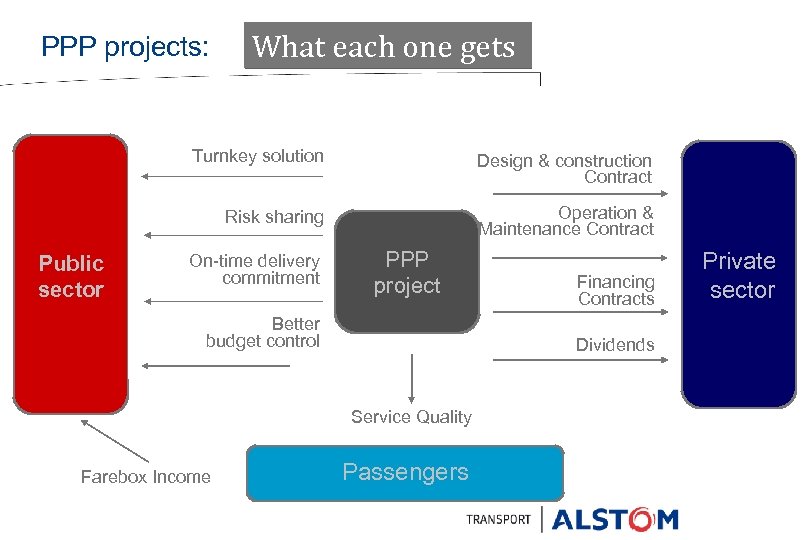
PPP projects: What each one gets brings Turnkey solution Grounds Public sector Design & construction Contract Risk sharing Laws context On-time delivery commitment Subsidies Operation & Maintenance Contract maintenance Rights PPP project Better budget control Dividends Capital Service Quality Farebox Income Financing Banks Contracts Passengers Private sector
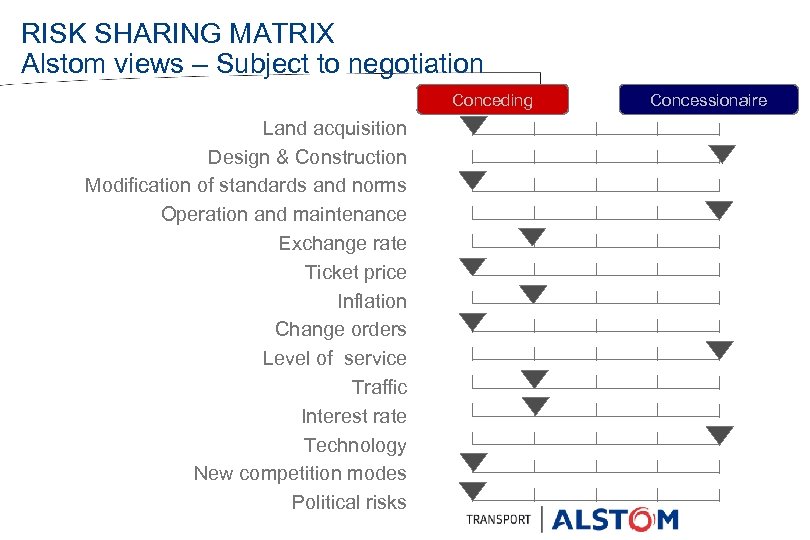
RISK SHARING MATRIX Alstom views – Subject to negotiation Conceding Land acquisition Design & Construction Modification of standards and norms Operation and maintenance Exchange rate Ticket price Inflation Change orders Level of service Traffic Interest rate Technology New competition modes Political risks Concessionaire
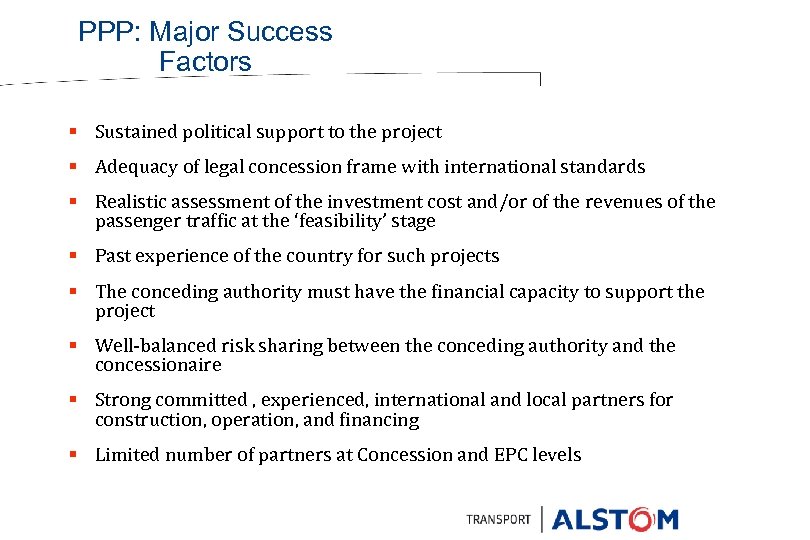
PPP: Major Success Factors § Sustained political support to the project § Adequacy of legal concession frame with international standards § Realistic assessment of the investment cost and/or of the revenues of the passenger traffic at the ‘feasibility’ stage § Past experience of the country for such projects § The conceding authority must have the financial capacity to support the project § Well-balanced risk sharing between the conceding authority and the concessionaire § Strong committed , experienced, international and local partners for construction, operation, and financing § Limited number of partners at Concession and EPC levels
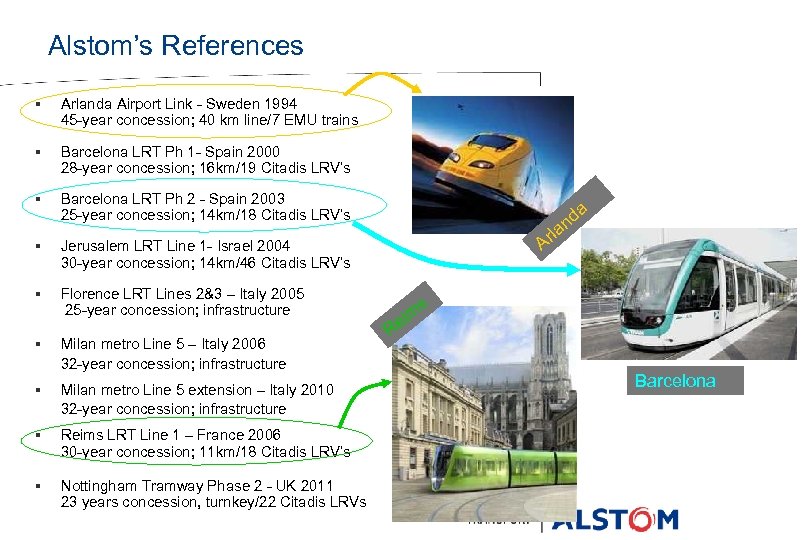
Alstom’s References § Arlanda Airport Link - Sweden 1994 45 -year concession; 40 km line/7 EMU trains § Barcelona LRT Ph 1 - Spain 2000 28 -year concession; 16 km/19 Citadis LRV’s § Barcelona LRT Ph 2 - Spain 2003 25 -year concession; 14 km/18 Citadis LRV’s § Jerusalem LRT Line 1 - Israel 2004 30 -year concession; 14 km/46 Citadis LRV’s § Florence LRT Lines 2&3 – Italy 2005 25 -year concession; infrastructure a nd rla A s eim R § Milan metro Line 5 – Italy 2006 32 -year concession; infrastructure § Milan metro Line 5 extension – Italy 2010 32 -year concession; infrastructure § Reims LRT Line 1 – France 2006 30 -year concession; 11 km/18 Citadis LRV’s § Nottingham Tramway Phase 2 - UK 2011 23 years concession, turnkey/22 Citadis LRVs Barcelona
Conclusion
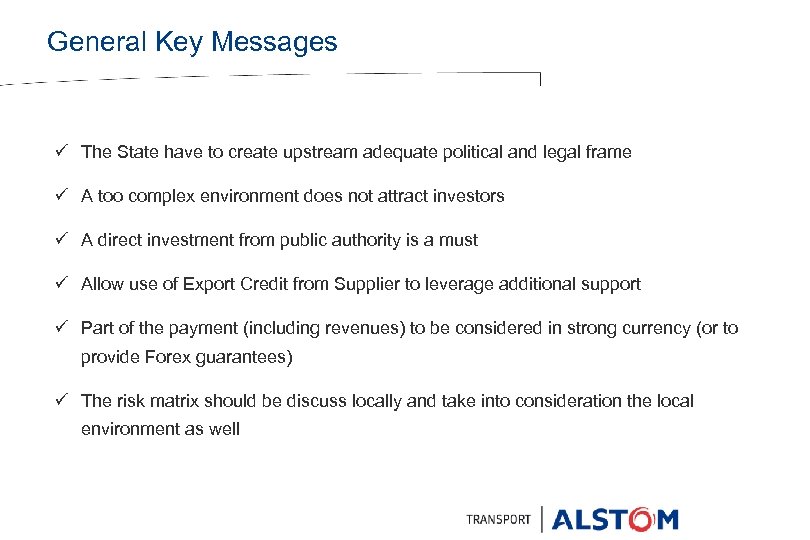
General Key Messages ü The State have to create upstream adequate political and legal frame ü A too complex environment does not attract investors ü A direct investment from public authority is a must ü Allow use of Export Credit from Supplier to leverage additional support ü Part of the payment (including revenues) to be considered in strong currency (or to provide Forex guarantees) ü The risk matrix should be discuss locally and take into consideration the local environment as well
www. alstom. com
Скачать презентацию Public-Private Partnership PPP Alstom Transport s experience Philippe Pegorier
7999aa97c33eee15fc5a7ecda3e86805.ppt