 Скачать презентацию Public Health Impact of Disasters in the EM
6789d0bf06298ec8826a80f935e465f3.ppt
- Количество слайдов: 18



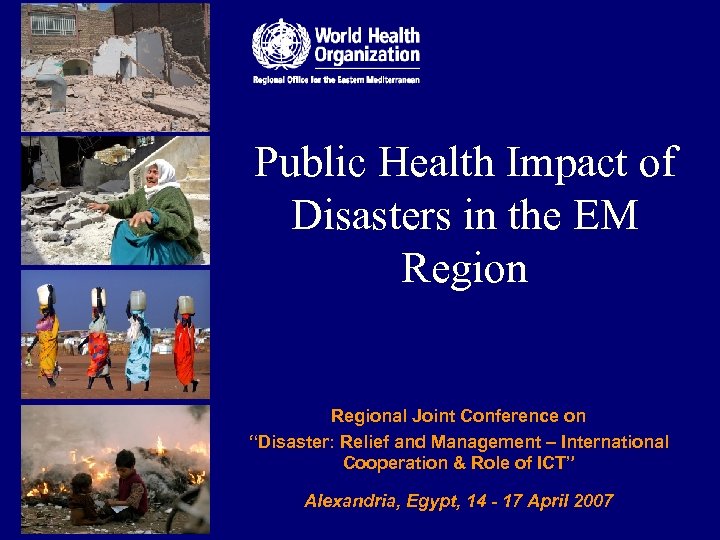
Public Health Impact of Disasters in the EM Regional Joint Conference on “Disaster: Relief and Management – International Cooperation & Role of ICT” Alexandria, Egypt, 14 - 17 April 2007
Monday, 16 April 2007 09: 00 -10: 30 Session IX: Public Health Impact of Disasters WHO Emergency Preparedness and Mr. Altaf MUSANI, Response; Regional Adviser, Regional Perspective WHO/EMRO EHA, Somalia Case Dr. Mohamed FUJE, Officer in Charge for WHO Office in Mogadishu Sudan Case Dr. Saad El-Din H. HASSAN, Head of the EHA unit in MOH, Sudan Iran Case Dr. Farzad PANAHI, Chief of Emergency Management Center in Iran Management of Logistics in Eng. Victor MARTINEZ, Emergency and Disaster Situations: Use of SUMA Software as an Example
Overview n Impacts of disasters n WHO’s support to EPR n Way forward
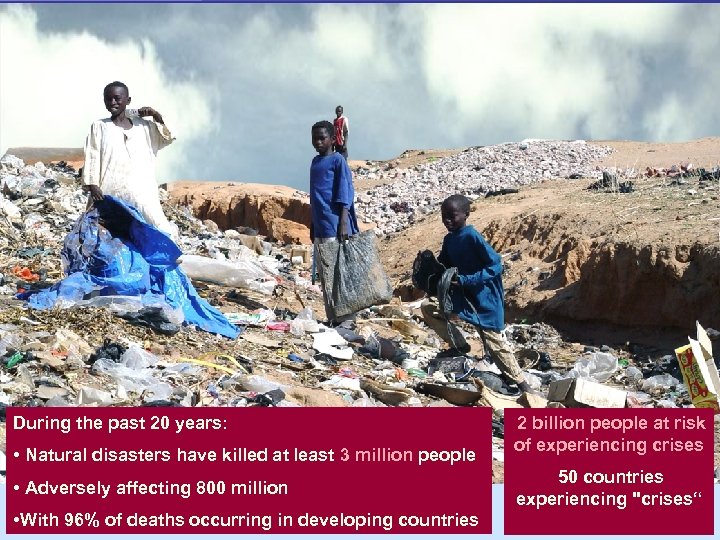
During the past 20 years: • Natural disasters have killed at least 3 million people • Adversely affecting 800 million • With 96% of deaths occurring in developing countries 2 billion people at risk of experiencing crises 50 countries experiencing "crises“
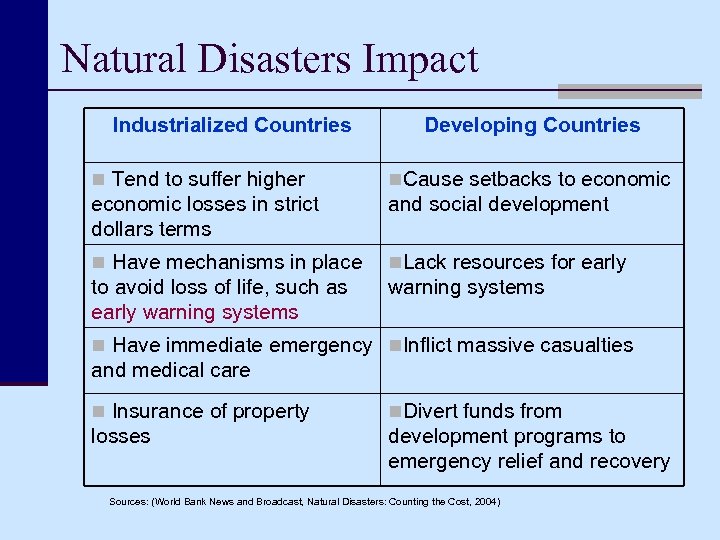
Natural Disasters Impact Industrialized Countries Developing Countries n Tend to suffer higher n. Cause setbacks to economic losses in strict dollars terms and social development n Have mechanisms in place n. Lack resources for early to avoid loss of life, such as early warning systems n Have immediate emergency n. Inflict massive casualties and medical care n Insurance of property n. Divert funds from losses development programs to emergency relief and recovery Sources: (World Bank News and Broadcast, Natural Disasters: Counting the Cost, 2004)
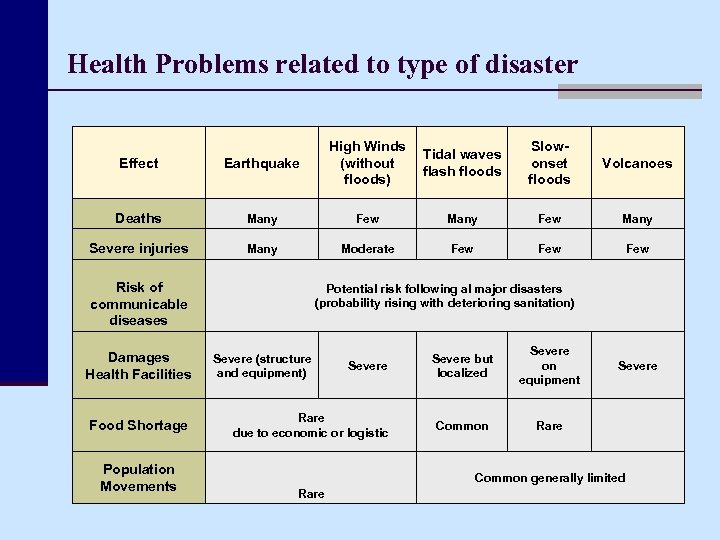
Health Problems related to type of disaster Effect Earthquake High Winds (without floods) Deaths Many Few Many Severe injuries Many Moderate Few Few Risk of communicable diseases Damages Health Facilities Food Shortage Population Movements Tidal waves flash floods Slowonset floods Volcanoes Potential risk following al major disasters (probability rising with deterioring sanitation) Severe (structure and equipment) Severe Rare due to economic or logistic Severe but localized Severe on equipment Common Rare Severe Common generally limited Rare
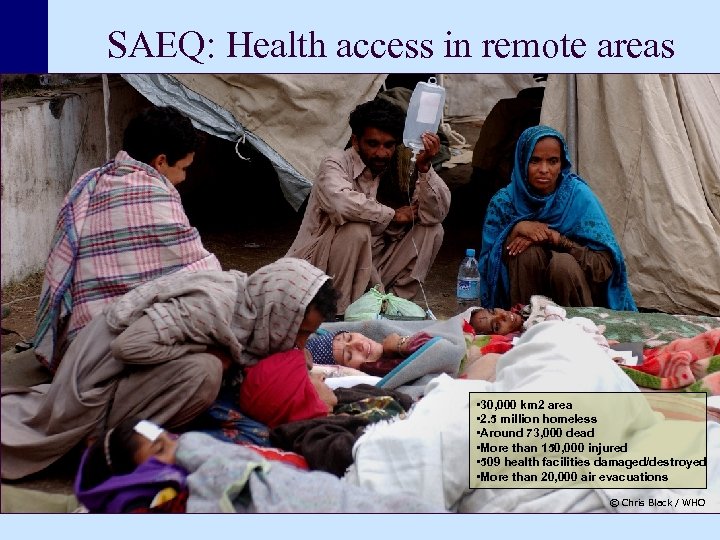
SAEQ: Health access in remote areas (7. 6 Richter, October 2005) • 30, 000 km 2 area • 2. 5 million homeless • Around 73, 000 dead • More than 150, 000 injured • 509 health facilities damaged/destroyed • More than 20, 000 air evacuations © Chris Black / WHO
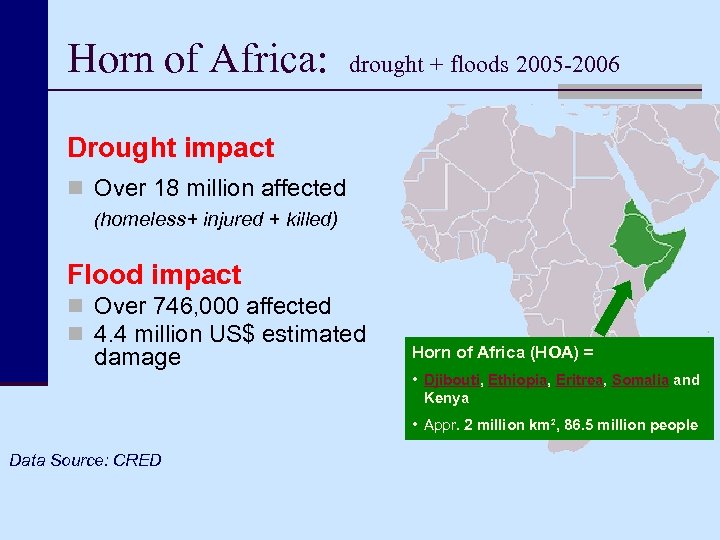
Horn of Africa: drought + floods 2005 -2006 Drought impact n Over 18 million affected (homeless+ injured + killed) Flood impact n Over 746, 000 affected n 4. 4 million US$ estimated damage Horn of Africa (HOA) = • Djibouti, Ethiopia, Eritrea, Somalia and Kenya • Appr. 2 million km², 86. 5 million people Data Source: CRED
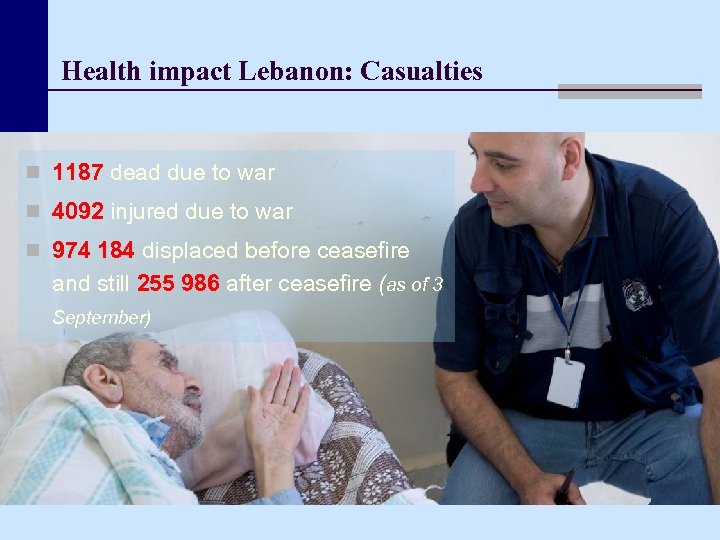
Health impact Lebanon: Casualties n 1187 dead due to war n 4092 injured due to war n 974 184 displaced before ceasefire and still 255 986 after ceasefire (as of 3 September)
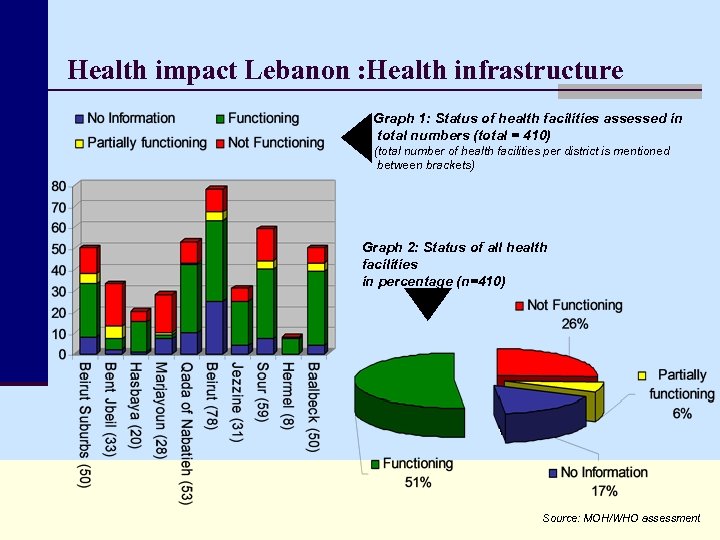
Health impact Lebanon : Health infrastructure Graph 1: Status of health facilities assessed in total numbers (total = 410) (total number of health facilities per district is mentioned between brackets) Graph 2: Status of all health facilities in percentage (n=410) Source: MOH/WHO assessment
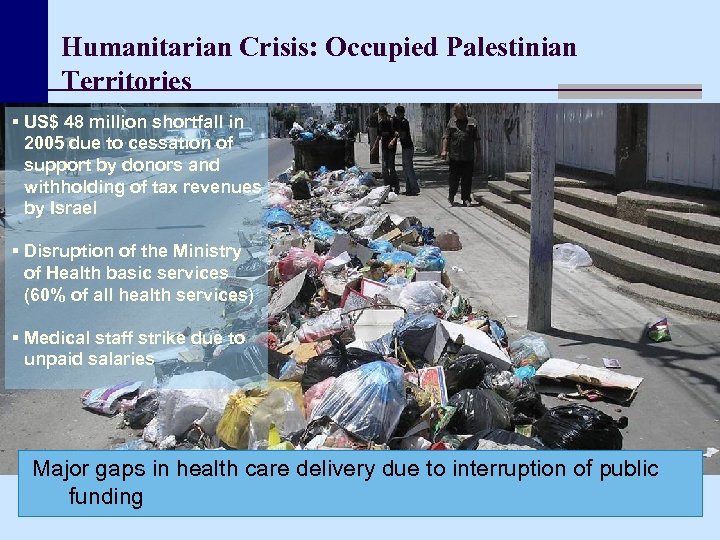
Humanitarian Crisis: Occupied Palestinian Territories § US$ 48 million shortfall in 2005 due to cessation of support by donors and withholding of tax revenues by Israel § Disruption of the Ministry of Health basic services (60% of all health services) § Medical staff strike due to unpaid salaries Major gaps in health care delivery due to interruption of public funding
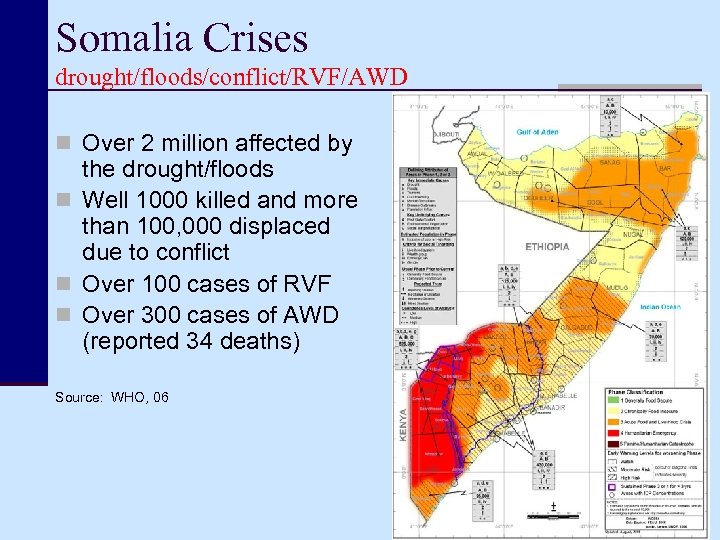
Somalia Crises drought/floods/conflict/RVF/AWD n Over 2 million affected by the drought/floods n Well 1000 killed and more than 100, 000 displaced due to conflict n Over 100 cases of RVF n Over 300 cases of AWD (reported 34 deaths) Source: WHO, 06
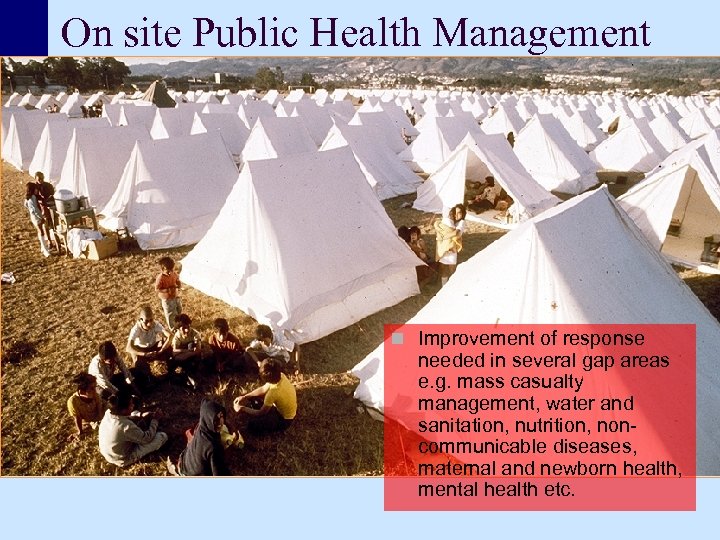
On site Public Health Management n Improvement of response needed in several gap areas e. g. mass casualty management, water and sanitation, nutrition, noncommunicable diseases, maternal and newborn health, mental health etc.
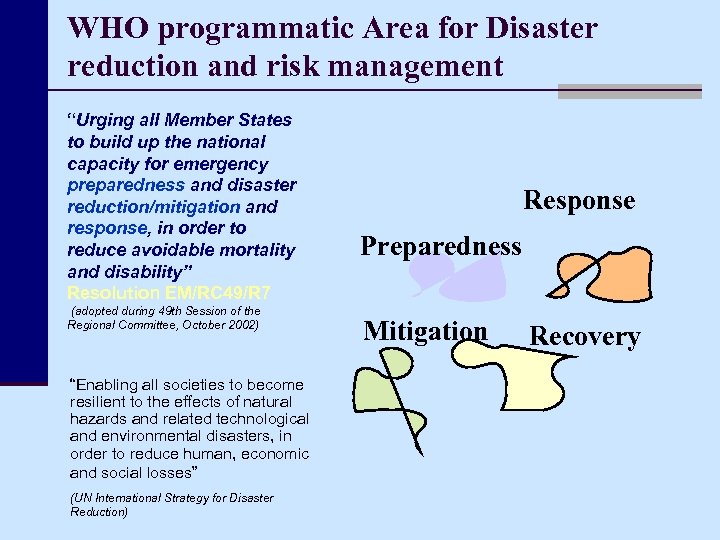
WHO programmatic Area for Disaster reduction and risk management “Urging all Member States to build up the national capacity for emergency preparedness and disaster reduction/mitigation and response, in order to reduce avoidable mortality and disability” Resolution EM/RC 49/R 7 (adopted during 49 th Session of the Regional Committee, October 2002) “Enabling all societies to become resilient to the effects of natural hazards and related technological and environmental disasters, in order to reduce human, economic and social losses” (UN International Strategy for Disaster Reduction) Response Preparedness Mitigation Recovery
WHO's objective for crises work Objective: To reduce avoidable mortality and morbidity in crises Mission: The design and implementation of programmes that prepare the health sector to deal with emergencies, and that help improve health during and after emergencies § Covers preparedness, response, recovery and mitigation § Has a health systems approach
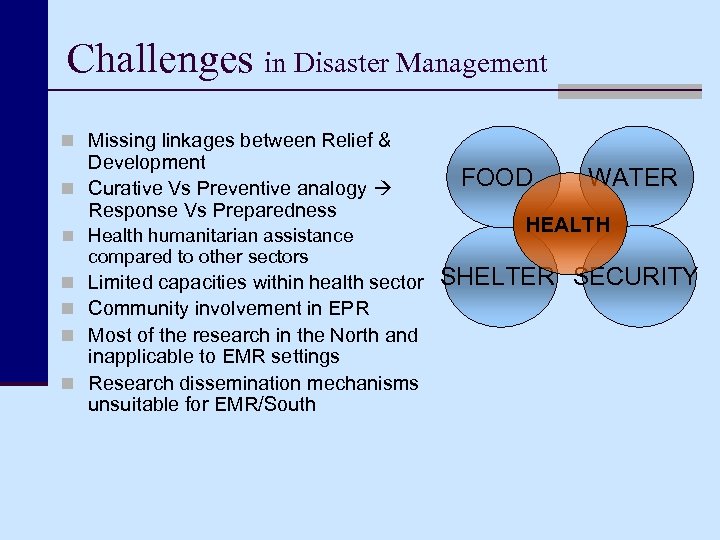
Challenges in Disaster Management n Missing linkages between Relief & Development n Curative Vs Preventive analogy Response Vs Preparedness n Health humanitarian assistance compared to other sectors n Limited capacities within health sector n Community involvement in EPR n Most of the research in the North and inapplicable to EMR settings n Research dissemination mechanisms unsuitable for EMR/South FOOD WATER HEALTH SHELTER SECURITY
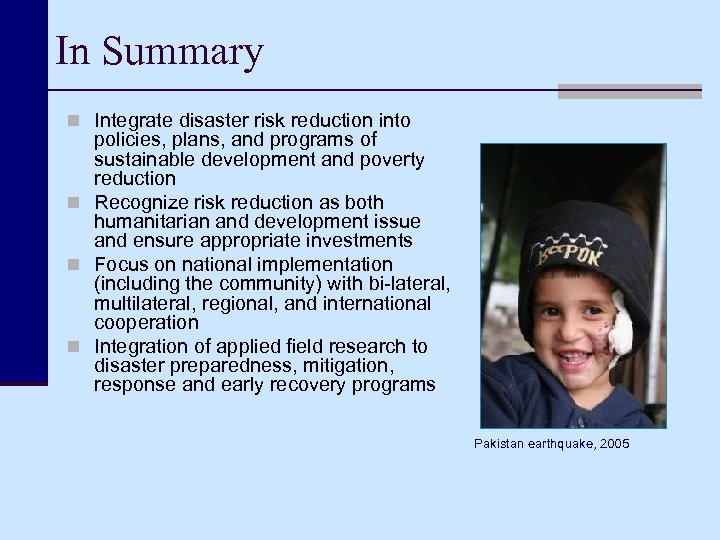
In Summary n Integrate disaster risk reduction into policies, plans, and programs of sustainable development and poverty reduction n Recognize risk reduction as both humanitarian and development issue and ensure appropriate investments n Focus on national implementation (including the community) with bi-lateral, multilateral, regional, and international cooperation n Integration of applied field research to disaster preparedness, mitigation, response and early recovery programs Pakistan earthquake, 2005
Thank You Emergency and Humanitarian Action Regional Office for the Eastern Mediterranean World Health Organization www. emro. who. int/eha eha@emro. who. int
Скачать презентацию Public Health Impact of Disasters in the EM
6789d0bf06298ec8826a80f935e465f3.ppt