 Скачать презентацию Public Health Breastfeeding Policy Initiative Breastfeeding Matters April
b24f20182e990634e9499ea750e5e00e.ppt
- Количество слайдов: 16



Public Health Breastfeeding Policy Initiative Breastfeeding Matters April 7, 2010 Jonathan E. Fielding, MD, MPH, MBA Director of Public Health and Health Officer L. A. County Department of Public Health 1
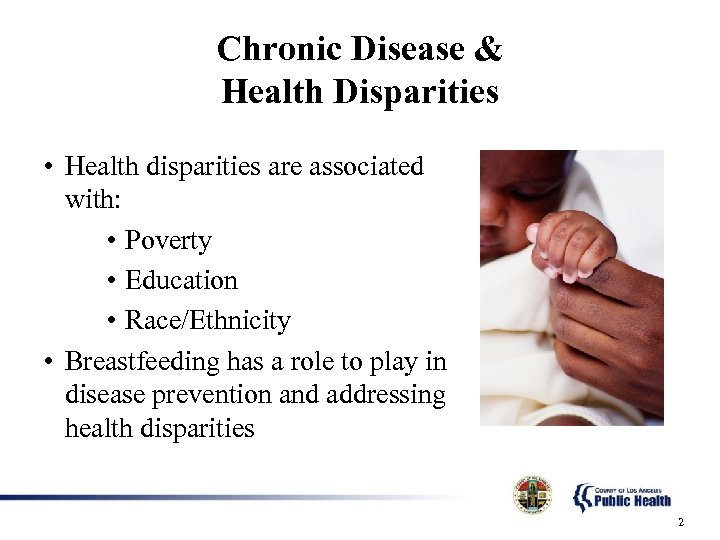
Chronic Disease & Health Disparities • Health disparities are associated with: • Poverty • Education • Race/Ethnicity • Breastfeeding has a role to play in disease prevention and addressing health disparities 2
Breastfeeding evens the playing field Breastfeeding is a natural "safety net" against the worst effects of poverty. . . It is almost as if breastfeeding takes the infant out of poverty for those first few months in order to give the child a fairer start in life and compensate for the injustice of the world into which it was born. James P. Grant Former Executive Director UNICEF 3
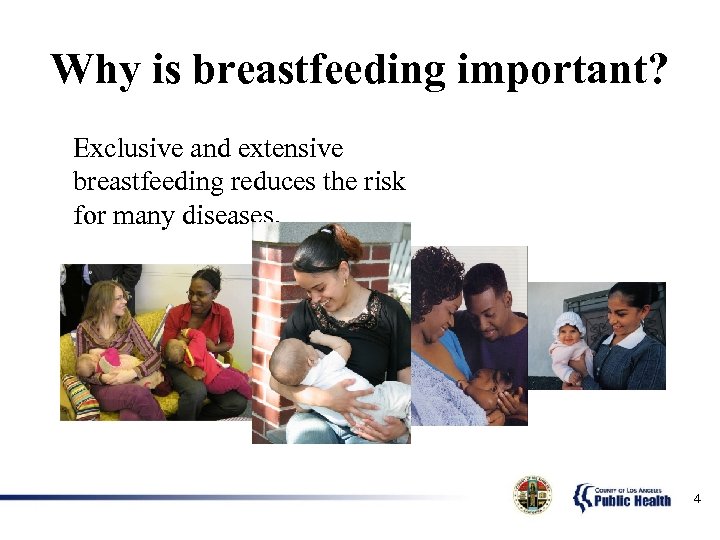
Why is breastfeeding important? Exclusive and extensive breastfeeding reduces the risk for many diseases. 4
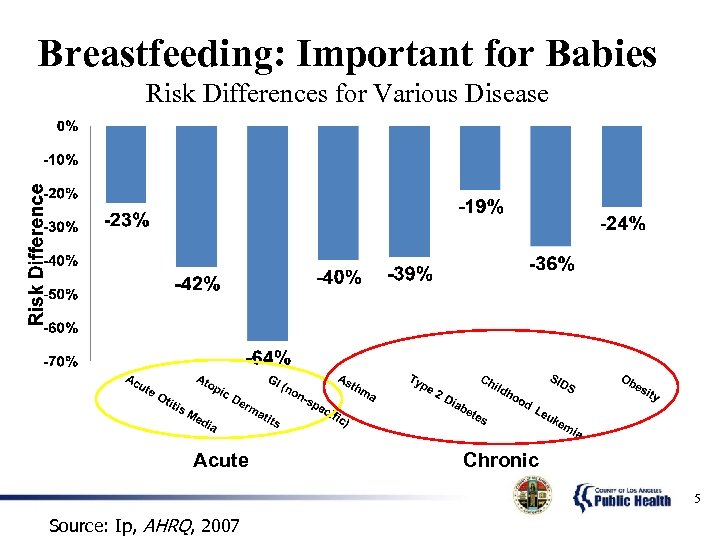
Breastfeeding: Important for Babies Risk Differences for Various Disease Acute Chronic 5 Source: Ip, AHRQ, 2007
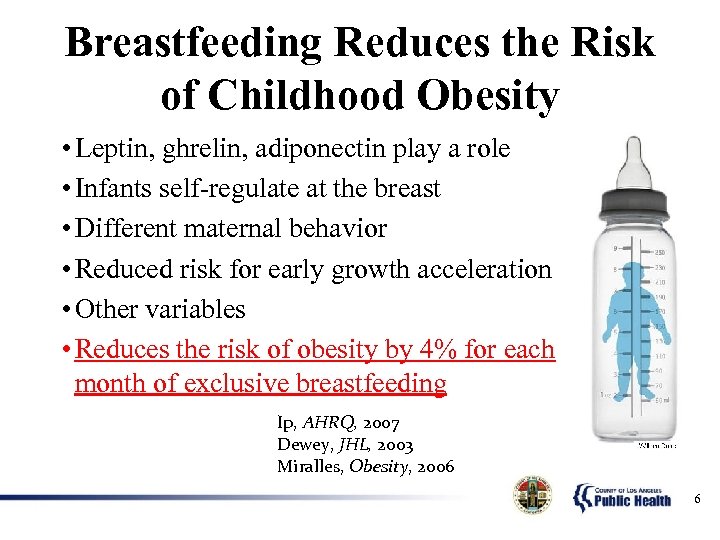
Breastfeeding Reduces the Risk of Childhood Obesity • Leptin, ghrelin, adiponectin play a role • Infants self-regulate at the breast • Different maternal behavior • Reduced risk for early growth acceleration • Other variables • Reduces the risk of obesity by 4% for each month of exclusive breastfeeding Ip, AHRQ, 2007 Dewey, JHL, 2003 Miralles, Obesity, 2006 6
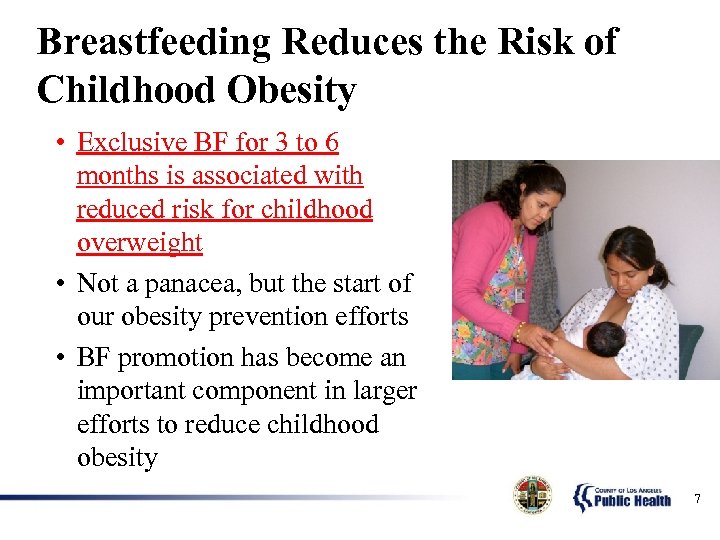
Breastfeeding Reduces the Risk of Childhood Obesity • Exclusive BF for 3 to 6 months is associated with reduced risk for childhood overweight • Not a panacea, but the start of our obesity prevention efforts • BF promotion has become an important component in larger efforts to reduce childhood obesity 7
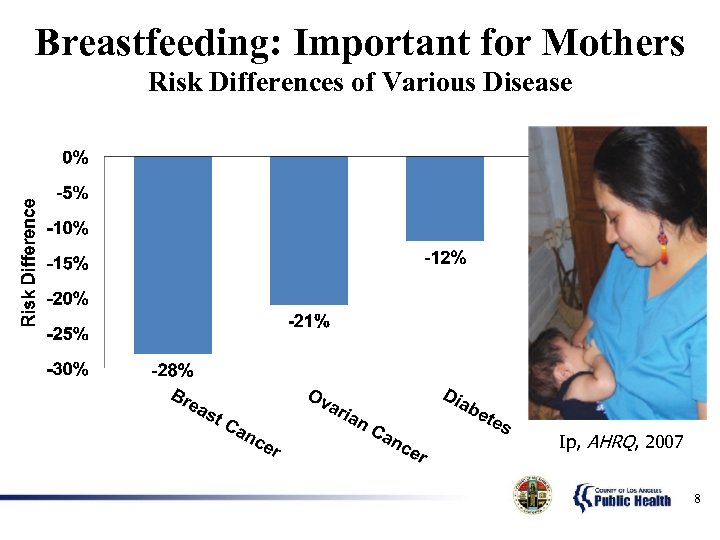
Breastfeeding: Important for Mothers Risk Differences of Various Disease Ip, AHRQ, 2007 8
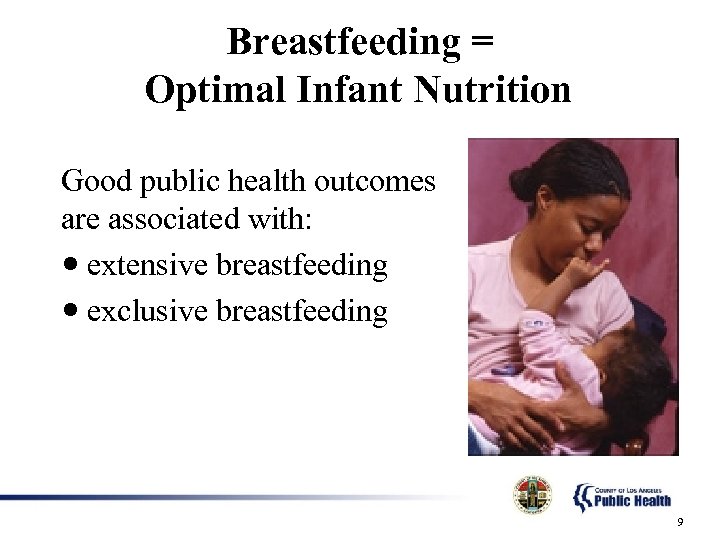
Breastfeeding = Optimal Infant Nutrition Good public health outcomes are associated with: extensive breastfeeding exclusive breastfeeding 9
Public Health Breastfeeding Policy Initiative Increase exclusive and extensive BF rates Baby Friendly Hospital designation LAC DHS committed, bringing along others Evidence based approach Buy-in from the top Convening regional quality improvement Collaborative approach Multidisciplinary team 10
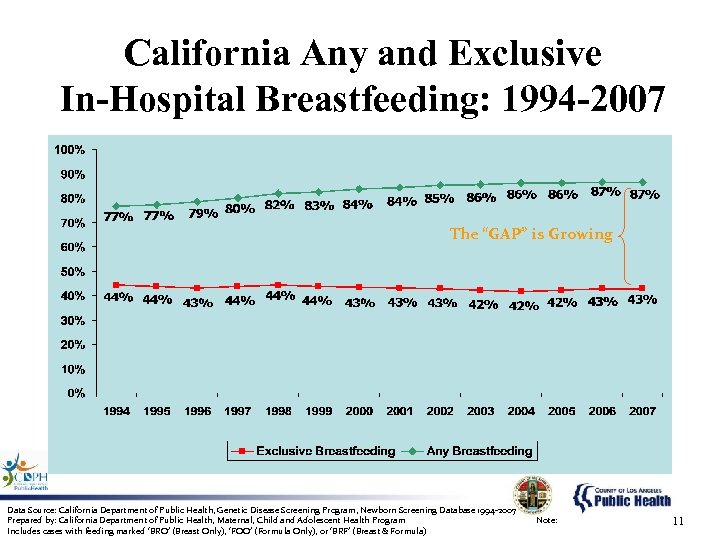
California Any and Exclusive In-Hospital Breastfeeding: 1994 -2007 The “GAP” is Growing Data Source: California Department of Public Health, Genetic Disease Screening Program, Newborn Screening Database 1994 -2007 Prepared by: California Department of Public Health, Maternal, Child and Adolescent Health Program Includes cases with feeding marked ‘BRO’ (Breast Only), ‘FOO’ (Formula Only), or ‘BRF’ (Breast & Formula) Note: 11
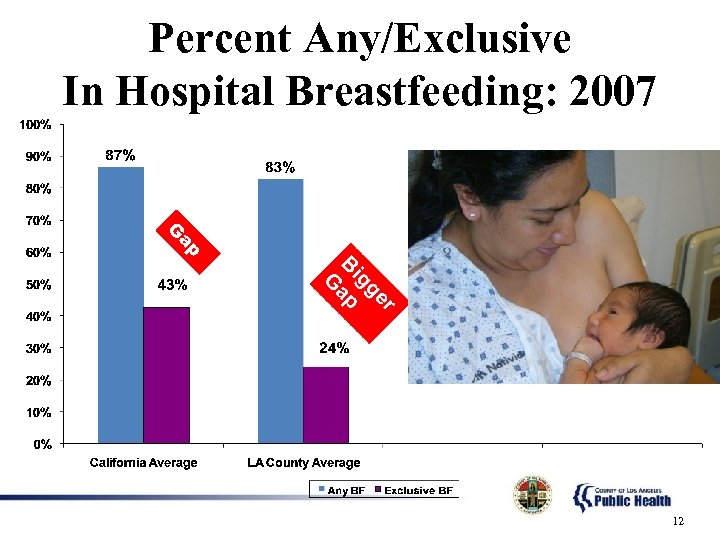
Percent Any/Exclusive In Hospital Breastfeeding: 2007 ap G 12
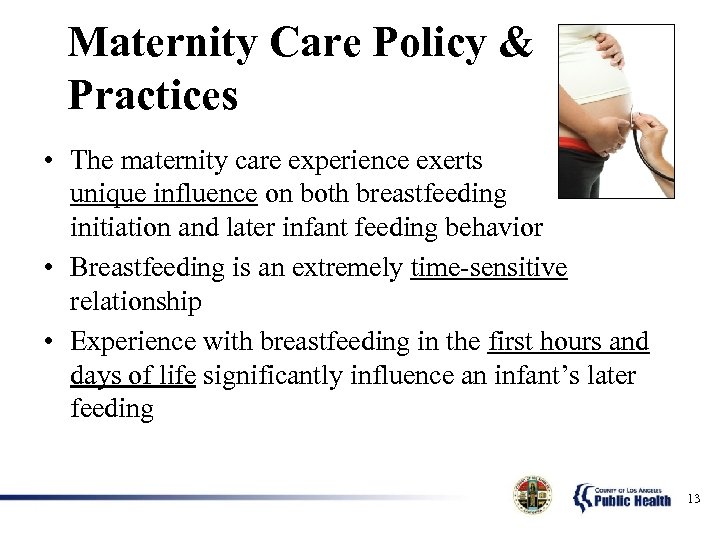
Maternity Care Policy & Practices • The maternity care experience exerts unique influence on both breastfeeding initiation and later infant feeding behavior • Breastfeeding is an extremely time-sensitive relationship • Experience with breastfeeding in the first hours and days of life significantly influence an infant’s later feeding 13
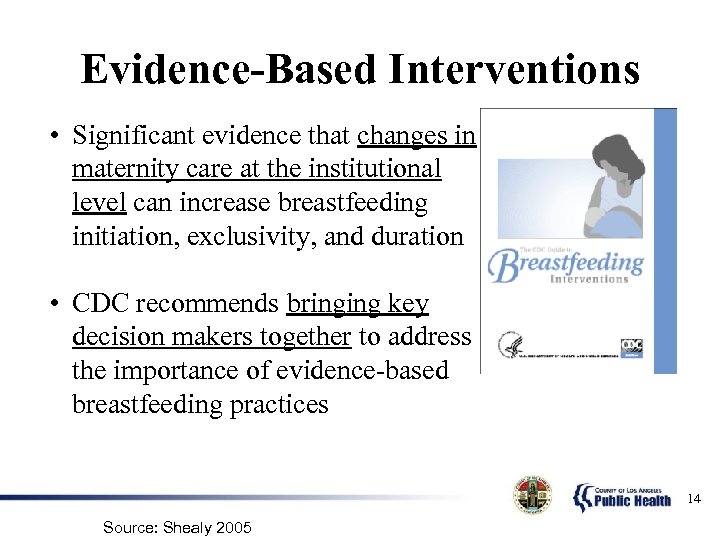
Evidence-Based Interventions • Significant evidence that changes in maternity care at the institutional level can increase breastfeeding initiation, exclusivity, and duration • CDC recommends bringing key decision makers together to address the importance of evidence-based breastfeeding practices 14 Source: Shealy 2005
We look forward to your partnership on this important Public Health issue. 15
Works Cited • • • California Department of Public Health, Maternal, Child and Adolescent Health Program. “California Department of Public Health, Genetic Disease Screening Program, Newborn Screening Database, 1994 -2007. ” Available at: http: //www. cdph. ca. gov/DATA/STATISTICS/Pages/Breastfeeding. Statistics. aspx Dewey KG. Is breastfeeding protective against child obesity? J Hum Lact 2003; 19(1): 9 -18. Ip S, Tufts-New England Medical Center. Evidence-based Practice Center. , United States. Agency for Healthcare Research and Quality. Breastfeeding and maternal and infant health outcomes in developed countries. Rockville, MD: U. S. Dept. of Health and Human Services, Public Health Service, Agency for Healthcare Research and Quality; 2007. Miralles O, Sanchez J, Palou A, Pico C. A physiological role of breast milk leptin in body weight control in developing infants. Obesity (Silver Spring) 2006; 14(8): 1371 -7. Shealy KR, Li R, Benton-Davis S, Grummer-Strawn LM. The CDC Guide to Breastfeeding Interventions. Atlanta: U. S. Department of Health and Human Services. Available at: http: //www. cdc. gov/breastfeeding/pdf/breastfeeding_interventions. pdf 16
Скачать презентацию Public Health Breastfeeding Policy Initiative Breastfeeding Matters April
b24f20182e990634e9499ea750e5e00e.ppt