 Скачать презентацию Public Finance Public Finance Three questions
3cc0cffc500f4ce9b723a2497959095f.ppt
- Количество слайдов: 21




Public Finance
Public Finance Three questions • What does the government spend money on? • How does the government collect money? • What is the best way for the government to collect money?
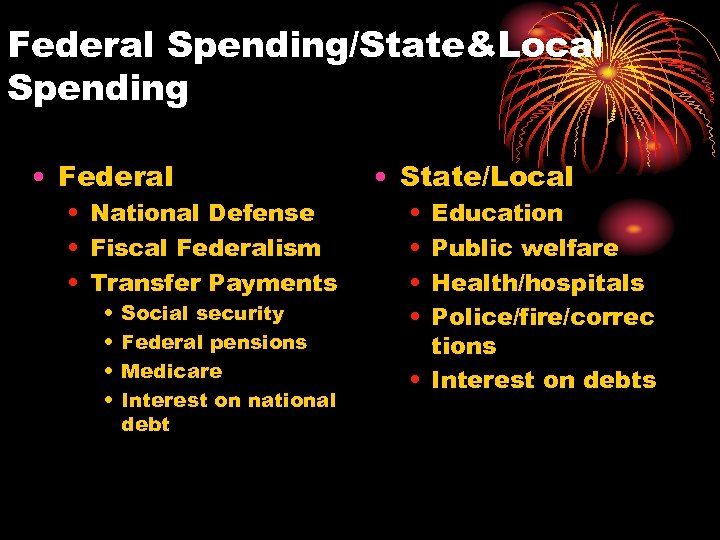
Federal Spending/State&Local Spending • Federal • National Defense • Fiscal Federalism • Transfer Payments • • Social security Federal pensions Medicare Interest on national debt • State/Local • • Education Public welfare Health/hospitals Police/fire/correc tions • Interest on debts
What does the Federal government spend money on? • About 1/3 of the GDP in the United States passes through the federal government • The government purchases about 18% of all goods/services in the economy • The largest government expenditure is national defense (16. 5% of the budget) • The rest of the money collected by the federal government is involved in transfer payment programs
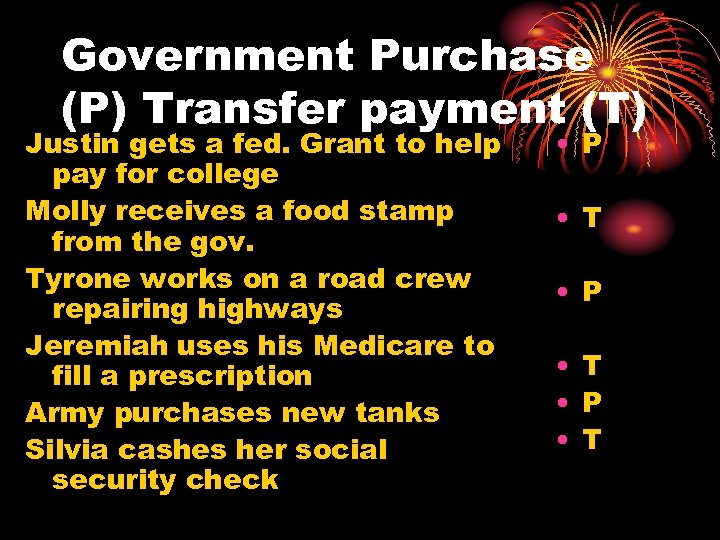
Government Purchase (P) Transfer payment (T) Justin gets a fed. Grant to help pay for college Molly receives a food stamp from the gov. Tyrone works on a road crew repairing highways Jeremiah uses his Medicare to fill a prescription Army purchases new tanks Silvia cashes her social security check • P • T
Entitlement Programs • Recipients are legally entitled to the programs, can not be reduced • Social Security, Fed. Gov. Pensions, Medicaid, Medicare
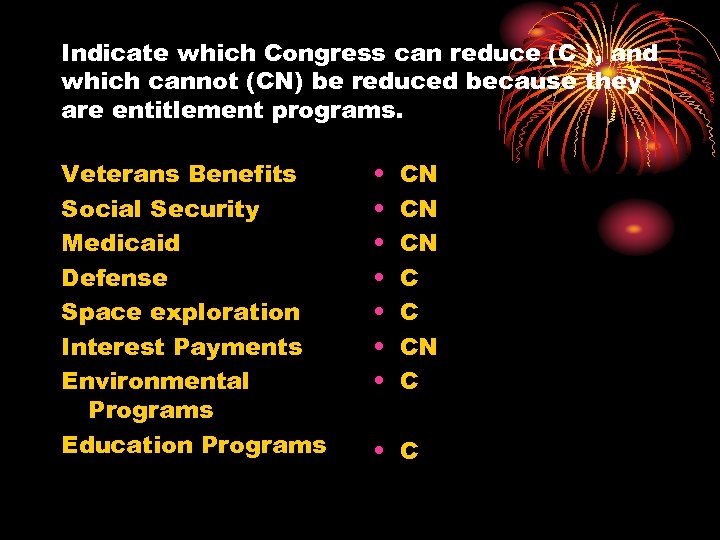
Indicate which Congress can reduce (C ), and which cannot (CN) be reduced because they are entitlement programs. Veterans Benefits Social Security Medicaid Defense Space exploration Interest Payments Environmental Programs Education Programs • • CN CN CN C C CN C • C
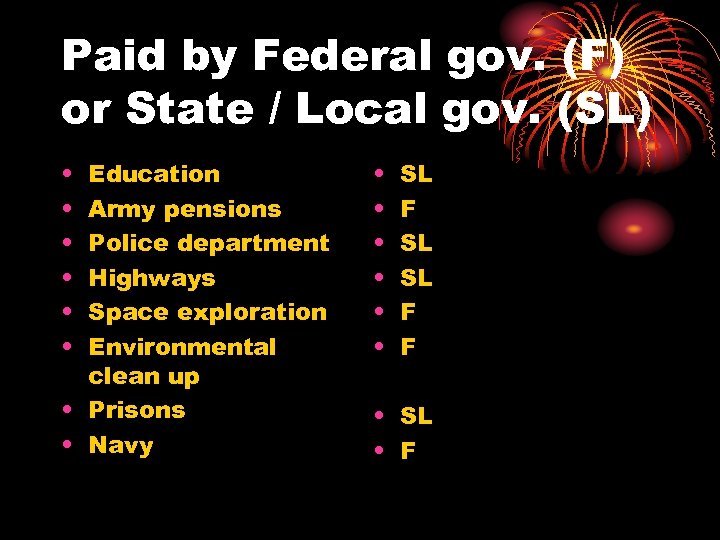
Paid by Federal gov. (F) or State / Local gov. (SL) • • • Education Army pensions Police department Highways Space exploration Environmental clean up • Prisons • Navy • • • SL F SL SL F F • SL • F
What two areas of spending do you think have increased the most for state and local governments? • Prisons • Health Care
Fiscal Federalism • To pay for programs state and local governments are granted money from the federal government. • Fed. Gov. often mandates the specific programs that the grants may be used for; grants are usually not enough to cover costs of programs • Contributes to the financial squeeze
Where do they get the Money? Federal Revenues Personal income tax Payroll taxes Corporate income tax Excise tax State & Local Rev. User fees and mis. Sales tax property tax income taxes (does not exist in some states) federal grants federalism) (fiscal
Main Sources of Revenue Federal -Income Tax State - Sales Tax Local - Property Tax
Revenue sources federal (f), state (s), local (l) or a combination? • Personal income tax • The sales tax • Excise tax • Grants in aid • Corporate tax • The Property tax • Payroll tax • • F, S S, L F
What taxes are paid? • A person gets a pay check. • A person spends some of his/her pay check. • A person uses some of his/her money to buy a house.
How should governments collect money? • Two things should be kept in mind Equity and Efficiency Equity Horizontal- people who are equally able to pay should bear the same tax burden Vertical- people with higher incomes pay a larger percentage of their income in taxes Efficiency Taxes should be levied in such a way as to minimize their interference with the allocation of resources and their discouragement of production Exception Sin taxes- placed on goods hat the government wishes to discourage the use of
Thee types of tax strategies • Progressive • Regressive • Proportional
Progressive Taxes • A higher percentage of tax is levied on larger incomes
Regressive tax • Lower income earners pay a larger percentage of their income in taxes than higher earners
Proportional Taxes • The same percentage of income is paid in taxes at different income levels
Which tax style do you think is most fair? Best for the economy? Why?
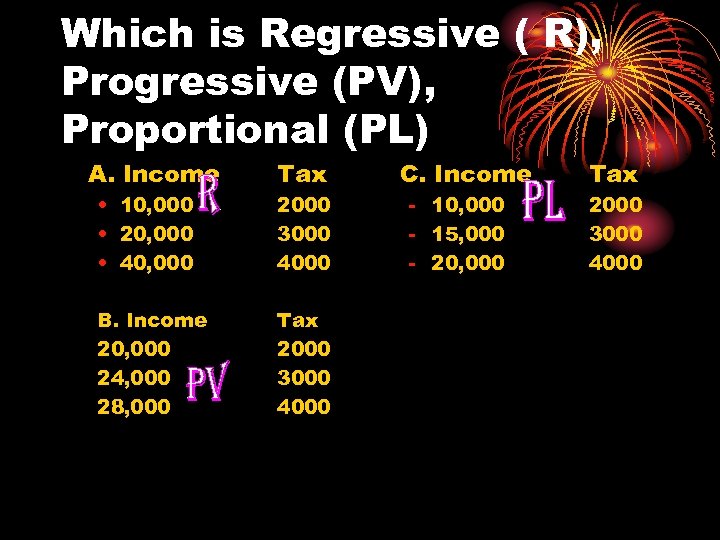
Which is Regressive ( R), Progressive (PV), Proportional (PL) A. Income • 10, 000 • 20, 000 • 40, 000 B. Income 20, 000 24, 000 28, 000 Tax 2000 3000 4000 C. Income - 10, 000 - 15, 000 - 20, 000 Tax 2000 3000 4000
Скачать презентацию Public Finance Public Finance Three questions
3cc0cffc500f4ce9b723a2497959095f.ppt