 Скачать презентацию Pub Pol 751 -001 The Chinese Economy and
81765195e181752d58b7930fb5667941.ppt
- Количество слайдов: 38



Pub. Pol 751 -001 The Chinese Economy and Economic Policy Lecture 2 Dr Liu Yunhua Snow on Nov 1, 2009
Lecture 2 The Socialist Era 19491978 and The Start of Market Reform 2. 1 Setting up of the Command Economy 2. 2 Start of the Economic Reform 2. 3 Reform Strategies and Process
2. 1 Setting up of The Command Economic System Setting Up of the Command Economy after 1949 China declared the establishment of the new nation: People’s Republic of China after the victory against Nationalist Party (Guomingdang) in civil war in 1949. A command economic system was set up consequently following the model of the Soviet Union.
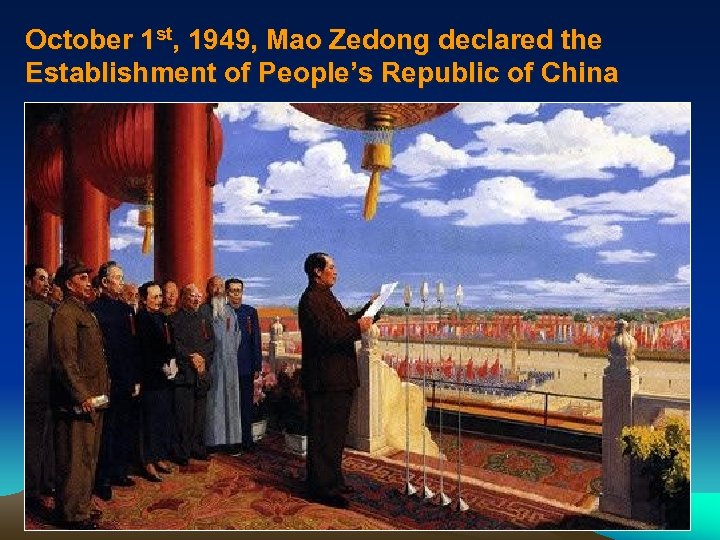
October 1 st, 1949, Mao Zedong declared the Establishment of People’s Republic of China
2. 1 The Command Economic System What was the command economic system in China? It was a centrally planned and controlled system. All the productive resources and property were acquired by the state without any compensation, including land, forests, mountains, minerals, rivers, houses, factories, etc. , simply, state ownership. Private ownership was limited to basic consumption goods such as food and clothing. Private home only in rural areas.
The household registration system One of the important regulations in China‘s command economic system was the Household Registration System. Under this system, the households were registered at their living locality. People lived in urban areas were registered as urban residents, while people lived in rural areas as rural residents. Permanent migration across registration areas was restricted to very special cases, even the short visit was also regulated.
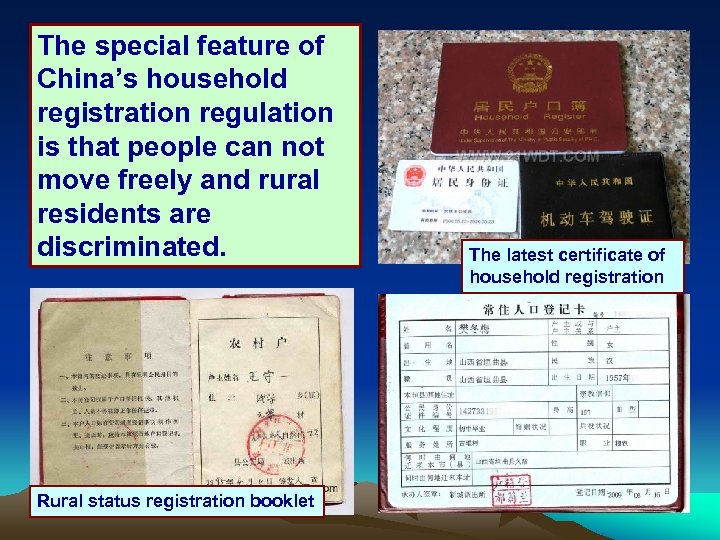
The special feature of China’s household registration regulation is that people can not move freely and rural residents are discriminated. Rural status registration booklet The latest certificate of household registration
What was the life of urban residents? Urban areas were organized for industrial production. Government provided the residents with jobs, housing and all the necessities for living, including free medical care and free school. Food, cloth and other living necessities were rationed, such as rice, flour, edible oil, meat, eggs, sugar, cloth, etc. . Wages were set into deferent levels according to seniority, responsibility and positions by the central government.
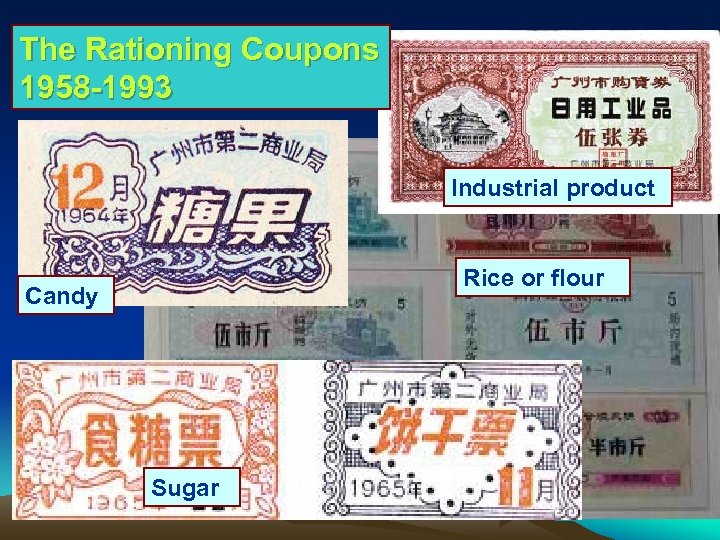
The Rationing Coupons 1958 -1993 Industrial product Rice or flour Candy Sugar
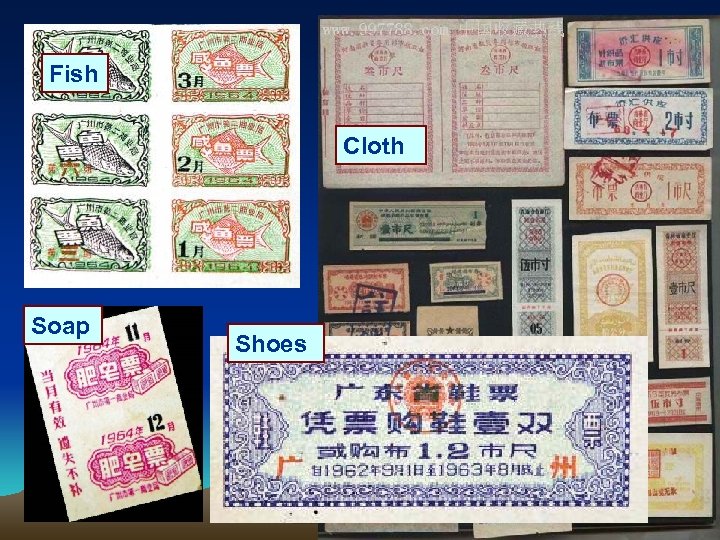
Fish Cloth Soap Shoes
2. 1 The Command Economic System What was the life of rural farmers? While in rural areas, farmers were organized into communes. Land production tools or equipment were collectively owned by the farmers in the village. Farmers can own their homes, education was free and medical care was subsidized. Income of farmers was determined by their harvest after the grain procurement by the central government. Each households income was calculated according to their work days contributed and their work effort they have devoted.
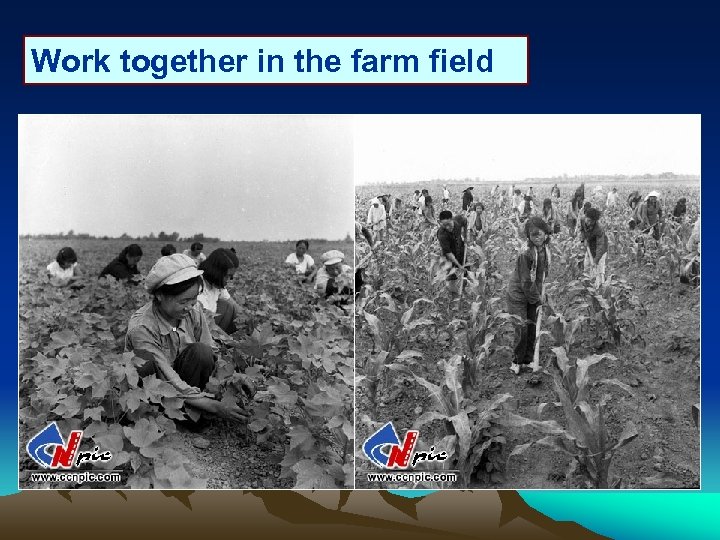
Work together in the farm field
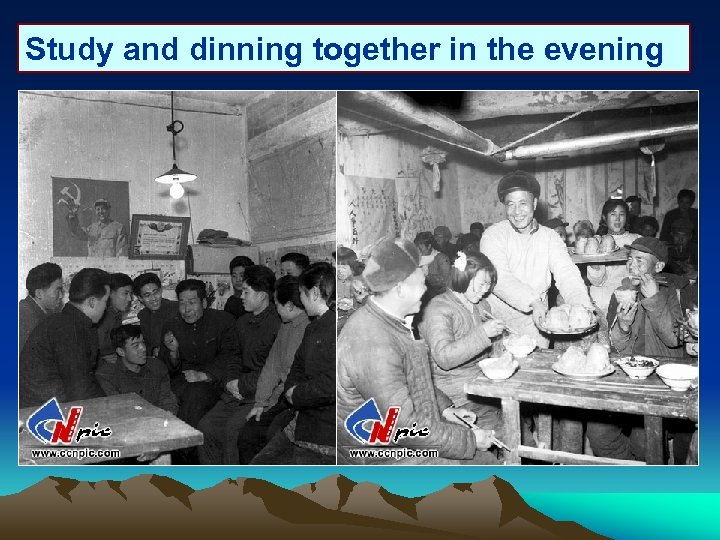
Study and dinning together in the evening
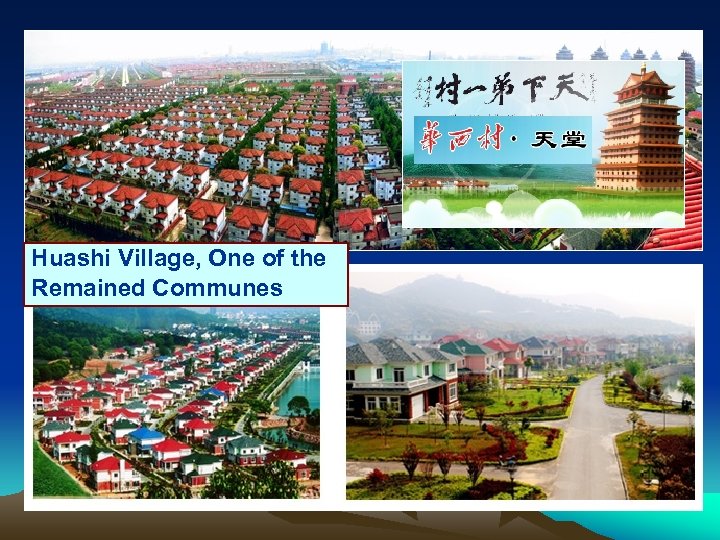
Huashi Village, One of the Remained Communes
2. 1 The Command Economic System How was the social and economic system operated? Under the ideology of communism, every body should work hard and should not go on leisure without reasons. People therefore were literally restricted on traveling or migration. Central government planned every thing including production and living. It was a quasi communist society.
2. 1 The Command Economic System The economic development policies The big push for industrialization policy: Heavy-industry-priority. In 1958, Great Leap Forward industrial campaign started. The Great Leap Forward strategy did increase China industrial production quickly, but the cost was an economic disaster in 1960 s.
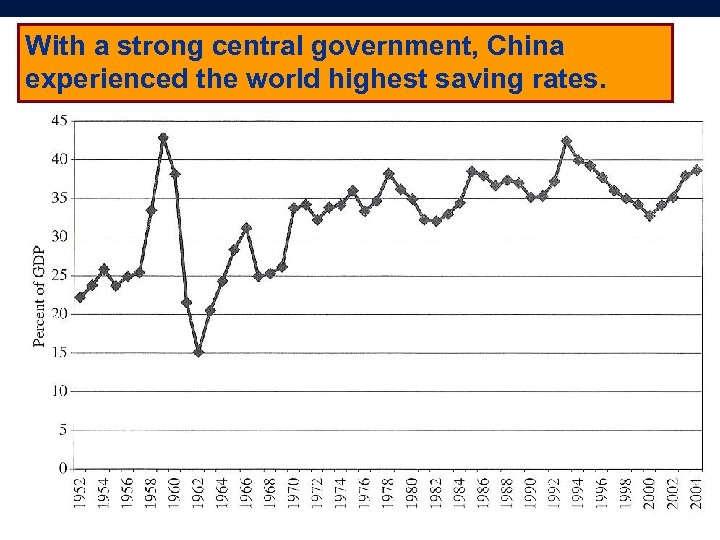
With a strong central government, China experienced the world highest saving rates.
2. 1 The Command Economic System The Natural Disaster in 1962 The Great Leap Forward campaign resulted in a disaster to China. Laborers were drawn to steel production with every possible stove, farm crops were abandoned, a huge waste resulted. 1962 draught further the agricultural damage, caused the big famine in China during 1962 to 1963. 1964, policy was adjusted to pay more attention to consumption goods production.
2. 1 The Command Economic System The Cultural Revolution broke out in 1996. The main goal of the Cultural Revolution was to completely remove the very traditional feudal value and the possible capitalist returning to China. Politically correct became the first priority. Almost all economic activities were affected, and need to give way to political activities. The cultural revolution lasted for ten years, 1996 -1976, caused a huge damage to the economy and to every aspect of the country.
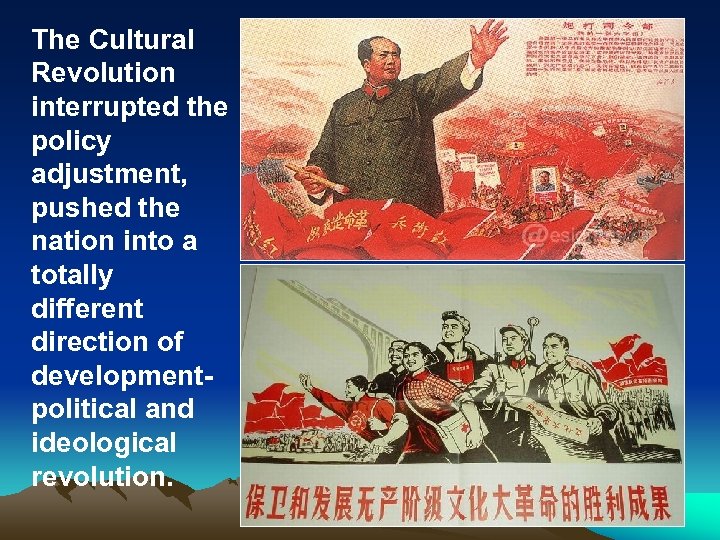
The Cultural Revolution interrupted the policy adjustment, pushed the nation into a totally different direction of developmentpolitical and ideological revolution.
2. 1 The Command Economic System The achievement of the first thirty years development of China Established its own industrial system, in heavy industry and light industry. Developed its own nuclear and national defense technology such missiles. Developed its own satellite technology and other high tech research base. Set up the nationwide education and medical care system to cover all the people in urban and rural areas. Completely removed drugs, prostitute, gambling and underground society.
2. 1 The Command Economic System The losses of the first thirty years development of China Incorrect economic development strategy and policy resulted in big waste and even disasters. Traditional social order was dismantled while new value system was not set up.
2. 2 Start of the Economic Reform During the first thirty years of socialist era, incorrect development strategy and a few radical political movements, especially the ten years cultural revolution, pushed China’s economy to a margin of bankruptcy in late 1970 s.
2. 2 Start of the Economic Reform 1976, the end of Maoist socialism era and the downfall of Gang of Four marked the turning point in China’s political direction. 1978, the Third Plenum of Communist Party of China made the decision to start the economic reform, focusing more on economic development, rather than on the political movements.
The change in ideology Debating on how China should reform the economy was fierce, following capitalist model or continuing on communist model. The most famous and influential brief speech was Mr Deng Xiaoping’s cat philosophy: “Black cat or white cat, it's a good cat so long it catches the mice”. which stopped the argument of going for capitalism or communism.
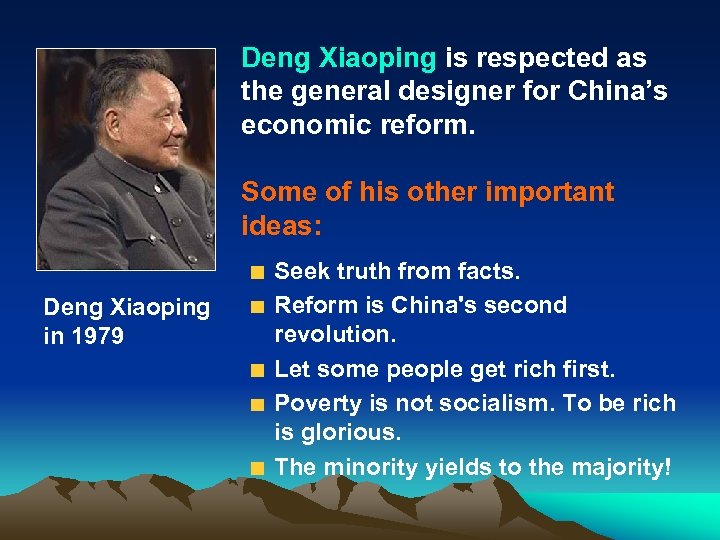
Deng Xiaoping is respected as the general designer for China’s economic reform. Some of his other important ideas: Deng Xiaoping in 1979 Seek truth from facts. Reform is China's second revolution. Let some people get rich first. Poverty is not socialism. To be rich is glorious. The minority yields to the majority!
More Deng Xiaoping’s ideas: Ø The United States brags about its political system, but the President says one thing during the election, something else when he takes office, something else at midterm and something else when he leaves. Ø When our thousands of Chinese students abroad return home, you will see how China will transform itself.
Starting of the rural reform China’s economic reform started from the collective farming communes. 1982 -1986, collective farming communes were abandoned, the Household Responsibility System was set up. The Household Responsibility System was to rent the land to farm households with a fixed rent, farmers were allowed to keep the residuals. It turned out that the rural reform was a big success. Grain production increased substantially in the coming few years.
2. 3 Strategies and Process The objectives: reform in policies and institutions, at the same time, maintain a steady growth trend. The Strategy: individual policy reform and gradual transformation in institution. Evaluate and reform results and expand reform areas.
2. 3 Strategies and Process Argument of different reform strategies: Gradual reform or shock therapy: Price control: which good should be released first for price control? Ownership type: should private ownership of business be allowed and to what extent? Market entry: which market could be opened? FDI: what policy should be designed? ……
The first phase of the reform 1978 -1992: Introduction of market mechanism in different sectors. Principles followed: touching the stone, then cross the river. Decentralization: Planning and market coexisted period. Dual-track market system and corruption. Lifting of the price control: Inflation and Tiananmen square turmoil in 1989. Open-door policy and special economic zones.
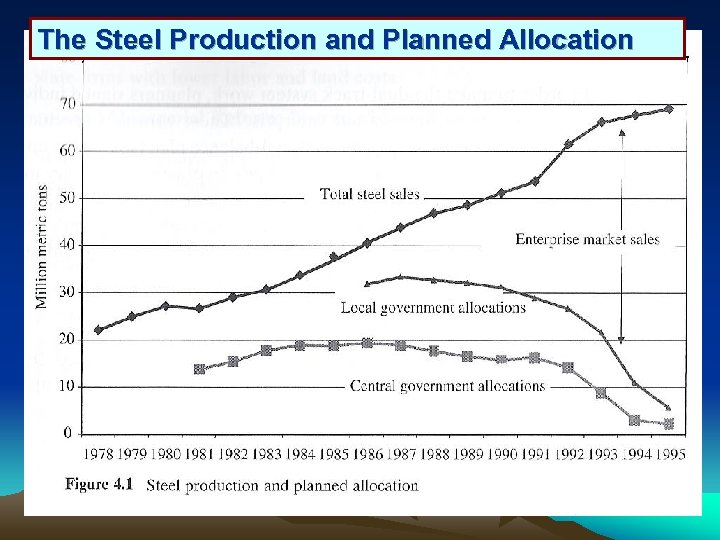
The Steel Production and Planned Allocation
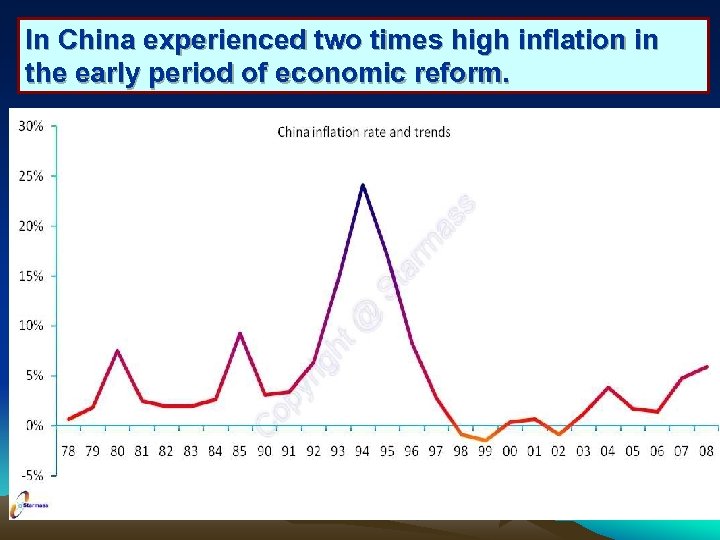
In China experienced two times high inflation in the early period of economic reform.
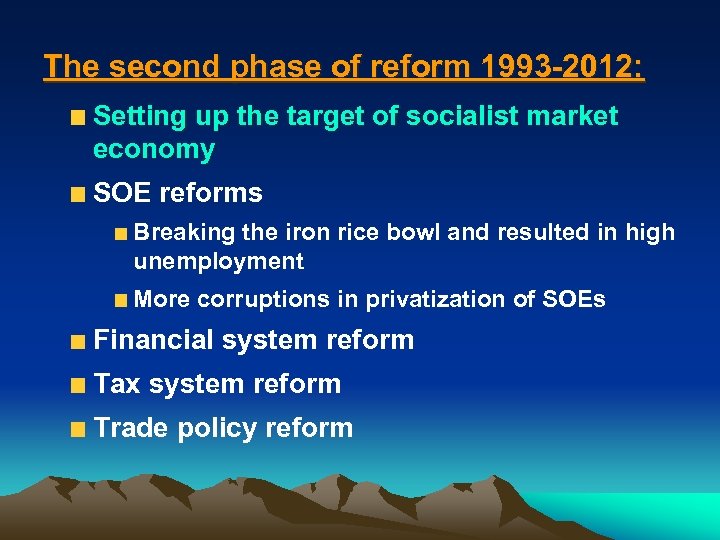
The second phase of reform 1993 -2012: Setting up the target of socialist market economy SOE reforms Breaking the iron rice bowl and resulted in high unemployment More corruptions in privatization of SOEs Financial system reform Tax system reform Trade policy reform
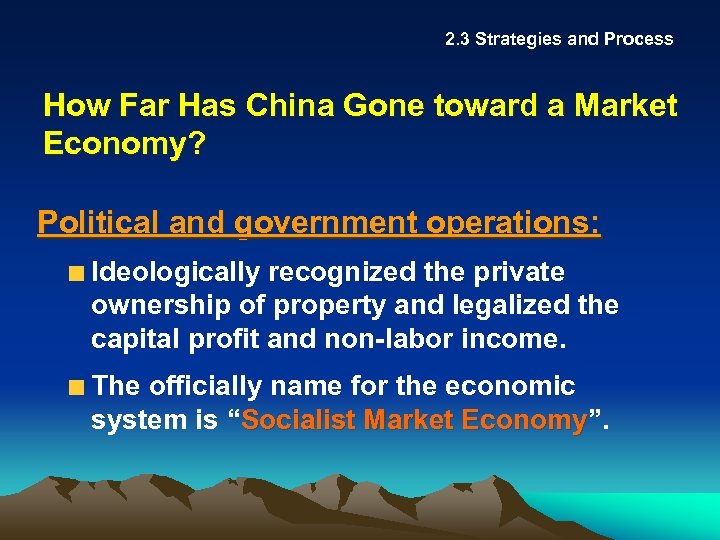
2. 3 Strategies and Process How Far Has China Gone toward a Market Economy? Political and government operations: Ideologically recognized the private ownership of property and legalized the capital profit and non-labor income. The officially name for the economic system is “Socialist Market Economy”. Economy
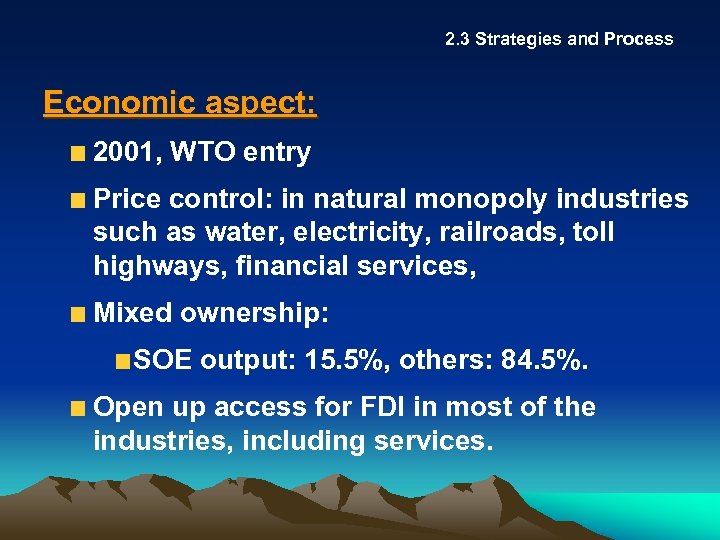
2. 3 Strategies and Process Economic aspect: 2001, WTO entry Price control: in natural monopoly industries such as water, electricity, railroads, toll highways, financial services, Mixed ownership: SOE output: 15. 5%, others: 84. 5%. Open up access for FDI in most of the industries, including services.
Tutorial Questions 1. What was the possible reason for China to choose the socialist system? 2. Is it really a doctrine that collective commune could not work efficiently? Why or why not? 3. What could be the obstacles for China to develop a democratic society?

End
Скачать презентацию Pub Pol 751 -001 The Chinese Economy and
81765195e181752d58b7930fb5667941.ppt