


 Скачать презентацию Psychic processes Sensation (not feeling) • This
Psychic processes Part 1.ppt
- Количество слайдов: 14
 Psychic processes
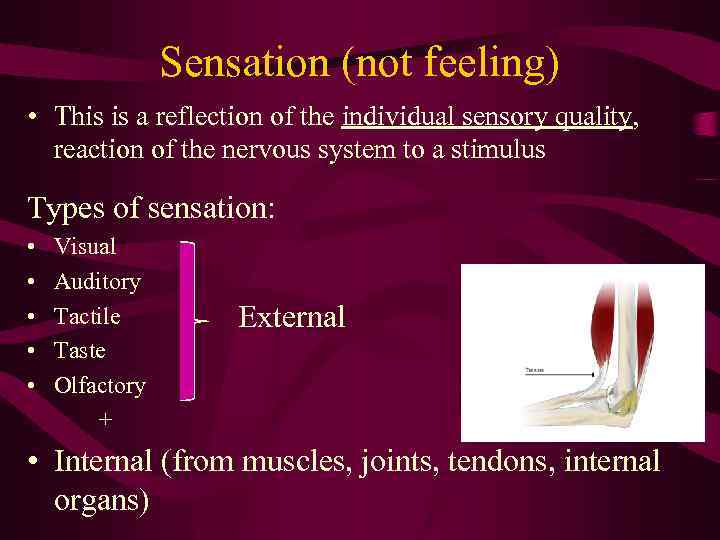 Sensation (not feeling) • This is a reflection of the individual sensory quality, reaction of the nervous system to a stimulus Types of sensation: • • • Visual Auditory Tactile Taste Olfactory + External • Internal (from muscles, joints, tendons, internal organs)
 Perception • This is a reflection of the objects and phenomena of reality currently affecting our senses with all the complex of their various features and parts Characteristics of perception: • • • Objectivity Integrity Structurality Constancy Meaningfulness Apperception Forms of perception : • Simple • Complex (space, time, movement, color)
 Structurality Constancy
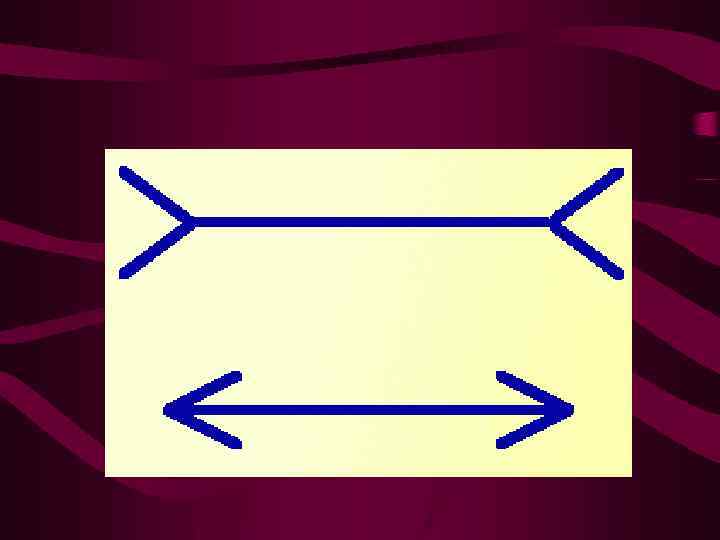
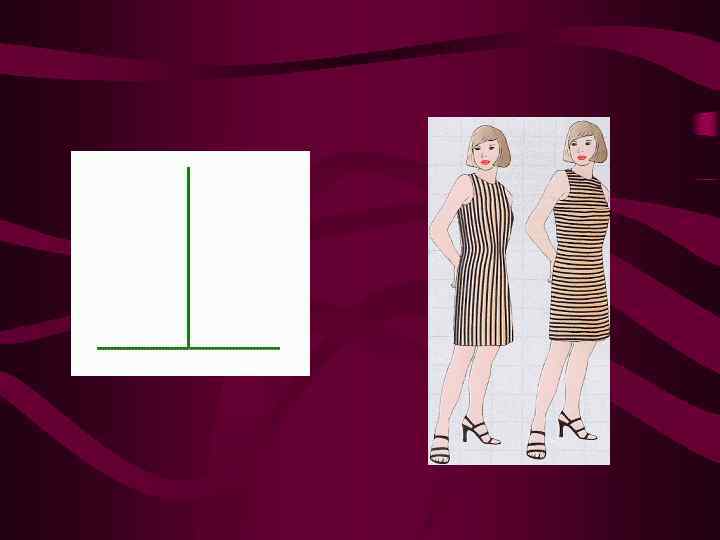
 Illusions of perception



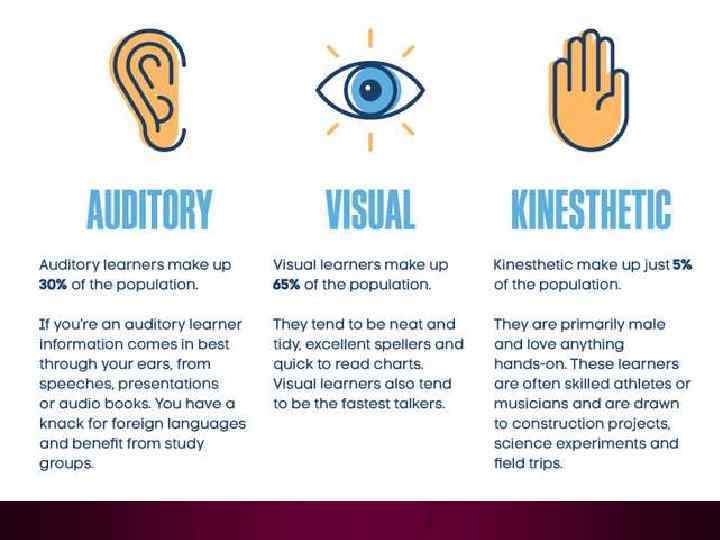
 Representation • It is a process of mental reconstruction of images of objects and phenomena, which are not currently affecting our senses Types of representation: • Visual • Auditory • Kinesthetic (tactile)
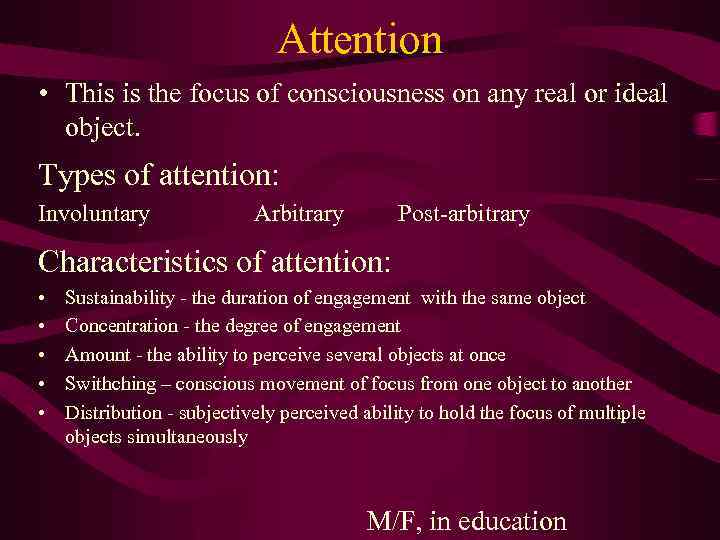 Attention • This is the focus of consciousness on any real or ideal object. Types of attention: Involuntary Arbitrary Post-arbitrary Characteristics of attention: • • • Sustainability - the duration of engagement with the same object Concentration - the degree of engagement Amount - the ability to perceive several objects at once Swithching – conscious movement of focus from one object to another Distribution - subjectively perceived ability to hold the focus of multiple objects simultaneously М/F, in education
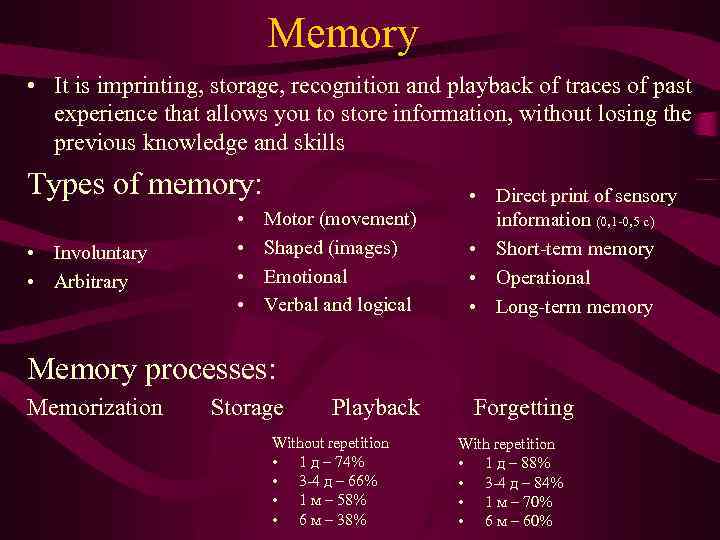 Memory • It is imprinting, storage, recognition and playback of traces of past experience that allows you to store information, without losing the previous knowledge and skills Types of memory: • Involuntary • Arbitrary • • Motor (movement) Shaped (images) Emotional Verbal and logical • Direct print of sensory information (0, 1 -0, 5 с) • Short-term memory • Operational • Long-term memory Memory processes: Memorization Storage Playback Without repetition • 1 д – 74% • 3 -4 д – 66% • 1 м – 58% • 6 м – 38% Forgetting With repetition • 1 д – 88% • 3 -4 д – 84% • 1 м – 70% • 6 м – 60%