 Скачать презентацию Psychiatric Disorders and Psychotherapy of Substance Abuse Robert
de1ad77f85752da054a2f65429c17619.ppt
- Количество слайдов: 38



Psychiatric Disorders and Psychotherapy of Substance Abuse Robert M. Weinrieb, M. D Department of Psychiatry University of Pennsylvania
Attitudes Toward the Treatment of Addicts At completion of residency, more physicians have negative attitudes toward SUD pts and are less optimistic about benefits of treatment than at the start of med school --Geller, et al, 1989
So, Why is That ? 1. Historically, substance abuse disorders (SUDs) were treated independently of medical community by paraprofessionals 2. Mental health services also rejected pts with SUDs 3. House staff see recidivist patients with multiple complex problems and are not trained to deal with them
“Attitude Adjustment” 1. An adequate knowledge base 2. A positive attitude toward the patient and the benefits of treatment 3. A sense of responsibility for the clinical problem - J. A. Renner, Jr. Biol Psychiatry, 2004
Topics to be Discussed 1. Dual Diagnosis • Definition, epidemiology, a case • Effects on medical care outcomes 2. Psychotherapy of Addiction • Theory, examples, outcomes
Definition of Dual Diagnosis • Dual Diagnosis is defined by having a major psychiatric diagnosis comorbid with a Substance Use Disorder (SUD) • Psychiatric symptoms are common in the context of substance abuse • 2/3 individuals with SUD have another psychiatric syndrome (Axis I)
Dual Diagnosis Caveats • Many of these psychiatric syndromes are temporary
Psychiatric Symptoms Due to Acute Effects of Drugs, ETOH • Stimulants (cocaine, amphetamines) Anxiety (panic, PTSD) mania, paranoia, hallucinations, delusions • Sedative/hypnotics (Etoh, benzos, opiates) Depression
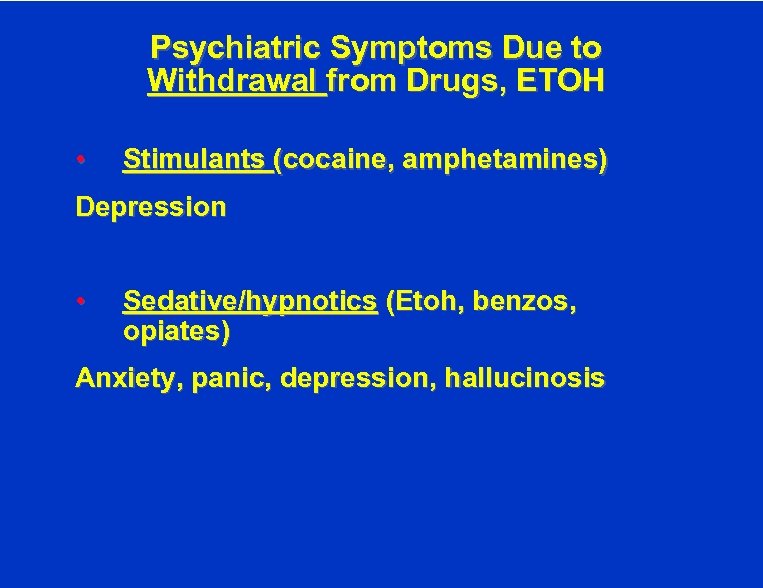
Psychiatric Symptoms Due to Withdrawal from Drugs, ETOH • Stimulants (cocaine, amphetamines) Depression • Sedative/hypnotics (Etoh, benzos, opiates) Anxiety, panic, depression, hallucinosis
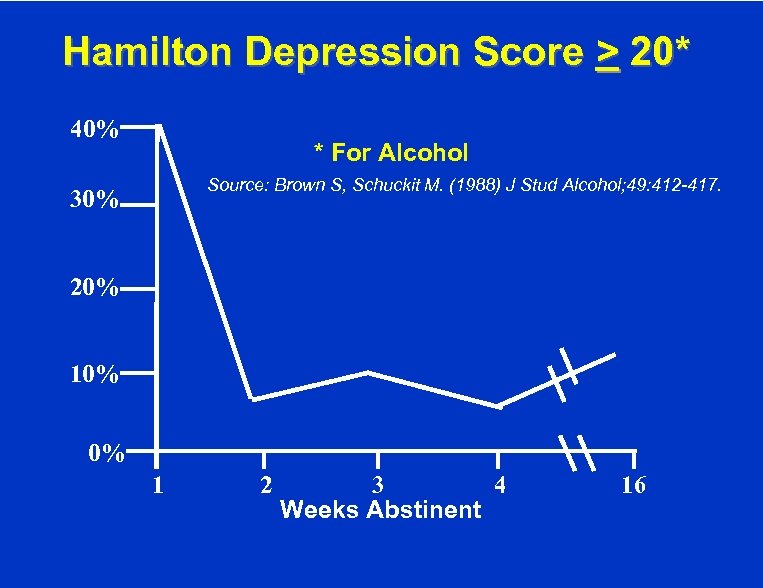
Hamilton Depression Score > 20* 40% * For Alcohol Source: Brown S, Schuckit M. (1988) J Stud Alcohol; 49: 412 -417. 30% 20% 10% 0% 1 2 3 4 Weeks Abstinent 16
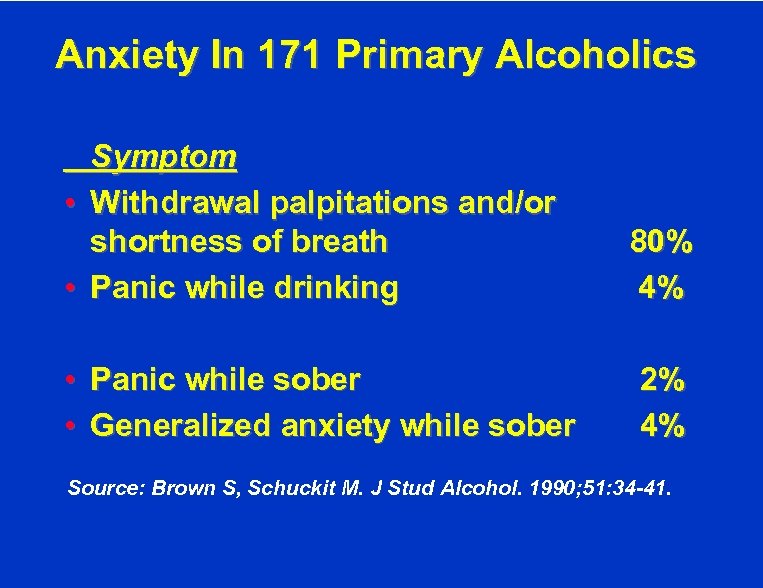
Anxiety In 171 Primary Alcoholics Symptom • Withdrawal palpitations and/or shortness of breath • Panic while drinking • Panic while sober • Generalized anxiety while sober 80% 4% 2% 4% Source: Brown S, Schuckit M. J Stud Alcohol. 1990; 51: 34 -41.
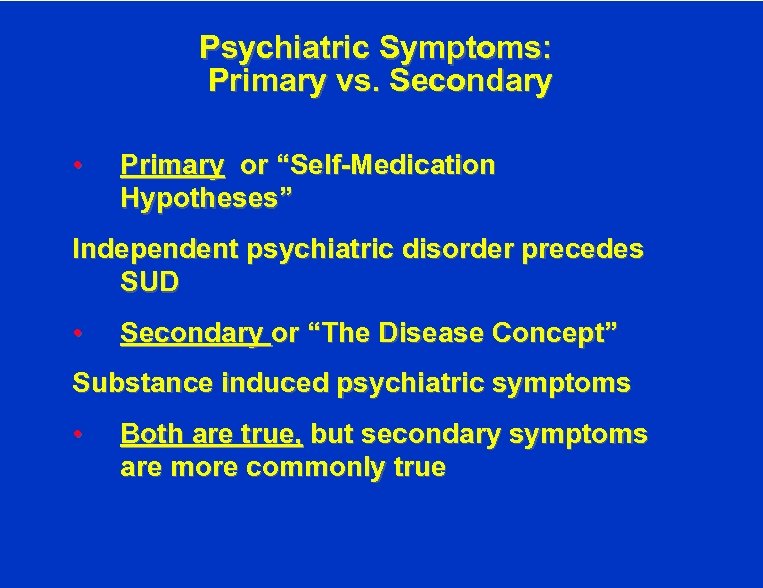
Psychiatric Symptoms: Primary vs. Secondary • Primary or “Self-Medication Hypotheses” Independent psychiatric disorder precedes SUD • Secondary or “The Disease Concept” Substance induced psychiatric symptoms • Both are true, but secondary symptoms are more commonly true
Epidemiology of Dual Diagnosis Disorders • Epidemiologic Catchment Area Study (ECA) • People who present for treatment for a SUD are ~3 X more likely to have a second psychiatric disorder vs. those without SUD • Most comorbidity (dual diagnosis) is accounted for by Antisocial Personality Disorder (Axis II) and another SUD
How to Make a Diagnosis When 2+ Disorders Are Observed 1. Take a good history 2. Be able to differentiate among acute and withdrawal symptoms of alcohol and drugs 3. Were psychiatric symptoms present during a clean period of more than 4 weeks?
Case Example of Dual Diagnosis 45 y/o male using cocaine for 5 years. Is depressed with paranoid thoughts. He stabbed himself while trying to fend off an “intruder” in his truck. Brought in by police who witnessed the stabbing-no intruder was seen Important questions: 1. Did the psychiatric symptoms precede his alcohol dependence? 2. Were there periods of time lasting more than 4 weeks during which psychiatric symptoms were present? 3. Presumptive diagnosis?
Treatment for Dual Diagnosis • Integration of therapy is necessary (medications, groups and individual tx) • Sometimes “coercion” or drug courts • Clinical Trials: Seeking Safety (Post. Traumatic Stress D/O)
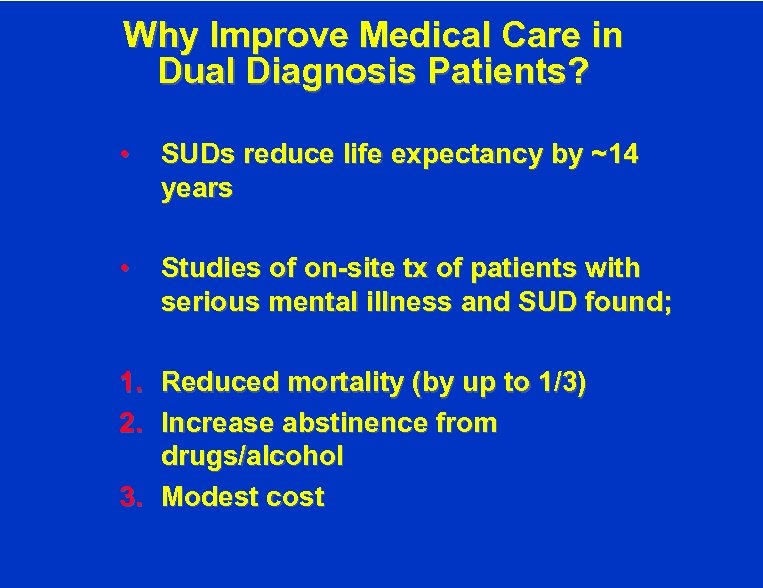
Why Improve Medical Care in Dual Diagnosis Patients? • SUDs reduce life expectancy by ~14 years • Studies of on-site tx of patients with serious mental illness and SUD found; 1. 2. Reduced mortality (by up to 1/3) Increase abstinence from drugs/alcohol 3. Modest cost
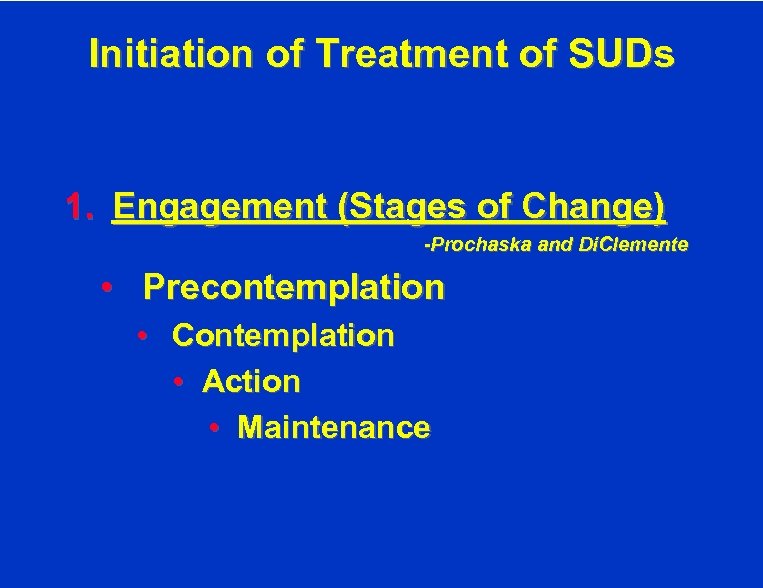
Initiation of Treatment of SUDs 1. Engagement (Stages of Change) -Prochaska and Di. Clemente • Precontemplation • Contemplation • Action • Maintenance
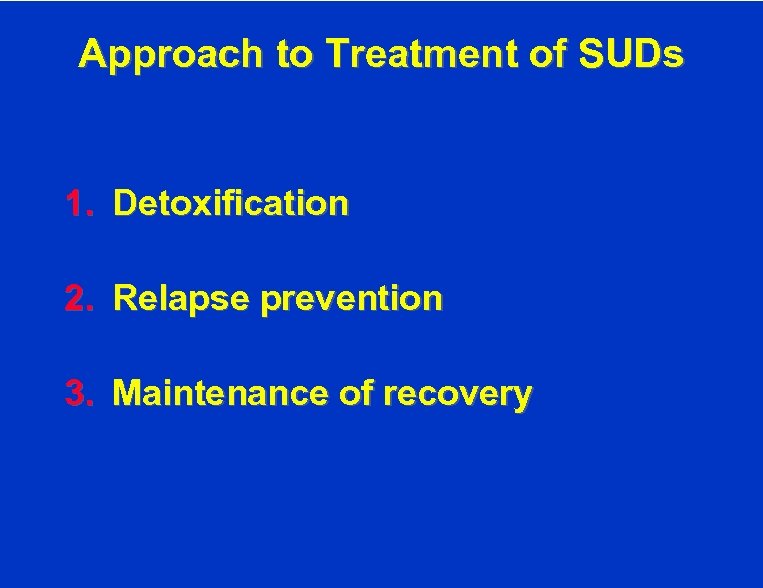
Approach to Treatment of SUDs 1. Detoxification 2. Relapse prevention 3. Maintenance of recovery
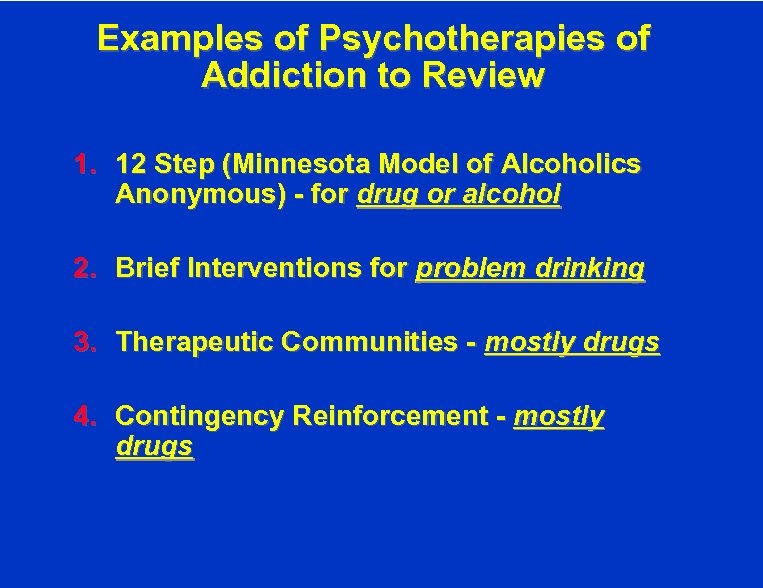
Examples of Psychotherapies of Addiction to Review 1. 12 Step (Minnesota Model of Alcoholics Anonymous) - for drug or alcohol 2. Brief Interventions for problem drinking 3. Therapeutic Communities - mostly drugs 4. Contingency Reinforcement - mostly drugs
Still More Psychotherapies of Addiction 5. PROJECT MATCH FOR ALCOHOL DEPENDENCE: Motivational Enhancement Therapy, Cognitive Behavioral Therapy, 12 Step Facilitation Therapy 6. Alternative Therapies (harm reduction, aversive therapy, hypnosis, accupuncture, mindfulness, yoga, telephone treatment, etc) - for drugs, alcohol and/or nicotine
12 Step (Minnesota Model) for Alcohol Dependence • Self-help, not professional therapy • 12 Steps and 12 Traditions • In a study of Twelve-Step Facilitation (TSF) vs. Motivational Enhancement and Cognitive Behavioral Therapy, ~40% of TSF pts stayed in AA 10 years after treatment.
Brief Interventions for Moderate Alcohol Problems • Administered by health professionals in medical settings (physicians, nurses) • Sessions are brief (5 -30 minutes) • Goal is to improve medication compliance or reduce harmful drinking behaviors • Mixed results: Wallace et al. , 1988: reduction drinking 45% tx vs. 25% control Fleming et al, 1999: reduction drinking 14% tx vs. 20% control
Project MATCH for Alcohol Dependence • Motivational Enhancement Therapy • Individual Cognitive-Behavioral Psychotherapy • AA and Therapeutic Communities
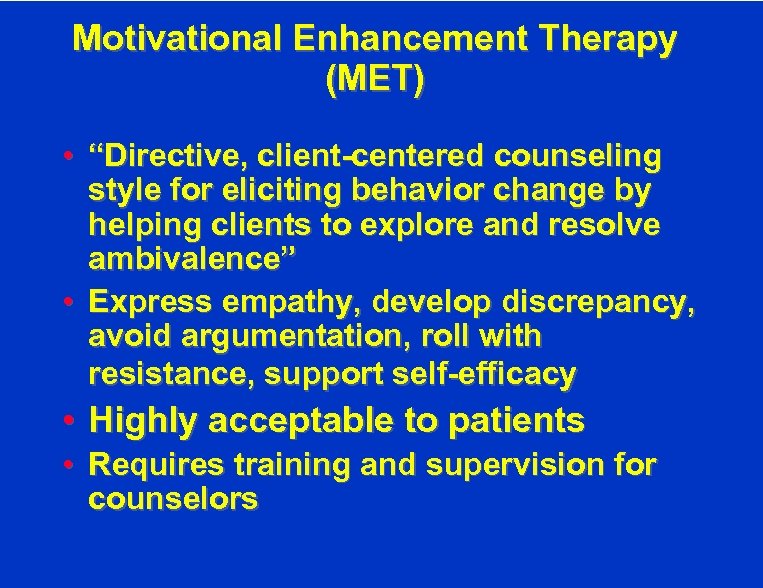
Motivational Enhancement Therapy (MET) • “Directive, client-centered counseling style for eliciting behavior change by helping clients to explore and resolve ambivalence” • Express empathy, develop discrepancy, avoid argumentation, roll with resistance, support self-efficacy • Highly acceptable to patients • Requires training and supervision for counselors
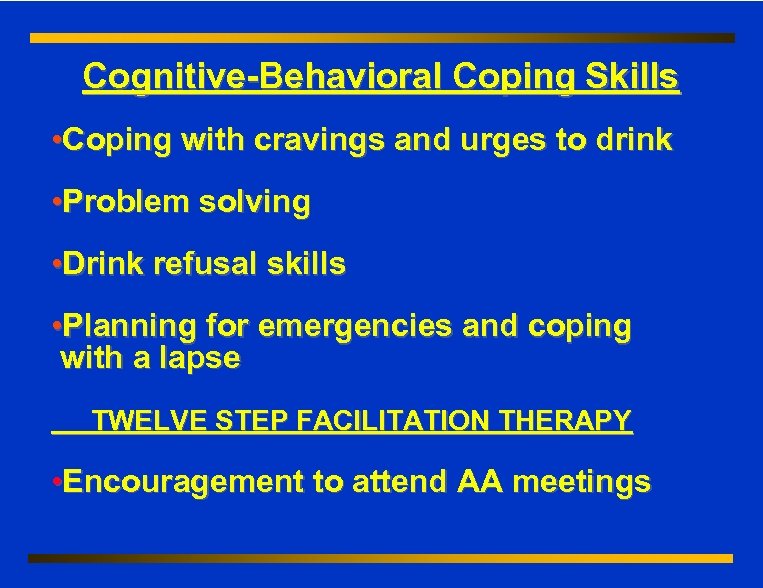
Cognitive-Behavioral Coping Skills • Coping with cravings and urges to drink • Problem solving • Drink refusal skills • Planning for emergencies and coping with a lapse TWELVE STEP FACILITATION THERAPY • Encouragement to attend AA meetings
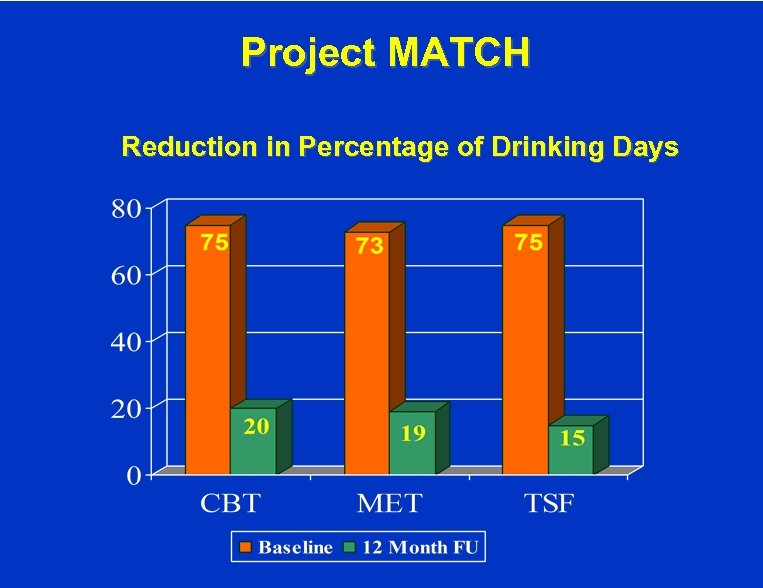
Project MATCH Reduction in Percentage of Drinking Days
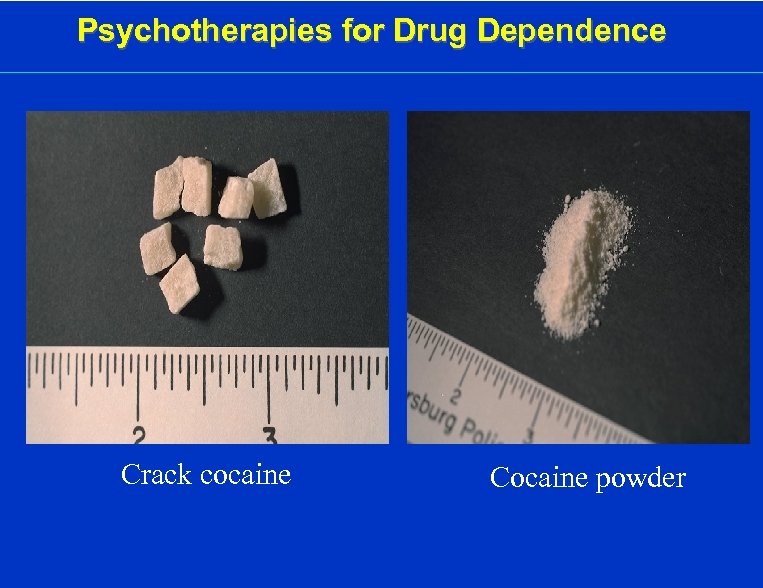
Psychotherapies for Drug Dependence Crack cocaine Cocaine powder
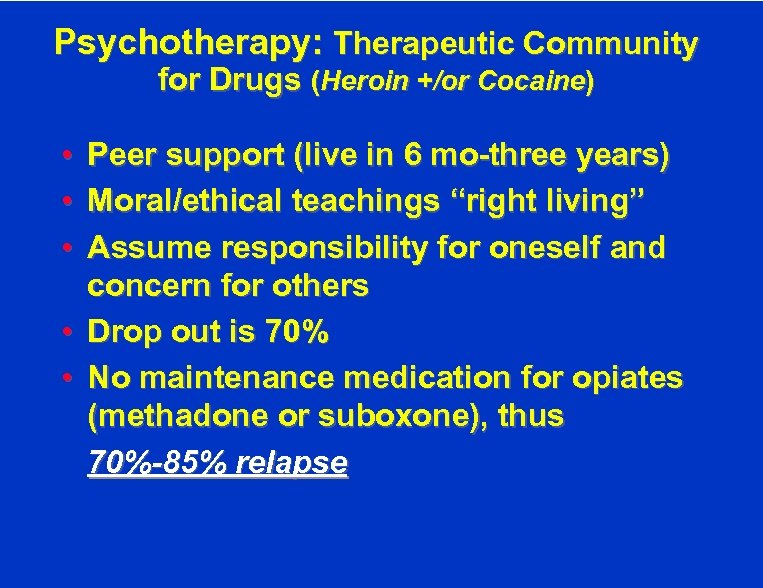
Psychotherapy: Therapeutic Community for Drugs (Heroin +/or Cocaine) • • • Peer support (live in 6 mo-three years) Moral/ethical teachings “right living” Assume responsibility for oneself and concern for others • Drop out is 70% • No maintenance medication for opiates (methadone or suboxone), thus 70%-85% relapse
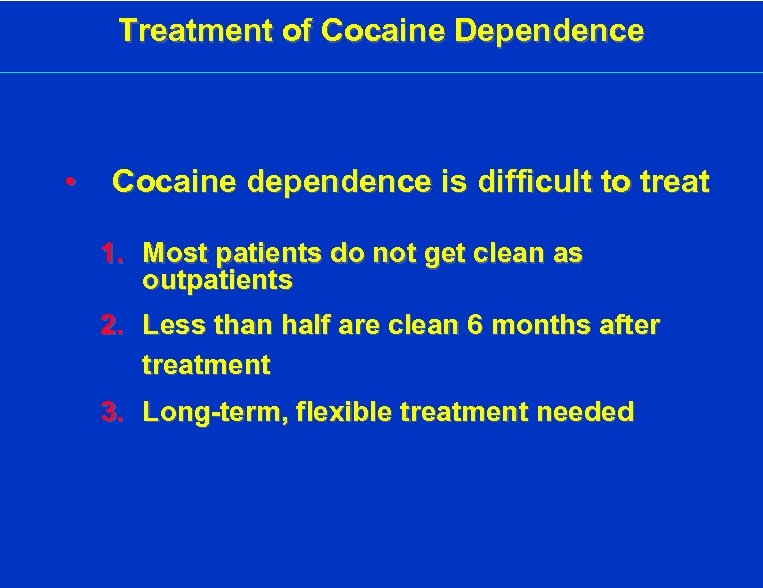
Treatment of Cocaine Dependence • Cocaine dependence is difficult to treat 1. Most patients do not get clean as outpatients 2. Less than half are clean 6 months after treatment 3. Long-term, flexible treatment needed
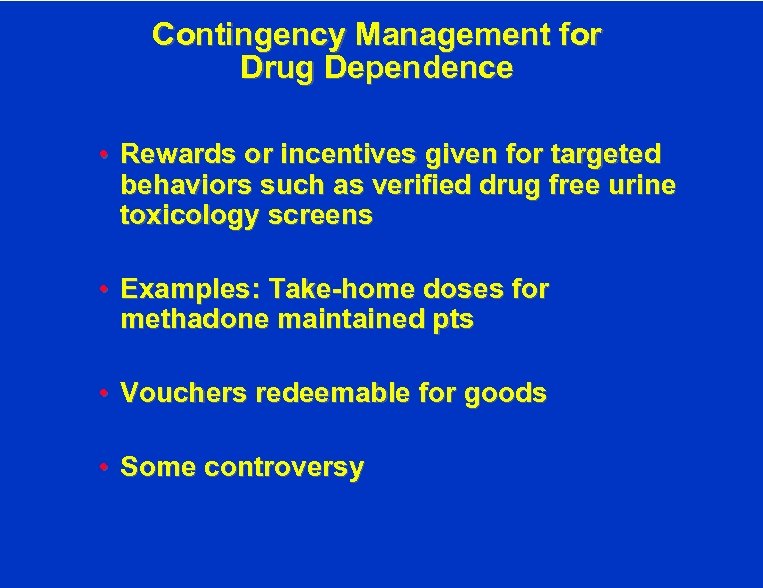
Contingency Management for Drug Dependence • Rewards or incentives given for targeted behaviors such as verified drug free urine toxicology screens • Examples: Take-home doses for methadone maintained pts • Vouchers redeemable for goods • Some controversy
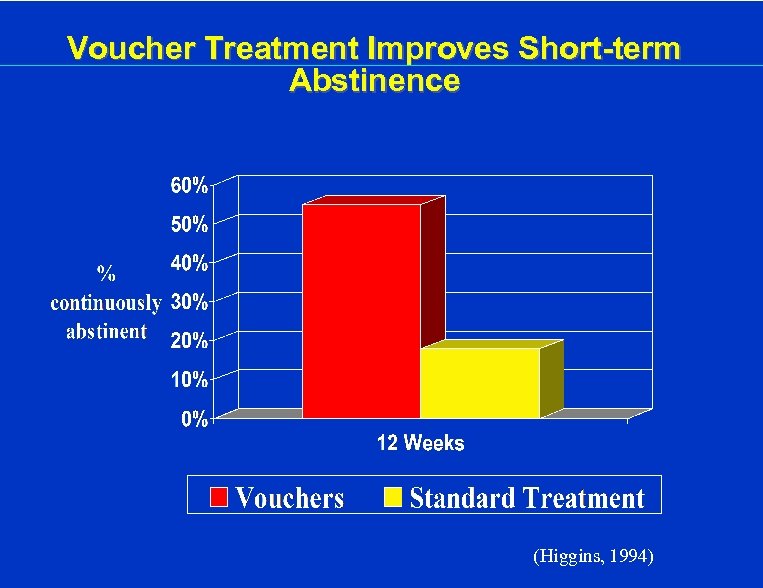
Voucher Treatment Improves Short-term Abstinence (Higgins, 1994)
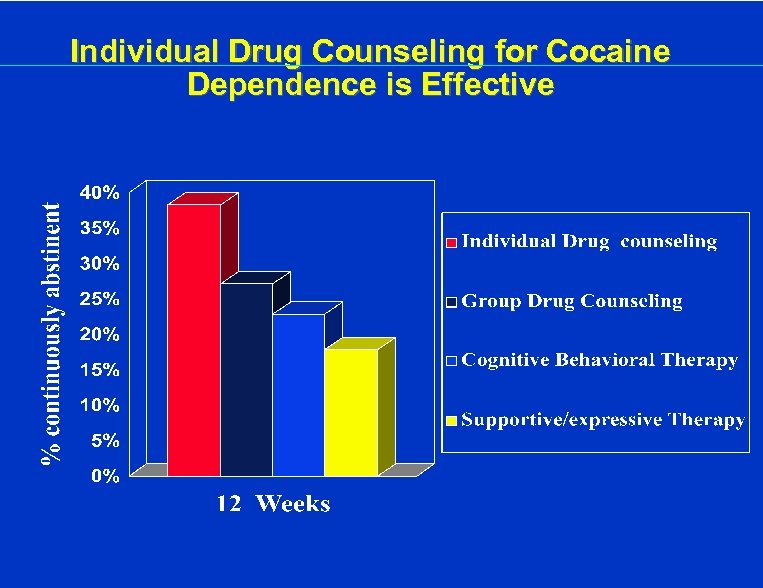
Individual Drug Counseling for Cocaine Dependence is Effective
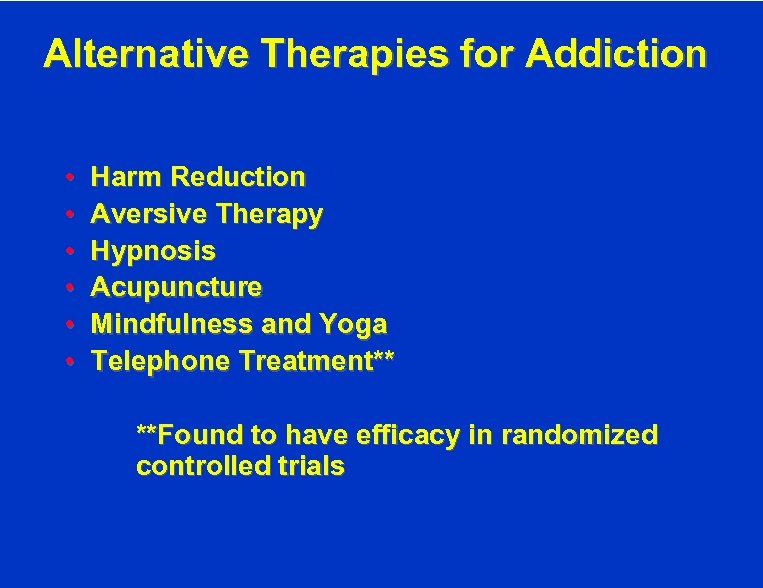
Alternative Therapies for Addiction • • • Harm Reduction Aversive Therapy Hypnosis Acupuncture Mindfulness and Yoga Telephone Treatment** **Found to have efficacy in randomized controlled trials
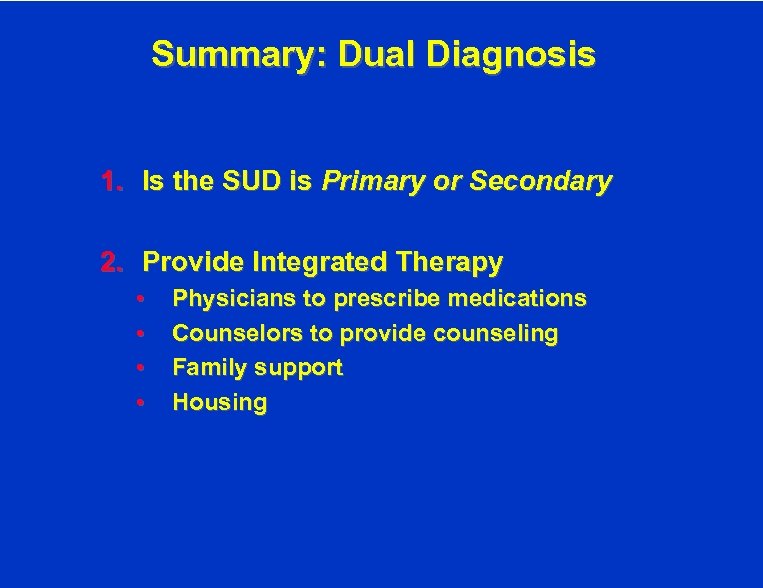
Summary: Dual Diagnosis 1. Is the SUD is Primary or Secondary 2. Provide Integrated Therapy • • Physicians to prescribe medications Counselors to provide counseling Family support Housing
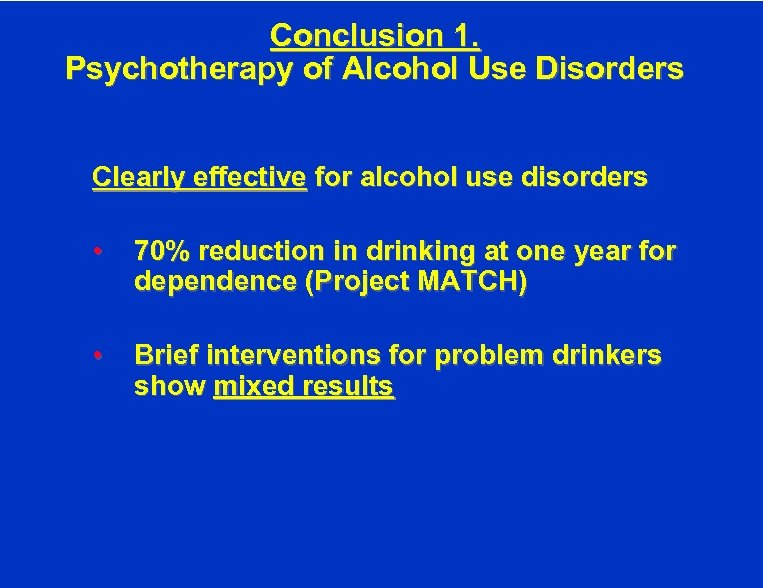
Conclusion 1. Psychotherapy of Alcohol Use Disorders Clearly effective for alcohol use disorders • 70% reduction in drinking at one year for dependence (Project MATCH) • Brief interventions for problem drinkers show mixed results
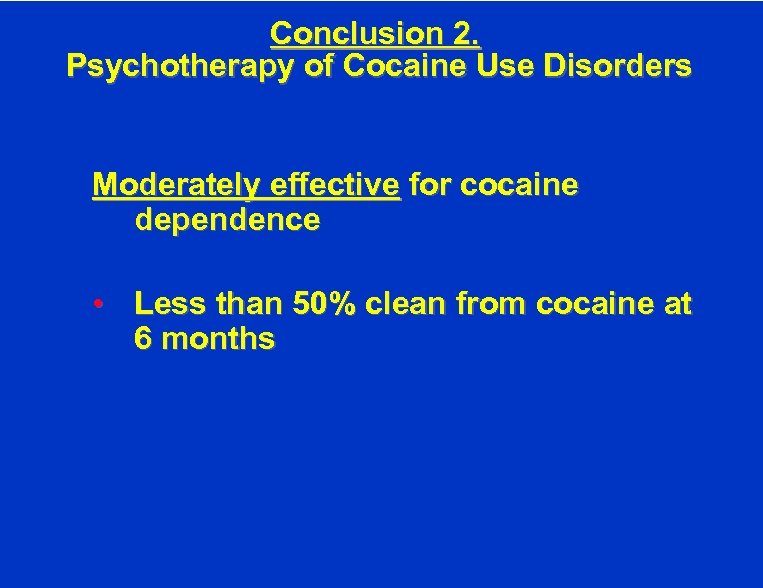
Conclusion 2. Psychotherapy of Cocaine Use Disorders Moderately effective for cocaine dependence • Less than 50% clean from cocaine at 6 months
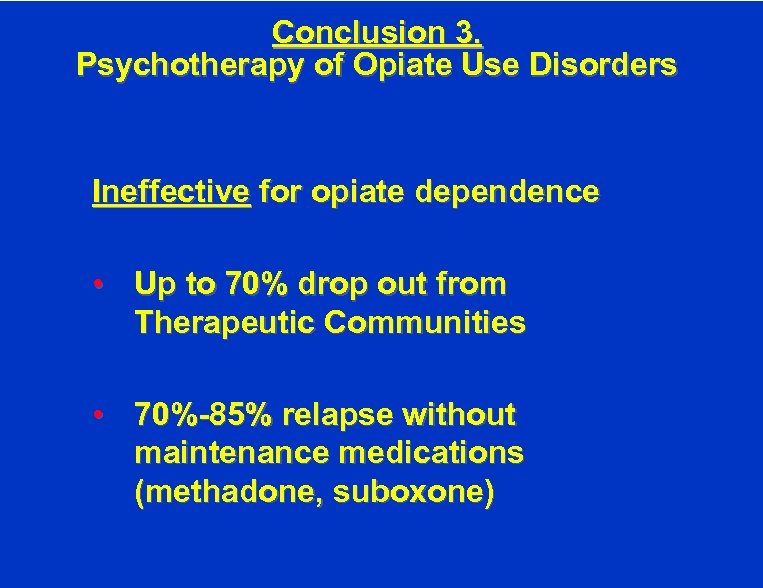
Conclusion 3. Psychotherapy of Opiate Use Disorders Ineffective for opiate dependence • Up to 70% drop out from Therapeutic Communities • 70%-85% relapse without maintenance medications (methadone, suboxone)
Скачать презентацию Psychiatric Disorders and Psychotherapy of Substance Abuse Robert
de1ad77f85752da054a2f65429c17619.ppt