


 Скачать презентацию Pseudocode LO express a solution using standard design
47_48_Pseudocode.pptx
- Количество слайдов: 17
 Pseudocode LO: express a solution using standard design tools
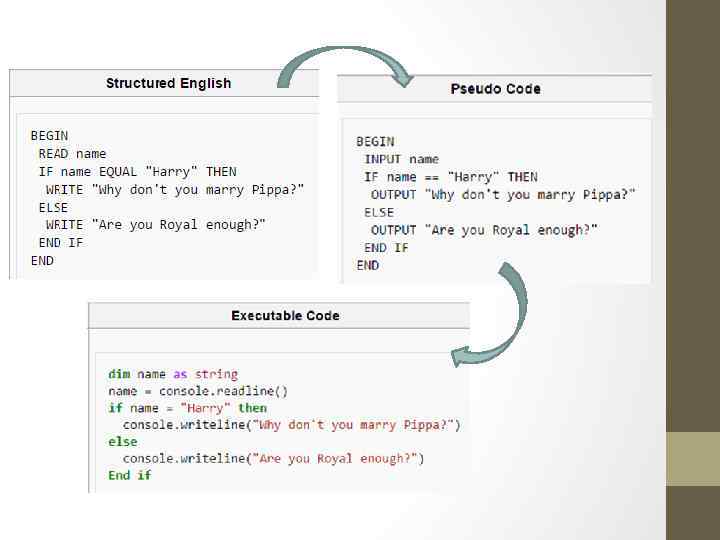
 Pseudocode - informal high-level description of a computer program or other algorithm, intended for human reading rather than machine reading.
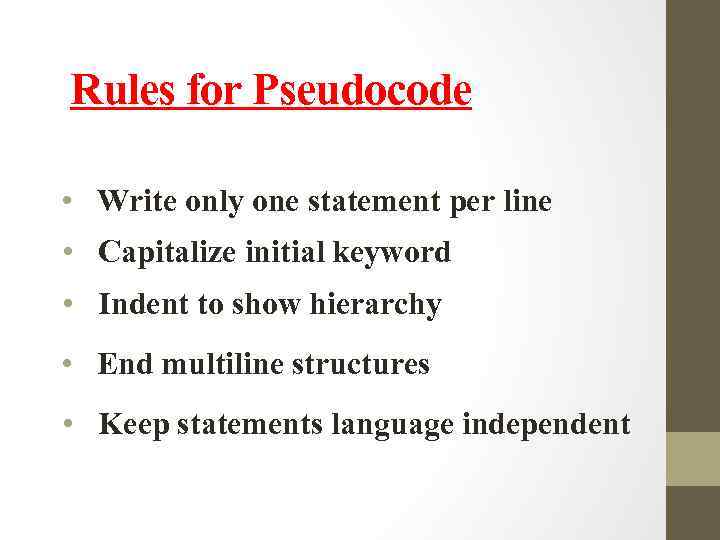 Rules for Pseudocode • Write only one statement per line • Capitalize initial keyword • Indent to show hierarchy • End multiline structures • Keep statements language independent
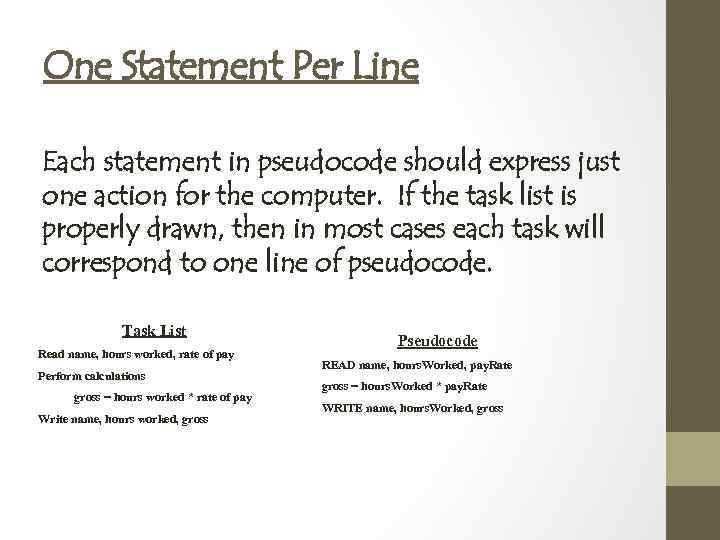 One Statement Per Line Each statement in pseudocode should express just one action for the computer. If the task list is properly drawn, then in most cases each task will correspond to one line of pseudocode. Task List Read name, hours worked, rate of pay Perform calculations gross = hours worked * rate of pay Write name, hours worked, gross Pseudocode READ name, hours. Worked, pay. Rate gross = hours. Worked * pay. Rate WRITE name, hours. Worked, gross
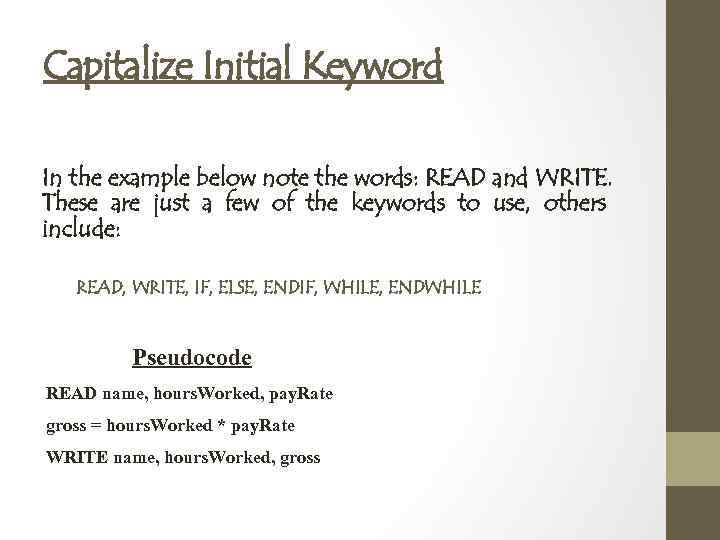 Capitalize Initial Keyword In the example below note the words: READ and WRITE. These are just a few of the keywords to use, others include: READ, WRITE, IF, ELSE, ENDIF, WHILE, ENDWHILE Pseudocode READ name, hours. Worked, pay. Rate gross = hours. Worked * pay. Rate WRITE name, hours. Worked, gross
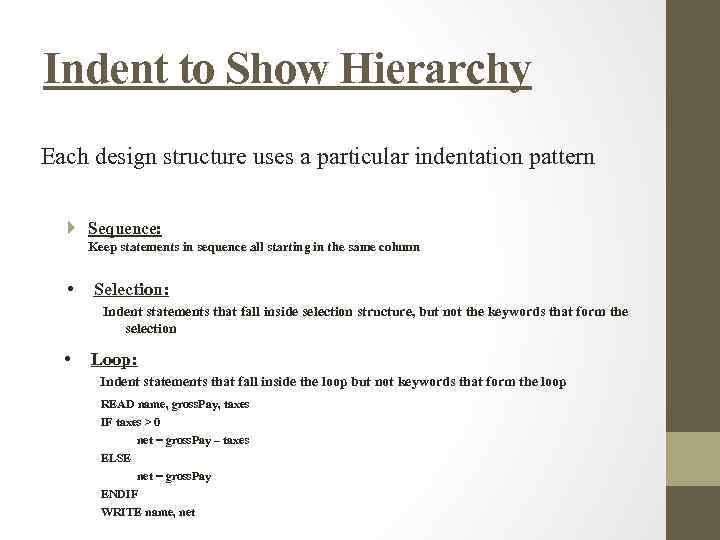 Indent to Show Hierarchy Each design structure uses a particular indentation pattern Sequence: Keep statements in sequence all starting in the same column • Selection: Indent statements that fall inside selection structure, but not the keywords that form the selection • Loop: Indent statements that fall inside the loop but not keywords that form the loop READ name, gross. Pay, taxes IF taxes > 0 net = gross. Pay – taxes ELSE net = gross. Pay ENDIF WRITE name, net
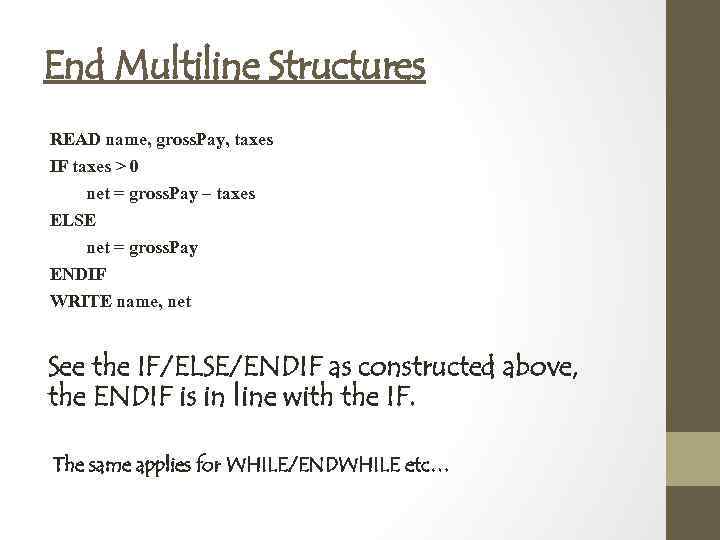 End Multiline Structures READ name, gross. Pay, taxes IF taxes > 0 net = gross. Pay – taxes ELSE net = gross. Pay ENDIF WRITE name, net See the IF/ELSE/ENDIF as constructed above, the ENDIF is in line with the IF. The same applies for WHILE/ENDWHILE etc…
 Language Independence Resist the urge to write in whatever language you are most comfortable with, in the long run you will save time. Remember you are describing a logic plan to develop a program, you are not programming!
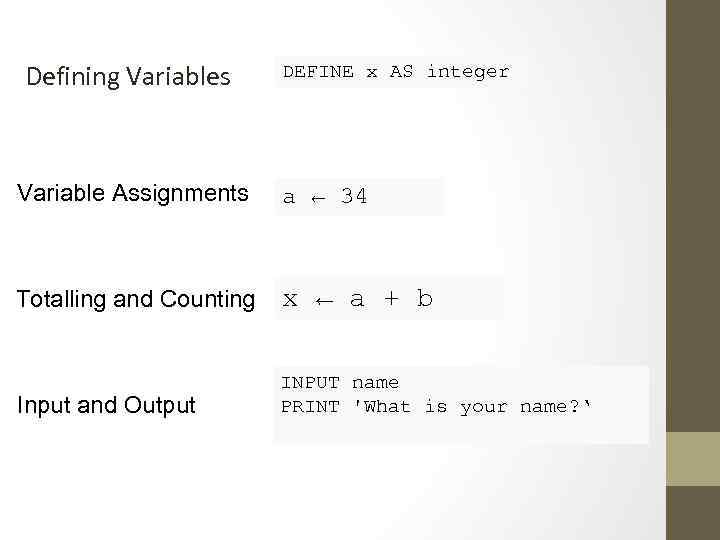 Defining Variables DEFINE x AS integer Variable Assignments a ← 34 Totalling and Counting x ← a + b Input and Output INPUT name PRINT 'What is your name? ‘
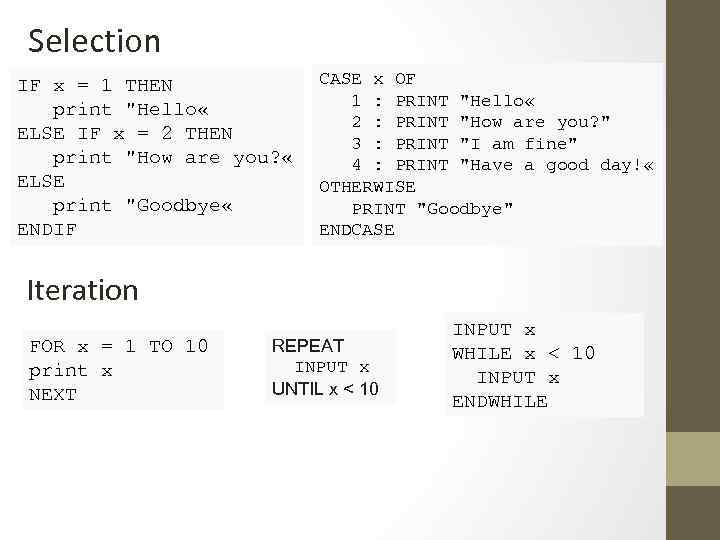 Selection IF x = 1 THEN print "Hello « ELSE IF x = 2 THEN print "How are you? « ELSE print "Goodbye « ENDIF CASE x OF 1 : PRINT "Hello « 2 : PRINT "How are you? " 3 : PRINT "I am fine" 4 : PRINT "Have a good day! « OTHERWISE PRINT "Goodbye" ENDCASE Iteration FOR x = 1 TO 10 print x NEXT REPEAT INPUT x UNTIL x < 10 INPUT x WHILE x < 10 INPUT x ENDWHILE
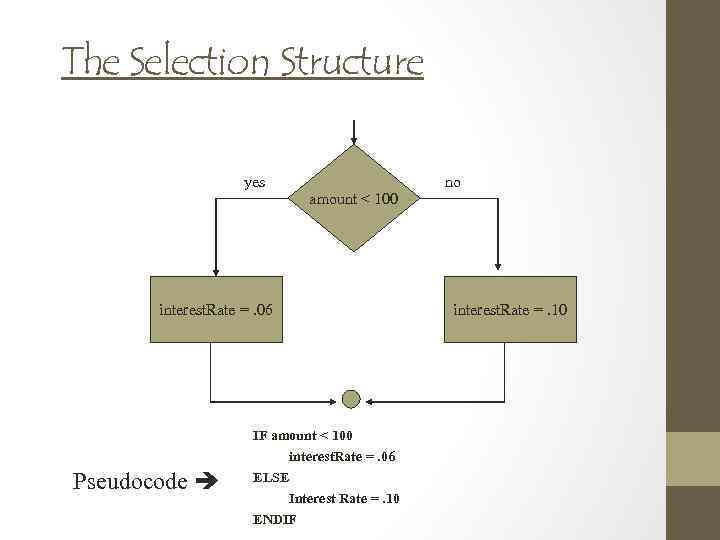 The Selection Structure yes amount < 100 interest. Rate =. 06 IF amount < 100 interest. Rate =. 06 Pseudocode ELSE Interest Rate =. 10 ENDIF no interest. Rate =. 10
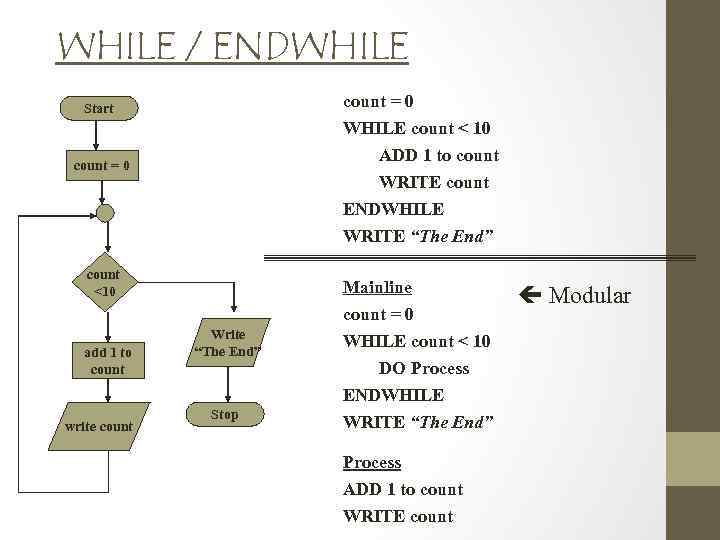 WHILE / ENDWHILE count = 0 Start WHILE count < 10 ADD 1 to count WRITE count ENDWHILE count = 0 WRITE “The End” count <10 Mainline count = 0 add 1 to count write count Write “The End” Stop WHILE count < 10 DO Process ENDWHILE WRITE “The End” Process ADD 1 to count WRITE count Modular
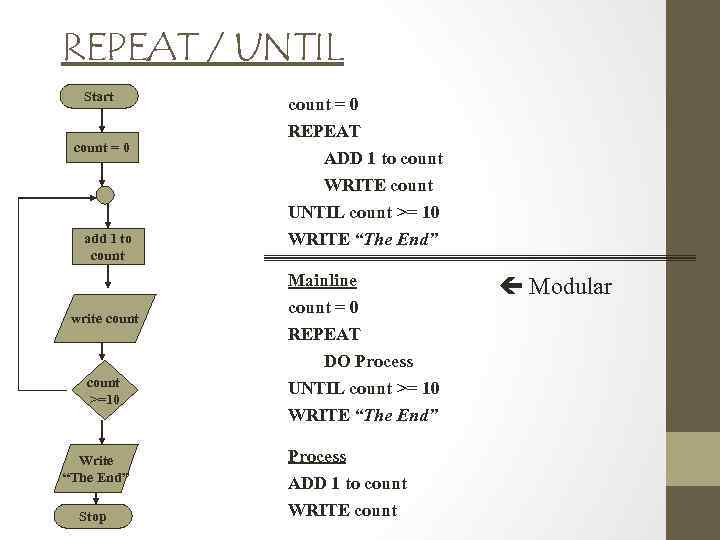 REPEAT / UNTIL Start count = 0 add 1 to count = 0 REPEAT ADD 1 to count WRITE count UNTIL count >= 10 WRITE “The End” Mainline write count >=10 Write “The End” Stop count = 0 REPEAT DO Process UNTIL count >= 10 WRITE “The End” Process ADD 1 to count WRITE count Modular
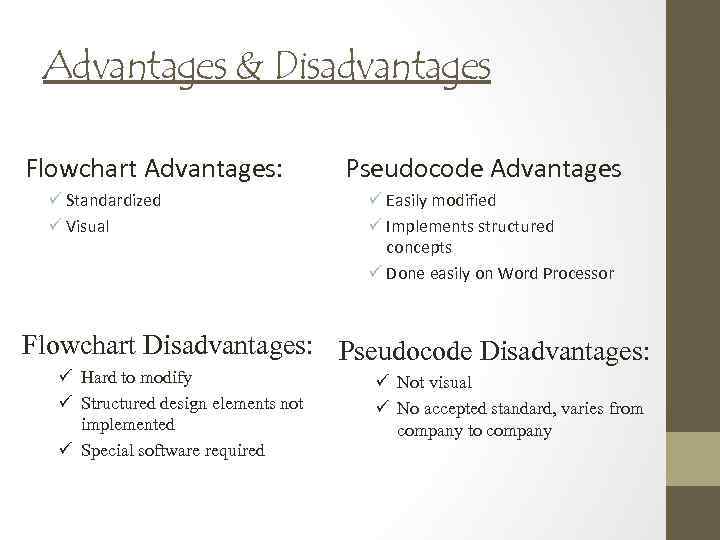 Advantages & Disadvantages Flowchart Advantages: ü Standardized ü Visual Pseudocode Advantages ü Easily modified ü Implements structured concepts ü Done easily on Word Processor Flowchart Disadvantages: Pseudocode Disadvantages: ü Hard to modify ü Structured design elements not implemented ü Special software required ü Not visual ü No accepted standard, varies from company to company
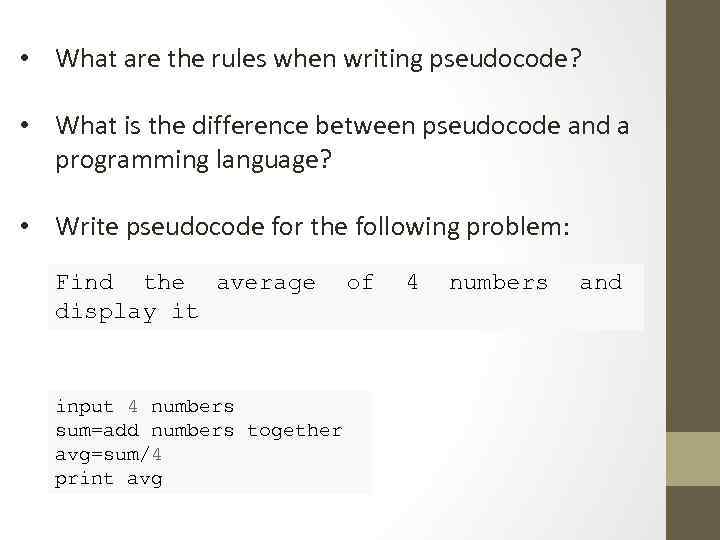 • What are the rules when writing pseudocode? • What is the difference between pseudocode and a programming language? • Write pseudocode for the following problem: Find the average display it input 4 numbers sum=add numbers together avg=sum/4 print avg of 4 numbers and
 • https: //en. wikibooks. org/wiki/GCSE_Computer_Science/Pseudocode • https: //en. wikibooks. org/wiki/Alevel_Computing/AQA/Problem_Solving, _Programming, _Data_Represe ntation_and_Practical_Exercise/Problem_Solving/Pseudo_code • https: //en. wikibooks. org/wiki/GCSE_Computer_Science/Pseudocode