


 Скачать презентацию PSC Partners Seeking a Cure Future directions in
72c39bb7733bf51b162d5e89b4bcb217.ppt
- Количество слайдов: 40
 PSC Partners Seeking a Cure Future directions in PSC research New Haven June 25, 2016 U. Beuers Department of Gastroenterology & Hepatology Tytgat Institute of Liver and Intestinal Research Academic Medical Center University of Amsterdam The Netherlands
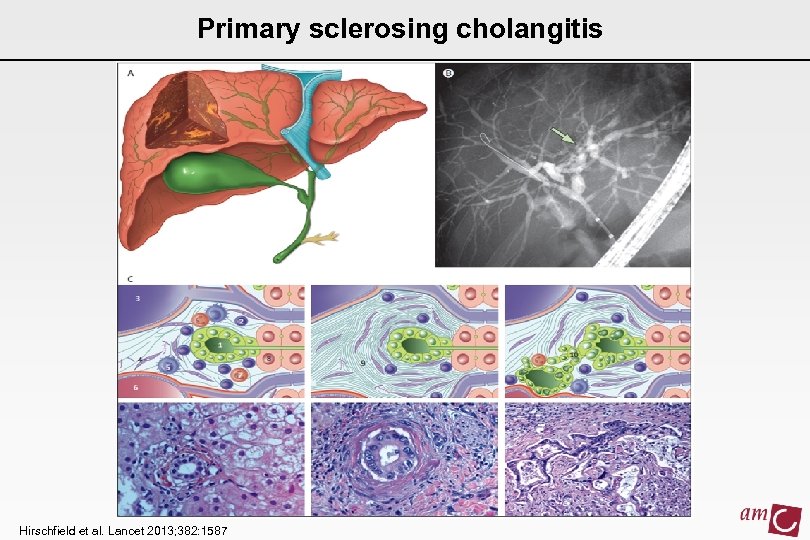 Primary sclerosing cholangitis Hirschfield et al. Lancet 2013; 382: 1587
 Future Directions in PSC Research • Epidemiology • Diagnosis & Screening • Pathophysiology • Treatment
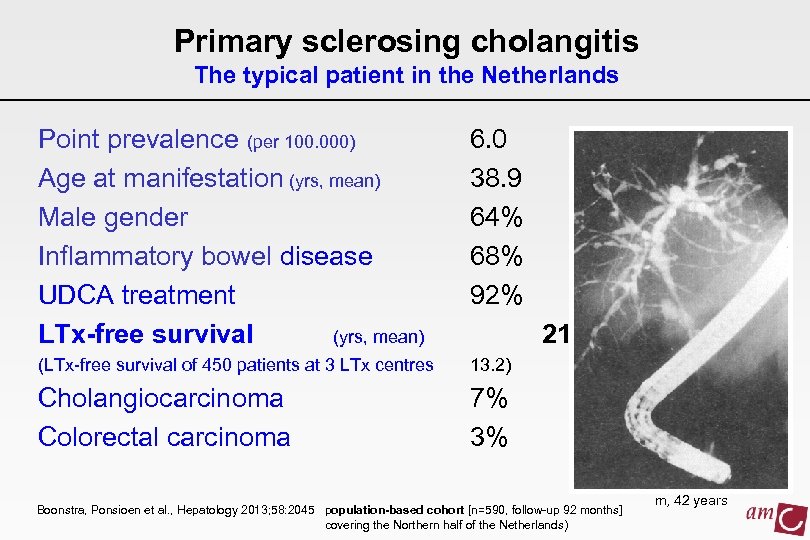 Primary sclerosing cholangitis The typical patient in the Netherlands Point prevalence (per 100. 000) Age at manifestation (yrs, mean) Male gender Inflammatory bowel disease UDCA treatment LTx-free survival (yrs, mean) 6. 0 38. 9 64% 68% 92% (LTx-free survival of 450 patients at 3 LTx centres 13. 2) Cholangiocarcinoma Colorectal carcinoma 7% 3% 21. 2 Boonstra, Ponsioen et al. , Hepatology 2013; 58: 2045 population-based cohort [n=590, follow-up 92 months] covering the Northern half of the Netherlands) m, 42 years
 Future Directions in PSC Research • Epidemiology • Diagnosis & Screening • Pathophysiology • Treatment
 Diagnosis of PSC A diagnosis of PSC is made in patients with biochemical markers of cholestasis not otherwise explained, when MRCP shows typical findings and causes of secondary sclerosing cholangitis are excluded. EASL Clinical Practice Guidelines, J Hepatol 2009; 51: 237
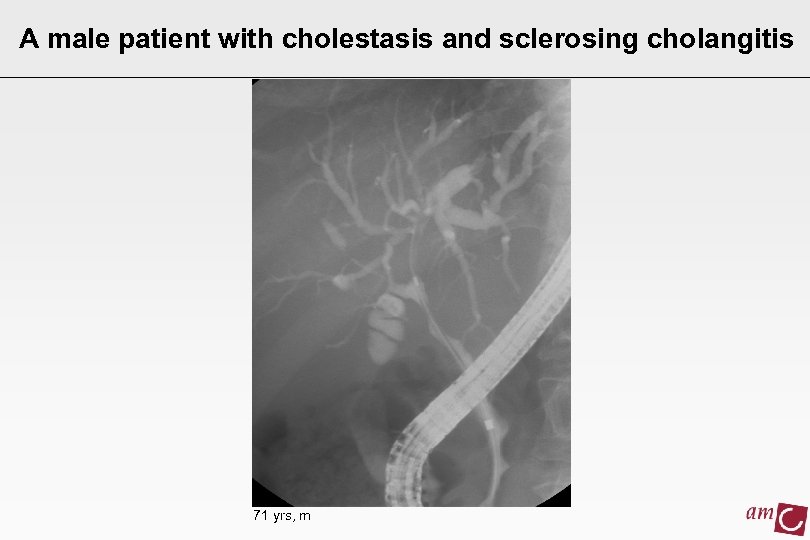 A male patient with cholestasis and sclerosing cholangitis 71 yrs, m
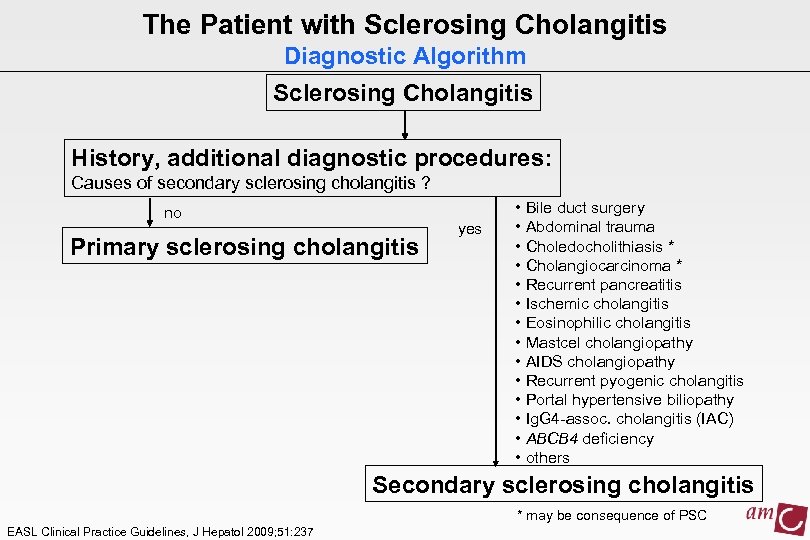 The Patient with Sclerosing Cholangitis Diagnostic Algorithm Sclerosing Cholangitis History, additional diagnostic procedures: Causes of secondary sclerosing cholangitis ? no Primary sclerosing cholangitis yes • Bile duct surgery • Abdominal trauma • Choledocholithiasis * • Cholangiocarcinoma * • Recurrent pancreatitis • Ischemic cholangitis • Eosinophilic cholangitis • Mastcel cholangiopathy • AIDS cholangiopathy • Recurrent pyogenic cholangitis • Portal hypertensive biliopathy • Ig. G 4 -assoc. cholangitis (IAC) • ABCB 4 deficiency • others Secondary sclerosing cholangitis * may be consequence of PSC EASL Clinical Practice Guidelines, J Hepatol 2009; 51: 237
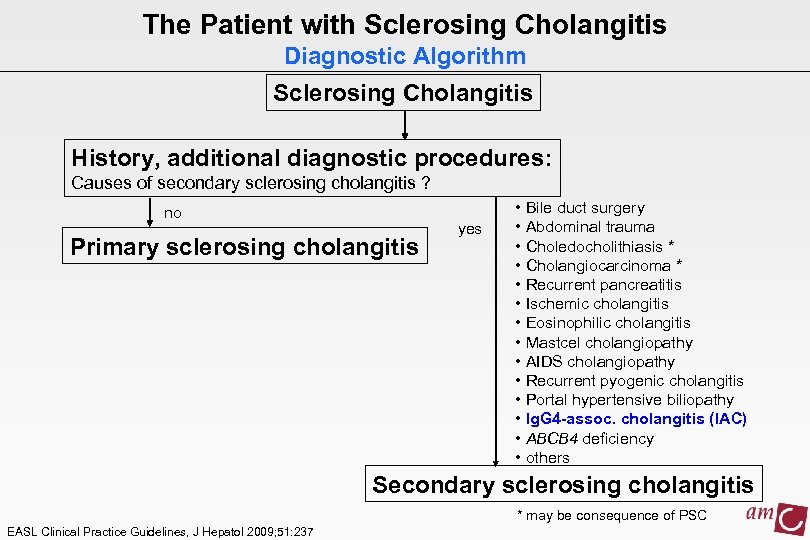 The Patient with Sclerosing Cholangitis Diagnostic Algorithm Sclerosing Cholangitis History, additional diagnostic procedures: Causes of secondary sclerosing cholangitis ? no Primary sclerosing cholangitis yes • Bile duct surgery • Abdominal trauma • Choledocholithiasis * • Cholangiocarcinoma * • Recurrent pancreatitis • Ischemic cholangitis • Eosinophilic cholangitis • Mastcel cholangiopathy • AIDS cholangiopathy • Recurrent pyogenic cholangitis • Portal hypertensive biliopathy • Ig. G 4 -assoc. cholangitis (IAC) • ABCB 4 deficiency • others Secondary sclerosing cholangitis * may be consequence of PSC EASL Clinical Practice Guidelines, J Hepatol 2009; 51: 237
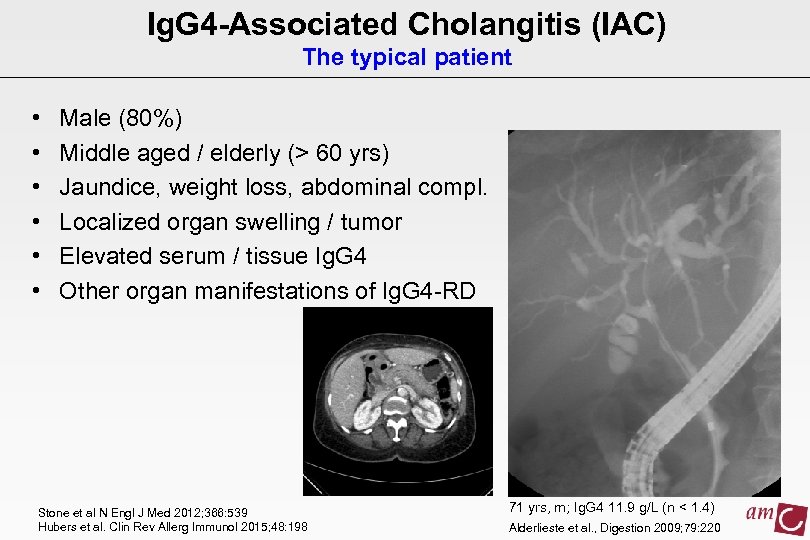 Ig. G 4 -Associated Cholangitis (IAC) The typical patient • • • Male (80%) Middle aged / elderly (> 60 yrs) Jaundice, weight loss, abdominal compl. Localized organ swelling / tumor Elevated serum / tissue Ig. G 4 Other organ manifestations of Ig. G 4 -RD Stone et al N Engl J Med 2012; 366: 539 Hubers et al. Clin Rev Allerg Immunol 2015; 48: 198 71 yrs, m; Ig. G 4 11. 9 g/L (n < 1. 4) Alderlieste et al. , Digestion 2009; 79: 220
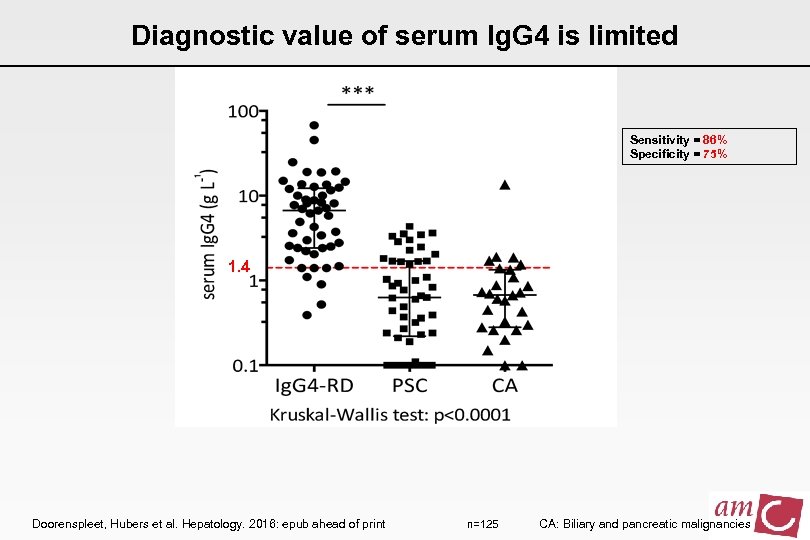 Diagnostic value of serum Ig. G 4 is limited Sensitivity = 86% Specificity = 75% 1. 4 Doorenspleet, Hubers et al. Hepatology. 2016: epub ahead of print n=125 CA: Biliary and pancreatic malignancies
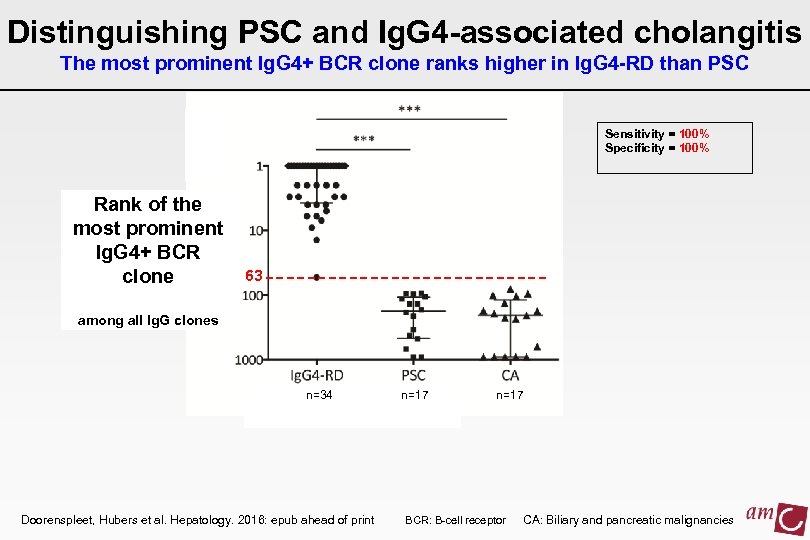 Distinguishing PSC and Ig. G 4 -associated cholangitis The most prominent Ig. G 4+ BCR clone ranks higher in Ig. G 4 -RD than PSC Sensitivity = 100% Specificity = 100% Rank of the most prominent Ig. G 4+ BCR clone 63 among all Ig. G clones n=34 Doorenspleet, Hubers et al. Hepatology. 2016: epub ahead of print n=17 BCR: B-cell receptor CA: Biliary and pancreatic malignancies
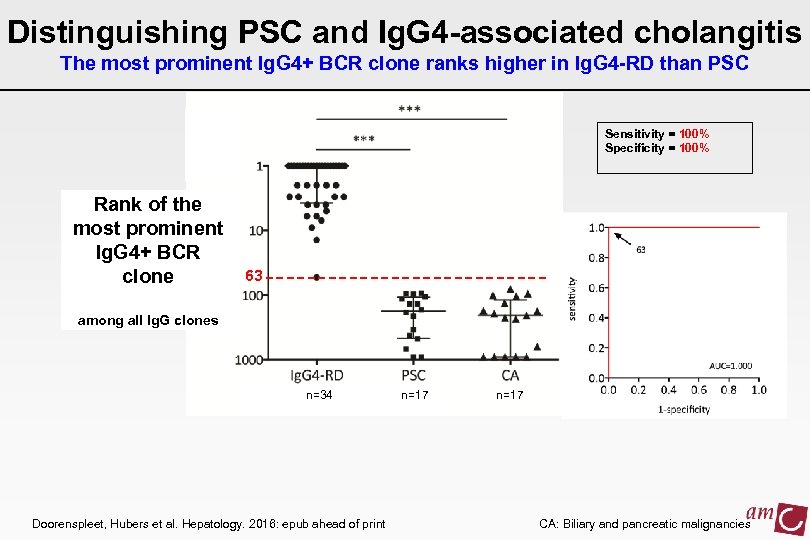 Distinguishing PSC and Ig. G 4 -associated cholangitis The most prominent Ig. G 4+ BCR clone ranks higher in Ig. G 4 -RD than PSC Sensitivity = 100% Specificity = 100% Rank of the most prominent Ig. G 4+ BCR clone 63 among all Ig. G clones n=34 Doorenspleet, Hubers et al. Hepatology. 2016: epub ahead of print n=17 CA: Biliary and pancreatic malignancies
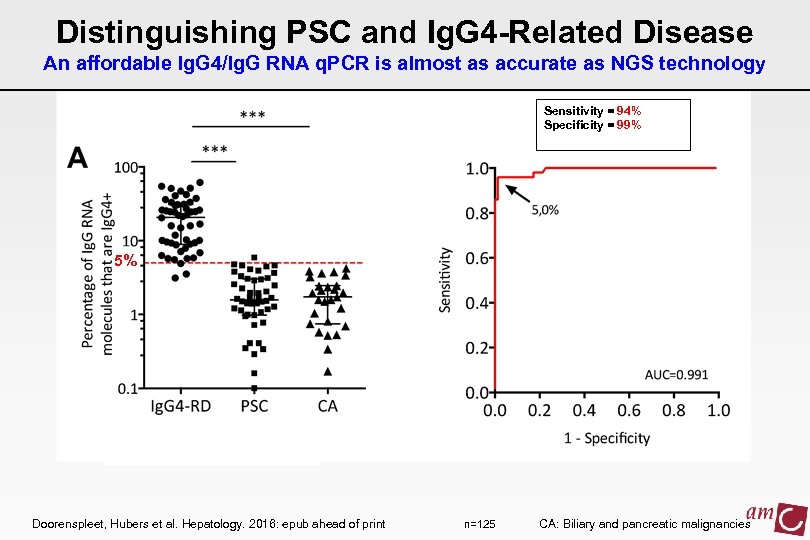 Distinguishing PSC and Ig. G 4 -Related Disease An affordable Ig. G 4/Ig. G RNA q. PCR is almost as accurate as NGS technology Sensitivity = 94% Specificity = 99% 5% Doorenspleet, Hubers et al. Hepatology. 2016: epub ahead of print n=125 CA: Biliary and pancreatic malignancies
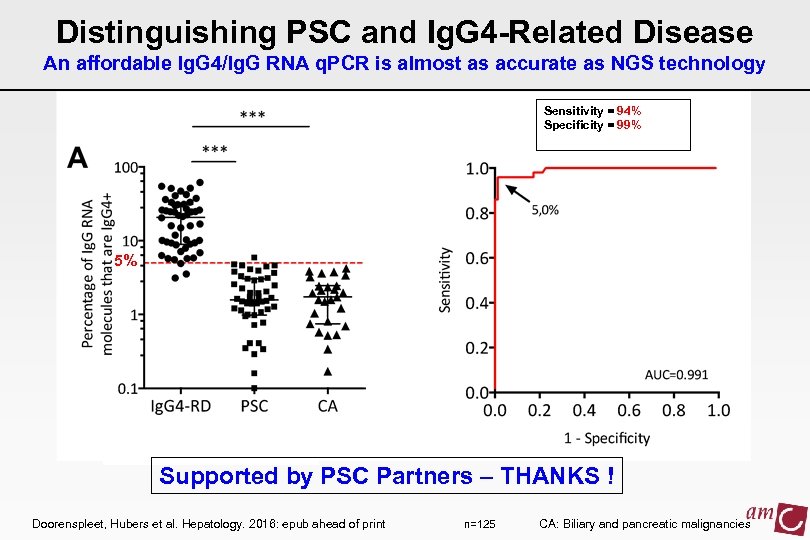 Distinguishing PSC and Ig. G 4 -Related Disease An affordable Ig. G 4/Ig. G RNA q. PCR is almost as accurate as NGS technology Sensitivity = 94% Specificity = 99% 5% Supported by PSC Partners – THANKS ! Doorenspleet, Hubers et al. Hepatology. 2016: epub ahead of print n=125 CA: Biliary and pancreatic malignancies
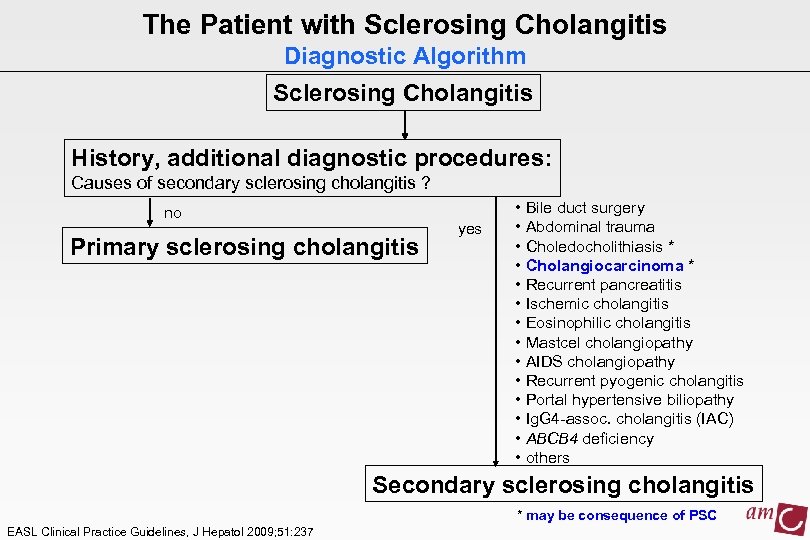 The Patient with Sclerosing Cholangitis Diagnostic Algorithm Sclerosing Cholangitis History, additional diagnostic procedures: Causes of secondary sclerosing cholangitis ? no Primary sclerosing cholangitis yes • Bile duct surgery • Abdominal trauma • Choledocholithiasis * • Cholangiocarcinoma * • Recurrent pancreatitis • Ischemic cholangitis • Eosinophilic cholangitis • Mastcel cholangiopathy • AIDS cholangiopathy • Recurrent pyogenic cholangitis • Portal hypertensive biliopathy • Ig. G 4 -assoc. cholangitis (IAC) • ABCB 4 deficiency • others Secondary sclerosing cholangitis * may be consequence of PSC EASL Clinical Practice Guidelines, J Hepatol 2009; 51: 237
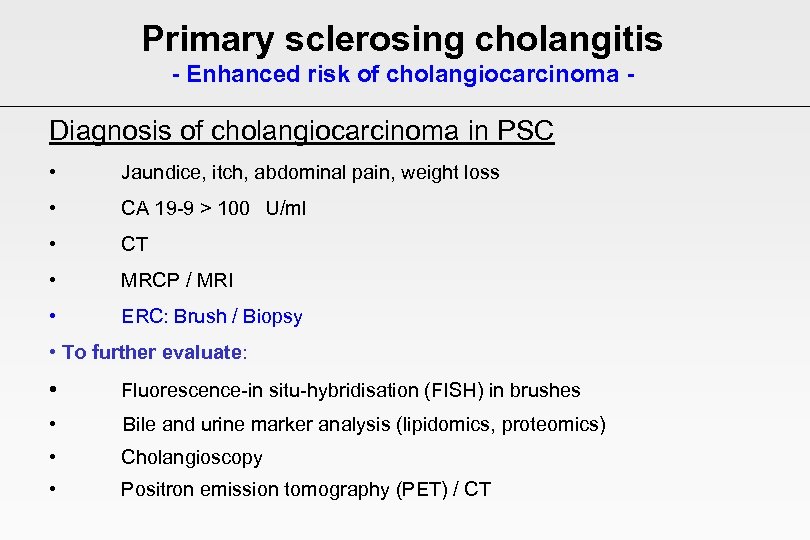 Primary sclerosing cholangitis - Enhanced risk of cholangiocarcinoma - Diagnosis of cholangiocarcinoma in PSC • Jaundice, itch, abdominal pain, weight loss • CA 19 -9 > 100 U/ml • CT • MRCP / MRI • ERC: Brush / Biopsy • To further evaluate: • Fluorescence-in situ-hybridisation (FISH) in brushes • Bile and urine marker analysis (lipidomics, proteomics) • Cholangioscopy • Positron emission tomography (PET) / CT
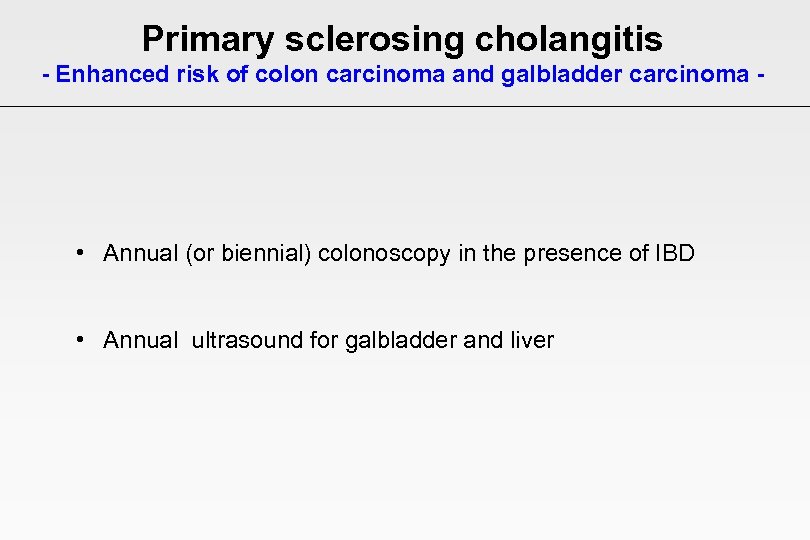 Primary sclerosing cholangitis - Enhanced risk of colon carcinoma and galbladder carcinoma - • Annual (or biennial) colonoscopy in the presence of IBD • Annual ultrasound for galbladder and liver
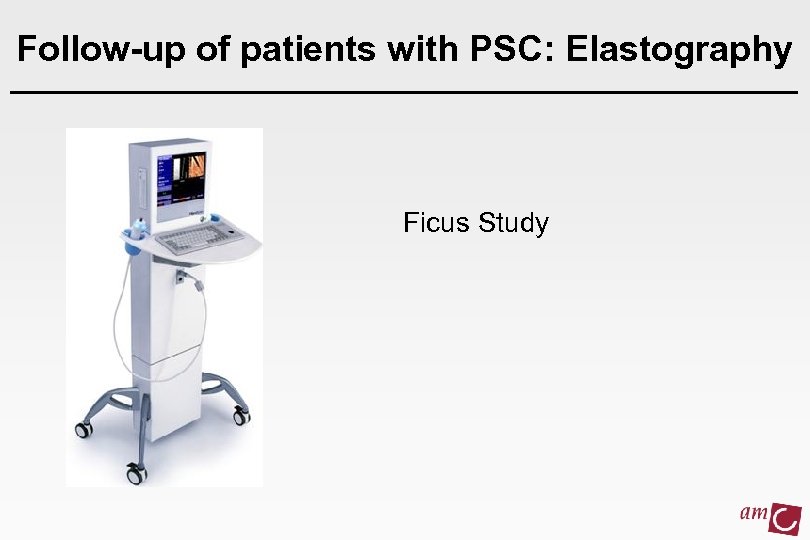 Follow-up of patients with PSC: Elastography Ficus Study
 Future Directions in PSC Research • Epidemiology • Diagnosis & Screening • Pathophysiology • Treatment
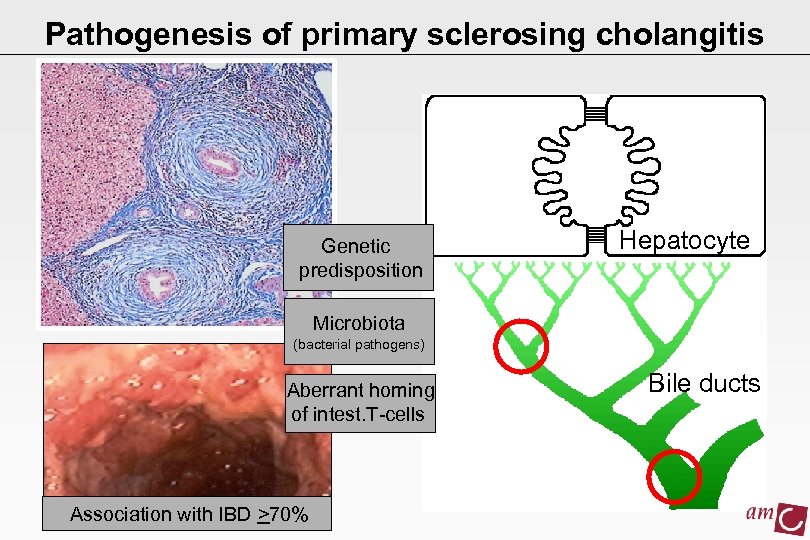 Pathogenesis of primary sclerosing cholangitis Genetic predisposition Hepatocyte Microbiota (bacterial pathogens) Aberrant homing of intest. T-cells Association with IBD >70% Bile ducts
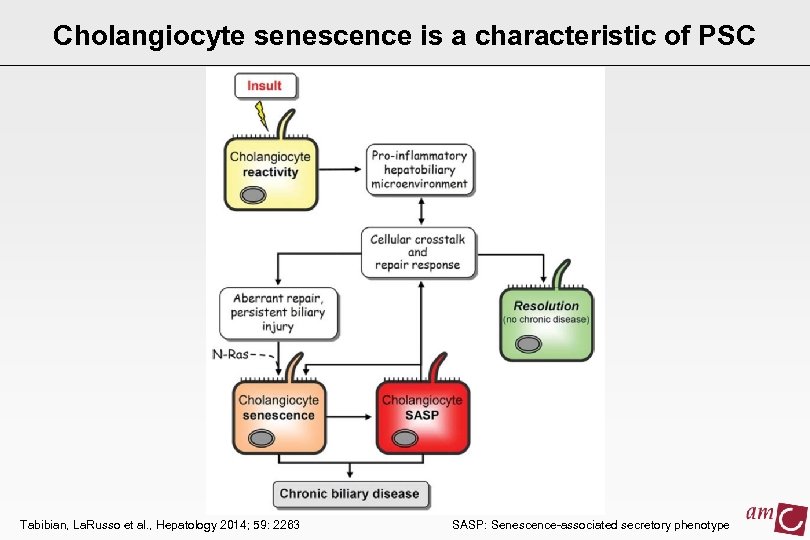 Cholangiocyte senescence is a characteristic of PSC Tabibian, La. Russo et al. , Hepatology 2014; 59: 2263 SASP: Senescence-associated secretory phenotype
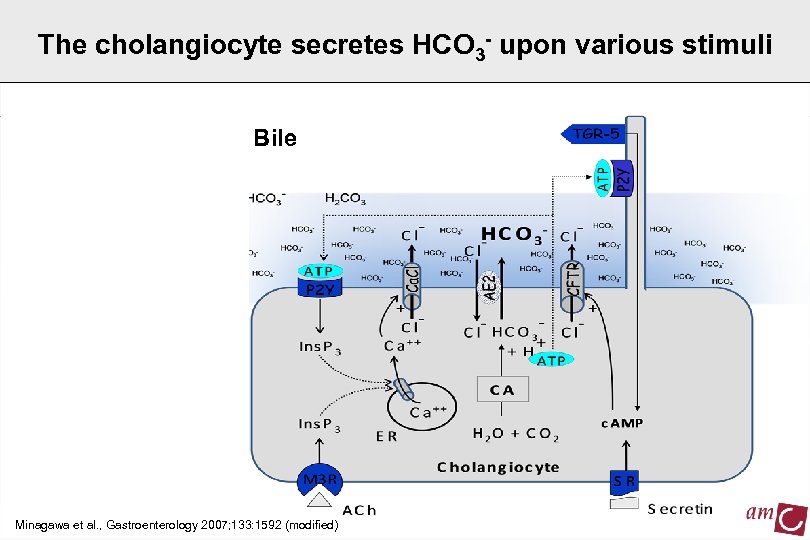 The cholangiocyte secretes HCO 3 - upon various stimuli Bile Minagawa et al. , Gastroenterology 2007; 133: 1592 (modified)
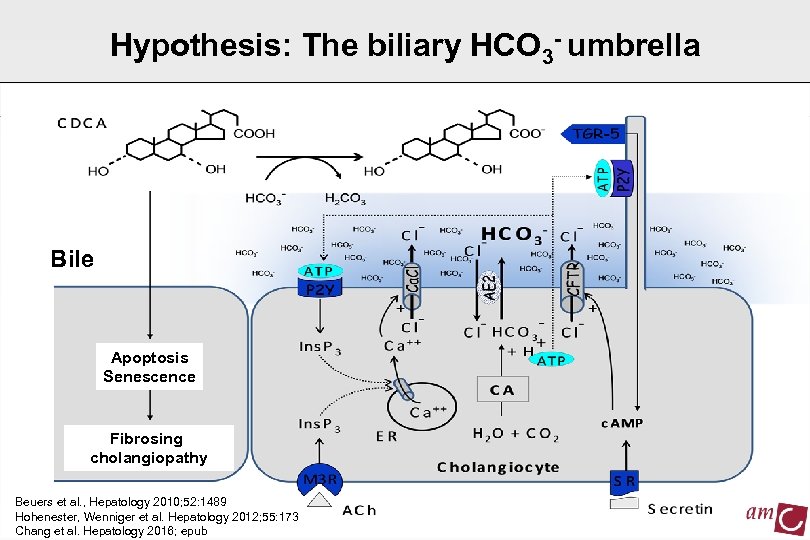 Hypothesis: The biliary HCO 3 - umbrella Bile Apoptosis Senescence Fibrosing cholangiopathy Beuers et al. , Hepatology 2010; 52: 1489 Hohenester, Wenniger et al. Hepatology 2012; 55: 173 Chang et al. Hepatology 2016; epub
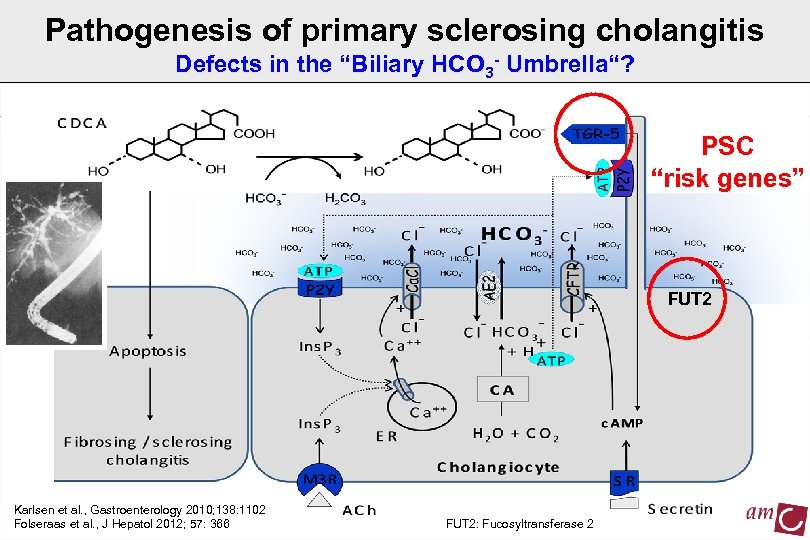 Pathogenesis of primary sclerosing cholangitis Defects in the “Biliary HCO 3 - Umbrella“? PSC “risk genes” FUT 2 Karlsen et al. , Gastroenterology 2010; 138: 1102 Folseraas et al. , J Hepatol 2012; 57: 366 FUT 2: Fucosyltransferase 2
 Future Directions in PSC Research • Epidemiology • Diagnosis & Screening • Pathophysiology • Treatment
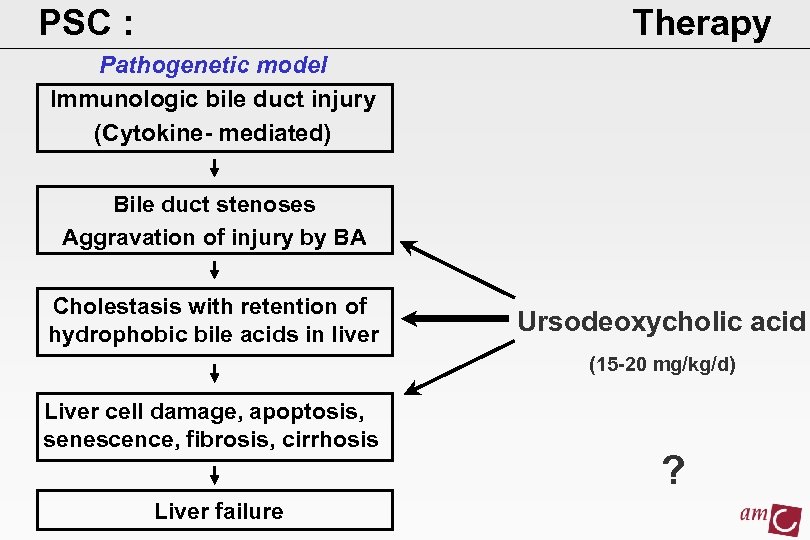 PSC : Therapy Pathogenetic model Immunologic bile duct injury (Cytokine- mediated) Bile duct stenoses Aggravation of injury by BA Cholestasis with retention of hydrophobic bile acids in liver Ursodeoxycholic acid (15 -20 mg/kg/d) Liver cell damage, apoptosis, senescence, fibrosis, cirrhosis Liver failure ?
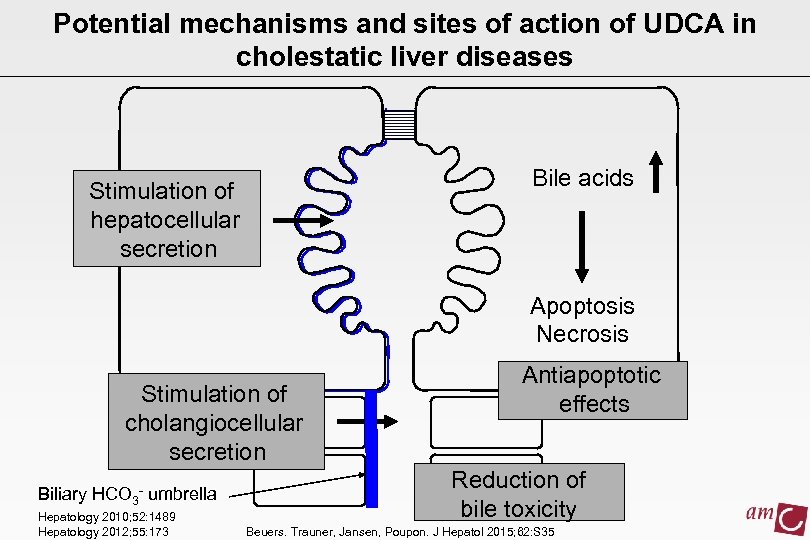 Potential mechanisms and sites of action of UDCA in cholestatic liver diseases Bile acids Stimulation of hepatocellular secretion Apoptosis Necrosis Stimulation of cholangiocellular secretion Biliary HCO 3 umbrella - Hepatology 2010; 52: 1489 Hepatology 2012; 55: 173 Antiapoptotic effects Reduction of bile toxicity Beuers. Trauner, Jansen, Poupon. J Hepatol 2015; 62: S 35
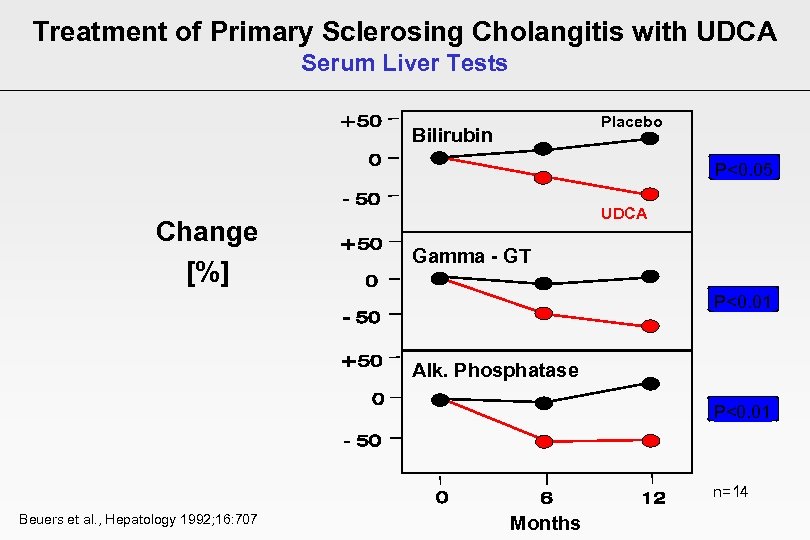 Treatment of Primary Sclerosing Cholangitis with UDCA Serum Liver Tests Placebo Bilirubin P<0. 05 Change [%] UDCA Gamma - GT P<0. 01 Alk. Phosphatase P<0. 01 n=14 Beuers et al. , Hepatology 1992; 16: 707 Months
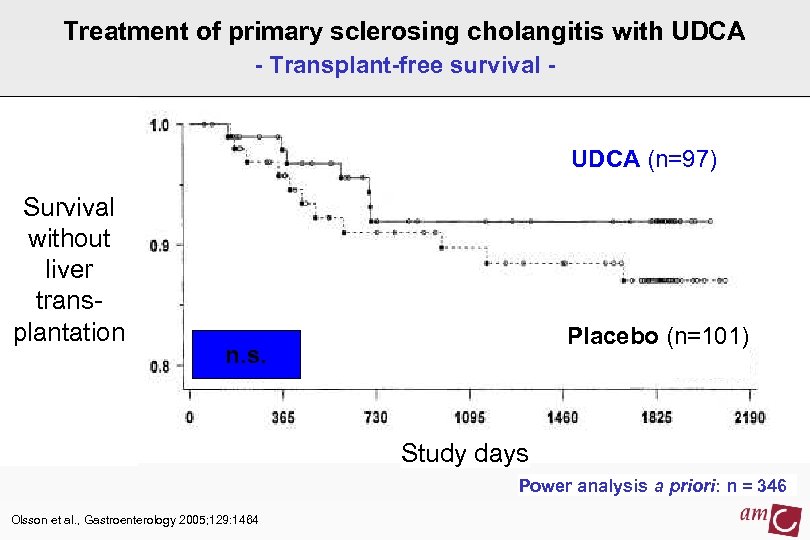 Treatment of primary sclerosing cholangitis with UDCA - Transplant-free survival - UDCA (n=97) Survival without liver transplantation [%] Placebo (n=101) n. s. Study days Power analysis a priori: n = 346 Olsson et al. , Gastroenterology 2005; 129: 1464
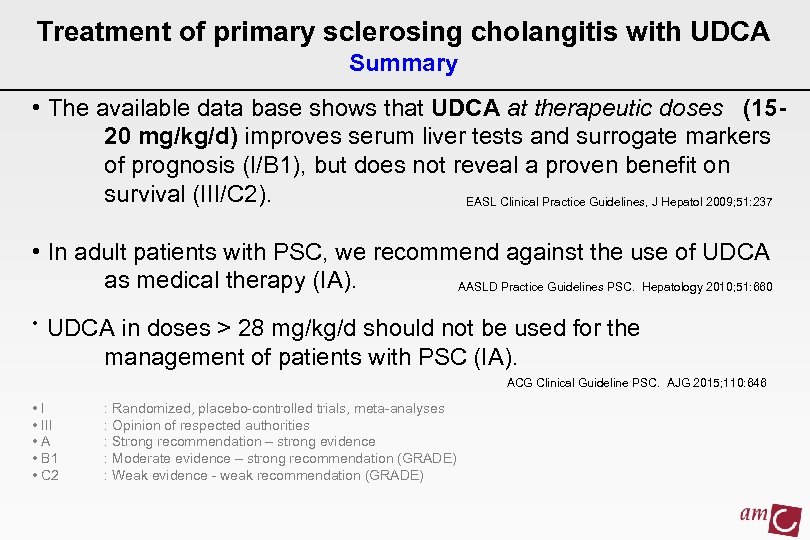 Treatment of primary sclerosing cholangitis with UDCA Summary • The available data base shows that UDCA at therapeutic doses (1520 mg/kg/d) improves serum liver tests and surrogate markers of prognosis (I/B 1), but does not reveal a proven benefit on survival (III/C 2). EASL Clinical Practice Guidelines, J Hepatol 2009; 51: 237 • In adult patients with PSC, we recommend against the use of UDCA as medical therapy (IA). AASLD Practice Guidelines PSC. Hepatology 2010; 51: 660 • UDCA in doses > 28 mg/kg/d should not be used for the management of patients with PSC (IA). ACG Clinical Guideline PSC. AJG 2015; 110: 646 • III • A • B 1 • C 2 : Randomized, placebo-controlled trials, meta-analyses : Opinion of respected authorities : Strong recommendation – strong evidence : Moderate evidence – strong recommendation (GRADE) : Weak evidence - weak recommendation (GRADE)
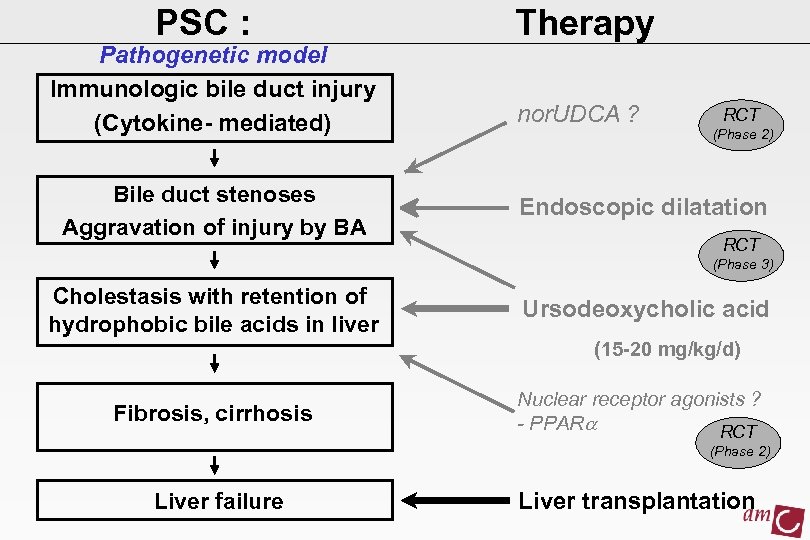 PSC : Pathogenetic model Immunologic bile duct injury (Cytokine- mediated) Bile duct stenoses Aggravation of injury by BA Therapy nor. UDCA ? RCT (Phase 2) Endoscopic dilatation RCT (Phase 3) Cholestasis with retention of hydrophobic bile acids in liver Ursodeoxycholic acid (15 -20 mg/kg/d) Fibrosis, cirrhosis Nuclear receptor agonists ? - PPARa RCT (Phase 2) Liver failure Liver transplantation
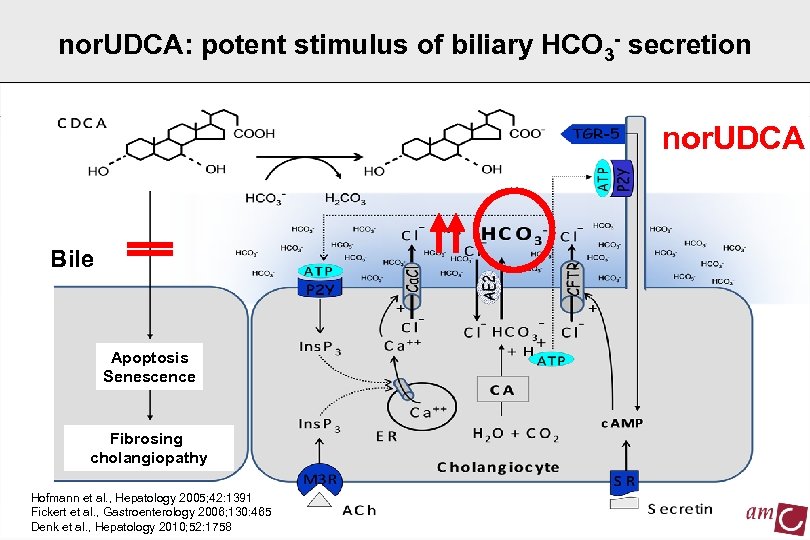 nor. UDCA: potent stimulus of biliary HCO 3 - secretion nor. UDCA Bile Apoptosis Senescence Fibrosing cholangiopathy Hofmann et al. , Hepatology 2005; 42: 1391 Fickert et al. , Gastroenterology 2006; 130: 465 Denk et al. , Hepatology 2010; 52: 1758
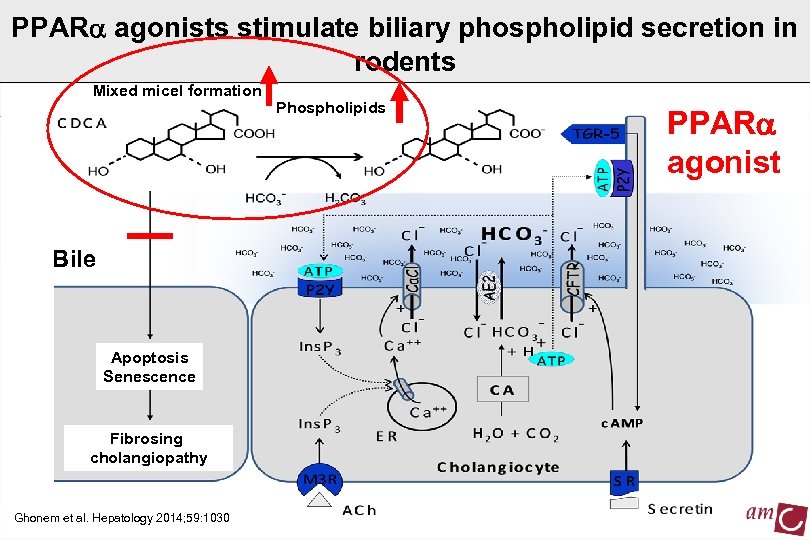 PPARa agonists stimulate biliary phospholipid secretion in rodents Mixed micel formation Bile Apoptosis Senescence Fibrosing cholangiopathy Ghonem et al. Hepatology 2014; 59: 1030 Phospholipids PPARa agonist
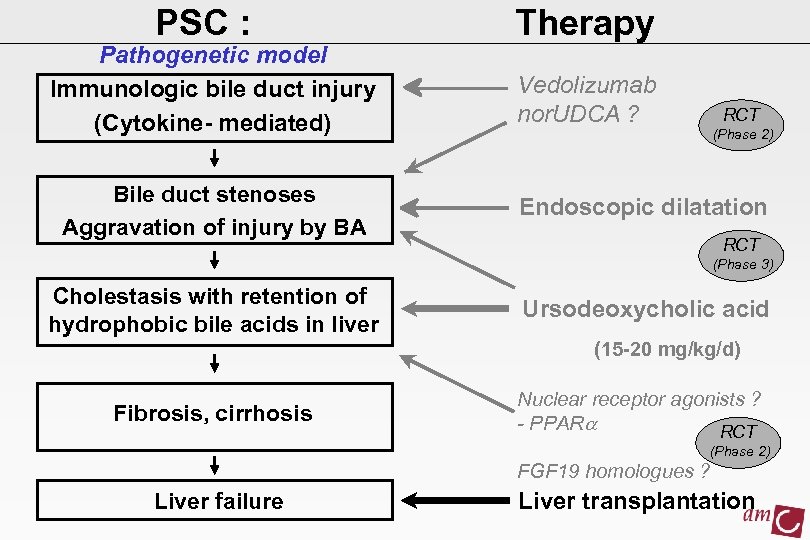 PSC : Pathogenetic model Immunologic bile duct injury (Cytokine- mediated) Bile duct stenoses Aggravation of injury by BA Therapy Vedolizumab nor. UDCA ? RCT (Phase 2) Endoscopic dilatation RCT (Phase 3) Cholestasis with retention of hydrophobic bile acids in liver Ursodeoxycholic acid (15 -20 mg/kg/d) Fibrosis, cirrhosis Nuclear receptor agonists ? - PPARa RCT (Phase 2) FGF 19 homologues ? Liver failure Liver transplantation
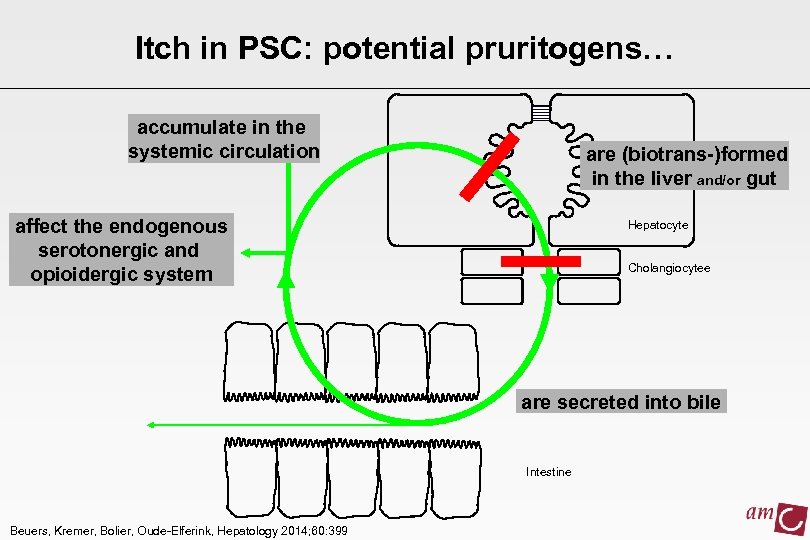 Itch in PSC: potential pruritogens… accumulate in the systemic circulation are (biotrans-)formed in the liver and/or gut affect the endogenous serotonergic and opioidergic system Hepatocyte Cholangiocytee are secreted into bile Intestine Beuers, Kremer, Bolier, Oude-Elferink, Hepatology 2014; 60: 399
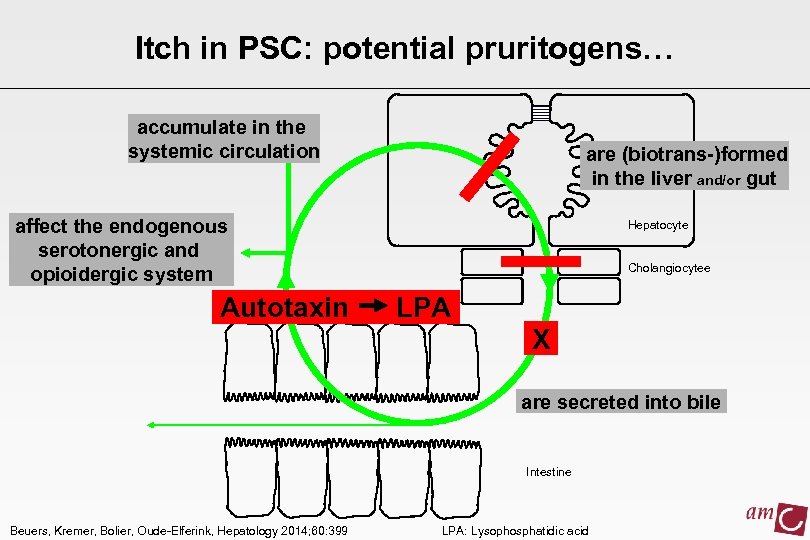 Itch in PSC: potential pruritogens… accumulate in the systemic circulation are (biotrans-)formed in the liver and/or gut affect the endogenous serotonergic and opioidergic system Autotaxin Hepatocyte Cholangiocytee LPA X are secreted into bile Intestine Beuers, Kremer, Bolier, Oude-Elferink, Hepatology 2014; 60: 399 LPA: Lysophosphatidic acid
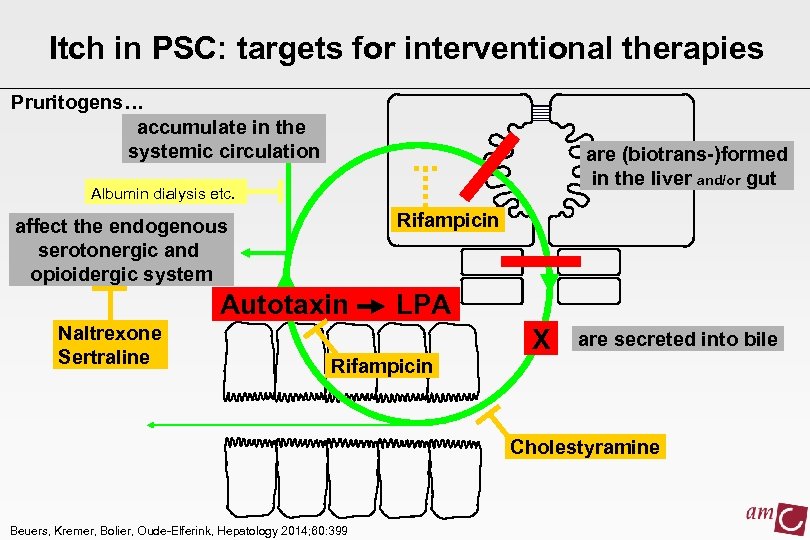 Itch in PSC: targets for interventional therapies Pruritogens… accumulate in the systemic circulation are (biotrans-)formed in the liver and/or gut Albumin dialysis etc. Rifampicin affect the endogenous serotonergic and opioidergic system Autotaxin Naltrexone Sertraline LPA X are secreted into bile Rifampicin Cholestyramine Beuers, Kremer, Bolier, Oude-Elferink, Hepatology 2014; 60: 399
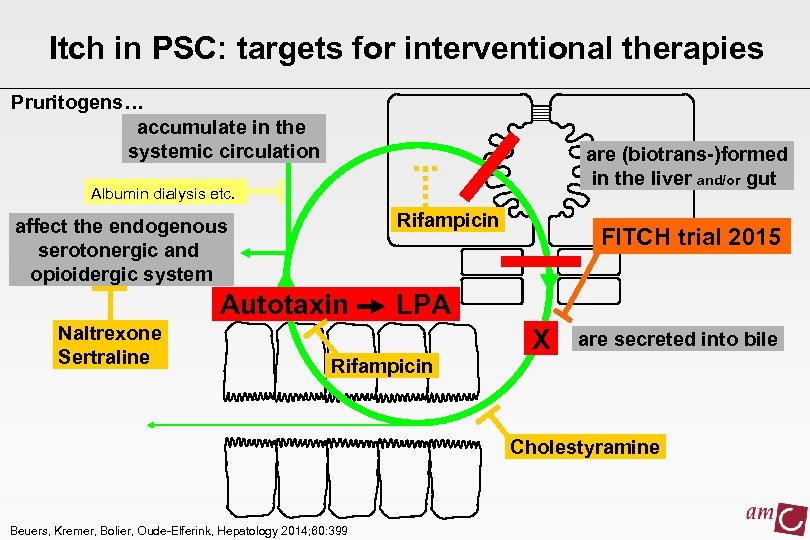 Itch in PSC: targets for interventional therapies Pruritogens… accumulate in the systemic circulation are (biotrans-)formed in the liver and/or gut Albumin dialysis etc. Rifampicin affect the endogenous serotonergic and opioidergic system Autotaxin Naltrexone Sertraline FITCH trial 2015 LPA X are secreted into bile Rifampicin Cholestyramine Beuers, Kremer, Bolier, Oude-Elferink, Hepatology 2014; 60: 399
 Thank you Spain Tytgat Institute for Liver and Intestinal Research & AMC, Amsterdam Germany Christian Rust Andreas Kremer, Simon Hohenester, Lucas Maillette de Buy Wenniger, Ruth Bollier, Dagmar Toolenaars, Remco van Dijk, Luca Maroni, Jung-Chin Chang, Coen Paulusma, United Kingdom Stan van de Graaf, Peter Jansen, Ronald Oude Elferink Carherine Williamson Rajiv Jalan Roger Chapman Albert Pares Lithuania Jurate Kondrackiene Belgium Tania Roskams Mina Komura USA Ananth Menanthanarian Michael Nathanson NKI, Amsterdam Wouter Moolenaar UMC, Utrecht Karel J. van Erpecum Erasmus MC, Rotterdam Edith M. Kuiper Henk R. van Buuren Sektion PSC