


 Скачать презентацию Provider Resiliency Training PRT AMEDD Center School
36ce7aa8836b6fcb537a4db7cdb638bf.ppt
- Количество слайдов: 39
 Provider Resiliency Training PRT AMEDD Center & School Soldier & Family Support Branch www. behavioralhealth. army. mil https: //www. cs. amedd. army. mil/sfsb/spss_prt. asp prt@amedd. army. mil 1
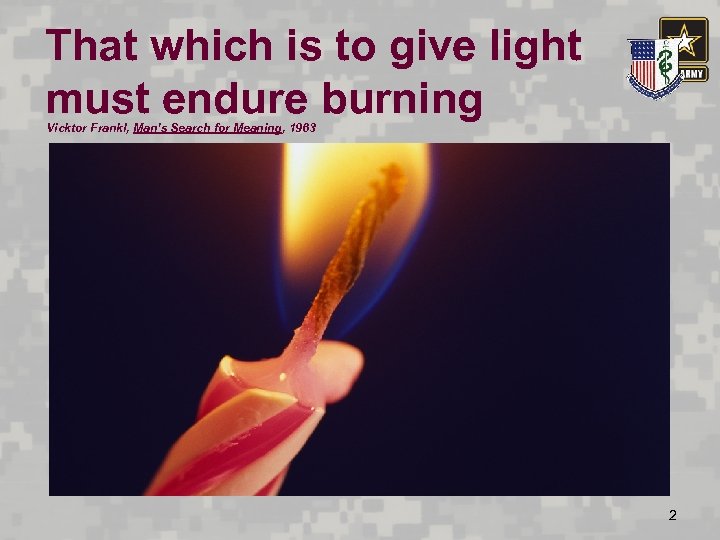 That which is to give light must endure burning Vicktor Frankl, Man’s Search for Meaning, 1963 2
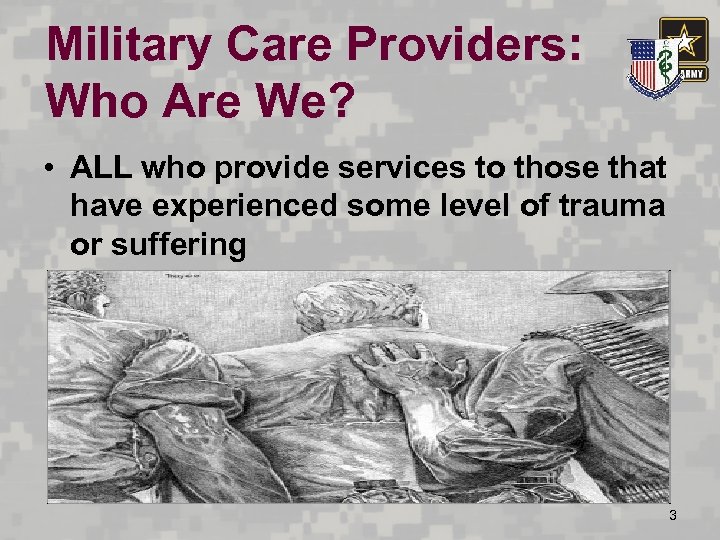 Military Care Providers: Who Are We? • ALL who provide services to those that have experienced some level of trauma or suffering 3
 Terms • Compassion (Provider) Fatigue: – Impacts the individual who is exposed to those who have been directly traumatized – Also known as Secondary Trauma – The military terminology for Compassion Fatigue is Provider Fatigue 4
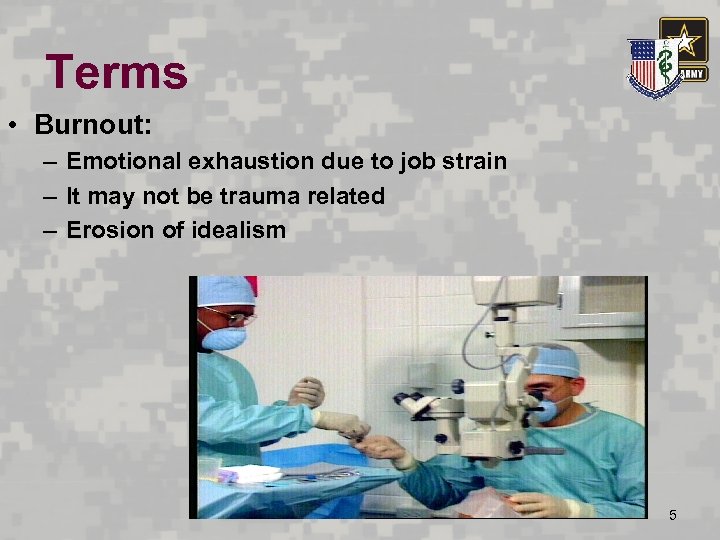 Terms • Burnout: – Emotional exhaustion due to job strain – It may not be trauma related – Erosion of idealism 5
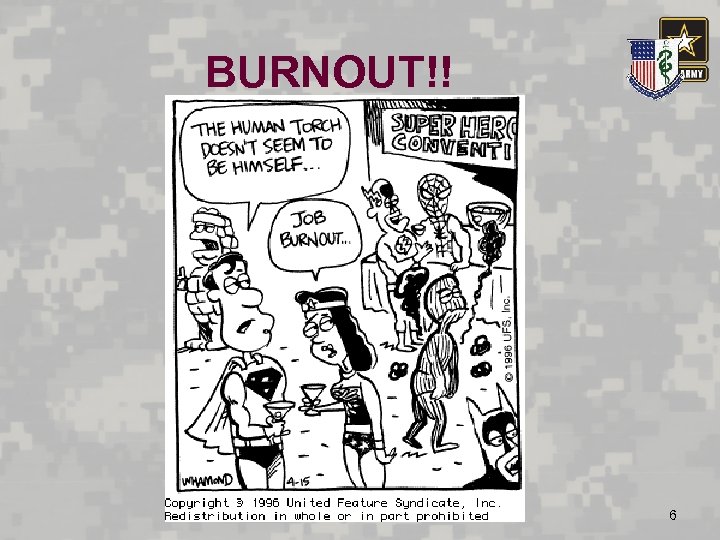 BURNOUT!! 6
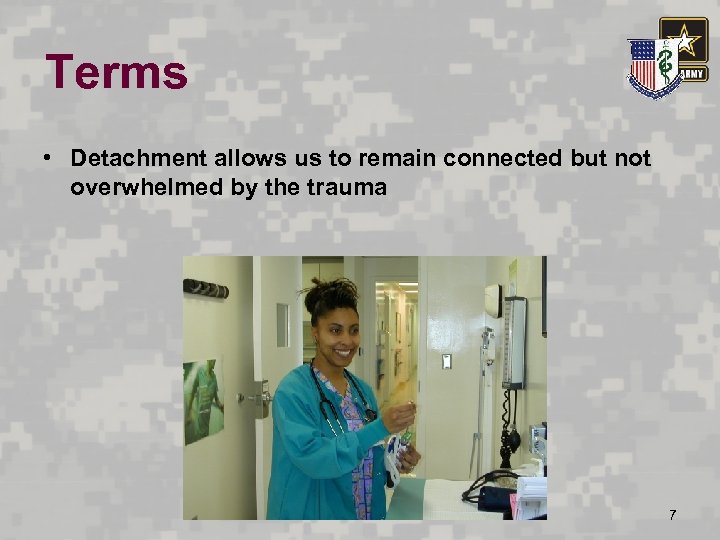 Terms • Detachment allows us to remain connected but not overwhelmed by the trauma 7
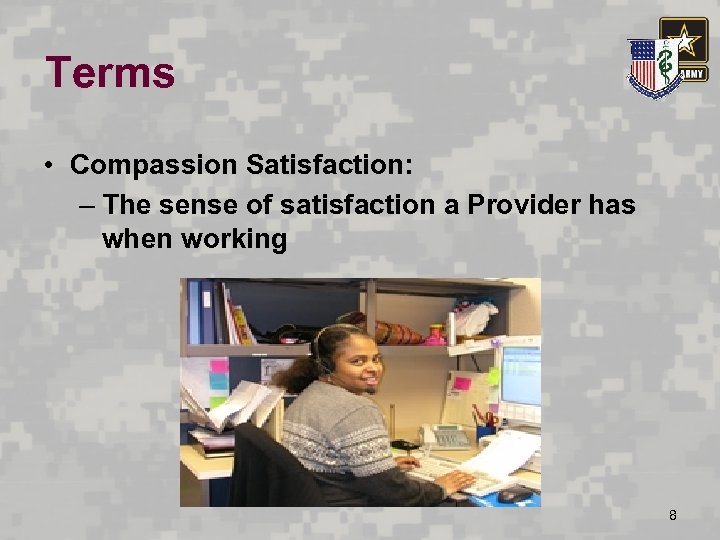 Terms • Compassion Satisfaction: – The sense of satisfaction a Provider has when working 8
 Term • Resiliency is the ability to: • Sustain good health and well-being in stressful conditions • Bounce-back easily from setbacks • Cope well with non-stop change • Overcome adversity • Convert misfortune into good luck • Become stronger and better year after year 9
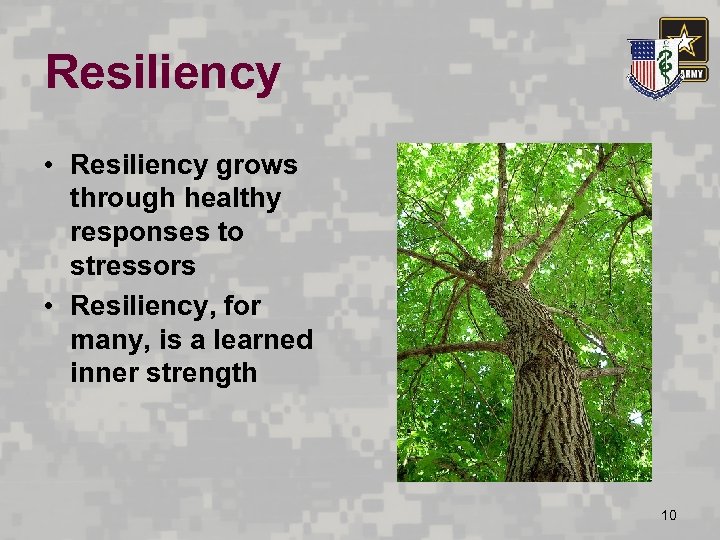 Resiliency • Resiliency grows through healthy responses to stressors • Resiliency, for many, is a learned inner strength 10
 Questions? ? 11
 Provider Fatigue Markers 12
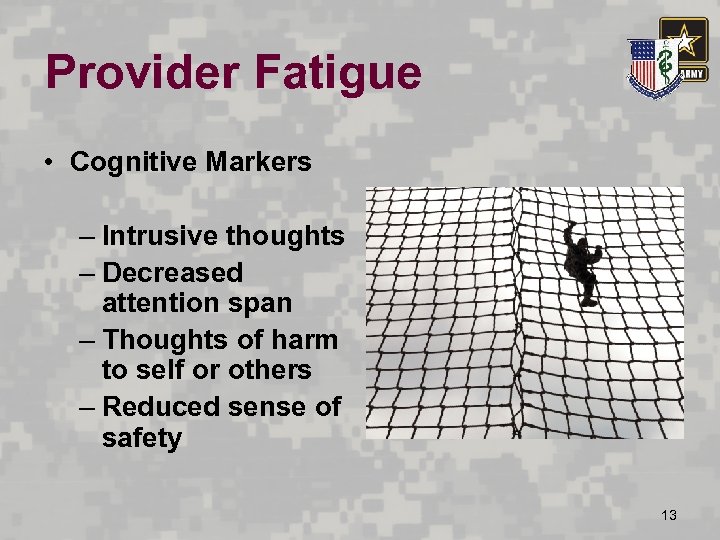 Provider Fatigue • Cognitive Markers – Intrusive thoughts – Decreased attention span – Thoughts of harm to self or others – Reduced sense of safety 13
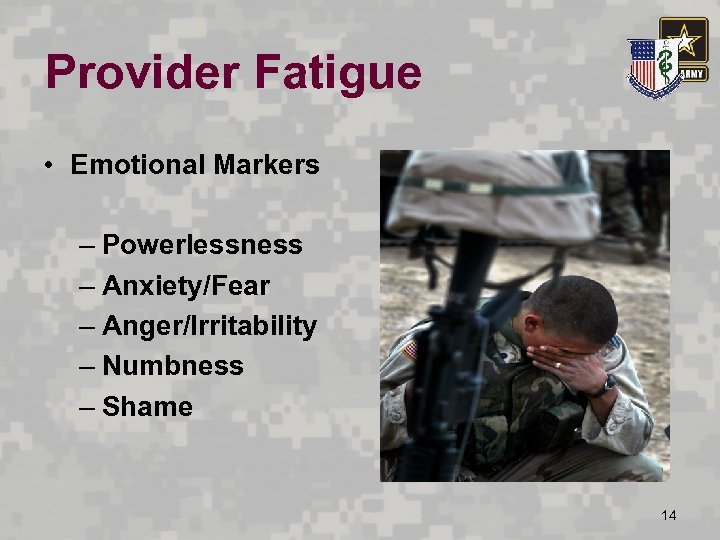 Provider Fatigue • Emotional Markers – Powerlessness – Anxiety/Fear – Anger/Irritability – Numbness – Shame 14
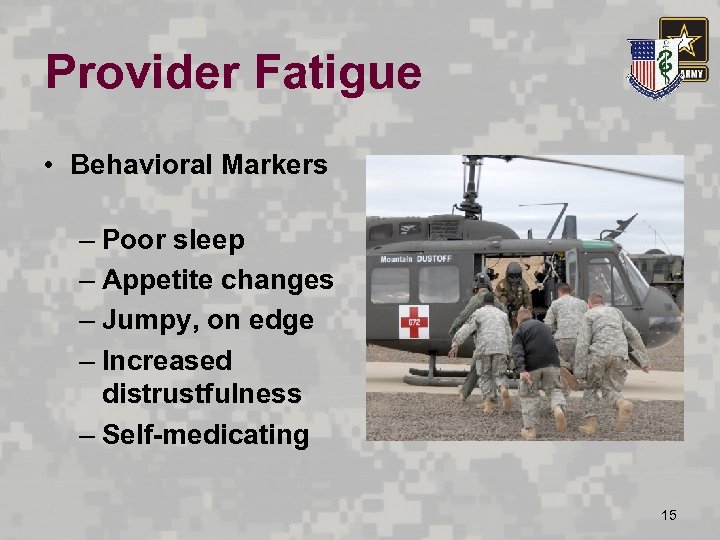 Provider Fatigue • Behavioral Markers – Poor sleep – Appetite changes – Jumpy, on edge – Increased distrustfulness – Self-medicating 15
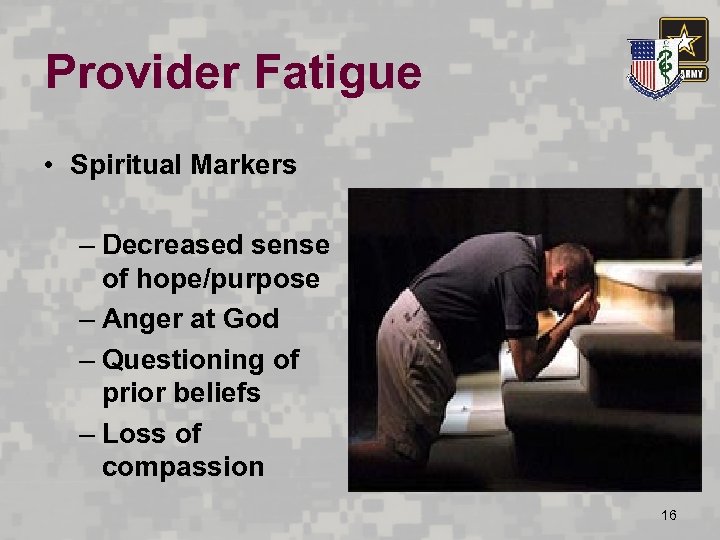 Provider Fatigue • Spiritual Markers – Decreased sense of hope/purpose – Anger at God – Questioning of prior beliefs – Loss of compassion 16
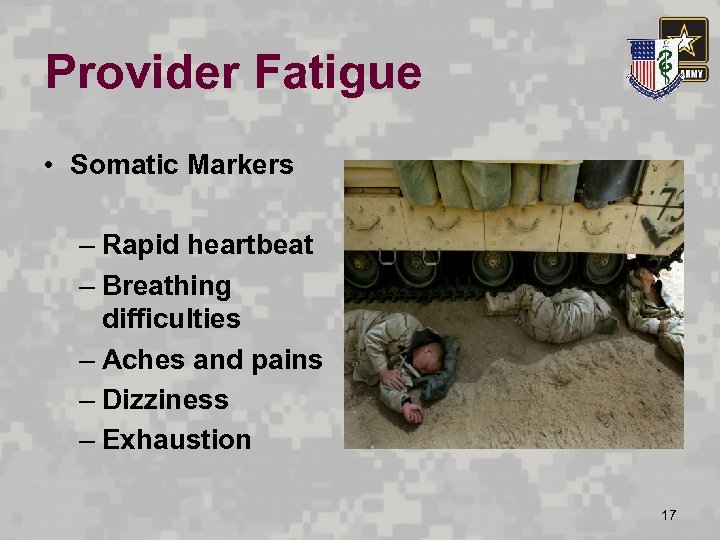 Provider Fatigue • Somatic Markers – Rapid heartbeat – Breathing difficulties – Aches and pains – Dizziness – Exhaustion 17
 Provider Fatigue • Relationship Markers – Decreased interest in intimacy – Mistrust/Isolation – Overprotection as a parent – Interpersonal conflicts 18
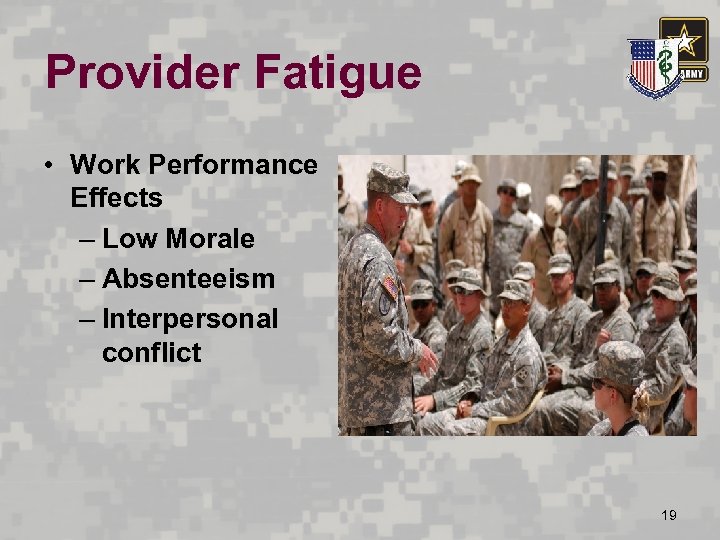 Provider Fatigue • Work Performance Effects – Low Morale – Absenteeism – Interpersonal conflict 19
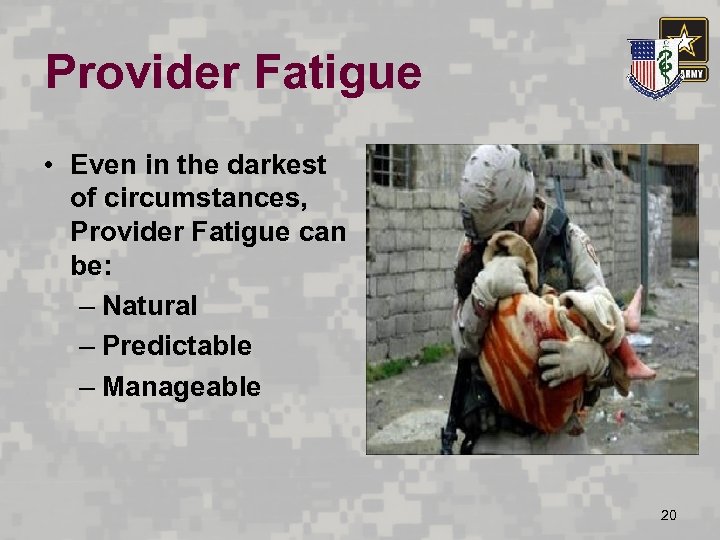 Provider Fatigue • Even in the darkest of circumstances, Provider Fatigue can be: – Natural – Predictable – Manageable 20
 Questions? ? 21
 Resiliency Strengths 22
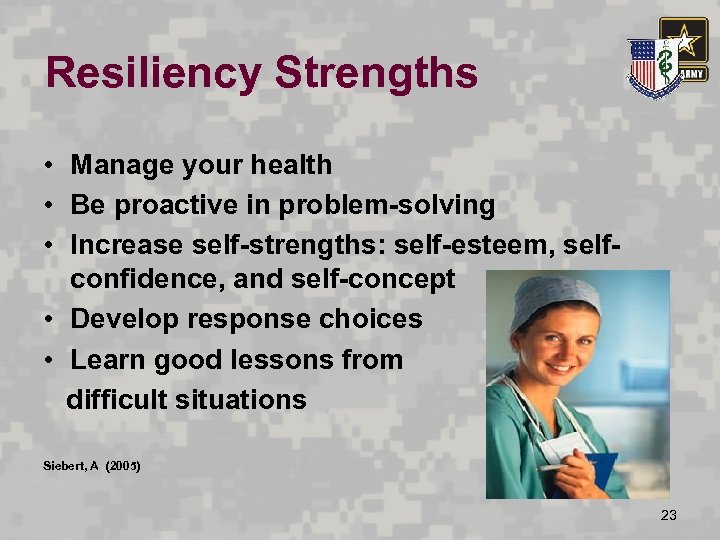 Resiliency Strengths • Manage your health • Be proactive in problem-solving • Increase self-strengths: self-esteem, selfconfidence, and self-concept • Develop response choices • Learn good lessons from difficult situations Siebert, A (2005) 23
 Resiliency Encouragement • Family of Origin Sayings/Slogans that encourage resiliency: – “You can do anything you put your mind to” – “Just do it” – “Be all that you can be” 24
 Resilient Role Model 25
 Building Resiliency Through Self-care 26
 Resiliency Building • Self-care – Physical • Through nutrition • Through exercise • Through good sleep routine – Mental • Relaxation techniques (meditation, yoga, music, deep breathing) • Hobbies/ leisure activities • Through setting goals and making plans of actions 27
 Resiliency Building • Self-care cont. : – Emotional • Personal journal writing • Alone time • Acceptance of difficult situations • Finding time for humor 28
 Resiliency Building • Self-care cont. – Social • Increase activities with family and friends • Join a new group activity (through church, intramural sports, etc. ) • Find a way to become involved in community programs 29
 Resiliency Building • Self-care cont. – Spiritual • Through Prayer • Through Reading Inspirational/ Devotional Material • Through Forgiveness 30
 Do’s & Don’ts of Provider Fatigue • Do’s – Talk with someone – Understand that the pain you feel is normal – Start exercising and eating properly – Get enough sleep – Take time apart – Develop interest outside your field John-Henry Pfifferling, Ph. D and Kay Gilley, MS Family Management Practice • Dont’s – Blame others – Look for a new job, buy a new car, get a divorce, have an affair – Get into the habit of complaining with your colleagues – Hire a lawyer – Work harder and longer – Self medicate – Neglect yourself and your own interests 31
 Questions? ? 32
 Take Action • Continue to assess your level of Provider Fatigue • Decide which area of your life needs improved resiliency activities • Create a Self-Care Plan • Chose an accountability buddy for your self care plan • Buddies are good, but if you need professional help, find an appropriate counselor 33
 Management Role What Does the Staff Need? Options for Support • Work environments that acknowledge the reality of secondary or vicarious trauma and offer support for self-care and connection • Forums for discussions about the work and its stresses • A group with a focus on discussing and addressing vicarious traumatization • A buddy system (Identify a colleague with whom you will discuss the work and its challenges. ) • Regular clinical consultation • Personal psychotherapy • Continuing education opportunities that address these topics • Emotional release (opportunities to express strong feelings of grief, fear, anger, gratitude) • Realistic expectations for selves • Information Karen W. Saakvitne, Ph. D; B. Hudnall Stamm, Ph. D www. APAHelp. Center. org 34
 Counseling Sources • Seek help: – If you feel overwhelmed – If you have thoughts about harming yourself or others – If family or friends are expressing concerns about your well being • Military One. Source: – 1 -800 -342 -9647 – www. militaryonesource. com • Contact local services: – Dept of Behavioral Health – Community Mental/Behavioral Health clinics – Chaplains – Family Life Centers 35
 Questions Email questions to: www. behavioralhealth. army. mil 36
 References • • • Adams, RE; Boscarino, J; & Figley, CR (in press). Compassion fatigue among a sample of New York Social Workers: Instrument psychometrics. Journal of Orthopsychiatry. Bride, B. E. , Robinson, M. M. , Yegidis, B. & Figley, C. R. (2004). Development and Validation of the Secondary Traumatic Stress Scale. Research on Social Work Practice, 14: 1, 27 -36. Dealing with Critical Incident Stress and Compassion Fatigue. American Association of Critical Care Nurses. Retrieved January 6, 2005, from Figley, C. R. (2002). Treating Compassion Fatigue. New York: Brunner. Rutledge. Figley, C. R. (Ed. ) (1995). Compassion Fatigue: Secondary Traumatic Stress Disorders from Treating the Traumatized. New York: Brunner/Mazel. (Review) Figley, C. R. (2002). Compassion fatigue and the psychotherapist's chronic lack of self care. Journal of Clinical Psychology, 58: 11, 14331441. 37
 References • • • Figley, C. R. (2003). Compassion Fatigue: An Introduction. Gift From Within. Retrieved January 3, 2005, from http: //www. greencross. org/_Research/Compassion. Fatigue. asp Figley, C. R. , Nash, W. P. (Ed. ) (2007). Combat Stress Injury Theory, Research, and Management. New York: Taylor & Frances Group. Funk. Rev. Jeffrey R. , M. Div. , P. C. C. , “Balancing the Burdens of Caregiving: Avoiding Compassion Fatigue”, Healthcare Chaplains Ministry Association Gentry J. E. (2002) Burning Up: The Negative Effects of Caregiving. AKH Consultant and St. Petersburg College. AKH Inc. O’Grady, K (2003). Symptoms and prevention outlined. Vet Center Voice, Vol. 25, No. 3, 44 -45. Regehr, C; Goldberg, G; & Hughes J (2002). Exposure to Human Tragedy, Empathy, and Trauma in Ambulance Paramedics. American Journal of Orthopsychiatry 2002, Vol. 72, No. 4, 505 -513. 38
 References • • • Siebert, A. (2005). The Resiliency Advantage. New York: Brunner. Rutledge. Stamm, B. (1997 -2005). Professional Quality of Life: Compassion Satisfaction and Fatigue Subscales, R-IV (Pro. QOL). http: //www. isu. edu/~bhstamm Thompson, R. T. USA (2003). Compassion Fatigue: The Professional Liability for Caring Too Much. The Human Side of School Crisis – A Public Entity Institute Symposium. Retrieved January 6, 2005, from http: //www. riskinstitute. org/symposiumdocs/Compassion. Fatigue. PERISymposium. Paper. pdf “When Helping Hurts: Preventing & Treating Compassion Fatigue”, Video, Gift From Within, www. giftfromwithin. org, 17 Minute Preview, 2006 39