


 Скачать презентацию Prototyping the Emergency Smoke Response System ESRS Sim
3b9ee979ebdc541c5f5ec99c2b9de6b3.ppt
- Количество слайдов: 19
 Prototyping the Emergency Smoke Response System (ESRS) Sim Larkin, Tara Strand, Robert Solomon (US Forest Service Air. Fire Team) Sean Raffuse, Dana Raffuse, Lyle Chinkin (Sonoma Technology) Tim Brown (Desert Research Institute) Pete Lahm (USFS), Trent Procter (USFS Region 5) Westar Fall Meeting 2008 October 3, 2008
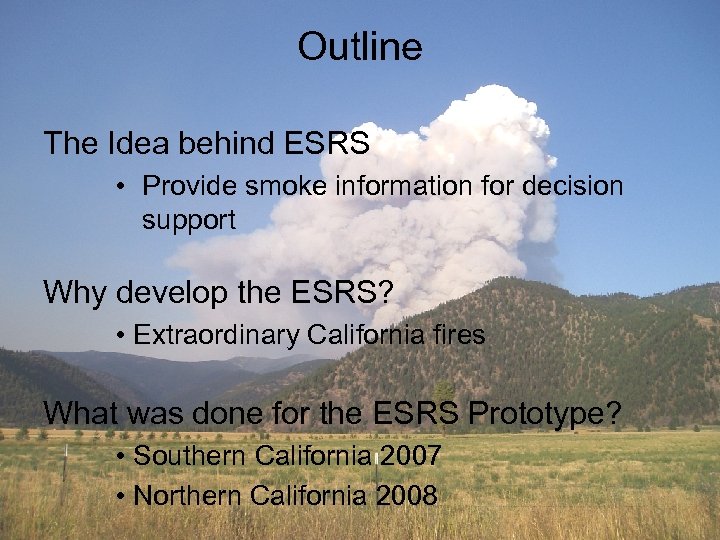 Outline The Idea behind ESRS • Provide smoke information for decision support Why develop the ESRS? • Extraordinary California fires What was done for the ESRS Prototype? • Southern California 2007 • Northern California 2008
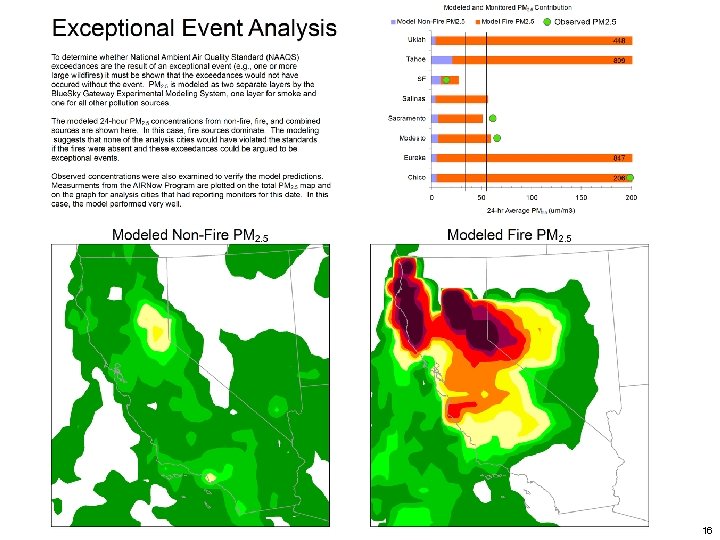
 Smoke is a growing issue More fire Increasing wildfires, WFU and Rx fires Decreased public acceptance of smoke More health awareness, encroachment (WUI) Tightening regulations NAAQS standards (PM 2. 5 & O 3), regional haze rule, exceptional events standards
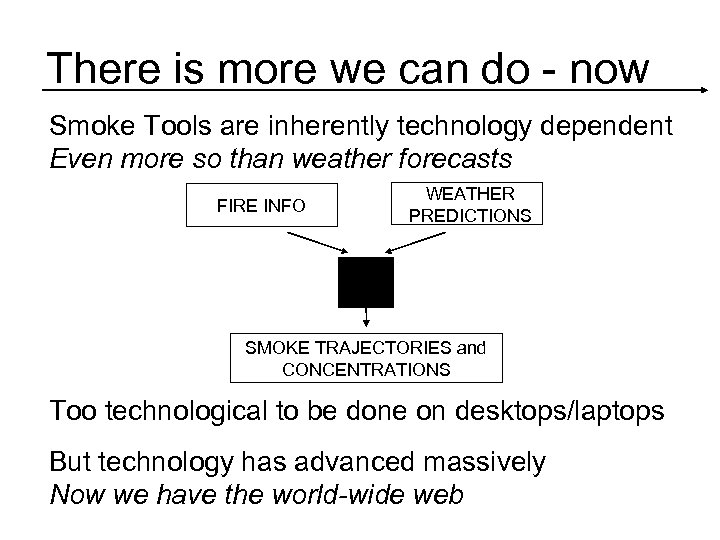 There is more we can do - now Smoke Tools are inherently technology dependent Even more so than weather forecasts FIRE INFO WEATHER PREDICTIONS SMOKE TRAJECTORIES and CONCENTRATIONS Too technological to be done on desktops/laptops But technology has advanced massively Now we have the world-wide web
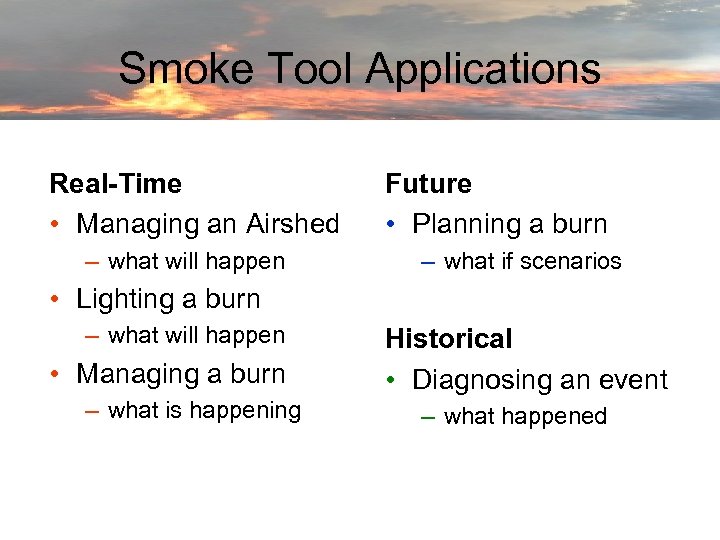 Smoke Tool Applications Real-Time • Managing an Airshed – what will happen Future • Planning a burn – what if scenarios • Lighting a burn – what will happen • Managing a burn – what is happening Historical • Diagnosing an event – what happened
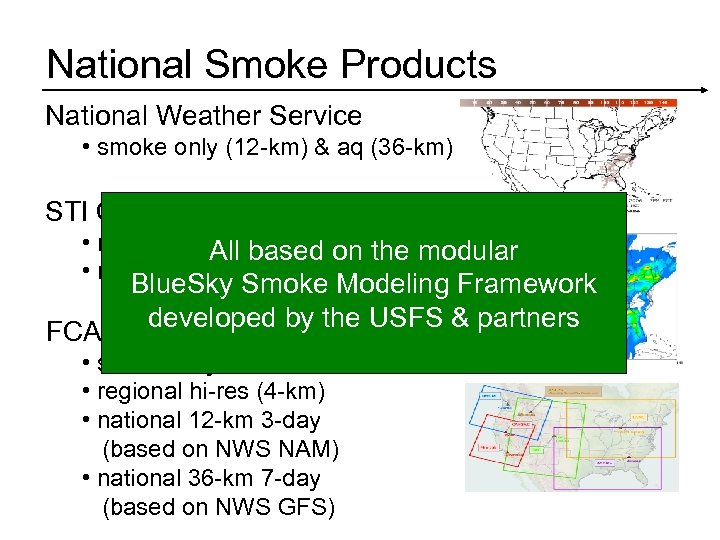 National Smoke Products National Weather Service • smoke only (12 -km) & aq (36 -km) STI CMAQ • national emissions inventory +modular All based on the fire • national 36 -km Blue. Sky Smoke Modeling Framework developed by the USFS & partners FCAMMS • smoke only • regional hi-res (4 -km) • national 12 -km 3 -day (based on NWS NAM) • national 36 -km 7 -day (based on NWS GFS)
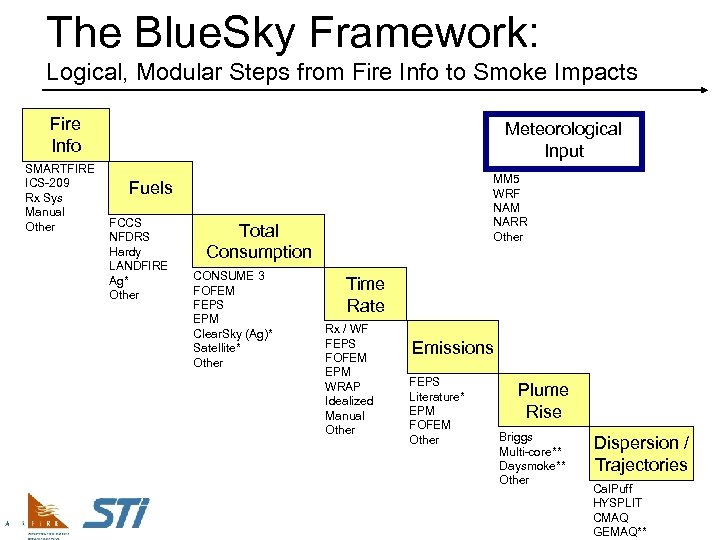 The Blue. Sky Framework: Logical, Modular Steps from Fire Info to Smoke Impacts Fire Info SMARTFIRE ICS-209 Rx Sys Manual Other Meteorological Input MM 5 WRF NAM NARR Other Fuels FCCS NFDRS Hardy LANDFIRE Ag* Other Total Consumption CONSUME 3 FOFEM FEPS EPM Clear. Sky (Ag)* Satellite* Other Time Rate Rx / WF FEPS FOFEM EPM WRAP Idealized Manual Other Emissions FEPS Literature* EPM FOFEM Other Plume Rise Briggs Multi-core** Daysmoke** Other Dispersion / Trajectories Cal. Puff HYSPLIT CMAQ GEMAQ**
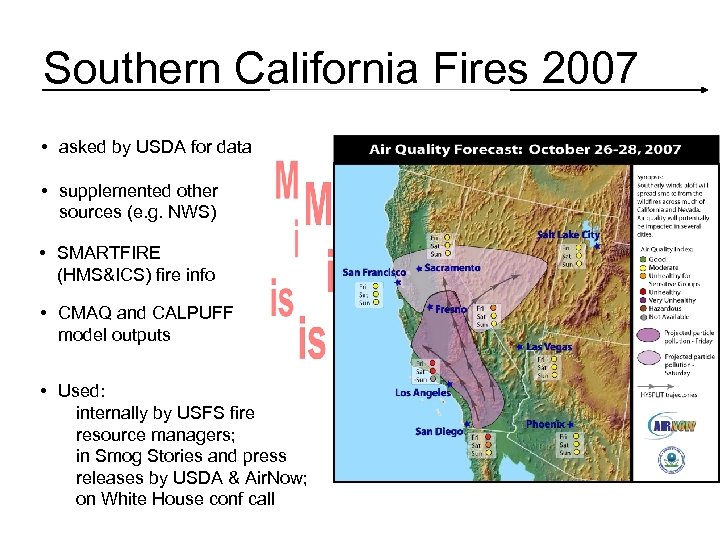 Southern California Fires 2007 • asked by USDA for data • supplemented other sources (e. g. NWS) • SMARTFIRE (HMS&ICS) fire info • CMAQ and CALPUFF model outputs • Used: internally by USFS fire resource managers; in Smog Stories and press releases by USDA & Air. Now; on White House conf call
 Northern California Fires 2008 State of Emergency / Presidential Declaration Enormous Smoke Impacts (> 5 million people affected) USFS Air. Fire Team & Partners (STI, DRI) asked to develop prototype ESRS by Region 5 Federal / Private / University partnership Rapid Response basis
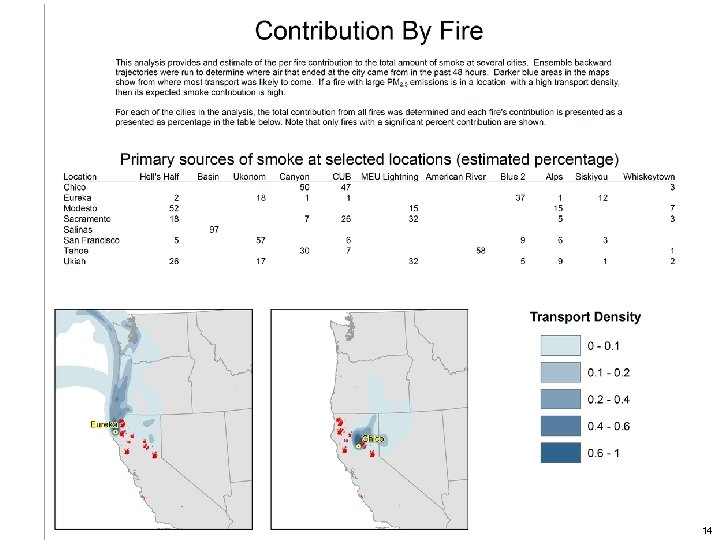
 GOALS: 1. Improve Smoke Modeling Systems both background models and operational status 1. Provide New Tools • Higher resolution • On-the-fly trajectories • Other species (e. g. Ozone) • Smoke apportionment by source fire 1. Provide Forecasts expert interpreted forecast text and graphics
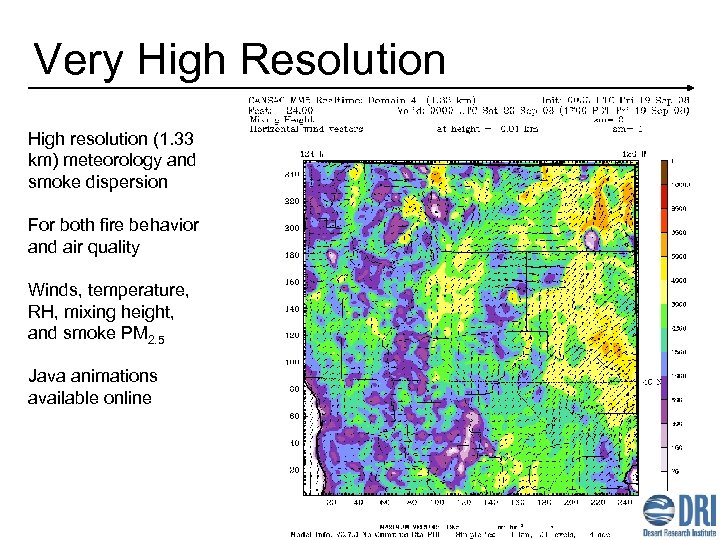 Very High Resolution High resolution (1. 33 km) meteorology and smoke dispersion For both fire behavior and air quality Winds, temperature, RH, mixing height, and smoke PM 2. 5 Java animations available online
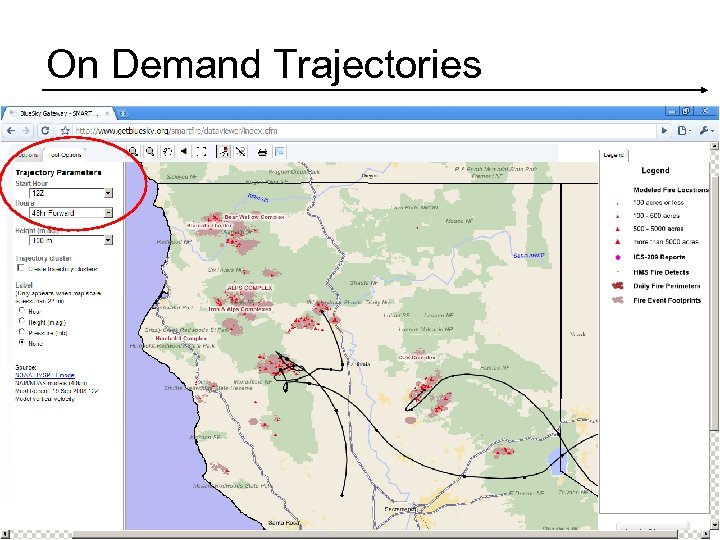 On Demand Trajectories
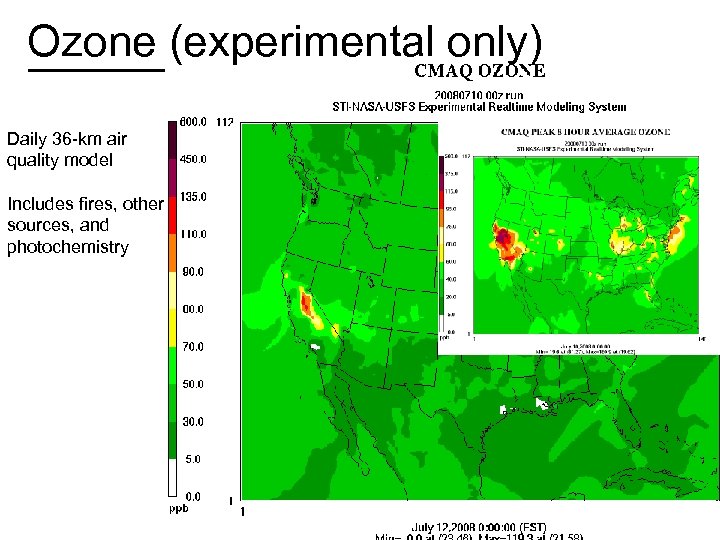 Ozone (experimental only) Daily 36 -km air quality model Includes fires, other sources, and photochemistry
 14
14
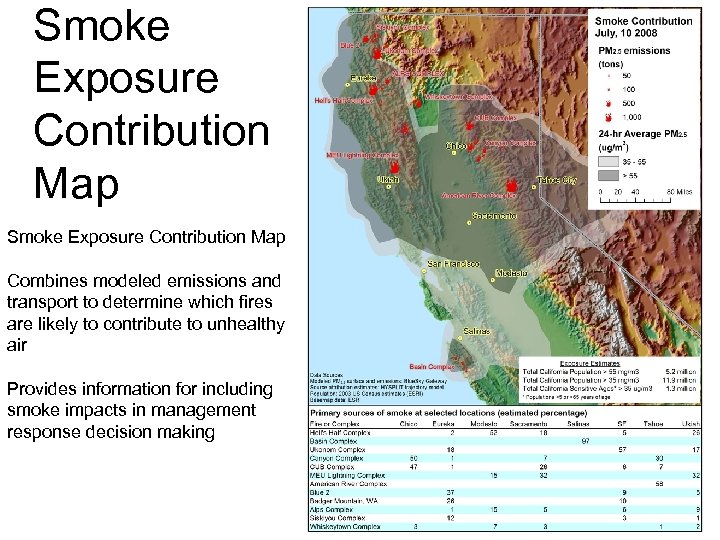 Smoke Exposure Contribution Map Combines modeled emissions and transport to determine which fires are likely to contribute to unhealthy air Provides information for including smoke impacts in management response decision making
 16
16
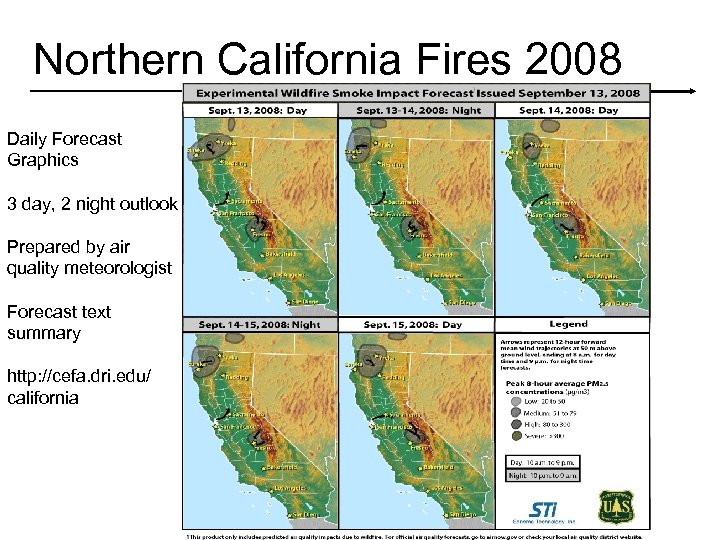 Northern California Fires 2008 Daily Forecast Graphics 3 day, 2 night outlook Prepared by air quality meteorologist Forecast text summary http: //cefa. dri. edu/ california
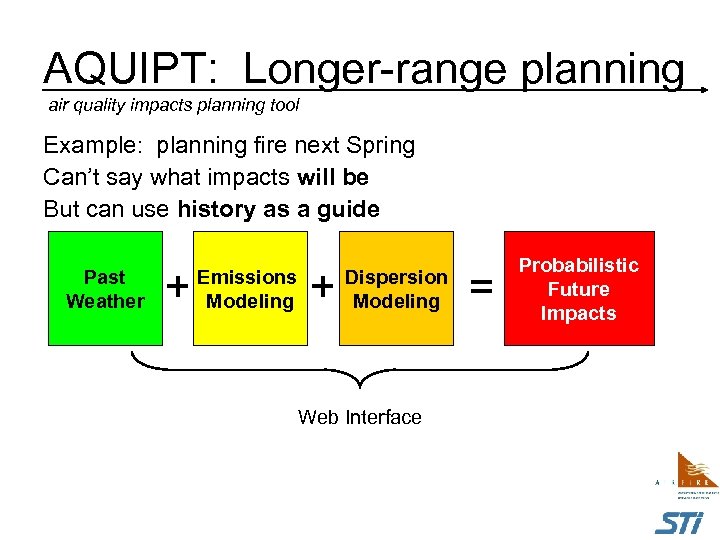 AQUIPT: Longer-range planning air quality impacts planning tool Example: planning fire next Spring Can’t say what impacts will be But can use history as a guide Past Weather + Emissions Modeling + Dispersion Modeling Web Interface = Probabilistic Future Impacts
 Thank you Funding from National Fire Plan, USDA CSREES NRI, USFS, Joint Fire Science Program, EPA, DOI, and NASA ROSES DSS. http: //get. Blue. Sky. org Sim Larkin 206 -732 -7849 larkin@fs. fed. us Tara Strand 206 -732 -7867 tarastrand@fs. fed. us